
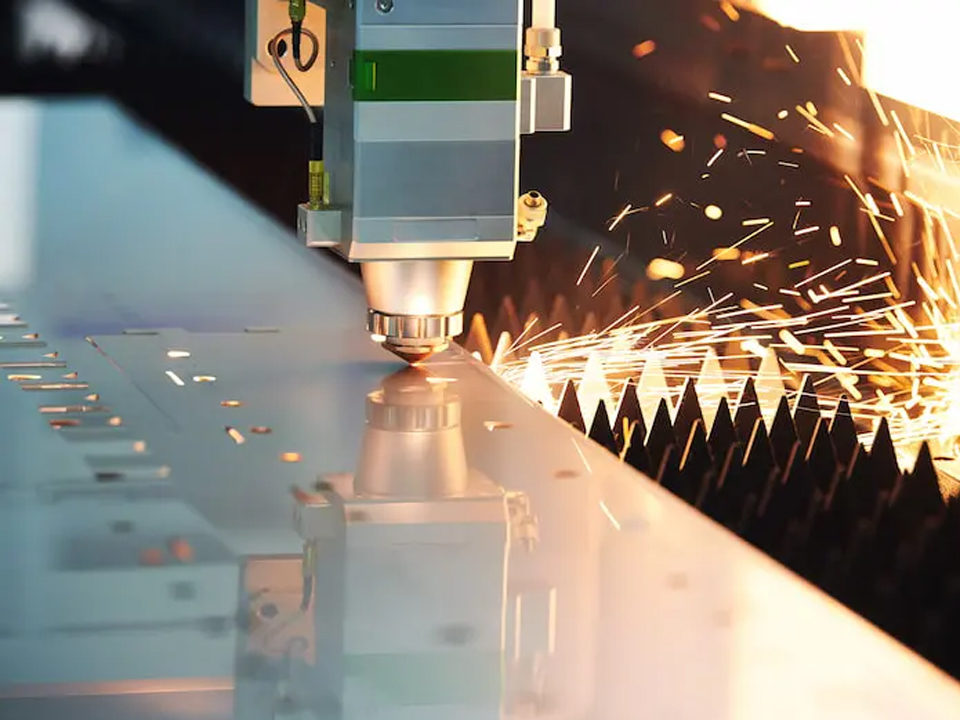
Common Challenges in Fiber Laser Cutting and Solutions
A buyer's guide to fiber laser cutting problems: diagnose dross and burrs, choose assist gas, handle reflective metals and prepare a clear RFQ.

Most fiber laser cutting problems come from a mismatch between five things: laser power, cutting speed, focus position, assist gas and nozzle condition. Dross on the bottom edge, burrs on stainless steel, incomplete cuts in thick plate and unstable results on copper or brass usually trace back to one of these variables. Sometimes the cause is a worn consumable that quietly changed the process window. For a buyer, the practical question is rarely “which defect is this?” It is “can the machine, the gas supply and the material specification hold a stable process on my parts?” This guide explains the most common defects and how to diagnose them in a logical order. It also covers where equipment choice matters and what to specify with a supplier before ordering.
Why Do Fiber Laser Cutting Problems Happen?
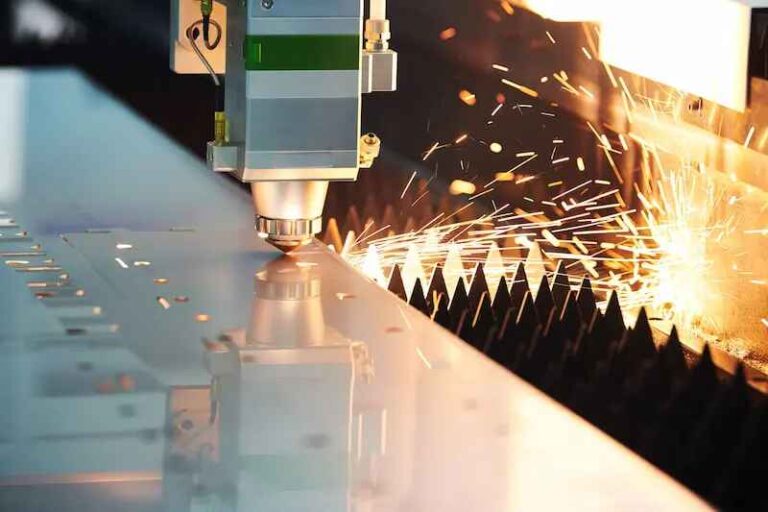
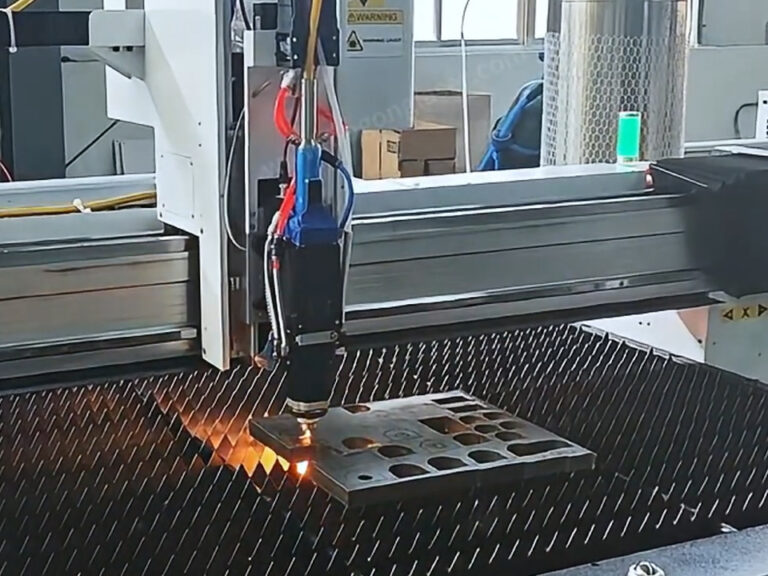
Fiber laser cutting problems happen when molten metal in the kerf is not ejected cleanly, or when the beam delivers energy unevenly. The assist gas has to blow melt out of the cut before it re-solidifies on the bottom edge. If speed, gas pressure, focus or nozzle alignment drift out of range, melt stays in the kerf and becomes dross or a burr.
In The Fabricator’s explainer on burr-free laser cutting, the author notes that burrs and dross often remain on cut parts, yet operators can frequently avoid them by adjusting the cutting parameters. The article draws on an Air Liquide laser cutting specialist. It frames the issue as getting molten metal to evacuate in the right way at the right time.
That framing changes how a buyer should read a defect. A rough edge is a symptom of the process window, not automatically proof of a weak machine or a weak supplier.
How to Diagnose Dross, Burrs and Rough Edges
Diagnose edge defects in a fixed order: consumables and optics first, gas second, focus third, speed and power last. Changing power or speed first is a common mistake. It hides a contaminated lens or damaged nozzle behind a new set of parameters that then fail again a week later.
The table below summarizes typical symptoms and the checks that usually resolve them. It is a qualitative troubleshooting guide, not a set of universal parameters. Correct values depend on the machine, material grade, thickness and gas.
| Symptom | Likely causes | What to check first | Typical corrective direction |
|---|---|---|---|
| Hard, beaded dross on the bottom edge (stainless, nitrogen cut) | Gas pressure or flow too low, speed too high or too low for power, focus too high | Nozzle condition and centering, gas pressure at the head (not just at the cylinder), focus offset | Restore nozzle, verify gas delivery, re-run a speed and focus test on a scrap coupon |
| Spiky or irregular burrs on one side only | Nozzle off-center, damaged nozzle tip, beam not centered in the nozzle | Nozzle centering, nozzle tip for dents or spatter | Replace or re-center nozzle, then retest |
| Rough, striated edge on thicker plate | Speed too high for power, wrong focus depth, gas flow too low | Cut speed against the supplier’s cutting table, focus position | Reduce speed, adjust focus deeper into the cut, check gas flow capacity |
| Oxidized or discolored edge on stainless | Oxygen or low-purity gas, air contamination in the gas line | Gas type, gas purity, leaks and hoses | Switch gas or fix the supply line |
| Incomplete cut or cut-through that fails intermittently | Power or thickness limit reached, dirty protective lens, speed too high | Lens condition, power at the workpiece, speed | Clean or replace the lens, lower speed, or specify a higher-power source |
| Sudden change after a stable period | Contaminated protective window, worn nozzle, unstable gas pressure | Lens and nozzle first, then gas regulator | Replace consumables and re-baseline the parameters |
Two points are easy to miss. First, a sudden change after weeks of stable cutting is rarely a parameter problem. It points to consumables, optics or gas supply. Second, a single test cut can mislead. Cut a small test matrix across speed and focus on the same material lot, then record the winning settings against the sheet’s thickness and grade.
Is More Laser Power the Solution? A Qualified View
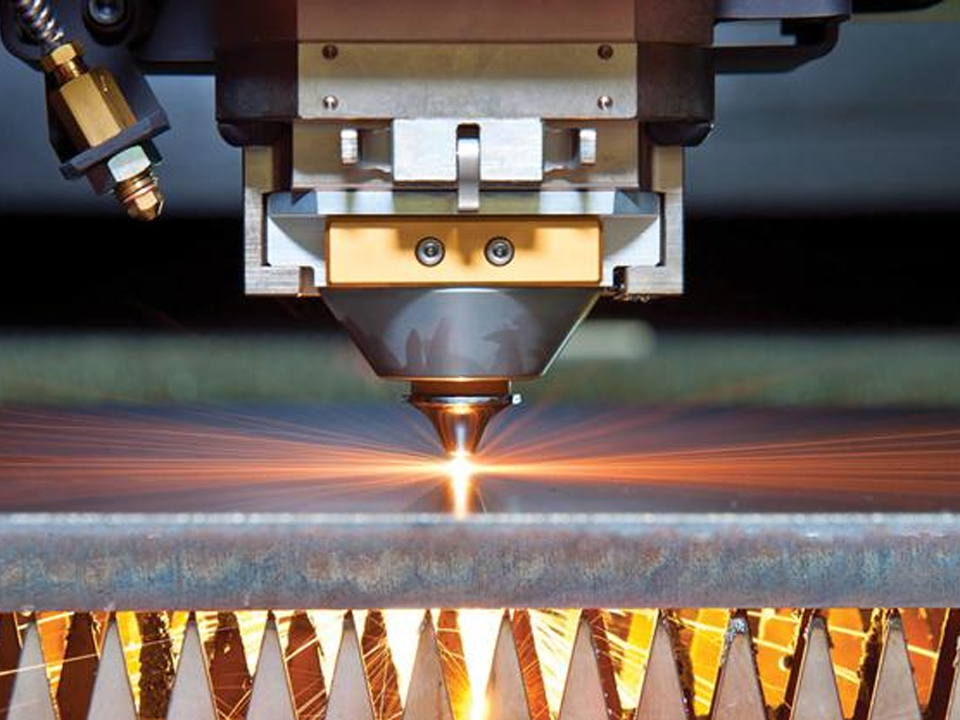
Higher power does not automatically improve edge quality, and buying more wattage to fix a defect can waste capital. Power sets the thickness range and the achievable speed. It does not repair a damaged nozzle, an undersized gas supply or an unstable cutting head.
Consider an illustrative example, not a real customer case. A job shop sees dross on 6 mm stainless and assumes its source is underpowered. The real cause is a gas line that cannot deliver enough flow when two machines run at once. A higher-power source would add cost and the same dross.
Higher power does earn its place in specific conditions:
- Thick carbon steel, stainless or aluminum where the current source sits at its thickness limit.
- Production environments where cutting speed on mid-thickness sheet drives throughput and cost per part.
- Shops that cut a wide thickness range and need headroom to stay inside a stable process window.
Higher power also carries trade-offs. It can mean greater gas demand on thick-section nitrogen cuts, higher electrical demand, tighter cooling requirements and a larger machine footprint. Buyers choosing a 6000W–40kW high-power fiber laser metal cutting machine should compare the manufacturer’s stated thickness ranges for each material. The listing for that model states cutting capacities of up to 25 mm for carbon steel, 18 mm for stainless steel, 16 mm for aluminum and 10 mm for copper and brass. It also lists a 380V three-phase supply and refrigerated water cooling. Treat those as supplier-stated maximums. Ask for sample cuts at the thickness you actually run, not the maximum.
Choosing the Right Assist Gas: Oxygen, Nitrogen or Air
The right assist gas depends on the material, the finish the next process needs and the cost per part. Gas selection is a design decision, not just a machine setting. It changes edge color, oxide layer, speed and operating cost.
| Gas | Typical use | Edge result | Main trade-off |
|---|---|---|---|
| Oxygen | Mild or carbon steel, especially thicker sections | Oxide-coated edge; the exothermic reaction can support cutting thicker plate | Oxide layer may need removal before painting, powder coating or some welding processes |
| Nitrogen | Stainless steel, aluminum, brass where a clean edge is needed | Bright, oxide-free edge | Higher gas consumption and cost; needs adequate pressure and flow |
| Compressed air | Thin sheet and cost-sensitive work | Acceptable edge for many non-critical parts | Edge quality and oxidation vary with air quality; filtration and dryness matter |
This table is a qualitative comparison. Confirm material-specific gas recommendations, pressures and flow rates with the machine supplier and your gas provider. Ask whether your cylinder, bulk tank or on-site generation setup can supply the flow the machine needs. Undersized supply is a common hidden cause of dross.
Cutting Reflective Metals: Copper, Brass and Aluminum
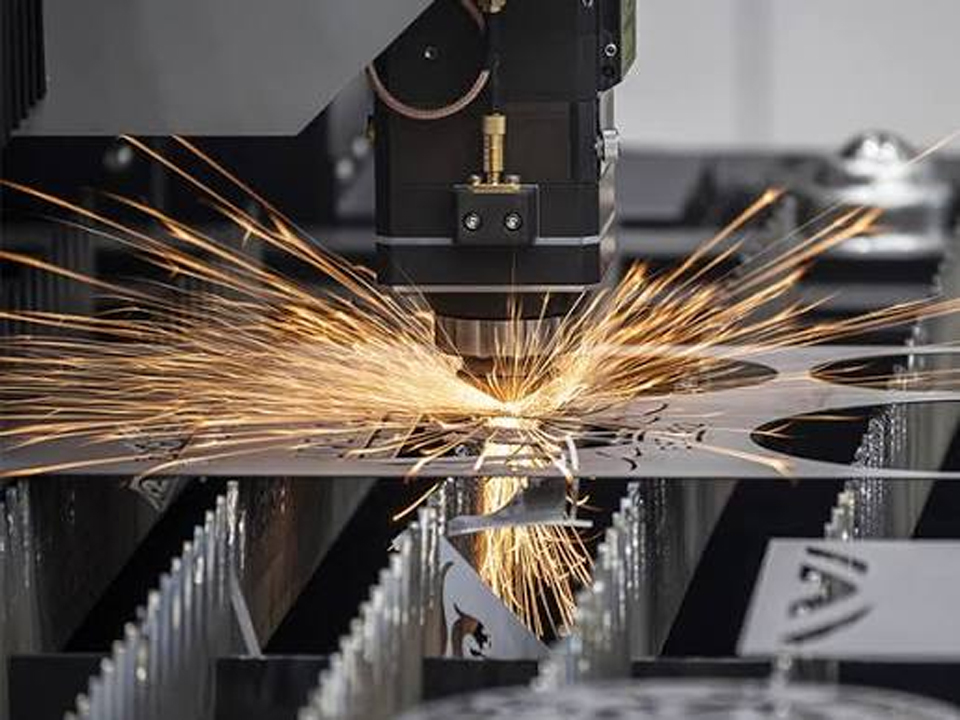
Reflective metals are harder to cut because they reflect a larger share of the beam, especially at the start of a pierce. That energy can travel back toward the cutting head and laser source. Copper, brass, silver, gold and some aluminum surfaces fall into this group.
Fiber lasers generally handle these materials better than older CO2 systems, but the risk does not disappear. When evaluating a machine for reflective metals, verify the following with the supplier:
- Back-reflection protection. Ask whether the source includes back-reflection monitoring or isolation, and what the warranty says about reflection damage.
- Surface condition. Polished, mirror-finish or oily surfaces behave differently from matte or oxidized ones. Test your actual material.
- Pierce method. Pierce strategy matters more on reflective metals than on mild steel.
- Gas and thickness. Nitrogen is typically used for clean edges. Confirm the stated maximum thickness for each reflective metal.
For small-format precious metal work, buyers often look at compact machines. The 5050 small fiber laser cutting machine is listed with a 500 × 500 mm cutting area, 1000W to 3000W source options and positioning accuracy of ≤±0.03 mm. The listing positions it for cutting gold, silver, copper and stainless steel. Stated positioning accuracy describes machine motion. Final part tolerance also depends on heat input, fixturing, sheet flatness and kerf compensation.
Thick Plate, Thin Sheet and Small Features: Three Different Problems
Thick plate, thin sheet and small features fail in different ways, and a supplier’s headline power figure does not predict performance across all three.
Thick plate tends to show slanted kerf, rough striations, bottom dross and unreliable piercing. Causes include running near the source’s thickness limit, wrong focus depth, insufficient gas flow and a worn nozzle. Ask for a cut sample at your thickness, and ask how long a pierce takes, since slow piercing increases heat build-up and cycle time.
Thin sheet tends to warp, tip up or show heat discoloration. Heat input and part geometry drive this, not just power. Common fixes include an optimized cutting sequence, common-line cutting where the design allows, micro-joints or tabs, and a faster cut with an appropriate gas. A very high-power source on thin sheet can be harder to control, not easier.
Small holes and fine details suffer when hole diameter is small relative to material thickness. Ask your supplier about the smallest reliable hole-to-thickness ratio on your material rather than assuming one. That limit varies by machine, gas and operator skill, and no universal figure applies.
Preventive Maintenance That Prevents Most Recurring Defects
Most recurring cut-quality problems link to a short list of maintenance items. Build these into a written schedule rather than relying on operator memory:
- Protective lens and focusing optics: inspect on a fixed interval and before critical jobs. Contamination absorbs energy and shifts focus.
- Nozzle: check for damage, spatter and centering. Treat nozzles as consumables with a replacement trigger.
- Gas lines, filters and regulators: check for leaks and pressure at the head, and drain or replace filters on air systems.
- Chiller and cooling circuit: keep water quality, temperature setpoints and filters within the manufacturer’s specification.
- Rails, guides and servo systems: keep them clean and lubricated per the manual. Dust and debris degrade motion accuracy over time.
- Electrical supply: confirm the voltage and phase the machine needs. Unstable supply can produce intermittent faults that look like cutting defects.
When comparing suppliers, ask which consumables ship with the machine, what the recommended spare-parts kit contains, and how quickly replacement parts and remote technical support are available. A warranty headline says little about downtime if a replacement part takes weeks to arrive. The product pages reviewed for this article list a two-year limited warranty and free technical support, but buyers should still confirm in the purchase contract exactly what each covers.
Laser Safety and Fume Extraction Requirements
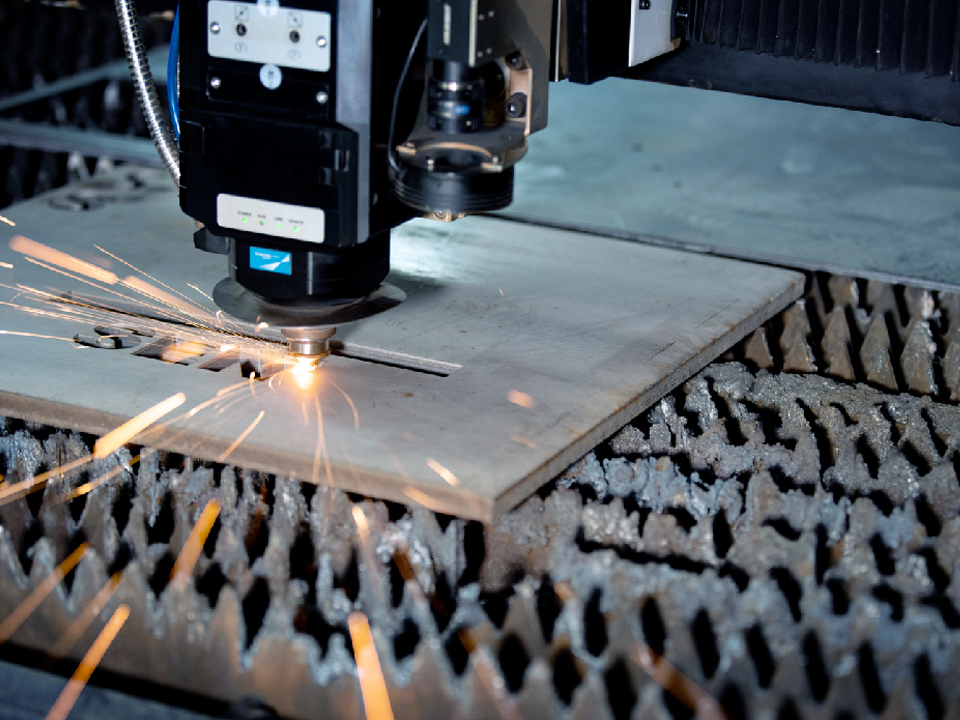
Laser safety affects how the machine is enclosed, operated and maintained, and cutting also produces fumes and spatter that need extraction. The OSHA overview of laser hazards explains that the most common cause of laser-induced tissue damage is thermal, and that the eye is almost always more vulnerable to injury than the skin.
Practical points for buyers include confirming that the machine has a fully enclosed cutting area with appropriate viewing windows, that interlocks are present, and that fume extraction and filtration are sized for the metals you cut. Local regulations vary by country. Check the applicable laser safety, electrical and machinery requirements for your market with the supplier and your compliance adviser.
How to Specify Edge Quality in Drawings and RFQs
Edge quality is easier to control when the drawing states a measurable requirement instead of “smooth cut.” ISO 9013:2017 provides geometrical product specifications and quality tolerances for classifying thermal cuts. According to ISO, it covers laser cuts from 0.5 mm to 32 mm, and its specifications apply when drawings or delivery documents reference the standard.
That scope matters in two ways. Very thick plate falls outside the standard’s stated laser-cut range. And flatness defects are not addressed as such in the document, so flatness needs its own requirement from the relevant material standard or your drawing.
A practical approach is to reference the standard on critical drawings only. Specify the edge zones that matter (for example, weld preparation edges or visible faces) and leave non-functional edges unconstrained. Over-specifying every edge can add cost without improving the part.
When Cut Parts Move to Marking and Welding
Cutting quality shows up again downstream. Oxide layers, burrs and heat-affected edges can influence marking contrast, weld fit-up and finishing time. Many buyers therefore evaluate the whole small-part workflow rather than the cutter alone.
For traceability, a portable laser engraver is described by the supplier as a small handheld tool that marks metal and some non-metal materials. That may suit part IDs on workpieces that are impractical to move to a fixed marking station. For heat-sensitive materials or very fine marks, a UV laser marking machine operates at 355 nm. The supplier describes it as suited to high-contrast, low-damage marking on metals and plastics.
For jewelry and small precision assemblies, joining is the next operation after cutting. A floor-type laser welding machine rated at 150W with a built-in CCD camera and a 200W Pro mini laser welding machine with CCD are both positioned by the supplier for jewelry welding. Those pages describe jewelry applications, so buyers with industrial parts should confirm suitability for their materials and joint types before purchase.
What Should Buyers Specify Before Requesting a Quote?
An accurate quotation for a fiber laser cutting machine starts with a clear description of the parts, not a power rating. Prepare these items before contacting suppliers:
- Materials and grades: carbon steel, stainless steel, aluminum, copper or brass, with surface condition (polished, oiled, coated).
- Thickness range and the most common thickness: the machine should perform well at your typical thickness, not only at its maximum.
- Sheet size and loading method: bed dimensions, sheet weight, and whether pallet changing or automation is needed.
- Edge-quality requirement: whether you need an ISO 9013 grade, weld-ready edges or paint-ready surfaces.
- Gas supply: which gases you will use, and whether you have bulk, cylinder or generator supply, with the flow it can deliver.
- Electrical supply: voltage and phase at your site, which should match the machine’s stated requirements.
- Target output: parts per shift, expected nesting yield and shifts per day.
- Sample test: ask the supplier to cut your drawing in your material, and request edge photos and cycle time.
- After-sales terms: spare-part list, consumable lead time, remote support and training.
Buyers still comparing categories can browse the BOGONG LASER product range across cutting, welding, marking, engraving and cleaning machines. They can also read the laser machine application guides to match a machine type to a material and job.
Frequently Asked Questions
What is the most common cause of dross in fiber laser cutting?
Insufficient melt ejection is the usual cause. Low or unstable assist gas pressure, a damaged or off-center nozzle, a dirty protective lens and mismatched speed or focus all leave molten metal in the kerf. Check consumables and gas delivery before changing power.
Why do burrs appear on stainless steel cut with nitrogen?
Burrs on nitrogen-cut stainless typically mean the melt is not being blown out fast enough. Common causes are insufficient gas pressure or flow, an off-center nozzle, a focus position that is too high, or cutting speed that does not match power.
Can a fiber laser cutter cut copper and brass?
Yes, within limits. Fiber lasers can cut copper and brass, but the reflectivity of these metals raises the risk of back reflection and makes piercing harder. Confirm maximum thickness, back-reflection protection and cut samples on your material.
Does higher laser power always improve cut quality?
No. Higher power raises the thickness range and cutting speed, but it cannot correct a worn nozzle, weak gas supply or poor focus. Matching power to your typical thickness usually gives better value than buying maximum wattage.
How do I specify cut edge quality on a drawing?
Reference ISO 9013 on critical drawings and state the requirements for the edge zones that matter. The standard classifies thermal cuts, including laser cuts from 0.5 mm to 32 mm, so check that your thickness falls inside that range.
What should I ask a supplier before buying a fiber laser cutter?
Ask for sample cuts on your material and thickness, stated cutting capacities per metal, gas and power requirements, back-reflection protection, spare-parts lead time, and exactly what the warranty and technical support cover.


Hot Click
Contact Us
Application
©Copyright [bogonglaser.com]. BOGONG Laser Machine Supplier All Rights Reserved.