
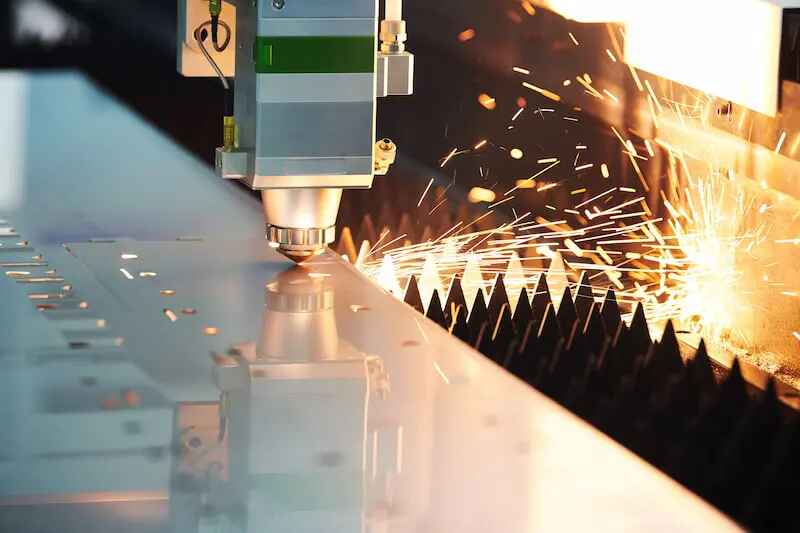
How Fiber Laser Cutting Machines Work in Industrial Manufacturing
Fiber laser cutting is not magic. It is a brutal mix of beam quality, CNC control, assist gas, material absorption, fixture discipline, and operator judgment. This article explains how the process actually works on the factory floor.

The Uncomfortable Truth About Fiber Laser Cutting
Power lies.
A Fiber Laser Cutting Machine can look like a clean, enclosed, almost polite piece of industrial equipment, but inside the cabinet it is running a violent negotiation between photons, molten metal, oxygen or nitrogen flow, CNC acceleration, thermal distortion, and the stubborn fact that steel does not care what the sales brochure promised. So why do so many factories still buy based on wattage alone?
I have watched buyers argue over 3kW versus 6kW like the machine itself would fix bad nesting, wet compressed air, weak fixturing, dirty lenses, and operators who were never trained to read a cut edge. That is the expensive mistake.
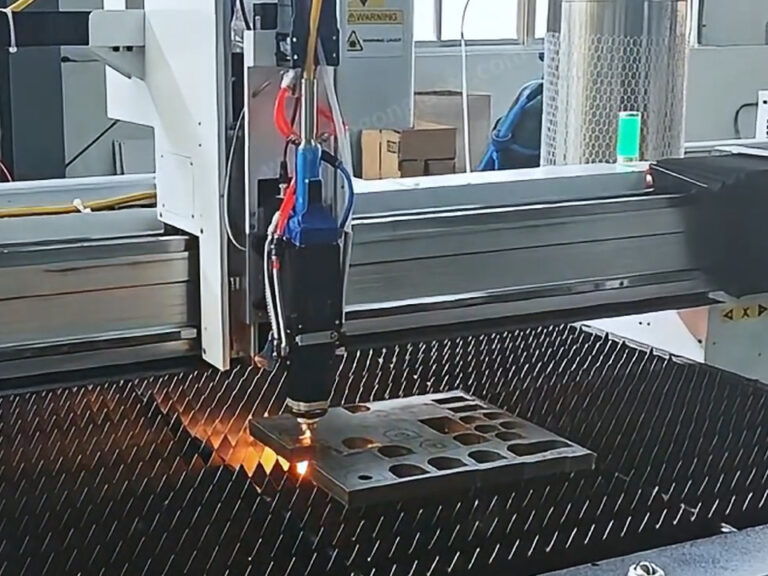
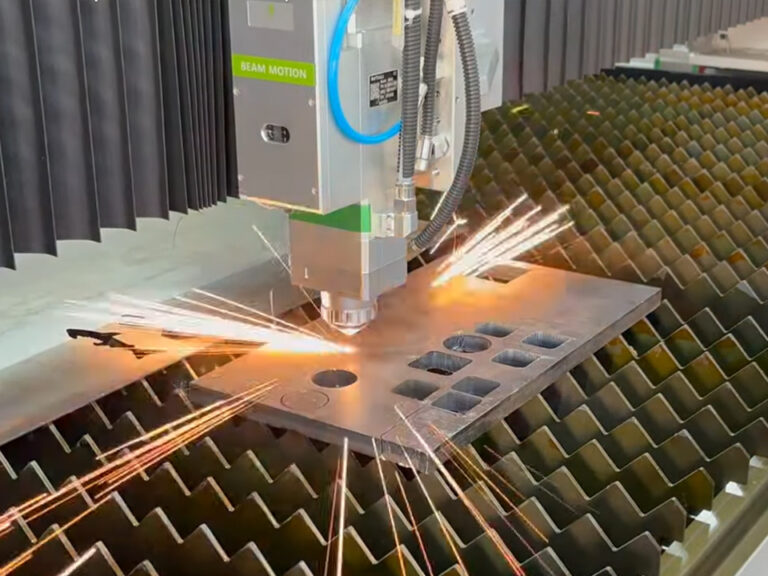
A fiber laser cutter works by generating a concentrated laser beam, usually near 1064 nm, routing that beam through fiber optics, focusing it into a tiny spot through the cutting head, and using CNC motion plus assist gas to melt, burn, or eject material from the kerf. Bogong Laser’s own fiber laser cutting machine page describes systems using CAD/CAM-driven CNC control, 1064 nm beam delivery, and metal-cutting ranges from thin sheet to heavy plate, depending on machine power and setup.
Here is the part vendors whisper, but rarely shout: the machine is only half the process. The other half is beam path stability, nozzle centering, focal position, gas purity, acceleration tuning, operator discipline, and whether the factory treats the laser as a production cell instead of a shiny saw.
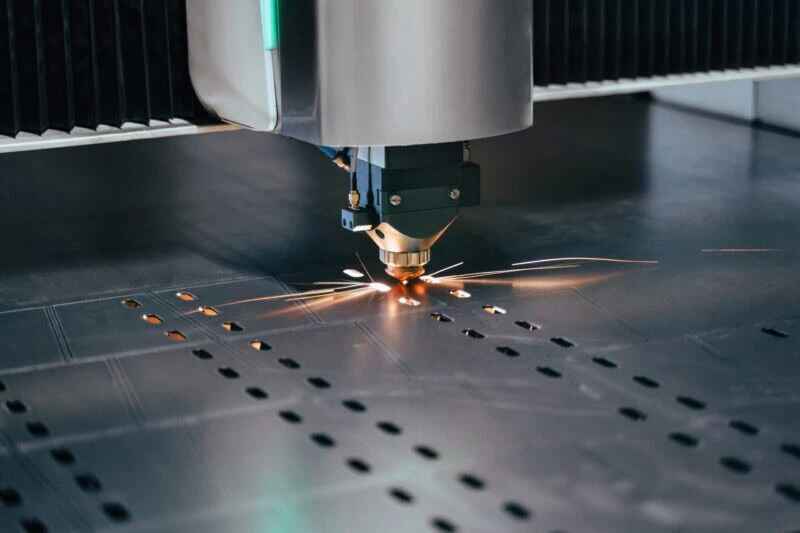
Table of Contents
How the Fiber Laser Cutting Process Actually Works
A CNC fiber laser cutter begins with a digital file. CAD geometry becomes CAM toolpaths. CAM toolpaths become motion instructions. The controller drives the gantry, cutting head, height sensor, gas valves, laser source, piercing sequence, and safety interlocks.
Then the beam hits metal.
The fiber laser source pumps energy into an optical fiber, where rare-earth-doped fiber amplifies the light. That energy exits as a high-quality beam, travels through delivery fiber, passes through collimating and focusing optics, and lands on the workpiece as an extremely small, high-energy spot. In plain shop language: the machine puts a controlled sunbeam exactly where the cut line should be.
But that beam alone is not enough.
Assist gas does the dirty work. Oxygen supports exothermic cutting in carbon steel and can increase speed, but it leaves an oxidized edge. Nitrogen gives cleaner stainless steel and aluminum edges, but it demands higher pressure, higher flow, and a real gas budget. Compressed air is cheaper, useful in many jobs, and often misunderstood. The wrong gas choice can make a high-end industrial laser cutting machine behave like a bargain-bin torch.
A 2024 pilot study on mild steel fiber laser cutting found that focus position and cutting speed directly affect kerf width and surface roughness, which matches what experienced operators already know: the edge tells the truth before the spreadsheet does. The study, published as Fiber Laser Cutting Technology: Pilot Case Study in Mild Steel Cutting, treated fiber laser cutting as a process-control problem, not just a power-rating contest.
The Five Variables That Decide Whether the Cut Is Good
The biggest variables in sheet metal laser cutting are laser power, cutting speed, focal position, assist gas pressure, and material condition. That sounds simple. It is not.
Rust, oil film, zinc coating, mill scale, burr direction, sheet flatness, and stress-relieved versus non-stress-relieved plate all change the outcome. A machine can hold ±0.05 mm positioning and still produce bad parts if the sheet bows upward during piercing or the operator keeps running a worn nozzle because “it still cuts.”
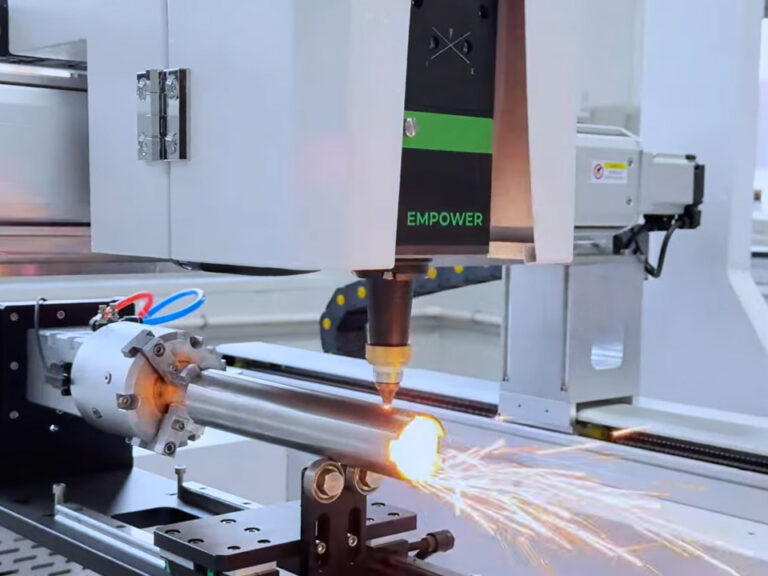
For buyers comparing systems, Bogong’s CNC laser cutting machine lineup is a useful internal reference because it separates flat cutting, tube cutting, and 3D robotic cutting use cases instead of pretending one machine should do everything.
Why Industrial Manufacturing Moved Toward Fiber Lasers
Industrial manufacturing did not adopt fiber laser cutting because engineers wanted prettier sparks. It adopted the process because factories needed faster changeovers, tighter nesting, cleaner edges, lower tooling dependency, and fewer mechanical bottlenecks.
That pressure is not theoretical. In 2024, the U.S. Bureau of Labor Statistics reported that labor productivity decreased in 52 of 86 four-digit manufacturing industries, while unit labor costs increased in 73 of 86. That is the kind of data that makes owners reconsider every slow cut, every rework loop, and every operator hour wasted on secondary grinding. The BLS manufacturing productivity release is dry reading, but it explains why automation spending keeps surviving budget meetings.
Reuters reported that U.S. factory output rose 0.4% in June 2024 and increased at a 3.4% annualized rate in Q2, while fabricated metal products still showed weakness inside that broader rebound. That contradiction matters: demand can recover while individual metalworking shops still bleed margin through slow setups and labor-heavy finishing. Read the Reuters June 2024 manufacturing output report and the subtext is obvious: capacity without efficiency is not strength.
So factories moved toward fiber laser cutting machine applications in automotive brackets, electrical cabinets, rack enclosures, elevator panels, agricultural machinery, HVAC sheet metal, appliance bodies, battery trays, chassis parts, signage, and stainless kitchenware. Not because fiber is fashionable. Because digital cutting reduces the penalty for product variety.
Small batches hurt less.
Fiber Laser vs CO2 Laser Cutting Machine: The Real Comparison
The fiber laser vs CO2 laser cutting machine debate usually gets ruined by tribal marketing. Fiber people act like CO2 is dead. CO2 people pretend fiber is only about speed. Both sides are selling something.
The honest distinction is material behavior. Fiber lasers dominate metal cutting because their wavelength is absorbed well by metals, especially reflective materials when the machine is built correctly. CO2 lasers remain useful for non-metallic materials such as acrylic, wood, leather, paper, and certain plastics. Bogong’s CO2 laser cutting machine page positions CO2 equipment around engraving and non-metal cutting, while its fiber pages focus on stainless steel, carbon steel, aluminum, brass, copper, and titanium.
| Cutting Method | Best Fit | Weak Spot | Typical Shop-Floor Reality |
|---|---|---|---|
| Fiber Laser Cutting Machine | Carbon steel, stainless steel, aluminum, brass, copper, titanium | Higher upfront cost, gas discipline, optical maintenance | Best for high-mix metal fabrication and fast sheet metal laser cutting |
| CO2 Laser Cutting Machine | Acrylic, wood, leather, paper, some plastics | Less ideal for modern high-speed reflective metal cutting | Still valuable for signage, packaging, decorative materials, and engraving |
| Plasma Cutting | Thick carbon steel, rough structural work | Wider kerf, more dross, lower precision | Cheap speed, but secondary finishing can eat the savings |
| Waterjet Cutting | Heat-sensitive materials, thick mixed materials | Slower, abrasive cost, wet process | Excellent when heat-affected zones are unacceptable |
| Mechanical Punching | Repeated holes and forms in high-volume sheet metal | Tooling cost, design-change delay | Strong in stable production, painful in high-mix revision-heavy work |
My opinion: if your factory cuts mostly metal sheets and tubes, and your product designs change often, fiber usually wins. If your shop cuts acrylic awards, wood displays, packaging inserts, or leather patterns, buying fiber because it sounds more advanced is just an expensive misunderstanding.
Inside the Machine: Beam Source, Head, Bed, Motion, and Software
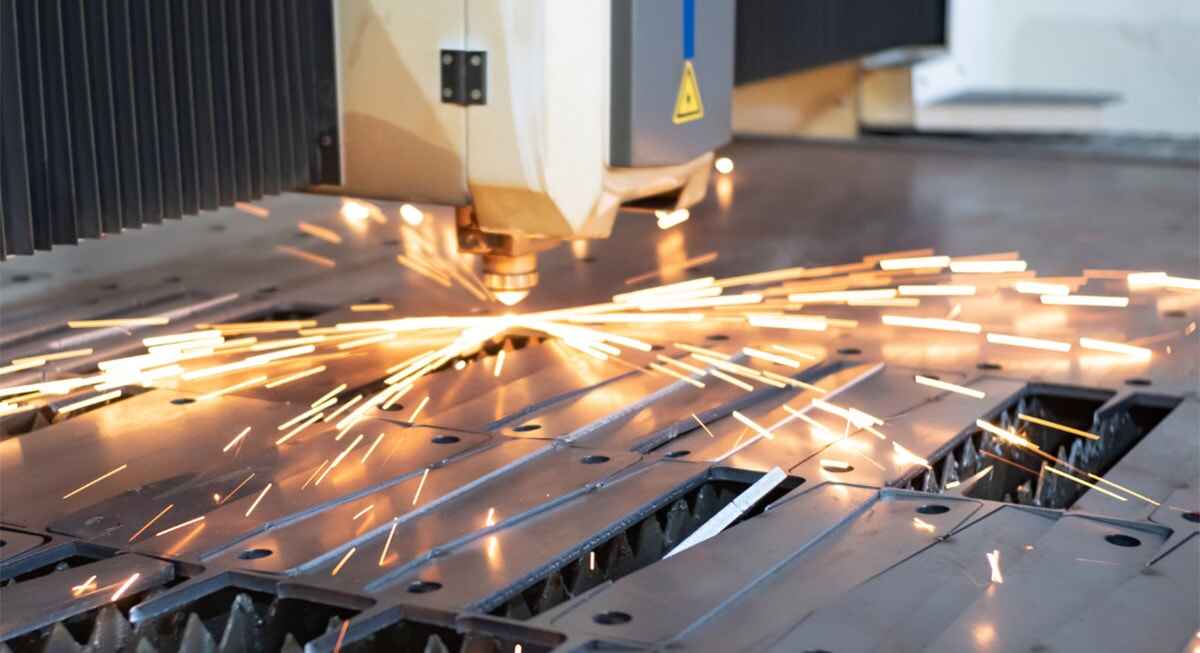
A serious metal fabrication laser cutting system has five main organs.
First, the laser source. This may come from IPG, Raycus, MAX, or another supplier, depending on the machine configuration. Bogong’s BGC3015 fiber laser cutting machine lists 1000W, 1500W, 2000W, 3000W, and 6000W options for a 1500 × 3000 mm standard cutting format.
Second, the cutting head. This is where focusing optics, protective lenses, capacitive height sensing, nozzles, and collision protection become real money. A bad head setup ruins good power.
Third, the machine bed. Heavy frames, heat management, slag drawers, exchange tables, and support slats matter more than new buyers think. A flimsy bed turns precision into theater.
Fourth, the CNC motion system. Rack-and-pinion drives, servo motors, guide rails, acceleration curves, and cornering control determine whether the machine can cut complex geometry without shaking itself into bad tolerances.
Fifth, the software. Nesting, lead-in strategy, micro-joints, piercing rules, common-line cutting, remnant management, and barcode workflow determine whether the operator spends the day producing parts or babysitting chaos.
This is where I get blunt: buying only by laser wattage is like buying a truck only by engine horsepower while ignoring brakes, tires, transmission, payload, and driver training.
What Happens at the Cut Edge
The cut edge is a report card.
A good fiber laser cutting process produces a narrow kerf, controlled striation pattern, limited dross, acceptable perpendicularity, stable corner quality, and a heat-affected zone small enough for downstream bending, welding, coating, or assembly.
A bad cut edge tells you exactly what failed. Heavy dross may point to low speed, wrong focal position, poor gas pressure, bad nozzle alignment, or contaminated material. Burned stainless edges often indicate oxygen contamination or weak nitrogen coverage. Rough lower-edge striations can mean the cut is too fast, the beam is out of focus, or the gas jet has lost coherence.
And no, increasing power does not automatically fix that.
High power can make the problem worse by widening the thermal zone, increasing instability during piercing, or making reflective-metal cutting more sensitive to setup errors. This is why serious factories document recipes by material grade, thickness, gas type, nozzle diameter, focus, speed, pierce time, and batch behavior.
Safety Is Not Paperwork; It Is Production Insurance
Industrial lasers are not office equipment with sparks.
OSHA’s Technical Manual classifies Class IV lasers as high-power systems above 500 mW that are hazardous to view directly or diffusely and may create fire and skin hazards. A modern CNC fiber laser cutter used for metal cutting sits far beyond that threshold, so enclosure design, interlocks, eyewear policy, fume extraction, lockout, and operator training are not optional decorations.
U.S. federal laser product rules under 21 CFR 1040.10 require protective housings, safety interlocks, remote interlock connectors, key controls, emission indicators, and related safeguards for applicable laser products. That is not marketing copy. That is the legal skeleton behind serious industrial laser machine design.
The FDA also states that laser products improve quality, precision, accuracy, security, and reliability, but their exposure risks must be managed. That sentence from the FDA laser products page should be printed and taped near every purchasing desk.
My hard rule: if the quote ignores fume extraction, interlock logic, operator training, spare protective lenses, gas purity, and service access, it is not a complete quote. It is a trap with a discount.
Where Fiber Laser Cutting Makes the Most Money
The best fiber laser cutting machine applications share one trait: they punish slow tooling.
Think rack enclosures. Ventilation slots, cable holes, grounding tabs, mounting rails, side panels, doors, and brackets change constantly because data center, telecom, and electrical cabinet designs keep changing. Bogong’s article on fiber laser cutting for rack enclosure production makes the right argument: the laser is valuable because it reduces tooling delay, improves repeatability, and catches geometry problems before bending and assembly expose them.
The same logic applies to elevator panels, stainless kitchenware, automotive brackets, switchgear cabinets, agricultural covers, and HVAC panels. In each case, the laser does not merely cut. It compresses the distance between design change and sellable part.
For sheet metal buyers, Bogong’s sheet metal fabrication fiber laser guide includes internal deployment snapshots showing claimed cycle-speed gains, edge tolerances, and ROI effects across automotive brackets, signage, and heavy-gauge chassis projects. I would still verify every number against your own material mix, but the scenarios are directionally useful for planning.
The Buying Mistake I See Again and Again
Factories often ask, “How fast can it cut 6 mm carbon steel?”
That is the wrong first question.
The better question is: “Can this machine cut our real monthly material mix, with our operators, our gas supply, our nesting discipline, our tolerance stack, our maintenance habits, and our downstream bending and welding constraints?”
A Fiber Laser Cutting Machine should be judged by usable parts per shift, not brochure speed. I care about pierce reliability, rejected-edge percentage, lens consumption, nozzle crashes, unattended cutting stability, fume extraction performance, service response, spare-part availability, and how fast a new operator can safely run repeat jobs.
The machine that wins the demo may not win the year.
FAQs
What is a Fiber Laser Cutting Machine?
A Fiber Laser Cutting Machine is a CNC-controlled industrial metal cutting system that uses a focused fiber-generated laser beam, usually near 1064 nm, with assist gas to cut sheet metal, tubes, plates, and profiles into programmed shapes with high speed, narrow kerf width, and repeatable geometry.
In practical terms, it converts CAD/CAM files into cut metal parts. The beam supplies the heat, the gas clears the molten material, and the CNC system controls motion. The best systems integrate cutting recipes, nesting software, safety enclosures, fume extraction, and stable material handling.
How does a fiber laser cutting machine work?
A fiber laser cutting machine works by generating high-intensity laser light inside an optical fiber, focusing that beam through a cutting head, and moving it along CNC-programmed paths while oxygen, nitrogen, or compressed air removes molten metal from the kerf.
The result depends on more than power. Focus position, nozzle diameter, gas pressure, speed, material coating, and sheet flatness all affect edge quality. That is why two machines with the same wattage can produce very different parts in the same factory.
What materials can a CNC fiber laser cutter cut?
A CNC fiber laser cutter can cut many industrial metals, including carbon steel, stainless steel, galvanized steel, aluminum, brass, copper, titanium, iron, silver, and some alloys, provided the machine power, beam quality, assist gas, and cutting parameters match the material thickness and reflectivity.
Reflective metals require more care because poor setup can create unstable cutting behavior. Stainless steel usually benefits from nitrogen when a bright, oxide-free edge is required. Carbon steel often uses oxygen for speed, though the edge will oxidize.
Is fiber laser cutting better than CO2 laser cutting?
Fiber laser cutting is generally better for industrial metal cutting because metals absorb the fiber wavelength efficiently, the beam can be delivered through fiber optics, and the process supports fast CNC sheet metal production with low mechanical tooling dependence.
CO2 laser cutting still has a place in non-metal materials such as acrylic, wood, paper, leather, and some plastics. For metal fabrication laser cutting, I would usually start with fiber. For signage, packaging, engraving, and organic materials, I would still consider CO2.
What is the biggest hidden cost of industrial laser cutting?
The biggest hidden cost of industrial laser cutting is not the laser source; it is the production ecosystem around it, including nitrogen or oxygen supply, compressed-air quality, extraction, consumables, operator training, preventive maintenance, rejected parts, software discipline, and service downtime.
A cheap machine with poor support can become expensive fast. A higher-priced machine with better uptime, cleaner recipes, safer enclosure design, and faster support may win financially after six months of real production.
Your Next Step: Test the Part That Usually Fails
Do not start by asking for a beautiful demo on clean 1 mm stainless steel.
Send the supplier your ugliest real part: tight holes, sharp corners, reflective material, awkward thickness, dense nesting, bend-sensitive geometry, and the tolerance that normally causes arguments between cutting, bending, welding, and inspection. Then ask them to cut it under production-like conditions, using the gas and material grade you actually buy.
That is how you separate a brochure Fiber Laser Cutting Machine from a production machine.
For manufacturers comparing flat sheet, tube, and mixed metal cutting workflows, start with Bogong’s fiber laser cutting machine range, then match the system to the real bottleneck: sheet metal laser cutting, tube cutting, rack enclosure production, stainless kitchenware, elevator panels, or high-mix metal fabrication. The right machine is not the one with the loudest wattage number. It is the one that turns your worst recurring part into a boring, repeatable cut.


Hot Click
Contact Us
Application
©Copyright [bogonglaser.com]. BOGONG Laser Machine Supplier All Rights Reserved.