
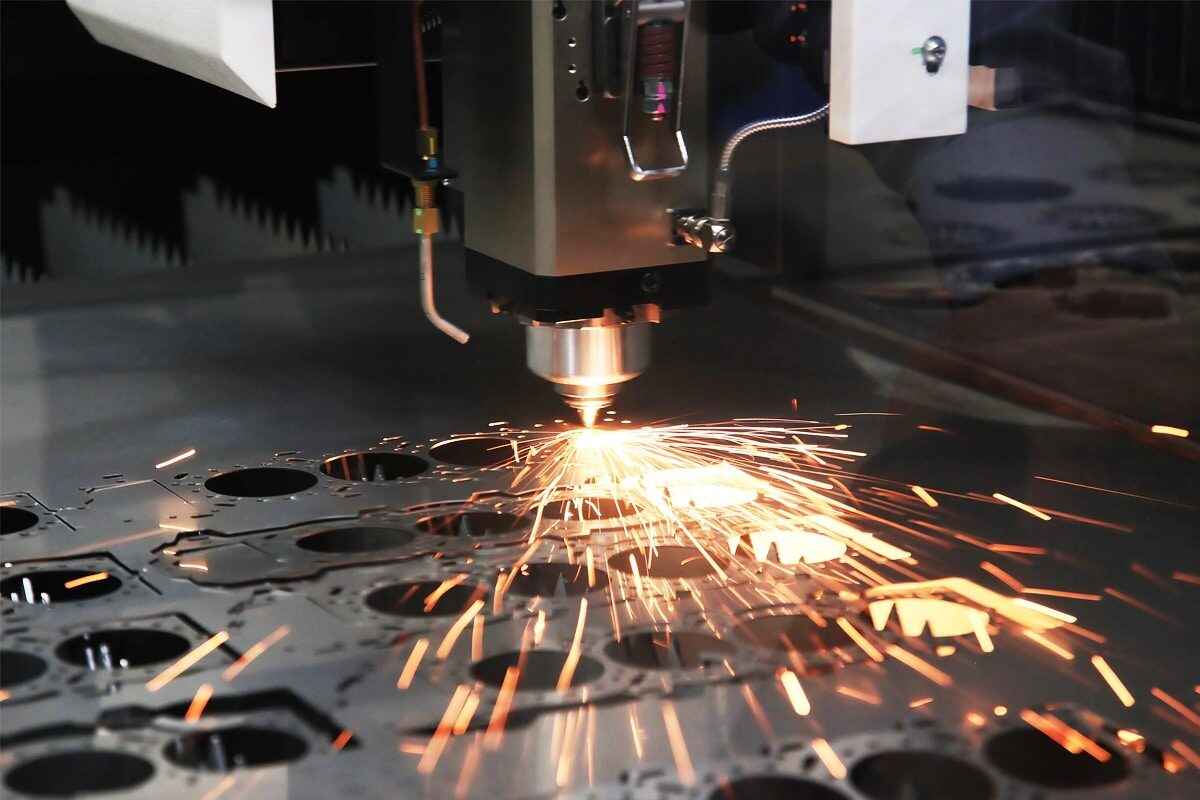
How Fiber Laser Cutting Improves Rack Enclosure Production
Rack enclosure production is no longer a sleepy sheet-metal job. This article explains why fiber laser cutting, when paired with disciplined CAD/CAM, nesting, assist gas control, bending logic, and inspection, can make rack panels, doors, rails, brackets, vents, and cabinet parts faster, cleaner, and less vulnerable to expensive revision churn.

The Rack Business Got Meaner, and the Cut Line Had to Catch Up
Metal tells truth.
I have watched rack enclosure factories blame bending, coating, operators, suppliers, “bad steel,” and even humidity before anyone admits the first cut was already setting the job up to fail, especially when a 42U or 48U enclosure has vent fields, mounting rails, grounding tabs, cable-entry windows, PDU brackets, hinge slots, and customer-specific revisions stacked into one rushed order.
So why are buyers still choosing a laser cutting machine from spark videos?
The hard truth: rack enclosure production is not furniture work. A factory buying laser cutting machines for data center rack manufacturing is solving a different problem from someone researching laser cutting machines for furniture manufacturing, a furniture laser cutting machine, or a CO2 laser cutter for woodworking. Wood likes CO₂. Conductive sheet metal likes fiber. Rack enclosures like discipline.
A modern fiber laser cutting machine usually runs around a 1064 nm wavelength, which is why it behaves so differently from a CO₂ system on stainless steel, carbon steel, galvanized sheet, aluminum, brass, and copper. Bogong’s own fiber laser cutting machine category page describes fiber systems for sheet metal, tubes, bars, and profiles, with power ranges from 1,500 W to 60,000 W and entry-to-high-power pricing bands from roughly $15,000 to $300,000. That price spread matters because buying too little machine creates bottlenecks, while buying too much machine turns depreciation into a silent tax.
And here is my unpopular opinion: most rack enclosure manufacturers do not lose money because the laser is “too slow.” They lose money because the entire chain after cutting is too fragile.
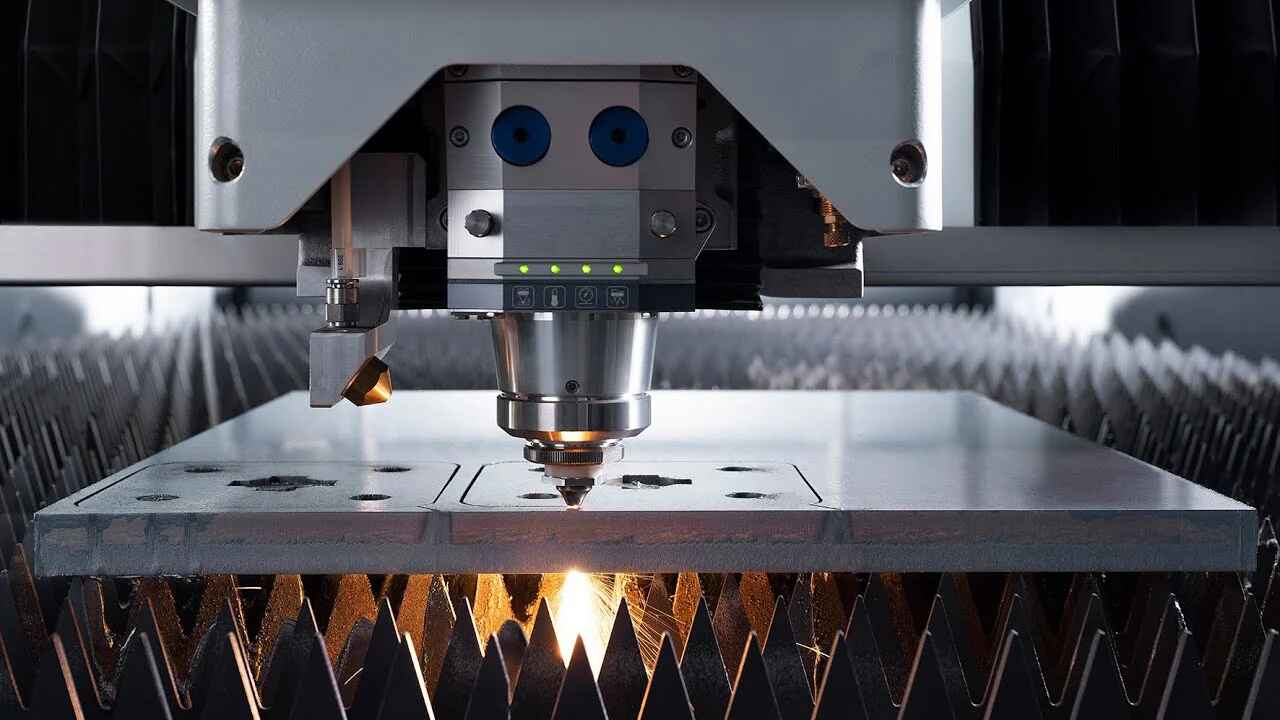
Table of Contents
What Fiber Laser Cutting Actually Fixes in Rack Enclosures
Fiber laser cutting improves rack enclosure production by removing hard-tooling delay, cutting dense ventilation features directly from CAD/CAM files, improving repeatability across mixed enclosure batches, and reducing fit errors before bending, powder coating, grounding, and final assembly expose them.
That is the clean answer.
The dirty answer is better. A rack factory lives inside tiny conflicts: SPCC versus SGCC, 1.0 mm doors versus 2.0 mm mounting rails, 304 stainless trim versus 5052 aluminum panels, nitrogen assist versus oxygen assist, micro-joints versus part tip-up, beautiful edge quality versus actual downstream bend behavior. I care less about the sales brochure than the operator’s cut sheet at 2:17 p.m. when a hot order hits the floor.
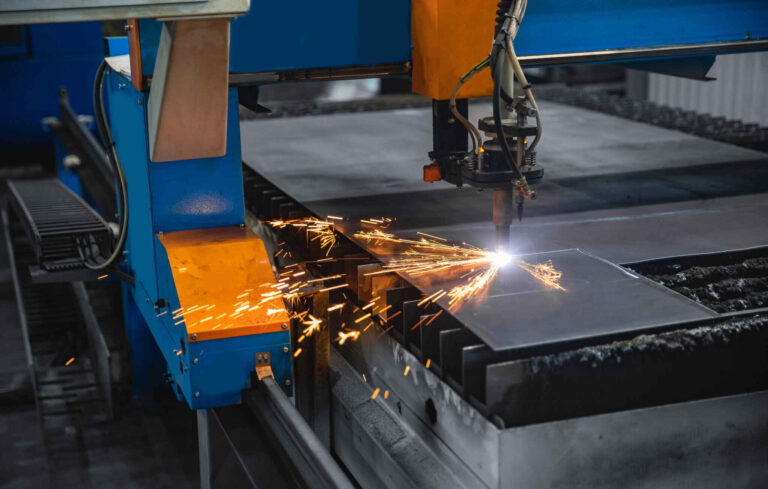
Fiber laser cutting helps because it converts enclosure geometry into programmable movement. No punch tooling wait. No turret tool limitation. No arguing for three days about whether the vent slot pattern is “worth” a new tool. A CNC laser cutting machine for furniture might be sold on decorative flexibility; a CNC laser cutting machine for rack enclosures must be judged by hole location, slot stability, burr control, nesting yield, and whether the blank still behaves under press-brake tonnage.
If your rack panel has 600 ventilation slots, four hinge zones, two grounding windows, and twelve PEM insertion locations, the cut line is already making assembly promises. Break those promises and the enclosure becomes a rework farm.
AI Data Centers Made Rack Enclosure Tolerances Less Forgiving
The AI infrastructure wave is not just a chip story. It is a sheet-metal story wearing a software costume.
The U.S. Department of Energy said in December 2024 that data centers consumed about 4.4% of total U.S. electricity in 2023 and could consume roughly 6.7% to 12% by 2028, with data center electricity use rising from 58 TWh in 2014 to 176 TWh in 2023 and potentially 325 to 580 TWh by 2028. That is not trivia; it explains why rack density, airflow, power distribution, cable management, and enclosure repeatability are under pressure at the same time. DOE’s 2024 data center electricity demand report is the kind of source procurement people should read before pretending a cabinet is still “just a box.”
Reuters reported the same DOE-backed signal bluntly: U.S. data-center power use could nearly triple in three years, and AI servers are a major driver because they demand more powerful chips and heavier cooling. Reuters’ December 2024 coverage makes the rack enclosure issue feel less theoretical. More heat means more airflow engineering. More power means more grounding and cable discipline. More deployment speed means fewer chances to correct sloppy metalwork later.
This is where precision sheet metal cutting for IT infrastructure hardware becomes the real discussion. The enclosure has to fit, cool, ground, ship, install, and survive service. If the laser-cut blank is wrong by a little, the assembled cabinet can be wrong by a lot.
Cutting Method Reality Check for Rack Enclosure Production
A laser wood cutting machine is not the benchmark here. Neither is a plasma table. Neither is a showroom demo cutting a logo into 3 mm stainless.
For rack enclosure production, the cutting method has to deal with repeatable thin sheet, high slot density, revision churn, clean edges, and downstream forming. Here is the blunt comparison.
| Method | Where It Works | Where It Hurts | My Take for Rack Enclosures |
|---|---|---|---|
| Fiber laser cutting | Stainless steel, carbon steel, galvanized sheet, aluminum, dense vents, small batches, mixed revisions | Assist gas cost, reflective-metal tuning, heat management on thin sheet | Best default for high-mix rack panels, doors, rails, brackets, and custom enclosure runs |
| CNC punching | Repeated holes, louvers, high-volume legacy panels | Tooling cost, design inflexibility, visible marks, slower revision response | Still useful when the same panel runs forever, but dangerous for fast ECO-heavy production |
| CO₂ laser cutting | Wood, acrylic, some non-metal materials | Poor fit for many conductive metals compared with fiber | Better for how to use laser cutting in furniture manufacturing, not modern metal rack production |
| Plasma cutting | Thick plate, rougher industrial work | Wider kerf, more heat distortion, lower fine-feature quality | Too crude for most server rack enclosure panels |
| Waterjet cutting | Heat-sensitive materials, thick mixed materials | Slower, messier, higher operating burden | Useful in special cases, not a normal rack enclosure workhorse |
The phrase “best laser cutting machine for furniture” has search volume, sure. But rack enclosure buyers should not copy that logic. A laser cutting machine for wood panels and decorative furniture parts is solving appearance and material compatibility. A rack enclosure line is solving tolerance stack, thermal flow, grounding continuity, and repeatable assembly.
Where Fiber Laser Cutting Improves the Real Production Line
Faster CAD-to-Part Revisions
Rack enclosure customers change things late. They always do.
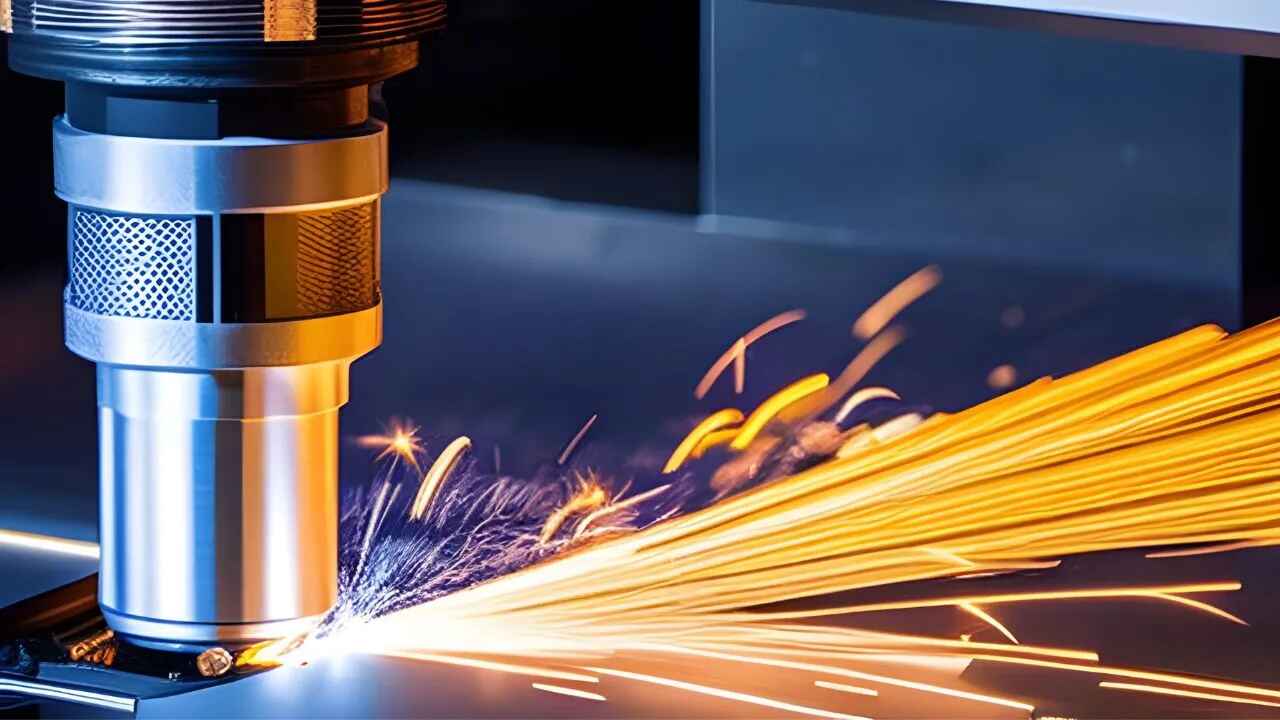
A cable pass-through moves 8 mm. A vent field changes because the fan tray changed. A PDU bracket gets revised after pilot assembly. With punching, those changes can trigger tooling delay or ugly compromises. With fiber laser cutting, the new geometry moves from CAD to CAM to nesting to cut with far less friction.
That is why I like fiber in high-mix enclosure work. Not because it is magical. Because it is less sentimental about old tooling.
Cleaner Airflow Features
AI-era rack enclosures are full of slots, perforations, louvers, and airflow openings. Those features are not decoration. They decide pressure drop, cooling consistency, dust behavior, and how service teams experience the hardware.
For thin panels, the messy variables are ordinary and unforgiving: sheet thickness, alloy behavior, assist gas, lead-ins, micro-tabs, cut sequencing, thermal loading, and whether the nest lets small features overheat. Bogong’s article on laser cutting thin sheet metal for server enclosures is relevant here because thin material punishes lazy programming faster than thick plate does.
Bad vent geometry is not a cosmetic flaw. It is a thermal argument you already lost.
Better Repeatability Before Bending
A flat blank is only half a part. Sometimes less.
The problem is not whether the laser can cut a pretty line. The problem is whether hole-to-bend distance, corner relief, notch geometry, and mounting features stay consistent after bending, hardware insertion, coating, and assembly. That is why I push buyers to evaluate the full sheet-metal route, not just the cutting head.
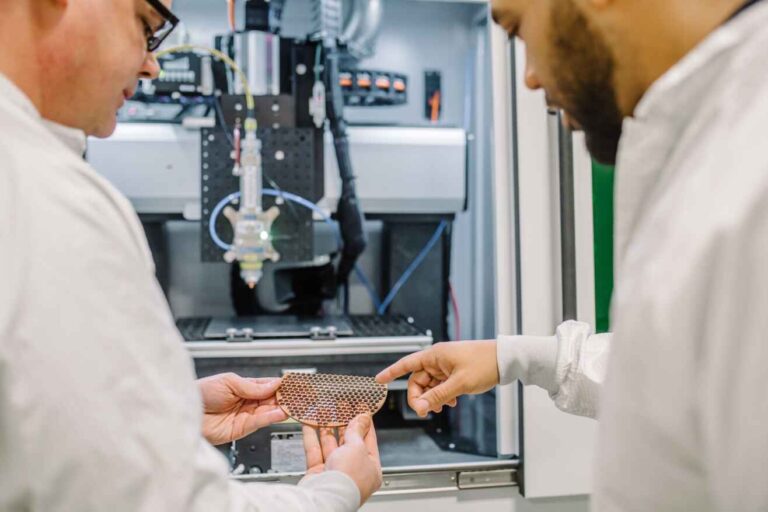
When a supplier talks only about watts, speed, and “high precision,” I get suspicious. Ask about ±0.1 mm feature behavior on repeated panels, cut sequencing around dense slot fields, nitrogen purity, nozzle wear, focus drift, burr control, and first-article inspection. Watch the room get quieter.
Lower Tooling Risk for High-Mix Production
Fiber laser cutting is especially strong when the rack enclosure factory handles small-to-medium batches, frequent revisions, and many part families. Doors, side panels, top covers, base plates, blanking panels, rails, brackets, baffles, and busbar shields do not all want the same process rhythm.
For heavier structural members or thick metal work, a 6000W–40KW high power fiber laser metal cutting machine may belong in the evaluation. For compact parts, pilot runs, or tight prototype work, a smaller platform such as a 5050 small fiber laser cutting machine may make more business sense. Bigger is not smarter. Bigger is just bigger until your orders prove otherwise.
The Buyer Trap: Confusing a Fiber Laser Machine With a Production System
I have seen factories buy an expensive industrial laser cutter for furniture production, cabinets, or enclosures and then act shocked when output disappoints. The machine was not the entire system. It never was.
A rack enclosure line needs:
- CAD/CAM discipline for ECO control
- Nesting rules that protect yield and prevent part tip-up
- Assist gas strategy using N₂, O₂, or clean compressed air
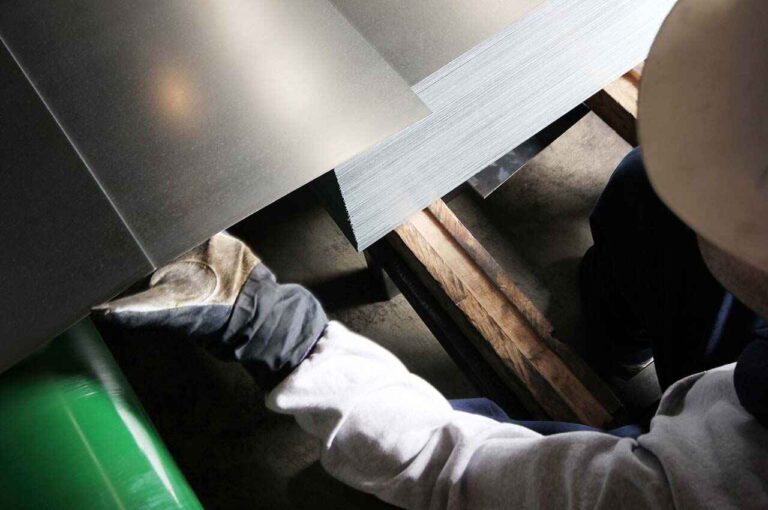
- Stable material handling for SPCC, SGCC, stainless steel, and aluminum
- Barcode or traveler control from cutting to bending
- Deburr standards tied to coating and assembly
- Press-brake tooling logic matched to laser-cut reliefs
- Inspection plans for rails, doors, hinges, grounding points, and vent fields
NIST’s Manufacturing Extension Partnership highlighted the same broader manufacturing reality in 2024 when it described the Supply Chain Optimization and Intelligence Network, a two-year pilot backed by $20 million to help manufacturers map supply chains, identify gaps, and improve resilience. NIST’s SCOIN update is not about lasers specifically, but the lesson applies: factories win through connected capability, not isolated equipment purchases.
This also explains why bulk procurement of laser cutting machines for power distribution cabinets deserves attention from rack enclosure buyers. Power cabinets and rack enclosures share more manufacturing pain than sales teams admit: thin sheet, doors, mounting plates, cutouts, bend control, coating expectations, and flow bottlenecks.
Safety, Fumes, and the Part Nobody Wants to Budget
Here comes the boring part. The expensive part. The part that separates grown-up factories from spark shows.
OSHA’s laser safety guidance says adequate ventilation should reduce hazardous fumes and vapors from laser welding, cutting, and target interactions below applicable exposure limits. OSHA’s Technical Manual on laser hazards is not optional reading when cutting coated sheet, galvanized material, painted stock, or mixed metals in real production.
If a supplier talks about speed but cannot explain fume extraction, enclosure safety, gas handling, slag drawers, fire risk, lens protection, and maintenance intervals, I would not let them near a serious rack enclosure program.
Yes, the customer wants the quote yesterday. Yes, nitrogen costs money. Yes, filtration takes space. But pretending fumes are someone else’s problem is how factories create future liabilities while congratulating themselves on short-term savings.
When Fiber Laser Cutting Is Not the Right Answer
Fiber laser cutting is often the practical default for metal rack enclosure production. Often. Not always.
If the product is a fixed legacy panel with millions of identical holes and no real revision cycle, CNC punching may still win on unit economics. If the part needs formed louvers from the same operation, punching earns a seat. If the material is wood, acrylic, leather, or paper, CO₂ may be the better technology. If the job is thick, rough, and tolerance-light, plasma might survive the argument.
But for modern rack enclosures with mixed metal panels, fast engineering changes, airflow complexity, and fit-sensitive assembly, fiber laser cutting usually gets the first serious look.
That is my bias. I own it.
What a Serious Fiber Laser Cutting Setup Should Prove Before Purchase
Do not ask for the prettiest sample. Ask for your ugliest rack part.
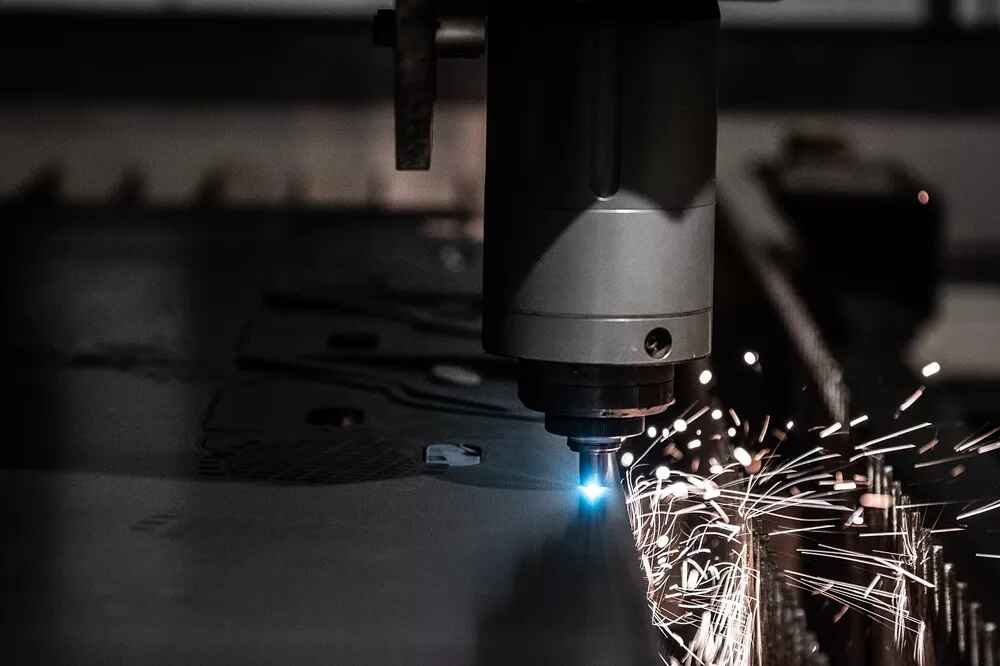
A serious supplier should be able to cut your real enclosure geometry and show:
- Slot quality on dense ventilation fields
- Hole roundness near bend lines
- Kerf consistency across the full sheet
- Corner control on thin galvanized steel
- Burr behavior on stainless steel and aluminum
- Micro-joint placement that does not scar visible panels
- Part sorting logic for left/right enclosure variants
- Repeatability across at least 30 to 50 parts, not one hero sample
- Downstream fit after bending and coating
If you are evaluating a laser cutting machine for rack enclosure production, do not start with power. Start with the enclosure bill of materials. Then match the machine, bed size, automation, gas system, and software to the actual part mix.
The best machine is the one that keeps the whole line honest.
FAQs
What is fiber laser cutting in rack enclosure production?
Fiber laser cutting in rack enclosure production is a CNC-controlled metal cutting process that uses a focused fiber laser beam, usually around 1064 nm, to cut sheet metal panels, rails, doors, brackets, vents, and cabinet features with repeatable geometry, low tooling dependence, and fast digital revision control. In practice, it helps factories move from CAD files to usable rack components without waiting for punch tooling.
The value is highest when the enclosure line handles mixed models, tight feature locations, and frequent design changes.
How does a laser cutting machine improve rack enclosure production?
A laser cutting machine improves rack enclosure production by cutting complex sheet-metal features directly from digital files, reducing tooling delay, improving repeatability, and giving manufacturers better control over vents, mounting holes, cable openings, grounding tabs, and bracket geometry before bending, coating, and assembly. That matters because rack problems usually appear downstream, not at the cutting table.
The real gain is not only speed. It is fewer revision delays and fewer fit surprises.
Is fiber laser cutting better than CNC punching for rack enclosures?
Fiber laser cutting is better than CNC punching for rack enclosures when the job involves high-mix production, frequent engineering changes, dense vent patterns, and custom metal panels that would otherwise require costly or slow punch tooling changes. CNC punching can still win on stable, high-volume legacy parts with repeated holes and formed features.
I would not retire punching blindly. I would stop pretending it is flexible enough for every modern enclosure program.
What metals can fiber laser cutting handle in rack enclosure manufacturing?
Fiber laser cutting can handle common rack enclosure metals such as carbon steel, stainless steel, galvanized steel, cold-rolled steel, aluminum, brass, and copper, although each material needs the right assist gas, cutting parameters, nozzle setup, and heat-control strategy. Sheet thickness, reflectivity, coating, and edge-quality requirements determine the real processing window.
For rack enclosures, the normal conversation centers on thin-to-medium conductive sheet rather than decorative wood or acrylic.
What is the biggest mistake when buying a fiber laser cutting machine?
The biggest mistake when buying a fiber laser cutting machine is choosing by wattage alone instead of evaluating the full production system, including material handling, nesting, assist gas cost, fume extraction, press-brake compatibility, inspection routines, and the actual rack enclosure part mix. A powerful machine can still fail inside a weak workflow.
I would rather buy a balanced machine tied to a disciplined process than an oversized machine surrounded by chaos.
Your Next Steps: Cut the Worst Rack Part First
If you are serious about improving rack enclosure production, send the supplier your hardest part: the ugly vented door, the rail with too many holes, the thin galvanized panel that bends badly, the bracket that always needs hand correction. Make them prove the cut, the repeatability, and the downstream fit.
Then look at the machine.
Start with a practical review of Bogong’s fiber laser cutting machine options and match the discussion to your rack enclosure material, sheet thickness, revision frequency, airflow features, and assembly tolerance. The winning factory will not be the one that buys the loudest machine. It will be the one that controls the cut, the handoff, and the ugly little errors before they multiply.


Hot Click
Contact Us
Application
©Copyright [bogonglaser.com]. BOGONG Laser Machine Supplier All Rights Reserved.