

Exactly How Fiber Laser Cutting Improves Rack Room Manufacturing
An obdurate check out why fiber laser cutting is taking over rack room manufacturing, where it in fact conserves money, and where careless purchasers still get burned.

The Shelf Company Got Meaner, and the Cut Line Had to Capture Up
Rack room production used to look boring from the exterior. Steel panels. Placing rails. Perforated doors. Cable holes. Paint. Ship it.
No magic here.
But when a rack unit line begins feeding AI web server hardware, telecommunications power cupboards, high-density switchgear, liquid-cooling manifolds, and custom-made electrical cabinets in the very same month, the cutting process comes to be the peaceful pressure factor where schedule danger, scrap, bending mistake, air movement failing, and rework all start to pile up before monitoring even sees the damages.
So why are so many factories still getting devices as if every rack were a simple metal box?
I’ll be candid: Fiber Laser Reducing does not enhance rack unit production due to the fact that the word “laser” appears modern. It improves production because it eliminates fixed-tool rubbing from a work category that currently changes frequently, endures less blunders, and penalizes slow alteration cycles. The real gain is not one attractive cut example. The gain is control.
That matters due to the fact that data-center hardware is no more a side market. The U.S. Department of Energy reported on December 20, 2024, that data-center load development had actually tripled over the previous years and might double or triple again by 2028, according to its 2024 information center power demand report. Reuters went further in its protection of the DOE-backed study, reporting that united state data facilities might consume 6.7% to 12% of complete U.S. power by 2028, with AI servers and GPU-heavy facilities driving the rise.
That is not simply an energy tale. It is a construction story.
Much more compute ways a lot more shelfs. A lot more shelfs mean even more enclosure panels, rails, vents, doors, braces, trays, cable-management components, busbar covers, and cabinet settings up. And if your reducing process can not absorb revision-heavy sheet steel enclosure manufacture, your bottleneck will certainly not politely introduce itself. It will appear as late powder finishing, dissimilar holes, distorted doors, awful burrs, and drivers “adjusting” parts that ought to never ever need adjusting.
This is why I would certainly link this topic naturally to Bogong Laser’s own overview on laser reducing makers for data facility rack production, because the overlap is evident: rack enclosure production is no more regarding reducing level rectangles; it has to do with handling fast-changing metal geometry at range.
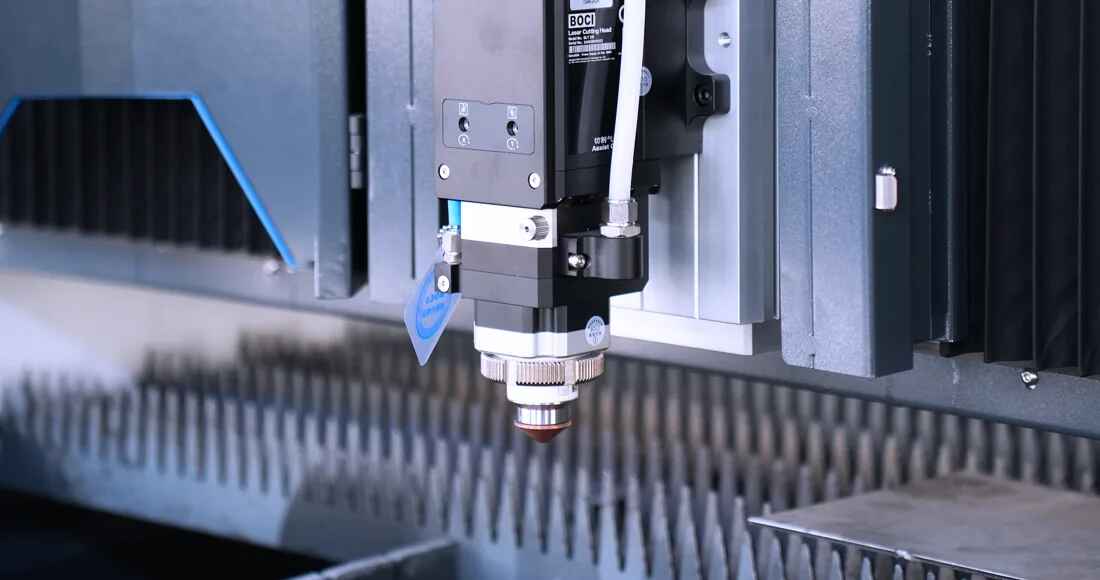
Table of Contents
What Fiber Laser Reducing Really Fixes in Shelf Room Manufacturing
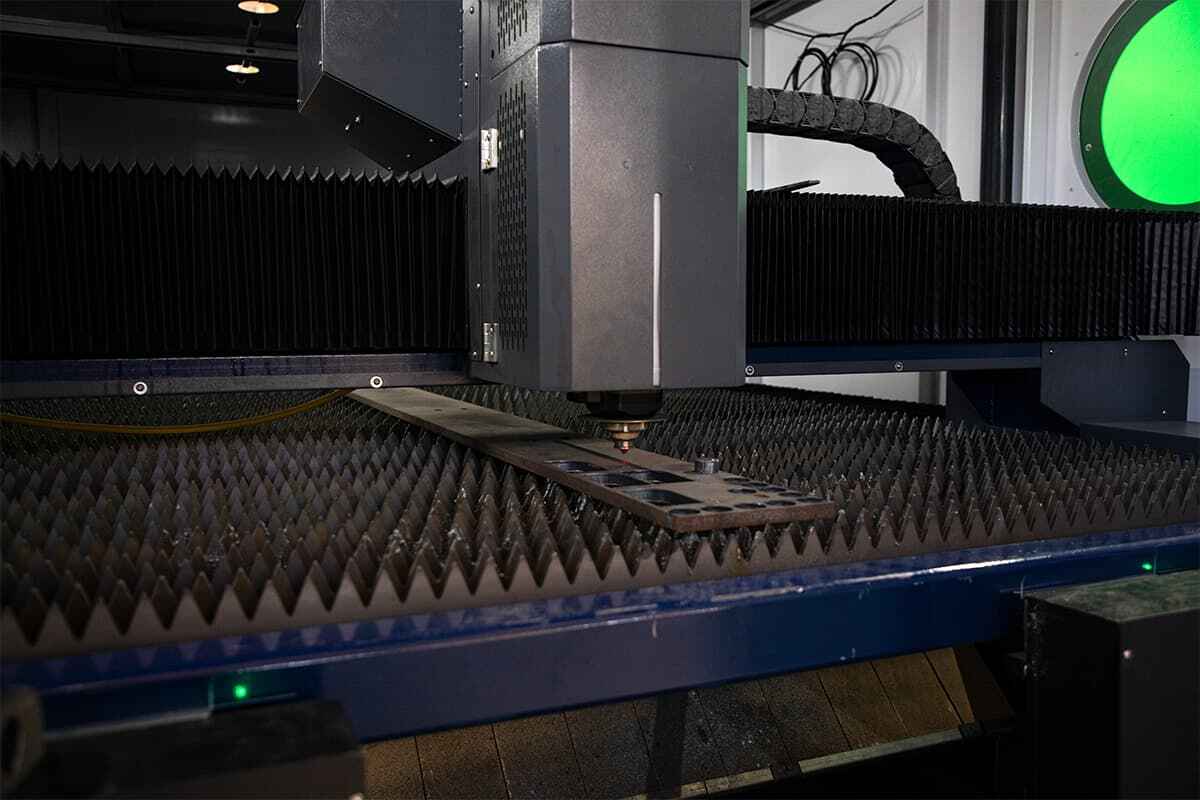
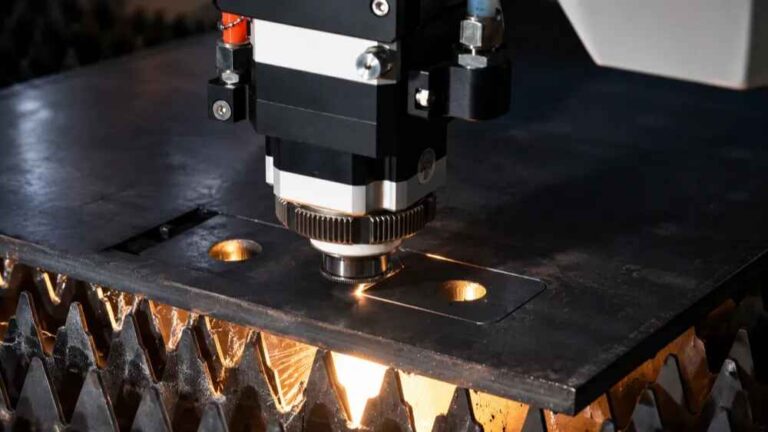
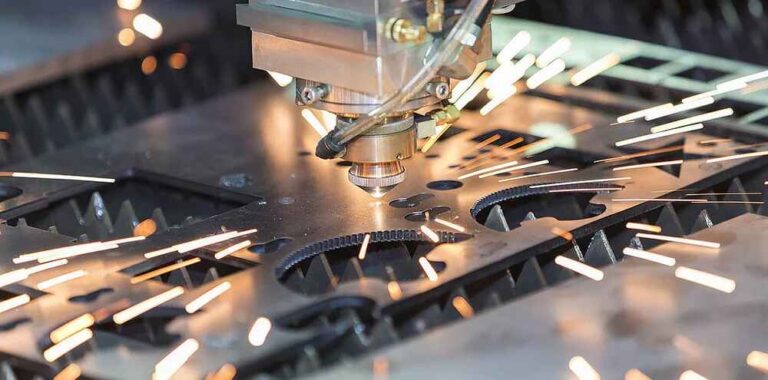
Fiber laser cutting solutions four costly problems in shelf room manufacturing: tooling hold-up, function disparity, revision drag, and downstream fit error. It makes use of a CNC-controlled laser beam, generally with nitrogen, oxygen, or compressed-air aid, to reduce shelf panels, rails, doors, brackets, and cabinet attributes straight from sheet metal without strike tooling.
That is the tidy solution.
The dirtier solution: most rack unit waste is not visible at the equipment. It hides 2 actions later on.
A bad air vent field makes the panel weak. A rough edge slows deburring. A distorted side panel battles the press brake. A hole pattern that drifts 0.4 mm across a batch can destroy joint positioning, grounding points, or cage nut spacing. And no one in the front office wants to confess that the quote looked rewarding only due to the fact that the procedure assumed best parts.
I have actually seen purchasers obsess over laser power– 3 kW, 6 kW, 12 kW, 20 kW, 30 kW, 40 kW– while neglecting nesting discipline, gas cost, nozzle problem, focal security, micro-joint strategy, monotony control, and part sorting. That is just how stores buy ability and still shed cash.
For rack unit manufacturing, fiber laser cutting is strongest when the factory takes care of:
- SPCC cold-rolled steel panels from 0.8 mm to 2.0 mm
- SGCC or SECC galvanized sheet for electric closets
- SUS304 stainless steel doors and brackets
- 5052-H32 aluminum panels for lightweight equipment enclosures
- Perforated air movement doors, cable slots, rectangle-shaped kos, louvers, installing rails, and mixed-SKU nesting
- Powder-coated cabinet components where burrs and edge oxidation show up later on as finish defects
If the job is primarily slim sheet metal for server cabinets, Bogong’s page on laser reducing slim sheet metal for server rooms fits the post naturally. Thin unit work is where the sales pamphlet stops helping and actual procedure control begins mattering.
The Uneasy Business Economics: Speed Is Not the Whole Story
Speed markets machines. Repeatability conserves manufacturing facilities.
That sentence irritates individuals because it damages the typical sales pitch. Yet shelf room manufacturing is rarely a solitary straight-line race. It is a queue-management trouble using a sheet steel costume.
A fiber laser may reduce a panel much faster than a turret punch in several geometries, especially when the part has thick ventilation patterns, differed port dimensions, and short-run design changes. However the larger gain is preventing device adjustments, punch wear, custom-made dies, and layout freeze pressure. In real enclosure manufacturing, alteration number three is usually where the cash leakages out.
The International Power Company claimed information centers represented about 1.5% of international power usage in 2024, equivalent to 415 TWh, with the USA standing for 45%, China 25%, and Europe 15% of that need. Its Power and AI executive recap likewise states that global data-center power consumption has grown approximately 12% each year considering that 2017, more than four times faster than complete electrical energy consumption.
What does that pertain to rack enclosure production? Everything.
AI facilities is compeling quicker enclosure redesigns: denser airflow fields, much heavier cable television directing, rear-door warmth exchangers, liquid-cooling user interfaces, even more power-distribution equipment, tighter grounding systems, and extra demanding assembly resistances. When the shelf changes, the cut files modification. Fiber laser cutting takes care of that pain far better than tool-dependent process.
And of course, produced metal is a major financial category, not a hobby corner. FRED’s Census-sourced data programs U.S. makers’ worth of deliveries for fabricated metal items at $42.995 billion in March 2026, seasonally changed, under the M3 survey series. That figure is tracked via the Federal Reserve Bank of St. Louis fabricated metal products data.
Cutting Method Fact Check for Rack Enclosures
| Manufacturing Variable | Turret Punching | Carbon Dioxide Laser Reducing | Fiber Laser Cutting |
|---|---|---|---|
| Finest fit | High-volume repeat hole patterns | Non-metal and some steel tradition job | Metal rack panels, cabinets, combined SKUs |
| Tooling dependancy | High | Low | Extremely low |
| Design-change rate | Slow down when brand-new devices are needed | Modest | Quick through CAD/CAM updates |
| Slim galvanized sheet | Good, however device marks matter | Feasible, less preferred currently for metal rate | Solid fit with right specifications |
| Thick airflow vents | Fast if tooling exists | Slower on many metals | Strong, particularly with maximized nesting |
| Side quality | Can need deburring | Heat-affected edge differs | Tidy edge with appropriate gas and focus |
| Combined shelf enclosure production | Often awkward | Possible | Normally toughest |
| Surprise danger | Device wear, burrs, contortion | Operating cost, older beam distribution | Gas expense, inadequate nesting, driver faster ways |
The tough truth: the most effective laser cutting technique for sheet steel rooms is not immediately the highest-power device. A 40 kW equipment utilized badly can create expensive turmoil. A well-specified 6 kW fiber laser with secure autofocus, tidy assist gas, disciplined nesting, and serious downstream assessment can defeat a flashier device in real shelf enclosure outcome.
This is where a buyer must compare real maker classifications, not sales brochure adjectives. Bogong’s laser cutting machine for sheet metal web page is a useful interior suit due to the fact that rack units are fundamentally sheet steel products prior to they end up being closets. For power option, the buyer likewise requires a practical filter like just how to pick a fiber laser cutting machine, particularly when making a decision whether the work mix belongs in 3 kW, 6 kW, 12 kW, or high-power area.
Where Fiber Laser Cutting Improves the Actual Shelf Line
1. Faster CAD-to-Part Modifications
Rack unit production currently lives inside alteration stress. One client desires a new cable port. An additional wants airflow altered. A 3rd wants the placing rail relocated due to the fact that a thermal test revealed an issue at 38 ° C inlet air.
With CNC laser cutting for steel units, the store alters the data, updates the nesting strategy, examines the unsightly part initially, and reduces the next batch. No waiting on a punch tool. No arguing over whether the old die can be modified. No making believe the illustration is steady since tooling cash has currently been spent.
This is why I keep stating the laser is not simply a cutter. It is a modification absorber.
2. Cleaner Air Flow Features
Shelf enclosure manufacturing progressively relies on air movement geometry. Perforated doors, side vents, fan openings, cord leaves, and blanking panels influence thermal actions. A sloppy cut side is not simply unsightly; it can disturb layer top quality, produce handling risk, or add deburring labor.
Fiber laser cutting for sheet steel rooms allows the manufacturing facility cut varied hole sizes and port patterns without devoted tooling. That serves for electrical cupboards, server shelfs, telecom enclosures, and control closets where component selection is high and each client wants little differences.
3. Much Better Repeatability for Bending and Assembly
Laser cutting rack units is not ended up at the cutting table. The cut blank must bend properly, layer correctly, and put together properly. If the flat pattern is irregular, the press brake driver becomes the unsettled quality-control department.
A great fiber laser process supports repeatable bend alleviations, tab ports, hinge openings, basing points, and lock cutouts. That reduces the awful guidebook solutions: declaring, exploration, forcing, shimming, and “making it fit.”
Those repairs are margin killers.
4. Reduced Tooling Danger for High-Mix Manufacturing
The old enclosure version favored dealt with tooling when runs were steady. However rack enclosure production has actually shifted toward combined sets, custom panels, local electric criteria, liquid-cooling variations, and much shorter item cycles.
A laugh line still has a place. I am not religious regarding lasers. However if a shelf producer is pricing estimate brief runs, modified panels, and cabinet family members with dozens of variants, fiber laser cutting normally gives the factory much more space to breathe.
For manufacturing facilities assuming beyond one standalone machine, Bogong’s short article on automated laser cutting lines for web server equipment manufacturing fits the more comprehensive production-control disagreement. Automation is not simply loading and unloading; it is nesting, recognition, sorting, inspection, and keeping the ideal part with the best job order.
The Buyer Trap: Confusing a Fiber Laser Machine With a Shelf Manufacturing System
Below is my controversial viewpoint: many rack room factories do not have a cutting problem. They have a monitoring trouble that they try to resolve by buying a reducing equipment.
A fiber laser will not fix negative drawings. It will certainly not repair careless product storage space. It will certainly not take care of operators guessing assist gas pressure. It will not fix a press brake team that never gets updated bend information. It will not repair bad product packaging that scratches powder-coated panels before delivery.
The U.S. National Institute of Requirements and Technology explains clever production as job that determines the effect of computing and communication modern technologies, constructs trust in technology option, and helps manufacturers use new systems with much better standards and methods with its Smart Production program. That is the absent point in numerous laser acquisitions: the maker is only important when it sits inside a regulated details flow.
For rack enclosure production, that flow must consist of:
- CAD rules for bend alleviation, hole-to-bend distance, tab size, and finish clearance
- Camera collections for SPCC, SGCC, SUS304, AL5052, copper, and brass where appropriate
- Aid gas criteria for N ₂, O TWO, and compressed air
- QR or laser marking for component identification
- Nesting regulations that secure noticeable surfaces
- First-article inspection on the hardest panel, not the most convenient one
- Comments from bending, welding, powder finishing, and final setting up
If a supplier can not discuss that chain, I do not care exactly how glossy the machine picture looks.
For manufacturing facilities cutting both panels and architectural tube aspects, Bogong’s laser plate and tube combo fiber laser cutting equipment web page can support the discussion. Rack production usually requires flat panels and tube or rail functions, and integrating those workflows can decrease floor-space pressure when the part mix supports it.
When Fiber Laser Cutting Is Not the Right Response
Fiber laser cutting is effective, but it is not an ethical virtue. In some cases it is the wrong investment.
If a shelf room manufacturing facility runs one fully grown part household at extremely high volume, with secure geometry and existing punch tooling, a turret punch line may still make financial sense. If the plant cuts mostly very thick plate, the business economics change again. If the manufacturing facility has weak CAD technique, no upkeep culture, dirty pressed air, and no prepare for product handling, the machine will certainly become an expensive mirror reflecting every one of that disorder.
The device does not forgive idleness.
For high-power work, Bogong’s 6000W-40KW high power fiber laser metal cutting maker web page is relevant because hefty manufacture and closet work can overlap. Yet in rack enclosure manufacturing, power must be matched to product density, obligation cycle, gas budget, cut top quality, and downstream handling– not ego.
The blunder I see again and again is straightforward: buyers ask, “Just how fast can it reduce?” They should ask, “The amount of right, labeled, bend-ready room components can this system supply per shift, with appropriate edge high quality and no surprise disorder downstream?”
That inquiry alters the offer.
What a Severe Fiber Laser Cutting Configuration Should Show Before Purchase
Do decline a perfect trial component. Perfect demo components are movie theater.
Request for the awful examples:
- A perforated shelf door with thick air movement ports
- A side panel with long, slim intermediaries
- A galvanized electrical cabinet panel with coating-sensitive edges
- A bracket with little openings near bend lines
- A blended nest of rails, covers, tabs, and cable-management components
- A repeat reduced test across 20 to 50 parts, not one hero item
After that gauge what issues:
- Opening setting drift
- Burr height
- Edge oxidation
- Warm tint on stainless-steel
- Monotony after cutting
- Scratch damage throughout dumping
- Bend accuracy after reducing
- Powder-coating attachment around cut sides
- Part identification precision
That is where accuracy laser cutting for electric cabinets materializes. Not in the showroom. Not in the PDF. On the 2nd change, when the driver is weary and the material is not perfect.
FAQs
What is fiber laser reducing in shelf enclosure production?
Fiber laser reducing in rack unit manufacturing is a CNC metal-cutting procedure that makes use of a concentrated fiber laser beam of light to cut sheet metal panels, rails, doors, vents, brackets, and electrical closet components with repeatable geometry, low tooling reliance, and fast electronic transition for combined enclosure designs. It is most helpful when rack parts alter typically or need dense attributes.
For rack enclosure manufacturing, the procedure usually deals with carbon steel, stainless-steel, galvanized steel, and aluminum. The worth comes from quick CAD-to-part execution, cleaner cut features, and less tooling hold-ups compared to punch-heavy process.
Just how does fiber laser cutting improve sheet steel enclosure fabrication?
Fiber laser reducing boosts sheet metal unit construction by reducing hard tooling, reducing complex vents and slots directly from CAD files, improving repeatability throughout batches, and assisting downstream bending, finish, and setting up groups receive cleaner, extra constant get rid of less manual corrections. The toughest gains show up in high-mix, revision-heavy production.
That means the factory can respond much faster when a consumer changes hole settings, air movement designs, grounding points, latch cutouts, or cable-routing attributes. The outcome is not only quicker cutting; it is less rubbing across the entire room line.
Is fiber laser cutting much better than punching for rack units?
Fiber laser cutting is usually far better than punching for shelf rooms when the factory takes care of different part designs, short runs, frequent modifications, dense air flow patterns, and intricate sheet steel includes that would call for multiple strike tools or custom-made passes away. Punching can still win in secure, high-volume patterns with existing tooling.
The appropriate choice depends on item mix. If your shelf room service is custom-heavy, fiber laser reducing usually provides more adaptability. If you run the exact same panel every day for years, punching might still deserve a seat at the table.
What materials are commonly reduced for shelf enclosure production?
Typical rack enclosure materials include SPCC cold-rolled steel, SGCC galvanized steel, SECC electro-galvanized sheet, SUS304 stainless-steel, and 5052 light weight aluminum, typically in thin-to-medium assesses such as 0.8 mm, 1.0 mm, 1.5 mm, 2.0 mm, and occasionally thicker architectural parts. Material selection depends on stamina, corrosion resistance, weight, grounding, and finish requirements.
Carbon steel continues to be typical due to the fact that it is budget-friendly and paintable. Stainless steel appears where rust resistance matters. Light weight aluminum serves where weight decrease matters. Galvanized sheet prevails in electrical closet and commercial enclosure work.
What is the very best laser cutting method for sheet steel enclosures?
The very best laser cutting technique for sheet metal units is generally fiber laser reducing when the production mix includes metal panels, regular style adjustments, complicated intermediaries, tight repeatability needs, and high-mix cabinet or shelf components that must move quickly from CAD to bending and assembly. The very best arrangement still depends upon density, quantity, and surface needs.
For many rack enclosure factories, a 3 kW to 6 kW system may fit thin-to-medium sheet job, while thicker or faster production may justify 12 kW or higher. Yet power alone does not decide quality; process control does.
Your Next Steps: Evaluate the Shelf Component, Not the Sales Pitch
If you are assessing Fiber Laser Reducing for rack room manufacturing, do not start with the prettiest directory machine. Beginning with your worst panel.
Send out the supplier a genuine shelf door, a real side panel, an actual electric cabinet space, or a real blended nest from your present manufacturing. Ask them to cut it, label it, deburr it, flex it, and explain every flaw honestly. After that contrast cycle time, side quality, flatness, revamp, gas expense, operator actions, and downstream fit.
If you desire a sensible starting factor, review Bogong Laser’s fiber laser reducing equipment alternatives and match the maker discussion to your product thickness, shelf style volatility, and enclosure production quantity prior to asking for a quote. The winning manufacturing facility will certainly not be the one that acquires the loudest device. It will certainly be the one that manages the cut, the information, and the mess after the cut.


Hot Click
Contact Us
Application
©Copyright [bogonglaser.com]. BOGONG Laser Machine Supplier All Rights Reserved.