
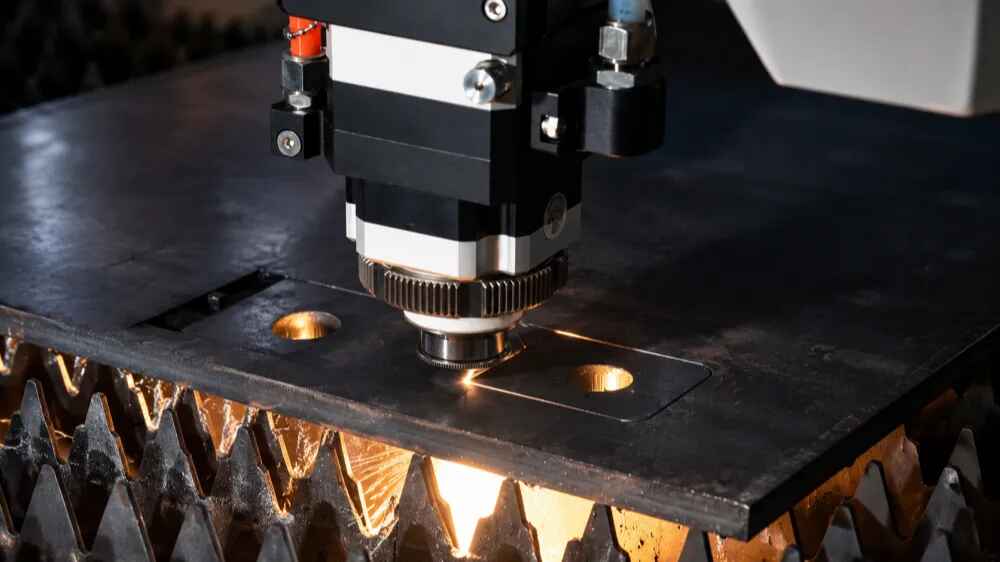
Fiber Laser Cutting Machines for Sheet Metal Fabrication
Fiber laser cutting machines can make sheet metal fabrication faster, cleaner, and more repeatable. But the wrong machine, wrong power level, or weak production workflow can turn a smart investment into an expensive bottleneck.

The Machine Is Not the Strategy
Metal tells truth.
And when a shop replaces punching, plasma, outsourcing, or an old CO₂ system with a fiber laser cutting machine, the truth does not show up in the sales video; it shows up in edge oxidation, nitrogen invoices, cut-path discipline, remnant chaos, collision logs, operator habits, and whether the press brake department stops blaming the laser by Thursday afternoon.
So who actually wins?
I’ll say the quiet part first: most sheet metal fabricators do not need the most powerful machine they can finance. They need the right sheet metal laser cutting machine for their material mix, production rhythm, operator skill level, gas infrastructure, nesting discipline, and downstream bending reality. That is less glamorous than “20kW industrial fiber laser cutting machine,” but it is usually where profit lives.
A serious fiber laser cutter for sheet metal fabrication is not just a beam source on a gantry. It is a production system. It converts CAD geometry into repeatable blanks, holes, slots, vents, tabs, brackets, panels, covers, chassis, cabinets, enclosures, electrical boxes, automotive parts, HVAC components, and architectural metal features. If you are comparing models, start with the actual work: mild steel, stainless steel, galvanized steel, aluminum, brass, copper, 1 mm sheet, 6 mm plate, mixed SKUs, short runs, repeat orders, urgent revisions.
Then ask the ugly question: where is your shop bleeding money right now?
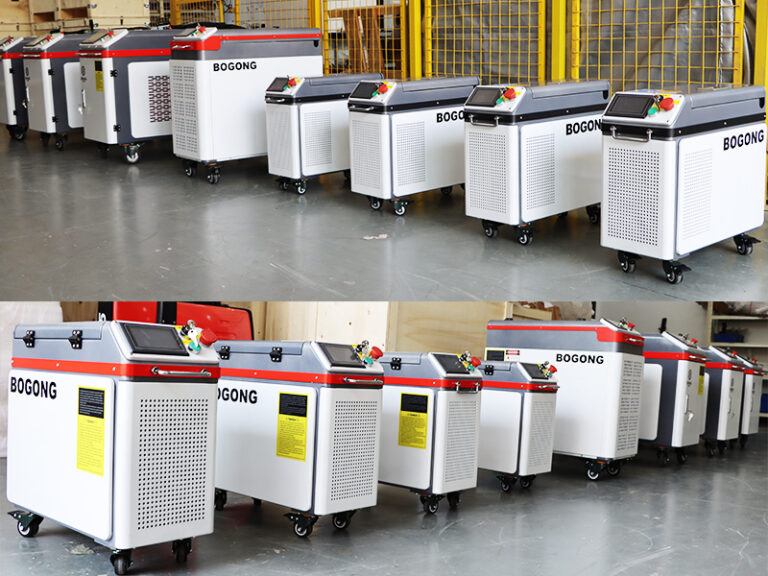
For buyers still mapping the category, Bogong’s fiber laser cutting machine range gives a useful baseline: power configurations from 1,500 W to 60,000 W, cutting speeds from 0.05 m/min to 100 m/min, assist gases such as air, nitrogen, and oxygen, and rough investment bands from about $15,000 to $300,000 depending on configuration. Those numbers are not decoration. They define the economic trap.
Buy too little machine, and you create a bottleneck.
Buy too much, and depreciation eats your margin while the operator still fights burrs, tip-ups, and bad nesting.
Why Fiber Laser Cutting Became the Default Answer for Sheet Metal
The reason fiber wins is not mystical. It is physics plus workflow.
A fiber laser cutting machine typically operates around a 1064 nm wavelength, which couples well with common metals used in fabrication. That matters on carbon steel, stainless steel, galvanized sheet, aluminum, brass, and copper. Compared with older CO₂ machines, fiber systems usually deliver better electrical efficiency, less maintenance, faster thin-sheet cutting, and cleaner integration with CNC automation.
But speed alone is a childish metric.
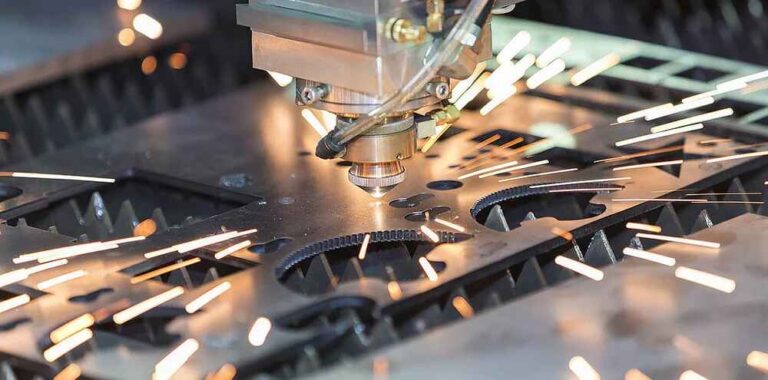
A CNC fiber laser cutter earns its place when it reduces the stupid work: re-cutting parts, cleaning ugly edges, waiting for punch tooling, outsourcing awkward geometry, correcting hole drift, and arguing with customers over tolerances that should have been controlled before bending. Bogong’s page on laser cutting machines for sheet metal frames the useful part correctly: contactless cutting, reduced material distortion, clean edges, and the ability to process stainless steel, aluminum, copper, brass, and complex sheet metal patterns.
I like fiber most in high-mix fabrication because it punishes weak process control quickly. That sounds negative. It is not. A weak workflow should be exposed before it becomes a shipment problem.
Here is the hard truth: a metal laser cutting machine cannot rescue a shop that refuses to standardize parameters, document assist-gas settings, maintain nozzles, train operators, inspect first articles, or connect cutting logic to press-brake reality. The laser is fast. Your process may not be.
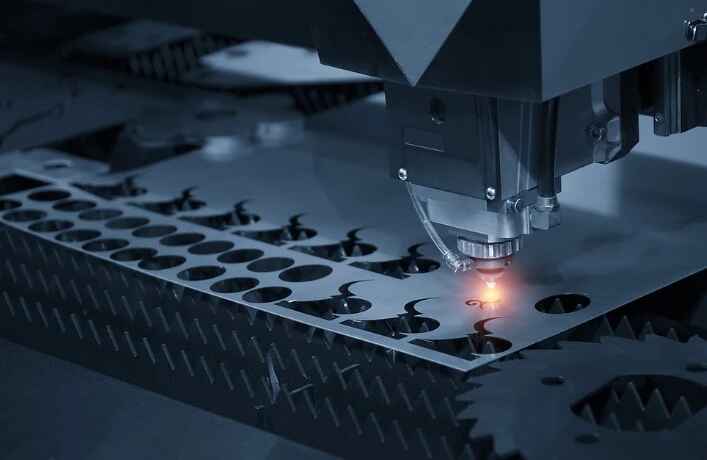
Table of Contents
The Data Behind the Buying Pressure
The market pressure is real, even if half the sales decks are inflated.
The U.S. Census Bureau reported in April 2024 that U.S. capital expenditures for robotic equipment totaled $12.96 billion in 2022, with manufacturing accounting for 56.2% of all robotic equipment expenditures. That is not a fiber-laser-only number, but it tells us something important: manufacturers are spending on automation because labor, throughput, repeatability, and reshoring pressure are no longer abstract boardroom language.
Reuters added a more uncomfortable layer in August 2024: U.S. core capital goods orders dipped 0.1% in July, machinery orders were flat, but fabricated metal product orders rose 0.2%. In plain English, equipment spending was uneven, money was cautious, and fabricated metal work still had pockets of demand. That is exactly the kind of environment where a laser cutting machine for metal fabrication must justify itself with cash flow, not brochure wattage.
And if you import equipment, politics sits in the room with engineering. In May 2024, the Office of the U.S. Trade Representative announced proposed Section 301 tariff modifications and a machinery exclusion process tied to domestic manufacturing. Translation for buyers: landed cost, tariff classification, spare-parts sourcing, and support access are not accounting footnotes. They are purchase-risk variables.
Fabrication Buyer Reality Check
| Decision Area | What Buyers Usually Ask | What I Would Ask Instead | Why It Matters |
|---|---|---|---|
| Laser power | “Is 12kW better than 6kW?” | “Which thickness range generates 80% of our revenue?” | Oversized power can raise cost without fixing workflow defects. |
| Assist gas | “Can it cut with nitrogen?” | “What is our monthly nitrogen, oxygen, or air cost per material family?” | Gas cost quietly changes part economics. |
| Automation | “Does it have loading?” | “Can our operators keep the table fed across two shifts?” | Idle laser time destroys ROI. |
| Software | “Is nesting included?” | “Does nesting reduce remnant waste and prevent tip-ups on our real jobs?” | Software quality changes yield and crash risk. |
| Safety | “Is it enclosed?” | “Do we have fume extraction, eye protection, lockout, training, and maintenance routines?” | OSHA treats laser hazards and fumes as real workplace safety issues. |
| Supplier proof | “Can you show a sample?” | “Can you cut our worst part, from our material, with our tolerance target?” | Pretty demo parts are cheap theater. Bad parts reveal the truth. |
How to Choose a Fiber Laser Cutting Machine Without Getting Played
Let’s make this practical.
If you are searching for the best fiber laser cutting machine for sheet metal, stop asking for the “best” machine in the abstract. There is no universal winner. There is only the best match for your production mix.
Start with your last 90 days of jobs. Pull the actual data: material grade, thickness, sheet size, part count, batch size, rejected parts, outsourced jobs, deburring hours, nitrogen usage, oxygen usage, operator overtime, late deliveries, and customer complaints. Then sort the pain.
If 70% of your revenue comes from 1–6 mm stainless and carbon steel, a mid-power industrial fiber laser cutting machine may beat a higher-power system on payback. If you cut thick plate all day, the conversation changes. If your business lives on enclosures, brackets, panels, vents, and short-run revisions, speed matters, but CAD/CAM flow matters more.
I would link machine choice directly to application. For broad category research, use Bogong’s laser cutting machine overview to understand flat-sheet, tube, and robotic laser options. For shop-level planning, the article on laser cutting solutions for sheet metal fabrication businesses is the better internal next step because it talks about repeatability, tolerance control, and operating margin rather than only machine specs.
Power Is Not Masculinity
This industry has a wattage addiction.
I have watched buyers treat 20kW like a personality trait. But high power is not automatically high profit. A 20kW or 30kW system can be brilliant in the right plant, especially where thick carbon steel, heavy plate, strong material handling, stable shifts, and real volume justify the burn rate. In the wrong shop, it becomes a very expensive way to discover that your bottleneck was loading, programming, gas cost, or bending.
So ask these questions before you sign:
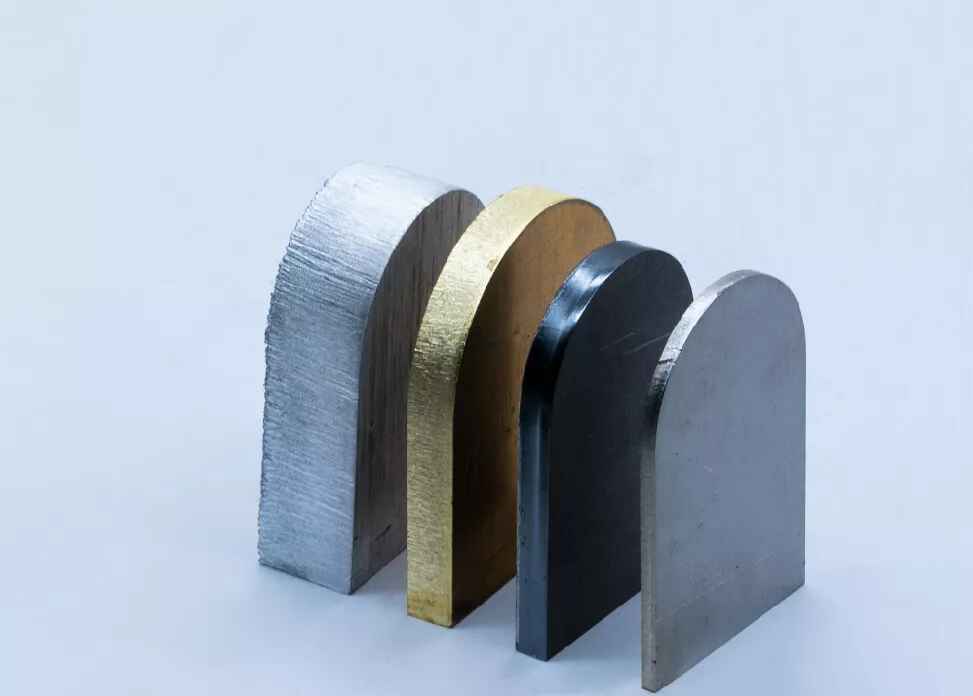
Can the supplier prove cut quality on your common metals?
Can your compressor, chiller, extraction system, and gas supply support the machine?
Can your team run the software without turning every rush job into a tribal-knowledge ritual?
Can the machine cut the parts you hate, not just the parts that look good in a demo?
That last one matters most.
Assist Gas Is Where Profit Gets Quietly Stolen
Nitrogen gives clean, oxide-free edges on stainless and aluminum. Oxygen can help with carbon steel cutting speed and lower gas consumption, but it can leave oxidation that affects welding, painting, or coating. Air cutting can reduce gas cost, but edge quality and material compatibility must be tested honestly.
Do not let anyone sell you a gas story without part economics.
A good sheet metal laser cutting machine should be evaluated with assist-gas strategy by material and thickness. For 304 stainless steel, 5052 aluminum, galvanized sheet, Q235 carbon steel, and brass, the right gas decision may change finish quality, downstream labor, and total cost per part. The machine price is visible. The gas invoice arrives forever.
The Safety Budget Is Part of the Purchase
This is where some suppliers get conveniently vague.
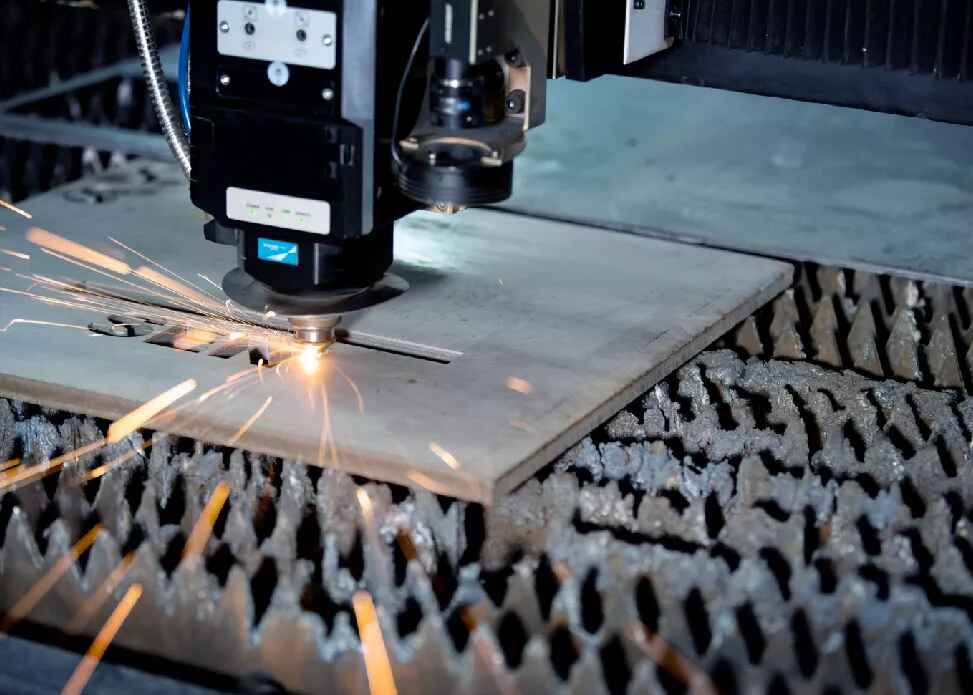
A fiber laser cutting machine is not a desktop toy. It is a high-energy industrial system with beam hazards, fumes, moving axes, electrical systems, assist gas, sparks, dust, and fire risk. OSHA’s laser hazard guidance points to general industry standards for personal protective equipment and eye and face protection. OSHA’s technical manual also states that adequate ventilation should reduce noxious or potentially hazardous fumes and vapors from laser welding, cutting, and other target interactions.
That should be enough to kill the fantasy that safety is optional.
A 2024 Aerosol and Air Quality Research study on laser cutting and engraving emissions found that operating parameters and material choice significantly influenced respirable particles and gaseous emissions, while ventilation reduced particles and removed gaseous contaminants. Yes, that study focused on a desktop CO₂ system and non-metal materials, not a heavy industrial fiber laser cutting machine. But the principle still travels well: thermal cutting produces airborne contaminants, and extraction design matters.
For metal fabrication, I would budget for:
Fume extraction sized for the enclosure and duty cycle.
Fire detection and clean housekeeping around slag, dust, oil film, paper, pallets, and scrap.
Laser safety training for operators and maintenance staff.
Protective eyewear policies where service exposure is possible.
Documented lockout/tagout procedures.
Nozzle, lens, and protective window maintenance.
A supplier that treats safety as part of production is worth more than a supplier that treats it as a PDF attachment.
Where Fiber Laser Cutting Makes the Most Money
A fiber laser cutter for sheet metal fabrication earns the fastest returns where complexity, revision speed, and repeatability matter.
Think rack enclosures, electrical cabinets, server-rack panels, HVAC duct components, elevator panels, automotive brackets, construction hardware, agricultural machinery covers, stainless commercial kitchen parts, signage structures, and mixed OEM subcontract work.
Bogong’s article on laser cutting machines for data center rack manufacturing is a good example because rack work exposes the real problem: not just cutting panels, but holding mounting alignment, airflow perforations, grounding tabs, bend behavior, and fast design revisions. A shop cutting 42U and 48U cabinet parts, side panels, cable trays, PDU brackets, roof plates, airflow doors, and rails does not need a pretty spark video. It needs repeatable geometry.
The same logic appears in rack enclosure production with fiber laser cutting, where the main value is not merely speed. It is CAD-to-part revision control, dense ventilation features, better repeatability before bending, and lower tooling delay in high-mix production.
That is the insider filter: buy for the production chain, not the cutting table alone.
FAQs
What is a fiber laser cutting machine?
A fiber laser cutting machine is a CNC-controlled metal cutting system that uses a focused fiber laser beam, commonly near 1064 nm, to cut carbon steel, stainless steel, galvanized sheet, aluminum, brass, and copper with high speed, narrow kerf, low tooling dependence, and repeatable geometry. In sheet metal fabrication, it is used for panels, brackets, enclosures, cabinets, covers, vents, chassis, and precision metal parts.
Is fiber laser cutting better than CO₂ laser cutting for sheet metal?
Fiber laser cutting is usually better than CO₂ laser cutting for sheet metal because the fiber wavelength couples more effectively with reflective and conductive metals, while the system typically offers faster thin-sheet cutting, lower maintenance, better energy efficiency, and stronger fit with modern CNC automation. CO₂ can still make sense for non-metal materials, acrylic, wood, and some legacy workflows.
How do I choose the best fiber laser cutting machine for sheet metal?
The best fiber laser cutting machine for sheet metal is the system that matches your revenue-producing thickness range, material mix, sheet size, batch volume, gas strategy, automation needs, operator skill level, software workflow, safety requirements, and downstream bending or welding tolerances. Do not choose by wattage alone; choose by the part families that actually pay your bills.
What thickness can a sheet metal laser cutting machine handle?
A sheet metal laser cutting machine can handle thin sheet and thicker plate depending on laser power, machine structure, assist gas, material grade, beam quality, cutting head, and parameter control, with commercial fiber systems commonly configured from low-power thin-sheet work to high-power heavy-plate cutting. Real capacity should always be proven on your own metal, not copied from a brochure chart.
What is the real cost of running a CNC fiber laser cutter?
The real cost of running a CNC fiber laser cutter includes machine financing, depreciation, electricity, assist gas, consumables, lenses, nozzles, protective windows, chiller service, fume extraction filters, maintenance labor, software, operator wages, scrap, downtime, and the cost of bad parts moving downstream. Purchase price matters, but cost per good part matters more.
Why should I not simply buy the highest-power industrial fiber laser cutting machine?
The highest-power industrial fiber laser cutting machine is not always the best purchase because high wattage only pays when your material thickness, batch volume, loading automation, gas supply, operator skill, maintenance discipline, and downstream process can fully use that cutting capacity. Otherwise, the extra power becomes depreciation, not profit.
Your Next Steps: Cut the Worst Part First
Before you request a quote, pick five ugly parts.
Not the pretty logo sample. Not the easy rectangle. Choose the parts that currently create scrap, burrs, hole drift, bending complaints, coating problems, welding rework, or late deliveries. Send those drawings, material grades, thicknesses, tolerance requirements, and expected batch sizes to the supplier.
Then ask for proof.
Ask for cut samples. Ask for cycle time. Ask for gas consumption. Ask for edge photos. Ask what happens when the sheet is galvanized, oily, reflective, thin, thick, warped, or nested tightly. Ask how the machine handles remnant tracking, pierce strategy, tip-up risk, and operator training.
If your shop is ready to compare a practical fiber laser cutting machine against real sheet metal fabrication work, start with Bogong’s fiber laser cutting machine options and match the conversation to your actual parts, not fantasy capacity. The winning machine is not the loudest one in the showroom. It is the one that makes your worst production day less expensive.


Hot Click
Contact Us
Application
©Copyright [bogonglaser.com]. BOGONG Laser Machine Supplier All Rights Reserved.