
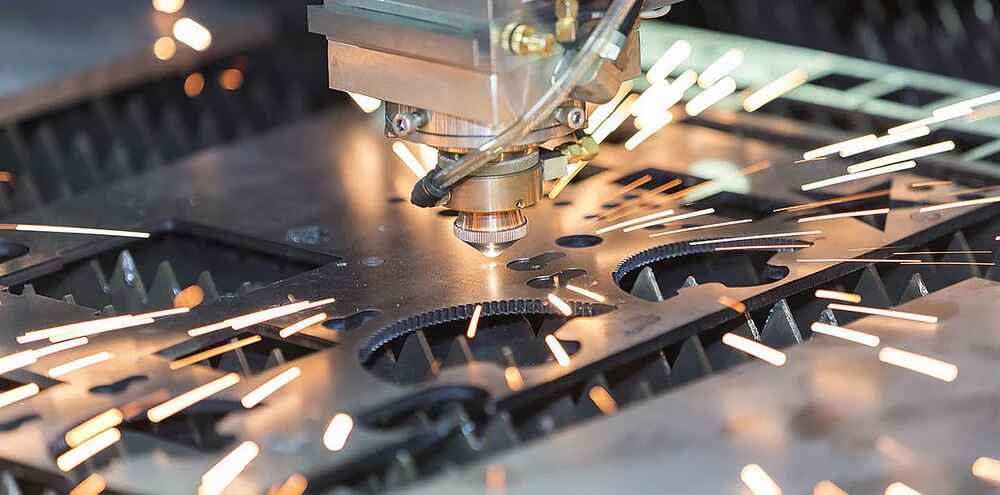
Optimizing Laser Cutting for Rack Panel Fabrication
Laser cutting is not automatically precise. For rack panel fabrication, the winning shops control sheet metal behavior, CAD-to-CAM rules, assist gas, vent geometry, tolerance stack, and inspection discipline before production speed becomes expensive noise.

Rack Panels Punish Lazy Cutting Faster Than Most Parts
Laser Cutting looks clean in a demo video. Rack Panel Fabrication is uglier.
This matters now.
Because when a 19 Inch Rack Panel carries mounting holes, ventilation slots, cable cutouts, grounding contact points, labeling windows, and bend-adjacent features on the same sheet, a small kerf assumption can quietly migrate into a fit problem, a coating problem, an airflow problem, or a field-installation problem that nobody wants to own. So why do so many factories still judge a CNC Laser Cutting line by sparks and wattage?
I do not buy the wattage religion. I never have. A 12 kW or 20 kW machine can still produce weak Laser Cut Rack Panels if the shop ignores lead-in strategy, pierce timing, micro-joints, nozzle condition, assist gas purity, and sheet flatness. The expensive machine gets blamed. Usually, the process deserves the beating.
For readers comparing equipment paths, Bogong’s guide to a laser cutting machine for sheet metal is a useful starting point because rack panels are not decorative blanks. They are functional sheet metal parts that must survive bending, powder coating, assembly torque, grounding checks, and thermal load.
The rack business has changed. AI servers, denser power distribution, higher airflow demand, and faster enclosure revisions have made custom rack panels less forgiving. The International Energy Agency reported that data centres consumed about 415 TWh in 2024, around 1.5% of global electricity use, and projected data-centre electricity consumption to more than double by 2030 in its Energy and AI executive summary. That pressure shows up in hardware. More heat. More vents. More brackets. More late changes.
And yes, more bad panels.
The Hard Data Behind Better Sheet Metal Laser Cutting
The uncomfortable truth is that Sheet Metal Laser Cutting is a controlled failure process. We melt, eject, cool, and hope the geometry stays honest. Hope is not a process.
A 2024 Kaunas University of Technology record for the Metals paper Effect of fiber-laser parameters on cutting accuracy of thin and thick S355JR structural steel plates states that laser power, cutting speed, and auxiliary gas pressure were tested on 4 mm and 6 mm S355JR plates, measuring surface roughness, dimensional accuracy, cut taper, and heat-affected zones. That is the correct frame. Not “can it cut?” But “what quality penalty did the cut create?”
The Reuters report on the Paris 2024 torch fabrication gives a neat public example: six tons of steel were shaped into 0.7 mm plates, then laser-cut, welded, and assembled into 2,000 torches. Thin material, high visibility, tight repeatability, real deadline. Different product, same lesson: laser cutting only wins when the entire fabrication chain is disciplined.
Rack panels are less glamorous. They are also less forgiving.
A 2U blank panel with four mounting holes may look simple until the customer adds a logo cutout, a recessed label field, a vent pattern, PEM hardware clearance, grounding teeth, and a finish requirement. Now the panel is no longer “flat metal.” It is a tolerance stack with paint on it.
If you are choosing machinery for mixed rack work, review Bogong’s page on laser cutting machines for data center rack manufacturing before treating every panel as the same flat cutting job. Data center rack parts create their own pressure: galvanized sheet, cold-rolled steel, stainless trim, aluminum panels, dense perforations, and revision-heavy orders.
Table of Contents
The Variables I Would Audit Before Touching Cycle Time
Speed sells. Scrap invoices tell the truth.
Here is the table I would put in front of any production manager trying to optimize Laser Cutting for rack panels:
| Process variable | What it controls | Rack panel failure when ignored | Practical audit move |
|---|---|---|---|
| Material grade | Edge condition, heat behavior, coating response | Burrs, warping, poor powder coat adhesion | Separate SPCC, SGCC, 304 stainless, 5052 aluminum, and coated sheet programs |
| Sheet thickness | Kerf width, taper, heat input, bend behavior | Hole drift, bend-line distortion, poor hardware fit | Build parameter libraries by thickness, not by “steel” |
| Assist gas | Oxidation, dross, edge color, cutting speed | Blackened edges, excess dross, rejected visible panels | Compare N₂, O₂, and air by actual edge requirement |
| Pierce strategy | Local heat and starting-point marks | Burn marks near visible slots or logo openings | Move pierces away from cosmetic zones and bend-sensitive zones |
| Nest density | Heat accumulation and part stability | Tip-up, local distortion, damaged nozzles | Use smarter sequencing on dense vent fields |
| Micro-joints | Part retention during cutting | Part movement, vibration marks, tab cleanup labor | Place tabs where deburring will not damage functional edges |
| Inspection plan | Batch drift detection | Late discovery after bending or coating | Measure first-off, mid-batch, and post-bend critical features |
The biggest mistake? Treating vent patterns as artwork.
Vent slots affect airflow, panel stiffness, heat input, and powder behavior. A beautiful slot field can become a warped mess if the cut order traps heat in one zone. On Custom Rack Panels, especially 1U and 2U parts, I would rather slow the sequence slightly than buy a box of banana-shaped scrap.
Bogong’s article on how fiber laser cutting improves rack enclosure production gets close to the real issue: the cut is only one handoff in a chain. Laser cutting must serve bending, coating, assembly, grounding, and shipping. Otherwise, the factory is just making expensive flat parts.
CNC Laser Cutting Versus Punching: Stop Pretending One Always Wins
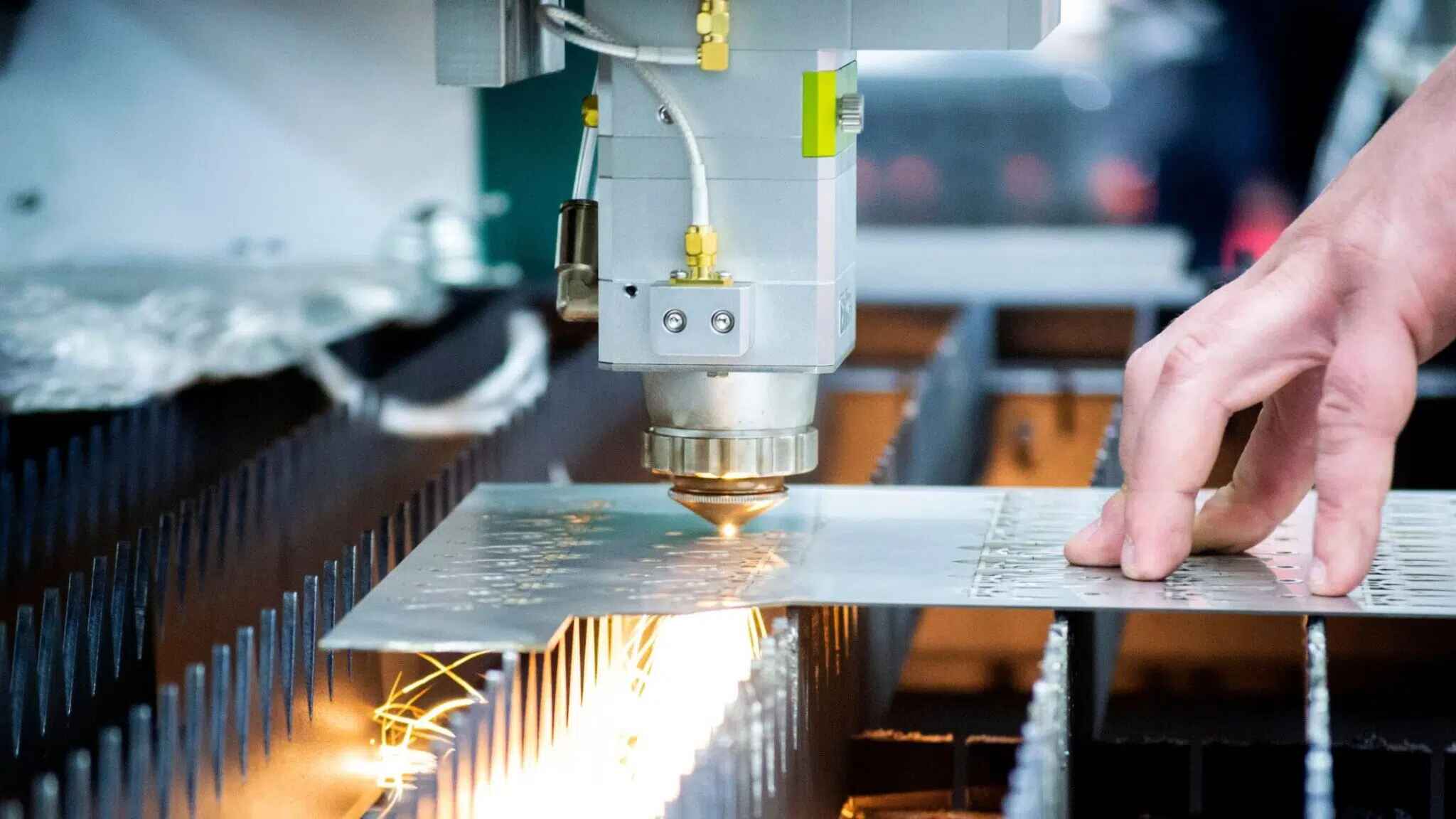
CNC Laser Cutting is not morally superior. It is a tool.
For stable, high-volume 19 Inch Rack Panels with repeated hole patterns, CNC punching can still make sense. Punching can be brutally efficient when the geometry is mature, the tooling exists, and formed features are needed. But the moment the work shifts toward high-mix orders, dense ventilation, logo cutouts, cable-window changes, and customer-specific hole maps, laser cutting starts to expose punching’s weakness: hard tooling friction.
With laser cutting, the revision lives in the file. That is powerful. It is also dangerous. Bad CAD becomes bad production faster.
This is why I like a strict CAD-to-CAM rulebook for rack panel fabrication:
- Minimum slot width should be tied to sheet thickness, assist gas, and finish requirement.
- Holes near bend lines should be flagged before nesting.
- Decorative cutouts should not share assumptions with grounding features.
- Parts with dense perforation fields should use heat-managed sequencing.
- 19 inch rack mounting holes should be checked against EIA-style spacing expectations before first article approval.
- Powder coat thickness should be included in fit decisions, not discovered after the coating vendor sends parts back.
For shops still mapping their equipment options, Bogong’s fiber laser cutting machine page gives a broad machine-level view, including power ranges, sheet-metal capability, and gas choices. But my advice is blunt: do not start with machine power. Start with your worst rack panel.
The ugly part knows more than the brochure.
Safety, Fumes, and the Cost Nobody Wants in the Quote
A laser cell is not just a cutting table. It is a machine, a fume source, a thermal process, a compressed-gas system, a software workflow, and a human-risk environment.
In June 2024, OSHA logged an accident report involving a Bodor CNC laser cutting machine where workers were setting up a machine to cut 4-foot by 8-foot sheet metal and conducting framing around the sheet perimeter. I am not using that incident to scare buyers. I am using it to make a point: the “setup” phase deserves the same respect as full-power cutting.
The U.S. Bureau of Labor Statistics page for Fabricated Metal Product Manufacturing: NAICS 332 tracks industry employment, wages, injuries, fatalities, and workplace trends for the fabricated metal product sector. That matters because Metal Panel Fabrication is not a clean software problem. It is people, machines, energy, dust, fumes, sharp edges, and repeat exposure.
If your quote for Laser Cut Rack Panels does not include fume extraction, enclosure logic, operator training, lens/nozzle maintenance, gas handling, and inspection time, the quote is lying by omission.
And I know that sounds harsh. Good. The industry could use less politeness and more honest costing.
For broader production planning, Bogong’s guide to laser cutting solutions for sheet metal fabrication businesses fits naturally here because rack panels are rarely isolated parts. They belong to a shop-wide flow of blanks, bent components, cabinets, doors, brackets, rails, and covers.
How to Optimize Laser Cutting for Rack Panels Without Fooling Yourself
How to Optimize Laser Cutting for Rack Panels? Start by refusing vague goals.
“Better quality” is useless. “Fewer burrs on 1.5 mm galvanized vent panels cut with nitrogen and powder coated black” is useful. “Higher throughput” is vague. “Reduce rework on 2U custom rack panels with dense slot arrays by changing sequence, lead-ins, and tab locations” is useful.
Here is the workflow I would trust:
Freeze the functional geometry first
Mounting holes, grounding tabs, cable cutouts, and PEM hardware zones come before cosmetic features. If the panel must mate with rails, chassis, fan trays, switches, or power hardware, those references control the drawing.
Cut the worst sample first
Do not prove the machine on a clean rectangle. Cut the ugliest panel: dense vents, thin webs, bend-adjacent holes, asymmetric cutouts, and visible edges. If that sample survives cutting, bending, coating, and assembly, then we can talk.
Separate cosmetic edges from functional edges
A visible front-panel logo cutout and a hidden cable pass-through should not be judged the same way. Over-polishing hidden features wastes labor. Under-controlling visible edges loses customers.
Build a parameter library by reality, not hope
Material, thickness, assist gas, nozzle, focal position, speed, pierce type, and sheet condition should be recorded. If the operator has to “remember what worked last time,” the process is still tribal.
Inspect after bending, not only after cutting
Many laser-cut blanks look perfect on the table and fail after press-brake work. Rack panel fabrication does not end when the laser stops. The blank still has to become a usable part.
For buyers comparing equipment categories, Bogong’s laser metal cutting machine page is worth connecting to this decision because rack panels may share production with tubes, brackets, rails, profiles, and other metal fabrication work. The right choice depends on the whole part mix.
FAQs
What is laser cutting in rack panel fabrication?
Laser cutting in rack panel fabrication is a CNC-controlled thermal cutting process that uses a focused laser beam to cut mounting holes, vent slots, cable openings, grounding tabs, label windows, and panel outlines from sheet metal for 19 inch rack panels, custom rack panels, and enclosure components. It reduces tooling dependence and supports fast design changes.
In practice, it works best when the shop controls kerf, heat, assist gas, nesting, and downstream bending. The machine matters. The process matters more.
How do you optimize laser cutting for rack panels?
Optimizing laser cutting for rack panels means matching material grade, sheet thickness, assist gas, cutting sequence, pierce placement, micro-joint strategy, and inspection points to the actual rack panel geometry instead of using generic sheet metal settings. The goal is repeatable fit after cutting, bending, coating, assembly, and final hardware installation.
I would start with the hardest part in the job folder, not the easiest. Dense vent patterns and bend-adjacent holes reveal the truth quickly.
Is CNC laser cutting better than punching for 19 inch rack panels?
CNC laser cutting is better than punching for 19 inch rack panels when the job involves custom designs, frequent engineering changes, dense ventilation patterns, low-to-medium batch sizes, and complex cutouts that would require slow or costly punch tooling. Punching can still win on stable high-volume panels with repeated features and existing tools.
So the honest answer is not “laser always wins.” The honest answer is “laser wins when flexibility, revision speed, and geometry complexity matter more than legacy tool speed.”
What materials are commonly used for laser cut rack panels?
Common materials for laser cut rack panels include cold-rolled steel, galvanized steel, stainless steel, aluminum, and sometimes coated sheet, with thickness often selected around stiffness, grounding, weight, finish, and enclosure duty. Each material needs different laser parameters, assist gas choices, edge expectations, and bend compensation.
Stainless may look premium but punish poor gas control. Aluminum saves weight but can expose heat and reflectivity issues. Galvanized sheet brings coating behavior into the conversation.
What is the biggest mistake in rack panel laser cutting?
The biggest mistake in rack panel laser cutting is optimizing only the cutting speed while ignoring downstream fit, bend behavior, powder coat thickness, burr control, hole alignment, grounding continuity, and inspection discipline. A fast laser can still produce expensive scrap if the blank fails later in fabrication or assembly.
I would rather see a slower, stable process than a fast one that creates rework nobody tracks correctly.
Your Next Steps: Cut the Worst Rack Panel First
If you are serious about Optimizing Laser Cutting for Rack Panel Fabrication, do not begin with a generic machine quote or a clean sample part.
Start with the worst panel in your real production mix.
Send the drawing. Mark the critical holes, visible edges, bend lines, grounding features, coating requirements, and assembly risks. Then test the cut, bend it, coat it, assemble it, and measure it again. That is where the truth lives.
If your shop is planning new capacity for Sheet Metal Laser Cutting, CNC Laser Cutting, Custom Rack Panels, or broader Metal Panel Fabrication, talk to Bogong Laser with the difficult part first. The easy part will not teach you enough.


Hot Click
Contact Us
Application
©Copyright [bogonglaser.com]. BOGONG Laser Machine Supplier All Rights Reserved.