
High-Volume Manufacturing of Data Center Racks With Laser Cutting
AI demand is requiring faster information center building and construction, yet the shelf supply chain still stops working on fundamental metalwork: openings, bends, weld distortion, layer, and repeatability. This write-up discusses why laser reducing currently sits at the facility of severe data center shelf manufacturing.

The Shelf Is Uninteresting Up Until It Fails
Steel informs fact.
Data focus shelf manufacturing looks straightforward from a distance– four blog posts, rails, doors, panels, cable ports, grounding points, powder coat– but the moment a hyperscale purchaser demands 2,000 closets, 48U height, 1,200 mm deepness, M6 cage-nut uniformity, seismic supporting, blanking panels, airflow self-control, and repeatable flatness after welding, the lazy makers start hemorrhaging money.
Why does the cheapest rack commonly end up being one of the most costly point in the row?
I’ll be blunt: most server shelf fabrication problems are not “design problems.” They are process control problems wearing an engineering costume. A shelf is a resistance pile. A bad punched pattern becomes a poor bend. A negative bend becomes a twisted structure. A twisted framework comes to be door imbalance, rail drift, basing issues, paint rework, and a buyer who all of a sudden desires assessment records for each batch.
That is where laser cutting makes its area. Not as magic. As discipline.
In 2024, the pressure behind this market quit being theoretical. The United State Department of Power reported that data centers taken in regarding 4.4% of total U.S. power in 2023 and can get to approximately 6.7% to 12% by 2028, with usage climbing from 176 TWh in 2023 to a projected 325– 580 TWh range by 2028, according to the DOE record on information center electricity demand. Reuters, pointing out CBRE study, reported that data center supply under construction in North America’s top markets jumped around 70% year over year to 3.9 GW in August 2024, while job fell to 2.8%, as displayed in this Reuters record on North American information facility construction.
That demand does not merely produce larger buildings. It produces uglier procurement behavior: shorter preparations, even more drawing alterations, even more personalized cabinet midsts, even more airflow devices, more high-density retrofits, even more emergency orders, and less patience for “we require to remake the panels.”
Why Laser Reducing Fits High-Volume Information Center Rack Manufacturing
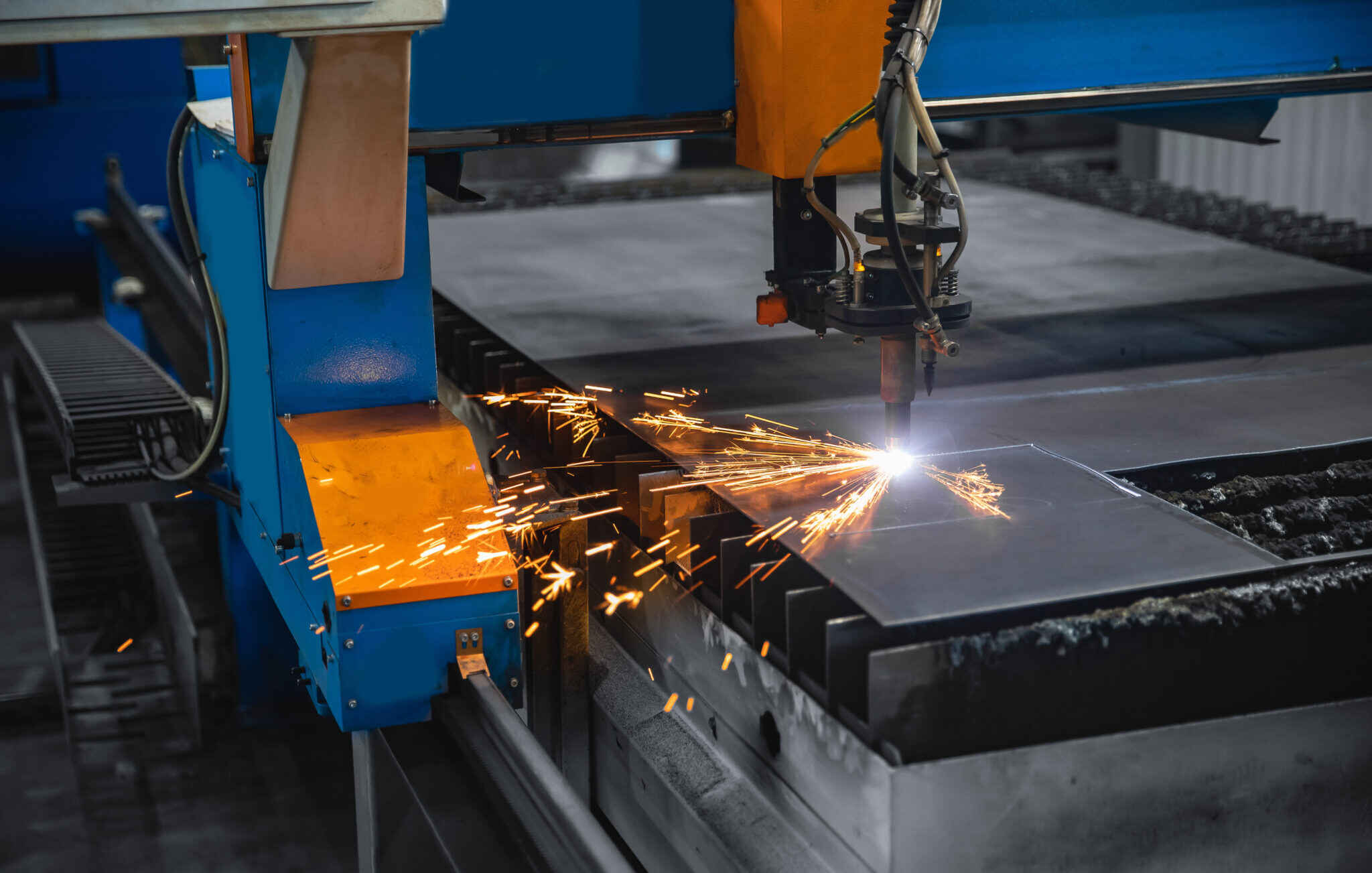
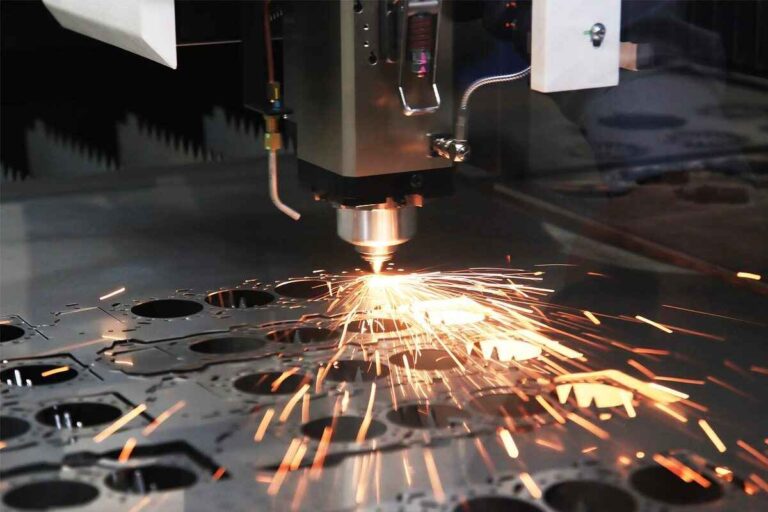
Laser reducing for web server shelfs functions because rack manufacturing is repeated, feature-heavy, and intolerant of built up mistake. A common information facility cupboard consists of vertical installing rails, top panels, bottom panels, side panels, perforated doors, cable-entry plates, grounding tabs, PDU brackets, fan trays, baffles, joint plates, lock plates, skid-base parts, gussets, and often tube or square-pipe framework aspects.
Punching can still be quick. Roll creating can still control long duplicated accounts. I am not below to offer fairy tales.
However in high-volume sheet metal manufacture with mixed shelf SKUs, fiber laser cutting wins when the component household modifications usually and when opening geometry, louvers, wire slots, air vent patterns, corner reliefs, logos, basing features, and little engineering alterations would or else activate new tooling or component mayhem. A serious rack line can make use of a fiber laser reducing maker for sheet metal to refine carbon steel, stainless-steel, light weight aluminum, brass, and galvanized sheet, with power classes that can vary from entry-level systems to high-power industrial makers.
Below is the difficult truth: the laser is not the line. The line is nesting, reducing, deburring, flexing, touching, securing, welding, covering, assembly, examination, labeling, product packaging, and shipment. A laser just looks quickly when the rest of the plant is not asleep.
Table of Contents
Where Laser Reducing Beats Standard Shelf Construction
Laser reducing makes one of the most feeling in data center closet production when the manufacturing facility requires repeatable features without waiting for difficult tooling. In method, that suggests:
| Shelf Element | Usual Material | Laser-Cutting Advantage | Failing Setting If Refine Is Weak |
|---|---|---|---|
| Mounting rails | 1.5– 2.5 mm cold-rolled steel or galvanized steel | Exact square holes, cage-nut slots, modification flexibility | Rail pitch drift, cage nuts bind, web server install hold-ups |
| Perforated doors | 1.0– 1.5 mm steel or light weight aluminum | Custom air movement patterns, logo-free or branded alternatives | Burrs, warmth distortion, powder-coat flaws |
| Leading and lower panels | 1.0– 2.0 mm steel | Cable-entry intermediaries, brush-strip openings, basing tabs | Poor fit, sharp sides, cable abrasion |
| PDU braces and accessory plates | 1.2– 2.0 mm steel | Rapid alternative manufacturing throughout consumer specs | Field boring, awful retrofits, delayed installs |
| Tube guards and base structures | Carbon steel tube or square pipe | Integrated sheet/tube operations on ideal tools | Weld inequality, fixture creep, rework |
| Baffles and airflow control components | Light weight aluminum 5052, galvanized sheet, or steel | Low-tooling custom air flow geometry | Hot-aisle leak, blocked cord directing |
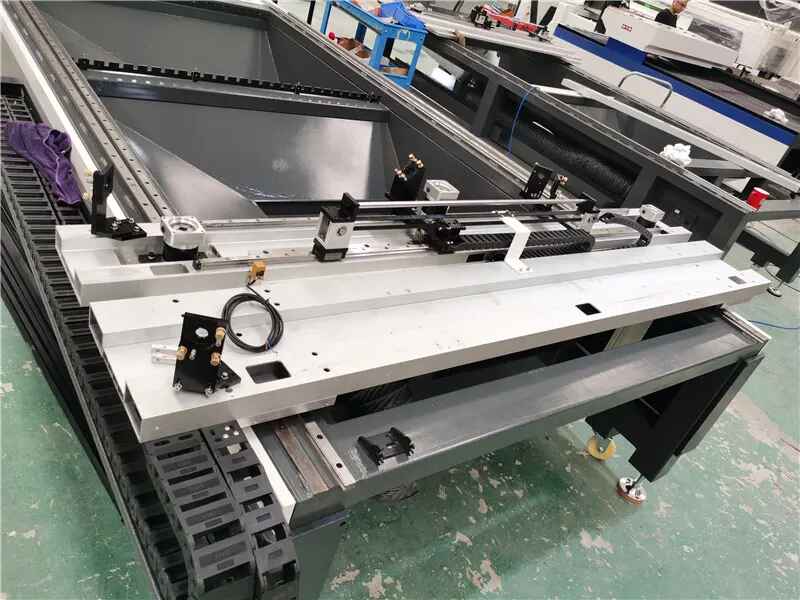
For shelf makers building both flat parts and tube components, a plate and tube fiber laser reducing maker can get rid of one awful handoff: sending out tube guards, base rails, and sheet brackets with different cutting process. Bogong checklists 1,500 W– 10,000 W fiber resource choices, 380V three-phase power, placing precision of ≤ ± 0.03 mm, repeatability of ≤ ± 0.02 mm, and a 1070 nm solid-state CW fiber laser on that equipment page.
Those numbers issue. Yet just if you check them under production lots, not during a showroom cut.
The AI Rack Trouble: Thickness Is Relocating Faster Than Old Metal Shops
The shelf used to be furnishings for servers. Currently it belongs to thermal monitoring, cable television administration, implementation speed, fire discipline, service, and energy strategy.
The Uptime Institute’s 2024 study stated ordinary server rack densities are enhancing however still continue to be listed below 8 kW, while the majority of centers do not yet have shelfs above 30 kW, according to the Uptime Institute Global Data Center Survey 2024. That sentence sounds tranquil. It is not. It suggests the sector is separating normal closet production and a coming wave of high-density AI cabinets, rear-door warmth exchangers, liquid-cooling manifolds, busway adjustments, larger frameworks, and air flow redesign.
So what adjustments inside the manufacturing facility?
A whole lot.
The traditional 42U, 600 mm wide, 1,000 mm deep rack is no longer sufficient for each purchaser. Much more orders currently push 45U, 48U, 52U, 800 mm width, 1,200 mm deepness, greater fixed load scores, stronger casters, detachable side panels, secured cable television openings, higher opening proportions, and cleaner grounding connection. A custom-made web server rack manufacturer that can not change opening patterns without weeks of delay is not a strategic distributor. It is a bottleneck with a quote form.
That is why I such as laser cutting for web server shelfs, particularly when coupled with press brake discipline and proper component control. You can change a DXF. You can not delicately change a bad practice.
For manufacturers already making storehouse shelfs, server cupboards, battery cupboards, telecommunications enclosures, and industrial control closets, the reasoning is comparable. Bogong’s post on sheet and tube fiber laser reducing for stockroom racking makes a useful point: base plates, gussets, cross-braces, tube guards, end quits, safety panels, and customized add-ons are commonly specifically where laser versatility pays. Data facility racks have the very same disease: too many devices, too many customer-specific versions, not enough time.
The Manufacturing Circulation I Would Trust fund
If I were auditing a high-volume data facility shelf manufacturing line, I would not begin with the laser brand. I would start with scrap bins, first-article reports, powder-coat turns down, and the driver’s transcribed notes.
Pretty slides lie.
A defensible rack line ought to look like this:
1. Design for Repeatable Manufacture
The CAD version should respect bend span, grain direction, hole-to-bend distance, tab-and-slot setting up, coating accumulation, rail adjustability, and evaluation accessibility. For cold-rolled steel, galvanized steel, stainless-steel 304, stainless steel 316, aluminum 5052-H32, and aluminum 6061-T6, the cutting plan needs to not be copied thoughtlessly across materials.
A 2.0 mm galvanized panel and a 2.0 mm stainless panel do not act like twins under reducing, flexing, welding, or finishing.
2. Nesting and Cut-Path Method
Good nesting lowers waste. Terrific nesting safeguards downstream circulation. The appropriate nesting strategy accounts for component alignment, micro-joints, warm input, help gas, scratch-sensitive faces, QR labeling, and the series in which kits move to bending and assembly.
For server shelf manufacture, the manufacturing facility should separate aesthetic exterior panels from covert structural parts. Scraped covert brackets are a problem. Damaged front doors are a margin leakage.
3. Laser Cutting and Side Control
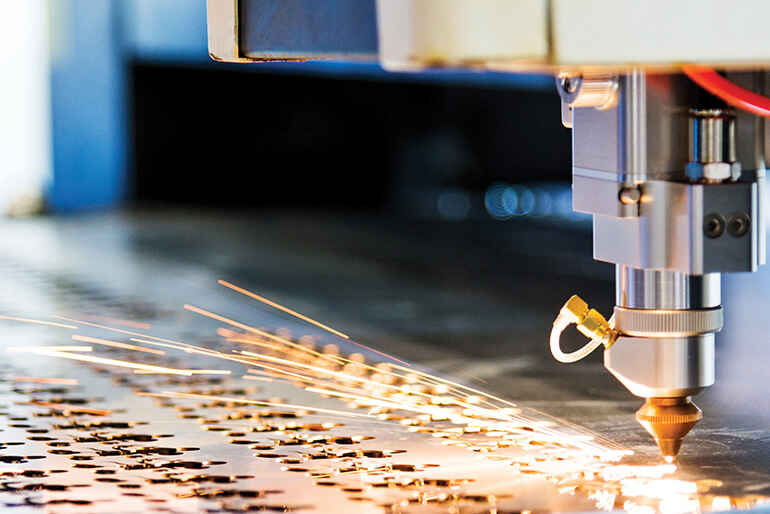
A modern-day fiber laser can reduce fast, however high-volume rack job needs stable kerf, clean pierce factors, managed dross, and constant hole quality. Nitrogen may be chosen where oxidation affects finishing top quality, while oxygen may reduce thicker carbon steel strongly but present oxide layers that need more surface area preparation.
This is the unglamorous information buyers should inquire about: not “The number of watts?” but “What is your side problem after cutting, and what preparation is required prior to powder finishing?”
Bogong’s laser reducing maker for sheet metal page is relevant here because sheet-metal rack production lives or dies on clean edges, very little waste, and repeatable handling. Not the sales brochure version. The 2 a.m. variation.
4. Press Brake, Fixtures, and Weld Distortion Control
Trimming precision indicates little if flexing accuracy collapses. Rack messages, doors, side panels, and rails need bend repeatability, because every little angular error becomes visible throughout setting up.
Welding is worse. Heat actions steel. If a vendor welds a shelf framework without steady fixturing and a known sequence, the cupboard might pass a laid-back visual check and still fall short when rails, doors, side panels, and locks collaborated.
5. Surface Treatment and Setting Up
Powder layer can hide ugly cutting for a week. After that the purchaser notifications flakes, side corrosion, orange peel, bad attachment, obstructed grounding factors, or tight-fit hardware.
For data center racks, finishing is not decoration. It impacts rust resistance, electrical connection, label adhesion, ESD planning, and field service understanding. I would rather see a boring, regulated powder line than a heroic sales tale regarding “superior surface.”
Laser Reducing vs Punching vs Roll Forming for Information Center Racks
Nobody severe should declare laser cutting replaces every process. That is amateur talk.
For a common high-volume upright with countless duplicated holes, roll forming and punching might still win on raw throughput. For brief runs, models, custom cupboard family members, accessory plates, air movement doors, cord panels, brace sets, and design adjustments, laser reducing comes to be the better tool.
| Process | Ideal Use in Rack Manufacturing | Toughness | Weak point | My Point of view |
|---|---|---|---|---|
| Fiber laser cutting | Mixed-SKU panels, doors, brackets, rails, baffles, prototypes | No tough tooling, quick alterations, tidy geometry | Can bottleneck if bending/assembly is weak | Ideal versatile procedure for contemporary rack versions |
| CNC punching | Repeated openings and types on sheet steel | Rapid on standard patterns, can develop louvers | Tooling limits geometry and revision speed | Still beneficial, however less flexible when designs alter weekly |
| Roll forming | Long repeated messages, rails, and networks | Extreme repeatability at scale | Poor flexibility for personalized variations | Outstanding for stable SKUs; excruciating for personalization |
| Plasma cutting | Thick structural parts, reduced precision needs | Lower equipment price sometimes | More heat, rougher edges | Incorrect tool for precision cabinet faces |
| Waterjet cutting | Heat-sensitive parts and thick products | No heat-affected zone | Slower, greater operating complexity | Helpful niche, not the major rack line |
The very best shelf manufacturing facilities do not prayer one device. They designate the ideal process to the right part.
What Purchasers Should Ask a Custom Server Shelf Supplier
A purchaser ought to ask awful questions prior to signing the purchase order. Not after the initial container arrives.
Beginning with these:
Can you hold rail pitch throughout the complete cabinet height?
A 42U rack has no patience for accumulated mistake. Hole spacing, upright rail alignment, squareness, and cage-nut interaction need to be validated, not thought.
What is your first-article evaluation procedure?
The first shelf of a set ought to be determined against the illustration: size, deepness, height, angled squareness, rail placement, door fit, panel gaps, basing connection, finish thickness, and packaging protection.
Can you take care of combined orders without chaos?
Actual data center shelf manufacturing frequently consists of basic cabinets, network racks, battery closets, containment panels, power devices, and custom-made braces in one buying cycle. A provider that can not set components by task will certainly deliver complication.
Do you check finish bond and side insurance coverage?
Sharp laser edges may need deburring or distance control before finish. If a distributor refuses to discuss this, I would worry.
Can you show consumer proof?
Supplier cases are affordable. Manufacturing proof is harder. Bogong’s consumer feedback page is the type of page I would certainly examine when inspecting whether a laser-machine provider has noticeable market use as opposed to just magazine claims.
Cost, Throughput, and the Lie of the Affordable Rack
Affordable shelfs are not inexpensive if they get here late, spin under load, chip during installation, or require field boring.
Information center procurement groups usually contrast rack quotes as if every cupboard is an asset. That is a blunder. A $40 distinction per rack can vanish in one fell short release weekend break, one postponed cage develop, one unexpected mount team, or one rejected shipment.
In server rack construction, the pricey failings normally hide in these places:
- Door placement after powder finish
- Rail adjustability after structure welding
- Burrs around cord openings
- Inconsistent grounding points
- Repaint build-up in threaded areas
- Weak product packaging for sea freight
- Opening patterns not matching PDUs or accessories
- Poor flatness on perforated doors
- Missing out on paperwork for repeat orders
This is why laser cutting need to be judged as part of a manufacturing system. The laser might decrease tooling expense, enhance alteration rate, and sustain smaller sized batch modification, but the money is won downstream: less remake components, cleaner bends, easier setting up, much less stock, faster design adjustment orders, and better repeatability across sets.
What “High Volume” Really Implies in Data Center Closet Manufacturing
High volume does not always mean one million identical components. In information facility closet production, high quantity usually means 300 racks of one configuration, 700 of another, 150 custom network cupboards, 2,000 air movement panels, 4,000 cord plates, and a late-stage adjustment because the consumer’s PDU vendor transformed the installing pattern.
That is specifically the mess where laser cutting becomes beneficial.
A high-volume shelf operation should be able to process:
- 1.0– 1.5 mm panels for doors, sides, tops, and bases
- 1.5– 2.5 mm upright installing rails and brackets
- 2.0– 4.0 mm base plates, gussets, and reinforced components
- Stainless-steel 304 or 316 for corrosion-sensitive applications
- Light weight aluminum 5052-H32 for lighter air movement panels or baffles
- Galvanized steel where corrosion resistance and price control matter
- Tube or square pipe for guards, bases, frameworks, and sustains
The factory also requires electronic discipline: ERP task directing, barcode tracking, DXF revision control, nesting documents, assessment logs, finish sets, loading images, and serial-number traceability.
Without that, the plant is simply reducing metal swiftly on its means to making errors promptly.
FAQs
What is data center rack manufacturing?
Information center shelf production is the controlled fabrication of steel or aluminum closets that hold servers, buttons, PDUs, wire systems, air movement accessories, and safety hardware inside a data facility, utilizing cutting, flexing, welding, finish, assembly, and assessment processes to fulfill rigorous dimensional, load, and thermal needs.
In plain language, it is not just making a steel box. It is constructing a repeatable facilities part. A rack has to accept 19-inch equipment, stay square, assistance fixed and dynamic loads, manage airflow, secure wires, allow service accessibility, and make it through delivery without becoming scrap.
How are information facility shelfs manufactured with laser cutting?
Information center racks are made with laser cutting by transforming CAD illustrations into CNC cut courses, cutting sheet metal or tube profiles, after that relocating components through deburring, flexing, tapping, welding, surface treatment, powder finish, assembly, examination, labeling, and packaging for final implementation.
The laser generally manages panels, rails, braces, doors, cable television plates, frustrates, and accessory components. The manufacturing facility still requires press brakes, components, welding controls, covering systems, torque treatments, and final top quality checks. Laser reducing boosts rate and versatility, but it does not excuse weak production discipline.
Is laser cutting better than punching for server shelf fabrication?
Laser reducing is better than punching for web server rack fabrication when the task requires customized hole patterns, regular design revisions, small-to-medium set changes, complex cable openings, perforated panels, accessory brackets, or mixed-SKU manufacturing where difficult tooling would certainly slow down design adjustments and increase surprise price.
Punching can still be quicker for stable, repeated patterns. Roll developing can still be best for long standard rails. The smart solution is not “laser constantly wins.” The wise answer is to use laser cutting where flexibility, precision, and tooling evasion produce the most worth.
What materials are commonly utilized for information center racks?
Information facility shelfs are commonly made from cold-rolled steel, galvanized steel, stainless steel, and sometimes light weight aluminum, with regular sheet densities around 1.0– 2.5 mm for panels and rails, while enhanced bases, brackets, and seismic or heavy-load frameworks might utilize thicker steel sections.
Cold-rolled steel is common since it flexes and layers well. Galvanized steel assists with deterioration resistance. Stainless steel might be made use of in extreme or specialized settings. Aluminum can lower weight, especially for panels and airflow components, yet it requires cautious layout where tons stamina matters.
How should I pick a custom-made web server rack producer?
A custom web server rack supplier should be selected by validating its drawing control, laser cutting ability, bending precision, welding components, finish high quality, assessment process, packaging method, material traceability, and ability to repeat the exact same rack arrangement throughout sets without dimensional drift or undocumented replacements.
Do pass by just by cost. Ask for first-article evaluation examples, coating thickness targets, load-rating presumptions, shelf squareness tolerances, product packaging photos, and revision-control treatments. A distributor that can not clarify its procedure will eventually make you spend for its silence.
Last Thoughts: Develop the Shelf Line Prior To the Order Beats You
Data facility shelf production is getting in a less forgiving phase. AI need, high-density shelfs, power constraints, liquid-cooling equipment, quicker construction timetables, and reduced vacancy prices are forcing buyers to require much better cupboards quicker. The weak manufacturing facilities will certainly condemn labor, steel rates, products, or “consumer modifications.” Some of that will certainly be true. A lot of it will be cover.
My viewpoint is simple: laser cutting is now one of the cleanest ways to keep server rack manufacture adaptable without giving up precision, yet it only functions when the entire manufacturing chain is developed around repeatability.
So below is the following step.
If you manufacture data center shelfs, web server cupboards, battery cupboards, telecom enclosures, or rack accessories, examine your present process from DXF revision to final packaging. Then compare your traffic jams versus a fiber laser-based workflow, particularly for panels, rails, brackets, doors, baffles, and tube-supported assemblies. If your store is still losing time to tooling delays, field boring, burr cleaning, or late design adjustments, review Bogong Laser’s sheet-metal and sheet-tube cutting options and request a production-focused quote prior to the following high-volume order reveals the weak point.


Hot Click
Contact Us
Application
©Copyright [bogonglaser.com]. BOGONG Laser Machine Supplier All Rights Reserved.