
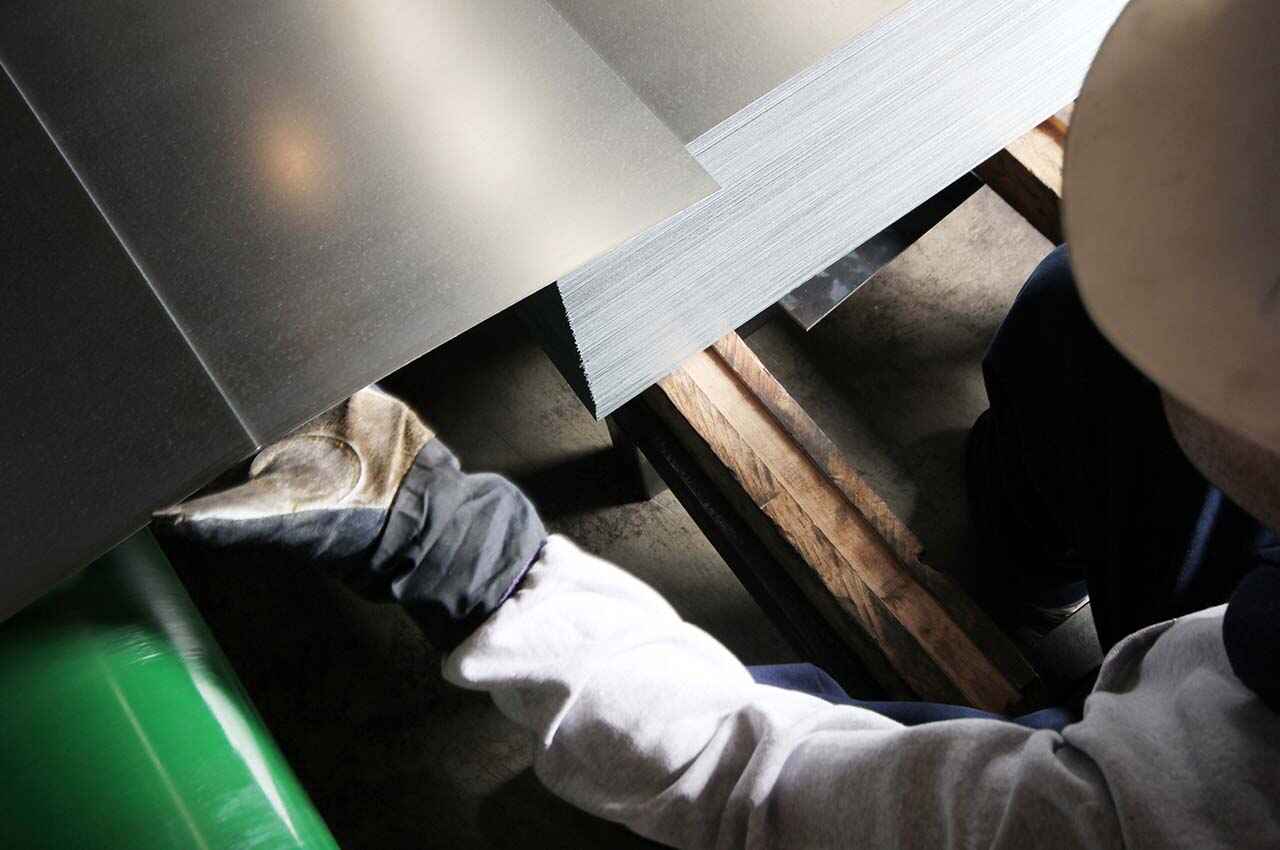
Precision Sheet Metal Cutting for Data Center Infrastructure
Data center infrastructure is forcing sheet metal fabricators to work faster, tighter, and cleaner. This article explains what buyers should demand from precision sheet metal cutting suppliers before AI-era rack programs expose bad tolerances, burrs, heat distortion, and rework.

The Rack Is No Longer Just Furniture
Margins expose lies.
When a data center project is late, the public story usually blames power availability, GPUs, switchgear, permitting, or cooling packages; inside the fabrication chain, though, I would look much earlier, at the supposedly boring sheet metal cutting decisions that determine whether racks, doors, rails, trays, blanking panels, busway brackets, and server chassis parts actually fit at scale. Why does nobody want to talk about the cut edge until the assembly line is already bleeding money?
Precision sheet metal cutting for data center infrastructure is not about making metal look clean. It is about repeatable geometry under pressure: ±0.05 mm hole patterns where possible, low-burr edges before powder coating, consistent flatness before bending, and airflow features that do not turn into accidental pressure losses.
The industry’s dirty secret is simple: many “data center ready” metal parts are only ready in a PDF quote. Put them into high-density AI rack production, add fast engineering changes, mix 304 stainless steel, 5052-H32 aluminum, DX51D+Z galvanized steel, and cold-rolled carbon steel, then watch the weak shops reveal themselves.
The demand side is not theoretical anymore. The U.S. Department of Energy’s December 2024 LBNL-backed report said data center load growth had tripled over the previous decade and could double or triple again by 2028.Reuters also reported that North American data center supply under construction jumped about 70% year over year to a record 3.9 GW in major markets, based on CBRE research.
So yes, power is the headline. But metal is the schedule.
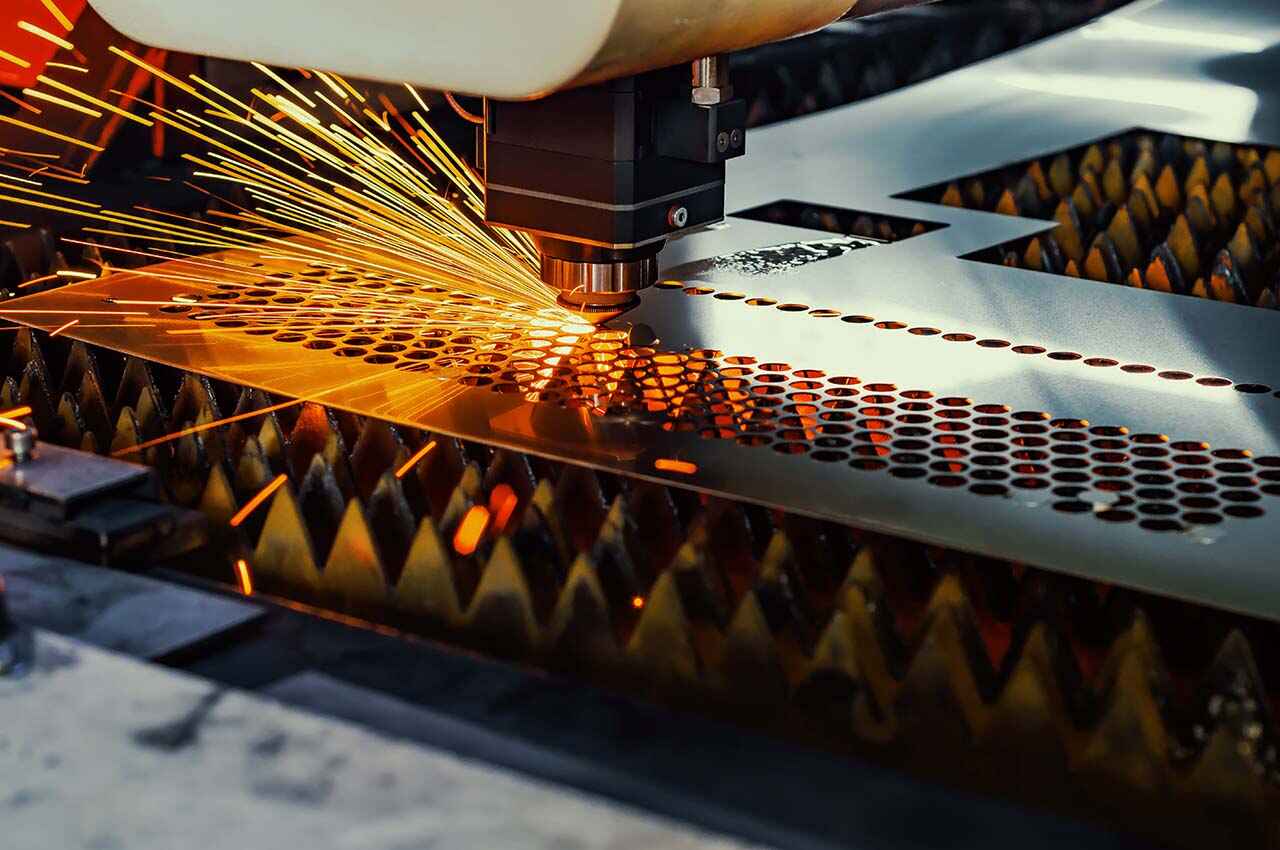
Table of Contents
Where Sheet Metal Cutting Actually Controls Data Center Risk
Most buyers ask the wrong question: “Can you cut this part?” That is amateur hour.
The better question is: “Can you cut, revise, nest, label, inspect, bend, coat, and repeat this family of parts without creating invisible assembly debt?” Data center infrastructure fabrication punishes tiny mistakes because the hardware repeats thousands of times. One distorted cable-routing slot is annoying. Ten thousand distorted slots become a cost center.
For buyers comparing CNC sheet metal cutting options, I would separate the job into five production zones:
| Fabrication Zone | What Can Go Wrong | What I Would Demand From the Supplier |
|---|---|---|
| Server rack rails | Hole drift, rail misalignment, poor grounding contact | Batch inspection reports, datum control, repeatability checks |
| Perforated doors and airflow panels | Burrs, inconsistent vent geometry, thermal distortion | Nitrogen cutting on stainless where edge quality matters, airflow feature sampling |
| Server chassis panels | I/O cutout mismatch, board-mounting error, EMI leakage risk | Tight CAD/CAM revision control and first-article inspection |
| Cable management brackets | Sharp edges, slot deformation, coating build-up | Deburring standard, bend allowance validation, coating thickness planning |
| Busway and power hardware supports | Poor flatness, wrong slot geometry, fatigue points | Material certificate, traceable cut program, mechanical fit test |
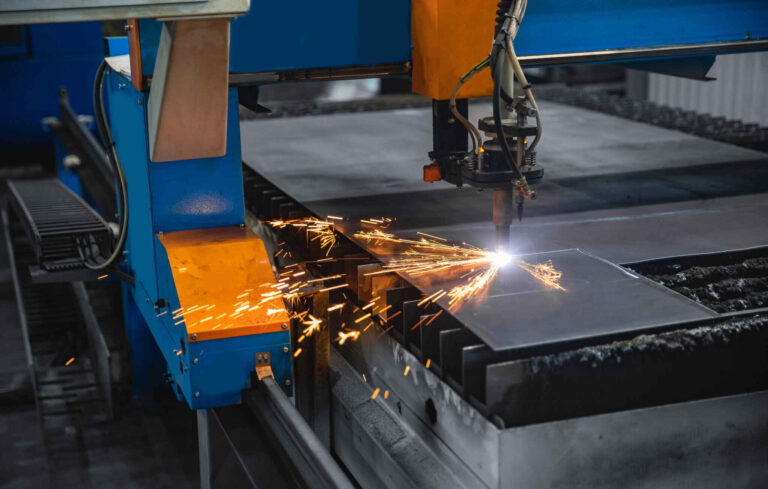
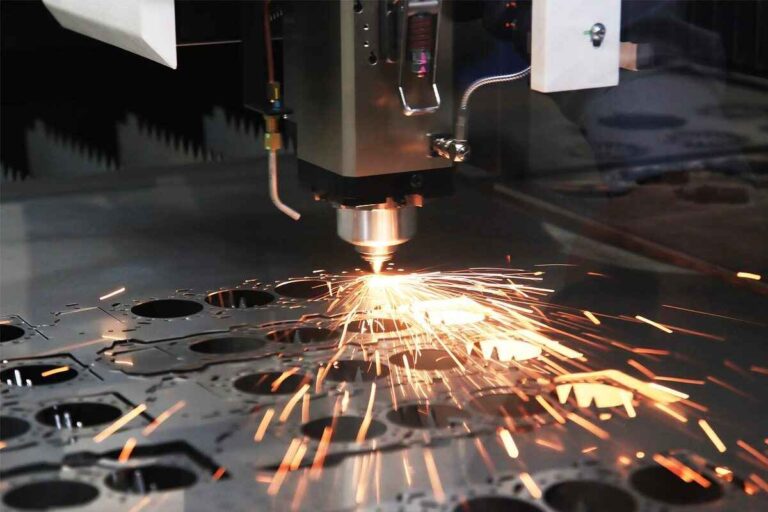
This is where laser cutting for sheet metal earns its place. A contactless cut reduces mechanical stress compared with punching-heavy workflows, and it handles complex vent fields, brackets, slots, and fast design revisions without waiting for hard tooling. Bogong’s own sheet metal laser cutting page also emphasizes clean edges, minimal burrs, and reduced distortion for stainless steel, aluminum, copper, brass, and geometric sheet parts.
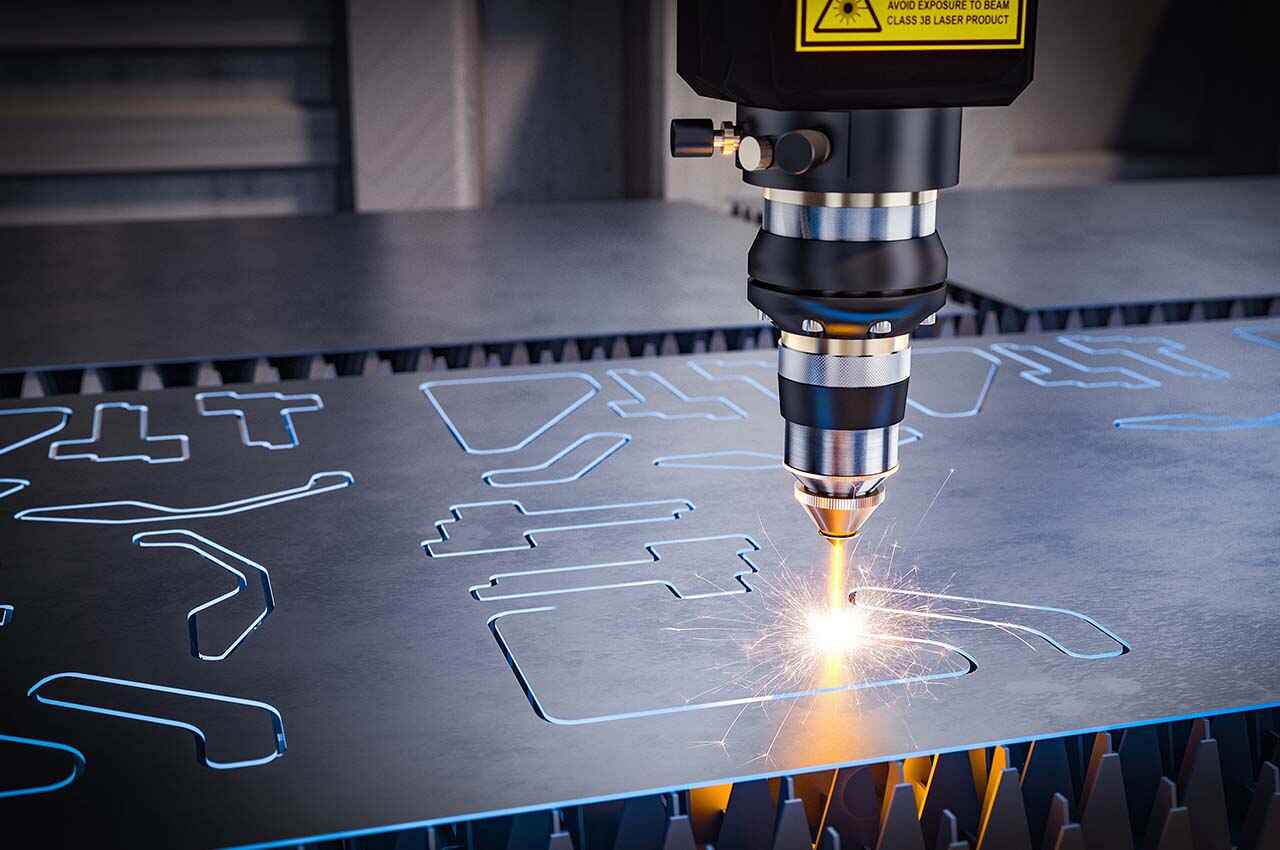
But I will say the unpopular part: laser cutting for sheet metal is not automatically “precision.” Bad focus height, dirty lenses, weak assist-gas control, poor nesting logic, cheap sheet stock, and lazy inspection can turn a powerful fiber laser into an expensive scrap generator.
The AI Buildout Changed the Tolerance Conversation
AI did not just increase demand for data centers. It changed the mechanical behavior of the room.
Higher rack density means tighter thermal margins. Liquid cooling adds manifolds, brackets, CDU interfaces, heavier cable loads, and service-access constraints. GPU-heavy systems push more mass into the rack. That means server rack sheet metal fabrication has to support structure, airflow, grounding, serviceability, and revision speed at the same time.
According to the Secretary of Energy Advisory Board’s July 2024 recommendations, hyperscale connection requests of 300 MW to 1000 MW or larger, with 1–3 year lead times, were already stretching local grids. When the power side is that tight, nobody has patience for a rack enclosure program that loses two weeks because the side panels warp after cutting or the mounting holes drift after coating.
And material pressure is not going away. Reuters reported in April 2024 that global steel demand was expected to rise 1.7% to 1.793 billion metric tons in 2024, with further growth expected in 2025.That matters because data center infrastructure still eats steel through frames, cabinets, brackets, containment systems, panels, trays, equipment supports, and service platforms.
For teams evaluating fiber laser cutting machine systems, the technical stack matters. Bogong describes CNC-controlled fiber laser systems using a 1064 nm beam, CAD/CAM workflows, 1,500 W to 60,000 W power options, and cutting capability across carbon steel, stainless steel, aluminum, brass, copper, titanium, and other conductive metals.That range sounds impressive, but the buyer still needs proof on the exact alloy, thickness, hole diameter, burr limit, and batch volume.
Hard Truths Buyers Learn Too Late
Power rating is not a process plan
A 6 kW, 12 kW, or 30 kW laser can still produce bad parts if the shop has no discipline. I care less about brochure wattage and more about nozzle condition, focus calibration, N2 purity, O2 settings, compressed-air quality, pierce strategy, kerf compensation, and whether the operator understands why 1.5 mm galvanized sheet behaves differently from 3.0 mm 304 stainless.
The cheap quote often hides the expensive part
A low cutting price can look brilliant until the supplier pushes deburring, sorting, rework, inspection, packaging damage, or revision confusion onto the buyer. In custom sheet metal fabrication for data centers, the visible unit price is rarely the full cost.
Revisions are the real stress test
Data center hardware changes fast. Cable openings move. Cooling ducts change. Door perforation patterns get revised. Mounting rails shift for a new server platform. A strong shop treats CAD/CAM control as production infrastructure, not clerical work.
This is why I would naturally connect buyers to Bogong’s guide on laser cutting machines for data center rack manufacturing. The article correctly frames rack production around carbon steel, stainless steel, galvanized steel, aluminum panels, perforated doors, mounting rails, side covers, and mixed sheet-metal SKUs.
Laser Cutting vs. Punching vs. Waterjet: The Real Fabrication Choice
I am not religious about process. I am religious about fit, cost, timing, and evidence.
| Cutting Method | Best Fit in Data Center Fabrication | Weak Spot Nobody Likes Mentioning | My Opinion |
|---|---|---|---|
| Fiber laser cutting | Mixed SKUs, vents, brackets, rails, chassis panels, fast revisions | Edge quality depends heavily on setup, gas, optics, and material | Best default for high-mix data center sheet metal cutting |
| CNC punching | Repeated holes, louvers, embossed features, mature designs | Tooling delay and feature limits hurt fast design changes | Still useful, but less flexible |
| Waterjet cutting | Thick plate, heat-sensitive materials, special shapes | Slower, wetter, and often less ideal for high-volume thin sheet | Good niche tool, not my first pick for rack panels |
| Stamping | Very high-volume stable parts | Tooling cost and revision pain | Great after the design freezes, risky before that |
For rack enclosure programs, I would send engineers to Bogong’s article on how fiber laser cutting improves rack enclosure production because the core argument is practical: tooling delay, feature inconsistency, revision drag, and downstream fit errors are where factories lose money.
For chassis-heavy projects, the better internal match is the category page for laser cutting machine for server chassis, especially when the work involves motherboard trays, I/O cutouts, PCIe slots, airflow fields, grounding tabs, and enclosure panels.
How to Choose Precision Sheet Metal Cutting for Data Center Infrastructure
Start with the ugly parts.
Do not begin supplier qualification with a simple rectangle. Send the part that has small holes near bends, dense ventilation, thin webs, asymmetric heat paths, grounding contact surfaces, coating-sensitive edges, and revision-sensitive slot locations. That sample tells the truth.
Here is the checklist I would use before approving a supplier for metal fabrication for data centers:
1. Ask for tolerance evidence, not slogans
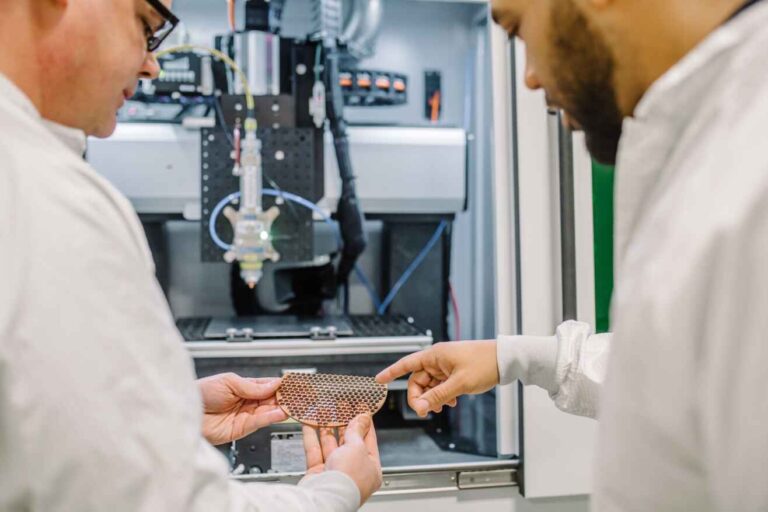
A supplier saying “high precision” means nothing. Ask for measured Cpk where available, first-article inspection, edge roughness targets, hole-position reports, and sample results after bending and coating.
2. Match assist gas to the part
Nitrogen N2 often makes sense for stainless edges where oxidation is a problem. Oxygen O2 can improve speed on carbon steel but may create oxide layers that affect coating. Compressed air can cut cost, but the air quality must be controlled. Moisture and oil are not small issues.
3. Audit downstream fit
A cut panel is not finished. Test the part after bending, powder coating, assembly, grounding contact, and fastener installation. Data center infrastructure fabrication fails downstream more often than buyers admit.
4. Check revision control
The supplier should control DXF, STEP, nesting files, bend deductions, drawing versions, material lots, and inspection records. If they rename files like “final-final-new-v3,” walk away.
5. Demand packaging discipline
Scratched coated panels, bent corners, mixed batches, and missing labels can erase any savings from a clean cut. Packaging is part of quality, not warehouse housekeeping.
For teams comparing equipment and supplier capability, Bogong’s 2025 guide to best fiber laser cutting machines for sheet metal fabrication gives useful internal context on models, throughput claims, tolerance examples, and application fit, including BOGONG 5050, 3020, and 6000W–40KW systems.
FAQs
What is precision sheet metal cutting for data center infrastructure?
Precision sheet metal cutting for data center infrastructure is the controlled CNC cutting of metal panels, rails, brackets, chassis parts, doors, trays, and enclosure components to meet repeatable dimensional, airflow, grounding, coating, and assembly requirements in server rooms, colocation facilities, hyperscale sites, and AI rack deployments. The point is not just clean edges; it is predictable system fit.
In practice, that means the supplier must manage CAD/CAM files, material behavior, cutting heat, kerf width, burr height, hole position, bend allowance, and inspection. If the cut is wrong, the problem may not appear until powder coating, rack assembly, or equipment installation.
Why is laser cutting for sheet metal common in data center fabrication?
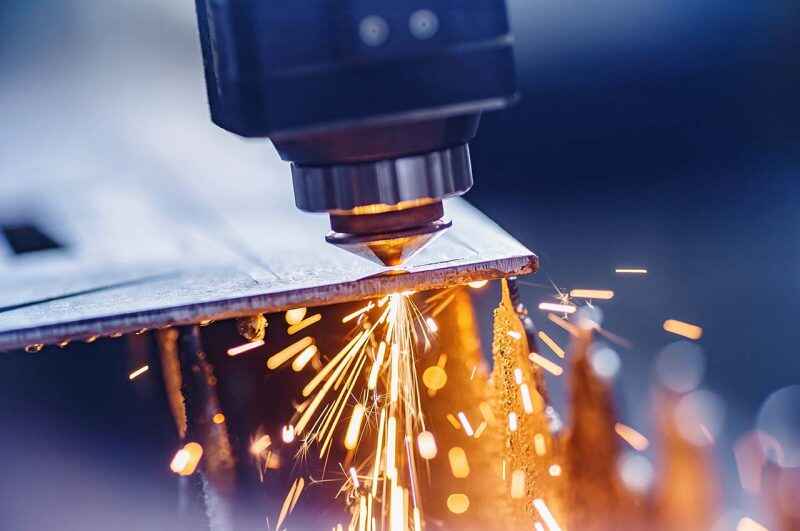
Laser cutting for sheet metal is common in data center fabrication because it can cut complex vents, slots, brackets, rails, panels, and chassis features directly from digital files with strong repeatability, fast revision handling, narrow kerf width, and reduced mechanical distortion compared with tooling-heavy processes. It fits high-mix rack and enclosure production especially well.
That does not mean every laser-cut part is good. The final result depends on material flatness, assist gas, focus control, nozzle condition, nesting strategy, operator skill, and inspection discipline.
How do I choose precision sheet metal cutting for data center infrastructure?
Choosing precision sheet metal cutting for data center infrastructure means qualifying the supplier by measured tolerance data, material capability, revision control, downstream fit testing, burr standards, coating readiness, packaging quality, and proven experience with racks, server chassis, airflow panels, cable brackets, and power-support hardware. Price should come after process proof.
The best test is a difficult sample part. Use thin stainless, galvanized sheet, dense perforations, bend-near holes, and coated assembly checks before awarding volume work.
What metals are used in server rack sheet metal fabrication?
Server rack sheet metal fabrication commonly uses cold-rolled carbon steel, galvanized steel, stainless steel such as 304, and aluminum alloys such as 5052-H32 or 6061-T6, depending on strength, corrosion resistance, weight, grounding, coating, thermal behavior, and cost requirements. Each material changes the cutting window.
Carbon steel may cut quickly but needs coating protection. Stainless resists corrosion but can punish poor heat control. Aluminum saves weight but demands proper laser settings because reflectivity and thermal conductivity can complicate cutting.
Is CNC sheet metal cutting better than stamping for data center hardware?
CNC sheet metal cutting is often better than stamping for data center hardware when designs change frequently, volumes are mixed, vent patterns are complex, and buyers need fast prototypes or revised panels without hard tooling. Stamping can win later when the design is stable and production volume justifies tooling cost.
My rule is simple: cut with CNC laser while the product is still changing; consider stamping only when the geometry has stopped moving and the forecast is real.
Your Next Steps
If you are sourcing precision sheet metal cutting for data center infrastructure, stop asking suppliers for a prettier quote and start asking for proof: sample cuts, inspection reports, burr limits, coating behavior, rack fit results, revision workflow, and packaging controls.
For rack, enclosure, and server chassis programs, review the relevant Bogong Laser resources on fiber laser cutting machines, sheet metal laser cutting, and data center rack manufacturing, then send your hardest drawing for evaluation before the purchase order locks you into someone else’s process problems.


Hot Click
Contact Us
Application
©Copyright [bogonglaser.com]. BOGONG Laser Machine Supplier All Rights Reserved.