
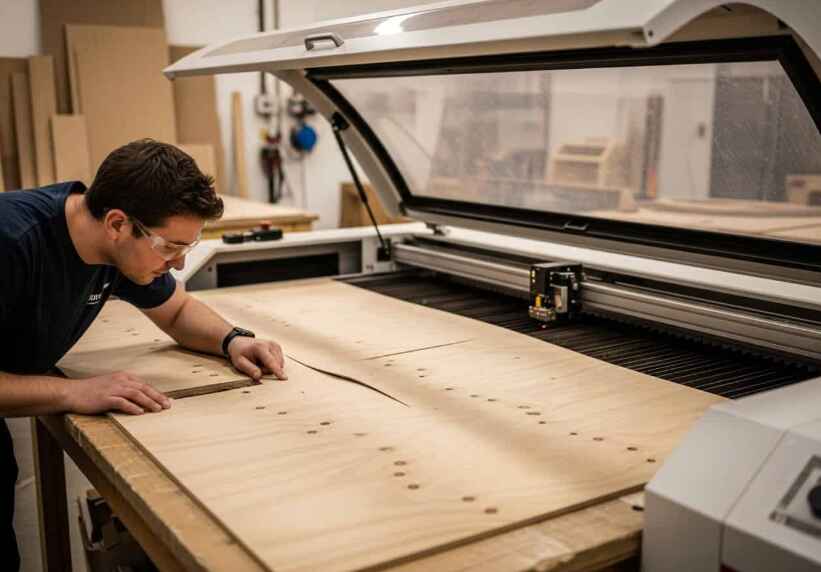
Wood Panel Cutting With CO2 Laser Technology
CO2 laser cutting wood looks clean from a distance. Up close, it is controlled thermal damage, smoke management, glue chemistry, airflow, beam quality, and operator discipline. This article explains what actually matters when cutting wood panels with CO2 laser technology.

The Dirty Secret Behind Clean Laser Cut Wood Panels
Wood tells truth.
If the panel supplier changed adhesive, if the MDF sat in a humid corner for three weeks, if the lens has a thin brown film on it, or if the exhaust duct is half-blocked by resin dust, the same CO2 laser settings for wood that looked perfect yesterday can produce black edges, flare-ups, and parts that smell like a burned warehouse sample board.
So why do so many sellers pretend wood panel laser cutting is just “power plus speed”?
I have watched shops waste expensive plywood because they bought wattage instead of process knowledge. That is the industry’s quiet tax. CO2 laser cutting wood is not magic; it is a controlled thermal process where a 10.6 µm infrared beam heats cellulose, lignin, resin, moisture, and glue until the material separates. On good stock, the result can be gorgeous: tight kerf, repeatable curves, no router chatter, no mechanical hold-down scars. On bad stock, it becomes smoke, char, warped panels, and excuses.
For buyers who need a machine-level starting point, Bogong’s CO2 laser engraver cutter page lists 60W, 80W, 100W, 150W, and 180W CO2 tube options with a 10.6 µm wavelength, working-area options, RDWorks software, and knife-blade platforms, which is the right equipment family for non-metal materials such as plywood, MDF, paper, leather, and acrylic.
But equipment is only half the story. The other half is ugly: dust, fumes, compliance, and operator habits.
OSHA’s wood dust guidance is blunt enough for anyone who has spent time near production cutting: airborne wood particles from sanding and cutting can cause allergic respiratory symptoms, mucosal symptoms, non-allergic respiratory symptoms, and cancer. That matters because laser cut wood panels do not only create visible smoke; they also create fine residue from vaporized wood, adhesive, fillers, and surface treatment.
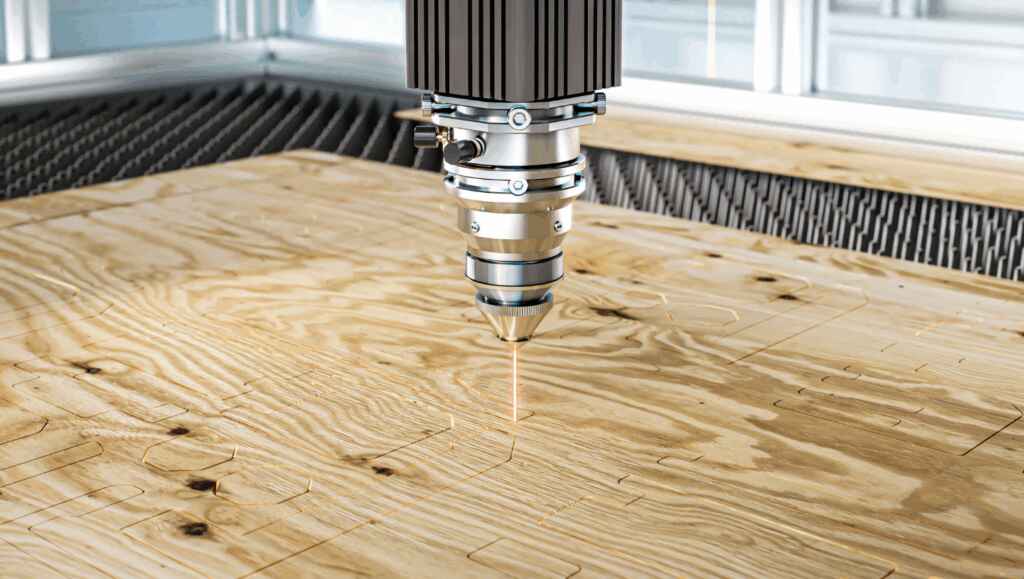
Table of Contents
CO2 Laser Cutting Wood Is Heat, Chemistry, and Airflow — Not Just Motion Control
The cleanest plywood laser cutting jobs I have seen had three things in common: predictable material, stable optics, and serious extraction. Not “a fan.” Extraction.
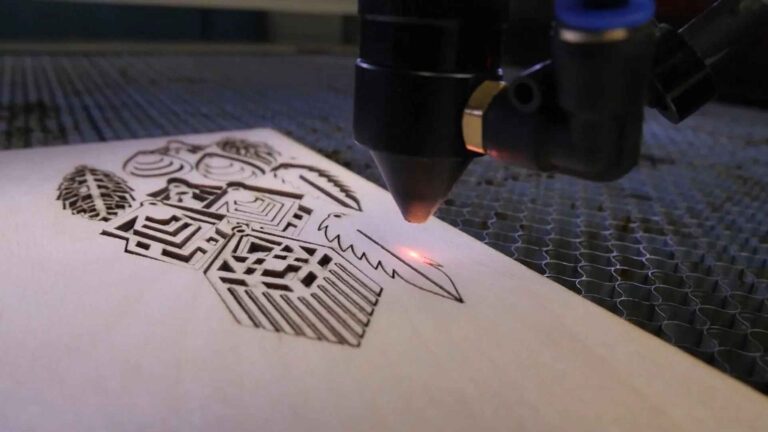
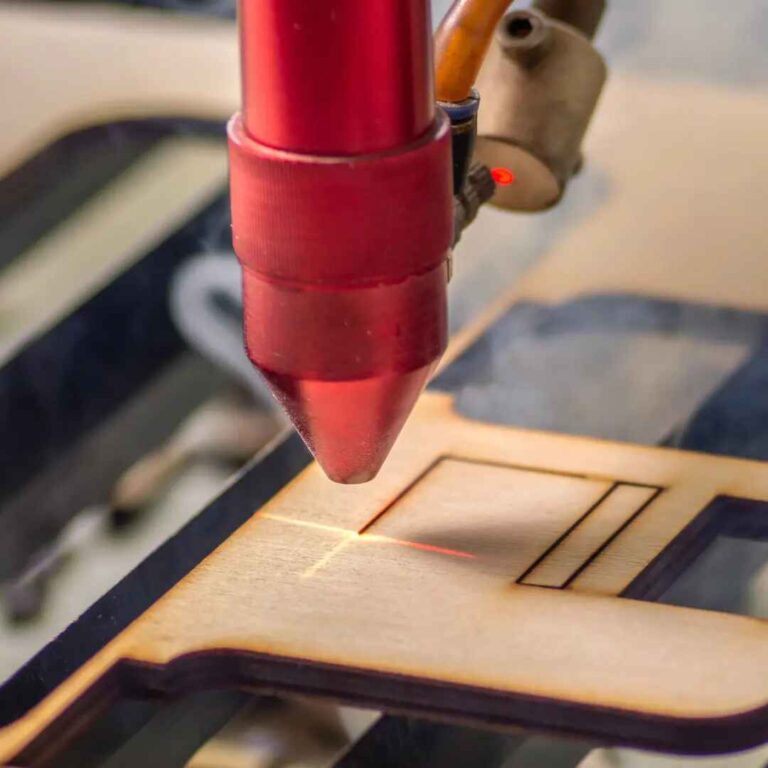
A CO2 laser cutter for wood works because organic material absorbs the 10.6 µm beam well. The beam creates a narrow heat-affected zone, while assist air pushes smoke and flame away from the kerf. In production terms, that means you can cut detailed furniture inlays, signage components, model parts, perforated decorative panels, acoustic features, packaging inserts, and custom display parts without tool wear.
But let’s be honest. The laser is burning a path through wood.
That is not a moral criticism. It is a process reality. If you understand it, you can make money with it. If you hide it, your operators will find out at 4:40 p.m. when the job is due and the underside of the panel looks like toast.
Bogong’s laser cutting machine for wood page correctly positions the process for plywood, MDF, hardwood, softwood, furniture manufacturing, cabinetry, signage, model making, and decorative arts. That use-case map is sensible because CO2 laser cutting wood panels is strongest where shape detail, nesting flexibility, and non-contact cutting beat brute-force chip removal.
What Actually Changes the Cut
Here is the practical stack I use when judging CO2 laser cutting wood panels:
| Variable | What it changes | What goes wrong when ignored | My hard opinion |
|---|---|---|---|
| Laser power | Cut depth, feed rate, edge color | Overburn, wider kerf, fire risk | More watts do not fix bad material |
| Speed | Heat input per millimeter | Incomplete cuts or black edges | Adjust speed before blaming the tube |
| Air assist | Flame control, smoke removal, kerf cleanliness | Soot, flare-ups, underside staining | Weak air is false economy |
| Lens focal length | Spot size and depth of focus | Tapered edge, poor penetration | Match lens to thickness, not habit |
| Exhaust | Smoke evacuation and operator exposure | Odor, dirty optics, health risk | Ventilation is part of the machine |
| Panel chemistry | Burn rate, fumes, edge color | Inconsistent cuts across batches | Test every new supplier lot |
| Bed design | Back reflection and support marks | Flashback stains, incomplete small parts | Knife bed often beats honeycomb for panels |
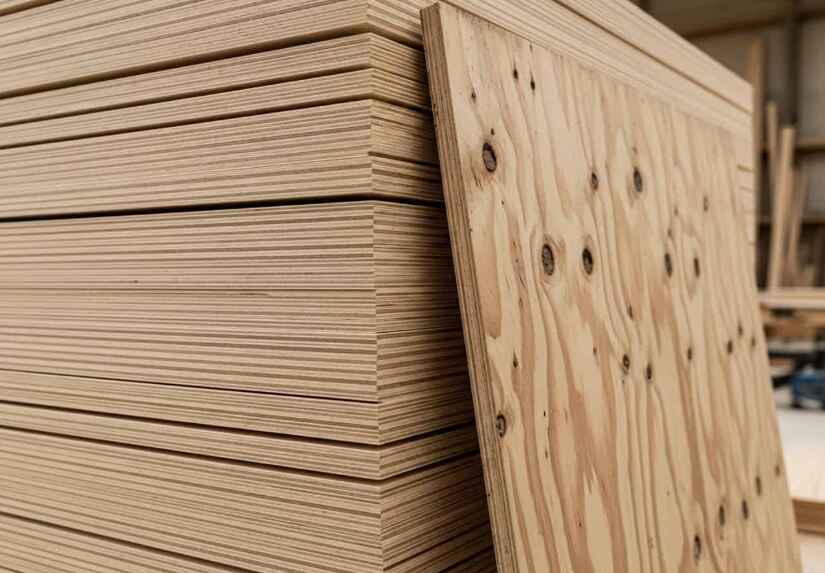
MDF is the best example of the trap. It cuts consistently because it is engineered material. It also punishes weak ventilation because binder chemistry and dense fiber smoke can linger, stink, and coat optics. Plywood is more romantic, but less obedient. Veneer species, glue lines, voids, moisture, and internal knots can make one sheet cut cleanly while the next sheet fights back.
That is why I like the application logic in Bogong’s industrial applications of laser cutting in wood processing article: it treats laser cutting as a production answer for thin plywood, MDF, veneer, basswood, bamboo, cork, packaging board, decorative panels, inlays, architectural models, acoustic panels, and display parts—not as a toy for pretty Instagram smoke shots.
The Settings Myth: Why “Best CO2 Laser Settings for Wood” Is a Half-Truth
I dislike universal setting charts. There, I said it.
A chart can help you start. It cannot know your plywood glue line, humidity, tube age, mirror alignment, lens contamination, nozzle height, air pressure, or whether the operator forgot to clean the bed. Search engines love simple answers. Wood does not.
For 3 mm plywood, many shops may begin somewhere around moderate-to-high power with relatively fast travel on a 60W–100W CO2 system, then tune from there. For 6 mm plywood, speed usually drops and air assist becomes more important. For MDF, you often need slower motion than plywood of similar thickness because density and binder content change heat behavior. For 9–10 mm sheets, the conversation moves from “Can it cut?” to “Can it cut repeatedly without unacceptable char, odor, taper, or cycle time?”
That last question is where buyers get humbled.
When someone asks for the best CO2 laser for cutting wood, I ask: what thickness, what sheet size, what daily volume, what edge color, what tolerance, what exhaust plan, what finishing labor, what budget for spares? The CO2 laser cutting machine category is the right place to compare platform capability, but no responsible buyer should select a machine from wattage alone.
A Field-Tested Setup Sequence
Start ugly. Then tighten.
First, run a small material test grid. Change only one variable at a time: speed, power, then air assist. Second, inspect top edge, bottom edge, kerf width, smoke stain, and odor. Third, cut a real geometry sample, not just a straight line. Corners reveal overburn. Small holes reveal airflow. Long cuts reveal bed support issues. Fourth, record everything.
I mean everything: species, supplier, thickness, moisture feel, masking tape, lens, power, speed, pass count, air pressure, chiller temperature, and finish result.
The shop that logs data beats the shop that worships settings.
Safety Is Not an Accessory: It Is the Margin Protector
I have a controversial view: many “laser cutting problems” are really safety-system problems wearing a production mask.
Bad extraction dirties optics. Dirty optics reduce power at the workpiece. Operators slow the cut to compensate. Slower cutting adds heat. More heat creates darker edges and more smoke. More smoke makes extraction look worse. Then someone says the laser tube is weak.
Maybe. Or maybe the process is eating itself.
The University of Illinois Division of Research Safety states in its laser cutter safe-use guidance that laser cutters are safe when used as designed with interlocks, filtration and ventilation systems, standard operating procedures, manuals, and training in place. That sentence should be printed above every wood laser workstation, not buried in a binder.
And compliance is getting less forgiving around composite panels. The EPA’s Formaldehyde Emission Standards for Composite Wood Products resources note that, unless exempted, laminated product producers became subject to applicable hardwood plywood panel-producer requirements beginning March 22, 2024, under TSCA Title VI and 40 CFR 770.4(a). That does not mean every laser shop is suddenly a panel producer, but it does mean buyers cutting MDF, particleboard, hardwood plywood, and laminated panels should care about supply-chain documentation, resin type, labeling, and import claims.
Hard truth: if your quotation ignores exhaust, filtration, fire response, material certificates, and finishing labor, your margin is fake.
Laser Cut Wood Panels vs CNC Routing: The Argument Nobody Settles Honestly
A router removes material mechanically. A CO2 laser removes material thermally. One throws chips. One throws smoke. Pick your enemy.
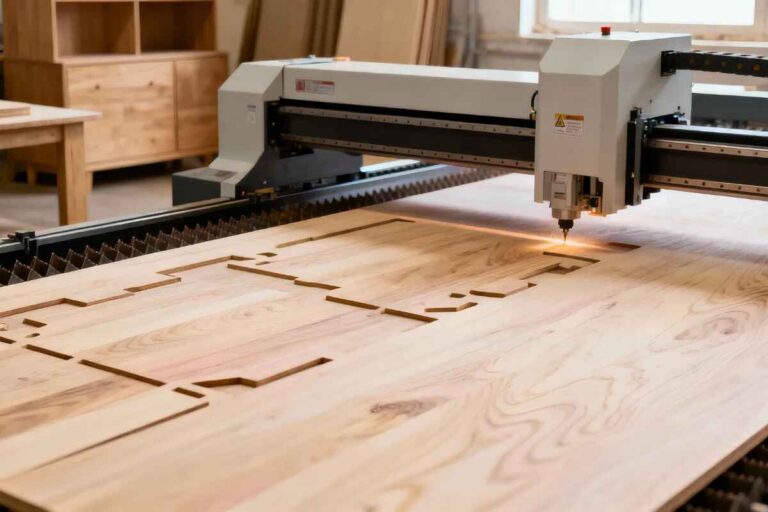
For simple rectangular cabinet panels, CNC routing may still win because of speed, edge quality, and thicker stock handling. For intricate patterns, branding, fretwork, inlays, thin plywood, decorative panels, and fast design changes, CO2 laser cutting wood can be the sharper production choice.
But it is not a religion. It is a spreadsheet.
| Job Type | CO2 Laser Cutting Wood | CNC Routing | Winner in My Shop Notes |
|---|---|---|---|
| Thin plywood ornaments | Fine detail, low mechanical stress, fast file changes | Tool wear, small-feature breakage | CO2 laser |
| MDF decorative screens | Excellent pattern flexibility, but smoke-heavy | Cleaner edge in some thicker cuts | Depends on ventilation |
| Furniture inlays | Tight kerf and repeatable curves | More setup and bit-radius limits | CO2 laser |
| Thick cabinet panels | Slow, char risk, taper risk | Strong, familiar, clean when tooled well | CNC router |
| Branding and engraving | Cutting plus engraving in one setup | Needs tool change or separate process | CO2 laser |
| Unknown laminated board | Risky fumes and inconsistent glue behavior | Still needs dust control | Neither without testing |
For buyers comparing broader material applications, Bogong’s laser cutting machine application section is useful because it separates laser-cutting use cases instead of pretending one machine class solves every material problem. That distinction matters. Fiber lasers dominate metal cutting; CO2 lasers remain the practical workhorse for many non-metal materials.
How to Cut Wood Panels With a CO2 Laser Without Producing Expensive Scrap
Here is my practical workflow for how to cut wood panels with a CO2 laser when the order matters and the buyer will inspect the parts.
Step 1: Reject Mystery Material
Do not cut PVC, vinyl, unknown plastic-faced panels, heavily treated wood, or boards with undocumented coatings. Chlorinated materials can produce corrosive and dangerous gases. Painted panels and adhesive-backed sheets need review before cutting. “The customer said it is wood” is not a safety data sheet.
Step 2: Build a Material Library
Create a known-good library for 3 mm birch plywood, 6 mm poplar plywood, 3 mm basswood, 5 mm MDF, veneer, bamboo, and cork. Record supplier, batch, thickness, cutting parameters, edge photo, and odor note. Yes, odor note. If you cut production parts, your customer may care whether the product smells burned in a retail box.
Step 3: Start With Cut Quality, Not Maximum Speed
High speed that leaves uncut fibers is not production efficiency. It is rework. Start with clean separation, then reduce cycle time. If the edge is too dark, increase speed or reduce power. If the bottom is stained, inspect bed reflection and airflow. If only corners burn, tune acceleration, corner power, or path strategy.
Step 4: Use Masking Selectively
Masking can reduce smoke stains on visible surfaces, especially for pale plywood and decorative laser cut wood panels. But masking adds labor. In high-volume orders, the cleanup time may cost more than the cosmetic gain. Test masked and unmasked samples before quoting.
Step 5: Quote Finishing Honestly
Some parts need wiping, sanding, sealing, deodorizing, or flat-packing delay. Put that time into the price. I have seen shops win the cutting job and lose money on hand cleanup. That is not craftsmanship. That is arithmetic failure.
For readers who want a deeper material-behavior breakdown, Bogong’s guide to how CO2 laser cutting machines process wood materials is a strong supporting page because it discusses plywood, MDF, hardwood, softwood, machine settings, safety, and buyer logic in one place.
Buying Advice: The Best CO2 Laser for Cutting Wood Is the One That Survives Production
Do not buy the biggest wattage your budget can tolerate. Buy the most stable process your workload needs.
For craft signage and small wood products, 60W–80W can make sense. For repeated plywood laser cutting, thicker MDF, larger panels, and mixed cutting/engraving work, 100W–150W often becomes more practical. For industrial panel work, bed size, exhaust engineering, chiller stability, motion control, lens choices, and parts support matter as much as tube power.
I would rather own a well-supported 100W CO2 system with clean optics, documented settings, strong air assist, and a disciplined operator than a neglected 180W machine running mystery plywood through weak ventilation.
The machine does not make you professional. The process does.
FAQs
What is CO2 laser cutting wood?
CO2 laser cutting wood is a thermal cutting process where a focused 10.6 µm infrared beam heats wood fibers, moisture, lignin, and adhesive layers until the material chars, vaporizes, and separates along a programmed path. It is widely used for plywood, MDF, veneer, signage, models, furniture inlays, and decorative panels.
In practical terms, it is excellent for detailed profiles, low mechanical stress, and quick design changes. The tradeoff is heat: edge darkening, smoke, odor, and fire control must be managed like real production variables.
Can a CO2 laser cut MDF safely?
A CO2 laser can cut MDF, but safe MDF laser cutting depends on known material composition, strong exhaust, air assist, fire monitoring, and documented supplier compliance because MDF contains fibers, binders, and possible formaldehyde-related chemistry. The cut may look consistent, but fumes and residue can be harsher than with many plywood sheets.
I like MDF for repeatability. I dislike it in shops that treat extraction as an afterthought. If you cut MDF daily, plan ventilation, filtration, optics cleaning, and operator exposure controls before chasing faster settings.
What are the best CO2 laser settings for wood?
The best CO2 laser settings for wood are the lowest heat-input settings that fully cut the specific panel thickness while meeting edge color, kerf width, cycle time, and repeatability targets. Power, speed, air assist, focal length, lens cleanliness, wood species, glue type, moisture, and bed design all change the result.
Use online settings only as a starting point. Run a test grid, record results, photograph edges, and keep a material log. The winning setup is the one that repeats on your actual panels, not someone else’s chart.
What is the best CO2 laser for cutting wood panels?
The best CO2 laser for cutting wood panels is a machine matched to your real panel size, thickness range, daily cutting volume, exhaust plan, software workflow, service access, and finishing standard. For many shops, that means a 100W–150W CO2 laser with a large bed, stable chiller, air assist, and reliable optics support.
For thin crafts, smaller wattage can work. For commercial CO2 laser cutting wood panels, work area and process stability usually beat headline wattage. Ask for sample cuts on your actual material before buying.
How do you cut wood panels with a CO2 laser?
You cut wood panels with a CO2 laser by confirming material safety, focusing the lens, setting air assist and exhaust, running a test grid, choosing the cleanest power-speed balance, and documenting the result before full production. The goal is controlled separation with acceptable edge color, minimal smoke staining, and repeatable geometry.
Do not begin with the final sheet. Begin with samples from the same batch. Inspect top edge, underside, smell, small holes, corners, and long cuts. Production confidence comes from proof, not optimism.
Your Next Steps
If you are evaluating CO2 laser cutting wood for furniture panels, MDF screens, plywood signage, decorative laser cut wood panels, packaging inserts, or architectural models, do not start by asking for a generic machine price. Start with your material list, maximum panel size, thickness range, expected daily volume, edge-quality standard, and ventilation plan.
Then ask for a real test: your file, your wood, your thickness, your quality target.
If you want a practical machine recommendation, send Bogong Laser your panel size, material type, cutting thickness, sample drawing, and production volume through the Bogong contact page. A serious supplier should answer with process logic, not just a wattage number.


Hot Click
Contact Us
Application
©Copyright [bogonglaser.com]. BOGONG Laser Machine Supplier All Rights Reserved.