
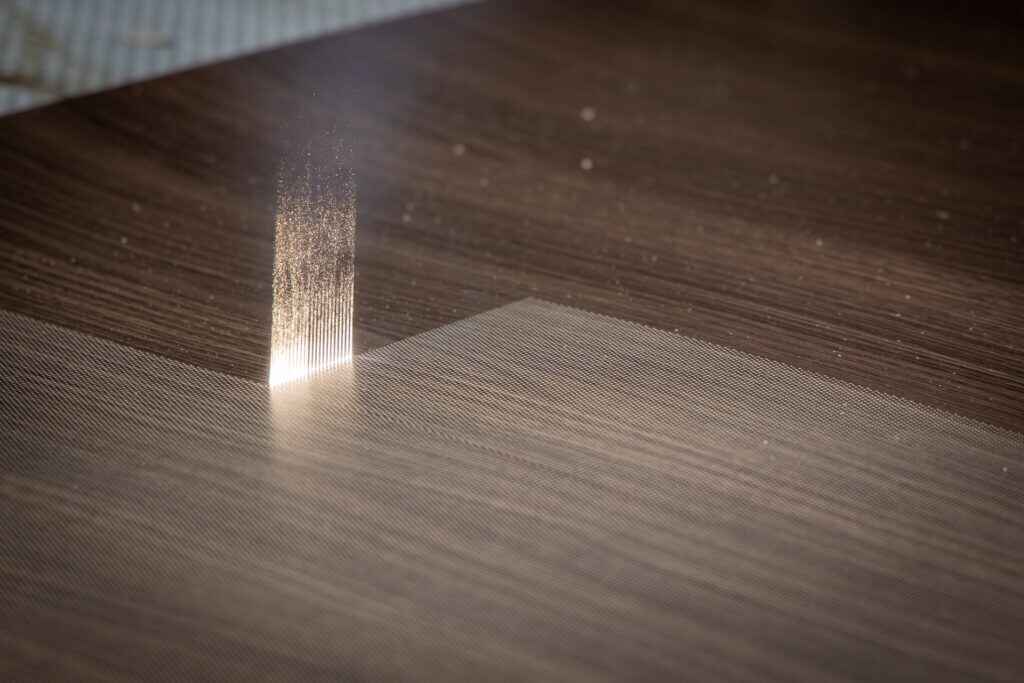
Industrial Applications of Laser Cutting in Wood Processing
Laser reducing wood is not a craft gimmick. In commercial wood processing, it is a regulated thermal procedure utilized for thin plywood, MDF, veneers, attractive panels, product packaging inserts, signage, jigs, themes, and high-mix manufacturing where device wear, configuration time, and repeatability determine margin.

The Awkward Truth About Laser Cutting Wood in Manufacturing Facilities
Laser cutting timber is a thermal splitting up process where a focused laser light beam, normally a 10.6 μm carbon dioxide laser, heats up cellulose, lignin, material, dampness, and adhesive layers up until the product chars, vaporizes, and divides along a CNC-controlled path.
Margins reveal everything.
And in timber handling, the uneasy truth is that lots of purchasers treat laser reducing like a prettier saw, when the genuine value sits in arrangement compression, embedded sheet return, small-batch repeatability, and the capability to move from CAD data to salable component without acquiring another personalized tool, jig, die, knife, or cutter head. Why pretend or else?
I am mosting likely to be blunt: commercial laser reducing timber is not instantly cleaner, faster, or less costly. It wins when the part geometry is slim, thorough, repeatable, and expensive to fixture by traditional means. It sheds when someone attempts to compel a CO2 laser via thick, wet, resin-heavy wood and then condemns the maker for smoke, taper, odor, and a smudged edge.
That is why I would send out a manufacturing manager first to BOGONG’s functional overview on just how CO2 laser cutting machines procedure timber materials before letting them compare sales brochures. The procedure is not magic. It is controlled damage.

Table of Contents
Where Industrial Laser Reducing Timber In Fact Makes Money
The very best commercial applications of laser cutting in wood handling are not unclear “creative uses.” They are measurable production problems: excessive device wear, a lot of setups, way too much hand ending up, too many layout modifications, too much supply danger.
A CO2 laser earns its floor area when the manufacturing facility is reducing thin plywood, MDF, veneer, basswood, bamboo, cork, paper-faced board, packaging board, decorative panels, fretwork, inlays, building designs, acoustic panels, show components, and branding components. If the shop requires the same documents cut 400 times today and modified tomorrow, CNC laser timber reducing begins to look less like deluxe equipment and even more like a bush versus mayhem.
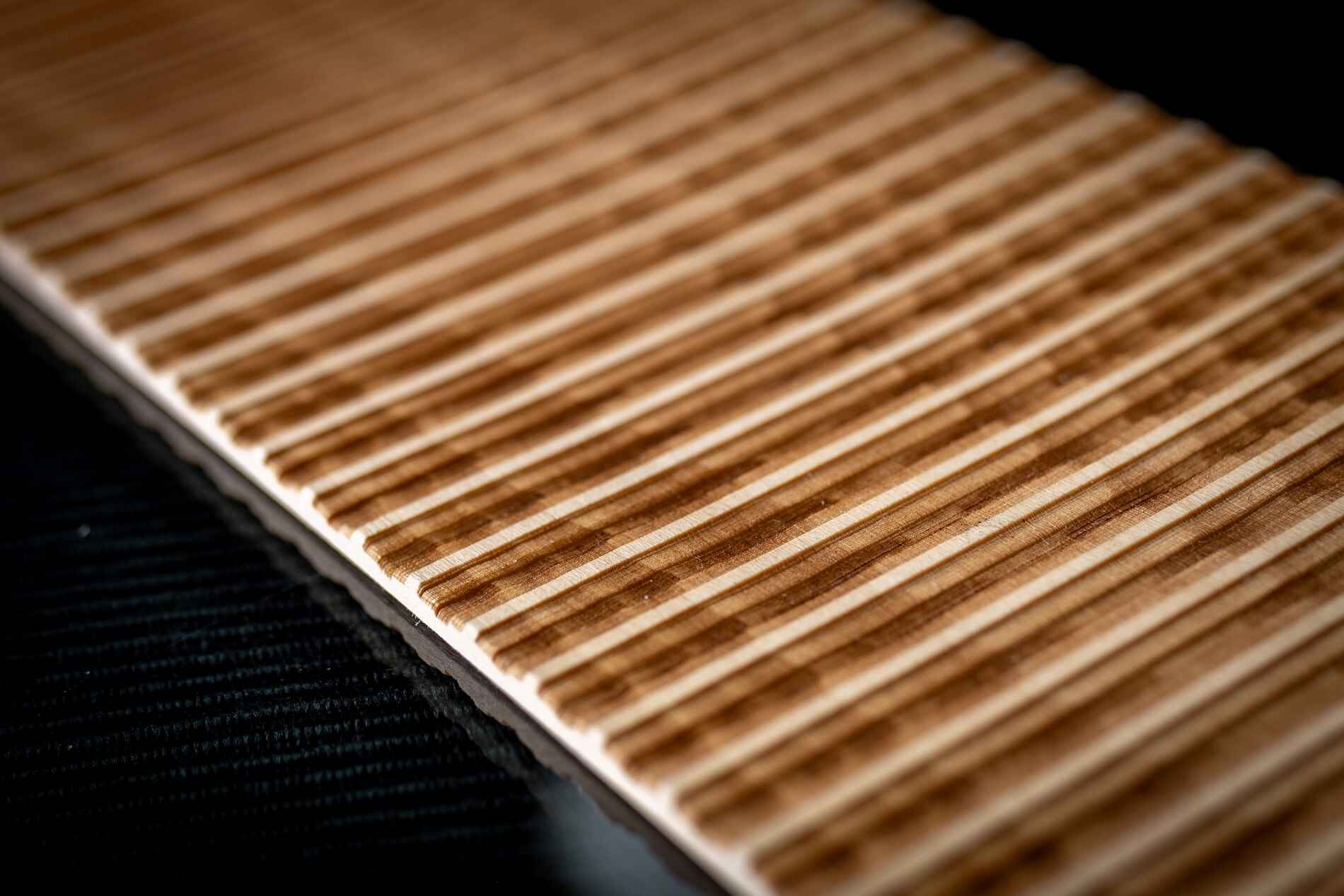
According to BOGONG’s own laser cutting machine for wood page, the process is placed for plywood, MDF, wood, softwood, kitchen cabinetry, furniture production, signs, design making, and ornamental arts. That is the best application map: slim sheet goods, high-detail contours, and non-contact processing where mechanical stress would split, chip, or misshape the work surface.
| Industrial use case | Typical product | Common laser fit | Why manufacturing facilities use it | Failure mode no one likes to state |
|---|---|---|---|---|
| Furnishings inlays and attractive panels | Veneer, plywood, MDF | CO2 laser, 60W– 180W class | Great geometry without cutter babble | Charred edges if speed/power is lazy |
| Packaging inserts and divider panels | Plywood, MDF, fiber board | Carbon dioxide laser with nesting software | Rapid file-to-part process | Smoke discoloration and sticky smell |
| Signage and retail screens | Plywood, bamboo, MDF, acrylic-wood hybrids | CO2 cutting plus engraving | Reducing and branding in one setup | Deforming on cheap sheet stock |
| Building designs | Basswood, thin plywood, cardboard | Carbon dioxide laser, small kerf | Repeatable micro-details | Overburn on little corners |
| Acoustic/decorative perforated panels | MDF, plywood | Larger-bed carbon dioxide laser | High-density opening patterns | Long cycle time if opening count explodes |
| Jigs, templates, assesses | MDF, plywood, acrylic | Carbon dioxide laser | Quick interior tooling | Dimensional drift if kerf is overlooked |
The surprise purchaser error is bed size. Everybody inquires about watts. Less ask whether the maker bed, exhaust circulation, air help, table layout, lens maintenance, and nesting process fit the real day-to-day workload. That is in reverse.
For a store that deals with mixed materials, BOGONG’s wider laser cutting maker application page is likewise worth connecting from this topic due to the fact that commercial buyers hardly ever cut just one substratum for life. Today it is plywood. Tomorrow it is acrylic signs, leather tags, paper packaging, or plastic spacers.
The Data Says This Is a Production System, Not a Hobby Tool
The united state wood product making field is not tiny cottage-industry cinema. A Reserve Bank of St. Louis collection based on U.S. Bureau of Labor Stats information recorded 446.6 thousand work in Wood Product Manufacturing, NAICS 321, in 2024, down from 452.7 thousand in 2023, which tells me manufacturing facilities are still operating at serious commercial scale while being pressed to do even more with less labor hours. BLS timber item production work information reveals the labor base behind the automation discussion.
That issues because laser cutting in timber handling is not practically prettier edges. It is a labor substitution disagreement, a setup-time disagreement, and a SKU volatility debate. If the same crew has to process much more product variants with less hands, a CNC laser cutter gives monitoring a method to relocate complexity right into data, fixtures, nesting policies, and repeatable parameter collections.
The much better evidence originates from product research, not sales talk. A 2023 research in Maderas. Ciencia y Tecnología tested CNC laser handling qualities across several timber types utilizing a 130 W carbon dioxide laser, 80% irradiation, and 10 mm/s cutting rate, after that assessed kerf width and heat-affected area; bamboo massif created the strongest cutting-quality cause that examination set. The 2023 CNC laser timber handling study serves since it confirms the noticeable point numerous catalogs stay clear of: types, grain instructions, thickness, and procedure criteria transform the result.
So when somebody asks, “What is the very best laser cutting approach for timber processing?” I do not respond to with wattage initially. I ask what wood, what glue, what thickness, what moisture content, what tolerance, what edge-color acceptance, what removal system, and what finishing action. Annoying? Yes. Necessary? Additionally yes.
Carbon Dioxide Laser Cutting Timber: Why It Controls MDF, Plywood, and Thin Sheet Job
Carbon dioxide laser reducing wood remains the industrial default because wood takes in the 10.6 μm infrared wavelength successfully, while fiber lasers are developed mainly for steels and do not act the same way on organic, resinous materials.
That sentence needs to conserve individuals money.
For timber, MDF, cardboard, natural leather, acrylic, and numerous organic materials, a CO2 laser typically makes even more manufacturing feeling than a fiber laser. Fiber systems can be excellent for stainless steel, carbon steel, light weight aluminum, brass, copper, and industrial marking, but in wood refining the CO2 system is normally the rational choice. BOGONG’s CO2 laser cutting equipment web page listings CO2 systems targeted at acrylic, thin wood, inscription, cutting, adjustable worktables, conveyor worktables, and 60W– 180W power choices, which matches the actual commercial usage pattern for timber.
The tough truth: if your MDF vendor modifications glue chemistry and your side instantly smells like burned lab furnishings, the laser did not betray you. Your incoming product control did.
MDF is a strangely profitable and punishing substratum. It cuts cleanly when density, resin, dampness, and density correspond. It additionally generates smoke, fine particulates, smell, and brown edge residue that can wreck a weak removal configuration. That is why a customer comparing “industrial laser reducing wood” tools must check out BOGONG’s committed laser cutting machine for timber MDF resource, particularly when examining 40W– 150W CO2 systems and MDF density targets. The web page asserts 100W+ is better for MDF above 6 mm, which is directionally reasonable for production testing, though I would certainly still require sample cuts on the buyer’s actual board set.
The Safety And Security and Conformity Bill Always Arrives
Timber dirt is not harmless store fragrance. OSHA specifies that air-borne timber fragments from fining sand and reducing can cause allergic respiratory system symptoms, mucosal and non-allergic breathing signs, and cancer cells issues relying on exposure and timber type. OSHA’s timber dust support ought to be needed reading for anyone positioning laser reducing tools inside a timber processing plant.
And below is where laser sales duplicate obtains too charming. A laser may reduce mechanical sawdust, yet it does not get rid of airborne threat. It alters the exposure account: smoke, condensates, fine particle, VOCs, material by-products, adhesive decay items, and char smell get in the conversation. Exhaust and filtration are not devices. They belong to the device.
OSHA’s woodworking eTool provides the nuisance dirt acceptable direct exposure restriction at 15 mg/m three complete dust and 5 mg/m ³ respirable portion as an 8-hour time-weighted average, while noting a NIOSH recommended exposure level of 1 mg/m three total dust and an ACGIH 0.5 mg/m THREE TLV for western red cedar as a result of bronchial asthma effects. OSHA’s woodworking dust eTool gives the numbers that ought to shape ventilation discussions, not simply the machine quote.
Composite timber includes an additional layer. MDF, wood plywood, and particleboard might fall under united state formaldehyde rules when made, imported, dispersed, or offered as controlled composite timber products or finished items. The legal foundation is 40 CFR Part 770 for formaldehyde standards in composite timber items, which covers screening, accreditation, labeling, and relevant requirements.
Does laser cutting go against those guidelines by itself? No. But if your production model depends upon MDF, plywood, imported panels, private-label completed goods, or kids’s furnishings elements, pretending material compliance is separate from cutting operations is managerial carelessness.
CNC Laser Timber Cutting vs Transmitting: The Fight Is Typically Misframed
CNC directing gets rid of material mechanically. Carbon dioxide laser cutting wood gets rid of material thermally. That distinction changes kerf size, fixturing, dust, device wear, side finish, noise, reducing deepness, and maintenance habits.
Routers are more powerful for thick structural components, filching, bevels, joinery, and deep material removal. Lasers are stronger for slim sheet accounts, fine indoor geometry, inscriptions, logos, serial marks, micro-perforations, nested panels, and quick layout changes. Anybody claiming one changes the other is selling also hard.
For timber shops doing both cutting and branding, BOGONG’s laser engraving maker for wood web page fits normally beside this write-up because industrial timber processing often requires engraving, marking, traceability, part IDs, logo designs, and decoration after reducing. The smartest manufacturing facilities do not ask whether cutting or inscribing is more attractive. They ask whether the same component and electronic process can create both without relocating the component two times.
My opinion: the very best wood manufacturing facilities will certainly run routers and lasers side by side, then quit having spiritual arguments about which maker is “better.” The much better maker is the one that makes the part to spec, at margin, with less stupid shocks.
How Is Laser Cutting Made Use Of in Timber Processing? A Practical Operations
In manufacturing, laser cutting wood generally starts with a CAD vector data, material choice, sheet inspection, nesting, kerf settlement, emphasis configuration, air-assist adjusting, exhaust confirmation, example cutting, edge evaluation, full-sheet cutting, sorting, odor control, finishing, and QC measurement.
No romance there. Good.
A useful industrial workflow resembles this:
- Define the part family members: decorative panels, inserts, signage, models, layouts, or well-known components.
- Lock the material specification: plywood grade, MDF density, veneer thickness, adhesive type, wetness content, and sheet flatness.
- Develop a specification library: power, speed, regularity or pulse habits, focus countered, atmospheric pressure, nozzle height, and pass matter.
- Step the kerf: do not guess; cut examination discount coupons and determine upper/lower kerf size.
- Control smoke: air assist, wear down speed, purification, bed sanitation, and lens inspection need to be logged.
- End up honestly: cleaning, fining sand, securing, deodorizing, or painting must be costed right into the quote.
- Audit scrap: track turns down brought on by internal gaps, adhesive lines, warped panels, flame-ups, and driver overrides.
The shops that win with CNC laser wood cutting are burning out in the most effective method. They document setups. They deny poor board. They clean lenses. They treat exhaust as production facilities. They do not let drivers freestyle every brand-new batch.
Frequently asked questions
What is laser reducing timber in industrial wood processing?
Laser reducing wood in commercial wood processing is a CNC-controlled thermal cutting approach that makes use of a focused laser beam of light, normally from a CO2 source, to reduce plywood, MDF, veneer, bamboo, hardwood, softwood, cardboard, and attractive panels into repeatable forms without mechanical blade call. It is mostly made use of where fine geometry, fast configuration, and repeatable digital production matter greater than deep material removal.
In simple shop language, the beam of light burns a regulated path while air aid and wear down pull smoke far from the cut. The component high quality relies on power, rate, emphasis, dampness, resin, adhesive chemistry, grain instructions, and driver discipline.
Just how is laser cutting made use of in wood processing?
Laser cutting is used in timber handling to produce decorative panels, furniture inlays, MDF components, plywood product packaging inserts, signage, architectural models, layouts, acoustic panels, branding marks, serial identifiers, and short-run personalized parts from digital data. It changes or supplements saws, passes away, knives, and routers when the geometry is described, the set dimension adjustments commonly, or configuration time is pricey.
The largest advantage is not constantly cutting speed. Usually, it is the capacity to modify a part documents, nest the brand-new geometry, and run production without waiting on tooling.
What is the most effective laser reducing method for timber handling?
The very best laser reducing approach for timber handling is usually CO2 laser cutting with regulated air aid, strong exhaust, proper lens emphasis, verified worldly high quality, and a tested speed-power dish for the exact timber sheet being refined. Carbon dioxide lasers fit wood far better than fiber lasers since wood soaks up the 10.6 μm wavelength more effectively.
For slim plywood, MDF, veneer, basswood, bamboo, and ornamental board, CO2 is the sensible default. For thick architectural wood, transmitting, sawing, or hybrid machining may still beat the laser.
Is CNC laser timber cutting better than CNC transmitting?
CNC laser wood cutting is far better than CNC directing for thin, thorough, non-contact profiles, inscribing, tight interior patterns, ornamental job, and high-mix production where tool changes and fixturing slow the job. CNC directing is better for thick timber, deep pockets, bevels, hefty joinery, architectural components, and applications that need clean non-charred sides.
I would certainly not build a severe wood-processing technique around just one of them unless the item array is slim. A combined store requires both technologies, after that appoints job by component geometry and margin.
Is MDF risk-free to cut with a CO2 laser?
MDF can be cut with a carbon dioxide laser, but it needs correct removal, filtering, product conformity checks, fire control, and sensible expectations regarding smell, smoke, resin by-products, and side discoloration. MDF is dense, adhesive-rich, and variable, so security depends less on the laser brand name and more on ventilation, board top quality, and procedure technique.
Do not cut unknown MDF in a closed area and call it manufacturing. That is not lean production. That is a breathing complaint awaiting documents.
Your Next Actions
If you are reviewing commercial laser cutting timber for furnishings, MDF handling, plywood product packaging, signs, decorative panels, or high-mix CNC production, quit asking just, “The amount of watts do I need?”
Ask this instead: What material, what thickness, what tolerance, what edge shade, what exhaust system, what completing action, and what everyday set volume?
Then take your real plywood, MDF, veneer, or bamboo sheets and demand a sample-cut operations around your actual components. Begin with BOGONG’s CO2 laser cutting maker options, compare them versus your part geometry, and make use of the laser reducing device for timber advice to mount the application prior to buying devices.
Bring drawings. Bring bad product samples. Bring your target cycle time.
That is just how specialists get a wood laser cutting system. Not from hope. From proof.


Hot Click
Contact Us
Application
©Copyright [bogonglaser.com]. BOGONG Laser Machine Supplier All Rights Reserved.