
Laser Reducing vs CNC Routing for Wood Production
Laser cutters win on information, engraving, thin sheet nesting, and non-contact cutting. CNC routers win on thickness, joinery, 3D profiling, filching, hardwood machining, and predictable side stamina. The lucrative solution is rarely "laser or router." It is normally "which process owns which SKU?"

The Expensive Blunder: Treating Laser and CNC as Competing Religious Beliefs
Margins make a decision.
I have seen wood stores throw away six figures due to the fact that a person saw a tidy laser-cut sample at a trade cubicle, neglected to inquire about smoke staining on birch plywood, neglected glue chemistry in MDF, and after that discovered that the “excellent” side was excellent only at demo rate, on demo stock, under demo ventilation, with a service technician standing nearby.
So which machine is much better?
The tough answer: laser cutting vs CNC routing is not an appeal contest; it is a process-control choice. A carbon dioxide laser cutter removes timber by heat. A CNC router eliminates timber by mechanical chip formation. One burns a kerf. The other throws chips. That difference seems straightforward till you run 800 closet panels, 2,400 nested signs blanks, or 10,000 etched gift-box covers and recognize the genuine costs stays in labor, rework, purification, spoilboard monitoring, tooling, and finish preparation.
For timber factories contrasting a CNC router vs laser cutter for timber, I would begin with the product, not the equipment. Plywood glue lines behave in different ways from solid walnut. MDF fumes differently from bamboo. Veneer burns before Baltic birch coatings cutting. Oak dims; poplar fuzzes; phenolic plywood can be hideous under warmth. Any individual offering one global response is either new, careless, or trying to close a quote prior to Friday.
If your store is still specifying the use instance, Bogong Laser’s very own laser cutting device for timber web page is a valuable interior starting point due to the fact that it structures the laser around plywood, MDF, wood, softwood, kitchen cabinetry, signs, version production, and decorative work. That matters due to the fact that laser toughness is normally not brute material elimination. It is pattern thickness, fine information, non-contact cutting, and repeatable attractive output.
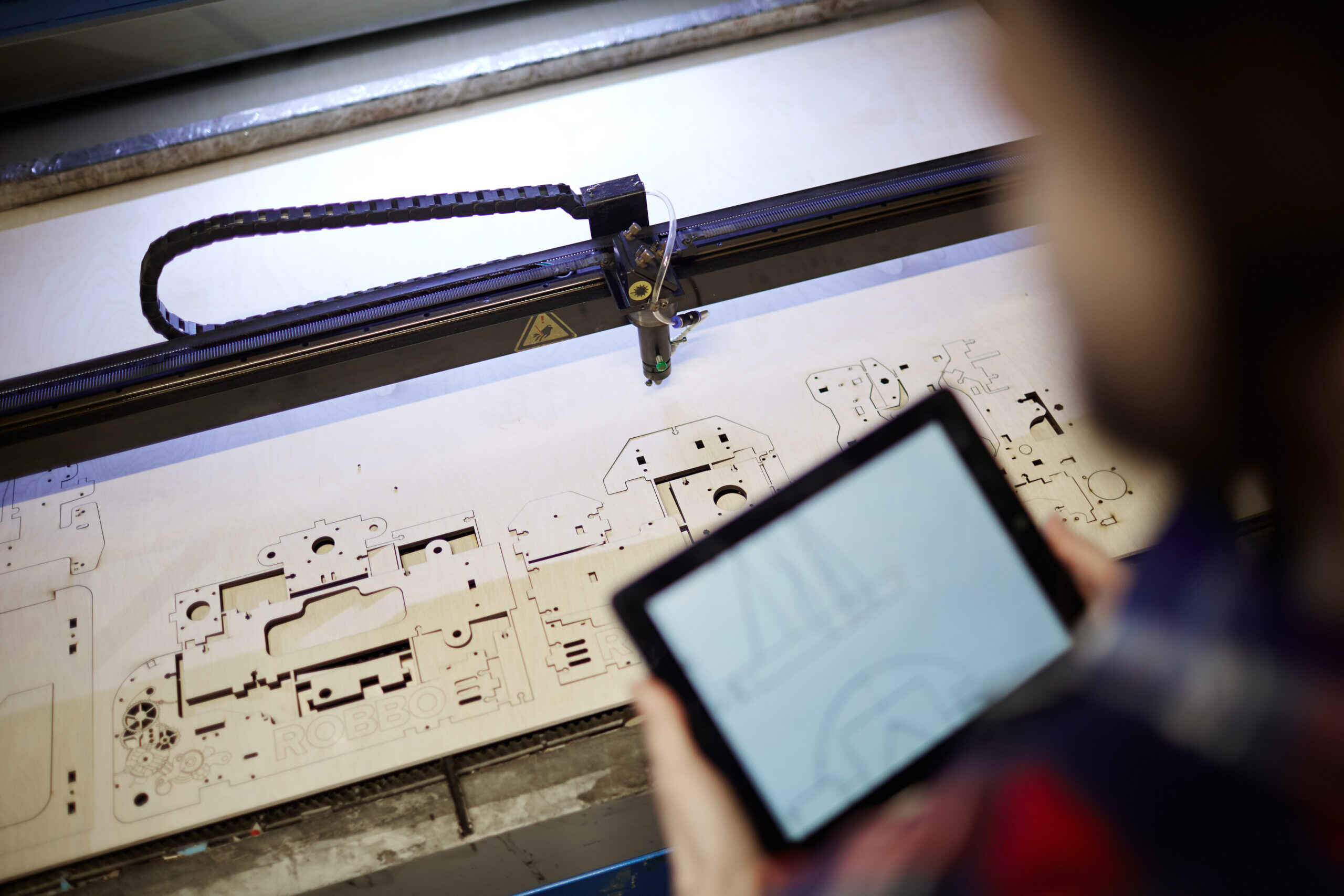
Table of Contents
What the general public Information Claims Prior To the Sales Pitch Begins
Timber manufacturing is not a tiny craft niche. The united state Demographics Bureau’s 2023 Organization Patterns account for NAICS 321 shows 13,900 employer facilities in timber product production, which means equipment choices are being made throughout a real industrial base, not simply Etsy garages and store indicator stores. The Demographics timber product production profile is a sober tip that process option ranges right into pay-roll, safety, and nationwide output, not just edge visual appeals.
Labor is the other half of the story. The BLS May 2023 table for NAICS 321 records 423,390 employees in timber product manufacturing, with all-occupation mean annual wages around $48,240. In simple terms, every minute of sanding, device changing, component flipping, dirt cleanup, and declined ending up hits a labor pool that is already expensive adequate to penalize careless process planning. The BLS timber product manufacturing wage table is not a machine brochure, which is specifically why I trust it a lot more.
And then there is scrap. NIST’s 2023 united state manufacturing economy report estimated flaws at $32.0 billion to $58.6 billion for distinct production, including NAICS 321– 339 leaving out oil and chemicals. That number is not “around woodworking,” but it is definitely regarding the boardroom error of acquiring cutting devices without mapping issues, downtime, and rework initially. NIST’s Annual Record on the United State Production Economy: 2023 makes the unglamorous factor: poor process choices become national-scale waste.
Laser Reducing Timber Manufacturing: Where the Laser Gains Its Keep
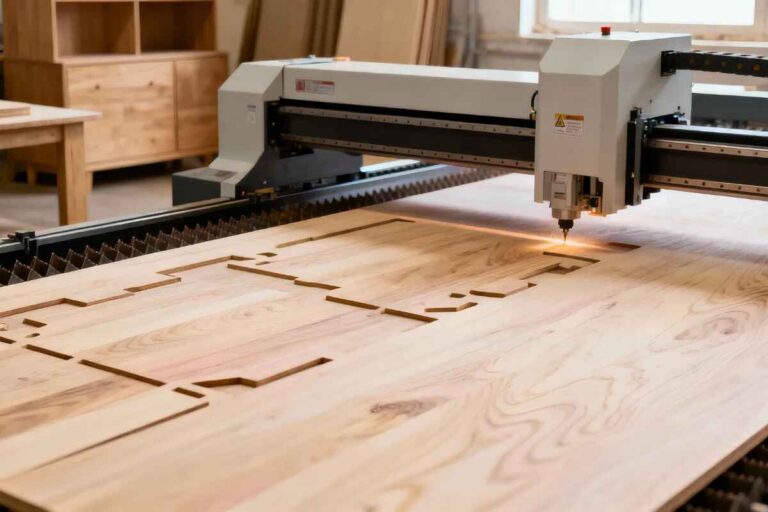
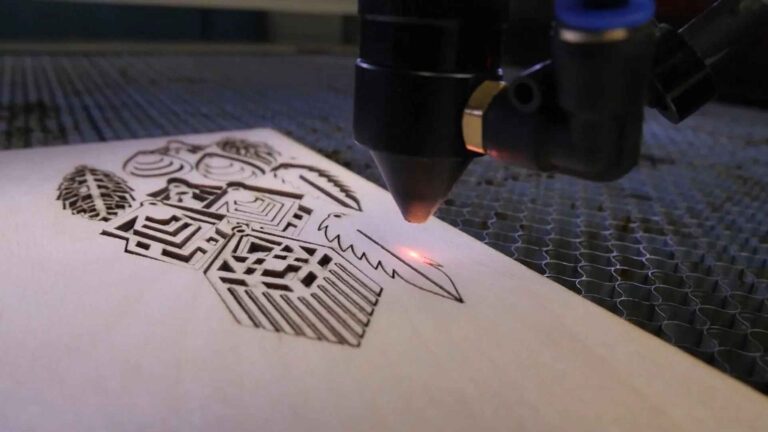
Laser reducing wood manufacturing works best when the worth remains in accuracy details, repeatability, detail, inscription, little kerf geometry, and reduced mechanical force. The laser does not get thin veneer. It does not bend breakable fretwork. It does not need a hold-down strategy for every little interior cutout. That is why laser systems control numerous work in wood packaging, decorative panels, design kits, inlays, accessories, signs, and branded elements.
Yet the equipment is not magic.
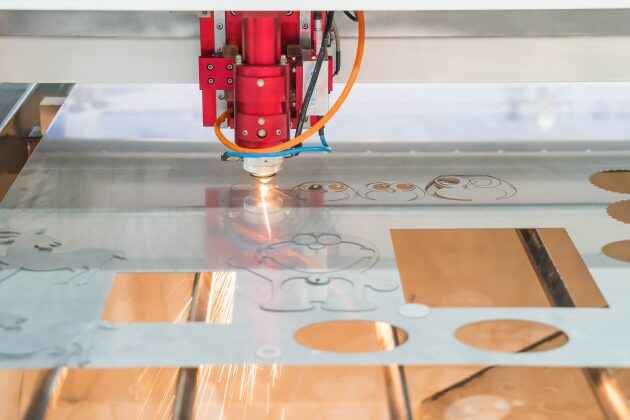
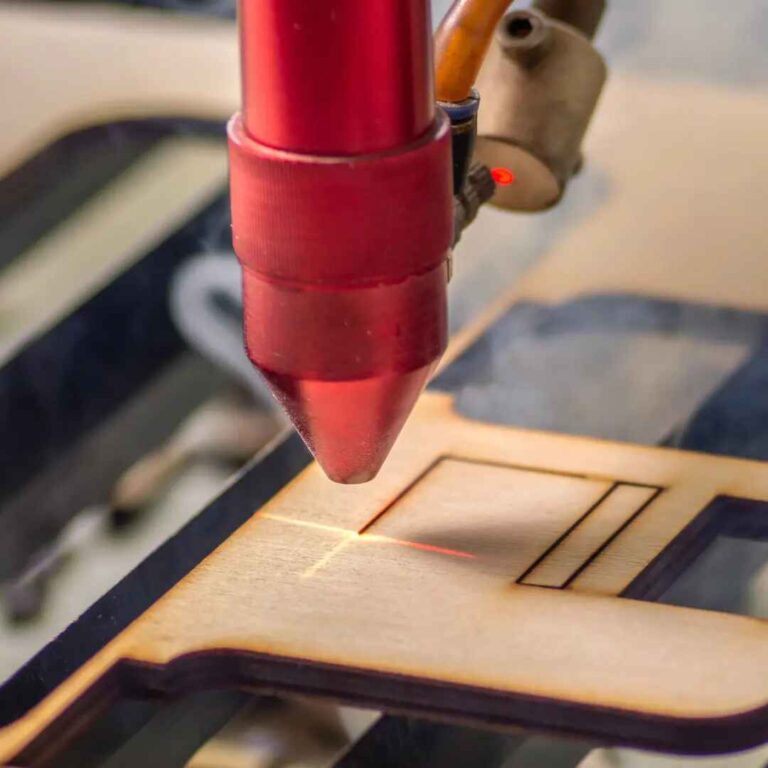
A CO2 laser, typically in the 10.6 µm wavelength class, cuts wood by vaporizing and charring product. That offers you narrow kerf and high information, yet it also gives you heat-affected edges, material behavior, smoke residue, and a completing conversation no one wants to have after the order is authorized.
For MDF and plywood, this gets untidy fast. MDF has timber fiber and binders. Plywood consists of rotating grain directions and adhesive lines. The laser sees those adhesive lines as irregular thermal obstacles, not as a developer’s neat CAD layer. That is why “laser reducing vs CNC router for plywood” is among one of the most straightforward search phrases in this market: plywood subjects every careless presumption.
If you are routing customers towards a wood-specific laser course, Bogong’s laser cutting equipment for timber MDF page is a solid contextual interior web link because it names practical arrangements such as CARBON DIOXIDE 40W– 150W, 5050 fiber 500W– 3000W, and 3020 fiber 300W choices for various wood and MDF jobs. Those varieties must not be dealt with as universal acquiring guidelines; they are better utilized as a starting list for thickness, bed dimension, marking requirements, and mixed-material job.
Laser wins when:
The geometry is dense. The component is slim. The edge can tolerate darkening. The design requires engraving and cutting in one configuration. The work includes fine inner forms that would break under mechanical pressure. The driver needs repeatability more than chip tons adjusting.
Laser loses when:
The wood is thick. The edge has to remain pale. The part requires pockets, rabbets, dados, 3D relief, side profiling, or architectural joinery. The product consists of glue layers that char erratically. The client rejects smoke odor or brownish cut edges.
CNC Routing for Woodworking: The Old Workhorse Still Bites
CNC directing for woodworking is not trendy in the same way a laser is fashionable. Great. Style does not reduce cupboard joinery.
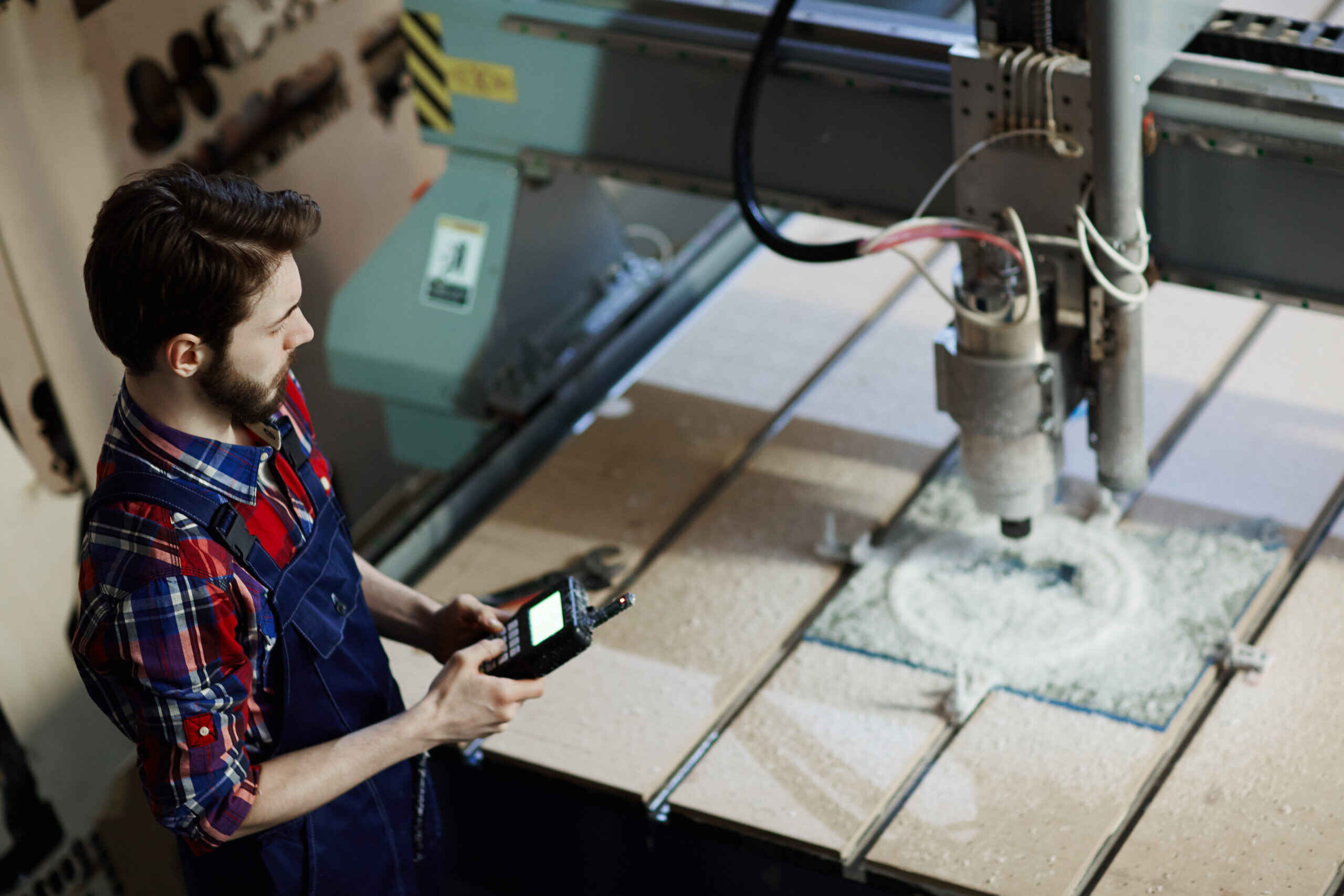
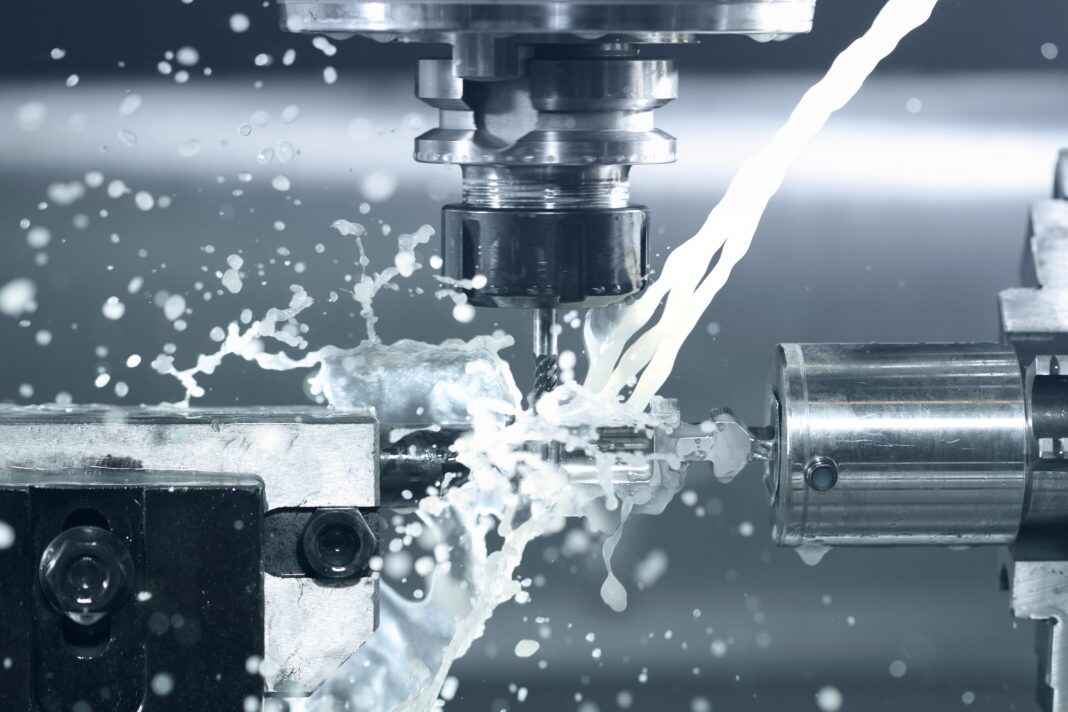
A CNC router eliminates timber with rotating tooling: compression little bits, upcut bits, downcut bits, V-bits, ball-nose cutters, spoilboard emerging tools, and specialized accounts. It can cut 18 mm plywood, pocket a joint recess, profile a hardwood edge, drill shelf-pin holes, and run embedded cabinet production throughout the day if the dust collection, vacuum cleaner table, and toolpathing are rational.
The router is louder, dirtier, and extra physically violent than a laser. Yet it provides you real machining. That difference matters. A laser can cut a flat summary. A router can make an assembly feature.
For anyone writing an internal purchaser course, the Carbon Dioxide Laser Engraver Cutter page should rest near laser-focused areas, while router-heavy comparison copy ought to still acknowledge that CO2 laser cutters and CNC routers address different production problems. Or else the article becomes supplier fantasy, and specialists can scent that instantly.
CNC directing wins when:
The board is thick. The edge needs to be clean after light sanding. The product needs pockets, discounts, profiles, dowel holes, counterbores, mortises, tenons, or 3D contours. The factory currently has dust extraction, device libraries, vacuum coverings, nesting software program, and operators that understand feeds and speeds.
CNC directing loses when:
The design is small, breakable, or full of fine internal information. The task is primarily engraving. Device pressure threats changing parts. Little intermediaries come to be vacuum cleaner leakages. Device put on changes reduce quality midway with a set. The consumer wants dark, high-contrast attractive branding without ink or stamps.
Timber CNC Router Contrast: The Actual Factory Table
| Aspect | Laser Cutting for Wood | CNC Routing for Woodworking | My Difficult Take |
|---|---|---|---|
| Reducing approach | Thermal vaporization and charring | Mechanical chip elimination | Heat makes detail simple; chips make structure possible |
| Finest material density | Thin plywood, veneer, MDF sheets, attractive panels | Medium to thick plywood, hardwood, MDF, laminated boards | Over thin sheet job, routers usually come to be much safer economics |
| Side appearance | Darkened, sealed, occasionally smoky | Natural wood edge, may require sanding | Laser sides offer “crafted”; router edges sell “manufactured” |
| Information level | Exceptional for limited inner geometry | Limited by tool size and workholding | Laser wins lattice; router wins joinery |
| 3D machining | Poor | Solid | A laser is not a cabinetmaking router |
| Engraving | Outstanding | Possible yet slower for great graphics | Usage laser for logos, serials, ornamental surface work |
| Dirt and fumes | Smoke, VOCs, great particulate, filtering called for | Chips, dirt, extraction called for | Neither procedure is tidy; they are unclean in different methods |
| Tooling expense | Lenses, mirrors, tubes or resource upkeep | Little bits, collets, spoilboards, vacuum cleaner seals | Router tooling shows up; laser purification prices are less complicated to underestimate |
| Plywood behavior | Glue lines can char unevenly | Cross-grain layers can chip or splinter | Test the specific provider batch before quoting big work |
| Finest cutting technique for wood manufacturing | Thin, outlined, ornamental, top quality components | Structural, thick, joinery-heavy, dimensional parts | The very best stores split the workload |
Dust, Smoke, and the Security Lie No One Desires in the Quote
Below is the lie: “Laser is tidy since there are no chips.”
No. It is cleaner-looking. That is not the very same thing.
OSHA states wood dust becomes a health issue when air-borne particles from sanding and cutting are breathed in, and its risk acknowledgment page also flags irritability, lung impairment, cancer category problems, bronchial asthma links, and dust explosion possibility. The OSHA timber dust web page and OSHA threat acknowledgment page should be called for analysis before any type of shop owner compares CNC routing vs laser reducing cost on device cost alone.
A router throws noticeable chips and dirt. Everyone sees the mess, so monitoring allocate collection agencies, air ducts, blast gates, containers, and clean-up labor. A laser produces smoke, tar, smell, condensate, and particulate that can disappear into the exhaust system up until filters, air ducts, optics, neighbors, or regulators complain.
That is why I distrust any type of ROI spreadsheet that consists of the equipment, the bed, and the software, however excludes extraction, filtration, fire watch logic, lens cleaning, extra optics, compressor air top quality, and operator training. It is not an ROI sheet. It is bait.
CNC Routing vs Laser Cutting Price: Quit Comparing Acquisition Cost
The least expensive machine is usually the pricey one.
When customers inquire about CNC directing vs laser cutting expense, they normally suggest capital investment: machine cost, products, setup, possibly a rotary axis or refrigerator. That is amateur audit. Specialist shops contrast expense per accepted component.
That consists of:
- Product yield from nesting
- Scrap price from charring, tear-out, shifting, or wrong feeds
- Labor for sanding, cleaning, masking, and sorting
- Consumables: router bits, lenses, mirrors, filters, spoilboards
- Downtime from maintenance and job transition
- Fire prevention and dust collection
- Finishing compatibility
- Driver skill danger
- Consumer being rejected threat
For a laser-heavy shop, Bogong’s laser engraving maker for timber page is a natural inner web link when going over logo designs, ornamental panels, advertising items, and surface area graphics since inscription is where lasers typically develop margin without forcing a complete cut-through process. For factories that require traceability, branding, or long-term ID marks, the laser marking device for wood web page fits even much better.
The unpleasant reality is that the “best” device can be the maker that does much less. If 80% of earnings is level ornamental plywood under 6 mm, acquire around laser throughput and fume control. If 80% is cabinet carcasses, strong timber components, jigs, or joinery, buy around transmitting rigidity, vacuum hold-down, dust extraction, and tooling self-control. If the SKU mix is divided, stop saying and create a two-process cell.
Plywood Is the Test by Fire
Plywood penalizes poor assumptions since it is not one product. It is veneer, adhesive, spaces, grain instructions, moisture, species variant, filler, deal with quality, and batch disparity pressed right into a sheet and sold as if the tag informs the full story.
Laser reducing vs CNC router for plywood normally damages down such as this:
A laser can produce stunning slim plywood components, specifically for versions, inserts, ornaments, packaging, and ornamental overlays. Yet edge darkening, smoke deposit, sticky odor, and glue-line disparity can transform “premium” into “rejected” if the consumer anticipates pale edges or stain-grade coating.
A CNC router can cut thicker plywood with cleaner structural sides, but it can splinter the top or lower veneer unless you use the ideal compression little bit, spoilboard support, feed price, pin rate, and hold-down strategy. Thin components can move. Tiny indoor cuts can become vacuum leaks. Tool size restricts the within corner distance.
So which is better for wood: laser cutting or CNC routing?
For plywood under roughly 3– 6 mm with fine information, the laser often wins. For plywood around 12– 18 mm with architectural use, CNC directing usually wins. For anything in between, run a genuine examination: very same sheet vendor, exact same coating procedure, very same product packaging approach, same operator skill level. Not an example floor tile. A manufacturing set.
The Crossbreed Cell: Where Serious Shops Wind Up
The wise wood maker does not ask, “Should we purchase a laser or a router?” The smart maker asks, “Which SKUs are entitled to warm, which SKUs deserve tooling, and which SKUs should never ever touch either machine?”
I would certainly appoint the operations like this:
Use the laser for embedded slim sheet components, serial marks, logo designs, decorative inscription, high-density interior contours, small-batch personalization, and jobs where non-contact cutting shields delicate geometry.
Utilize the CNC router for cabinet panels, thick plywood, wood accounts, MDF doors, joinery, boring, 3D relief, and parts that should put together cleanly without charred sides.
Usage both when the part requires a directed structural account plus a laser-marked logo design, QR code, ornamental pattern, or personalization layer. That is where margin conceals: not in the machine spec, yet in the handoff between processes.
Frequently asked questions
Which is better for timber production: laser cutting or CNC transmitting?
Laser cutting is much better for slim, in-depth, attractive timber parts, while CNC transmitting is much better for thick, architectural, joinery-heavy, and 3D-machined wood elements. In production terms, laser reducing victories when geometry and noting drive value; CNC routing success when toughness, deepness, pale edges, and mechanical functions matter extra.
In my point of view, stores lose cash when they compel one device to act like the other. A laser is not a taking device. A router is not a high-speed inscription light beam. Match the process to the SKU.
Is laser reducing great for plywood?
Laser cutting is good for thin plywood when the work requires great detail, limited kerf, repeatable lays out, or decorative inscription, however it can produce dark edges, smoke residue, smell, and unequal cutting where glue lines vary. For stain-grade or thick architectural plywood, CNC routing is usually the more secure manufacturing route.
The test is not whether the laser can reduce the plywood. The test is whether the consumer accepts the edge after ending up, product packaging, shipping, and humidity modifications.
Is CNC routing less expensive than laser cutting?
CNC directing can be cheaper for thick boards, cabinet panels, joinery, and architectural wood parts, while laser cutting can be more affordable for slim ornamental sheets, detailed internal cuts, and engraving-heavy batches. The genuine contrast is cost per approved part, not device price, wattage, or priced quote cutting rate.
A router consumes bits and spoilboards. A laser consumes optics, purification capacity, tube or source life, and cleansing labor. Various costs. Same discomfort if you disregard them.
What is the very best cutting method for timber manufacturing?
The most effective cutting approach for timber manufacturing is the technique that creates the needed edge, tolerance, finish, strength, and throughput at the lowest accepted-part cost. Laser cutting, CNC routing, sawing, pass away cutting, and crossbreed handling all have valid functions relying on product thickness, design detail, quantity, and high quality standard.
For a contemporary timber shop, I would rather see one laser and one router used smartly than one large machine anticipated to resolve every trouble terribly.
Can a laser cutter change a CNC router for woodworking?
A laser cutter can not totally replace a CNC router for woodworking because it can not successfully maker deep pockets, rabbets, dados, 3D contours, edge profiles, or heavy architectural parts. It can replace directing on slim decorative sheets, intricate profiles, etching, and some low-force plywood applications where charred sides are acceptable.
That replacement inquiry is dangerous due to the fact that it frames the decision as alternative. In real factories, the much better frame is work splitting up.
Last Thoughts: Build the Refine Prior To Buying the Maker
Do not buy the maker first.
Audit your leading 20 wood SKUs by profits, product, density, defect price, finishing demand, edge assumption, engraving demand, and driver time. Then mark each SKU as laser-first, router-first, crossbreed, or neither. Afterwards, demand examples from the precise products you make use of: exact same plywood grade, exact same MDF vendor, very same veneer, same glue behavior, very same surface.
Then talk with Bogong Laser regarding the wood work where laser handling really carries margin: great plywood cutting, MDF engraving, ornamental panels, top quality packaging, noting, customization, and combined cutting-plus-engraving workflows. Begin with the laser reducing equipment for wood page, contrast it with the wood MDF laser reducing guide, and bring genuine component illustrations, not obscure hopes.
The store that wins is not the store with one of the most impressive equipment photo. It is the store that knows precisely which process needs to touch the wood, why it ought to touch it, and just how much cash is lost each time the wrong procedure does.


Hot Click
Contact Us
Application
©Copyright [bogonglaser.com]. BOGONG Laser Machine Supplier All Rights Reserved.