
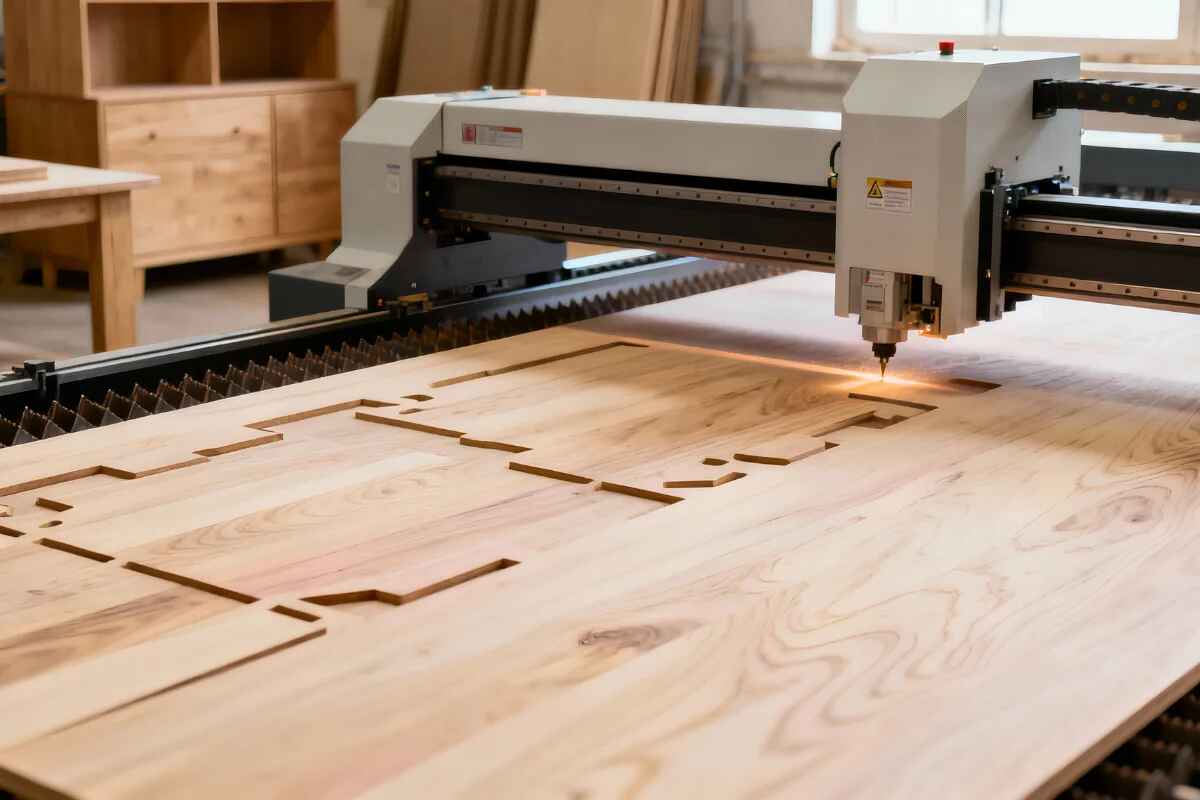
CO2 Laser Cutting Machines for Decorative Wood Panels
Decorative wood panels look effortless when they leave the machine clean, repeatable, and saleable. They are not effortless. This article breaks down how a CO2 laser cutting machine really behaves on plywood, MDF, veneer, hardwood, and acoustic panels, with safety, compliance, and production economics treated as part of the cut—not an afterthought.

The Pretty Panel Is Usually Hiding a Dirty Process
Wood burns first.
That is the first truth I want on the table, because the decorative panel business loves polished photos, clean showroom walls, honey-colored plywood edges, and romantic talk about craft, while the actual factory process is a controlled fight between infrared energy, glue chemistry, smoke behavior, moisture variation, air assist, motion control, and operators who may or may not understand why yesterday’s settings failed today.
So why do buyers still shop for a CO2 laser cutting machine as if wattage alone tells the story?
I have a bias here: I trust test cuts more than brochures. A CO2 laser cutter for wood is not a magic box. It is a thermal tool that happens to be incredibly good at turning vector geometry into repeatable cuts when the material is honest and the machine is specified properly. Decorative wood panels are not honest. Plywood hides voids. MDF hides resin. Veneer curls. Bamboo varies. Basswood behaves until it doesn’t. Walnut veneer can look expensive and still punish a lazy exhaust setup.
That is why a serious buyer should start with the application, not the machine photo. If your goal is fretwork wall panels, cabinet inserts, acoustic panels, room dividers, ceiling screens, hotel lobby decor, signage, model panels, or branded furniture inlays, you need to understand the whole process behind CO2 laser cutting machines, not just the sales line that says “cuts wood.”
The blunt version: the best CO2 laser cutting machine for wood panels is the one that can repeat your worst panel, not your easiest sample.
Why CO2 Still Dominates Decorative Wood Panel Cutting
A CO2 laser operates at about 10.6 µm, which is far-infrared energy. OSHA’s technical manual defines the CO2 laser as a carbon dioxide gas laser with a 10.6 µm output wavelength, and that number matters because organic materials such as wood, paper, leather, acrylic, and many board products absorb that energy efficiently. That is the physics reason CO2 remains the practical default for many non-metal decorative jobs.
Fiber lasers are monsters on metal. I like them for steel, stainless steel, aluminum, brass, and production sheet metal. But for decorative plywood, MDF, veneer, and many non-metal panels, a CO2 laser cutter for wood is usually the right tool because the beam-material interaction is more suitable.
The uncomfortable part? CO2 machines are easy to oversell.
A supplier can say “wood laser cutting machine” and be technically correct. But a professional buyer needs to ask: What wood? What thickness? What glue? What daily volume? What edge color is acceptable? What is the smallest bridge width? What is the maximum panel size? Is the product painted, laminated, oiled, left raw, or installed in a regulated interior environment?
Bogong’s own laser cutting machine for wood page correctly frames the value around plywood, MDF, hardwood, softwood, furniture, cabinetry, signage, model making, and decorative arts. That is the correct application cluster. But inside that cluster, the right configuration can change dramatically.
A craft studio cutting 3 mm basswood ornaments does not need the same system as a shop cutting 9 mm MDF acoustic panels for commercial interiors. Same keyword. Different business.
Table of Contents
The Real Buying Variables: Power, Bed, Optics, Smoke, and Glue
Most buyers ask, “How many watts?”
Bad question.
The better question is: “Can this system cut my material, at my edge standard, at my production volume, without turning my shop into a smoke experiment?”
Here is the range I would treat as realistic for decorative wood panels:
| Decision Factor | What I Watch | Bad Buying Signal | Better Buying Signal |
|---|---|---|---|
| Laser power | 60W, 80W, 100W, 130W, 150W | Buyer chooses the highest number without material testing | Power matched to thickness, speed, detail, and engraving needs |
| Work area | 600×900 mm, 900×1300 mm, 1300×2500 mm | Bed is smaller than standard sheet workflow | Bed size matches panel layout, nesting, and handling |
| Wood type | Plywood, MDF, veneer, basswood, bamboo, hardwood | Supplier says “all wood” | Supplier asks for sample sheets and edge standards |
| Exhaust | Smoke path, airflow, filtration, duct length | “Small fan included” | Defined exhaust volume, filter plan, and maintenance schedule |
| Air assist | Pressure, nozzle geometry, cut cleanliness | Weak airflow burns edges badly | Adjustable air assist matched to detail and thickness |
| Motion system | Belts, rails, controller, acceleration | Fast empty travel only | Clean corners, repeatability, and stable long contour cuts |
| Compliance | FDA/CE/labeling, enclosure, interlocks | No documentation | Clear product safety and import paperwork |
| Support | Lens, tube, mirrors, controller, training | Only price discussion | Spare parts, settings guidance, video proof, test files |
I would rather see a disciplined 100W or 130W CO2 machine with proper exhaust, cooling, rails, optics, and training than a noisy 180W system sold to someone cutting fragile decorative screens with tiny negative spaces. More power can widen kerf, darken edges, reduce engraving finesse, and magnify mistakes.
For wood panel production, wattage is only one line in the invoice. The hidden bill is smoke control, rejected panels, operator learning, lens contamination, chiller quality, batch testing, and the awkward moment when your MDF supplier changes resin behavior without warning.
Decorative Wood Panels Are a Design Business, Not Just a Cutting Business
The market rewards detail.
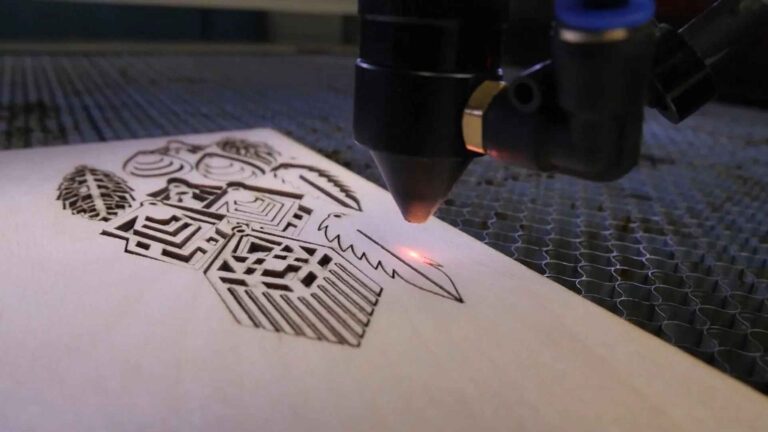
Thin bridges, Islamic geometric patterns, botanical screens, fluted overlays, acoustic slots, brand logos, layered wall art, backlit panels, and custom cabinet inserts all benefit from the low-force nature of laser cutting. A router pushes. A saw tears. A laser removes material without mechanical pressure. That is why a CNC laser cutting machine for wood can make patterns that would be slow, fragile, or impossible with conventional tooling.
But detail has a price.
Small internal features trap smoke. Dense patterns create heat load. Long continuous vectors can warp thin sheet stock. MDF edges darken. Plywood glue lines interrupt the beam. Veneer faces can stain if the masking strategy is lazy. The decorative panel may look simple on a wall, but the file behind it can be savage.
For design-heavy work, I would connect this topic directly to Bogong’s guide on how laser cutting creates complex wood designs, because the core issue is not whether the machine follows a line. Most machines follow a line. The issue is whether the machine holds quality when the design contains hundreds of sharp corners, nested curves, repeated slots, and thin ribs.
That is where cheap machines expose themselves. Not always on the first panel. Usually on the 47th.
The Safety Bill Nobody Wants in the Quotation
Here is my least popular opinion: a decorative wood panel cutting machine without a serious fume and fire plan is not a bargain. It is deferred risk.
OSHA says wood dust becomes a health problem when particles from cutting and sanding become airborne, and breathing those particles may cause allergic respiratory symptoms, mucosal symptoms, non-allergic respiratory symptoms, and cancer. That statement is not anti-laser. It is anti-carelessness.
Then there is combustible dust. OSHA’s 2023 Revised Combustible Dust National Emphasis Program says wood and food products made up an average of 70% of the materials involved in combustible dust fires and explosions in 2018, based on incident reports. That is a nasty statistic for anyone processing wood at scale.
A laser adds ignition energy by design. The beam is supposed to heat material. That does not make laser cutting unsafe; it makes bad procedure unsafe. Clean beds, correct exhaust, attentive operators, accessible extinguishers, material exclusion lists, air assist, enclosure design, and maintenance logs matter.
If a seller talks about speed for ten minutes and never asks about ventilation, I get suspicious.
The same goes for composite wood. EPA’s formaldehyde emission standards under TSCA Title VI apply to hardwood plywood, medium-density fiberboard, particleboard, and finished goods containing those products. For shops cutting MDF decorative panels, that means material sourcing is not a side issue. Your board supplier, labels, bills of lading, and resin chemistry can become part of your product risk.
A CO2 laser engraver for wood can make beautiful patterns. It can also expose poor material decisions very quickly.
The Compliance Trap: Lasers Are Not Just “Machines”
Industrial buyers often forget that a laser system is also a regulated radiation-emitting product. The FDA’s 2024 laser product page states that laser products must comply with radiation safety performance standards in Title 21 CFR Parts 1010 and 1040. That should matter to importers, distributors, and factories buying equipment across borders.
I know compliance documents are boring. I also know boring documents become very interesting when a machine is stopped at customs, an insurer asks for records, or a buyer’s safety team refuses installation approval.
The professional checklist should include:
- Machine classification and labeling
- Enclosure and interlock design
- Emergency stop layout
- Operator training documents
- Exhaust and fire procedure
- Material testing record
- Electrical documentation
- Cooling system requirements
- Spare optics and tube support
- Service response plan
Do not treat paperwork as decoration. Paperwork is evidence. And in industrial purchasing, evidence beats charm.
Where CO2 Laser Cutting Beats Routing, Punching, and Hand Work
CO2 laser cutting wins when geometry drives value. That is the honest dividing line.
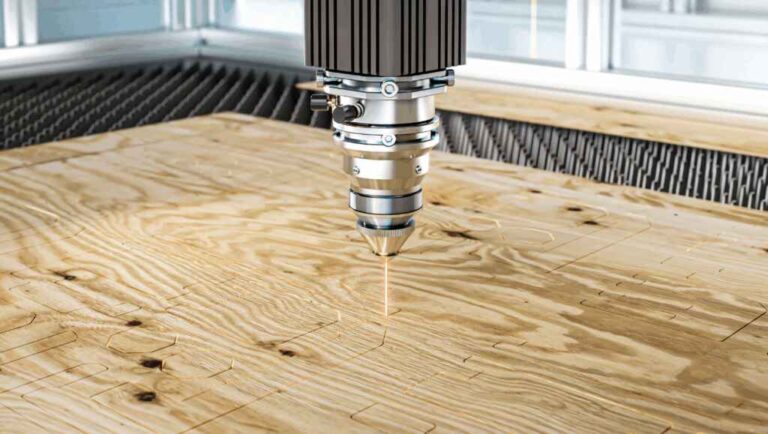
For thin plywood, MDF overlays, veneer inlays, model panels, craft kits, signage, and decorative screens, laser cutting can reduce tooling steps, avoid bit-radius limitations, and make sharp inside corners that routers cannot produce without compromise. The process is especially strong when a shop must produce many design variations without ordering new tooling.
Bogong’s article on laser cutting solutions for wooden craft production makes the right point: the best machine is matched to thickness, volume, bed size, engraving needs, ventilation, and finishing workflow. I would add one more factor: tolerance for ugly surprises.
Because wood surprises everyone.
A router is still better for thick structural joinery, deep pockets, 3D relief, heavy hardwood machining, and clean mechanical edges where burn marks are unacceptable. A saw is still better for rough straight breakdown. A press or die can still win when the same simple shape runs at huge volume.
But for decorative wood panels where the geometry changes and the design sells the product, the CO2 laser is hard to beat.
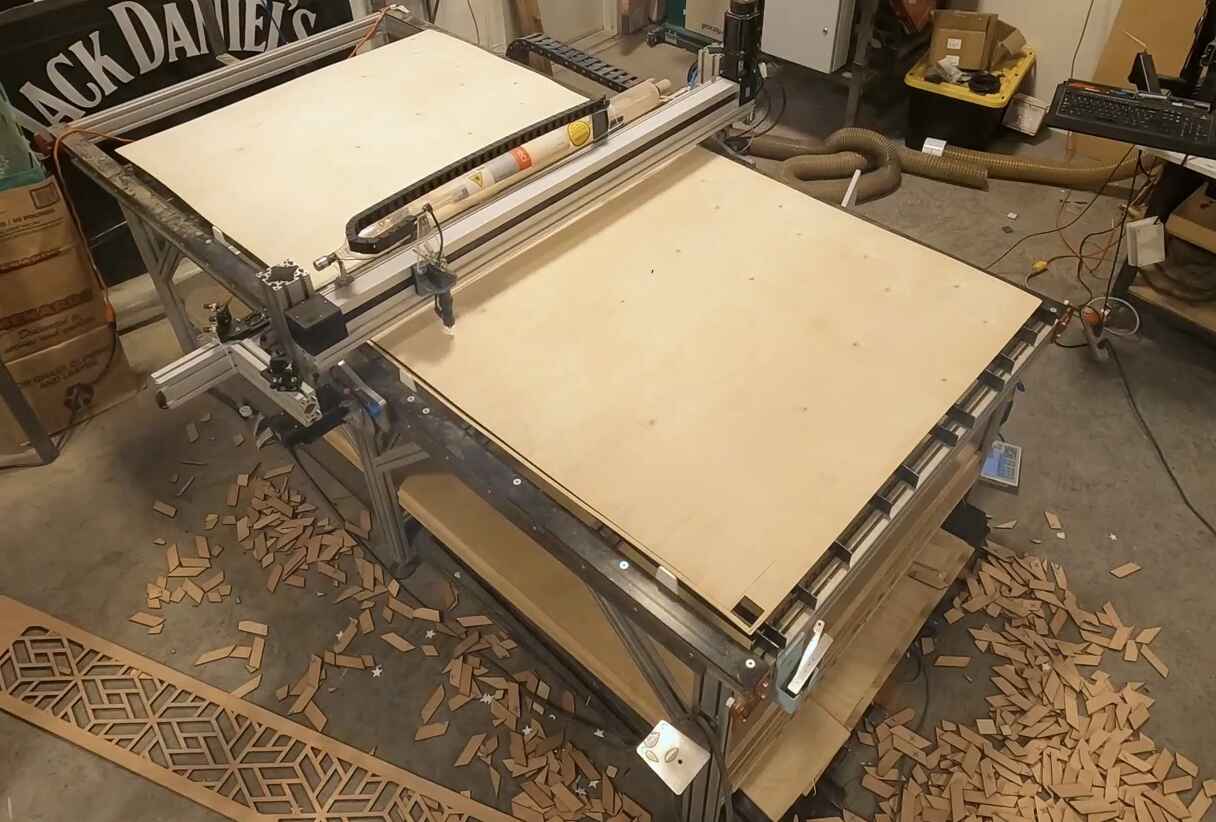
Material Reality: MDF, Plywood, Veneer, and Hardwood Do Not Cut the Same
Plywood is layered politics. Every veneer, glue line, void, and grain direction votes on the final edge.
MDF is consistent but dirty. It cuts predictably in many cases, but it can produce heavy smoke, strong odor, and darker edges. Resin content matters. TSCA Title VI compliance matters if the product enters regulated supply chains.
Veneer is elegant but fragile. It can curl, scorch, stain, or lift if the process is rushed.
Hardwood is honest in one way and annoying in another. The grain is visible, the density varies, and oily or resinous species can create darker edges and more stubborn residue.
Basswood is popular because it behaves. Birch plywood is common because it balances appearance and stability. Poplar plywood can be friendly. Bamboo can be attractive but variable. Laser-grade MDF can work well for decorative panels, but I would never approve it without testing the exact supplier batch.
The dirty truth: “wood” is not a material specification. It is a category label.
If you are evaluating a wood laser cutting machine, send the supplier your actual sheets. Not a similar sheet. Not a prettier sample. The actual sheet your production team will buy by the pallet.
A Practical Parameter Map for Decorative Wood Panels
No responsible supplier should promise universal settings from a blog article. Still, production teams need a starting map.
| Material | Common Thickness | Typical CO2 Power Range | Production Notes |
|---|---|---|---|
| Basswood | 1.5–6 mm | 60W–100W | Good for craft panels, fine detail, and clean light edges |
| Birch plywood | 3–9 mm | 80W–150W | Watch glue lines, voids, edge darkness, and batch variation |
| MDF | 3–10 mm | 80W–150W | Predictable geometry, heavier smoke, darker edge, resin concerns |
| Veneer | 0.5–3 mm | 40W–80W | Needs low heat input, masking, flat hold-down, and gentle air |
| Bamboo panel | 2–8 mm | 80W–150W | Attractive but density and glue behavior can vary |
| Hardwood sheet | 3–8 mm | 100W–150W | Species-specific testing is mandatory; resin and oil change results |
| Acoustic slot panel | 6–12 mm | 100W–180W | Heat accumulation and smoke evacuation become the real fight |
The table is useful. It is not a substitute for a test cut.
A supplier who refuses to test your most difficult vector file is telling you something. Listen.
The Economics: Why the Cheapest Machine Can Be the Most Expensive One
NIST’s 2024 Annual Report on the U.S. Manufacturing Economy reported that manufacturing labor productivity increased only 0.4% between Q2 2023 and Q2 2024. That is the macro version of what many factories feel at floor level: labor is expensive, rework is expensive, and slow setup quietly eats margin.
This is where CO2 laser cutting machines become more than equipment. They become scheduling tools.
A good CO2 laser cutting machine reduces the cost of design variation. It lets a panel shop run small batches, customer-specific patterns, prototype revisions, seasonal designs, hotel project variants, branded inserts, and short-turn samples without waiting for special tooling. That does not mean every laser pays for itself. It means the ROI depends on mix, not just volume.
I would calculate payback using:
- Monthly panel output
- Average rejected panel cost
- Setup time per design
- Labor cost per shift
- Finishing and cleaning time
- Exhaust filter replacement
- Tube life and optics replacement
- Electricity and chiller demand
- Design revision frequency
- Average selling price per panel
A cheap machine can still make money in a low-volume shop. But in commercial decorative panel production, the cheapest machine often becomes expensive through downtime, poor support, unstable motion, weak exhaust, inconsistent optics, and operators who lose confidence.
Confidence has a cost. So does doubt.
Cutting and Engraving Together: Where the Margin Often Lives
Many decorative products do not use cutting alone. They combine cutting, scoring, engraving, and sometimes registration marks in one workflow.
A wall panel may be cut through around the outline, scored along fold or alignment features, and engraved with shallow texture. A cabinet insert may have an outer profile, internal geometric openings, and brand engraving. A signage panel may combine cut lettering with surface shading.
That is where a laser engraving machine for wood becomes relevant to the same buying conversation. If your machine can only cut but cannot engrave cleanly, you may lose higher-margin work. If it engraves beautifully but cuts too slowly, you may lose production capacity.
The better question is not “cutting or engraving?” It is “what percentage of our future products will require both?”
For decorative wood panels, that percentage is often higher than buyers expect.
How to Cut Decorative Wood Panels With CO2 Laser Without Lying to Yourself
The process is straightforward on paper and unforgiving in production.
First, design with kerf in mind. Thin bridges, tight internal corners, and dense perforation fields need minimum-width rules. Do not let the designer export fantasy geometry and dump the problem onto the operator.
Second, test the real material. Measure thickness. Check flatness. Record supplier, batch, moisture condition, and surface finish.
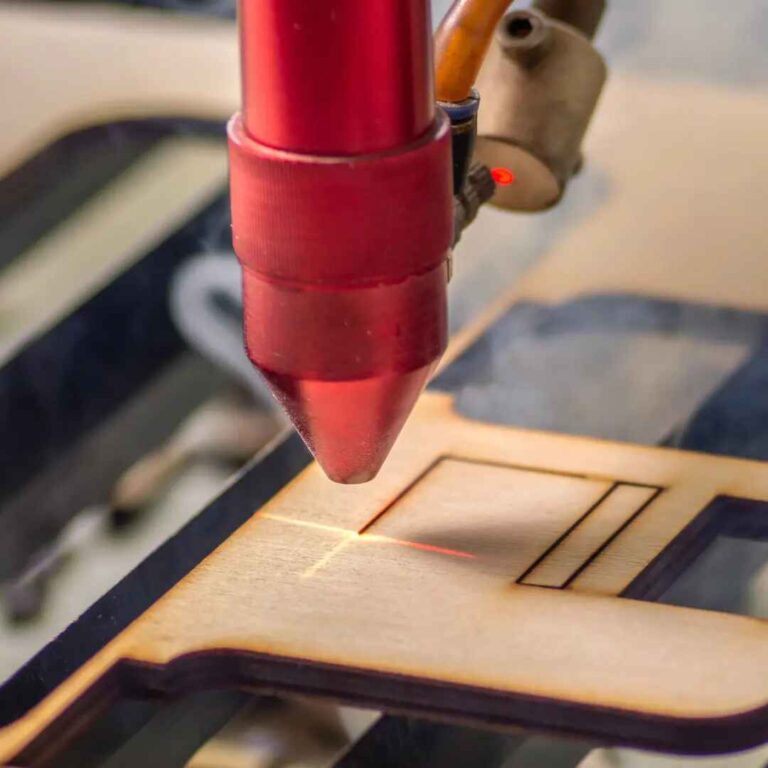
Third, set focus and air assist. A slightly wrong focus can turn clean geometry into a brown argument. Air assist should reduce flame and smoke staining without blowing fragile pieces around the bed.
Fourth, run a small matrix. Test power, speed, frequency or pulse behavior if available, corner performance, and engraving depth. Keep records.
Fifth, inspect the edge. Look for overburn, incomplete cut, excessive taper, resin flare, backside staining, bridge failure, and part movement.
Sixth, verify exhaust. If odor, visible smoke, or lens contamination grows quickly, the machine is not “almost fine.” It is telling you the process is under-controlled.
Seventh, repeat. The second sheet often tells a different story than the first.
For deeper application context, I would pair this workflow with Bogong’s page on laser cut wood panels and wood cutting applications, because the machine selection only makes sense when the actual panel job is visible.
What I Would Demand Before Buying
I would ask for proof, not promises.
Send the supplier your CAD file. Include the smallest slot, narrowest bridge, longest contour, tightest corner, and most annoying internal pattern. Send your MDF, plywood, veneer, or bamboo. Ask for a video of the test cut from setup to part removal. Ask for photos of the top edge, bottom edge, and backside. Ask how they controlled smoke. Ask what lens they used. Ask what power and speed they ran. Ask how often the lens needed cleaning.
Then ask the ugly question: “What would make this fail in my shop?”
Good suppliers answer that question directly. Weak suppliers dodge it.
Bogong’s CO2 Laser Cutting Machine page lists CO2 options for engraving and cutting, including wood and acrylic applications. That is a useful starting point. The final decision should still be based on your panel file, your material, your edge standard, your ventilation plan, and your operator skill level.
FAQs
What is a CO2 laser cutting machine for decorative wood panels?
A CO2 laser cutting machine for decorative wood panels is a CNC-controlled system that uses a 10.6 µm infrared carbon dioxide laser beam to cut, score, or engrave plywood, MDF, veneer, hardwood, and softwood into repeatable furniture, wall, acoustic, signage, and craft components. It is best understood as a controlled thermal process, not a blade-based process. Final quality depends on power, speed, focus, air assist, exhaust, material chemistry, and the panel design itself.
What wattage is best for cutting decorative wood panels?
The best wattage for decorative wood panel work is usually 80W to 150W when the shop cuts thin plywood, MDF, veneer, or basswood, because that range balances edge quality, speed, tube life, cooling demand, optics cost, and engraving control better than oversizing blindly. A 60W machine can work for thinner sheets and lighter production, while 150W to 180W systems may fit thicker panels or faster throughput. Always test the real board before buying.
Can a CO2 laser cut MDF safely?
A CO2 laser can cut MDF safely only when the machine, material, ventilation, filtration, fire monitoring, and operator training are treated as one process, because MDF can contain urea-formaldehyde resin and produces smoke, particulates, odor, char, and glue-dependent emissions during thermal cutting. Use compliant MDF, strong exhaust, documented procedures, clean workbeds, and active supervision. Never treat MDF laser cutting as a casual craft operation in a poorly ventilated room.
How do you cut decorative wood panels with a CO2 laser?
Cutting decorative wood panels with a CO2 laser means converting clean vector geometry into toolpaths, testing the exact board batch, setting focus and air assist, tuning power and speed, controlling smoke, inspecting edge quality, and repeating the process until the result is stable across multiple sheets. The real skill is not making one sample look good. The real skill is making the 50th panel match the first one.
Is a CO2 laser better than a CNC router for decorative wood panels?
A CO2 laser is better than a CNC router for thin decorative panels, sharp internal corners, dense fretwork, engraving, fast design changes, and low-force cutting, while a CNC router is better for thick hardwood, deep pockets, structural joinery, 3D relief, and clean non-burned mechanical edges. The smarter factory does not worship either machine. It matches the process to the geometry, thickness, finish standard, and production economics.
What wood is best for laser cut wood panels?
The best wood for laser cut wood panels is flat, dry, low-resin, consistent in thickness, and made with predictable glue chemistry, which is why basswood, birch plywood, poplar plywood, selected veneers, and laser-grade MDF are common choices for decorative work. Avoid judging by species name alone. Supplier batch, moisture, voids, adhesive, storage conditions, and surface finish can change cut quality more than buyers expect.
Final Thoughts: Stop Buying the Brochure, Start Buying the Proof
A CO2 laser cutting machine can turn decorative wood panels into a profitable product line. It can also become an expensive smoke box with a nice control panel.
The difference is discipline.
Do not buy only by wattage. Do not trust “cuts wood” as a specification. Do not ignore MDF compliance, dust risk, laser safety, exhaust design, or edge standards. And please do not let a salesperson test a clean little sample while your real production file contains 800 internal corners and thin bridges that barely survive handling.
If you are serious about decorative wood panels, send Bogong Laser your real material, your hardest vector file, your target thickness, your daily output, your required edge finish, and your ventilation constraints. Start with the CO2 laser cutting machine options, compare them against your actual panel workflow, and then contact Bogong Laser for a test-cut discussion before you commit capital.
Proof first. Purchase second.


Hot Click
Contact Us
Application
©Copyright [bogonglaser.com]. BOGONG Laser Machine Supplier All Rights Reserved.