
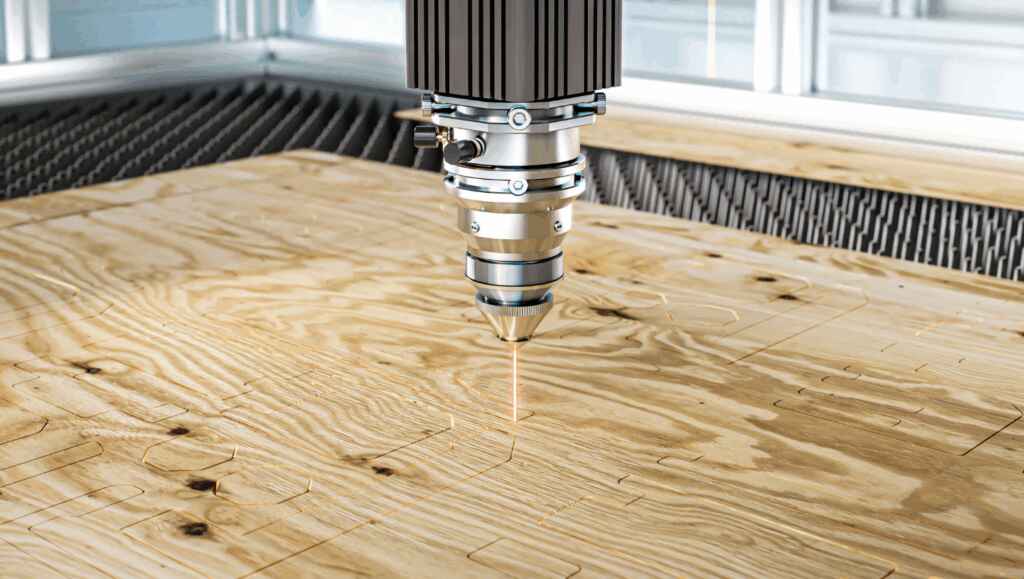
Industrial Wood Processing With CO2 Laser Machines
A hard-nosed guide to using a CO2 laser wood cutting machine in industrial wood processing, covering cutting quality, engraving behavior, dust and fume risk, machine selection, workflow design, and the mistakes that make factories lose money.

Wood burns.
That is the first truth behind every clean-looking panel that comes off a CO2 laser wood cutting machine, and it is also the truth many sales brochures try to hide under glossy words about “precision,” “speed,” and “automation.” A CO2 laser is not a magic pen. It is controlled thermal damage, shaped by optics, airflow, resin chemistry, feed rate, focus height, exhaust pressure, and the operator’s willingness to stop pretending that all plywood is the same material.
So why are serious wood shops still buying these machines?
Because when the process is controlled, an industrial CO2 laser machine can cut details that router bits hate, engrave branding at scale, reduce tool wear to almost zero, and turn digital files into nested production without clamping every small part like a medieval punishment device.
But there is a catch. There always is.
The Real Reason CO2 Lasers Work So Well on Wood
A CO2 laser typically emits infrared energy around 10.6 µm, a wavelength that organic materials such as wood, MDF, paper, leather, and acrylic absorb more effectively than metals. OSHA’s laser safety material also notes that carbon dioxide gas lasers radiate at 10.6 µm in the far-infrared spectrum, which is exactly why a CO2 laser is a natural fit for non-metal processing rather than steel plate work via fiber laser systems.
That wavelength matters. A lot.
Wood is not homogeneous. It is cellulose, hemicellulose, lignin, water, minerals, air pockets, adhesive, pigment, oil, and sometimes whatever bargain glue a panel supplier used on a bad Tuesday. When the laser beam hits it, the surface does not simply “cut.” It heats, decomposes, chars, vaporizes moisture, throws smoke into the kerf, and leaves behind an edge whose color tells you whether the process was smart or lazy.
For readers who want the process mechanics before the buying talk, Bogong’s guide on how CO2 laser cutting machines process wood materials is the natural supporting read because it gets into the beam-material interaction instead of treating wood like a generic sheet.
Here is my blunt view: the best CO2 laser machine for wood is usually not the most powerful one. It is the one with the right balance of laser wattage, bed size, motion control, lens quality, air assist, smoke extraction, and serviceability for your actual material stack.
A 150W laser that cuts dirty plywood all day without proper extraction is not “industrial.” It is a future insurance claim with a touchscreen.
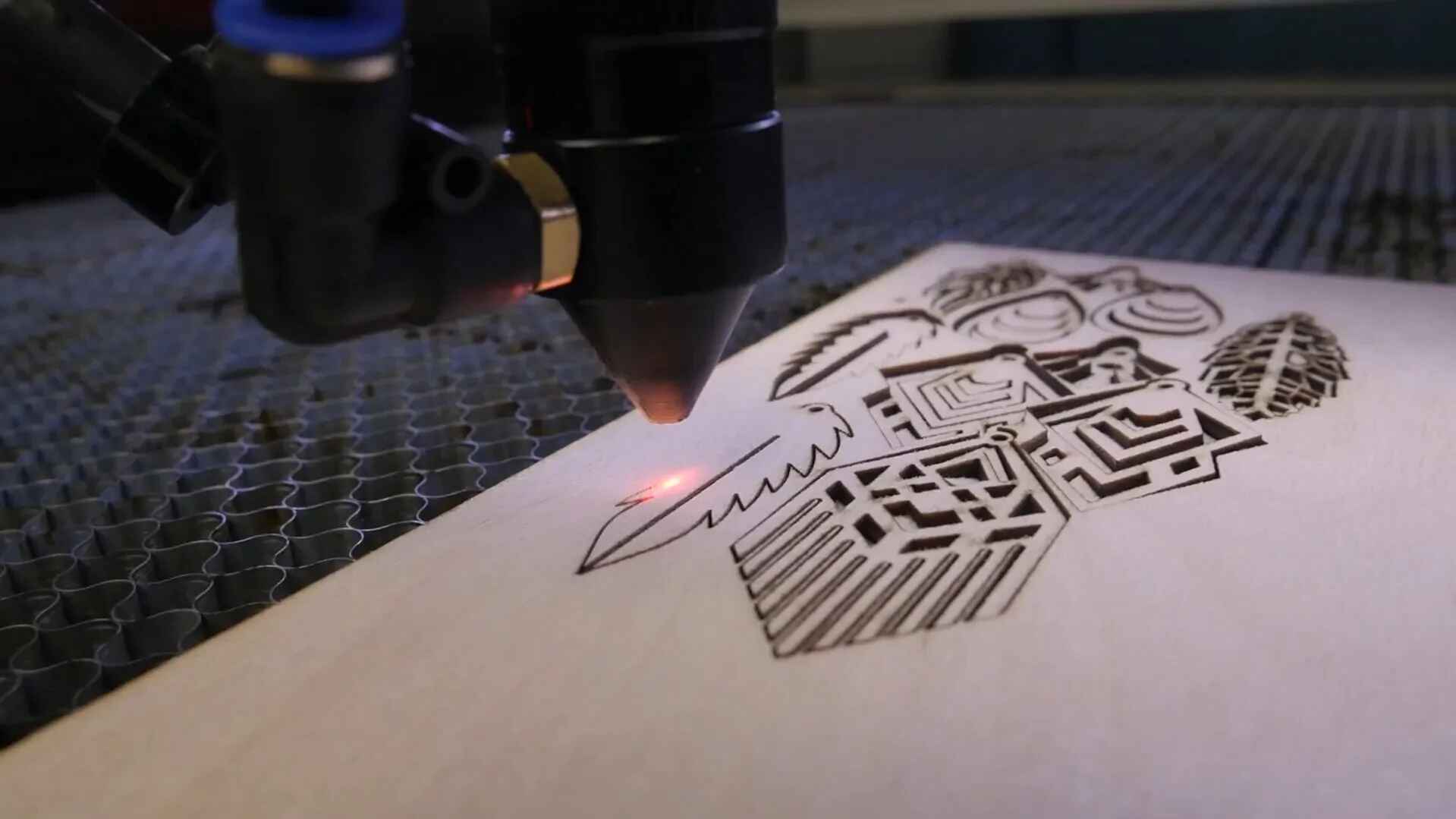
Table of Contents
The Shop-Floor Math: Cutting, Engraving, and Why Throughput Lies
A wood laser cutting machine sells itself on speed, but the real production number is not the top-line travel speed on a spec sheet. It is finished usable parts per hour after smoke stains, edge sanding, sheet loading, nesting loss, rejected knots, lens cleaning, and operator intervention.
Ask the ugly question: how many sellable parts came off the table by 5 p.m.?
In industrial laser wood processing, three jobs dominate:
Profile Cutting
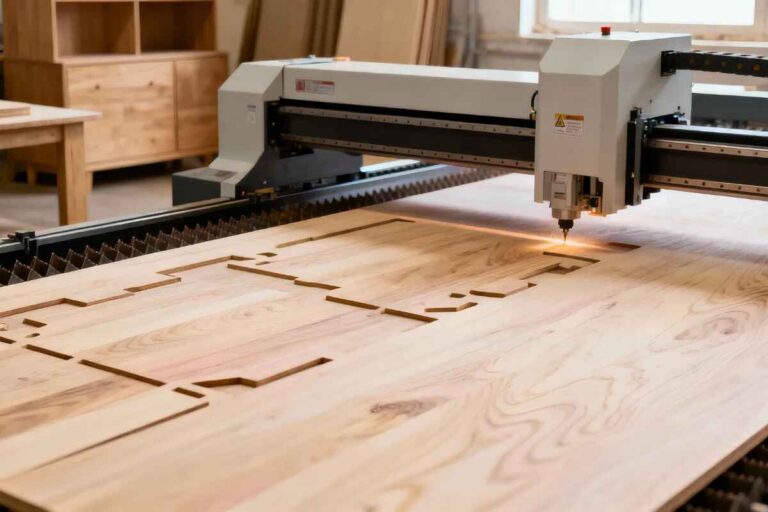
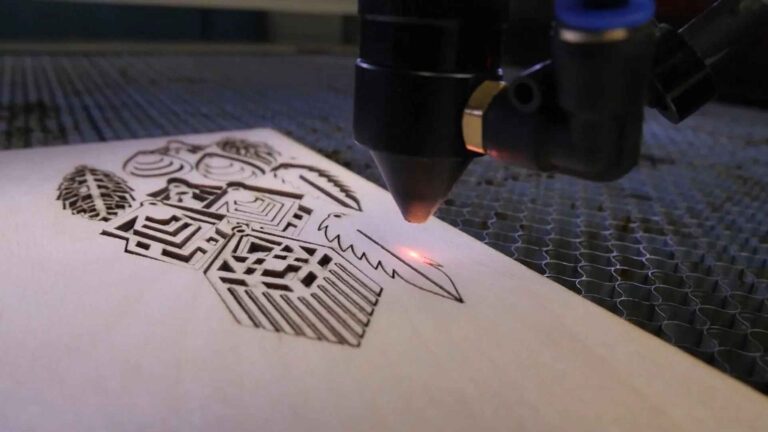
This is where the CNC laser cutter for wood earns its money. Plywood signs, furniture inlays, model components, packaging inserts, decorative screens, architectural panels, wooden crafts, drawer dividers, templates, and thin veneer parts all benefit from tight kerf width and non-contact cutting.
The advantage is obvious: no bit deflection, no tool sharpening, no mechanical drag on thin parts, and no ruined micro-detail because a 3 mm router bit could not turn a corner.
Surface Engraving
CO2 laser engraving wood is more sensitive than most buyers expect. A logo engraved on maple behaves differently from the same logo on bamboo, MDF, birch plywood, walnut veneer, or painted board. Power and speed affect depth, contrast, smoke halo, and tactile feel. Lower power with higher speed may give a clean brand mark; higher power can dig texture, but it may also leave tar, odor, and a dark edge that looks cheap.
This is where a dedicated laser engraving machine for wood makes sense for shops focused on decorative panels, personalized gifts, furniture branding, packaging, and signage.
Hybrid Cutting and Engraving
Laser cutting and engraving wood in one program is where CO2 machines separate themselves from many mechanical systems. You can engrave serial numbers, cut profiles, add perforations, score fold lines, and mark assembly positions in one setup. That reduces handling. Handling is expensive. Handling also causes scratches, misplaced parts, and operator blame games.
For shops comparing non-metal applications beyond wood, Bogong’s laser cutting machine application guide gives a broader view of where CO2 fits versus fiber and UV processes.
The Safety Issue Nobody Wants in the Sales Meeting
Smoke is data.
If your CO2 laser wood cutting machine is producing thick yellow-brown smoke, lingering odor, lens contamination, and blackened edges, the machine is telling you something. Either the material is wrong, the air assist is weak, the exhaust is underbuilt, the focus is off, the speed-power ratio is poor, or the operator is trying to force output through a process window that does not exist.
This is not just cosmetic. OSHA warns that wood dust exposure can irritate the eyes, nose, and throat, impair pulmonary function, and is considered a human carcinogen; the agency also flags fine wood dust accumulation as a fire and explosion hazard in workplaces through its wood dust hazard guidance. In January 2023, OSHA’s revised combustible dust directive stated that wood and food products made up an average of 70% of materials involved in combustible dust fires and explosions in 2018, with wood processing and lumber production repeatedly appearing in incident patterns through its Combustible Dust National Emphasis Program.
That should change how you read a machine quote.
A cheap exhaust fan is not a harmless accessory. A poor dust collector is not “good enough for now.” A dirty honeycomb bed is not a housekeeping issue; it is fuel. And a Class 4 laser without proper enclosure discipline is not a productivity tool. OSHA’s technical laser safety manual describes Class IV lasers as hazardous under direct or diffusely scattered viewing conditions and as potential fire and skin hazards, requiring significant controls in Class IV facilities through its laser safety guidance.
So yes, I like CO2 lasers for wood. I also think too many buyers treat ventilation as a line item to negotiate down. That is amateur behavior.
CO2 Laser Wood Cutting Machine vs Router vs Knife: The Honest Comparison
There is no universal winner. Anyone who says otherwise is selling too hard.
| Processing Method | Best Fit | Weak Point | Edge Quality | Consumables | Typical Industrial Use |
|---|---|---|---|---|---|
| CO2 laser wood cutting machine | Thin to medium wood, MDF, plywood, veneer, detailed patterns, engraving | Heat marks, smoke, fire risk, glue sensitivity | Smooth but can darken or char | Lenses, mirrors, tubes, filters | Signage, crafts, furniture details, panels, packaging inserts |
| CNC router | Thick hardwood, structural boards, deep pockets, joinery | Tool wear, vibration, clamping, corner radius limits | Clean with proper tooling | Bits, collets, spoilboard | Cabinetry, furniture frames, joinery, heavy panels |
| Oscillating knife | Soft sheets, cardboard, foam, gasket-like materials | Poor on hard wood and thick board | Clean on soft media | Blades | Packaging samples, foam inserts, soft sheet conversion |
| Saw cutting | Straight cuts, high-volume board sizing | No fine detail, kerf waste, mechanical setup | Fast but simple | Blades | Lumber sizing, panel breakdown |
The hard truth: a CO2 laser is not a replacement for every saw and router. It replaces the painful work: small details, custom batches, engraving, thin-sheet nesting, complex curves, product personalization, and design changes that would otherwise burn fixture time.
For wood-specific machine selection, the laser cutting machine for wood page is the strongest internal page to support buyers comparing plywood, MDF, hardwood, and softwood applications.
What Industrial Buyers Should Check Before Paying a Deposit
I have a strong opinion here: most bad laser purchases happen before the machine ships.
The buyer sends one clean sample. The supplier cuts it. Everyone smiles. Then the machine arrives and the factory runs cheaper plywood, thicker MDF, humid sheets, warped panels, painted stock, mixed batches, and artwork files designed by someone who has never cleaned a lens in their life.
Then the arguments begin.
Check the Material, Not Just the Machine
Plywood is the trap. Birch plywood, poplar plywood, marine plywood, furniture plywood, and bargain interior plywood behave differently because glue lines change cutting behavior. Some adhesives char heavily. Some release ugly fumes. Some create stubborn edge residue. MDF can engrave beautifully, but it also produces fine dust and dense smoke. Hardwood cuts cleaner in some species and worse in others depending on oil content, density, grain, and moisture.
If a supplier cannot test your real material, your real thickness, your real artwork, and your real batch tolerance, the test is theater.
Match Wattage to Thickness and Duty Cycle
For thin wood crafts, signs, and engraving, many shops live in the 80W–150W range. For heavier industrial panel work, buyers often look higher, but wattage alone does not solve smoke evacuation, bed flatness, focus consistency, or edge staining.
Too little power causes slow cutting and repeated passes. Too much power used carelessly causes wider kerf, darker edge, more flame risk, and rougher detail. The sweet spot is not a number. It is a process window.
Demand Exhaust and Air Assist Details
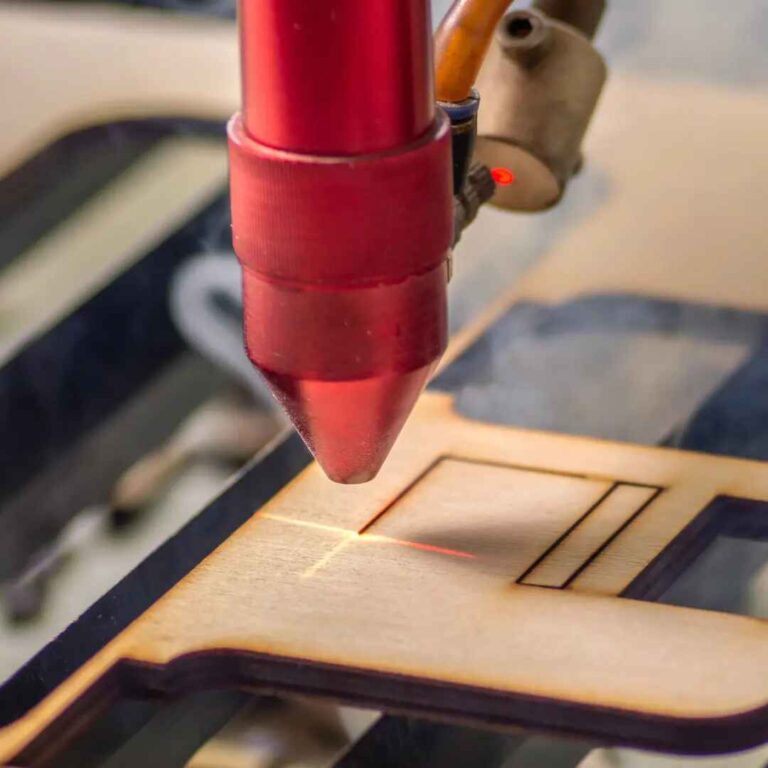
Air assist does three jobs: it helps clear smoke from the kerf, reduces flare-ups, and protects the lens from contamination. Exhaust removes the byproducts before they stain the top surface or attack optics. Weak airflow creates brown halos, unstable cutting, and operator frustration.
A CO2 laser machine without serious airflow planning is a smoke generator with motion control.
The 2024 Labor Pressure Behind Laser Automation
Nobody buys an industrial CO2 laser machine only because it looks modern. They buy it because skilled labor is hard to find, short runs are getting shorter, and customers want customization without paying custom-shop waiting times.
Reuters reported in December 2024 that Japan faces a projected worker deficit of 3.4 million by the end of the decade and 11 million by 2040, citing Recruit Works Institute, while smaller companies provide seven out of every ten jobs in that economy through its report on labor pressure in small-town Japan. That is not only a Japan story. It is a warning to every factory that still relies on one veteran operator to make every difficult job work by instinct.
In the United States, BLS fatal injury data released in December 2024 recorded 34 fatal occupational injuries in wood product manufacturing during 2023, including 17 in sawmills and wood preservation, according to the BLS 2023 fatal occupational injuries table. A CO2 laser does not eliminate safety risk, but it can reduce manual handling, blade exposure, repeated clamping, and tool-contact cutting in the right workflow.
That matters.
But automation is only honest when the process is engineered. A laser does not fix chaotic files, bad material purchasing, weak extraction, or a production manager who thinks maintenance is downtime instead of insurance.
Where CO2 Laser Machines Make the Most Money in Wood Processing
The strongest use cases are not always the obvious ones.
Decorative Panels and Interior Products
Perforated screens, wall panels, lamp shades, acoustic-style decorative surfaces, branded retail displays, hotel décor, restaurant signage, and custom partitions are excellent candidates. The laser’s value is repeatable geometry, fine internal cuts, and fast design revision.
Furniture Components and Inlays
For furniture shops, the value is not replacing every router. It is cutting veneer inlays, logos, templates, decorative trim, small batch parts, and custom features without waiting for tooling. The machine becomes a digital detail department.
Packaging, Fixtures, and Inserts
Wooden boxes, foam-and-wood hybrid inserts, display stands, assembly jigs, and protective packaging can be cut and engraved quickly. A shop making product packaging can use one CO2 laser for branding, cutting, scoring, and small-batch layout changes.
Wooden Crafts at Production Scale
Small craft sellers often think like hobbyists. The profitable ones think like factories. Nesting efficiency, batch labeling, jig design, smoke masking, and repeatable finishing decide margin. Bogong’s article on laser cutting solutions for wooden craft production fits naturally here because craft production is where small inefficiencies quietly eat the business.
The Buying Mistakes I Would Not Forgive
Some mistakes are understandable. These are not.
Buying only by wattage is one. A 180W tube with poor optics and weak exhaust can produce worse commercial results than a balanced 100W system with clean motion and disciplined airflow.
Ignoring bed size is another. If your raw sheets are 1220 × 2440 mm but your laser bed forces constant pre-cutting, you have moved labor upstream instead of removing it.
Forgetting service access is worse. Mirrors need alignment. Lenses need cleaning. Belts, rails, tubes, chillers, fans, filters, and sensors need attention. If the machine is designed like a sealed mystery box, your maintenance team will hate it by month three.
And then there is the ugliest mistake: cutting unknown materials because “it smells okay.”
Do not cut PVC. Do not casually cut mystery composites. Do not trust painted, laminated, or adhesive-backed materials without knowing their chemistry. Chlorine-containing materials can produce corrosive and toxic byproducts. Some foams are nasty. Some coatings are worse. Wood is already chemically complicated; do not add ignorance to the recipe.
For shops ready to compare commercial equipment rather than theory, the CO2 laser cutting machine page is the most direct internal route because it connects the wood discussion to actual CO2 cutting equipment.
Practical Setup: How to Process Wood With a CO2 Laser
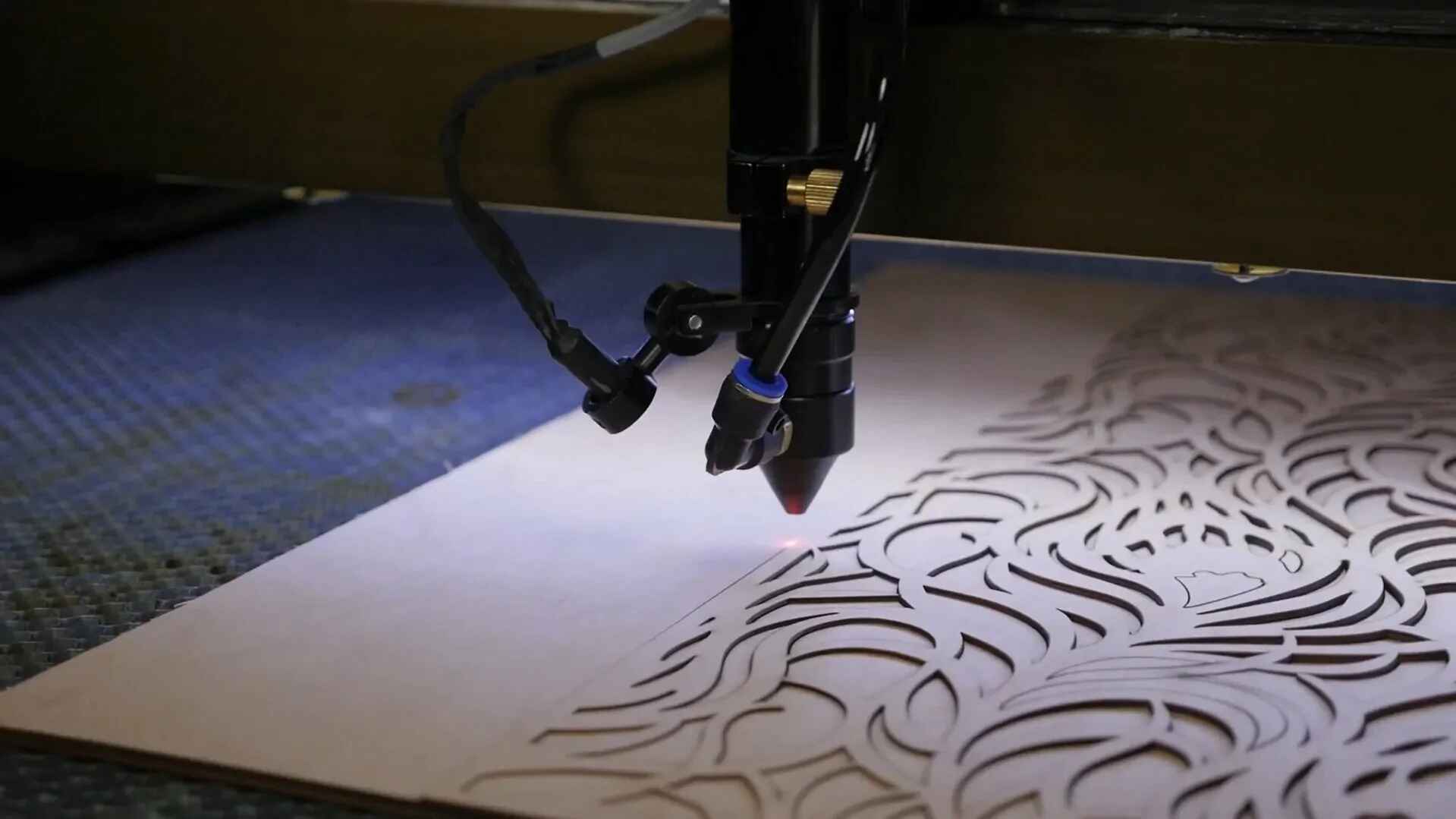
Start with the sheet, not the software. Check thickness variation, moisture, glue lines, warp, surface finish, and whether the material came from the same supplier batch as your test piece.
Then run a controlled parameter grid. Use one material, one lens, one focus setting, and one air assist pressure. Change speed and power deliberately. Record results. Do not trust memory. Memory lies when production is late.
A clean workflow looks like this:
- Confirm material safety and supplier consistency.
- Set focus height using the actual sheet surface.
- Use masking when top-surface smoke staining is unacceptable.
- Run air assist strong enough to clear smoke but not so aggressive that it disturbs small parts.
- Use proper exhaust with make-up air, filtration strategy, and fire-aware housekeeping.
- Test cut small geometry, not just straight lines.
- Inspect bottom edge, top halo, kerf width, part drop-out, smell, and lens contamination.
- Save parameters by material name, thickness, supplier, lens, and date.
That last point is boring. It is also where serious shops win.
FAQs
What is a CO2 laser wood cutting machine?
A CO2 laser wood cutting machine is a CNC-controlled system that uses a focused carbon dioxide laser beam, commonly around 10.6 µm, to cut, engrave, score, or mark wood-based materials by heating and decomposing the surface along a programmed digital path.
In practice, it is best for plywood, MDF, veneer, hardwood sheets, softwood panels, wooden crafts, signage, decorative panels, and engraved branding. Its real advantage is non-contact processing: no cutting bit pushes against the material, so thin parts and fine internal details can be produced with less mechanical distortion.
Is a CO2 laser better than a CNC router for wood processing?
A CO2 laser is better than a CNC router for thin sheets, detailed profiles, engraving, tight internal corners, and fast design changes, while a CNC router is usually better for thick hardwood, deep pockets, structural joinery, and applications that require clean non-charred edges.
I would not frame this as one machine killing the other. In a serious shop, the router handles mass removal and thick parts; the CO2 laser handles detail, personalization, decorative cutting, thin panels, templates, and fast-turn custom work. The winning setup is often both.
What wood materials can be processed with a CO2 laser?
A CO2 laser can process plywood, MDF, hardwood, softwood, veneer, bamboo, cork, thin timber sheets, and many engineered wood panels, but the cutting quality depends heavily on resin type, density, moisture content, glue lines, surface coating, thickness, and exhaust performance.
The safest way to qualify material is to test the exact board you plan to buy in production volume. Do not assume “3 mm plywood” is one material. In laser processing, the glue can matter as much as the wood.
How much laser power is best for wood cutting and engraving?
The best laser power for wood cutting and engraving depends on thickness, density, cutting speed, edge-color tolerance, engraving depth, and daily duty cycle; many commercial wood applications sit around 80W–150W, while heavier industrial cutting may require higher power and stronger exhaust.
A higher-watt machine can cut thicker stock, but it can also widen the kerf and darken edges if run carelessly. For engraving, control and consistency often matter more than raw wattage. For cutting, power must be paired with airflow, optics, bed design, and chiller stability.
Is CO2 laser engraving wood safe?
CO2 laser engraving wood is safe only when the machine has proper enclosure, extraction, air assist, fire monitoring, clean optics, trained operators, and verified material chemistry, because wood smoke, fine dust, hot debris, flame, and unknown adhesives can create health, fire, and equipment risks.
The dangerous part is complacency. Many shops treat engraving as harmless because the cut is shallow. But shallow engraving can still generate smoke, odor, fine particles, and deposits on lenses and rails. Safety is not about fear; it is about process control.
Final Thoughts: Build a Laser Process, Not a Laser Corner
Industrial wood processing with CO2 laser machines is profitable when the buyer stops shopping like a hobbyist and starts thinking like a process engineer.
Choose the machine around your material thickness, bed size, production volume, engraving needs, smoke control, operator skill, maintenance plan, and finishing requirements. Test real samples. Demand cut data. Budget for ventilation. Record parameters. Train operators. Clean the machine before it punishes you.
If you are planning to add a CO2 laser wood cutting machine to a production line, start with your real material list and your target daily output, then contact Bogong Laser through the CO2 laser cutting machine page to match bed size, power, exhaust setup, engraving needs, and industrial workflow before you commit capital.


Hot Click
Contact Us
Application
©Copyright [bogonglaser.com]. BOGONG Laser Machine Supplier All Rights Reserved.