
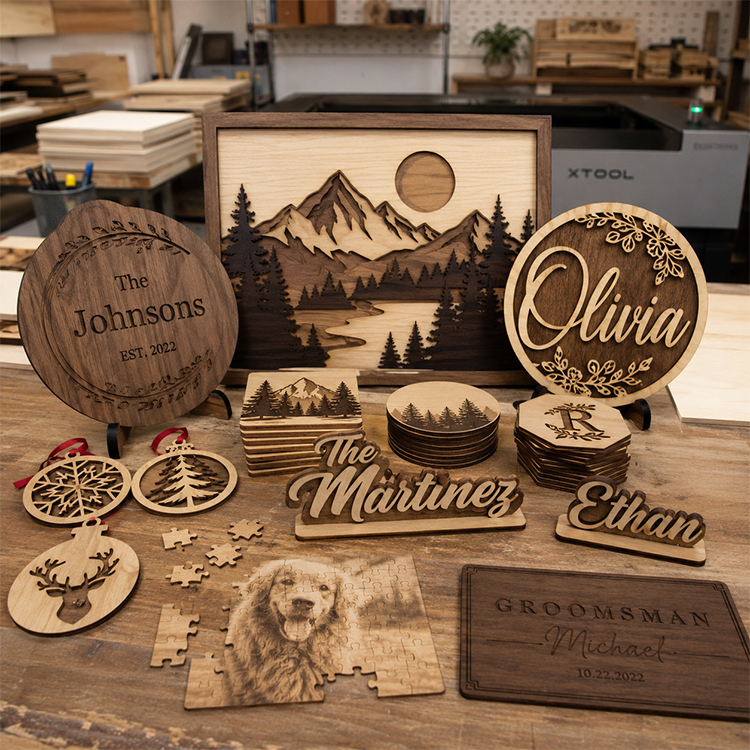
Laser Cutting Solutions for Wooden Craft Production
Wooden craft production is not won by buying the prettiest machine. It is won by matching wood species, glue chemistry, kerf control, ventilation, batch testing, and real order volume to the right wood laser cutter.

The Uncomfortable Truth About Wood Laser Cutter Buyers
Wood remembers heat.
A wood laser cutter does not “slice” timber in the romantic way tool sellers like to imply; it concentrates thermal energy into cellulose, lignin, resin, adhesive, moisture, and air gaps, then depends on motion control, air assist, exhaust, and material discipline to keep that burn narrow enough to look intentional.
So why do so many workshops still shop by wattage alone?
I’ll be blunt: most failed laser cutting wood crafts businesses do not fail because the machine cannot cut. They fail because the owner buys a wood laser cutting machine before understanding plywood glue lines, MDF smoke density, kerf compensation, delivery packaging odor, and the boring economics of repeatable production. That is the hard part. Not the beam.
For wooden craft production, the useful question is not “What is the best laser cutter for wood crafts?” The better question is uglier: what sheet thickness, what product mix, what daily output, what acceptable scorch level, what exhaust route, and what reject rate can the business survive?
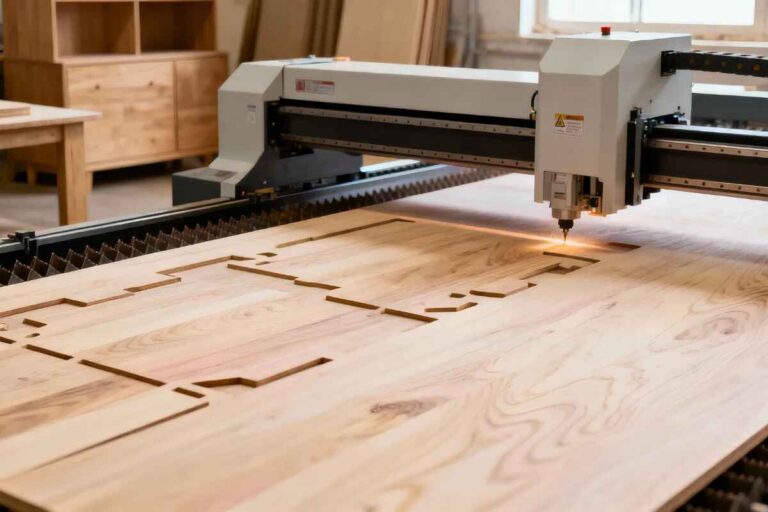
If you are comparing machine categories, start with Bogong’s own laser cutting machine for wood page because it frames the material group correctly: plywood, MDF, hardwood, and softwood are not one material wearing four names. They behave differently under the same beam. That matters more than brochure poetry.
Demand Is Real, But It Is Not Forgiving
The market wants personalized wood.
That does not mean the market will forgive sloppy edges, smoke-stained packaging, warped ornament sets, or engraved wedding signs that smell like burnt glue when the customer opens the box.
In Etsy’s 2024 annual filing, the company reported $12.6 billion in gross merchandise sales, 8.1 million active sellers, 95.5 million active buyers, and more than 100 million listed marketplace items; it also stated that roughly 30% of 2024 GMS came from custom or made-to-order merchandise, which is exactly the demand pocket where laser cut wood products live. Read the Etsy 2024 SEC filing and you can see the uncomfortable signal: custom demand is big, but crowded.
Reuters reported in July 2024 that Etsy beat quarterly revenue expectations partly because of steady demand for personalized gifts, with gifting GMS up 4.1% year over year in that quarter. That is good news for shops making ornaments, plaques, puzzles, name signs, party décor, branded packaging, and wedding table numbers. It is also bad news if your only strategy is “upload SVG, press start.”
Here is my opinion: personalization is not a niche anymore. It is a margin fight. The operator with cleaner files, cleaner exhaust, cleaner finishing, cleaner shipping, and cleaner repeatability beats the operator with a louder machine spec.
CO2, Diode, Fiber: Stop Mixing Up the Tools
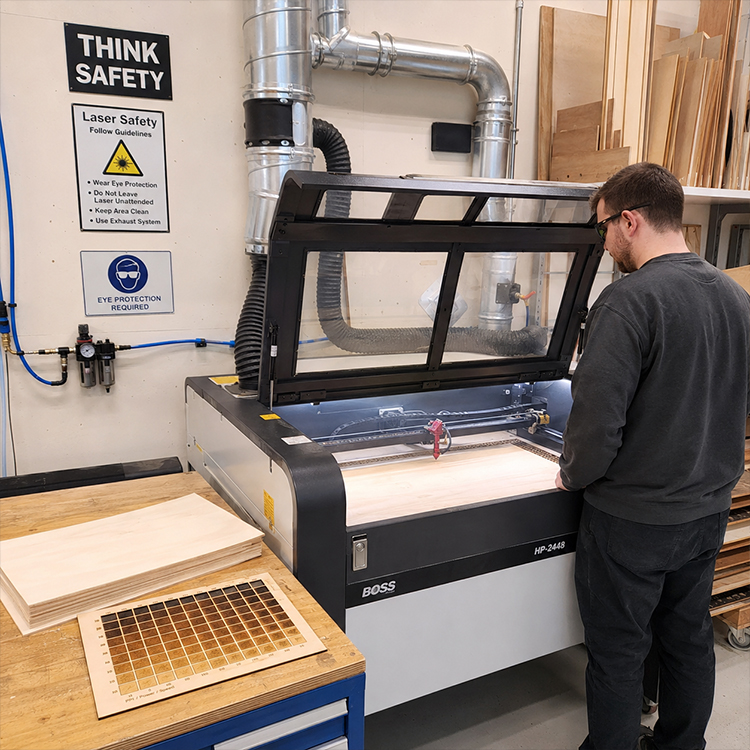
A CO2 laser is usually the serious production answer for wood because the 10.6 µm infrared beam couples well with organic materials such as plywood, MDF, basswood, bamboo, walnut, rubberwood, and veneer board. Diode lasers can work for engraving and light cutting, but they often crawl when sheet thickness rises. Fiber lasers are superb for metals, not the default choice for wooden craft production.
That sentence will annoy some hobby forums. Fine.
If you need both cutting and engraving, review Bogong’s laser engraving machine for wood resource alongside its cutting pages because many craft businesses need two revenue modes: through-cut parts and surface-marked customization. A sign shop may cut 3 mm birch plywood letters in the morning and engrave logos on walnut plaques in the afternoon. Same customer base. Different process behavior.
For wider material planning, Bogong’s laser cutting machine application page is also useful because wooden craft shops rarely stay wood-only forever; they drift into acrylic, paper, leather, plastic tags, packaging inserts, and mixed-material gift sets once order volume grows.
Table of Contents
Material Behavior: The Table Most Sellers Avoid
The cheapest board is often the most expensive board after rejected parts, lens cleaning, odor complaints, and rework.
| Material | Typical Craft Use | Laser Behavior | Main Risk | My Production Advice |
|---|---|---|---|---|
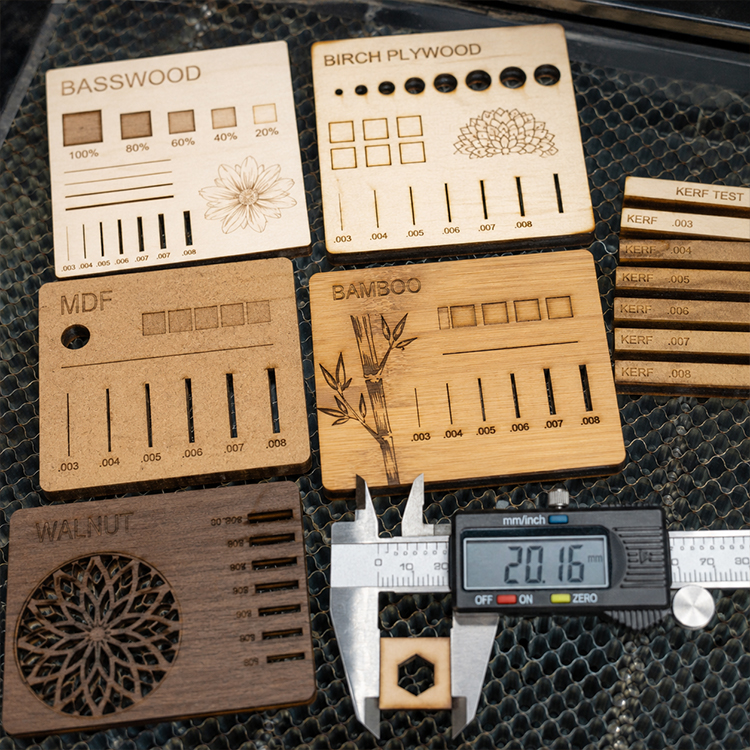
| 3 mm basswood | Ornaments, model kits, earrings, small signs | Fast cutting, pale edge, forgiving grain | Tiny details overburn easily | Use lower power, faster speed, and test fragile bridges |
| Birch plywood | Name signs, layered art, puzzles, décor panels | Stable sheet format, good detail | Glue-line flare, inconsistent imported batches | Test each supplier batch before selling finished SKUs |
| MDF | Templates, painted signs, prototypes | Uniform density, predictable geometry | Dense smoke, resin odor, brown edge | Use strong exhaust, mask surfaces, clean optics often |
| Walnut / hardwood | Premium plaques, luxury gifts | Attractive engraving contrast | Grain density changes cut depth | Sell engraving more than deep cutting unless tested |
| Bamboo | Coasters, kitchen gifts, branded items | Sharp contrast, fast visual payoff | Aggressive charring and smell | Conservative power, masking, and careful post-cleaning |
| Veneered board | High-end decorative surfaces | Beautiful face layer | Veneer lift, glue staining | Run shallow passes before full production |
I like CO2 laser cutting for wood because it rewards disciplined operators. I dislike it because it exposes lazy ones. The beam does not care about your brand story; it cares about moisture, resin, focus, speed, power, airflow, and the adhesive nobody mentioned in the material listing.
For a deeper process explanation, the Bogong article on how CO2 laser cutting machines process wood materials is the kind of internal support page I would link near any discussion of cellulose, lignin, plywood, MDF, charring, and air assist. It supports the technical intent behind this article instead of acting like a random product plug.
Safety Is Not a Side Note, It Is the Production System
Smoke tells secrets.
A 2024 CDC/NIOSH-indexed study on desktop laser cutters evaluated cardboard, wood, plastic, and glass at 10 amp, 15 amp, and 20 amp settings, measuring respirable particles, sub-half-micron particles, VOCs, and carbon monoxide; it found that material, current, and ventilation significantly influenced emissions, and that higher-carbon materials such as wood and cardboard generated higher VOC and CO levels than some other tested materials.
That should end the “it’s just wood smoke” nonsense.
And wood dust is not harmless shop perfume. OSHA’s wood dust guidance states that airborne wood particles from cutting and sanding can create health risks, and OSHA’s revised Combustible Dust National Emphasis Program, dated January 30, 2023, remains a legal and operational warning for facilities that create or handle combustible dust.
MDF and plywood deserve extra suspicion. EPA explains that composite wood products include hardwood plywood, MDF, thin-MDF, and particleboard, and that TSCA Title VI formaldehyde rules apply to covered composite wood products; EPA also notes that certain laminated-product requirements began March 22, 2024. For buyers producing goods for U.S. markets, the EPA formaldehyde standards FAQ is not optional reading.
California is even more specific in practice. CARB states that its composite wood products program covers hardwood plywood, particleboard, MDF, and finished goods containing these products, requiring emission standards and labeling.
How to Laser Cut Wood Crafts Without Building a Defect Factory
Start with the SKU, not the machine.
If your flagship product is a 3 mm basswood ornament, you need repeatable sheet flatness, fine detail stability, low scorch, easy masking removal, and fast nesting. If your product is a layered 6 mm plywood wall sign, you need bed size, air assist, reliable cut-through, edge cleanup, and part alignment. If your product is engraved walnut awards, you need grayscale control, focus accuracy, and finishing workflow.
My preferred production sequence looks like this:
- Choose one wood family first: basswood, birch plywood, MDF, walnut, bamboo, or veneer board.
- Buy sheets from two suppliers, then run the same vector file on both.
- Measure kerf with calipers, not vibes.
- Record speed, power, frequency/PPI if available, air assist pressure, lens focal length, and exhaust state.
- Smell the finished part after 24 hours inside packaging.
- Reject the supplier if odor or glue flare cannot be controlled.
- Only then scale the product listing.
Too slow? Maybe. But returns are slower.
This is where custom wood laser cutting services separate themselves from hobby sellers. A real service provider does not quote only by file size. It quotes by material type, thickness, cut length, engraving area, masking needs, finishing, packaging, batch tolerance, and scrap risk.
For buyers still comparing machine families, Bogong’s broader laser engraving machine category can support visitors who want engraving-focused systems rather than through-cut production. That internal path fits naturally because wood craft production often moves between cutting, marking, branding, and personalization.
The Machine Spec Sheet I Actually Care About
Most spec sheets are padded.
I care about working area, real CO2 wattage, lens options, exhaust design, pass-through support, bed flatness, controller compatibility, camera alignment, rotary compatibility, maintenance access, cooling stability, and whether the vendor can show the machine cutting the same material I plan to sell.
If a supplier cannot show video proof, ask for it. Bogong’s laser machine video page is a useful internal link for readers who want to see equipment behavior instead of trusting static photos. Video will not prove everything, but it can expose weak motion control, poor extraction, awkward loading, and over-promised cutting thickness.
Here is the buyer test I like: send the vendor a file with tight internal corners, thin bridges, nested circles, small text, and a long straight cut. Ask them to run it on 3 mm plywood and 6 mm plywood. Then ask for close-up photos of the back side. The back side tells the truth.
FAQs
What is a wood laser cutter?
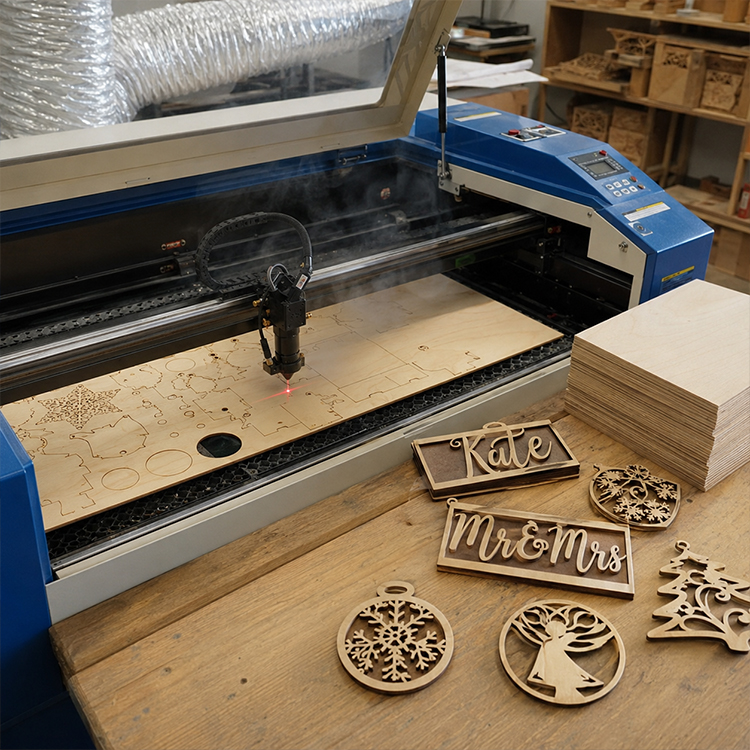
A wood laser cutter is a CNC-controlled machine, usually CO2-based for production use, that cuts or engraves wood by focusing laser energy onto materials such as basswood, plywood, MDF, bamboo, hardwood, and veneer board to vaporize, char, or remove material along a programmed path.
In practical terms, it is a heat-management system. The beam matters, but so do air assist, exhaust, sheet chemistry, moisture, focus, lens cleanliness, and file design. Treating it as “just a cutter” is how shops get black edges, smoke stains, and rejected batches.
What is the best laser cutter for wood crafts?
The best laser cutter for wood crafts is usually a CO2 laser machine matched to your material thickness, daily production volume, bed size, engraving needs, ventilation setup, and finishing workflow, rather than the highest-wattage machine you can afford.
For 3 mm ornaments, fine detail may matter more than raw wattage. For 6 mm plywood signs, cut-through consistency and air assist become more important. For engraved plaques, grayscale control and surface quality may matter more than speed.
How to laser cut wood crafts safely?
To laser cut wood crafts safely, use verified laser-compatible materials, strong exhaust ventilation, proper air assist, active fire monitoring, clean optics, documented settings, and compliant composite wood products when cutting plywood, MDF, or other bonded panels.
Never assume MDF or plywood is safe because it “looks like wood.” Adhesives, coatings, stains, sealers, and unknown cores can produce fumes, odor, flare-ups, and compliance problems. Ask suppliers for material data before scaling production.
Can a laser engraver for wood also cut wood?
A laser engraver for wood can cut wood if it has enough optical power, suitable wavelength, proper focusing, air assist, ventilation, and motion control for the material thickness, but many engraving-first machines are slow or limited on thicker plywood and MDF.
This is why buyers should separate engraving depth from cutting capability. Marking a logo on walnut is not the same job as cutting hundreds of 6 mm plywood parts with clean edges and acceptable cycle time.
Is MDF good for laser cut wood products?
MDF can be good for painted laser cut wood products because it has uniform density, predictable geometry, and low visible grain, but it also creates dense smoke, odor, brown edges, and extra concern around resin systems and formaldehyde compliance.
I use MDF cautiously in production thinking. It is useful for prototypes, painted signs, templates, and low-grain products, but it demands better extraction, more frequent cleaning, and stricter material sourcing than many beginners expect.
Are custom wood laser cutting services better than buying a machine?
Custom wood laser cutting services are better when you need short-run production, proof-of-concept samples, or seasonal products without committing to machine cost, maintenance, ventilation, training, material testing, and rejected-batch risk.
Buying a machine makes sense when you have repeat orders, predictable materials, enough margin, and enough volume to justify ownership. Outsourcing makes sense when uncertainty is still high. Pride is not a business model.
Final Thoughts: Build the Process Before You Buy the Wood Laser Cutter
Do not buy a wood laser cutter because the demo looked clean.
Buy it because you know your wood species, thickness range, batch volume, exhaust route, compliance needs, finishing steps, packaging tolerance, and reject-rate ceiling. Then choose the machine around that reality.
If you are planning wooden craft production and want a practical starting point, compare your material list against Bogong’s laser cutting machine for wood options, review the laser engraving machine for wood page for personalization workflows, and contact the supplier with your exact material thickness, target products, daily output, and sample file. Ask for proof cuts before you spend.


Hot Click
Contact Us
Application
©Copyright [bogonglaser.com]. BOGONG Laser Machine Supplier All Rights Reserved.