
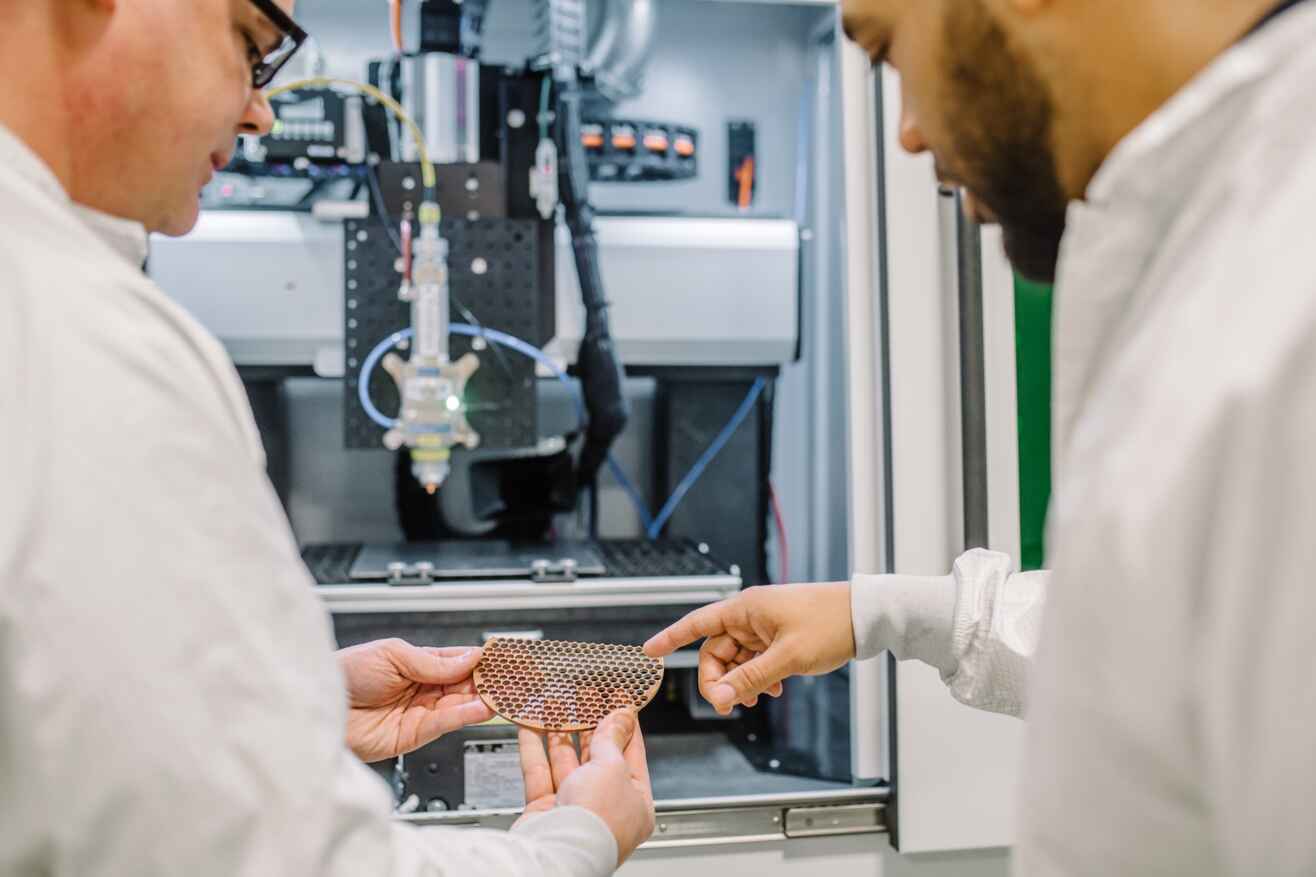
Laser Cutting Machines for Data Center Rack Manufacturing
Data center rack manufacturing is no longer a sleepy sheet metal job. AI racks, liquid cooling, 72-GPU server systems, tighter airflow windows, and faster build cycles are forcing rack factories to treat laser cutting machines as production-control assets, not just metal cutters.

The Rack Is Not “Just a Box” Anymore
Steel bends. Standards don’t.
I’ve walked enough fabrication floors to know the ugly truth: many server rack problems are born long before welding, powder coating, or final assembly. They start at cutting. A slot is 0.4 mm off, a perforation pattern drifts across a side panel, a mounting rail hole looks harmless until the cage nut fights the technician on-site, and suddenly a “simple” rack cabinet becomes a warranty conversation nobody wants.
Why does this matter now?
Because data center rack manufacturing has been dragged into the AI hardware fight. The DOE-backed 2024 data center energy report found that U.S. data centers used about 4.4% of total U.S. electricity in 2023 and could reach 6.7% to 12% by 2028, with usage rising from 176 TWh in 2023 to an estimated 325–580 TWh by 2028. That is not a spreadsheet detail. That is factory pressure. More power means denser hardware, heavier racks, more airflow discipline, and less tolerance for sloppy sheet metal work.
So yes, Laser Cutting Machines matter. Not because the beam looks impressive in a trade show video. Because the rack is now part of the thermal, mechanical, grounding, and deployment chain.
And here is my unpopular opinion: a cheap CNC laser cutting machine can make expensive scrap faster than an old punch press ever could.
Why Fiber Laser Cutting Machines Fit Data Center Rack Manufacturing
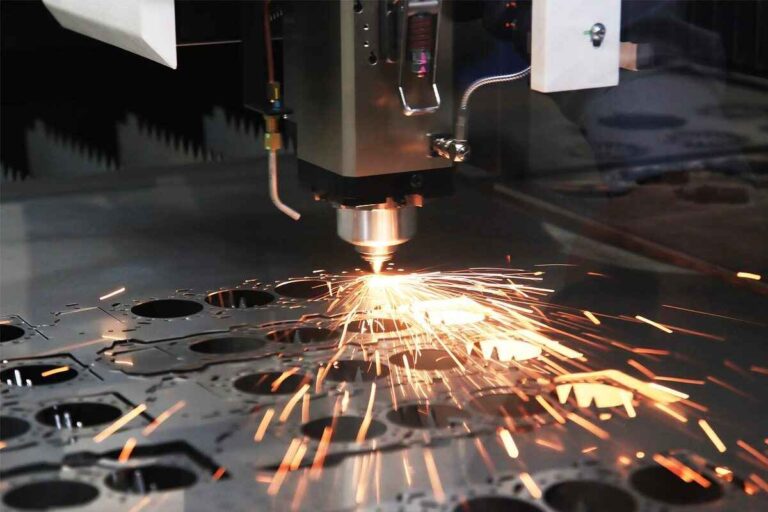
A fiber laser cutting machine makes the most sense for data center rack manufacturing when the factory cuts thin-to-medium carbon steel, stainless steel, galvanized steel, aluminum panels, perforated doors, mounting rails, side covers, cable-management parts, and mixed sheet-metal SKUs that change often. It is fast, repeatable, software-driven, and flexible enough for revised rack designs.
That flexibility is the real money.
A rack manufacturer does not cut one heroic part all day. It cuts 19-inch mounting rails, 42U and 48U cabinet parts, blanking panels, cable trays, roof plates, airflow doors, side panels, PDU brackets, busbar shields, grounding tabs, and oddball custom plates that sales promised last Friday. A fiber laser cutting machine gives that factory a way to move from CAD to CAM to cut parts without waiting on hard tooling.
But do not buy the wattage fantasy. I see this mistake constantly.
A shop cutting mostly 1.0–3.0 mm galvanized sheet and stainless steel does not automatically need a monster power source. What it needs is stable beam quality, clean assist-gas control, strong nesting software, reliable autofocus, good extraction, and real service support. Bogong’s fiber laser cutter page lists common industrial ranges from 1,500 W to 60,000 W and materials including stainless steel, carbon steel, aluminum, brass, copper, and galvanized sheets, which is the right broad material map for rack and enclosure work.
The hard part is not cutting steel. It is cutting the right steel, in the right order, with the right edge, at the right cost, without turning your production planner into a liar.
Table of Contents
The Insider Checklist: What Actually Matters on a Sheet Metal Laser Cutting Machine
I would rather inspect a factory’s nesting strategy than its brochure.
For data center rack manufacturing, the sheet metal laser cutting machine has to support the production system around it. That means real-world material flow: coils or sheets, forklift routes, storage towers, remnant tracking, burr control, part marking, bending sequence, powder coating hooks, and final rack assembly.
Here is the buying logic I trust.
| Decision Area | What Buyers Usually Ask | What They Should Ask Instead | Why It Matters for Rack Manufacturing |
|---|---|---|---|
| Laser power | “Is 6 kW enough?” | “What is our monthly thickness mix by material?” | 1.2 mm galvanized panels and 6 mm base plates do not need the same economics |
| Working table | “Can it cut full sheets?” | “Can it handle our nesting, loading, and shift rhythm?” | Rack parts are SKU-heavy; idle time kills throughput |
| Software | “Does it import DXF?” | “Does it prevent bad nesting, remnant chaos, and revision errors?” | Rack designs change often; software discipline protects margins |
| Assist gas | “Nitrogen or oxygen?” | “What edge quality is needed before bending, welding, and coating?” | Poor edges create downstream labor and coating defects |
| Tube cutting | “Do we need a tube laser?” | “How much rectangular tube, frame, brace, or support work do we outsource?” | Rack frames and support hardware may justify sheet-and-tube capability |
| Service | “What is the warranty?” | “How fast can we get lenses, nozzles, chiller parts, and remote diagnostics?” | One idle laser can freeze the entire rack line |
For shops building rack cabinets and supporting hardware, I would look first at CNC laser cutting machines for metal fabrication with proven sheet capability, then decide whether a sheet and tube laser cutting machine makes sense for rectangular tube, braces, support frames, and custom equipment mounting parts. Bogong’s sheet-and-tube model page states tube diameter handling commonly from 20 mm to 200 mm, plus sheet processing for stainless steel, aluminum alloy, copper, titanium alloy, carbon steel, and alloy steels.
Small note. Big cost.
If your rack business includes custom containment frames, seismic supports, battery-rack structures, or warehouse-style IT infrastructure hardware, tube capability may save more money than another flatbed upgrade.
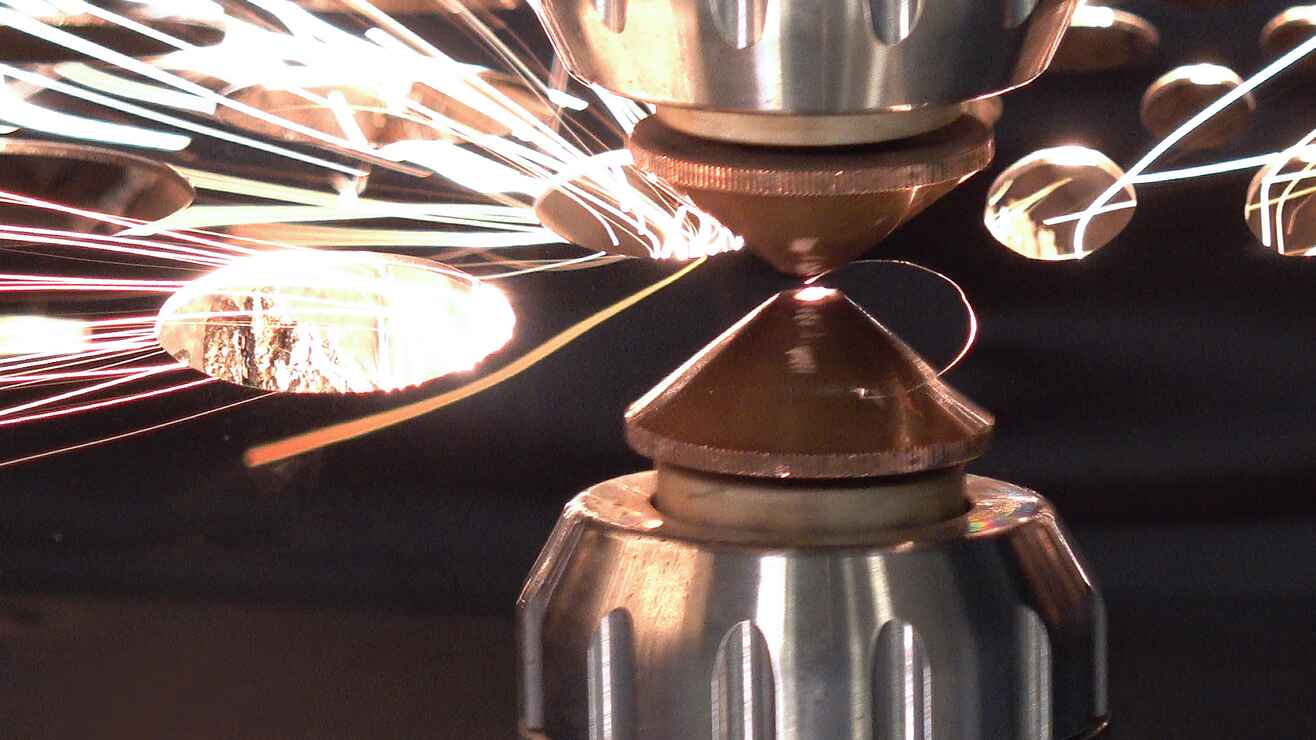
AI Racks Changed the Tolerance Conversation
The old server rack was forgiving. The new one is rude.
According to the Uptime Institute Global Data Center Survey 2024, average server rack densities are rising but remain below 8 kW, while most facilities still do not have racks above 30 kW. The sentence that matters is the last part: this is expected to change.
And Reuters gave the industry a warning shot in November 2024, reporting that Nvidia Blackwell GPUs had overheating issues when connected in server racks designed to hold up to 72 chips, according to The Information. I am not using that as gossip. I am using it as a manufacturing signal: rack geometry, airflow perforation, rigidity, thermal pathways, and assembly precision are now linked to AI deployment risk.
This is where industrial laser cutter for metal fabrication stops being a “cutting department” asset and becomes a rack engineering asset.
A laser-cut rack component must protect:
Airflow
Perforated front and rear doors often need controlled open-area ratios, clean hole geometry, and consistent spacing. A ragged pattern is not just ugly. It changes pressure behavior.
Mounting Alignment
19-inch rack rails, EIA-compatible hole patterns, cage nut positions, and PDU bracket slots need repeatability across batches. A modern CNC laser cutting machine can hold the pattern discipline that manual layout cannot.
Grounding and Bonding
Bare metal contact points, grounding tabs, copper busbar shields, and zinc-coated components all raise material and edge-quality questions. Galvanized steel is not mysterious, but it does punish lazy parameters.
Fast Design Revision
Rack manufacturing now moves at data center speed. A hyperscale customer changes a cable routing plate or liquid cooling bracket, and your factory either reacts digitally or bleeds time through tooling.
This is why I like pairing a strong laser cutting machine category page with practical application content. Buyers need product range, yes. But they also need to understand why flat sheet, tube, and 3D cutting are different tools for different rack problems.
The Dirty Economics: Where Laser Cutting Machines Make or Lose Money
Let’s be blunt.
A fiber laser cutting machine does not pay for itself because it is “advanced.” It pays for itself when it removes rework, shortens changeover, cuts nested parts efficiently, lowers outsourced cutting, reduces tooling dependence, and feeds bending/welding/coating without drama.
The IEA Energy and AI analysis projects global data center electricity consumption to double to about 945 TWh by 2030, with data center electricity demand growing around 15% per year from 2024 to 2030. That kind of buildout pushes rack suppliers toward faster, more flexible fabrication cells because old batch logic cannot keep up with volatile AI infrastructure orders.
But there is a trap: speed at the laser can expose weakness everywhere else.
If the press brake cannot keep up, the laser becomes a warehouse decoration. If nesting is sloppy, the scrap bin becomes the real customer. If operators cannot maintain nozzles, lenses, slats, gas settings, and calibration, cut quality quietly decays until assembly starts complaining.
I like Bogong’s point in its industrial laser cutting machines for sheet metal processing guide: do not start with the machine; start with the jobs that pay the rent. It also calls out software, nesting, labor reality, sample parts, and service response as buying factors, which is exactly how serious rack manufacturers should think.
Here is the blunt procurement math I use:
| Rack Factory Scenario | Best Laser Setup Direction | Reason |
|---|---|---|
| Mostly doors, panels, covers, rails | Flatbed fiber laser cutting machine | High sheet volume, repeatable nesting, fast revision |
| Mix of panels and rectangular tube frames | Sheet-and-tube fiber laser cutting machine | Reduces outsourcing and keeps frame tolerances internal |
| Heavy base plates plus thin panels | Higher-power flatbed with strong gas control | Prevents bottlenecks across mixed thicknesses |
| Many custom racks, short runs, engineering changes | CNC laser cutting machine with strong CAM workflow | Digital revision speed beats hard tooling |
| Export racks with cosmetic requirements | Stable cutting plus downstream edge control | Burrs, oxide, and coating defects become customer-visible |
The best laser cutting machine for sheet metal racks is not the highest-watt model. It is the machine that fits your rack SKU mix, tolerance stack, shift pattern, gas budget, service access, and downstream bending capacity.
How to Manufacture Data Center Racks with Laser Cutting
Here is the workflow I would audit before signing a purchase order.
Step 1: Freeze the rack architecture before cutting
Define 42U, 45U, 48U, or custom dimensions. Confirm 19-inch mounting geometry, rail pitch, airflow targets, door perforation percentage, grounding locations, roof cable entry, PDU mounts, side-panel latch points, and coating requirements.
Step 2: Build CAD/CAM rules around real fabrication
Do not let engineers throw beautiful DXF files over the wall. Define minimum hole size, slot spacing, bend relief, kerf compensation, grain direction, tab strategy, and bend sequencing before the file reaches the CNC laser cutting machine.
Step 3: Cut samples from the ugly parts first
I never trust vendor demo parts. Send long rails, dense perforated panels, thin galvanized covers, narrow tabs, and parts with small holes near bends. If the machine handles those, it can handle the easy rectangles.
Step 4: Control assist gas and edge condition
Nitrogen may produce cleaner oxidation-free edges for stainless and some coated parts. Oxygen may be economical for carbon steel. Air cutting may work in some cost-sensitive sheet jobs. But every choice affects bending, welding, coating, and final rack appearance.
Step 5: Track downstream defects back to cutting
If assembly sees rail misalignment, coating bubbles, burr complaints, or hole-fit issues, do not blame “operators” first. Audit laser parameters, material batches, nesting orientation, nozzle condition, and part handling.
That is the mature way to use laser cutting machines in data center rack manufacturing. Not as a flashy purchase. As a controlled production system.
FAQs
What are Laser Cutting Machines for data center rack manufacturing?
Laser Cutting Machines for data center rack manufacturing are CNC-controlled metal cutting systems that use a focused laser beam to cut rack panels, rails, doors, brackets, cable-management parts, and support structures from steel, stainless steel, galvanized sheet, aluminum, and related metals with repeatable geometry and clean edges.
In practice, most rack factories use fiber laser cutting because it handles sheet metal quickly, supports digital design revisions, and reduces the need for dedicated punching tools.
Why is a fiber laser cutting machine better than punching for server rack manufacturing?
A fiber laser cutting machine is often better than punching for server rack manufacturing because it cuts complex holes, slots, vents, and custom sheet metal profiles without dedicated tooling, making it stronger for short runs, revised rack designs, AI hardware changes, and mixed-part production.
Punching can still be efficient for huge volumes of stable patterns. But when rack designs change fast, laser cutting usually wins on flexibility and engineering response.
What materials can a sheet metal laser cutting machine process for racks?
A sheet metal laser cutting machine can process common rack materials such as carbon steel, mild steel, stainless steel, galvanized steel, aluminum, copper, brass, and some alloy steels, depending on the laser source, wattage, assist gas, cutting head, material thickness, and required edge quality.
For rack cabinets, galvanized steel and cold-rolled steel are common because they balance cost, strength, formability, and coating performance.
How do I choose the best laser cutting machine for sheet metal racks?
The best laser cutting machine for sheet metal racks is chosen by matching laser power, table size, automation, assist gas, nesting software, service support, and tube-cutting needs to your real rack parts, thickness mix, monthly volume, tolerance requirements, and downstream bending capacity.
Do not start with wattage. Start with your top 50 parts by volume and value, then test those files.
Can one CNC laser cutting machine handle both rack panels and rack frame tubes?
One CNC laser cutting machine can handle both rack panels and rack frame tubes if it is designed as a sheet-and-tube fiber laser system with a flatbed cutting area, rotary tube chuck, suitable support structure, and software that manages both sheet nesting and tube profile cutting.
This setup can be attractive for factories producing rack cabinets, braces, support frames, containment structures, and custom IT infrastructure hardware.
Final Thoughts: Build the Rack Line Around the Cut
If you manufacture data center racks, stop treating the laser as a shiny machine purchase and start treating it as the front gate of your production quality.
Ask for sample cuts from your own rack files. Audit your material mix. Compare flatbed versus sheet-and-tube capability. Calculate gas, scrap, service, software, loading, bending, coating, and assembly impact before you negotiate price.
Then talk to a supplier who understands sheet metal, not just laser wattage. For rack panels, rails, brackets, frames, and custom IT infrastructure hardware, start by reviewing Bogong’s fiber laser cutting machine options and laser metal cutting machine solutions, then request a cut test using your most difficult data center rack drawings.


Hot Click
Contact Us
Application
©Copyright [bogonglaser.com]. BOGONG Laser Machine Supplier All Rights Reserved.