
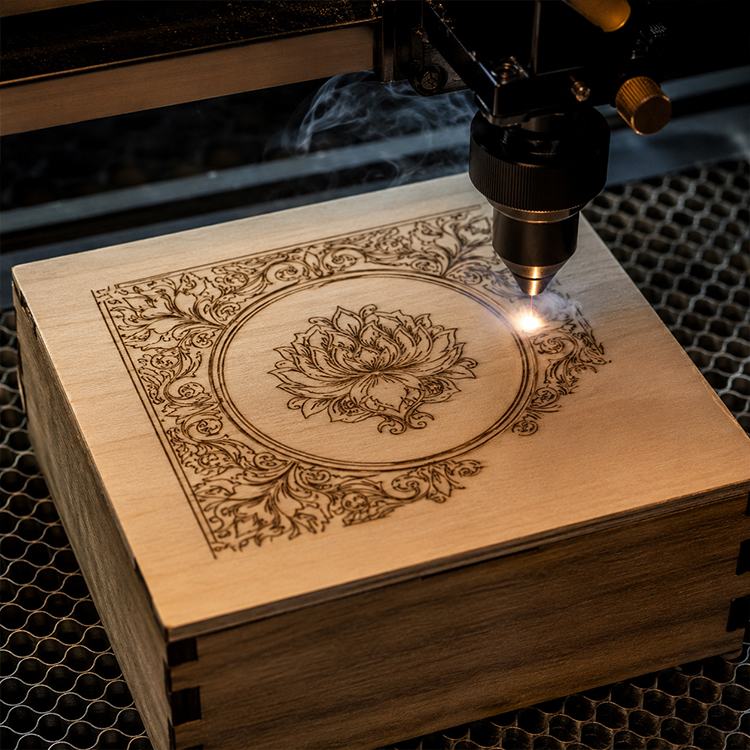
Exactly How Laser Reducing Improves Precision in Timber Products
A skeptical, shop-floor consider exactly how laser cutting enhances accuracy in wood products, where it defeats routers and saws, where it fails, and why the smartest stores test wood prior to they trust electrical power.

The Accuracy Misconception No One Must Purchase Blind
Laser reducing wood is not a magic technique. It is regulated damages.
Kerf tells reality. When a shop says its laser cutting timber process is precise yet can disappoint a determined kerf compensation table by material, thickness, wetness, lens, speed, power, and assist-air stress, I recognize the accuracy is marketing, not making. What else would we call it?
The actual reason laser reducing boosts precision in wood products is easy: the tool never touches the workpiece. No spinning bit. No blade drift. No securing scar throughout a noticeable walnut face. No operator “just tidying up the side” with a sander until the part is 0.4 mm smaller than the illustration.
However I’ll say the out of favor part: purchasing a larger laser does not automatically generate much better laser cut wood products. A careless 150W CARBON MONOXIDE two device can ruin 3 mm birch plywood much faster than a disciplined 80W system with tidy optics, mapped kerf, proper focus, strong exhaust, and a boringly consistent product distributor.
That is why I such as starting with a wood-specific devices page such as Bogong’s laser cutting device for timber as opposed to a common “laser cutter” web page. Timber is not steel. Wood is cellulose, lignin, extractives, glue, dampness, veneer gaps, material pockets, and, in MDF, binder chemistry that might consist of formaldehyde-related compliance problems.
The macro data makes the shop-floor stress noticeable. The NIST 2024 Annual Record on the U.S. Manufacturing Economic Situation reported that U.S. production labor performance enhanced just 0.4% between Q2 2023 and Q2 2024, while its five-year compound yearly growth price also rested at 0.4%. That is not a pleasant environment for waste, rework, and hand-fitting.
So the concern is not, “Can a laser cut timber?” Naturally it can.
The better inquiry is: can your procedure repeat the exact same cut on Monday morning, Friday afternoon, and after a new batch of plywood arrives?
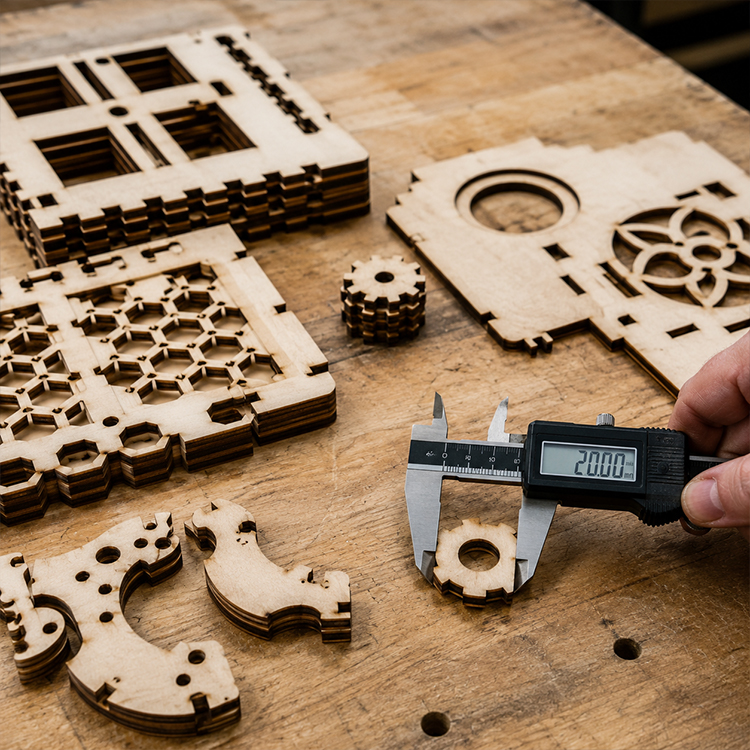
Table of Contents
Why CNC Laser Reducing Timber Strikes Tighter Geometry
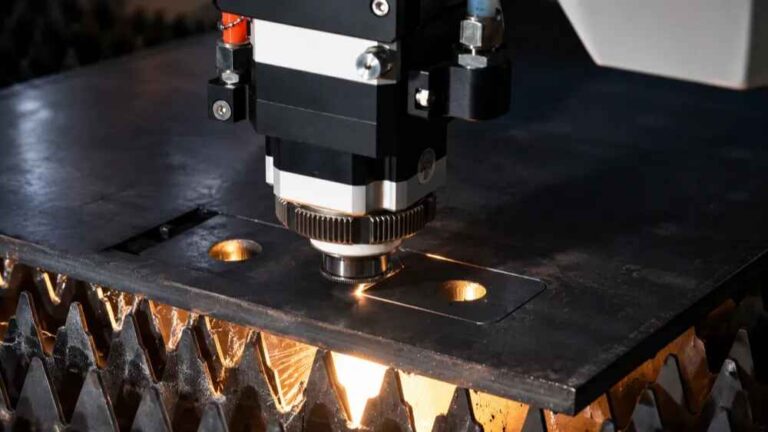
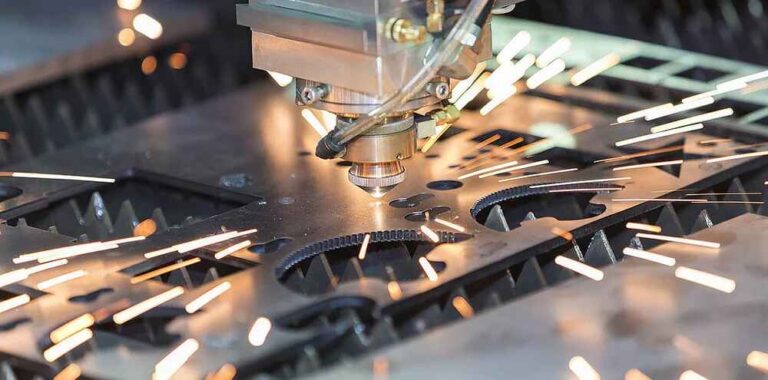
A CNC laser cutting timber system boosts precision by converting vector geometry right into controlled motion, then getting rid of a narrow course of product with focused infrared power. In functional terms, the laser follows the documents more consistently than a lot of manual or semi-manual reducing techniques since the reducing head is not dealing with grain instructions, bit lots, blade vibration, or workholding stress.
A CO two laser generally operates around 10.6 µm, a wavelength taken in well by numerous natural materials. That is why a carbon dioxide laser cutting equipment sits in the major discussion for slim wood, plywood, MDF, paper, leather, acrylic, and other non-metal materials.
Right here is the part sales brochures skip: the laser does not “cut” wood like a knife. It heats cellulose, lignin, dampness, sticky, and extractives until the cut line breaks down, evaporates, chars, or cracks. That seems awful since it is. Precision originates from controlling the unsightly component.
In a good configuration, the activity system, optics, controller, and cut documents create repeatability. In a poor setup, the very same laser creates scorched tabs, irregular slots, smoky sides, and components that look accurate until setting up reveals the lie.
Where the Accuracy Originates from
First, there is no side pressure. A router little bit pushes. A saw blade pushes. Also a sharp cutting tool produces mechanical tons. A laser light beam uses warm, not physical stress, so slim veneer, delicate lattice panels, and small tabs are much less likely to shift or splinter throughout reducing.
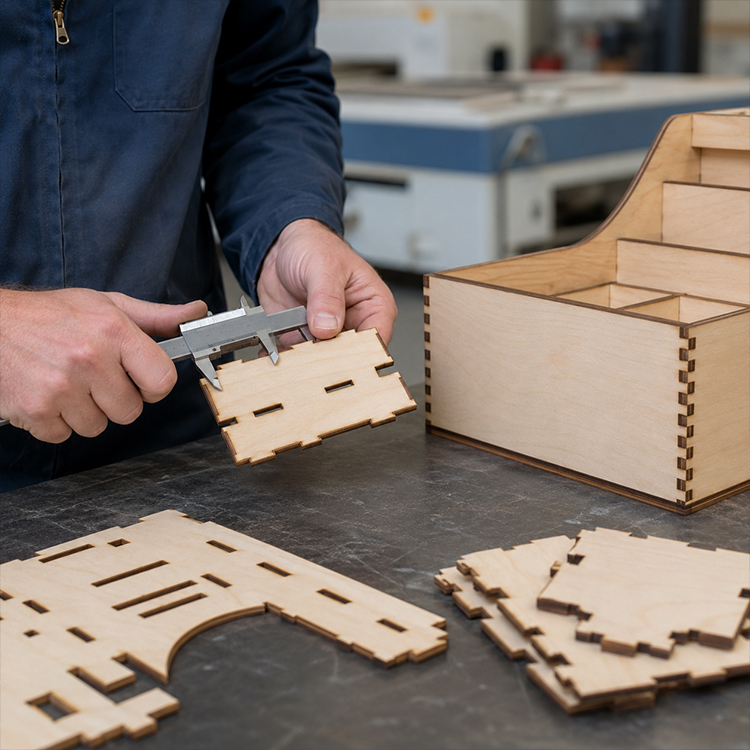
Second, kerf can be gauged and compensated. If a 3 mm plywood port consistently sheds 0.18 mm to the light beam course, the documents can be countered. That transforms accuracy laser cutting timber from “rather example” work into production reasoning.
Third, electronic repeatability matters. When a store locks an account for 3 mm basswood, 6 mm birch plywood, or 3 mm MDF, it can rerun the exact same geometry with less human choices. That does not remove skill. It moves ability upstream into configuration, testing, data prep work, and maintenance.
Fourth, nesting improves uniformity and return. When parts are set up in CAD/CAM software, the shop can manage grain direction, spacing, warmth accumulation, pierce points, and reduced order. That is where margins hide.
The Bureau of Labor Stats reported in June 2024 that 2023 labor performance declines surpassed 5% in four markets, including wood products. That is the ruthless backdrop: timber makers are being required to squeeze even more repeatable output from the very same labor force.
The Hard Contrast: Laser, Router, Saw, and Handwork
I do not hate routers. I despise utilizing the wrong device and acting it is method.
For thick hardwood, deep pockets, joinery calling for mechanical depth, and parts where char is unacceptable, CNC routing can be the far better response. For ultra-fine inner corners, fragile ornamental panels, packaging prototypes, inlays, accessories, model parts, and engraved branding, laser reducing timber has an evident precision advantage.
| Method | Accuracy Toughness | Weak Point | Best Wood Item Fit | My Take |
|---|---|---|---|---|
| CARBON MONOXIDE two laser reducing | Slim kerf, no call pressure, sharp inner details, repeatable vector courses | Warm staining, smoke, product chemistry level of sensitivity | Attractive panels, signs, inlays, craft packages, building models, slim plywood components | Best for fine information and repeatability |
| CNC transmitting | Strong depth control, thick material ability, tidy non-burned edges | Little bit radius restrictions interior edges; device wear adjustments reduced top quality | Cabinet parts, joinery, thick hardwood, pockets, grooves | Much better for structural deepness job |
| Table saw/ panel saw | Rapid straight cuts, low operating complexity | Restricted geometry, manual setup variant, splintering threat | Rectangles, strips, harsh sizing | Efficient yet not precision information work |
| Hand cutting | Adaptable, reduced tools cost | Skill-dependent, slow, difficult to repeat | One-off models, repair work, creative job | Romantic, yet not scalable |
This is why timber laser reducing services offer well to furnishings studios, product packaging developers, signage shops, version makers, and little makers that do not intend to hand-fit every tab. They are purchasing repeatability. They are purchasing less awkward conversations with clients that notice unequal spacing before they notice the story behind the item.
Product Is the Actual Boss: Birch, Basswood, MDF, and Glue
The most effective timber for laser cutting is not simply “wood.” That word is also careless for manufacturing.
Basswood acts in a different way from birch plywood. Birch plywood acts in a different way from poplar plywood. MDF acts like a geometry dream and a ventilation expense. Cherry inscribes magnificently however reduces slower. Oily and resinous woods can flare, discolor optics, and transform the edge right into black drama.
If I were constructing a major material approval procedure, I would certainly make use of Bogong’s overview to the finest timber for carbon dioxide laser reducing equipments as a starting factor, after that run my own examination grid: 20%, 30%, 40%, 50% power; speed ladder; emphasis offsets; air assist on and off; edge-color grading; caliper measurement; lens contamination check after a defined cut size.
Due to the fact that timber exists.
A plywood face can look clean while the core conceals voids, patched veneers, mineral streaks, adhesive pockets, or wetness variant. The laser locates every concealed problem. Not eventually. Promptly.
MDF is entitled to a different warning. It reduces consistently since it is consistent, yet it also creates smoke, great particle, and resin-related deposit. The united state EPA’s composite timber guidelines require TSCA Title VI conformity for controlled composite wood items such as hardwood plywood, MDF, and particleboard offered or imported into the United States after March 22, 2019. That does not imply “risk-free to laser casually.” It suggests paperwork issues prior to production.
And dirt is not a minor housekeeping problem. OSHA’s wood dust information web page lists an 8-hour permitted direct exposure limitation of 15 mg/m three for complete dust and 5 mg/m six for respirable dust, while NIOSH provides an advisable direct exposure limit of 1 mg/m THREE. That is why professional laser engraving timber and laser reducing wood setups need real exhaust, purification preparation, and maintenance discipline, not a home window follower and wishful reasoning.
A 2024 research study in Aerosol and Air Top Quality Research found that desktop computer laser cutting and etching can produce respirable particles and aeriform impurities; timber and cardboard produced even more TVOC and CO than plastic and glass in the tested conditions. Precision without ventilation is not expertise. It is financial obligation.
Laser Inscription Timber Is Not the Exact Same Precision Problem
Reducing and engraving are cousins, not twins.
Laser engraving timber removes or darkens surface area product to create marks, logos, identification numbers, appearances, QR-style patterns, attractive panels, and branded furniture information. Reducing divides the part. Engraving offers the component.
For many shops, the money is not just in the cut rundown. It remains in the personalization layer. A plain plywood box is a product. An equipped box with engraved branding, batch numbers, cover artwork, and clean finger joints is an item.
That is why a page concentrated on a laser engraving device for wood belongs inside the exact same buying journey as reducing. The smartest shops do not think, “cut or inscribe?” They think: reduce geometry, inscribe identification, mark traceability, minimize handwork.
A carbon dioxide laser noting machine is especially appropriate for organic materials because carbon monoxide ₂ wavelength actions fits wood, paper, cardboard, natural leather, acrylic, rubber, and comparable non-metal substratums. In timber products, that indicates permanent logo designs, message, serial numbers, ornamental graphics, panel labels, and set codes without mechanical get in touch with.
Below is my hard reality: if your laser reduced timber products leave the machine accurate however still require 10 mins of sanding, scuffing, re-marking, and component modification, your “accuracy” is cosmetic. Precision ought to lower downstream work. If it merely creates cleaner-looking rework, the process is not fully grown.
Where Laser Cutting Timber Falls Short
Laser reducing stops working when people perplex capacity with control.
It falls short on wet timber because dampness steals heat and expands variation. It fails on inexpensive plywood because adhesive lines and core gaps interrupt the beam of light. It falls short on thick MDF due to the fact that smoke, resin, and warmth lots come to be maintenance issues. It falls short on oily wood due to the fact that flare-ups and char can overwhelm detail. It falls short when drivers chase speed without measuring port fit.
And it falls short marvelously when purchasers go shopping only by power level.
More power can cut thicker material, yes. It can also overburn slim basswood, reduce inscribing finesse, broaden the heat-affected area, and make little inner details look swollen. A 100W device with appropriate lens choice, clean mirrors, secure emphasis, solid air help, and documented setups might beat an improperly handled 180W maker on 3 mm birch plywood.
So when a person asks me, “Just how does laser reducing enhance accuracy in wood products?” I address with problems attached.
It boosts accuracy when the store regulates the beam, the documents, the material, the air, the smoke, and the evaluation regimen. Without that system, laser cutting is simply a faster means to make similar blunders.
Frequently asked questions
What is laser reducing timber?
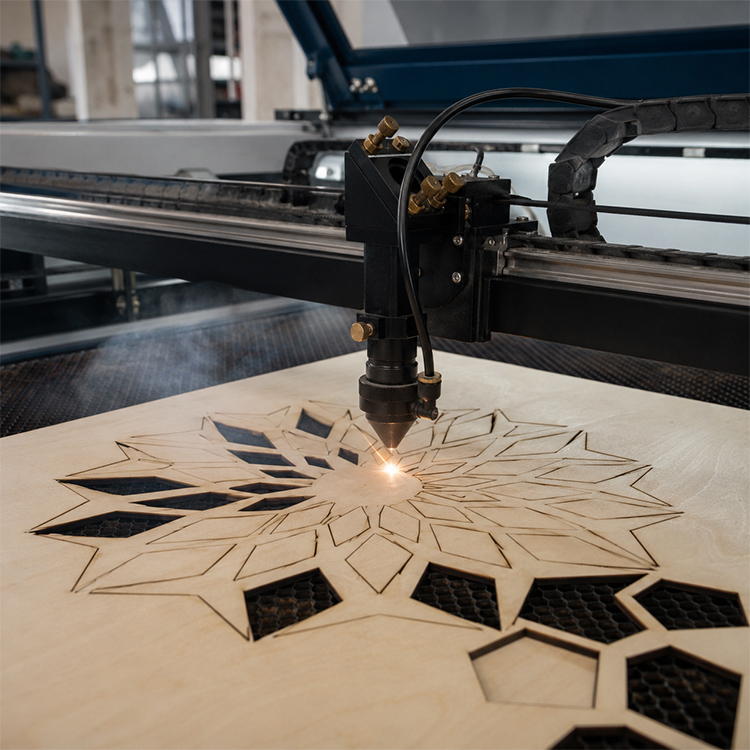
Laser reducing wood is a CNC-controlled thermal process that uses a concentrated laser beam, usually carbon monoxide two at regarding 10.6 µm, to get rid of a narrow kerf via timber, plywood, MDF, or veneer-based panels while complying with electronic vector geometry for repeatable forms, ports, patterns, and inscribed details.
In technique, the beam of light heats cellulose, lignin, moisture, glue, and resin up until product breaks down or vaporizes. The outcome can be extremely exact, but only when focus height, rate, power, air aid, exhaust, and worldly top quality are managed.
How does laser cutting boost accuracy in wood products?
Laser cutting improves accuracy in timber items by getting rid of mechanical device pressure, reducing splintering, adhering to CNC vector paths, compensating for gauged kerf, and duplicating the very same geometry throughout sets with much less operator variation than hand cutting, saw cutting, or inadequately managed directing.
The biggest gains appear in great interior details, tight slot-and-tab assemblies, ornamental panels, indicators, inlays, architectural versions, and branded parts where little aesthetic mistakes are easy to see.
What is the best wood for laser cutting?
The best timber for laser cutting is completely dry, low-resin, uniform-density material with foreseeable glue chemistry, which usually suggests basswood for clean light-weight craft job, laser-grade birch plywood for stronger architectural components, and accredited MDF only when smooth sides matter greater than smoke and filtration price.
I would certainly stay clear of mystery plywood, exterior plywood, oily woods, resin-heavy softwoods, and any kind of composite panel without documents. The material makes a decision the cut quality before the machine gets a vote.
Is CNC laser cutting wood far better than CNC routing?
CNC laser reducing wood is better for great detail, sharp inner edges, slim sheet parts, decorative patterns, etching, and low-force cutting, while CNC directing is much better for thick wood, pockets, grooves, joinery deepness, and components where a scorched side is undesirable.
The truthful solution is that serious shops often require both. A laser wins at information and non-contact precision. A router wins at mechanical depth and thick structural job.
Can laser etching wood improve item value?
Laser engraving wood can enhance item worth by including long-term branding, customization, serial numbers, attractive graphics, structure, and traceability without applying sticker labels, ink plates, stamps, or mechanical pressure to the surface area of the completed wood part.
This is why inscription is frequently the margin layer. The cut makes the item. The engraving makes it well-known, sellable, and tougher to contrast only on rate.
Are timber laser reducing services worth it for small companies?
Timber laser cutting solutions deserve it for small businesses when the work requires repeatable thin-sheet parts, tidy decorative geometry, branded engraving, short-run manufacturing, model testing, or batch consistency that would certainly be as well slow or irregular with hand devices.
They are much less eye-catching when the job is mainly thick wood machining, deep joinery, harsh carpentry, or large straight cuts where a saw or router is faster and less costly.
Your Next Actions
Do not buy precision as a motto. Evaluate it.
Send your genuine product list, densities, target resistance, product images, DXF or SVG files, and anticipated set volume to a laser provider prior to you commit to an equipment or outdoors solution. Ask for example cuts in your actual basswood, birch plywood, MDF, hardwood, or mixed-substrate panels. Procedure the kerf. Check the side. Scent the smoke. Evaluate the lens after reducing.
If your goal is repeatable laser cut wood products, beginning by matching your product and manufacturing target with a specialized laser cutting device for wood and a proven CO2 laser cutting device process. Then construct a settings collection rather than trusting memory.
That is exactly how precision becomes a process as opposed to a promise.


Hot Click
Contact Us
Application
©Copyright [bogonglaser.com]. BOGONG Laser Machine Supplier All Rights Reserved.