
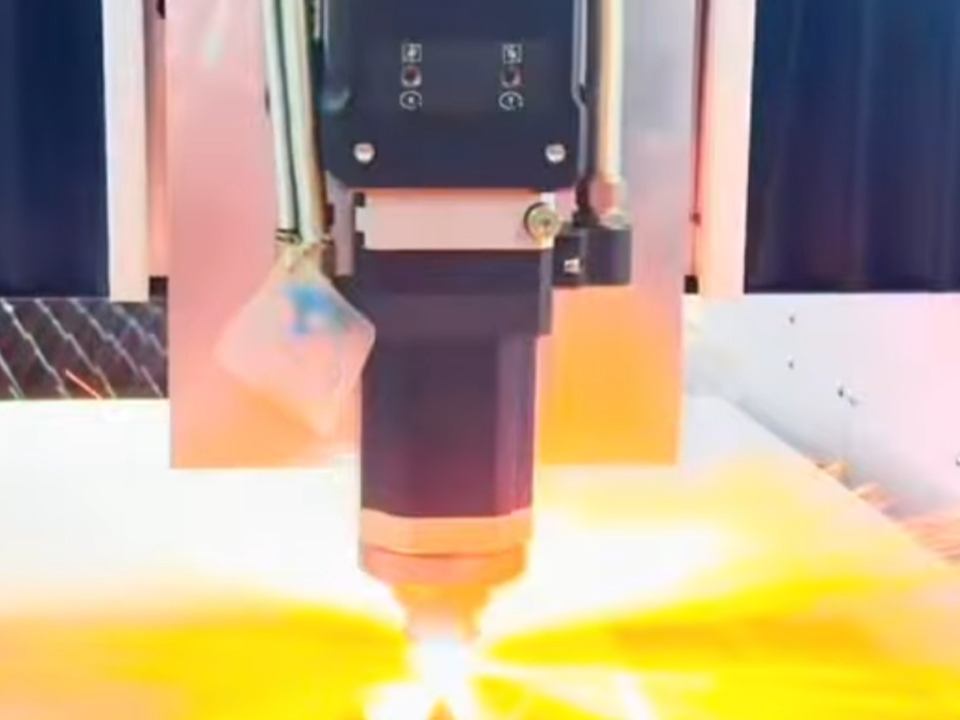
Best Laser Power for Cutting Carbon Steel Plates
Choosing laser power for carbon steel plate depends on your thickest regular job, assist gas, edge requirements, and automation. See how to size power and prepare an RFQ.

There is no single best laser power for carbon steel plate. The right wattage depends on the thickest plate you cut every week, the assist gas you run, the edge quality your next process needs, and how fast you can load and unload sheets. As a working rule from dealer-published data, a 6 kW fiber laser runs carbon (mild) steel to about 16 mm in routine production, while 12 kW extends that to about 30 mm. Machines can sever thicker plate than that, but not always at stable speed and clean edge quality. This guide explains how to read those ratings, where extra kilowatts pay back, and what to specify before you request a quote.
What Does “Best Laser Power” Mean for Carbon Steel Plate?
For a buyer, the best laser power is the lowest wattage that keeps your regular thickest job inside the machine’s production-ready range. Production-ready thickness is what a fiber laser runs shift after shift with stable speed, clean edges, and little rework. Maximum thickness is the most it can sever on a good sample.
AC Machinery’s fiber laser capacity guide separates the two ratings for mild steel with oxygen assist, and it argues that buyers should specify against the production figure. Its numbers come from manufacturers’ factory cutting tests, so treat them as a dealer’s reference baseline, not a guarantee for your material or your shop.
This distinction matters because spec sheets rarely label which number they quote. A product page that says a 6000W machine cuts carbon steel “up to 25 mm” is consistent with the maximum column below, not the production column. BOGONG’s 6000W–40KW fiber laser cutting machine page lists carbon steel up to 25 mm for its 6000W machine, so ask any supplier, including BOGONG, which thickness range is recommended for continuous production.
Fiber Laser Power vs Carbon Steel Thickness
The table below uses AC Machinery’s published figures for mild steel cut with oxygen. The last column is a qualitative reading, not measured data.
| Laser power | Production-ready (oxygen) | Maximum possible | Practical reading |
|---|---|---|---|
| 6 kW | 1–16 mm | 16–25 mm | Suits most sheet and light-to-medium plate work; 20–25 mm is at the edge of capability |
| 12 kW | 1–30 mm | 30–40 mm | Covers heavier structural plate with more tolerance for material variation |
| 20 kW | 1–40 mm | 40–50 mm | Fits shops with frequent thick plate and tight delivery targets |
| 30 kW | 1–50 mm | 50–60 mm | Heavy-plate specialists and contract cutters |
| 40 kW | 1–70 mm | 70–80 mm | Very thick plate as a core business |
| 60 kW | 1–80 mm | 80–120 mm | Extreme thickness, a niche requirement |
Source: AC Machinery, August 2026. Results vary with steel grade, surface condition, gas supply, optics, and control system.
Lower power tiers follow the same logic at smaller scale. One manufacturer’s published carbon steel capacity ranges run from 0.8–10 mm at 1000W to 1–22 mm at 3000W. That page does not clearly say whether those ranges are production-ready ceilings, so confirm the definition before comparing them with another vendor’s table. Different suppliers can define “capacity” differently, and a side-by-side comparison of brochures can mislead.
An illustrative example
Consider a hypothetical fabricator whose regular work is 6 mm brackets and 20 mm base plates. On the figures above, a 6 kW laser handles the brackets easily, but 20 mm plate sits above its 16 mm production range and close to its 25 mm maximum. A 12 kW laser runs the same plate well inside its production range. If 20 mm plate is occasional rather than weekly, the shop might accept slower cycles on those jobs and buy the lower power. If it is weekly, the larger machine may cost less per part. This is an illustration, not a customer case.
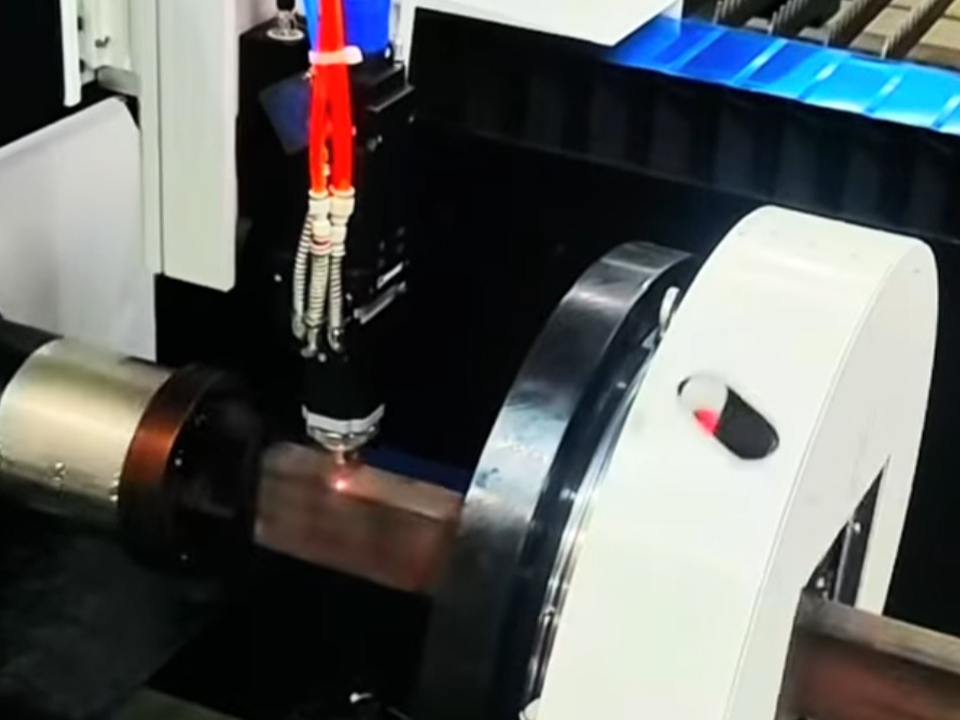
Why Wattage Alone Does Not Decide the Cut
Power is only one input to cut quality. Three other variables change what a given laser can do on real plate.
Beam power density and kerf width. AC Machinery explains that a low-power laser can reach thicker steel by focusing to a smaller spot, but the narrower kerf leaves molten metal less room to escape. That raises the risk of dross, fused cuts, and rough edges when material is less than ideal. Higher power allows a wider, more forgiving kerf at the same density, which is why thick plate runs more reliably at higher wattage.
Material condition. The same source lists mill scale, surface rust, steel chemistry variation, and inconsistent starting temperature as factors that matter little inside the production range but can decide success near the maximum. For buyers, that means the plate your supplier delivers matters as much as the machine. Ask whether the tested steel was laser-grade and clean, and whether your stock is.
Assist gas. Carbon steel is normally cut with oxygen, which reacts exothermically with the hot steel and adds energy to the cut. That is why oxygen cutting reaches thick carbon steel faster than inert gas alone, as the PCL Group carbon steel guide describes. Nitrogen gives a cleaner, oxide-free edge, but at lower speed on carbon steel and at higher gas cost. Gas choice therefore changes the power you need.
Oxygen or Nitrogen: How Assist Gas Changes the Power Decision
The gas decision is partly a downstream decision. Oxygen-cut carbon steel edges carry a thin oxide layer. That layer is generally acceptable for parts that will be welded after a quick wire-brush pass, but it needs attention before painting or plating, according to the same PCL Group guide.
The Fabricator’s guide to laser cutting power gives a useful counter-example. An outdoor trash bin manufacturer cut 3/16-in. carbon steel with loose tolerances and no need for a clean edge. Oxygen cutting on a lower-wattage fiber laser with basic load/unload automation was the lowest-cost route, and buying a high-power laser for nitrogen cutting was not. By contrast, an agricultural equipment maker that nitrogen-cuts every part to skip edge preparation before welding and powder coating is a better candidate for higher power.
| Decision factor | Oxygen cutting | Nitrogen cutting |
|---|---|---|
| Edge condition | Oxide layer on the cut face | Oxide-free edge |
| Typical fit on carbon steel | Thick plate, parts that are welded or ground afterwards | Parts that skip edge prep before coating or welding |
| Gas cost | Lower | Higher |
| Power implication | Lower wattage can be sufficient | Higher wattage helps maintain speed |
| What to verify | Oxygen supply and pressure for your thickness | Nitrogen consumption, tank or generator capacity |
The table is a qualitative comparison based on the sources above, not a measured cost model.
Where Higher Power Pays Back: Piercing, Nesting, and Throughput
Cutting speed on thin sheet is often limited by the motion system, not the beam. The Fabricator’s article describes a nest of intricate 18-gauge parts on a 12 kW laser where the machine could never reach the programmed speed. On heavier plate, speed differences grow, but piercing can matter just as much. The same article reports that a 3 kW laser needs a few seconds to pierce 0.25-in. material, while a 9 or 12 kW system pierces nearly instantly. On a nest with 600 or 700 pierces, that adds up to a large share of the program time.
Higher power can also expose the next bottleneck. The article describes an OEM that considered 15 kW, then 12 kW, and chose 9 kW after finding that a faster laser would back up its part sorting. A lower-powered laser with automation can also outproduce a higher-powered one without it, since an unattended second shift adds capacity that wattage alone does not.
Thick oxygen-cut plate adds another consideration. For material around 0.75 in. and thicker, the same source notes that heat distortion affects nesting, and describes water-assist cooling as one way to reduce warpage and allow denser nests. Ask a supplier how it handles thick-plate heat input if your parts have tight flatness requirements.

Is More Power Always the Better Investment?
Not always. The common assumption is that more kilowatts means lower cost per part. That holds when thick plate is your core work, when you need nitrogen-cut edges at speed, or when late deliveries are costly. It weakens when your mix is mostly thin and medium material, when oxygen cutting is acceptable, or when loading, unloading, and sorting limit throughput before the laser does.
Higher power also tends to raise the purchase price and utility demand. Before choosing a larger source, calculate how many hours per month the laser would actually spend on the thick jobs that justify it.
The opposite error is equally common: sizing for the thinnest, most frequent job and treating thick plate as an afterthought. Choose power for your thickest regular job, not your thinnest and not your rarest.
Specify Edge Quality With a Standard, Not an Adjective
If edge quality drives your power choice, define it in the drawing. ISO 9013:2017 sets geometrical product specifications and quality tolerances for thermal cuts, and applies to oxyfuel, plasma, and laser cutting when a drawing or delivery document references it. Its stated scope covers laser cuts from 0.5 mm to 32 mm. Its stated scope does not extend to laser cuts above that thickness, so agree separate acceptance criteria with your supplier in writing for thicker plate.
Referencing the standard and a quality class gives a supplier a measurable target. “Clean edge” does not.
Matching Power to Machine Format
Power is one part of a machine specification. These formats serve different carbon steel jobs.
- Full-size sheet and plate cutting. The BOGONG fiber laser cutting machine range lists a standard 1500 × 3000 mm cutting size with power options from 1000W to 6000W, which fits sheet and light-to-medium plate. Plate beyond that range points to the higher-power class.
- High-power plate work. For thick carbon steel and exchange-pallet production, review the higher-power options on the 6000W-and-above machine page and confirm available source power and production thickness for your steel.
- Small parts and light fabrication. A compact platform such as the 5050 small fiber laser cutting machine has a 500 × 500 mm cutting area, so it suits small workpieces, not large plate.
- Plate plus tube. Shops that cut both profiles can consider an all-in-one sheet and tube fiber laser cutting machine. Its page lists tube diameters from 20 mm to 200 mm. Tube-only operations may prefer an automatic loading laser tube cutting machine for carbon steel tubes.
- Weld preparation. If thick plate will be welded, a bevel fiber laser cutting machine can cut grooves and chamfers in the same operation. The product page describes bevel cuts of up to ±45° using a five-axis cutting head, which may remove a separate beveling step.
Buyers still comparing categories can start from this overview of metal cutting laser machines before narrowing to a power class.
Common Mistakes When Choosing Laser Power for Carbon Steel
- Specifying on the maximum thickness. Maximum ratings assume ideal material and accept slower speed and secondary work.
- Ignoring plate condition. Heavy mill scale or rust can disrupt thick-plate cuts, according to AC Machinery’s guide.
- Overlooking gas supply. Confirm oxygen pressure and flow for your thickness, and nitrogen volume if you plan to nitrogen-cut.
- Buying power without handling capacity. A faster laser can shift the bottleneck to loading and sorting.
- Comparing brochures directly. Different suppliers define capacity differently. Ask for cutting samples on your steel grade and thickness.
- Skipping the edge requirement. Painted or plated parts may need oxide-free edges; welded parts may not.
What Should Buyers Specify Before Requesting a Quote?
A precise RFQ shortens quoting and exposes capability gaps early. Include:
- Thickness mix. List thicknesses by monthly volume, and mark the thickest regular job.
- Material grade and condition. State the steel grade (for example S235, A36, or Q235 equivalents), surface condition, and whether plate is laser-grade.
- Maximum part and sheet size. This sets bed size and handling.
- Edge requirements. Reference ISO 9013 and a quality class where relevant, and state the downstream process (welding, painting, powder coating, plating).
- Assist gas plan. Oxygen only, nitrogen only, or both, and your supply setup.
- Bevel or tube requirements. Specify angles and tube profiles if needed.
- Throughput target and shifts. This indicates whether automation matters more than power.
- Validation request. Ask for sample cuts on your plate with recorded parameters, and for the production-ready thickness rating in writing.
- Delivery and service. Include installation, training, spare parts, and warranty terms, plus freight and electrical requirements for your site.
Send that list, together with drawings, to every supplier you are comparing. A supplier that asks follow-up questions on thickness mix and material condition is usually easier to work with than one that quotes from the headline wattage alone.
Frequently Asked Questions
What laser power is best for cutting carbon steel plate?
The best power is the lowest wattage whose production-ready range covers your thickest regular plate. Using dealer-published mild steel figures, 6 kW runs to about 16 mm and 12 kW to about 30 mm in production, with higher maximum ratings.
How thick can a 6 kW fiber laser cut carbon steel?
AC Machinery lists 6 kW as running mild steel to about 16 mm in production, with a maximum of about 25 mm using oxygen assist. Results depend on steel grade, surface condition, and gas supply.
Should I cut carbon steel with oxygen or nitrogen?
Oxygen is the usual choice for carbon steel, especially thick plate, because it adds cutting energy and costs less. Nitrogen produces oxide-free edges at lower speed and higher gas cost. Choose based on whether the parts will be welded, painted, or plated.
Is a higher-wattage laser always faster?
Not always. Thin sheet cutting is often limited by the motion system, and sorting or loading can become the bottleneck. Higher power shows clearer gains on thick plate and in piercing time, especially on nests with many pierces.
Does laser cutting follow a standard for edge quality?
ISO 9013:2017 classifies thermal cut geometry and quality tolerances for oxyfuel, plasma, and laser cutting, and covers laser cuts from 0.5 mm to 32 mm. It applies when a drawing or delivery document references it.
What should I ask a supplier before ordering a laser for carbon steel plate?
Ask for the production-ready thickness rating, sample cuts on your steel grade, the assist gas and pressure requirements, and the warranty and spare-parts terms. Also confirm which thickness figure the brochure lists: production or maximum.


Hot Click
Contact Us
Application
©Copyright [bogonglaser.com]. BOGONG Laser Machine Supplier All Rights Reserved.