
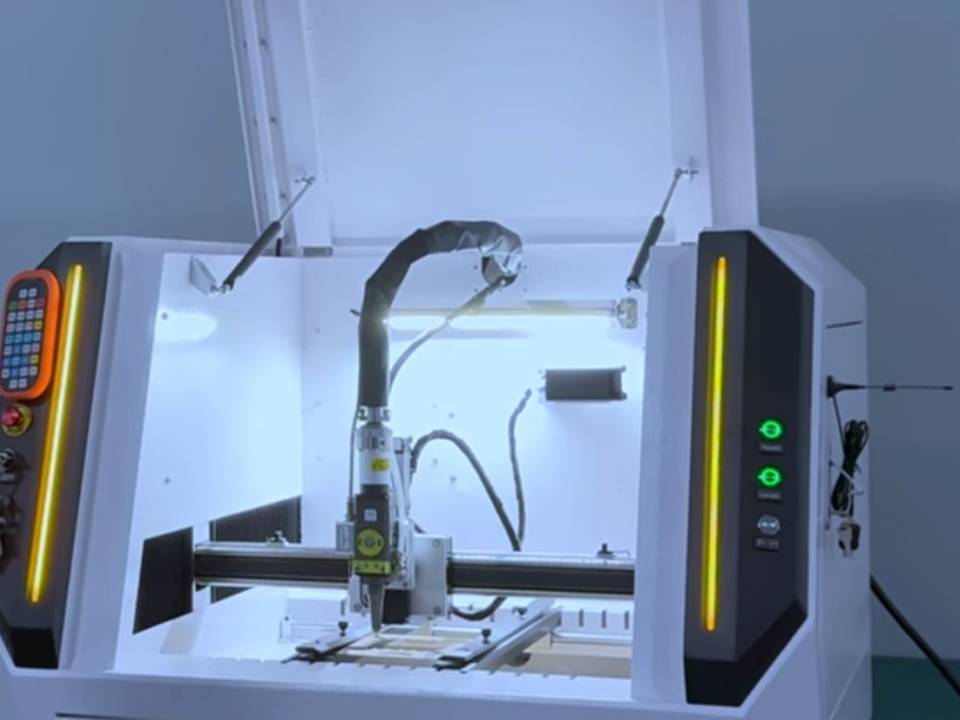
How Fiber Laser Cutting Improves Sports Gear Production
A practical guide to fiber laser cutting in sports equipment manufacturing: suitable materials, tube and sheet cutting, failure modes and RFQ details.

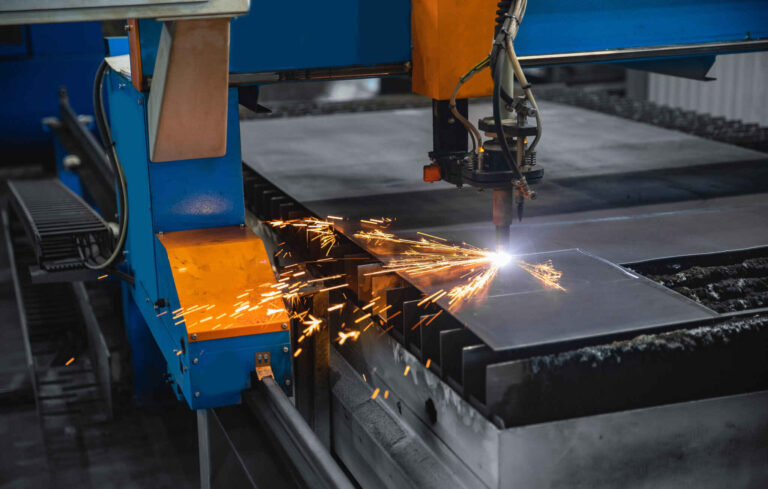
Fiber laser cutting improves sports gear production when the product is built from metal: tubular frames, brackets, base plates, stainless fittings and aluminum components. The machine cuts these parts directly from CAD files, so design changes need no new die, hole and slot positions stay consistent between batches, and many parts leave the cutting step closer to assembly-ready. The technology does not help every sports product. Fabric panels, foam, leather and many composites are normally cut by other methods. This article explains where fiber laser cutting adds real value in sports equipment manufacturing, where it does not, and what engineering and procurement teams should define before buying a machine or outsourcing cut parts.
Where Does Fiber Laser Cutting Fit in Sports Gear Manufacturing?
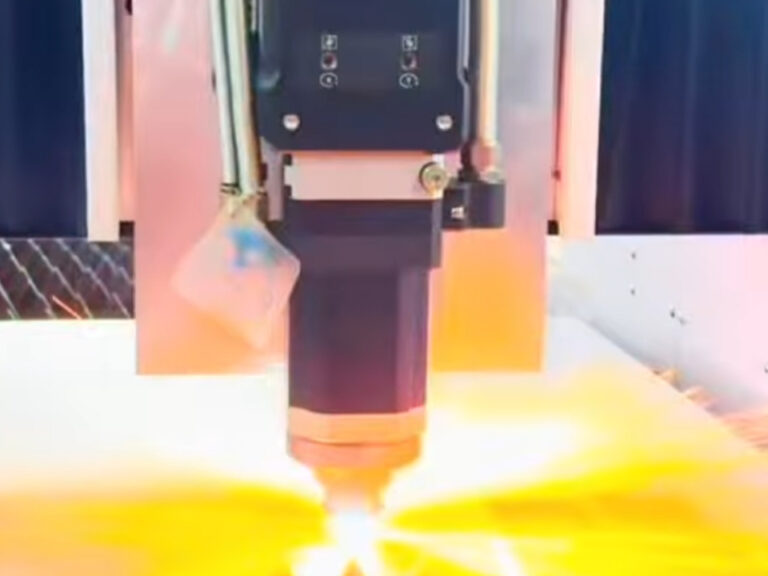
Fiber laser cutting fits metal components. A fiber laser emits at roughly 1.06 µm, a wavelength that couples well with metals, including reflective ones such as aluminum, copper and titanium. CO2 lasers at 10.6 µm are better matched to non-metals. That wavelength difference drives most of the machine-selection logic in this industry.
Typical candidates in sports and fitness equipment include:
- Square, round and rectangular tube for racks, benches, cardio frames and goal or court hardware
- Bracket, gusset, base and mounting plates
- Stainless steel fittings and corrosion-exposed hardware
- Aluminum plates and profiles used in cycling, outdoor and water-sports accessories
- Perforated or patterned panels, nameplates and branded metal parts
These are common categories, not a guarantee that a specific product suits laser cutting. Wall thickness, volume and finishing route still decide the outcome.
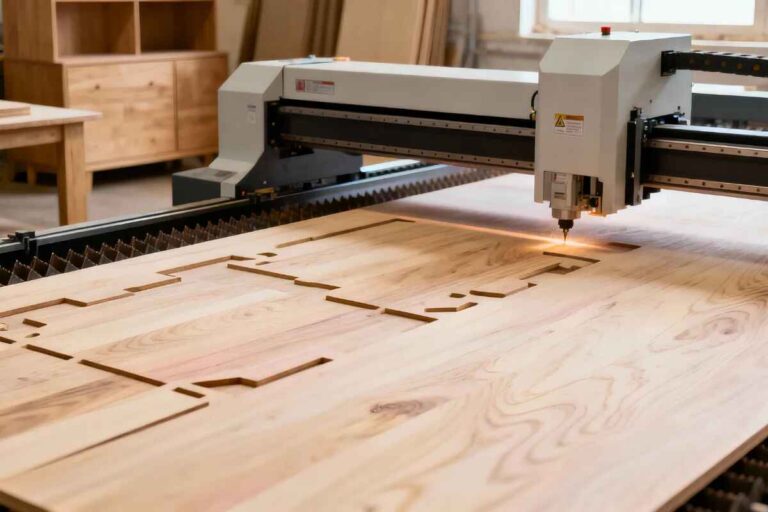
For a wider view of how cutting sits beside marking, engraving, welding and cleaning, the laser machine application overview groups the processes by use case. Sports brands that also work with leather grips, plastic housings or wood components can review laser cutting machine applications by material, which lists the metal and non-metal materials Bogong’s cutting machines address. For those softer materials, a CO2 source is usually the better starting point than a fiber source.
What Does Fiber Laser Cutting Actually Improve?
Design changes without hard tooling
Sports equipment lines often carry many sizes, colorways and model-year revisions. With laser cutting, a revised bracket or a new hole pattern is a file change and a nesting update. Punching and stamping can be faster per part at very high volumes, but each new geometry needs tooling, and tooling lead time slows prototyping and small batches.
The trade-off is cycle economics. When a single part runs in very large, stable quantities, a progressive die can still beat the laser on cost per piece. Laser cutting is strongest in the middle ground: many variants, moderate batch sizes and frequent engineering changes.
Tube accuracy and assembly fit
Tube frames are where many fitness and sports manufacturers see the clearest gain. A tube laser can cut holes, slots, notches and mitered ends in one setup, and tab-and-slot features can help parts locate each other before welding. That can reduce fixture complexity and manual marking compared with sawing, drilling and filing as separate operations.
Check the machine type carefully. A flat-bed fiber laser processes sheet and plate. Tube normally requires a dedicated tube cutter or a rotary attachment. Ask the supplier which tube profiles, diameters, wall thicknesses and maximum tube lengths the system handles, and how loading and unloading work.
Edge condition and finishing
Sports gear is usually painted, powder-coated, anodized or plated, so edge condition matters. For aluminum, nitrogen assist gas leaves a bright, oxide-free edge that can take paint, powder coat or anodizing without extra descaling. Oxygen-assisted cutting of steel leaves an oxide layer that typically has to be removed before finishing. The same source describes nitrogen as the standard choice for laser-cut aluminum.
This creates a cost trade-off. Nitrogen cutting usually consumes more gas and may run slower on thicker steel, but it can remove a deburring or descaling step downstream. The cheapest cutting parameters are not always the cheapest finished part.
Material utilization and nesting
Laser nesting software places many parts on one sheet and can share cut lines between neighboring parts. Yield improvement depends on part geometry and the current method. Ask a supplier to run a nesting study on your real part files instead of accepting a general percentage claim.
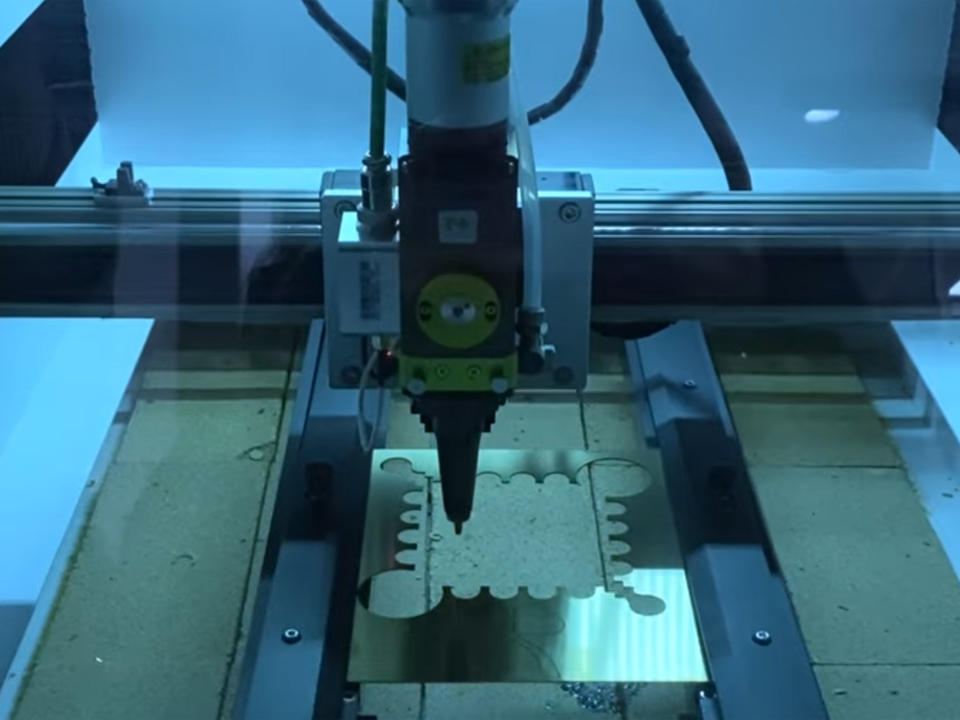
Fiber Laser Cutting vs Other Methods for Sports Gear Components
The table below is a qualitative comparison. It contains no measured performance data. Actual results depend on material, thickness, machine power, assist gas and part geometry.
| Method | Best suited to | Main strengths | Main limits | Decision trigger |
|---|---|---|---|---|
| Flat-bed fiber laser | Sheet and plate brackets, panels, plates, perforations | Tool-free design changes, fine contours, wide metal range | Does not process tube without an attachment; poor match for fabric and foam | Many part variants and frequent revisions |
| Tube fiber laser | Tubular frames, racks, benches | Holes, slots and cut ends in one setup; supports tab-and-slot assembly | Machine is tube-specific; loading and tube straightness need attention | Tube-heavy products with welded assemblies |
| CO2 laser | Leather, plastic, wood, acrylic, many textiles | Strong absorption in non-metals | Weaker fit for reflective metals | Grips, soft goods, non-metal components |
| Punching / stamping | Very high-volume flat or formed parts | Low cost per part at scale | Die cost, lead time and limited flexibility | Stable, large-volume parts |
| Saw, drill and manual notching | Simple tube cuts, low-investment shops | Low equipment cost | Multiple setups, more labor, more variation | Few part types, low complexity |
When Is Higher Laser Power the Wrong Priority?
A common assumption is that a buyer should purchase the highest wattage available. For sports gear, that assumption deserves scrutiny. Much of the work is thin-wall tube and thin-to-medium sheet. In that work, beam quality, motion system, tube handling and loading automation often limit throughput more than maximum power does.
Consider an illustrative scenario, not a customer case. A manufacturer of powder-coated benches cuts tube and 3–6 mm brackets in four widths. Doubling laser power would speed up thick cuts it rarely makes. Adding automated loading and a better nesting workflow would affect every shift. The right investment depends on the thickest regular job, the daily part mix and the finishing route, not on a headline power figure.
Higher power does matter when the workload includes thicker plate, high-volume cutting, or stainless and aluminum at greater thicknesses. The principle is to size the machine to the thickest regular job plus a reasonable margin, then check automation and edge requirements.
Material Considerations for Sports Equipment Parts
Use this table as a decision framework. Parameters depend on the machine and supplier, so treat the last column as a checklist.
| Material | Fiber laser suitability | Edge and gas consideration | What to verify with the supplier |
|---|---|---|---|
| Carbon steel (frames, plates) | Strong fit | Oxygen assist is typical but leaves an oxide layer; nitrogen or air may be specified when the edge will be coated | Edge condition before powder coating; dross on holes |
| Stainless steel (hardware, outdoor gear) | Strong fit | Nitrogen is commonly used for clean, oxide-light edges | Burr level on thicker sections; post-cut passivation needs |
| Aluminum (cycling, outdoor, accessories) | Good fit with a fiber source | Nitrogen gives a bright edge suitable for anodizing | Reflectivity handling; anodizing appearance at the cut edge |
| Titanium (premium components) | Possible, more demanding | Oxidation control is critical; inert gas strategy varies | Test cuts, oxide tolerance and the supplier’s titanium experience |
| Fabric, foam, leather, many composites | Usually the wrong tool | CO2 laser, knife or waterjet are more common | Heat damage, edge melting, fumes and material compatibility |
Titanium and composites are where a buyer should insist on sample parts. General guidance is no substitute for a trial cut on your alloy, thickness and finish.
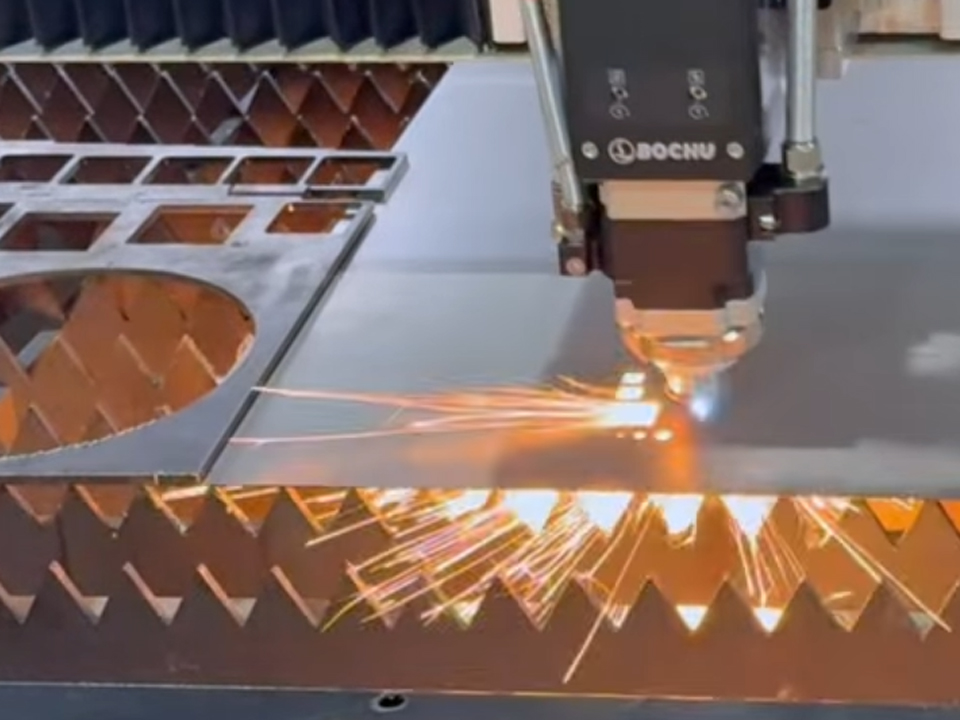
What Can Go Wrong: Common Failure Modes
Fiber laser cutting is not defect-free. These issues most often affect sports gear parts:
- Dross or burrs on holes and slots. They interfere with fasteners, bushings and powder-coat thickness. Ask what deburring step the quoted price assumes.
- Oxide edges under coatings. Oxygen-cut edges on steel can affect finishing if they are not cleaned, as noted above.
- Thin-wall tube distortion. Heat input and unsupported tube sections can shift geometry, especially on long tubes. Verify straightness and support methods.
- Pierce marks on cosmetic surfaces. If a surface is visible after assembly, specify where lead-in and pierce points may sit.
- Taper and edge roughness on thick plate. Define acceptance criteria rather than relying on “good quality.”
The most reliable way to define acceptance is to reference a standard. ISO 9013 covers thermal cuts, including laser cuts, with geometrical product specifications and quality tolerances. The page for the 2002 edition notes that this version is withdrawn and that ISO 9013:2017 is the current one. Referencing the applicable class on the drawing is more enforceable than an adjective.
Marking, Engraving and Welding After the Cut
Cutting is one stage of a finished sports product. Branding, serial numbers and small-part joining often follow, and the right equipment differs by material.
- Logos and model numbers: laser engraving machines etch designs, numbers and text on metal, wood and plastic.
- Large frames and fixed assemblies: a handheld portable laser engraver can mark metal and some non-metals without moving the workpiece to a bench, which suits traceability marks on bulky parts.
- Plastics and heat-sensitive components: Bogong’s UV laser marking machine page describes a 355 nm wavelength, shorter than the 1064 nm of fiber lasers, for high-contrast marking with less heat damage on metals and plastics. That makes it relevant to polymer housings, sensor covers and wearable accessories.
- Awards, trophies and event merchandise: the 3D crystal laser engraving machine is described as creating patterns inside crystal and glass. It fits sports-event awards and commemorative products rather than production equipment parts.
- Small precision welds: Bogong’s floor-type laser welding machine and its 200W Pro mini laser welder with CCD are listed in the jewelry laser welder category. They are relevant to small components, medals and fine repairs, not to structural welding of heavy tube frames, which needs different equipment.
Matching each process to the right machine avoids buying one tool and expecting it to do another’s job.
Laser Safety and Workplace Requirements
Industrial cutting lasers are normally high-power systems, so enclosure design and operating procedure matter. The OSHA Technical Manual chapter on lasers states that Class IV lasers and laser systems require a master switch control. It also says ANSI Z136.1 calls for a standard operating procedure for Class IV lasers, and that enclosure materials exposed to high irradiance can become a fire hazard. These are US references. The requirements for your site depend on the country and the machine’s actual configuration.
Ask suppliers for enclosure and interlock documentation, extraction requirements for coated or galvanized metals, and operator training. Confirm the conformity requirements for your market instead of assuming that a certification claim covers every configuration.
How to Evaluate a Laser Equipment Supplier
A supplier’s value shows up in application support more than in a catalogue price. Before shortlisting, check:
- Test cuts on your material. Provide actual part files, material grade, thickness and finishing route. Then inspect edge condition, hole accuracy and distortion.
- Consumables and service. Clarify nozzles, protective lenses and replacement parts, along with remote and on-site support.
- Software and nesting. Confirm file formats, tube-programming capability and operator training.
- Documentation. Request CE or other applicable declarations, electrical and laser-safety documents, and the exact warranty terms.
- Track record. On its company profile, Bogong describes itself as a Jinan-based manufacturer of cutting, welding and marking machines with clients in more than 180 countries. Treat this as a self-reported claim and verify references relevant to your industry, as you would with any supplier.
Buyers still comparing machine categories can browse the full laser product range before narrowing the specification. The Bogong blog carries further articles on cutting, welding and cleaning.
What Should Buyers Specify Before Requesting a Quote?
An accurate RFQ saves rounds of clarification. Whether you are buying a machine or outsourcing cut parts, prepare the following:
| RFQ item | Why it matters |
|---|---|
| Material grade and thickness range | Determines achievable speed, assist gas and required source power |
| Part type: sheet, plate or tube (profile, diameter, wall, length) | Decides whether a flat-bed, tube or combined system is needed |
| Typical and peak daily volumes | Affects automation, nesting strategy and laser-versus-stamping economics |
| Finishing route (powder coat, anodize, plating, bare) | Influences gas choice and deburring requirements |
| Edge and tolerance requirements | Referencing an ISO 9013 class avoids vague acceptance criteria |
| Cosmetic surfaces | Controls pierce and lead-in locations |
| Marking and traceability needs | Determines whether engraving or marking is added after cutting |
| Delivery, installation and training | Affects start-up time and total landed cost |
| Safety and compliance market | Defines enclosure, documentation and certification needs |
Send these details, plus drawings or sample files, through the Bogong contact page so an application engineer can respond to your actual parts rather than a generic specification.
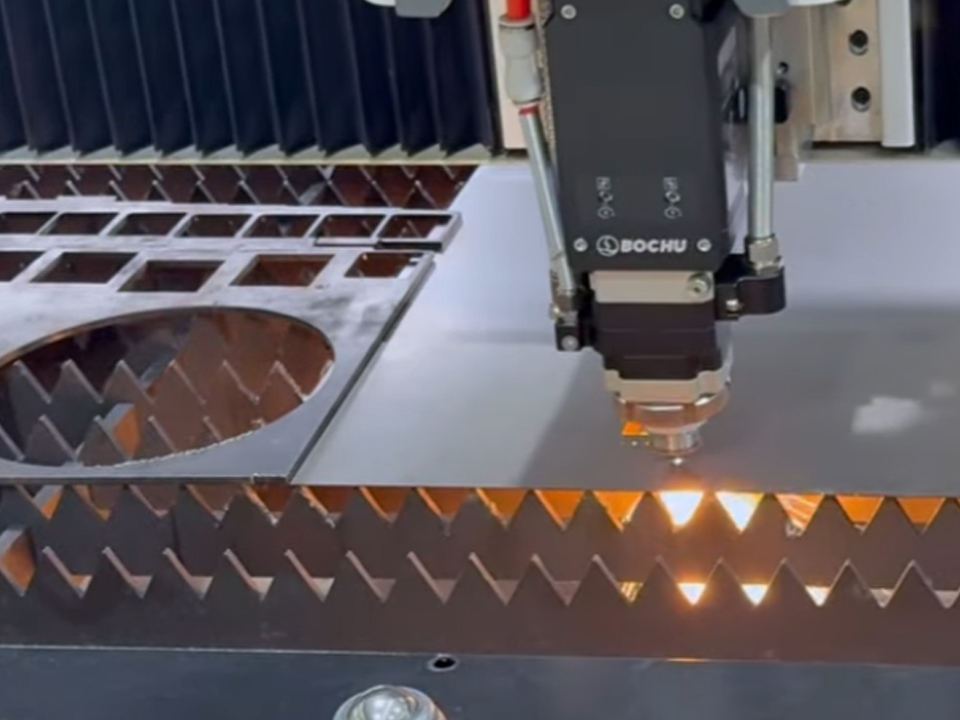
Frequently Asked Questions
Is fiber laser cutting suitable for all sports equipment materials?
No. It suits metals such as carbon steel, stainless steel and aluminum. Textiles, foam, leather and many composites usually need CO2 laser, knife or waterjet cutting. Confirm the material list and run sample cuts before choosing equipment.
Should sports gear manufacturers choose fiber or CO2 laser cutting?
Choose by material. Fiber lasers suit metal tubes, brackets and plates. CO2 lasers suit non-metals such as leather, plastic and wood. A manufacturer producing both metal frames and soft components may need both technologies or an outsourced partner.
Can a fiber laser cutter process tubes for fitness equipment?
Only if the system is configured for tube. Flat-bed machines cut sheet and plate. Tube normally needs a dedicated tube laser or rotary device. Specify tube profile, diameter, wall thickness and length when requesting a quote.
Does laser cutting replace stamping for high-volume sports parts?
Not always. Laser cutting offers flexibility and no hard tooling, which suits many variants and moderate batches. For very large, stable volumes, stamping or punching dies can give lower cost per part. Compare both using your actual quantities.
Which assist gas is better for parts that will be powder-coated or anodized?
Nitrogen generally gives a cleaner, oxide-free edge, especially on aluminum. Oxygen on steel leaves an oxide layer that may need removal before finishing. Gas choice affects speed and cost, so confirm it with test parts.
How should I define cut quality in an RFQ?
Reference ISO 9013 quality classes, state burr and dross limits, and mark cosmetic surfaces on drawings. Pair these with sample approval so both sides agree on edge condition before volume production.
What safety measures does an industrial laser cutter need?
Requirements depend on the machine’s enclosure, laser class and local regulations. Expect interlocked guarding, a master switch, operating procedures, fume extraction and operator training. Ask the supplier for documentation and verify local obligations.


Hot Click
Contact Us
Application
©Copyright [bogonglaser.com]. BOGONG Laser Machine Supplier All Rights Reserved.