
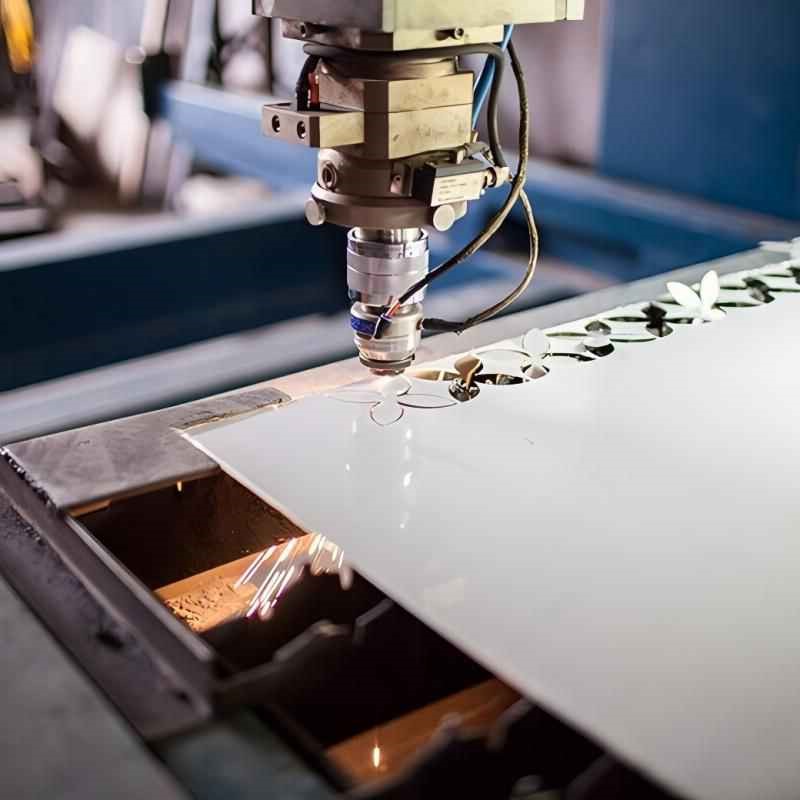
Laser Cutting Machines for Acrylic Product Manufacturing
A hard-edged manufacturing evaluation of laser cutting devices for acrylic product manufacturing-- why CO2 typically wins, where machine prices estimate hide risk, and what severe buyers should check before signing a purchase order.

The Equipment Is Not the Purchase; the Refine Is
Specification sheets lie.
They do not depend on the animation feeling; they exist by noninclusion, due to the fact that a quote that shouts “150W CO2” while whispering about exhaust static stress, mirror drift, component approach, cast-versus-extruded PMMA actions, kerf compensation, and regular monthly scrap expense is not a manufacturing strategy in any way.
So what are you really getting?
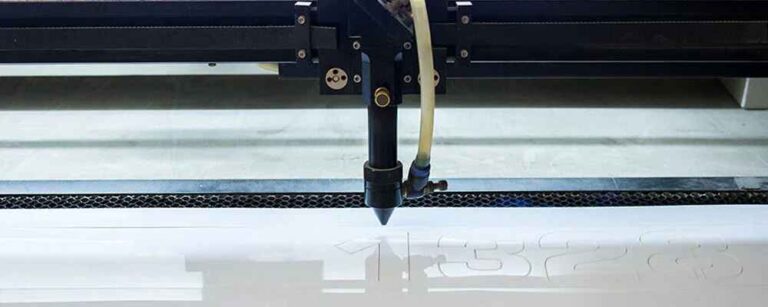
A Polymer Laser Reducing Equipment is not just a box with a glowing tube. It is a heat-delivery system, a motion-control system, a fume-control system, and– if your manufacturing facility actually ships acrylic items rather than making examples for Instagram– a repeatability system. The key phrase sounds tidy. The factory fact is messier.
I have a candid opinion here: most failed acrylic laser projects are not brought on by “poor makers.” They are caused by under-specified devices marketed into over-confident manufacturing strategies. The purchaser asks, “Can it cut 10 mm polymer?” The far better concern is, “Can it reduce 10 mm cast PMMA for eight hours, hold edge clarity, maintain the operator out of methyl methacrylate vapor, and still struck tomorrow’s delivery window?”
That is the difference in between a demonstration and manufacturing.
For anyone mapping actual production, Bogong’s Polymer Laser Reducing Maker overview is the most natural inner beginning point due to the fact that it frames acrylic reducing around tidy sides, intricate shapes, and industrial applications– not just electrical power. From there, the wider laser cutting device application guide helps separate acrylic, plastic, wood, leather, paper, metal, and sheet-metal use instances prior to a buyer picks the incorrect laser source.
Why CO2 Still Possesses Polymer Product Production
Polymer is PMMA– polymethyl methacrylate. The monomer methyl methacrylate is C5H8O2, according to PubChem’s methyl methacrylate access. In factory language, that means clear sheet, shiny edges, strong light transmission, and a nasty practice of penalizing lazy warmth control.
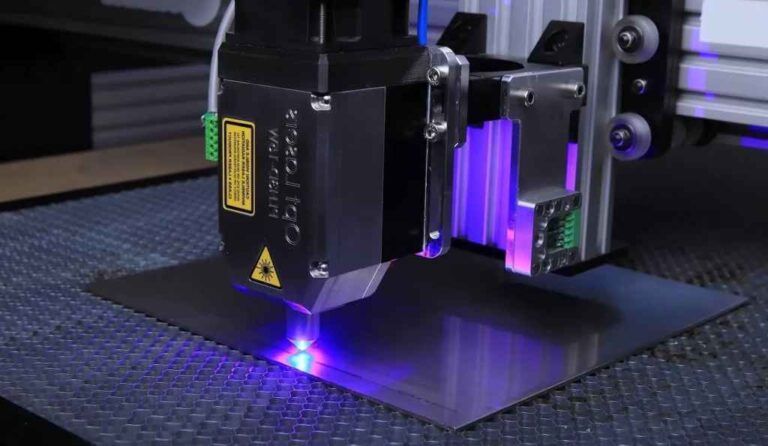
For clear and tinted acrylic sheets, a CO2 Laser Cutter for Acrylic is still the functional workhorse. Not stylish. Practical. The 10.6 µm CO2 wavelength pairs well with numerous natural materials, while fiber lasers around 1064 nm are primarily developed for metals. This is why a buyer contrasting a Commercial Polymer Laser Cutter versus a fiber laser ought to not deal with “more recent” as automatically much better. Newer for steel is not more recent for PMMA.
Bogong’s CO2 laser cutting equipment lineup is an appropriate inner link below due to the fact that its carbon dioxide web page directly positions carbon dioxide cutters for acrylic, slim wood, and other non-metal products. That is the proper classification. If a distributor presses a metal-first fiber laser as the “finest laser cutting machine for acrylic,” I would ask for a cut example on clear 8 mm cast PMMA prior to I think a word of it.
Polymer forgives much less than salesmen case. Way too much power per millimeter and the side yellows. Inadequate and the sheet rejects to separate easily. Incorrect emphasis and you get a diagonal, great smoky, irregular cut. Poor exhaust and the operator smells the chemistry prior to administration sees the issue record.
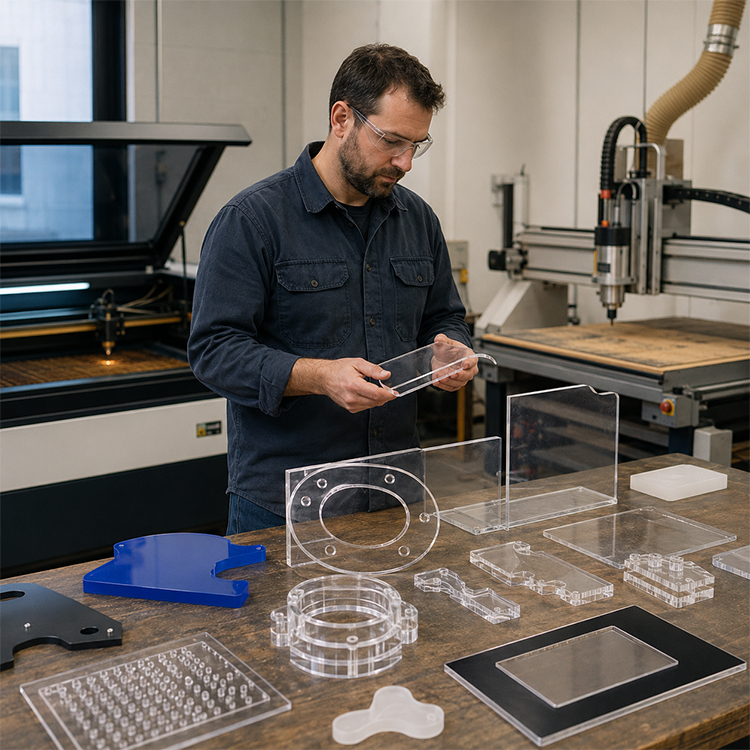
Yet when the arrangement is right, CO2 cutting provides manufacturers something routing battles to match: a polished-looking edge without device wear, no mechanical little bit stress, no cutter chatter, and outstanding repeatability on letters, screens, honors, light panels, guards, themes, and retail components.
The Information No Supplier Desires in the Brochure
Allow’s pull this out of sales language and placed it into numbers.
The united state plastics and rubber items making market is not a home hobby category. FRED, making use of U.S. Bureau of Labor Statistics information, lists 2024 sectoral output for NAICS 326 at $268,041.491 million, down from $274,808.837 million in 2023 but still enormous by any shop-floor requirement.
And security is not decorative. OSHA’s methyl methacrylate chemical database checklists methyl methacrylate as CAS 80-62-6, formula C5H8O2, with an OSHA PEL-TWA of **100 ppm/ 410 mg/m five and a NIOSH REL-TWA of *100 ppm/ 410 mg/m ³. The NIOSH methyl methacrylate IDLH profile repeats the very same REL and PEL worths and describes the material as an anemic fluid with an acrid, fruity odor.
That smell is not an efficiency metric.
A 2023 peer-reviewed study on exhausts from CO2 laser cutting acrylic sheets checked out particle and gas releases during acrylic laser cutting and noted that gases and particle issue may be released when the cover is opened up after reducing. Translation for production managers: cover design, dwell time, exhaust circulation, filtration, operator habit, and upkeep logs belong in the purchasing discussion.
OSHA additionally released 2024 office injury and illness information from 370,000 Kind 300A records and partial data from greater than 732,000 Kinds 300, 301, and 300A-related records, according to the agency’s 2024 injury and health problem information launch. I mention this because manufacturing facilities love stating “we have no problem” up until the recordkeeping system states otherwise.
Tough truth: if the quote for your PMMA Laser Reducing Machine does not go over fume removal, room, interlocks, lens cleaning, and material examination procedures, it is not a significant quote. It is a box cost.
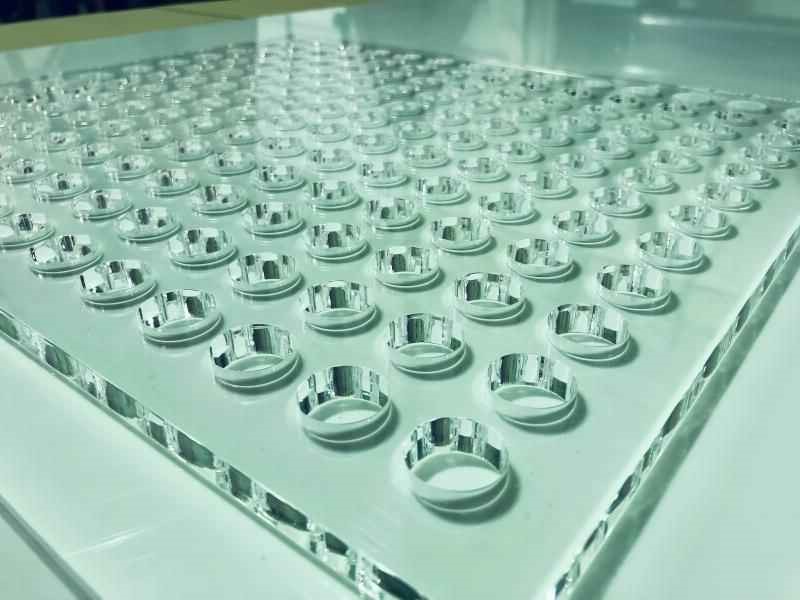
Table of Contents
CARBON DIOXIDE, Fiber, Diode, Router: The Shop-Floor Contrast
| Option | Ideal Usage | Acrylic Edge Quality | Manufacturing Threat | My Take |
|---|---|---|---|---|
| CO2 Laser Cutter for Polymer | Cast/extruded PMMA sheets, signs, screens, honors, panels | High when emphasis, speed, power, and exhaust are regulated | Fumes, optics contamination, warmth marks, mirror placement | Ideal default for acrylic product manufacturing |
| Fiber Laser Cutter | Metals such as stainless-steel, carbon steel, light weight aluminum, brass | Poor fit for the majority of clear acrylic job | Incorrect wavelength for clear PMMA, provider over-selling | Strong for steel; typically wrong for acrylic |
| Diode Laser Cutter | Leisure activity inscription, dark acrylic experiments, small crafts | Irregular on clear acrylic | Low power, wavelength limitations, slow-moving throughput | Not a manufacturing facility solution for major acrylic production |
| CNC Router | Thick plastic sheet, mechanical profiling, some high-volume job | Needs brightening or additional completing | Tool wear, chips, clamping pressure, dust | Helpful, yet not a clean-edge replacement for carbon dioxide |
| Blade/ Saw/ Handbook Reducing | Straight cuts, affordable rough work | Low to medium | Splits, chips, labor variant | Penalty for crude tasks, weak for top quality items |
This table is where customers ought to quit making believe one device can be everything.
The appropriate Polymer Cutting Equipment relies on item mix. A trophy shop cutting 3 mm cast acrylic logo designs does not require the exact same arrangement as a manufacturing facility making 12 mm maker guards. A point-of-purchase display maker may care a lot more about nesting performance, bed size, and side clarity. An illumination brand might obsess over haze, flame-polished edge quality, and repeatable port geometry.
For blended plastic work– not just PMMA, however additionally PET, ABDOMINAL MUSCLE, polycarbonate, and other substratums– the interior laser reducing maker for plastic products web page fits naturally since it broadens the conversation past acrylic. Yet take care: “plastic” is not one product. PVC is a various security discussion from PMMA. Polycarbonate behaves differently from cast polymer. ABS is one more beast. The vendor that treats them all as one line product is informing on himself.
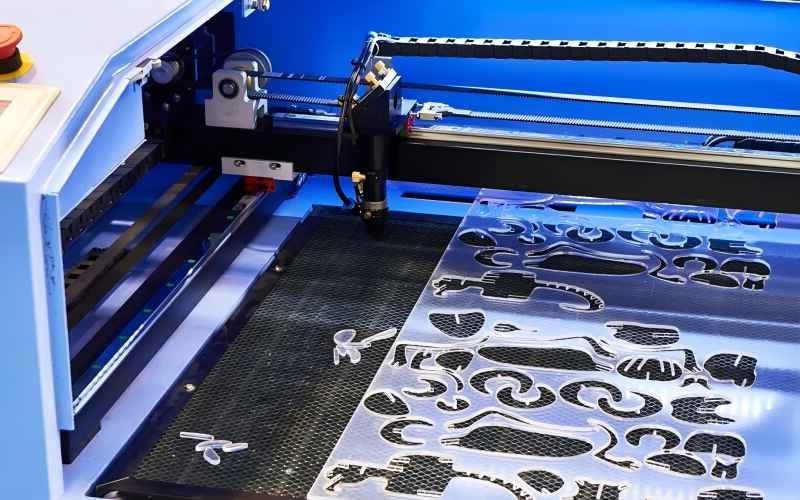
Exactly how to Specify an Industrial Acrylic Laser Cutter Without Getting Played
Beginning with the product, not the laser.
I would create the purchasing brief such as this: material kind, sheet density, cast or extruded PMMA, monthly manufacturing volume, biggest component dimension, smallest interior radius, appropriate side color, resistance target, engraving requirement, shift pattern, exhaust route, offered floor room, and operator ability level.
Boring listing? Great. Boring is where factories conserve money.
Here is what significant purchasers must demand before buying Laser Reducing Equipments for Acrylic:
1. Cut Samples on Your Real PMMA
Never approve a supplier sample made from secret polymer. Send your own material. Consist of cast PMMA, squeezed out acrylic, mirrored acrylic, tinted acrylic, and the most awful sheet you still intend to run. Request edge photos, melt marks, kerf dimension, and cycle time.
2. Power Matched to Thickness, Not Vanity
A 60W carbon dioxide laser can manage several thin acrylic jobs. A 100W or 150W class equipment might make sense for thicker PMMA, faster throughput, and industrial routines. Yet oversized power can create its own troubles if control is sloppy. Acquiring power level without activity high quality is like buying horsepower without brakes.
3. Bed Dimension Matched to Sheet Economics
Acrylic item manufacturing lives and passes away by nesting. If the bed size pressures drivers to pre-cut sheets terribly, your scrap price surges prior to the laser even terminates. Ask about standard sheet layouts in your area and match the workplace appropriately.
4. Tire Designed Like a System
Acrylic fumes are not “just scent.” They are process discharges. Use confined reducing, enough air flow, appropriate ducting, filtering where required, and operator procedures that keep the cover shut enough time after reducing. The 2023 emissions research study should terrify casual purchasers directly, yet evidently lots of people need to smell an issue before they value it.
5. Engraving Capacity, If the Product Requirements Branding
Lots of acrylic products need both cutting and marking: awards, plaques, control panels, retail indications, nameplates, cockpit console, light overviews, and custom-made present products. For that mix, Bogong’s laser inscribing machine for acrylic page is a helpful inner recommendation since it concentrates on high-contrast engraving without mechanical damage.
How to Laser Cut Polymer Products Without Burning the Task
You do not “discover the perfect setting.” You develop a setups window.
That home window changes with PMMA grade, thickness, lens focal size, air help, protective movie, table reflection, exhaust effectiveness, maker upkeep, and whether the operator cleaned the optics after the other day’s smoky plywood work. Anybody who provides one universal speed and power chart for every single acrylic product is selling convenience, not fact.
Still, the operating logic is steady:
Usage cast acrylic when side high quality and engraving clarity matter. Use squeezed out acrylic when cost and thermoforming behavior matter more than etching character. Eliminate or check safety film depending on sticky behavior. Keep emphasis consistent. Use adequate exhaust. Prevent subdued slow passes that cook the edge. Run test grids before production. Tape settings by material distributor and set.
For thin acrylic, the battle is usually rate and edge heat. For thick acrylic, the fight ends up being light beam geometry, emphasis depth, melt discharge, and staying clear of taper. For mirrored acrylic, the fight might be finishing behavior. For clear screen items, the battle is cosmetic technique: no smoke discolor, no haze, no distorted edges, no lazy handling scrapes.
And no, the driver can not take care of a weak maker by “simply reducing it down.” Slower commonly means hotter. Hotter often means uglier. Hideous ways rework.
The very best Polymer Product Manufacturing Tools provides the driver a steady procedure window. The most awful pressures every change to find the other day’s setups like a superstition routine.
Where Acrylic Product Manufacturing Actually Earns Money
Acrylic laser reducing earns money where personalization, coating top quality, and repeatable geometry matter greater than basic material tonnage.
The strong sectors are obvious if you look past pastime material: retail display screens, illuminated signage, building versions, instrument panels, honors, safety covers, gallery places, aesthetic display screen trays, electronic devices home windows, patterns, themes, lighting diffusers, and short-run OEM plastic parts.
The margin is not in reducing a square. Any individual can reduce a square.
The margin remains in sharp internal corners, clean typography, embedded repeat orders, fast transitions, and a refined edge that does not call for hand labor. That is why the appropriate Industrial Acrylic Laser Cutter can defeat a router in branded acrylic job also when the router looks more affordable theoretically.
Bogong’s existing Laser Reducing Makers for Polymer and Plastic Products page fits this industrial angle since it currently connects acrylic and plastic reducing to manufacturing facility throughput, precision, and ROI. I would certainly reinforce that page in time with even more test-cut photography, material-specific setups ranges, exhaust layouts, and sample-part study.
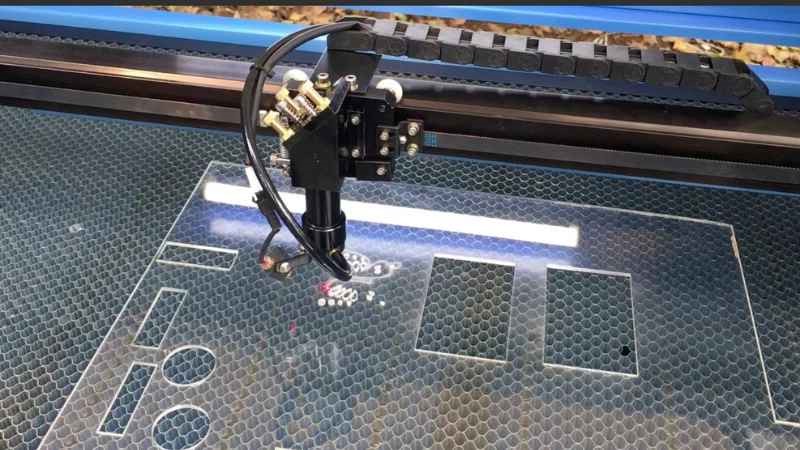
The Buying Checklist I Would Certainly Utilize Before Signing
Prior to getting a PMMA Laser Reducing Machine, I would ask the provider for the following:
| Buying Inquiry | Why It Issues | Poor Answer |
|---|---|---|
| Can you cut my specific acrylic sample? | Genuine product subjects genuine procedure restrictions | “Our standard acrylic example is enough.” |
| What edge quality can I expect on 3 mm, 6 mm, and 10 mm PMMA? | Density changes warm behavior | “It reduces all acrylic flawlessly.” |
| What exhaust volume and filtration do you recommend? | Fume control influences security and edge quality | “Regular fan is fine.” |
| What lens and emphasis setup is recommended? | Beam of light geometry affects kerf and taper | “Default lens benefits every little thing.” |
| What is the repeatability over a full shift? | Production is not a one-part trial | “The video clip shows it working.” |
| What upkeep does the optics course require? | Unclean optics ruin cuts and tubes | “Virtually no maintenance.” |
| Can it cut and inscribe in one operations? | Lots of acrylic products require both | “Possibly, relying on software.” |
The phrase “Ideal Laser Reducing Machine for Acrylic” is a catch unless the buyer defines “finest.” Best for 2 mm acrylic jewelry? Best for 10 mm signage letters? Best for 1,000 screen racks weekly? Best for mixed acrylic and wood? Best for low-odor indoor usage? Best for export product packaging?
A machine can not be best in the abstract. It can just be best for a production version.
Frequently asked questions
What is an Acrylic Laser Reducing Maker?
A Polymer Laser Reducing Machine is a CNC-controlled CO2 laser system created to cut PMMA sheets into specific product forms with clean edges, narrow kerf, repeatable geometry, and reduced mechanical stress compared to saws or routers, making it ideal for signs, display screens, honors, panels, guards, themes, and customized acrylic production.
In practice, the device incorporates laser power, activity control, optics, cooling, exhaust, workholding, and software. The laser matters, however the complete system decides whether the end product looks costs or burned.
What is the best laser cutting machine for polymer?
The most effective laser reducing machine for acrylic is usually an appropriately confined CO2 laser cutter matched to the manufacturing facility’s PMMA thickness array, bed dimension, edge-quality requirement, exhaust strategy, production quantity, and etching needs, since CO2 innovation is normally far better fit to acrylic sheets than fiber lasers developed for steel cutting.
For a lot of industrial acrylic item production, I would begin with CO2, then confirm through example cuts. Do deny from wattage alone. Purchase from proof: side clarity, cycle time, exhaust design, and repeatability.
How do you laser cut acrylic items without burning?
You laser cut acrylic products without burning by balancing power, speed, focus, air help, product type, sheet thickness, exhaust circulation, and protective-film actions, after that confirming the setup with examination cuts before manufacturing, since PMMA gets too hot promptly when energy density, dwell time, or vapor elimination is poorly controlled.
The operator should log setups by product vendor, thickness, shade, and batch. Excellent shops do not depend on memory. They build a setups library and update it when sheet habits modifications.
Is a CO2 Laser Cutter for Polymer better than a fiber laser?
A CO2 Laser Cutter for Acrylic is generally better than a fiber laser for clear and colored PMMA sheet reducing due to the fact that CO2 wavelengths are better suited to natural acrylic materials, while fiber lasers are largely enhanced for metals such as stainless steel, carbon steel, light weight aluminum, brass, and copper.
Fiber lasers are excellent makers in the best work. Polymer is usually not that work. If someone insurance claims or else, ask for transparent PMMA samples, edge photos, and repeatable production information.
Are acrylic laser cutting fumes dangerous?
Acrylic laser reducing fumes can create occupational direct exposure problems since PMMA handling might release methyl methacrylate and particulates, so producers must treat fume extraction, enclosure style, filtration, operator timing, and air surveillance as component of the production system instead of as optional accessories.
OSHA and NIOSH both list methyl methacrylate exposure limits, and the 2023 exhausts research study on acrylic laser reducing programs why lid-opening actions and ventilation issue. The nose is not a calibrated sensor.
What industries make use of Laser Reducing Machines for Acrylic?
Laser Cutting Devices for Acrylic are made use of by makers of retail displays, brightened signs, honors, ornamental panels, electronic devices home windows, protective guards, architectural versions, control board, layouts, light diffusers, cosmetic trays, exhibit components, and short-run custom-made PMMA components where tidy geometry and polished-looking edges influence item worth.
The typical thread is not “acrylic.” It is visible quality. Acrylic is usually bought by the eye initially and determined by the caliper second.
Last Ideas: Send Out the Example, Not Simply the Density
If you are acquiring an Acrylic Laser Cutting Machine genuine item production, quit asking for a common quote and send the vendor your hardest acrylic sample, target tolerance, month-to-month volume, sheet size, edge-quality picture, etching demand, and exhaust constraints.
Then request for a test-cut report.
That step divides serious vendors from pamphlet sellers. If you want a production-fit suggestion, begin with Bogong’s acrylic reducing sources, contrast the carbon dioxide arrangement versus your product listing, and request a sample-based machine proposition prior to you devote capital.


Hot Click
Contact Us
Application
©Copyright [bogonglaser.com]. BOGONG Laser Machine Supplier All Rights Reserved.