
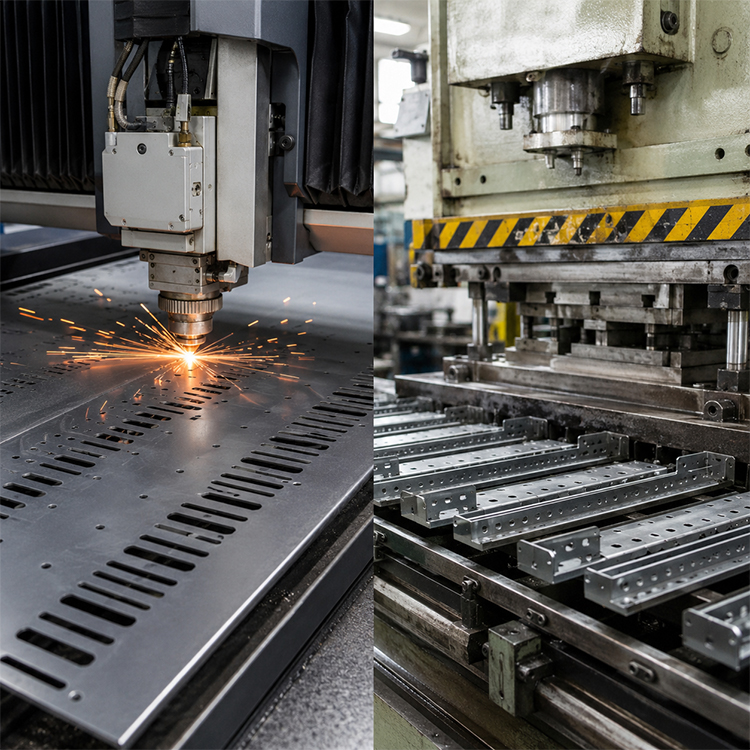
Laser Cutting vs Stamping in Shelf Production
Laser cutting wins versatility. Stamping victories quantity. However in rack production, the smarter selection depends upon air movement patterns, hole density, alteration threat, bend precision, material mix, and whether your assembly line penalizes design modifications.

The Rack Factory Disagreement Nobody Intends To Have
Laser Cutting vs Marking is not a cool innovation discussion. It is a cash debate wearing safety glasses.
Tooling modifications every little thing.
When I consider a shelf production process, I do not begin with the cutting head, press tonnage, pamphlet electrical power, or whatever sales groups are pressing that quarter; I begin with the ugliest part illustration, the revision background, the hole pattern density, the bend sequence, the burr resistance, and the number of times design has actually quietly altered a placing port after the acquiring group currently assured shipment.
So which procedure in fact wins?
The uncomfortable response: laser reducing success uncertainty, stamping success repeating. If you are building high-mix web server racks, control cupboards, battery racks, telecommunications structures, EV battery charger enclosures, or rack panels with fast-moving air flow geometry, CNC laser reducing shelf parts generally gives you a safer course. If you are making the exact same bracket, rail, clip, or reinforcement plate thousands of hundreds of times, metal marking for rack elements can ruin laser reducing on device cost.
The more comprehensive market context matters. The U.S. Bureau of Labor Data categorizes fabricated steel item production under NAICS 332 and clearly includes forging, marking, bending, developing, machining, welding, and setting up as core procedures in the field. That means rack production is not a “laser job” or a “press task.” It is a chain of steel choices. BLS fabricated metal item production information frames the category correctly.
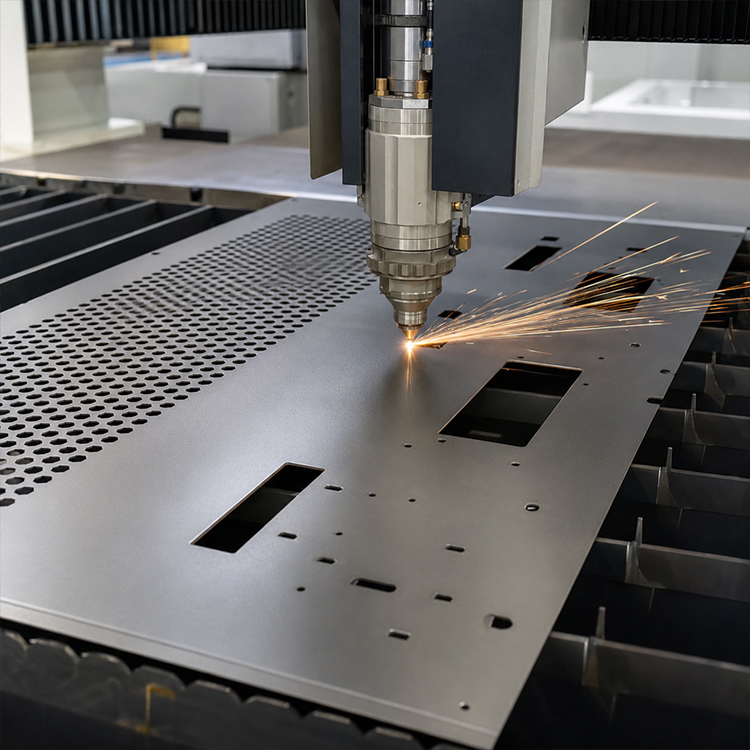
Table of Contents
Why Rack Manufacturing Is Extra Brutal Than It Looks
A rack looks straightforward to outsiders. Four articles. Panels. Openings. Doors. Perhaps a roofing plate.
That sight is dangerous.
Modern shelfs carry airflow, grounding, cable routing, powder coating constraints, tolerance stack-ups, and setting up logic. A 0.3 mm location drift on a mounting hole can become a field grievance after layer. A burr near a cord pass-through can come to be a warranty problem. A vent pattern that looks beautiful in CAD can become scrap if warm input contorts a slim galvanized panel.
This is why I such as the interior fit of Bogong’s post on fiber laser reducing makers for data center shelf production. It links laser cutting to genuine rack parts: panels, rails, doors, brackets, cable-management parts, and assistance structures, not simply abstract “metal cutting.”
And if you want the blunt production angle, Bogong’s break down of exactly how fiber laser reducing enhances shelf room manufacturing makes the best point: the laser is not the whole factory. The downstream chain after cutting is where weak shelf manufacturing begins hemorrhaging money.
Laser Reducing vs Steel Stamping: The Genuine Comparison
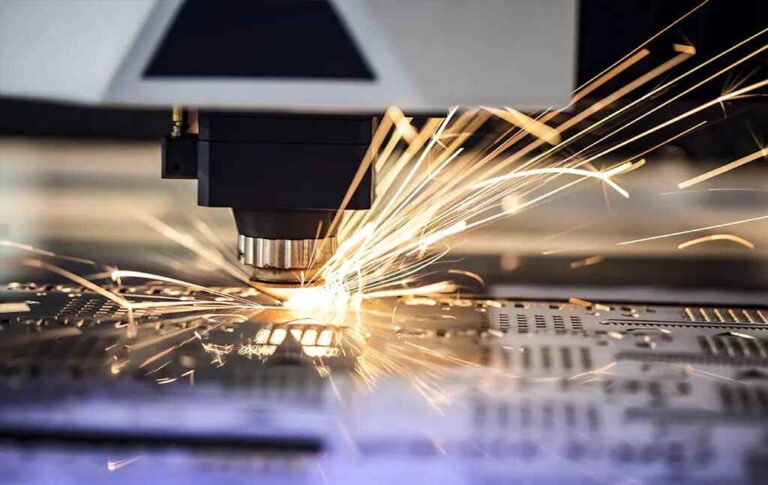
Below is the tidy version first: laser reducing makes use of a CNC-controlled beam of light to reduce sheet steel straight from electronic geometry, while stamping uses dies and press pressure to reduce or develop parts at high speed after tooling is built.
Now the untidy variation.
Laser cutting is versatile since CAD adjustments are affordable. Stamping is quick because the die has currently absorbed the complexity. A fiber laser can cut SPCC cold-rolled steel, SGCC galvanized steel, SUS304 stainless-steel, AL5052 light weight aluminum, and moderate steel with nitrogen, oxygen, or pressed air relying on edge requirement. A marking line can blank, pierce, emboss, create, coin, and bend with scary rate once the die is right.
Yet the die is the catch.
If a shelf consumer adjustments air vent dimension, grounding tab form, cord slot area, deal with cutout, fan pattern, or rail hole pitch, marking ends up being slower in the one location purchasers despise: alter monitoring. Laser cutting takes in those edits in CAD/CAM. Marking sends you back into device modification, test hits, requalification, and delay.
| Decision Factor | CNC Laser Reducing Rack Components | Steel Stamping for Shelf Parts | My Difficult Viewpoint |
|---|---|---|---|
| Best production fit | High-mix, medium-volume, changed designs | High-volume, stable styles | Laser initially unless the component is monotonous and tested |
| Tooling cost | Reduced tough tooling; greater machine-hour expense | High ahead of time die cost; reduced part expense later | Stamping only wins after quantity pays the die back |
| Layout revision rate | Quick CAD/CAM update | Slow die adjustment | Rack customers change greater than they admit |
| Hole and vent complexity | Strong for different opening patterns | Solid for duplicated functions | Laser wins combined airflow panels |
| Component speed | Slower per component | Very quick per stroke | Stamping wins repeat rails, clips, brackets |
| Material distortion threat | Heat-affected zone needs to be handled | Mechanical anxiety needs to be taken care of | Both can wreck monotony in various means |
| Downstream fit | Great if kerf, lead-ins, and nesting are managed | Exceptional if die is fully grown | Bad procedure self-control defeats any type of equipment |
| Finest manufacturing technique for metal racks | Versatile rack programs and prototypes | Mature mass-production parts | The majority of factories need both |
The Hidden Economics: Quantity Is Not the Whole Story
Purchasers like asking, “Which is less costly?”
Incorrect inquiry.
The sharper concern is: Which procedure is more affordable after revision spin, examination, storage space, scrap, postponed distribution, tooling danger, operator skill, and downstream assembly are included?
I have seen manufacturing facilities conserve cents on a stamped part and shed dollars since the rack style altered after the die was approved. I have also seen laser-only factories price quote high-volume rails like they were custom airplane brackets. Both mistakes originate from worshipping a procedure as opposed to checking out the production fact.
In 2024, the International Power Company reported that information centers made up regarding 415 TWh of electrical energy consumption, around 1.5% of worldwide electrical energy use, with the U.S. taking 45% of that need, China 25%, and Europe 15%. That data-center buildout pressure matters since rack designs are getting denser, hotter, and much less forgiving of careless air movement geometry. IEA’s Power and AI executive summary deserves analysis prior to anyone calls rack construction “fundamental metalwork.”
Steel rates and supply stress additionally rest under the table. Reuters reported in April 2024 that the World Steel Association expected worldwide steel demand to climb 1.7% to 1.793 billion statistics loads in 2024, then get to 1.815 billion statistics heaps in 2025. That is not facts. When product price moves, scrap self-control becomes strategy. Reuters on international steel need growth provides the wider metal-market backdrop.
And efficiency? The 2024 NIST producing economy report claimed U.S. making labor efficiency enhanced only 0.4% between Q2 2023 and Q2 2024, while overall aspect productivity had actually fallen 1.3% from 2021 to 2022. Translation: factories are not obtaining abundant by casually adding intricacy. They require procedure selections that remove rework, not simply equipments that look remarkable in video clips. NIST Yearly Report on the United State Manufacturing Economy: 2024 puts numbers behind that pressure.
When Laser Reducing Is the Better Shelf Production Refine
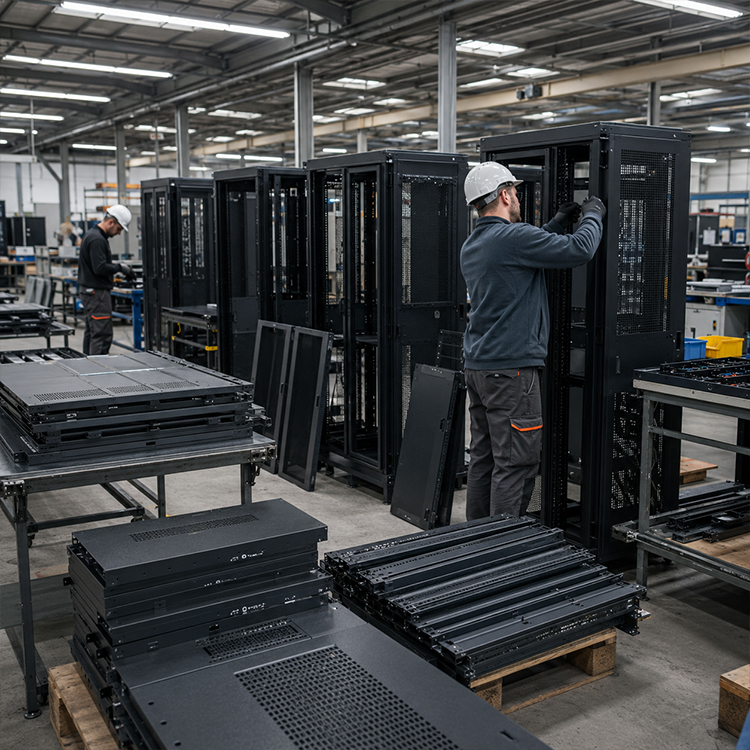
Laser cutting is the better choice when the rack style is still to life.
That seems noticeable. It is not. Several purchasing teams pretend drawings are frozen due to the fact that the RFQ deadline says so. Then the thermal group modifications vents. The cord group adjustments kos. The client changes logo ports. The setting up team uncovers a bend-relief conflict. Unexpectedly, the “low-cost” stamped path has a tooling issue.
Use laser cutting when you have:
High-mix rack SKUs
If one factory is generating network racks, server racks, battery racks, control cupboards, and customized chassis components from the exact same material household, laser cutting offers far better breathing room. The same machine can run different nests, various hole patterns, different panel widths, and different brace profiles without committed craves every variation.
Bogong’s laser reducing maker for sheet steel page is an all-natural sustaining link below due to the fact that rack manufacturing begins as sheet metal construction before it becomes a cupboard, unit, or finished shelf system.
Dense air flow and cable television functions
Shelf panels progressively carry airflow approach. Long ports, hex patterns, perforated doors, oblong cord ports, follower intermediaries, basing openings, and accessory installing factors all complete for room. Laser reducing manages that geometry without forcing every design right into the limits of a repaired strike tool.
Prototype-to-production uncertainty
For pilot rack programs, laser cutting is more secure because you can reduce 5 components, 50 parts, or 500 components without pretending the design deserves a dynamic die. In my view, marking a style prematurely is just one of the quietest ways to punish your very own design group.
Tidy digital traceability
CNC laser reducing rack parts can tie geometry, nesting, set number, equipment criteria, and assessment feedback into one regulated flow. That does not happen instantly. But it is much easier than tracing a stamped flaw throughout old die alterations, undocumented hand adjustments, and “momentary” solutions that in some way make it through for 3 years.
When Stamping Beats Laser Cutting Without Mercy
Stamping victories when the component is stable, duplicated, and straightforward enough to validate the die.
No drama there.
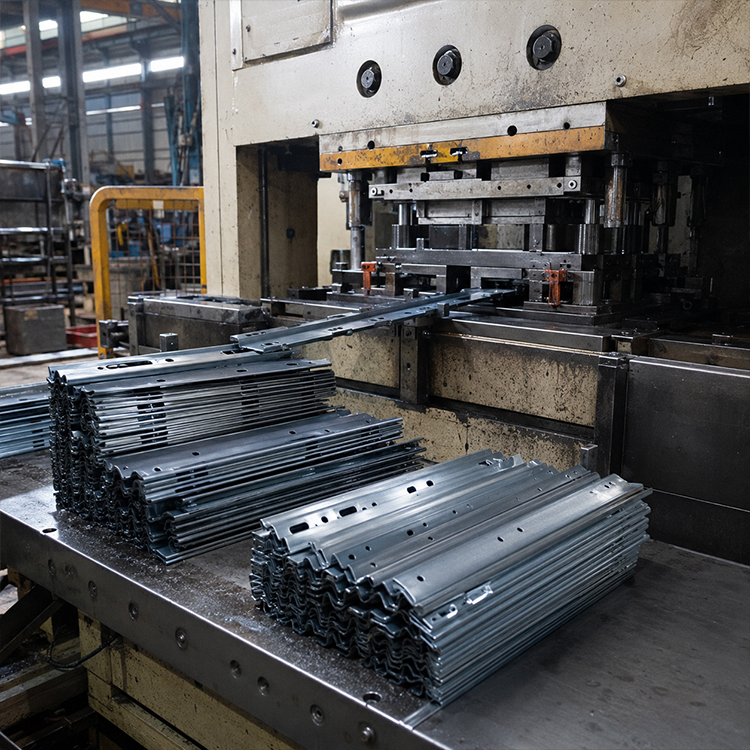
For rack production, that typically indicates mounting rails, repeated brackets, support clips, hinge plates, latch components, grounding washers, blanking plates, and interior support pieces. If the geometry is icy and annual volume is high, stamping can drive the per-piece cost down in a way laser cutting can not match.
The tough fact: laser people in some cases oversell flexibility due to the fact that flexibility is their best card. But once an element is mature, stamped parts can be much faster, more affordable, and much more consistent. An excellent marking die does not care about your inspirational poster. It simply strikes.
Yet stamping has conditions:
The illustration must quit relocating
If the opening pattern adjustments every quarter, do not glamorize stamping. You are purchasing device alterations.
The volume should repay the die
Marking is not low-cost at the start. It comes to be economical after adequate parts go through the press. The break-even point depends on die price, press rate, product utilization, scrap, labor, configuration, and inspection.
The rack component need to fit forming pressure
Thin rack panels with fragile vent patterns, aesthetic surface areas, and combined geometry might not behave nicely under press loads. Mechanical deformation is not constantly cleaner than thermal cutting. It is simply a various danger.
The Product Inquiry: Steel, Stainless, Aluminum, and Coating
Shelf products are not unique, but they are not similar.
Usual rack products consist of carbon steel, light steel, galvanized steel, stainless steel, and light weight aluminum. Bogong’s rack-focused laser cutting material likewise names carbon steel, light steel, stainless steel, galvanized steel, aluminum, copper, brass, and alloy steels as products a sheet steel laser cutting equipment might process depending upon laser resource, wattage, assist gas, cutting head, density, and side needs.
For rack manufacturing, I typically appreciate these practical details:
Galvanized steel
SGCC and other galvanized sheets prevail in enclosures and shelf structures, yet zinc covering changes cutting behavior. Poor fume control, ugly sides, and coating damages can develop problems later in welding, grounding, or powder coating.
Stainless steel
SUS304 or SUS316 rack components require cleaner side control, specifically if cosmetic surface areas or rust resistance matter. Nitrogen aid gas can aid avoid oxidation, however gas price becomes part of the quote.
Aluminum
AL5052 and AL6061 show up where weight issues. Laser reducing aluminum is practical, however reflectivity, warm actions, and burr control need grown-up supervision.
Mild steel
SPCC, DC01, and Q235-style moderate steels are forgiving, commonly utilized, and pleasant to both laser cutting and stamping. The process selection generally turns on quantity, complexity, and modification risk rather than basic cutability.
Just how to Select Between Laser Cutting and Stamping for Shelfs
Here is the choice rule I would utilize if I were resting inside a shelf factory with a skeptical production manager.
Beginning with the part family, not the device.
If the part has changing geometry, blended openings, vents, slots, wire attributes, or customer-specific modifications, quote laser reducing initially. If the component is a steady repeated bracket or rail with yearly quantity high sufficient to amortize tooling, quote marking. If the shelf program is scaling, use laser cutting to prove geometry first, then move secure sub-parts right into stamping after the design quits moving.
Bogong’s procurement overview for laser cutting equipments in data facility shelf production fits naturally right into this choice point due to the fact that machine buying must follow the shelf production traffic jam, not vice versa.
For procedure groups contrasting machine options, the broader fiber laser cutting equipment array serves because it demonstrates how power degrees, sheet capacity, tube cutting, and metal kind need to be matched to genuine fabrication needs as opposed to presumed from a single specification line.
The Process Circulation I Count On
A serious shelf manufacturing procedure should not ask “laser or marking?” in isolation. It needs to map the full path.
For laser-cut rack components
CAD file → DFM testimonial → nesting → kerf payment → aid gas configuration → test cut → edge inspection → deburring if required → flexing → welding or securing → powder finish → last setting up → fit check.
For stamped rack parts
Component drawing → DFM testimonial → pass away layout → die construct → dry run → dimensional assessment → tool adjustment → production marking → second developing if required → surface therapy → assembly recognition.
That “trial run” in stamping is where truth turns up. That “flexing” step after laser cutting is where reality shows up. Various trapdoors. Exact same building.
For viewers that want the physics behind the light beam rather than an additional sales pledge, Bogong’s article on just how fiber laser cutting devices work in commercial production is a strong contextual web link due to the fact that it speaks about laser power, reducing rate, focal position, assist gas pressure, and product condition as the variables that make a decision cut high quality.
My Prejudice, Stated Clearly
I choose laser reducing early in a shelf program.
Not due to the fact that lasers are trendy. Not because stamping is old. Due to the fact that rack layouts move, and moving styles penalize tough tooling.
However I would certainly not keep a mature, high-volume placing bracket on a laser permanently just to secure my opinion. As soon as the geometry is boring, stamping is worthy of a tough quote. The best production approach for steel racks is frequently a hybrid system: laser reducing for changed panels, doors, vents, covers, and short-run components; marking for steady braces, clips, supports, and repeat hardware.
That is the full-grown answer. Much less exciting. Much more successful.
Frequently asked questions
What is the distinction between laser cutting and stamping in shelf production?
Laser reducing in rack production is a digital sheet metal process that utilizes a concentrated CNC-controlled laser light beam to reduce panels, doors, rails, brackets, vents, and cable openings, while marking uses dies and press force to cut or create repeated shelf components at broadband after tooling is developed. Laser reducing prefers versatility; marking prefers stable volume.
In sensible terms, laser cutting fits transforming rack designs, pilot runs, and complex airflow patterns. Stamping fits duplicated elements where pass away expense can be spread out throughout huge amounts.
Is laser cutting better than steel marking for shelf elements?
Laser cutting is much better than steel stamping for shelf components when the design modifications usually, hole patterns are intricate, batch dimensions are blended, or the manufacturing facility needs fast CAD-to-part turn-around without waiting on dedicated dies. Stamping is better when the component is steady, simple, repeated, and produced in high sufficient quantity to warrant tooling.
So the best solution depends upon modification risk. I would certainly laser cut early-stage shelf components and stamp just after the geometry has confirmed itself in assembly.
When should a shelf supplier use marking rather than CNC laser cutting?
A shelf supplier should make use of marking as opposed to CNC laser cutting when a bracket, rail, clip, plate, or support part has actually iced up geometry, high yearly demand, limited repeatability demands, and adequate manufacturing quantity to recoup die expense with lower per-part production expenditure. Stamping becomes powerful when change risk is low.
The warning is easy: do not construct expensive dies for shelf components that engineering is still suggesting about.
What products prevail in sheet steel construction for racks?
Common products in sheet metal fabrication for shelfs include cold-rolled carbon steel, light steel, galvanized steel, stainless-steel, and light weight aluminum, with particular qualities such as SPCC, DC01, SGCC, SUS304, AL5052, and AL6061 picked according to toughness, corrosion resistance, weight, covering actions, grounding needs, and expense targets.
The cutting technique must match the product. Galvanized steel requires coating and fume control. Stainless steel requires tidy edge technique. Aluminum needs reflectivity and burr monitoring.
Just how do I select the most effective manufacturing approach for metal racks?
The best production method for steel shelfs is picked by matching part volume, design stability, opening intricacy, product thickness, resistance stack-up, tooling budget plan, alteration threat, and downstream setting up influence. Use laser cutting for adaptable, intricate, or changing rack components; use marking for fully grown, duplicated, high-volume components with stable geometry.
My guideline: reduce the risky parts with laser first, then move only monotonous survivors right into marking.
Your Following Relocate: Cut the Worst Rack Part First
Do not choose Laser Reducing vs Marking from a sales brochure.
Choose it from your ugliest shelf component.
Take the panel with the densest vent pattern, the rail with one of the most alignment complaints, the brace that keeps changing, or the galvanized cover that buckles after cutting. Estimate it both methods. Include tooling, scrap, examination, flexing, finishing, remodel, and revision price. Then decide with numbers, not commitment.
If your shelf line is moving toward high-mix manufacturing, faster engineering changes, and tighter air movement demands, begin with a severe laser-cutting process review. If your parts are stable and the volumes are actual, make marking confirm its payback.


Hot Click
Contact Us
Application
©Copyright [bogonglaser.com]. BOGONG Laser Machine Supplier All Rights Reserved.