
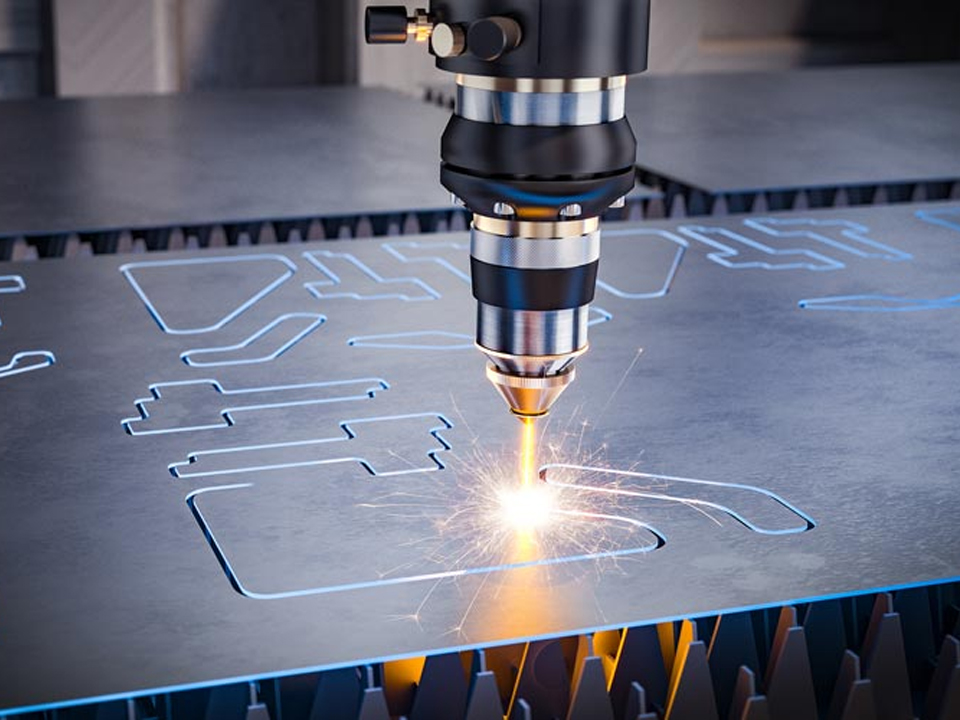
What Certifications Should Laser Cutting Machines Have
A practical guide to the certifications and documents buyers should request for laser cutting machines, including CE, FDA/CDRH, laser class, ISO 11553-1, and test reports.

A laser cutting machine does not carry one master certificate. It carries a set of documents, and which ones you need depends on where the machine will be installed, how the laser is enclosed, and who is legally responsible for placing it on the market. For an EU buyer that usually means CE marking supported by an EU Declaration of Conformity. For a US buyer it means FDA laser product compliance and a workplace safety program. For nearly every buyer it means a stated laser class and evidence that the machine was assessed against recognized laser machine safety standards.
This guide explains what each certification covers, what it does not prove, and which documents to request from a supplier before you issue a purchase order.
Which Certifications and Documents Matter for Laser Cutting Machines?
The core set for an industrial fiber or CO2 laser cutter is:
- CE marking with a Declaration of Conformity (EU/EEA).
- FDA/CDRH laser product compliance (US).
- A laser classification and warning labels aligned with IEC 60825-1.
- A machine-level safety assessment against ISO 11553-1.
- Electrical safety and EMC evidence.
Independent test reports and component certificates add credibility but do not replace these.
| Certification or document | Typical market | What it indicates | What it does not prove | What to request |
|---|---|---|---|---|
| CE marking and EU Declaration of Conformity | EU/EEA (also commonly requested elsewhere) | The manufacturer declares the machine meets applicable EU requirements | Independent testing, since many machines rely on the manufacturer’s own assessment | Declaration naming your exact model, the manufacturer, the applicable legislation, and the standards applied |
| FDA/CDRH laser product compliance (21 CFR 1040.10 and 1040.11) | United States | The laser product is certified, labeled, and built with required safety features | Compliance with your site’s workplace safety rules | Certification label on the machine, product report reference, import documentation |
| Laser class and labels (IEC 60825-1) | International | The hazard class of the laser product and the required warnings | That the machine is safe in your layout or with your materials | Class statement for the complete machine and photos of the labels |
| ISO 11553-1 safety assessment | International, widely used in the EU | Laser radiation safety measures at machine level | Cutting performance or reliability | Assessment or test report for the model |
| Electrical safety and EMC evidence | Varies by market | Electrical hazards and electromagnetic emissions were evaluated | Laser radiation safety | Report numbers, issuing lab, applicable standards |
| ISO 9001 quality management | International | The factory runs documented quality processes | Product safety of any specific model | Certificate scope, validity dates, site address |
CE Marking: What It Covers and What It Does Not
CE marking is the manufacturer’s declaration that a product meets the EU requirements that apply to it. For a laser cutting machine, the main legislation is machinery law, with EMC rules typically applying alongside it. For most industrial laser cutters the conformity route rests on the manufacturer’s own assessment and technical file. The mark alone is therefore not proof of third-party testing.
Timing matters right now. According to the European Commission’s machinery sector page, machinery placed on the EU market before 20 January 2027 must comply with the Machinery Directive 2006/42/EC. The new Machinery Regulation (EU) 2023/1230 applies on a mandatory basis from that date. The Commission also notes that manufacturers may state on a Declaration of Conformity that earlier machinery also conforms with the Regulation where applicable. If your order will ship or be placed on the market around the changeover, ask the supplier which legislation the declaration cites and how it will be updated.
A usable Declaration of Conformity should identify:
- The manufacturer and its address.
- The exact machine type or model, and ideally the serial number range.
- The legislation and harmonized standards applied.
- The person authorized to compile the technical file.
- A signature and date.
A generic “CE certificate” PDF with no model number, or one that lists a different product, is a documentation gap and not a pass.
US Requirements: FDA/CDRH Laser Product Compliance and Workplace Safety
For the United States, two separate frameworks apply, and buyers often confuse them.
The first is product compliance. The FDA’s laser products page states that laser products must meet the radiation safety performance standards in 21 CFR Parts 1010 and 1040, including 1040.10. It also states that manufacturers are responsible for the records, reports, and importation requirements in Parts 1000 through 1005. The FDA’s Laser Notice No. 56 guidance adds that laser products imported into US commerce must comply with 21 CFR 1040.10 and 1040.11 as applicable. They must also be certified and identified under 21 CFR 1010.2 and 1010.3. The same guidance allows manufacturers to rely on IEC 60825-1 Ed. 3 conformance in place of certain 1040.10 provisions, with a specific statement on the label. Which route a manufacturer used should be visible on the machine.
The second is workplace safety. OSHA does not certify machines. Its laser hazards standards page points employers to consensus standards, including the IEC 60825 series and ISO 11553-1 and 11553-2. Your safety officer still needs to assess the installation, define controlled access, and train operators.
For importers, ask your customs broker whether the shipment requires an FDA declaration for radiation-emitting products. Missing import paperwork can delay clearance even when the machine itself is well built.
Laser Class and Machine Safety Standards
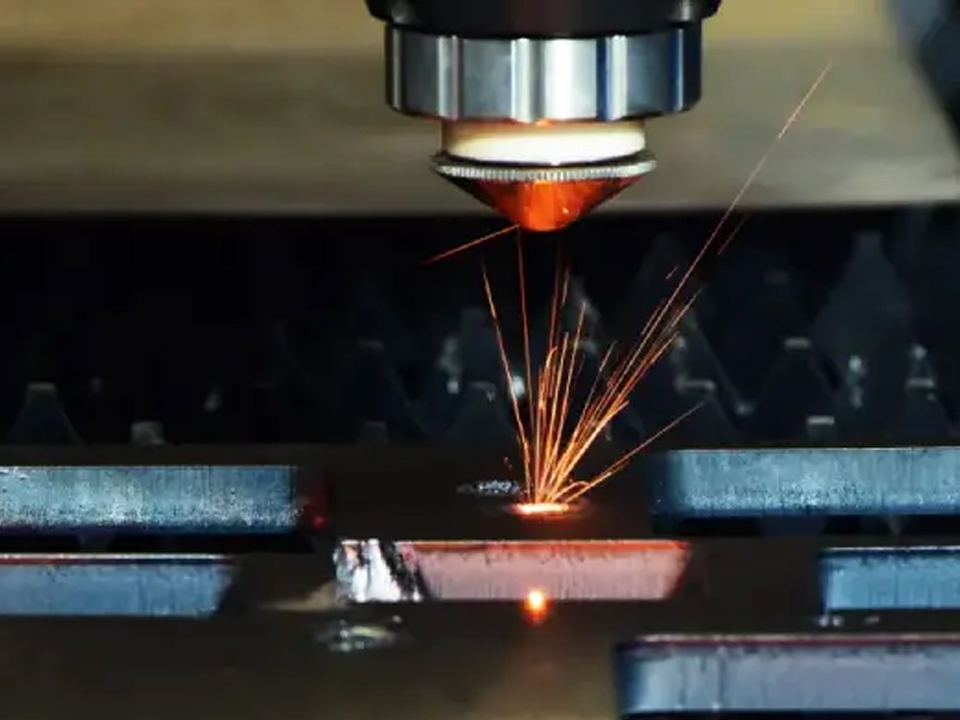
A laser’s class describes hazard, not quality. The FDA’s hazard class table lists Class IV, equivalent to IEC Class 4, as presenting an immediate skin and eye hazard from direct or reflected beams. It may also present a fire hazard, and industrial lasers are given as an example.
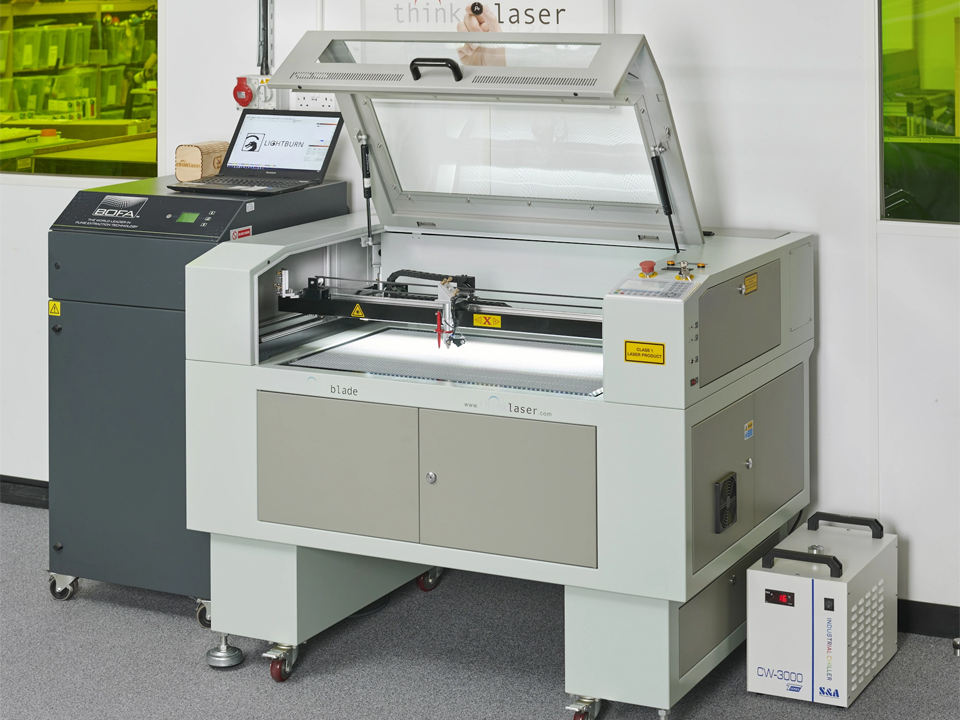
A bare 1,000–3,000 W continuous fiber source is a Class 4 laser. What buyers need to confirm is how the complete machine is classified and protected. A fully enclosed cabinet with interlocked doors and laser-safe viewing windows can allow the machine as a whole to carry a lower classification than the embedded laser source, but that depends on the design and its verification. Ask which class applies to the laser source, which applies to the finished machine, and what each label says.
ISO 11553-1 is the machine-level reference. As summarized on the OSHA page, it covers radiation hazards and hazards generated by the laser’s interaction with materials and substances. It also specifies information the manufacturer must supply. Practical items to verify against it include:
- Enclosure and interlocks: Do door interlocks cut or block the beam? Is the viewing window rated for the laser wavelength (about 1,070 nm for fiber lasers)?
- Emergency stop and control reliability: Is there a documented risk assessment, and are safety-related control functions validated? Ask which standards were used. ISO 12100 for risk assessment and ISO 13849-1 for safety-related control systems are common references.
- Fume and debris management: Cutting coated metals or plastics produces hazardous byproducts. Confirm extraction connection points and filtration guidance.
- Fire protection: Cutting oxidizing or flammable materials needs a defined response plan.
- Instructions and labeling: The manual should state residual risks, maintenance safety, and required personal protective equipment.
Machine format changes the safety picture. A compact 300×300 mm fiber laser cutting machine in a fully enclosed cabinet has a smaller guarded volume to verify, but still needs a defined interlock and window specification. An all-in-one sheet and tube fiber laser cutting machine adds rotary chucks, tube feeding, and larger work areas. That means more pinch points and more guarding to assess, not just the laser beam. For hand-held laser devices, OSHA’s list also refers to ISO 11553-2, which addresses their specific hazards.
Do Marking and Engraving Machines Need the Same Certifications?
The same laser safety framework applies, but the hazard details change with wavelength, power, and enclosure. If your catalog includes both cutting and marking equipment, treat each model as its own compliance file.
- A 30W fiber laser marking machine uses a 1064 nm source, so eyewear and window specifications must match that wavelength. Low average power does not remove the need for classification and labeling.
- A 3D UV laser marking machine for glass and plastic operates at a very different wavelength. Protective windows and eyewear chosen for a fiber model cannot be assumed to transfer.
- A large-area 3D fiber laser engraver for metal and a 3D fiber laser marking machine for metal relief and texturing use scan heads that move the beam in three dimensions. Confirm the enclosure and interlock design covers the full scanning envelope, including Z travel.
- A fiber laser engraver for gun stippling and grip texturing works on polymers and carbon-fiber parts as well as metal. Fume extraction deserves special attention, because the ISO 11553-1 scope includes hazards from material interaction. Separately, check the legal requirements in your country for processing firearm components.
Why More Certificates Do Not Always Mean a Safer Machine
A long list of logos does not prove a machine is safe. A shorter set of documents that match your exact model, destination, and configuration is worth more than a folder of unrelated certificates. This holds in most purchases, with one exception. If your customer, insurer, or local inspector requires a named third-party certificate, you need that specific document regardless of what else the supplier offers.
Common red flags:
- Certificates for components, not the machine. A certificate for protective glass, a power supply, or a laser source covers that part. It is not a machine-level declaration.
- Model mismatch. The certificate lists a different power rating, a different configuration, or an earlier model.
- Expired or undated documents. Check validity dates and whether the standards cited are current editions.
- Unverifiable laboratories. Report numbers should be checkable with the issuing body or traceable to a named, accredited laboratory.
- Class confusion. The label shows a lower class than the laser source supports, with no explanation of the enclosure that justifies it.
- Misread ISO 9001. A quality management certificate describes the factory’s processes. It does not certify that a given machine is safe.
Here is an illustrative scenario, not a real customer case. A buyer receives a CE document that names a 1,500 W sheet cutter, but the quote is for a 3,000 W model with a tube attachment. The paperwork is not necessarily wrong, yet it does not cover the machine being purchased. Resolving this before payment is far cheaper than doing so during customs clearance or an inspection.
What Should You Verify Before Requesting a Quote?
Include compliance requirements in the RFQ itself, not after the price is agreed. Specify:
- Destination country and installation site. This determines whether CE, FDA/CDRH, or other local requirements apply.
- Exact model, laser source power, and configuration. Include tube cutting options, rotary axes, and enclosure type.
- Required documents. Declaration of Conformity, laser class statement, relevant test reports, user manual language, and label photos.
- Delivery date relative to regulatory changes. For EU shipments near 20 January 2027, ask which legislation the declaration cites.
- Materials you will cut. Coated metals and non-metals change extraction and fire-protection needs.
- Voltage and power supply. Confirm the supplier’s electrical documentation matches your site supply.
- Safety accessories. Laser safety eyewear rated for the wavelength, extraction, and signage.
- Post-delivery obligations. Ask who provides updated documents and who handles non-conformity reports if an authority questions the product.
Suppliers differ in how complete their compliance files are. Before committing, request the document set for the specific model you intend to buy. Have your safety or compliance lead review it against the destination market.
Frequently Asked Questions
Is CE marking mandatory for laser cutting machines?
CE marking is required for machinery placed on the EU/EEA market. It is not a global legal requirement, but many buyers outside Europe request it as a baseline. Ask for the Declaration of Conformity naming your exact model, not just a certificate image.
Does a laser cutting machine need FDA approval to be sold in the US?
The FDA does not approve industrial laser cutters in the way it approves medical devices. Manufacturers must certify compliance with 21 CFR 1040.10 and 1040.11 as applicable, label the product, and meet reporting and import requirements.
What does Class 4 mean on a laser cutting machine?
Class 4 is the highest standard laser hazard class under IEC 60825-1. It indicates an immediate skin and eye hazard from direct or reflected beams and possible fire risk. Enclosure and interlocks determine how the complete machine is classified and what controls the operator needs.
What is ISO 11553-1?
ISO 11553-1 is a safety standard for laser processing machines. It covers laser radiation hazards and hazards arising from interaction with materials, and it sets requirements for information supplied by manufacturers. Buyers can ask suppliers to show how the model was assessed against it.
Is a CE certificate from a third-party lab required?
Not usually. Many machines are placed on the EU market on the manufacturer’s own conformity assessment. Third-party reports are useful extra evidence, but check that they name your model and configuration and that the issuing laboratory is identifiable.
Do laser marking machines need the same certifications as cutting machines?
They fall under the same laser safety framework, including classification, labeling, and applicable market rules. Hazards differ with wavelength, power, and enclosure, so each marking or cutting model needs its own documentation rather than shared paperwork.



Hot Click
Contact Us
Application
©Copyright [bogonglaser.com]. BOGONG Laser Machine Supplier All Rights Reserved.