
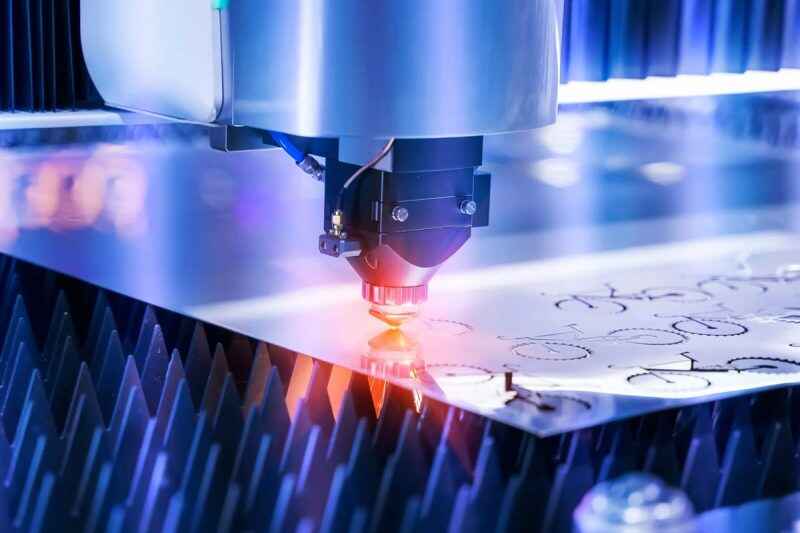
How Laser Metal Cutting Improves Manufacturing Efficiency
Laser metal cutting is not magic. It is a manufacturing discipline. Here is exactly how fiber Laser Metal Cutting, CNC laser cutting, and automated sheet steel laser cutting actually boost making efficiency-- and where customers still get burned.

I’ll state the quiet part first: most manufacturing facilities do not lose money because the reducing beam is too sluggish. They shed money due to the fact that their operations is careless.
Laser steel cutting improves making performance due to the fact that it presses 3 expensive manufacturing facility variables– configuration time, scrap price, and revamp– right into a digitally controlled procedure where CAD data, web cam nesting, CNC movement, aid gases, and maker power can be tuned rather than presumed. That sounds tidy. It is not always clean. Yet it is measurable.
Speed subjects waste.
When a shop relocates from hands-on cutting, outsourced profiling, or aging plasma tables into a modern fiber laser sheet metal cutter, the headline is normally “quicker reducing,” but the actual efficiency gain is less significant and much more rewarding: less secondary grinding passes, tighter component repeatability, better nesting, shorter line up time, and the ability to run stainless steel, carbon steel, aluminum, brass, and copper with controlled kerf size and cleaner edges.
So why do so numerous purchasers still compute ROI like they are purchasing a drill press?
The Efficiency Disagreement Nobody Likes to Admit
The laser does not deal with negative production preparation. It penalizes it.
In precision steel fabrication, the gap between a 3kW fiber laser and a 12kW fiber laser is not simply power level. It is timetable discipline, material handling, driver training, nozzle management, gas business economics, and whether your CAD/CAM team comprehends nesting yield. I have seen buyers stress over maximum reducing thickness while disregarding the dull numbers that actually choose repayment: mins per work changeover, sheets per shift, nitrogen intake, turn down percentage, and forklift wait time.
The marketplace is moving in one direction. Automation is no more a high-end word for glossy sales brochures. Reuters reported in November 2024 that China reached 470 commercial robotics per 10,000 manufacturing workers in 2023, greater than increase its 2019 density, while Germany rested at 429. That matters due to the fact that laser metal cutting is increasingly component of the exact same automation race: cut, dump, sort, bend, weld, examine, ship. No romance. Simply throughput.
Here is my difficult viewpoint: if a manufacture store is still assessing laser cutting just by “maximum thickness,” it is currently asking the incorrect concern.
Where Laser Metal Reducing Conserves Actual Manufacturing Facility Time
Laser reducing producing performance comes from eliminating friction in between layout and ended up component. Not all friction shows up on the shop floor. Some of it hides in quoting. Some in nesting. Some in examination.
1. Setup Time Shrinks Due To The Fact That Tooling Becomes Digital
Traditional boxing, sawing, milling, or mechanical shearing typically depends on components, passes away, blade wear, hand-operated placement, or operator touch. CNC laser reducing modifications the infiltrate a file-driven process. A DXF or STEP-derived profile goes into web cam software application, the operator chooses material, thickness, power, gas, nozzle, emphasis, and feed price, and the maker performs.
That is the very first effectiveness break.
For high-mix, low-volume producers, this matters more than raw reducing speed. A shop making elevator brackets, electrical cabinets, cooling and heating panels, machine guards, stainless food-processing parts, or Q235 architectural plates might run dozens of tiny jobs in a day. If every transition requires hands-on setup, the shift goes away right into dead time.
A well-matched laser reducing maker for sheet metal lowers that dead time by turning geometry into a repeatable program. The driver still matters. But the machine is not awaiting a personalized pass away.
2. Scrap Loss When Nesting Stops Being a Guess
Sheet steel laser reducing makes worldly return visible. A 1500 mm × 3000 mm sheet of 304 stainless steel can be embedded with loads or hundreds of components, common-line cuts, shared edges, micro-tabs, remnant tracking, and grain-direction policies. That is not extravagant. It is cash.
In many factories, one of the most pricey waste is not the offcut in the scrap container. It is the preventable remnant developed due to the fact that work were set up in the wrong order.
A fiber laser reducing maker with excellent webcam operations lets organizers combine work by material and thickness: 1.5 mm SUS304, 3 mm aluminum 5052, 6 mm carbon steel, 10 mm moderate steel. That reduces sheet swaps, assist-gas changes, and still machine time. It additionally improves quoting precision since the estimator can see real nesting yield instead of acting every job eats an ideal rectangular shape.
3. Revamp Drops Since Edges Come Off Cleanser
Plasma is difficult. Waterjet serves. Mechanical cutting still has its place. But in several sheet steel work, laser success because the cut side usually needs much less cleaning.
That matters when production has downstream flexing, welding, powder finish, or setting up. Burrs create fit-up issues. Warmth distortion adjustments bend habits. Inconsistent kerf changes hole alignment. And when a component needs deburring, grinding, re-drilling, or manual correction, the manufacturing facility has actually currently shed.
A 2023 peer-reviewed research study in Metals took a look at fiber laser cutting of stainless-steel plates and enhanced specifications including cutting rate, focal placement, regularity, and obligation cycle making use of Taguchi-based grey relational evaluation. In plain factory language: laser cutting effectiveness is not just concerning getting power; it is about parameter technique. The 2023 fiber laser cutting optimization research study is worth reviewing if your team still deals with feed price like a superstition.
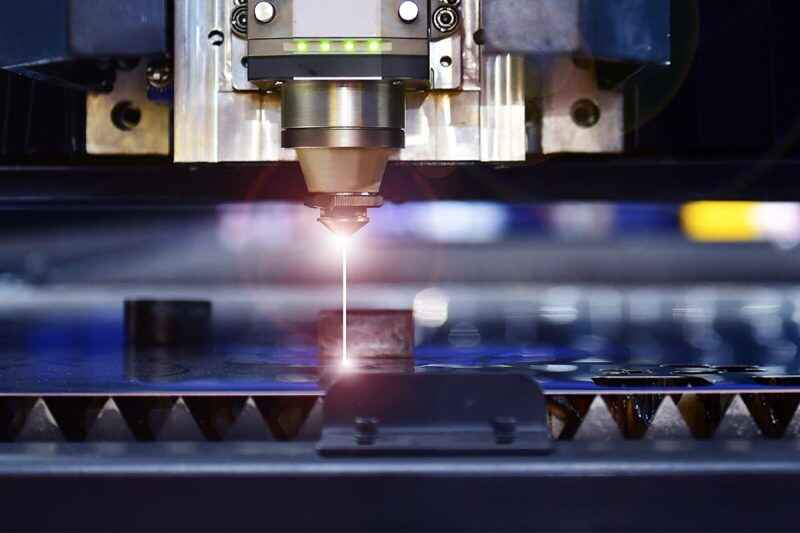
Table of Contents
Fiber Laser Metal Reducing vs Plasma, Waterjet, and Punching
The old debate was straightforward: plasma for thick harsh job, waterjet for heat-sensitive materials, punching for repeated holes, laser for precision. That is still partly true. But high-power fiber laser metal cutting has actually obscured the borders.
Below is the sensible variation customers should utilize before signing an order.
| Reducing Method | Ideal Fit | Performance Strength | Surprise Cost | My Take |
|---|---|---|---|---|
| Fiber laser metal cutting | Stainless-steel, carbon steel, aluminum, brass, copper, sheet and plate | Quick CNC profiling, tight kerf, clean sides, automation-ready operations | Aid gas cost, optics upkeep, driver training | Ideal all-around choice for modern precision steel manufacture |
| CNC plasma cutting | Thick carbon steel, architectural parts, rougher tolerance work | Reduced machine expense, strong thick-plate capability | Even more dross, wider kerf, more additional cleanup | Valuable, yet usually unpleasant downstream |
| Waterjet reducing | Heat-sensitive products, composites, thick combined products | No heat-affected zone, product versatility | Unpleasant cost, slower rate, water handling | Outstanding when heat is the enemy |
| Punching | Repetitive holes, louvers, forms, high-volume sheet tasks | Very fast for repeat geometry | Tooling expense, pass away wear, much less adaptable geometry | Strong when the part family is secure |
| Mechanical shearing/sawing | Straight cuts, simple stock preparation | Low cost and basic procedure | Limited geometry, even more handling | Fine for fundamental preparation, weak for intricate accounts |
Notice what the table does not claim: “laser always wins.”
It does not. A factory reducing just 40 mm light steel base plates all day might have a various answer than a cupboard shop reducing 1.2 mm galvanized sheet. A medical implant supplier reducing Ti-6Al-4V tubes has a various answer again. Effectiveness is contextual. Any person selling one equipment as the answer to every cut is selling confidence, not design.
The Numbers Behind a Faster Cut
Let’s talk about the numbers buyers really ask about.
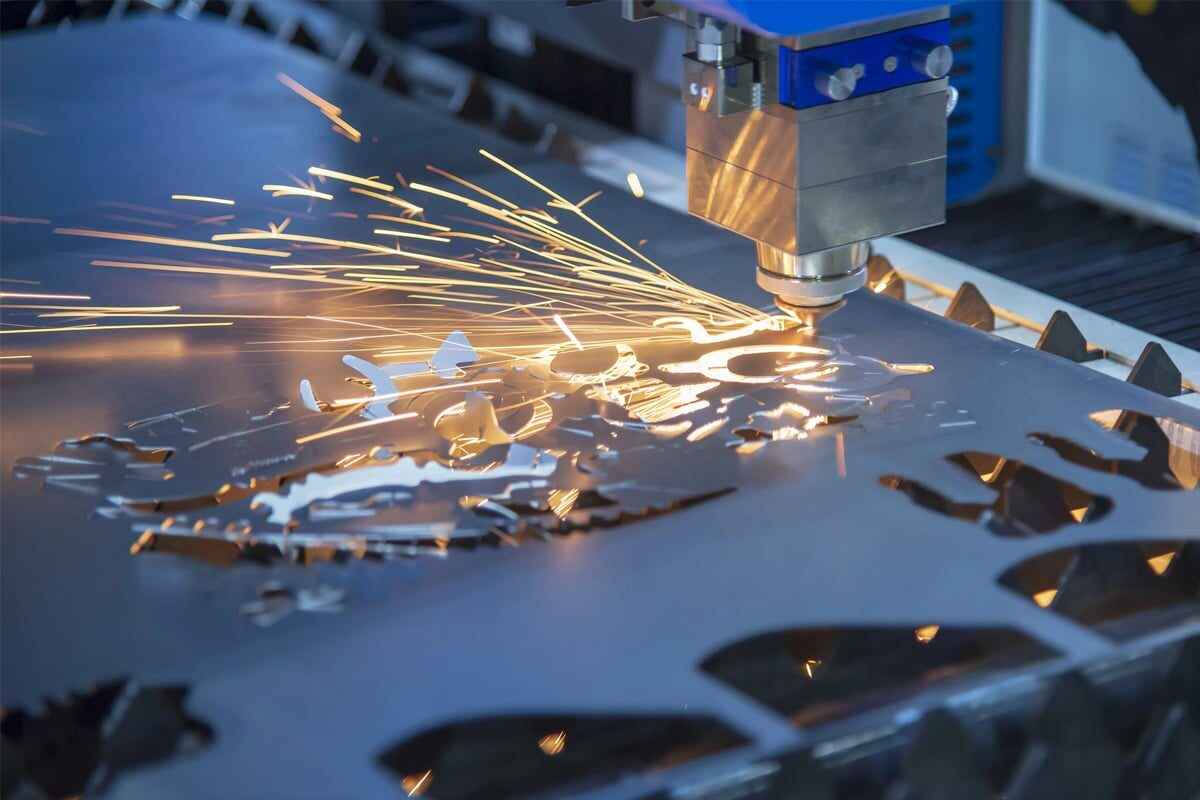
A modern fiber laser cutting machine might be configured around 1000W, 1500W, 2000W, 3000W, 6000W, 12000W, 20000W, or even 40000W+ power levels depending on material density, production scale, and spending plan. Bogong Laser’s own item pages explain fiber laser sheet metal systems functioning across stainless-steel, carbon steel, light weight aluminum, brass, gold, silver, copper, titanium alloy, and galvanized sheet, with entry-level machine pricing around $15,000 and high-power systems reaching $300,000 or even more.
Yet power is just one input.
A 6000W fiber laser may outperform a 12000W machine if the more powerful machine is inadequately loaded, inadequately embedded, under-maintained, or deprived by slow product handling. I know that sounds virtually offending to purchasers who desire a clean spec-sheet solution. However it is true.
The effectiveness pile looks even more such as this:
Material Circulation
If the laser awaits sheet loading, the beam of light is unnecessary. Automated metal reducing works best when packing tables, exchange pallets, tube feeders, component sorting, and stock hosting are developed around the device’s real cycle time.
Help Gas Technique
Nitrogen (N TWO) gives oxide-free sides on stainless-steel and light weight aluminum. Oxygen (O TWO) can enhance cutting rate on carbon steel with exothermic reaction, yet it leaves oxide range. Compressed air may reduce gas price in some jobs, however edge high quality and oxidation have to be inspected. Argon (Ar) is less typical but appears in specialized work.
The economical gas choice can become pricey if it produces finish failure, weld contamination, or customer rejection.
Kerf and Heat-Affected Zone
Laser steel cutting generally creates a slim kerf compared to many thermal cutting procedures, which helps nesting density and dimensional precision. Still, heat-affected zone habits depends upon product, power, speed, emphasis, pulse mode, nozzle, and gas stress. For AISI 304, 316L stainless-steel, Q235, SPCC, aluminum 6061, and brass, the criterion home window is not the same.
This is why procedure sheets issue.
Data Capture
The future is not simply greater electrical power. It is keeping track of. The United State National Institute of Criteria and Technology has actually pointed to an acquainted production trouble in laser-based steel processes: inconsistent part top quality and reduced manufacturing effectiveness continue to be obstacles when innovative manufacturing lacks far better tracking and control. The NIST web page has to do with metal laser powder bed combination, not sheet cutting, but the lesson transfers easily: without procedure comments, factories puzzle activity with control.
Automated Steel Cutting Is Truly an Organizing Tool
Automated metal cutting is not simply “operator presses begin.” It is the capability to turn manufacturing organizing right into an affordable weapon.
A store with a laser metal reducing maker can quote faster since it can mimic material use. It can rerun components due to the fact that programs are saved. It can approve immediate orders since work configuration is lighter. It can move from level sheet to tube if it uses a plate-and-tube combination system. It can minimize reliance on a couple of expert operators because CNC dishes, criterion collections, and maker controls bring even more of the process understanding.
That last factor is uneasy.
The best drivers are still valuable. More valuable, really. However they stop being human fixtures and become process managers. They view kerf quality, piercing behavior, lens contamination, gas pressure, nozzle focusing, piercing time, burr direction, and micro-joint technique. The ability changes.
Factories that understand this get faster. Factories that do not merely get a pricey bottleneck.
The Purchaser’s Trap: Faster Equipment, Exact Same Broken Workflow
The usual failing pattern resembles this:
A company acquires a high-power machine. The sales group assures speed. Monitoring anticipates instantaneous ability. The floor still presents material by hand. The developer nests severely. Operators are undertrained. Maintenance is responsive. No one tracks OEE. And after that the CFO asks why the regular monthly outcome did not dual.
Due to the fact that a laser is not a manufacturing facility.
Laser steel cutting boosts making efficiency only when the bordering system modifications also. That indicates:
- CAD documents have to be clean before web cam.
- Product inventory must be organized by thickness and alloy.
- Operators need composed reducing problem tables.
- Preventative maintenance should be scheduled, not improvisated.
- Components need downstream routing: bending, tapping, welding, coating, assembly.
- Estimate teams must recognize real nesting return.
- Managers need to track scrap, rework, gas cost, and beam-on time.
For buyers contrasting designs, Bogong’s guide to the finest fiber laser cutting machines for sheet steel construction is a better interior landing web page than a common “items” page because it matches the actual buying question: which maker fits the manufacturing scenario?
Just How Does Laser Cutting Improve Production Effectiveness?
Laser cutting boosts manufacturing performance by replacing slow, tool-dependent cutting with CNC-controlled, file-driven handling that minimizes arrangement time, boosts side uniformity, supports tighter nesting, lowers rework, and integrates extra conveniently with automated loading, unloading, bending, welding, and evaluation workflows.
That is the brief response. The longer solution is uglier and more useful.
The light beam itself is only one part of the business economics. In a manufacturing facility running two changes, the profit might come from three less obvious areas: a 4% material-yield improvement from far better nesting, a 20-minute reduction in average changeover, and a decrease in denied components after better parameter control. Include those across 250 production days, and the device does not require miracle speed. It needs technique.
For lots of shops, laser cutting equipment applications period automobile components, electronic devices real estates, signs, stainless kitchen equipment, building elements, medical hardware, storehouse racking, steel furniture, and custom-made manufacture. Each market has various tolerance discomfort. Automotive frets about repeatability. Electronic devices worries about burrs and cosmetics. Building and construction stress over throughput. Clinical job fret about warmth, traceability, and edge high quality.
Same beam. Various service trouble.
Frequently asked questions
What is laser metal reducing?
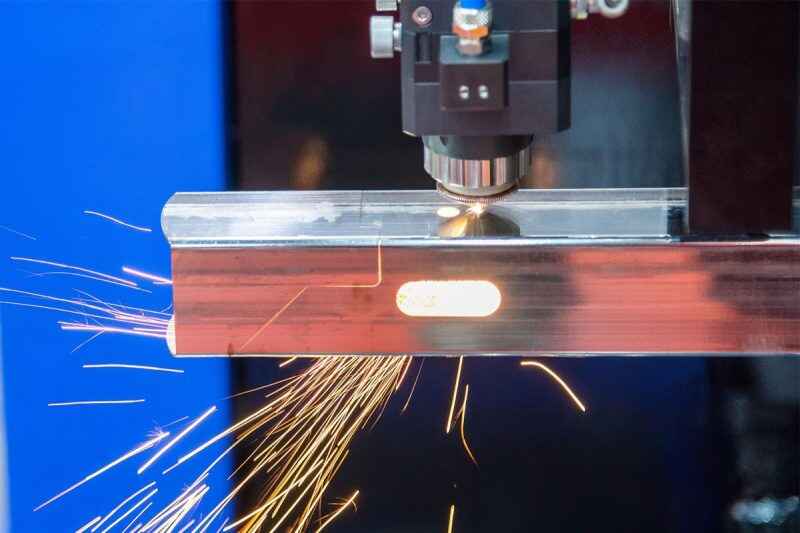
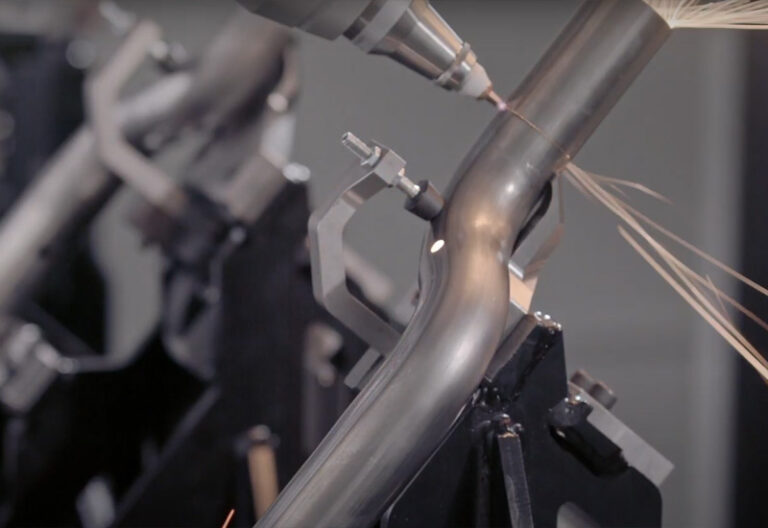
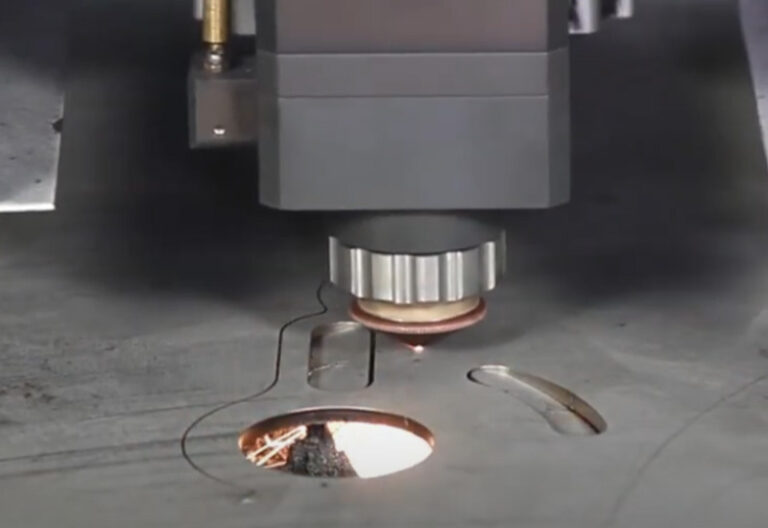
Laser metal cutting is a CNC-controlled thermal cutting procedure that uses a focused laser light beam, typically fiber laser power, to melt, burn, or vaporize steel along a programmed course while help gas removes the kerf and controls side high quality. It is widely made use of for sheet metal, tube, plate, and accuracy manufacture job.
In manufacturing, the procedure starts with CAD geometry and CAM nesting. The maker after that follows programmed toolpaths to cut stainless steel, carbon steel, aluminum, brass, copper, titanium alloy, galvanized sheet, and various other steels. The key advantage is repeatability: once the work is tuned, the very same account can be produced once more with less manual variation.
Exactly how does laser reducing enhance making performance?
Laser reducing improves making efficiency by minimizing hands-on setup, enhancing cutting repeatability, improving material nesting, decreasing additional completing job, and connecting straight with automated production systems such as loading tables, tube feeders, robot sorting, press brakes, welding cells, and electronic evaluation operations.
The largest gains typically show up outside the cutting bed. Shops conserve time when estimating becomes more exact, worldly remnants are tracked, immediate orders can be set rapidly, and drivers invest less time grinding burrs or fixing bad holes. That is why laser ROI need to consist of scrap, revamp, labor, gas, upkeep, and downstream bottlenecks– not just reducing speed.
Is fiber laser reducing far better than CO2 laser reducing for steel?
Fiber laser cutting is normally better for most contemporary steel construction due to the fact that it supplies solid electric effectiveness, high cutting speed on thin-to-medium metals, lower upkeep than lots of CO2 systems, and better absorption on reflective steels such as brass, copper, and aluminum. CO2 still has uses, particularly outside metal-focused manufacturing.
For sheet metal laser cutting, fiber lasers dominate due to the fact that the light beam distribution is reliable and the machines incorporate well with CNC automation. Carbon dioxide can still work for acrylic, wood, leather, paper, and certain non-metal products. For a metalworking shop, however, fiber laser steel cutting is typically the more functional financial investment.
What materials can be cut with laser metal reducing equipments?
Laser steel cutting machines can refine several industrial steels, consisting of stainless-steel, carbon steel, light steel, galvanized steel, aluminum, light weight aluminum alloy, brass, copper, iron, titanium alloy, and specialized sheet or tube products, relying on laser power, help gas, optics, device rigidity, and reducing criterion configuration.
The exact cutting capacity depends on wattage and material behavior. A 1500W system may be suitable for thinner sheet job, while 6000W, 12000W, 20000W, or 40000W systems target heavier production and thicker plate. Reflective steels like copper and brass need proper laser source choice, beam of light control, and operator experience.
What is the biggest blunder when getting a laser cutting equipment?
The most significant mistake when buying a laser cutting machine is picking only by maximum power or optimum thickness while ignoring operations, product handling, web cam software application, solution assistance, operator training, gas price, nesting performance, upkeep gain access to, and downstream production needs such as flexing, welding, tapping, and covering.
A high-power laser with weak process comes to be an expensive waiting area. Buyers ought to map genuine work first: product kind, sheet dimension, thickness array, tolerance, monthly volume, edge demands, filling approach, offered flooring room, and shift pattern. The right equipment is the one that boosts total factory output, not the one with the loudest power level number.
Last Ideas: Turn the Light Beam Into a Business System
Laser metal cutting improves making efficiency when it is treated as a manufacturing system, not a shiny purchase.
If your factory is dealing with slow-moving transitions, rough sides, outsourced cutting delays, inadequate nesting return, inconsistent openings, or too much manual grinding, it is time to investigate the reducing process seriously. Start with your leading 20 reoccuring components. Record product, thickness, regular monthly volume, turn down price, finishing time, and existing expense per part. After that contrast that against an appropriately sized fiber laser metal reducing workflow.
Do not buy the biggest equipment. Purchase the machine your operations can feed.
Talk With Bogong Laser concerning your actual material listing, thickness variety, everyday production target, and automation plan, then match the system– sheet, tube, plate-and-tube combination, portable fiber laser, or high-power 6000W– 40kW system– to the job your factory actually runs.


Hot Click
Contact Us
Application
©Copyright [bogonglaser.com]. BOGONG Laser Machine Supplier All Rights Reserved.