
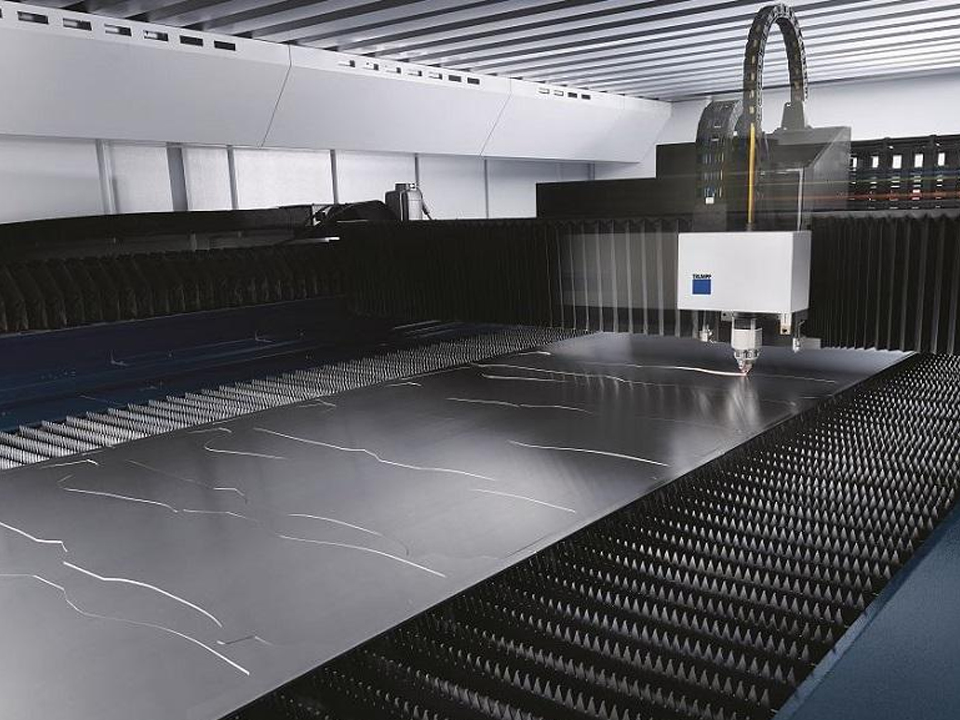
Laser Metal Cutting Applications in Automotive Manufacturing
Where laser cutting fits in automotive manufacturing: hot-stamped steel trimming, sheet brackets, tube frames and weld bevels, with specification, quality and RFQ guidance for buyers.

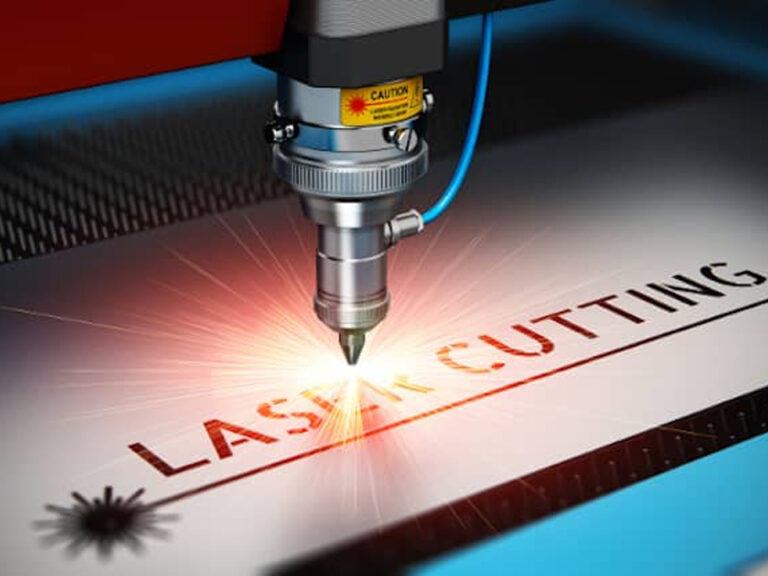
Laser cutting appears in automotive manufacturing wherever a part needs precise contours, repeatable hole positions, or a design that may change before volume production starts. The most established uses are trimming press-hardened body structures, cutting sheet-metal brackets and reinforcements, processing tubes for frames and exhaust systems, and preparing weld edges on heavier components. It is not a universal replacement for stamping, and it does not automatically suit every vehicle program. The right machine format, power level and quality system depend on the part, the material and the volume. This article explains where laser cutting fits in the automotive supply chain, what separates one machine type from another, and what buyers should specify before requesting a quotation.
Where Is Laser Cutting Used in Automotive Manufacturing?
The short answer: laser cutting is used for press-hardened steel trimming, flat sheet parts, tube and profile components, weld-prep bevels, prototypes, and tooling or fixtures. Each application calls for a different machine architecture, so “laser cutting” is not one purchasing decision.
| Application | Typical laser format | Why laser is used | What to verify before buying |
|---|---|---|---|
| Hot-stamped body structures (pillars, rails) | 3D five-axis robotic or gantry cell | Hardened steel is difficult to trim with dies | True 3D capability, part fixturing, cycle time |
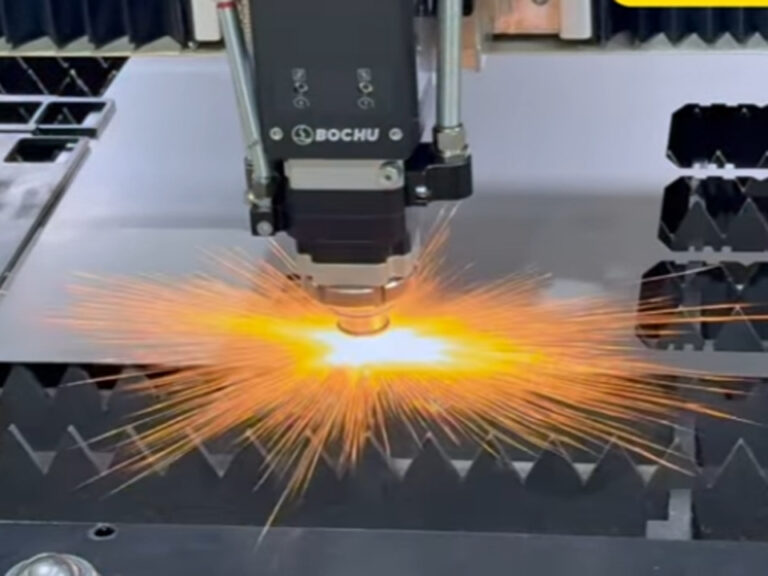
| Brackets, reinforcements, mounting plates | Flat-bed fiber laser | Fast program changes, nesting, no hard tooling | Material grade, thickness, edge condition, loading method |
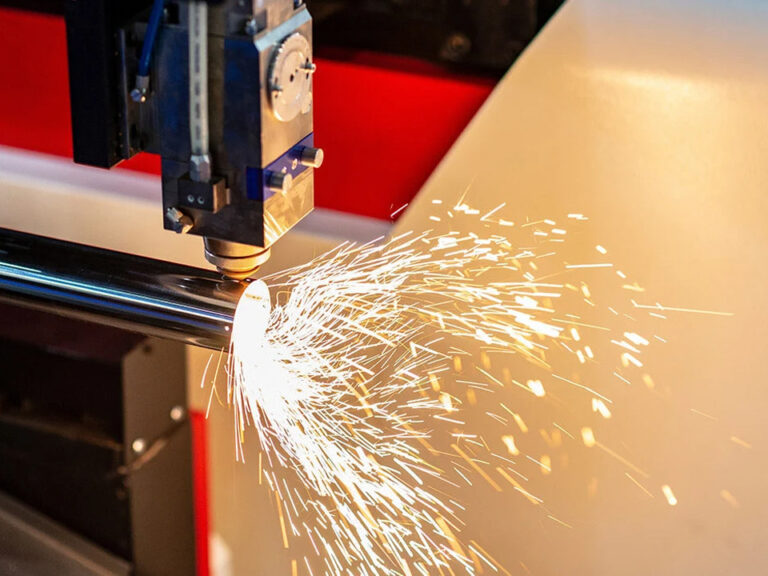
| Seat frames, exhaust parts, chassis tubes | Tube laser, or combined sheet-and-tube machine | Holes, notches and angled cuts in one setup | Diameter and wall range, tube straightness, tail scrap |
| Thick welded assemblies | Bevel cutting head | V, X or Y edges prepared during cutting | Bevel angle range, edge accuracy, thickness |
| Prototypes, jigs, checking fixtures | Small or mid-format fiber laser | Design changes need only a new program | Bed size, material range, software |
| Non-metal trim or gasket samples | CO2 laser | Suited to organic and polymer materials | Fume extraction, material compatibility |
| Part identification | Laser marking | Permanent, non-contact marks | Mark contrast, durability, data format |
Note that this table is a qualitative selection guide, not a list of verified machine capabilities.
Why Press-Hardened Steel Trimming Became a Laser Application
According to Laser Focus World’s overview of hot stamping and laser processing, press-hardened boron steel cannot be conventionally trimmed with a die because the material is harder than the die steel. The same article describes A- and B-pillars as typical hot-stamped components, with strength rising from roughly 500 MPa in the coated blank to about 1,500 MPa after forming and quenching. Trim dies for such parts would also risk edge deformation and micro-cracking, and would wear quickly.
Fanuc America’s article on robotic laser cutting reaches a similar conclusion, describing laser cutting as the most popular way to trim press-hardened steel, using either robotic or CNC laser systems.
Two cautions apply. First, the Laser Focus World article was published in 2014, so its cycle-time figures (a B-pillar with 22 holes cut in 47 seconds on a 3 kW solid-state laser) show a trend rather than current benchmarks. Second, this work is done on five-axis 3D systems. A flat-bed machine cannot trim a formed pillar. A buyer evaluating a flat-bed fiber laser should understand that it addresses blanks, brackets and flat components, not formed body structures.
Tube Laser Cutting for Frames, Seats and Exhaust Components
Tube-based parts include seat frames, exhaust sections, chassis reinforcements and roll structures. Tube lasers machine holes, slots, notches and angled ends in one clamping, which reduces separate sawing, drilling and fixture steps. Equipment makers commonly cite better joint fit and less weld-gap variation as the benefit, though the actual gain depends on tube quality and fixture design.
Four variables matter most:
- Diameter and wall range. One BOGONG automatic loading laser tube cutting machine lists automatic feeding for pipe diameters from φ10 to φ180 mm, and up to 240 mm when loaded manually. Compare that range with your actual tube list, including wall thickness.
- Support during cutting. The same page describes three chucks clamping simultaneously to limit deformation. Long, thin-wall exhaust tube is more prone to sag than short structural sections.
- Tail scrap. Remnant length affects material cost at volume, especially for stainless steel.
- Loading method. Manual loading suits small batches. Automatic bundle loading becomes relevant when the machine runs unattended or the tube changes often.
Workshops that process both flat plates and tubes may consider a combined sheet and tube laser cutting machine. Its page lists common tube diameters of 20 mm to 200 mm. A combined machine saves floor space, but it can limit throughput if sheet and tube jobs compete for the same machine time. A buyer with steady high-volume tube work may be better served by a dedicated tube cutter.
Sheet Metal Cutting for Brackets, Reinforcements and Fixtures
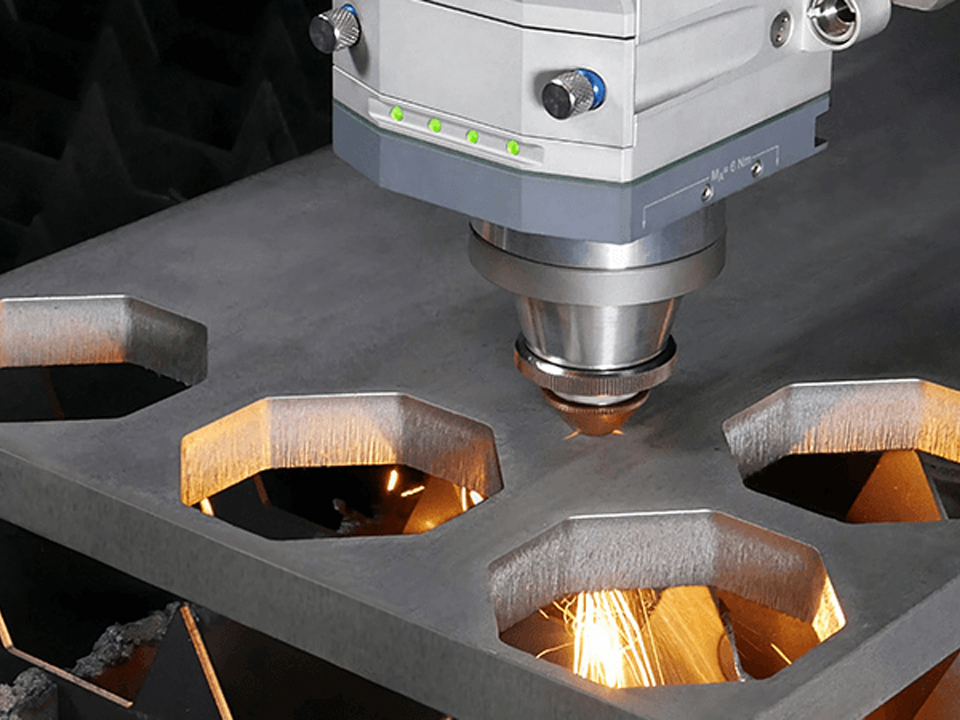
For flat parts, a CNC fiber laser cutting machine is the usual choice. BOGONG lists power options from 1,000 W to 6,000 W on that page, and higher-power platforms with exchange pallets from 2,000 W up to 40,000 W on its high-power fiber laser metal cutting machines page, which also lists automotive parts among its target industries. Those are supplier descriptions, not independent test results.
Does higher laser power mean more parts per hour?
Not necessarily. Higher power mainly increases the thickness that can be cut and the cutting speed on straight runs. Laser Focus World notes that a 3 kW system rarely reaches its top straight-line speed on parts with many direction changes. Small brackets with many holes and tight corners are limited by machine dynamics, piercing time and loading, not just by kilowatts.
That matters for budgeting. A shop cutting mostly thin brackets may gain more from an exchange pallet, a good nesting workflow and reliable piercing than from a jump in wattage. A shop cutting thicker chassis plate, by contrast, may find that higher power directly shortens the cycle. The decision should follow the thickness mix of the actual part list.
Materials that change the specification
Automotive sheet work spans carbon steel, galvanized and coated steel, stainless steel, aluminum and, in electrified drivetrains and battery systems, copper. Aluminum and copper are reflective, so buyers should ask the supplier for sample cuts in the exact alloy and thickness, together with details of how the machine protects its optics. Do not assume a quoted material list means equal performance on all of them.
Assist gas is another cost and quality driver. Oxygen cutting is generally cheaper but leaves an oxide layer that can affect later welding, painting or coating. Nitrogen produces cleaner edges but increases gas consumption. The finished part’s next process should decide which gas is specified.
Small-format machines
A compact system such as the 5050 small fiber laser cutting machine has a 500 × 500 mm cutting area on its product page. That page positions it largely for jewelry and small-piece metalwork, so engineering teams should confirm thickness range, material support and software before considering it for small-part prototyping or lab use.
Bevel Cutting for Weld Preparation
Heavy-section welded assemblies, such as truck and trailer frame components or structural mounts, often need chamfered or grooved edges before welding. A bevel fiber laser cutting machine uses a five-axis cutting head. According to BOGONG’s page, it cuts bevels up to 45° and can produce V, X and Y shapes in one operation.
The practical benefit is removing a separate edge-prep step, such as grinding or milling. The trade-offs are slower cutting at angle, a larger effective thickness through the cut, and tighter requirements for calibration. Buyers should ask for sample bevels measured against the drawing, since angle accuracy on the machine controller does not guarantee angle accuracy on the finished edge.
Laser Cutting vs. Die Stamping: Which Process Fits the Volume?
A common assumption is that laser cutting is only for prototypes and stamping is only for mass production. The reality is more conditional.
| Factor | Laser cutting | Die stamping / blanking |
|---|---|---|
| Tooling | No part-specific hard tooling | Dedicated dies required |
| Design changes | Program update | Die modification or replacement |
| Hardened materials | Suitable (press-hardened steel trimming) | Difficult or impractical for press-hardened steel |
| Throughput on simple, high-volume parts | Contour-by-contour, so often slower | Many features in one stroke |
| Low and mid volumes, variants | Often economical | Tooling cost spread over fewer parts |
| Edge condition | Thermal edge, depends on gas and parameters | Sheared edge, with burr and wear considerations |
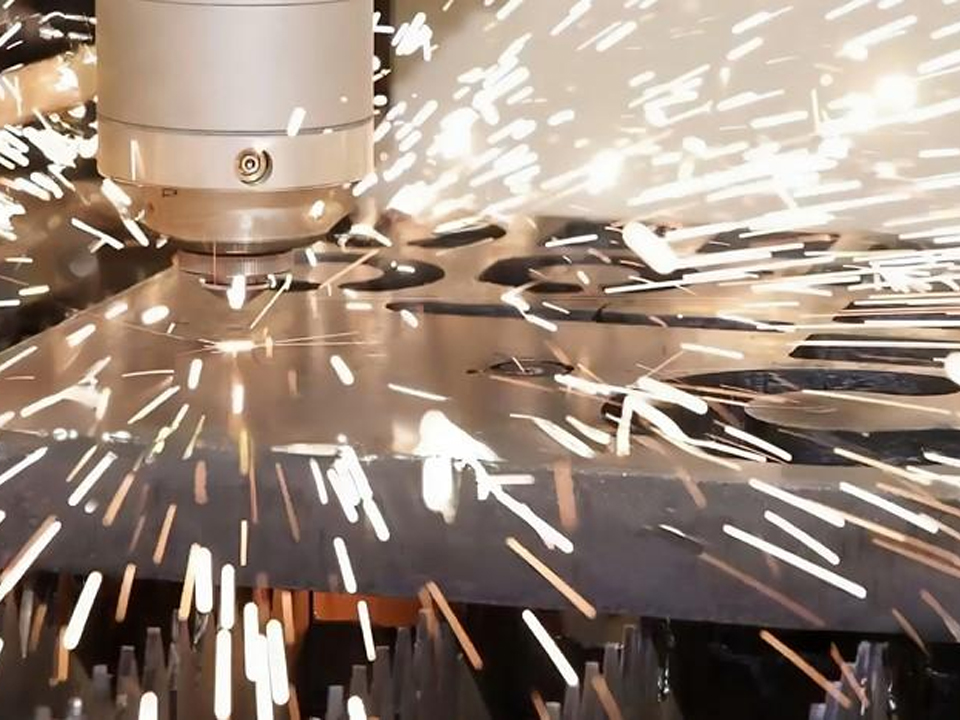
Laser Focus World makes the throughput point directly: a laser cuts one contour after another, while a die cuts all features in one hit. Laser cutting is strongest where variants are many, volumes are moderate, materials are hard, or design is still changing. Stamping typically remains stronger for very high volumes of stable, simple parts. The break-even point depends on part geometry, tooling cost, cutting length and annual demand, and no universal number applies.
Which Specifications Determine Machine Fit?
Quoted machine accuracy should be separated from finished part tolerance. BOGONG’s product pages list positioning accuracy of ≤±0.03 mm and repeatability of ≤±0.02 mm. Those are machine-level figures. Part tolerance also depends on material flatness, thermal distortion, nesting, fixturing, taper, cutting speed and gas settings.
For cut quality, ISO 9013:2017 defines geometrical product specifications and quality tolerances for thermal cuts, and its listed scope for laser cuts is 0.5 mm to 32 mm thickness. Buyers can use it to write edge-quality and tolerance classes into drawings, rather than relying on terms such as “smooth edge.” If a machine is marketed for much thicker material, ask what edge quality applies at that thickness, because the standard’s scope does not cover it.
Other specifications to confirm:
- Bed size and load capacity for the largest blank or sheet.
- Automation: manual loading, exchange pallet, or integrated load/unload.
- Software: nesting efficiency, import of CAD files and production reports.
- Dust and fume extraction for coated and galvanized materials.
- Service and spare parts: warranty scope, response time, consumables.
Marking, Traceability and Non-Metal Parts
Automotive parts commonly need permanent identification. A UV laser marking machine operates at 355 nm and is described by BOGONG as suited to heat-sensitive materials and fine components, including plastics. For large or fixed parts that are hard to move to a marking station, a portable laser engraver can mark metals and some non-metals, but buyers should test mark durability and readability for their own traceability requirements.
Where prototypes or samples use non-metal materials, a CO2 laser engraver and cutter is the usual alternative, because fiber lasers are generally chosen for metals. Check material compatibility and ventilation before purchase.
Quality Requirements: Machine Buyers vs. Part Suppliers
IATF 16949:2016 defines quality management system requirements for automotive production, service and accessory parts, and is used together with customer-specific requirements. It applies to organizations making automotive parts, not to the laser machine as a product. A shop supplying an OEM or Tier 1 should confirm what its customer requires, such as process control, inspection records, traceability and change management, and then choose equipment that supports those controls.
Machine buyers should therefore ask different questions of the machine builder: electrical and laser-safety documentation, calibration method, software logging, and maintenance support.
What to Include in an RFQ for Laser Cutting Equipment
An incomplete request leads to incomparable quotations. Prepare:
- Part drawings and material grades, including coating or surface condition.
- Thickness range and the thickest, most critical part.
- Maximum sheet or tube dimensions, including diameter, wall and length.
- Annual volume and batch size, to judge automation.
- Tolerance and edge-quality requirements, ideally referencing ISO 9013 classes.
- Downstream processes: welding, painting, coating.
- Gas supply and utilities available at the plant.
- Sample parts for supplier test cutting, with agreed measurement criteria.
- Target delivery date, installation, training and warranty expectations.
Ask suppliers to quote on identical assumptions so that price differences reflect real capability.
What Should You Verify Before Selecting a Supplier?
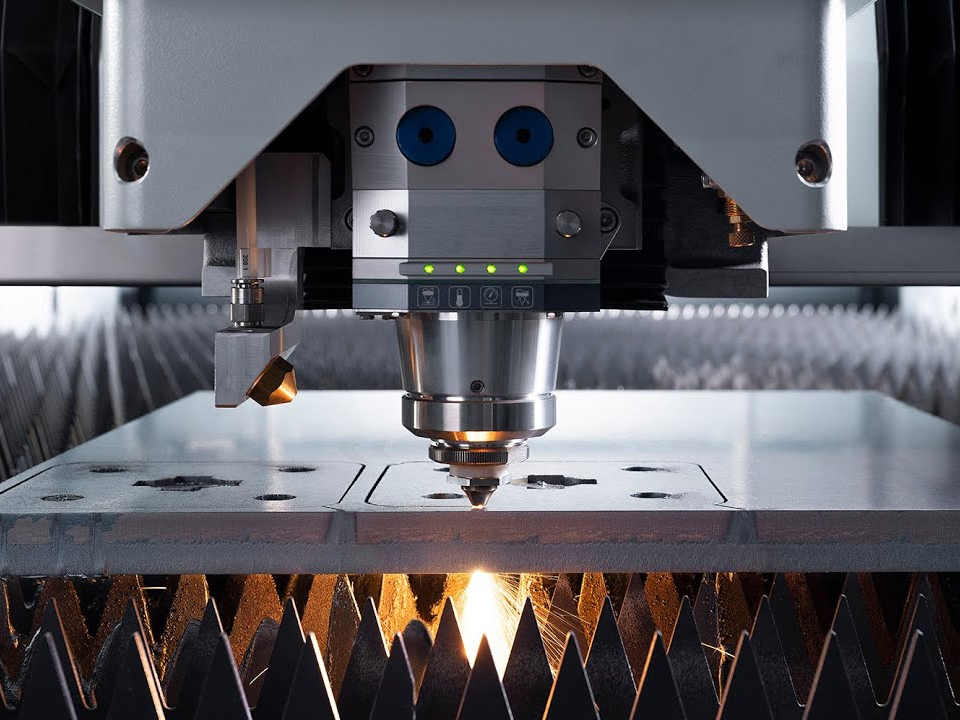
Before comparing price, request test cuts on your materials and review them against the drawing. Confirm the gas used and the cut time per part. Ask about warranty scope, spare part availability and remote support. For broader model comparisons, the metal cutting laser machine page outlines how the supplier describes laser cutting of steel, aluminum and brass. Check any claims about certifications or capacity directly with the supplier.
Frequently Asked Questions
What is laser cutting used for in automotive manufacturing?
It is used for trimming press-hardened steel parts, cutting sheet-metal brackets and reinforcements, processing tubes for seat frames and exhaust systems, preparing weld bevels, and producing prototypes and fixtures. Machine type varies by application.
Can a flat-bed fiber laser trim hot-stamped pillars?
No. Formed hot-stamped parts are three-dimensional and are trimmed on five-axis 3D laser systems. Flat-bed machines cut flat blanks, brackets, plates and similar components, so match machine format to part geometry.
Is a higher-wattage fiber laser always better for automotive parts?
No. Higher power helps with thicker material and straight-line speed, but small parts with many holes are limited by piercing, dynamics and loading. Choose power from the real thickness mix and part geometry.
Is laser cutting cheaper than stamping?
It depends on volume and part design. Laser cutting avoids dedicated dies and suits variants, moderate volumes and hard materials. Stamping often wins for high volumes of simple, stable parts because one stroke cuts many features.
Do I need IATF 16949 to buy a laser cutting machine?
No. IATF 16949 applies to organizations supplying automotive parts, not to machines. A part supplier should check its customer’s requirements, then pick equipment that supports needed process control and traceability.
What should I send a supplier for a laser cutting quote?
Send drawings, material grades, thickness range, maximum dimensions, annual volume, tolerance and edge-quality requirements, downstream processes and delivery timing. Include sample parts for test cutting so the supplier can prove results on your material.


Hot Click
Contact Us
Application
©Copyright [bogonglaser.com]. BOGONG Laser Machine Supplier All Rights Reserved.