
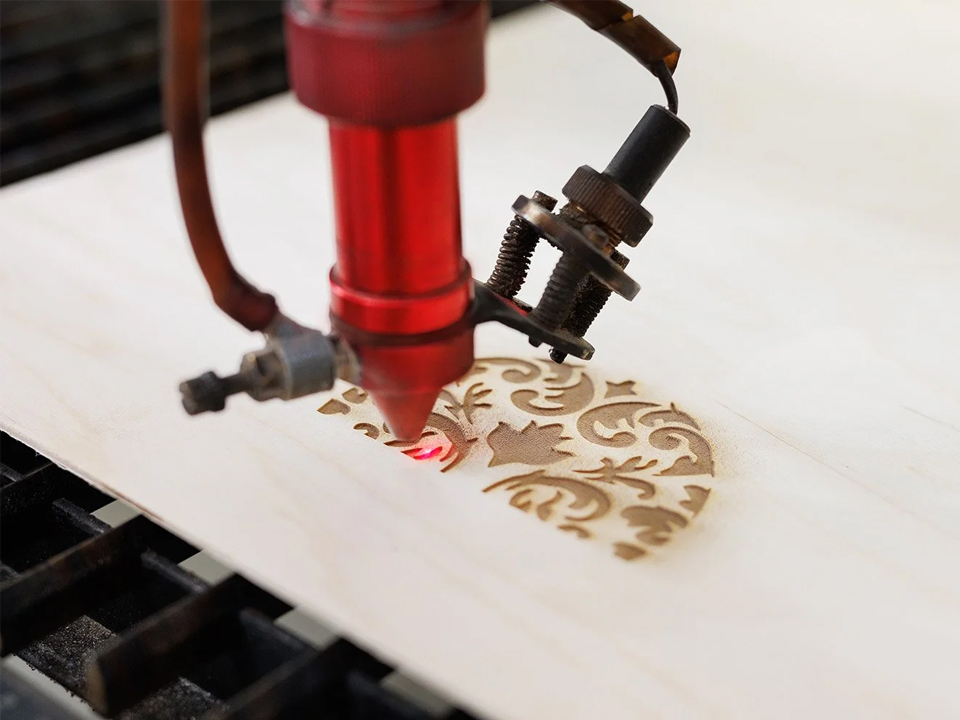
How to Choose a Reliable Laser Cutting Machine Supplier

A laser cutter is a five- or six-figure purchase that your production schedule will depend on for years. The supplier you choose determines more than the invoice price. It decides which components go into the machine, how fast a failed part arrives, and whether the cutting quality you saw in a demo holds up on your own material. A reliable laser cutting machine supplier can name the exact components in the machine, cut your material in front of you, supply the compliance documents your market requires, and put service terms in writing. A supplier that cannot do these things is a risk, whatever the price.
This guide works through that evaluation in the order most buyers need it: define the job, verify the machine, check documents, test the cut, and compare real cost.
Define the Job Before You Compare Suppliers
Supplier comparisons go wrong when the buyer has not fixed the workload. Write down the materials you cut most often, the regular thickness range (separate from the occasional maximum), sheet or tube format, part size, and monthly volume. Those inputs decide which machine class you need and which suppliers can serve you.
Three formats cover most metal-cutting requirements:
- Small-format sheet cutting. If you cut thin sheet for small parts, jewelry components or prototypes, a compact machine such as the 5050 small fiber laser cutting machine has a 500 × 500 mm cutting area, according to its product page. A full-size flatbed would waste floor space and budget.
- High-power flatbed cutting. For plate and production-volume sheet work, look at high-power fiber laser metal cutting machines from 6000W to 40kW. That page lists power options up to 40,000 W and an exchange pallet for loading.
- Tube and profile cutting. Fabricators working with round or square tube need a dedicated format such as an automatic loading laser tube cutting machine. Check the diameter range for automatic feeding. The product page gives Ø10–180 mm for auto-feeding and up to 240 mm when loading by hand.
Higher power is not automatically a better buy. Power sets the thickness ceiling and the speed on thick plate. It does not improve results on the thin sheet that makes up most workloads, and it raises the machine price, the electrical supply requirement, chiller size and running cost. Published maximum thickness figures are ceilings, not guarantees of clean production edges. A supplier who pushes the biggest machine without asking about your regular thickness is selling a product, not solving your problem.
What Should a Supplier Put in Writing About the Machine?
Phrases such as “high-quality components” tell you nothing. Ask for a written specification that names a brand and model for each of these items:
- Laser source. Request the manufacturer, model and rated power. Ask what the warranty on the source covers and who handles a claim.
- Cutting head. Ask whether it has autofocus, which collision protection it uses, and which consumables it needs. Consumable cost recurs for the life of the machine.
- Controller and software. Ask which CNC system is installed, which languages it supports, and whether nesting software and CAD file formats suit your workflow.
- Motion system. Servo motors, drives, guide rails and racks determine repeatability. If the supplier quotes positioning or repeatability figures, ask how they were measured. Bogong’s cutter pages, for example, list positioning accuracy of ≤±0.03 mm and repeatability of ≤±0.02 mm. Ask to see the measurement method behind figures like these, from any supplier.
- Frame and bed. Ask how the frame is built and stress-relieved, because it determines long-term accuracy. Also check whether the housing is enclosed and whether fume extraction is included.
- Chiller and electrical requirements. Confirm the voltage, phase and total power draw so your site can support the machine on arrival.
A supplier that names its components and explains why it chose them is showing engineering involvement. A supplier that refuses to identify models is a warning sign, because it leaves you unable to source parts independently later.
Which Compliance Documents Should You Ask For?
Which documents matter depends on where the machine will be installed. Ask your supplier which standards the machine was designed to meet, then confirm what your local authority or importer requires.
For machines going into the EU or EEA, the EU Machinery Regulation (EU) 2023/1230 is the governing framework. It applies from 14 January 2027, when it repeals Directive 2006/42/EC. The same text also provides that machinery already placed on the market under the old directive before that date is not obstructed. Under Article 10, manufacturers must draw up technical documentation and carry out the conformity assessment. Once compliance is shown, they must issue the EU declaration of conformity and affix the CE marking. They must also keep the documentation available to market surveillance authorities for at least 10 years. In practice, ask for the declaration of conformity and confirm which legal framework it cites. If your delivery falls near the changeover date, ask which one applies to your machine.
Laser safety is a separate topic. The IEC 60825-1 standard defines how laser products are classified by optical radiation hazard. It also requires manufacturers to supply the information, labels and instructions that let users take proper precautions. Ask which laser class the complete machine carries, whether the enclosure and interlocks form part of that classification, and whether warning labels and operator instructions come in your language. CE marking and laser classification are not interchangeable, so ask for each document explicitly.
Do not accept a certificate image as proof. Ask for the full document, check that the model name matches your quotation, and confirm the issuer.
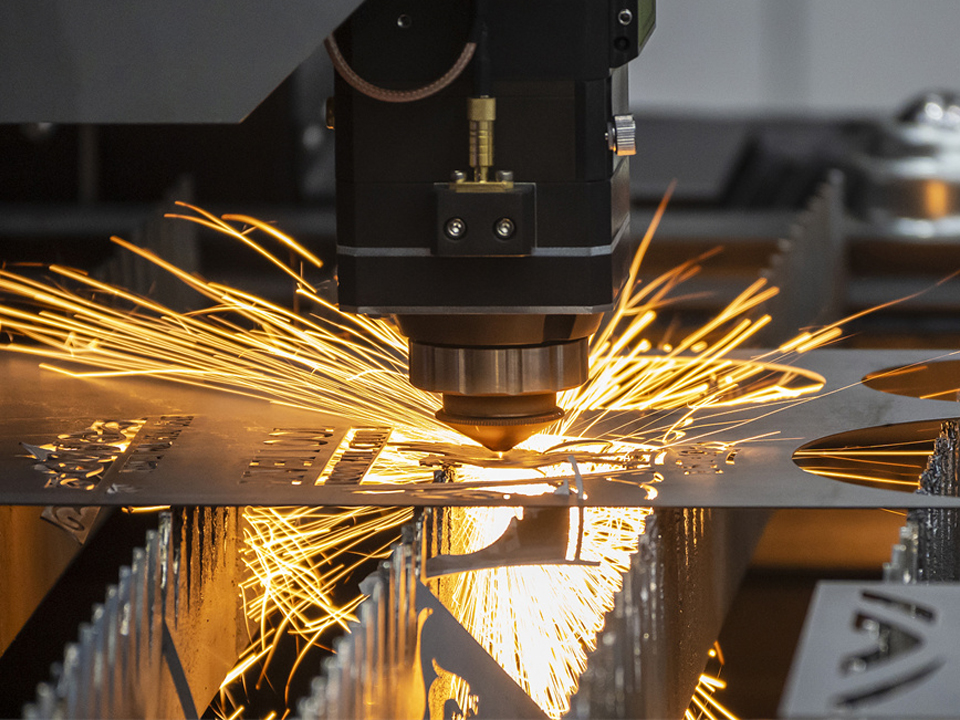
How to Run a Test Cut That Proves Something
A test cut is the most useful single check you can make, but only if you control it. Showroom samples prove that the machine can make a good cut under ideal settings, nothing more.
An illustrative example: a fabricator cuts mostly 3 mm stainless steel and 8 mm carbon steel. They send the supplier a DXF file with small holes, tight corners and a few thin bridges, plus material from their own stock. They ask for a recorded video of the cut, the parameters used (power, speed, assist gas, pressure, nozzle) and the finished parts.
Specify the following in advance:
- Your material and thickness, supplied or specified precisely, including grade and surface condition.
- Your own drawing, including features that expose weaknesses: small holes, sharp inside corners, narrow slots.
- Written acceptance criteria: dimensional tolerance, burr level, dross, and edge appearance. Ask whether the supplier can assess edge quality against a recognised thermal cutting standard such as ISO 9013.
- Witnessed or recorded cutting, either live on video or in person, with machine settings shown.
- Parts shipped or inspected, so you can measure them yourself.
Repeat the same test on the machine you receive. Agreeing the criteria before payment gives you a documented basis for any acceptance dispute.
Supplier Evidence Table: What to Request and What to Watch For
| Evaluation area | Evidence to request | Warning sign |
|---|---|---|
| Components | Written list of laser source, cutting head, controller, servo and chiller brands and models | Vague wording such as “imported parts” with no models |
| Factory capability | Live video walkthrough or visit, production address, assembly and testing process | Only generic promotional footage |
| Test cut | Your material, your file, recorded parameters, measurable parts | Only prepared sample pieces |
| Compliance | Declaration of conformity matching your model, laser class and safety documentation | Certificate images with no model reference |
| Service | Named contacts, response-time targets, remote-support method, training scope | General promises without commitments |
| Spare parts | Part numbers, prices, stock location, typical delivery time | Every critical part must ship internationally after a failure |
| Warranty | Separate terms for machine, laser source and cutting head, plus exclusions | One vague statement for the entire system |
| Total cost | Itemised quote including shipping, installation, training and accessories | Essential items excluded without explanation |
What After-Sales Terms Should Be in the Contract?
A machine that cannot get service is an idle asset. Ask for these in writing before you pay:
- Warranty scope and duration. Check what the warranty covers and which parts are treated as consumables. Bogong Laser’s product pages, for instance, publish a two-year limited warranty for the entire machine and lifetime free technical support for end users and dealers. Whatever a supplier publishes, confirm that the purchase contract repeats it and states the exclusions.
- Remote and on-site support. Ask how support is delivered (video call, remote desktop, messaging), in what language, and during which hours. Ask whether on-site service is available in your country or only through a local partner.
- Spare parts. Request a recommended spare-parts list with prices for the first year, and ask which items are stocked.
- Installation and training. Confirm whether the quote covers commissioning and operator training, and whether training is remote or on-site.
- Documentation. Manuals, wiring diagrams and parameter references should be supplied in a language your team can read.
Before buying, send a technical question and time the response. The answer shows you how quickly a real issue will be handled.
Compare Landed Cost, Not Machine Price
The lowest quoted price rarely produces the lowest total cost. Two quotations for the same nominal power and bed size can differ by what each includes. Normalise them before comparing.
Cost items to compare:
- Machine, laser source, cutting head and software
- Chiller, fume extraction and air compressor requirements
- Assist gas supply (nitrogen or oxygen) and installation
- Freight, insurance, import duties and local taxes
- Installation, commissioning and training
- Spare parts and consumables for the first year
- Payment terms and what is held back until acceptance
On delivery terms, use Incoterms 2020. It contains 11 rules that allocate costs, risks and obligations between buyer and seller. Confirm which rule your quote uses (EXW, FOB, CIF, DAP and so on) and where your responsibility for the machine begins. A low EXW price can turn out higher once you add freight, export clearance and insurance. Check the quotation validity period too, since metal and component prices change.
Does a Wider Product Range Make a Supplier More Reliable?
Not by itself. A long catalogue does not prove competence in any single machine type. A supplier can cut well and still offer weak service for welding, or the reverse. Judge each product line on its own evidence.
Breadth does have real value when your operation needs several laser processes. Sourcing from one supplier can simplify purchasing, training, spare-parts handling and support contacts. If you cut metal and also need part identification or finishing steps, a supplier covering both reduces vendor management work. Still run the same checks on each product line.
Bogong Laser’s range illustrates this:
- For jewelry and small-parts work, it lists a floor-type jewelry laser welding machine (150W, with CCD camera) and a 200W Pro mini laser welding machine with CCD.
- For marking, it lists a UV laser marking machine at 355 nm, a 3D crystal laser engraving machine, and a portable laser engraver for marking metal and some non-metal materials.
If part traceability or product marking is in your process plan, ask for these in the same quotation as the cutter. Then compare the service terms, warranty and spare-parts policy for each machine rather than assuming they match.
Red Flags to Treat Seriously
- The supplier will not name the laser source, cutting head or controller models.
- The price is far below comparable quotes with no explanation.
- Test cuts are only offered on prepared samples, never on your material.
- The supplier cannot supply a declaration of conformity that matches your exact model.
- Warranty terms are verbal or described only as “full warranty” without exclusions.
- Support responses are slow, evasive or come from different names each time.
- Payment demands go heavily toward the supplier before any inspection or acceptance.
- References cannot be contacted, or the supplier offers testimonials only.
One red flag may have an innocent explanation. Several together should stop the process.
What Should You Specify Before Requesting a Quote?
A precise RFQ gets comparable quotations and exposes weak suppliers early. Prepare the following:
- Materials and grades, regular and maximum thickness
- Sheet size, part size, or tube profile and diameter range
- Monthly volume and shift pattern
- Edge-quality requirement and tolerance
- Loading and unloading preference (manual, exchange table, auto-feed for tube)
- Power supply at your site (voltage, phase, frequency)
- Destination country, delivery term (Incoterm) and target delivery date
- Required compliance documents and operator-manual language
- Training, installation and spare-parts expectations
- Test-cut file and acceptance criteria
Send the same RFQ to every shortlisted supplier, then compare the replies line by line. To see what Bogong Laser offers across cutting, welding, engraving, marking and cleaning, browse its laser machine product range and match your RFQ to the closest format.
Frequently Asked Questions
What is the most important factor when choosing a laser cutting machine supplier? Verified proof on your own material. A witnessed test cut using your file, material and acceptance criteria shows real performance. It also tests the supplier’s openness, which predicts how they will handle problems after the sale.
How do I tell a manufacturer from a trading company or assembler? Ask for a live factory video, the production address, a written component list and the assembly and testing process. A real manufacturer can explain its quality-control steps and name the engineers handling your technical questions.
Does a higher-power fiber laser mean better cutting quality? No. Higher power raises the thickness ceiling and cutting speed on thick plate. Quality on thin sheet depends on the cutting head, motion system, gas setup and parameters. Size power to your regular workload, not your rarest job.
Which certificates should a laser cutting machine come with? It depends on the destination market. For the EU, ask for the EU declaration of conformity and CE marking under the applicable machinery framework. For laser safety, ask for the laser classification under IEC 60825-1 and the safety labelling.
How long should the warranty be, and what should it cover? Duration matters less than scope. Ask for separate terms covering the machine, laser source and cutting head, the exclusions, who pays shipping for replacement parts, and how fast replacements are dispatched.
Should I buy cutting, welding and marking machines from one supplier? It can simplify purchasing and support, but breadth does not prove quality. Evaluate each product line separately on specifications, test results, service terms and spare-parts availability.



Hot Click
Contact Us
Application
©Copyright [bogonglaser.com]. BOGONG Laser Machine Supplier All Rights Reserved.