
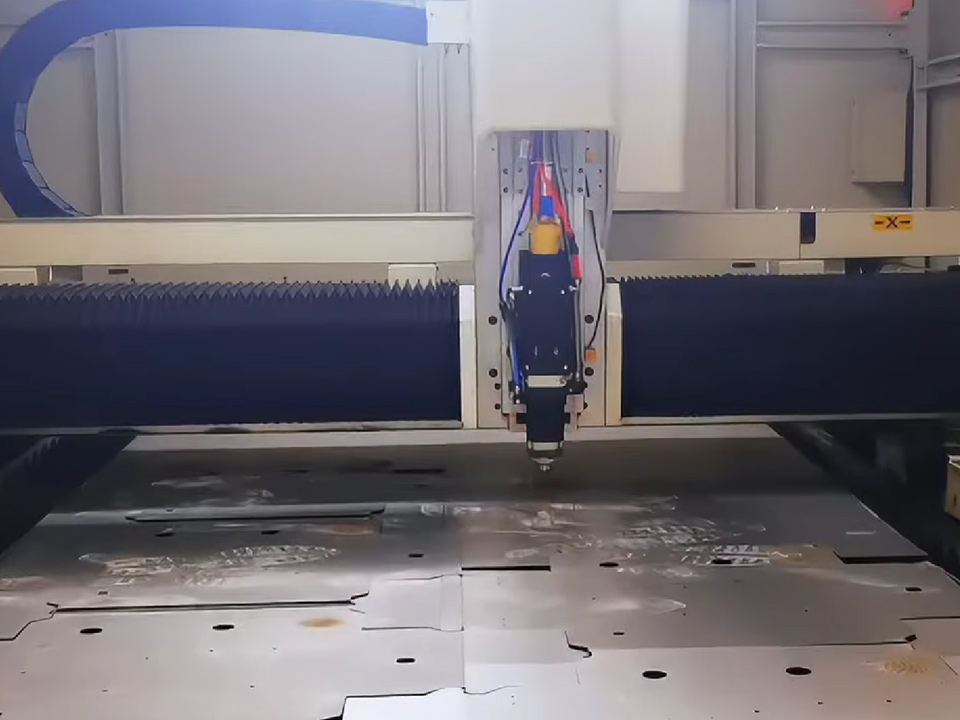
How Manufacturers Use Laser Cutting for Bicycle Components
A rough, opinionated look at how manufacturers use laser cutting for bike frames, dropouts, brackets, e-bike mounts, gussets, battery trays, and custom bicycle parts fabrication—and where the process quietly goes sideways.

The First Thing Nobody Says Out Loud: Lasers Are About Pain Avoidance
Margins got ugly.
I remember walking through a frame supplier’s cutting area years ago—hot metal smell, half-dead air hose, a stack of miscut brackets sitting in a cardboard box nobody wanted to talk about—and the lesson was obvious before anyone said it: the laser wasn’t bought for “innovation.” It was bought because manual correction had turned into a tax.
A stupid tax.
When bicycle brands talk about manufacturing, they love showing pretty stuff: carbon layups, hydroformed tubes, paint booths, a welder doing that slow blue-arc dance for the camera. Fine. Looks good. But on the floor, laser cutting bicycle components is usually about less glamorous things—kerf math, tab repeatability, slot geometry, nesting yield, fixture discipline, revision control, and whether the welder has to fight the part before lunch.
That’s the business.
And the business has been bruised. Giant Group reported 2024 consolidated sales of NT$71.28 billion, down 7.4% year over year, with inventory provision losses of NT$1.9 billion and operating profit down 60%, according to its 2024 Giant Group financial report.
So yes, I frankly believe a lot of bike factories moved toward laser cut bike parts because the old rhythm—tool up, hope the model sells, eat the inventory if it doesn’t—started looking reckless.
Not elegant. Necessary.
But here’s the ugly truth: a fiber laser can make garbage faster than a hacksaw ever could. If the shop doesn’t control assist gas, HAZ, burrs, sheet certs, fixture pull, weld prep, and inspection, then “CNC laser cutting bicycle parts” becomes a slick way to manufacture the same mistake 2,000 times.
Congratulations, I guess?
The Small Parts Are Where the Bodies Are Buried
Ever look closely at a frame dropout?
Most riders don’t. They look at paint, tire clearance, groupset, battery shape, maybe the welds if they’re nerdy. But the real evidence of good bicycle component manufacturing is usually hiding in the unsexy parts: dropouts, yokes, gussets, torque plates, brake tabs, battery-tray plates, cable-port inserts, motor brackets, chainstay bridges, sensor tabs, rack bosses, and suspension-linkage blanks.
Tiny metal. Big liability.
A 2 mm error on a bracket can look harmless on a bench, especially if the part is flat, deburred, and sitting under decent light; then it gets clamped, tacked, pulled by weld shrinkage, coated, assembled, loaded by a rider, rattled by potholes, and suddenly that “minor” mismatch is living right where fatigue likes to start.
Ask the recall people.
The CPSC Cannondale frame recall in 2024 said the headtube/downtube weld on certain Dave bicycles could become damaged and separate from the frame, affecting about 660 U.S. units plus about 113 in Canada.
No, I’m not saying laser cutting caused it.
Don’t be lazy.
I’m saying frame joints don’t care about marketing copy. Whether the issue starts in cutting, fit-up, welding, heat treatment, design, or inspection, the bike only sees the final assembly. And if the joint is wrong, the customer becomes the test rig.
Common Laser-Cut Bicycle Components
| Component | Common Material | Why Manufacturers Laser Cut It | What Can Go Wrong |
|---|---|---|---|
| Dropouts | 4130 steel, stainless steel, 6061/7005 aluminum | Accurate axle slot geometry and repeatable hanger alignment | Heat-affected edge, burrs, distortion near thin ears |
| Motor brackets | 6061-T6 aluminum, mild steel | Tight hole patterns for mid-drive or hub-drive assemblies | Misalignment under torque load, poor weld prep |
| Gussets | 4130 chromoly, aluminum sheet | Fast nesting and repeat shape control | Stress risers at sharp internal corners |
| Brake mounts | Stainless steel, aluminum | Precision spacing for caliper alignment | Edge taper, post-cut warping |
| Battery trays | Aluminum sheet, coated steel | Fast pattern changes across e-bike models | Oxide layer, coating fumes, inconsistent bend behavior |
| Prototype tabs | Steel, titanium, aluminum | Cheap revision cycles before tooling | Prototype geometry copied into production without validation |
Kerf, Pierce Marks, Burrs, HAZ—The Boring Stuff That Saves the Bike
But the DXF looked fine.
I’ve heard that sentence too many times, usually right before someone opens the scrap bin and starts pointing at parts with a caliper. CAD is clean. Metal is not. Metal has thickness variation, reflectivity, grain direction, oxide, stress, coating, heat memory, and a nasty habit of exposing weak assumptions.
Laser cutting starts before the beam fires.
Kerf compensation has to be built into the file. Pierce points need to stay away from functional edges. Internal corners need radius, not designer ego. Micro-tabs can’t land where the weld bead needs to sit. Nesting efficiency shouldn’t beat part integrity. And if the print doesn’t define the datum structure properly, inspection turns into theater.
Bad theater.
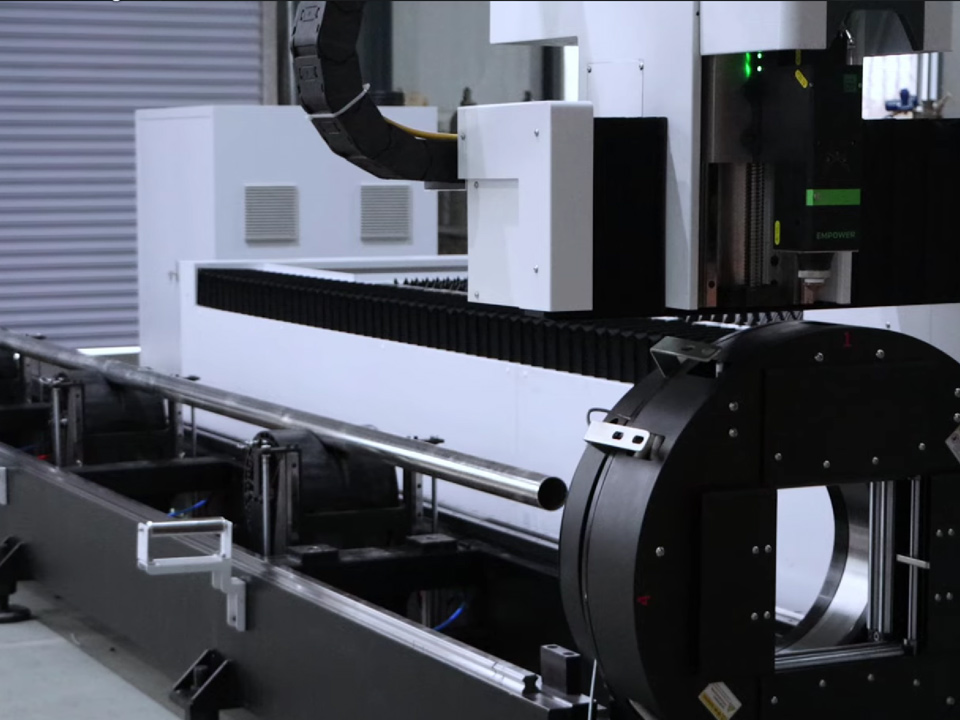
The 2024 laser cutting parameter review spelled out what experienced operators already know in their bones: power, speed, assist gas pressure, nozzle diameter, pulse settings, standoff distance, material thickness, and nitrogen use affect kerf width, roughness, taper, and heat-affected behavior.
That’s the clean academic version.
The shop version? Aluminum gets reflective and squirrelly. Titanium punishes oxygen slop. Stainless will tint and sulk if the settings drift. 4130 chromoly cuts beautifully, which is almost dangerous, because a pretty edge can seduce people into skipping fatigue thinking.
Seen it happen.
Cleaning Isn’t “Nice to Have.” It’s the Difference Between Process and Vibes.
A laser-cut edge can look clean.
That means almost nothing.
There may still be oxide, soot, oil film, adhesive residue, coating trash, compressed-air moisture, or whatever mystery fingerprint came from the last guy who handled the sheet without gloves. If that edge is going into TIG, MIG, brazing, robotic welding, or laser welding, “looks clean” is not a spec.
It’s a wish.
For oxide-sensitive weld prep, I’d rather see a shop control cleaning as part of the routing, not as a last-second bench habit. A controlled pulse laser cleaning before welding workflow makes sense when the goal is repeatable surface prep on brackets, tabs, reinforcement plates, and small e-bike structures.
If the parts are larger or the fixtures are carrying years of grime, spatter, and shop archaeology, then a 500W pulse laser cleaning machine is more believable than pretending a wire wheel is a quality system.
And yes, portable cleaning matters too. For repair zones, rework benches, and awkward frame jigs that nobody wants to move, a trolley case type laser cleaning machine can fit the reality of the shop better than a perfect brochure setup.
But if everything needs aggressive cleanup every time?
Then ask the rude question: is the cleaning system solving contamination, or hiding bad material handling? A CW laser cleaning machine has its place, but it shouldn’t become a bandage over sloppy storage, wet sheet stock, dirty racks, or painted parts arriving with mystery coatings.
That’s not process control. That’s cleanup theater.
Welding: Where Laser-Cut Parts Either Behave or Snitch
Welders know first.
They know before purchasing knows. Before the engineer updates the drawing. Before the production manager admits the fixture is worn. A part either drops into the nest and behaves—or it rocks, gaps, pulls, and makes the welder start doing little crimes with filler rod.
Little crimes add up.
Laser cut bike parts are useful because they can make weld prep less stupid. Tabs self-locate. Slots index. Holes reference fixture pins. Gussets sit where they’re supposed to sit. Dropouts don’t need “encouragement” from a dead-blow hammer.
That’s the dream, anyway.
For small brackets, fine tabs, sensor housings, or tight subassemblies, a CCD-assisted mini laser welding machine can help with visual alignment and repeat positioning. On smaller precision work—thin tabs, delicate mount points, tiny fixtures—the logic overlaps with equipment like a 150W jewelry laser welding machine, even though bicycle production obviously has different load and geometry demands.
Still, I don’t worship weld-process buzzwords.
I trust cut-and-etch sections. I trust pull tests. I trust fatigue rigs. I trust the QA sheet nobody wants to read. A perfect bead photo tells me about lighting, not durability.
E-Bikes Made the Whole Game Nastier
Yet the old bicycle mindset still hangs around.
That’s a problem.
A mid-drive motor bracket is not a bottle-cage boss. A battery tray is not a decorative plate. A cargo-bike torque arm is not a cute little tab that gets to live an easy life. These parts see motor torque, vibration, battery mass, curb hits, winter salt, overloaded panniers, kid seats, bad roads, and riders who treat maximum payload like a dare.
They do.
The CPSC e-bike mechanical hazard rulemaking document estimated 53,100 emergency-department-treated injuries from 2017 to 2022 associated with e-bikes and discussed mechanical-hazard concerns around low-speed electric bicycles.
That number isn’t a marketing problem. It’s a design-pressure problem.
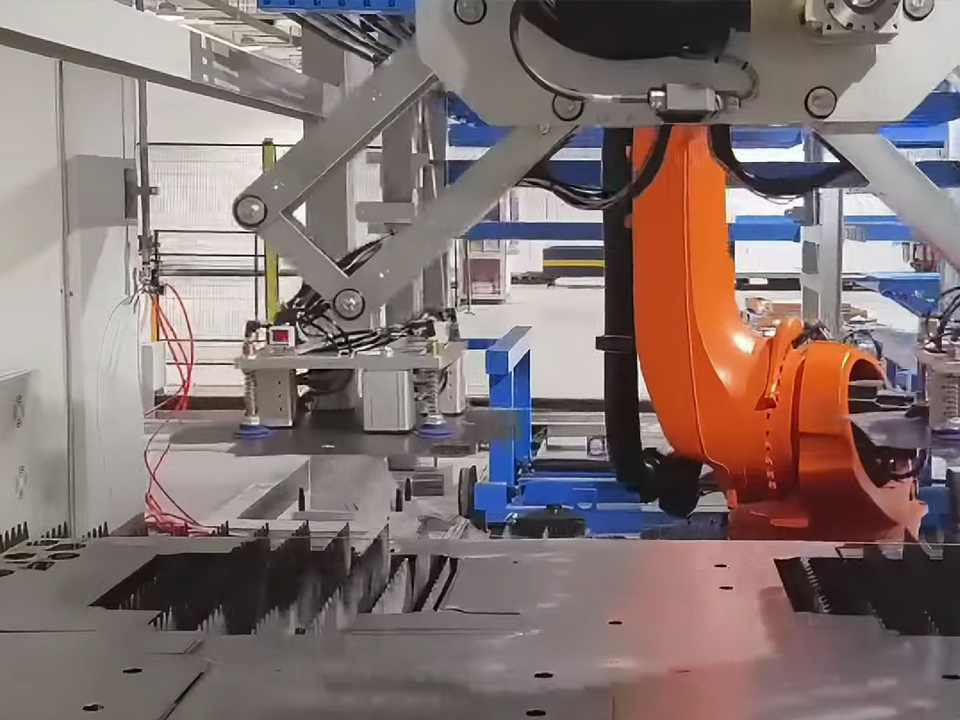
Laser cutting helps manufacturers move faster here. Revise a motor plate. Add a gusset. Open a battery-tray drain. Shift a harness slot 1.5 mm. Cut ten. Weld five. Break two. Cut again.
Fast loop. Good.
But fast loops don’t replace validation. I’ve seen prototype parts survive a demo, a launch video, and a parking-lot test, then look deeply stupid once exposed to real customers. Salt, vibration, thermal cycles, impact, overloaded racks—these are not edge cases. They’re Tuesday.
Safety Paperwork Is Dull Until Something Burns
OSHA doesn’t make great Instagram content.
Shocking.
But laser cutting brings fumes, hot edges, beam hazards, reflections, assist-gas issues, fire risks, filters, extraction maintenance, and operator exposure questions. If a bicycle supplier treats that as background noise, I start wondering what else they consider optional.
The OSHA guidance on laser cutting ventilation and hazards says ventilation should keep fumes and vapors from laser welding, cutting, and other laser-target interactions below applicable exposure limits.
That’s not a suggestion written for fun.
And the bicycle requirements business guidance from CPSC covers assembly, braking, protrusions, structural integrity, reflectors, and other requirements, while noting that noncompliant bicycles are banned under the Federal Hazardous Substances Act.
That’s the floor.
Not the flex.
So when a supplier quotes precision laser cutting for bike frames but can’t talk about extraction, interlocks, lens cleaning, assist gas, part traceability, operator PPE, fixture checks, and inspection frequency, I hear one thing: “We bought the machine before we built the system.”
Bad order.
Laser Cutting vs. CNC Machining vs. Stamping
Here’s another thing vendors hate hearing: laser cutting is not always the right answer.
Sometimes machining wins. Sometimes stamping wins. Sometimes waterjet saves the edge. Sometimes tube laser is the grown-up choice. Anyone who says one process solves everything is either new, selling hard, or ignoring the ugly parts of production.
Maybe all three.
| Method | Best Use Case | Strength | Weak Spot | My Take |
|---|---|---|---|---|
| Fiber laser cutting | Flat sheet tabs, plates, gussets, brackets, prototypes | Fast setup, clean geometry, low tooling cost | Edge heat, burrs, taper, material reflectivity | Best for flexible production and revision-heavy parts |
| CNC machining | Dropouts, bearing seats, precision mating surfaces | Tight 3D tolerances and surface control | Slow and costly for simple flat profiles | Use where the interface matters more than nesting yield |
| Stamping | High-volume repeat parts | Lowest unit cost at scale | Tooling cost and slow design changes | Good for stable mass-market parts, bad for rapid model churn |
| Waterjet cutting | Heat-sensitive materials and thick profiles | No thermal edge | Slower, abrasive cleanup, taper risk | Useful when HAZ cannot be tolerated |
| Tube laser cutting | Frame tubes, miters, slots, ports | Excellent for tube-to-tube fit-up | Machine cost and programming discipline | Strong choice for high-end frame workflows |
What Manufacturers Actually Do With CNC Laser Cutting Bicycle Parts
They prototype before the tooling argument starts
You can test three dropout profiles, four motor-plate gussets, two brake-tab offsets, and a battery-tray drain pattern before a stamping die enters the conversation. That matters when the bike is still changing and everyone in the meeting is pretending the geometry is “basically final.”
It never is.
This is why laser cutting has become so useful for gravel frames, cargo bikes, adaptive bikes, folding frames, and e-bike platforms. These programs tend to have packaging headaches. Weird clearances. Motor envelopes. Cable exits. Battery boxes. Rack loads. Fender mounts. Clearance fights everywhere.
The laser doesn’t solve all that.
It just lets you revise without lighting the tooling budget on fire.
They build less-dumb weld fixtures
A good laser-cut part can carry its own assembly logic: tabs, slots, pin holes, small datums, anti-rotation features, bend reliefs. That stuff saves time when the weld fixture is doing its job.
And when it’s not?
The part snitches.
You see it in the gap. You see it when the clamp needs too much force. You see it when one side pulls after tack. You see it when the dropout alignment gauge starts telling everyone uncomfortable news.
They lightweight parts—sometimes wisely, sometimes like amateurs
Lightening holes look cool.
That’s half the danger.
A designer can lace a bracket with cutouts and call it optimized, but without radius discipline, grain awareness, load-path thinking, and fatigue testing, those holes are just decorative crack starters. I’ve seen parts that looked clever in CAD and pathetic after real loading.
Thin webs. Sharp corners. Dumb idea.
Laser cutting makes it easy to remove metal. It does not make the remaining metal smart.
They use traceability when they’re serious
Batch codes, revision marks, material certs, inspection reports, machine logs—this is where the adults separate from the quote-chasers.
If Rev A and Rev B are mixed in the same bin, you don’t have production. You have a scavenger hunt. If the operator changes nitrogen pressure and nobody logs it, you don’t have repeatability. You have luck.
Luck runs out.
The Supplier Questions I’d Ask Before Signing Anything
Don’t ask, “How much per piece?”
Not first.
Ask how they hold the process. Ask what they measure. Ask what happens when the sheet lot changes. Ask what file revision is live at the machine. Ask how they prevent an old DXF from crawling back into production like a cockroach.
Process Questions
Can they show kerf compensation by material and thickness?
Do they log N₂, O₂, or Ar assist-gas settings?
Do they separate prototype parameters from production parameters?
Do they measure burr height, taper, hole roundness, and heat tint?
Do they control HAZ on thin 4130 tabs and aluminum brackets?
Do they document revisions, or is everyone passing around files called “final_final_v7.dxf”?
Quality Questions
Can they provide first-article inspection?
Do they inspect from functional datums instead of whatever edge is convenient?
Do they understand weld-fixture stack-up?
Do they test assemblies after cutting and welding?
Do they know where CPSC 16 CFR Part 1512 enters the conversation when a component becomes safety-adjacent?
Commercial Questions
Can they handle small-batch custom bicycle parts fabrication without treating every revision like an insult?
Can they scale from 20 prototypes to 2,000 parts without changing the edge?
Can they keep material certs tied to batches?
Can they tell you what happens when a sheet lot changes?
And one more: can they admit when laser cutting is the wrong process?
That answer matters.
FAQs
What is laser cutting bicycle components?
Laser cutting bicycle components is a digital fabrication process that uses a focused laser beam to cut bike-related metal parts—dropouts, gussets, motor brackets, brake mounts, battery trays, torque plates, and frame reinforcements—from sheet or tube material with controlled geometry, repeatable profiles, and limited hard tooling.
In shop terms, it turns a CAD file into metal fast. But speed isn’t the same as competence. The edge still has to survive welding, coating, vibration, corrosion, assembly load, rider abuse, and whatever the road throws at it.
Why do manufacturers use laser cut bike parts instead of stamping?
Manufacturers use laser cut bike parts instead of stamping when model changes, lower production volumes, prototype cycles, frame-size variation, and e-bike packaging changes make hard tooling too expensive, too slow, or too rigid for the actual production reality.
Stamping is great when the design is frozen and volume is high. Laser cutting wins in the messy middle—where product managers keep changing brackets, engineers keep moving holes, and nobody wants to buy a die for a part that might be revised next month.
Your Next Step: Don’t Buy the Laser. Buy the Discipline.
Ask less about wattage.
Ask about kerf records, assist-gas logs, sheet certs, burr limits, cut-edge inspection, cleaning steps, fixture strategy, weld-fit validation, revision control, and batch traceability. Ask what happens when Rev B replaces Rev A. Ask where the old file goes. Ask who signs off the first article.
If they answer with machine specs, keep pushing.
If they dodge?
Walk.
A laser is just the tool. The process is the product.


Hot Click
Contact Us
Application
©Copyright [bogonglaser.com]. BOGONG Laser Machine Supplier All Rights Reserved.