
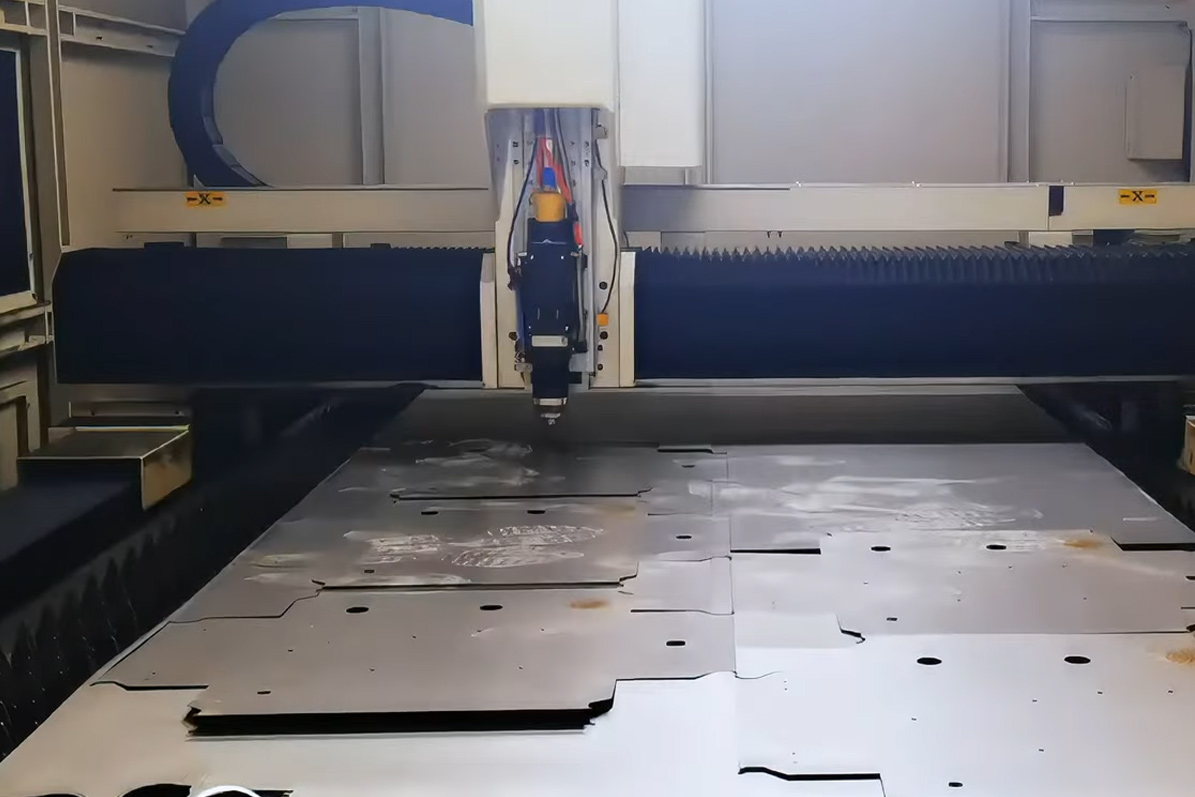
Laser Cutting Steel Tubes for Sports Equipment
Laser Cutting Steel Tubes for Sports Equipment breaks down how tube laser cutting changes the way gym racks, benches, bicycle frames, outdoor fitness structures, and sports equipment frames are made. The real win is not only speed. It is cleaner weld fit-up, tighter hole alignment, fewer fixtures, less grinding, and fewer ugly surprises after powder coating.

The Cut Comes Before the Weld. Always.
I’ve walked through enough metal shops to know the lie.
The welder gets blamed.
But half the time, the weld wasn’t the original problem. The tube was cut badly, the hole drifted, the miter sat open, the fixture got bullied into “making it fit,” and then everyone acted surprised when the final gym frame looked tired before it even reached powder coating.
That’s the job.
Laser cutting sports equipment isn’t about making sparks look pretty for a factory video. It’s about controlling the tube before it turns into a welded frame. Before the bench leg, squat rack upright, bike handlebar, rowing-machine support, or outdoor training structure becomes a part someone actually trusts with body weight.
And yes, I’ll say the quiet part: a lot of “welding problems” in sports equipment manufacturing are really cutting problems wearing a welding mask.
Steel tube laser cutting changes that. Not magically. Not every time. But when the part has holes, slots, miters, fish-mouth profiles, cable pass-throughs, drainage holes, or bolt patterns, CNC tube laser cutting starts pulling waste out of the process in a way saws and drill presses can’t match.
It works. Usually.
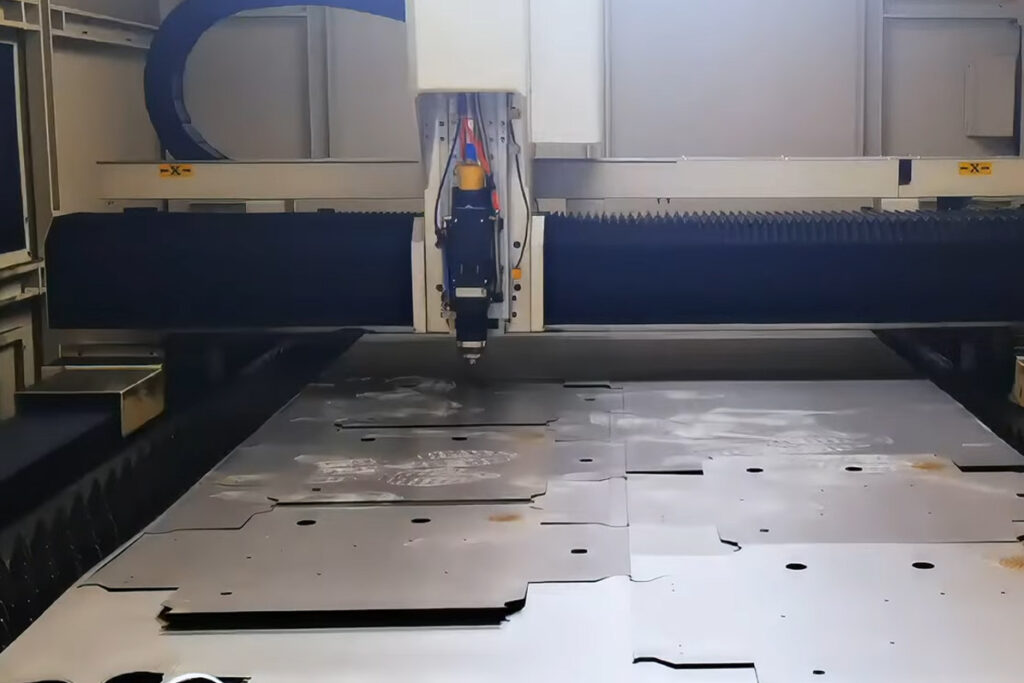
Steel Tubes Are Simple Until They Aren’t
Ever watched a rectangular tube twist slightly under clamp pressure? Or seen a round tube roll just enough to push a hole off center? That’s when the brochure language falls apart.
Steel is stubborn.
Round tube, square tube, rectangular tube, oval tube, D-shaped tube, 4130 chromoly, Q235, Q345, 1018, 1020, stainless steel 304, aluminum alloy—none of these behave exactly the same once heat, chuck pressure, seam position, wall thickness, and rotation enter the job.
Old-school steel tube cutting for gym equipment usually follows the same messy ritual: saw the tube, mark the holes, drill, deburr, fixture, tack, weld, grind, coat, inspect, swear quietly, fix the bad ones.
That last part isn’t on the routing sheet.
But it’s there.
Here’s the ugly truth: if your factory still uses separate cutting, drilling, and hand correction for a tube frame with repeated geometry, you’re probably hiding cost inside labor hours. The invoice may look cheaper. The floor doesn’t.
For low-volume, dead-simple tubes, saw cutting still makes sense. I’m not religious about lasers. A straight-cut support tube with no secondary features doesn’t need a high-end machine just because someone in marketing likes the word “fiber.”
But gym racks? Adjustable benches? Cable machine frames? Fitness bike supports? Anything with repeated holes and welded alignment?
Different story.
What CNC Tube Laser Cutting Really Does
A CNC tube laser doesn’t just “cut metal.”
It feeds the tube, clamps it, rotates it, reads the program, and cuts profiles in a controlled sequence. Holes. Slots. Angles. Miters. End cuts. Notches. Sometimes marking. Sometimes part IDs. Sometimes enough small details to make the welding fixture look less like a medieval torture tool.
Small thing? No.
When the laser uses the same digital reference for several features on the same tube, hole position becomes less dependent on someone’s tape measure, mood, coffee level, or Monday morning eyesight. That matters more than people admit.
According to the U.S. Bureau of Labor Statistics — Metal and Plastic Machine Workers, employment for metal and plastic machine workers is projected to decline 7% from 2024 to 2034. Translation: factories still need parts, but experienced hands aren’t getting easier to find.
So yes, automation matters.
Not because workers don’t matter. Because good workers shouldn’t waste their day fixing bad cuts.
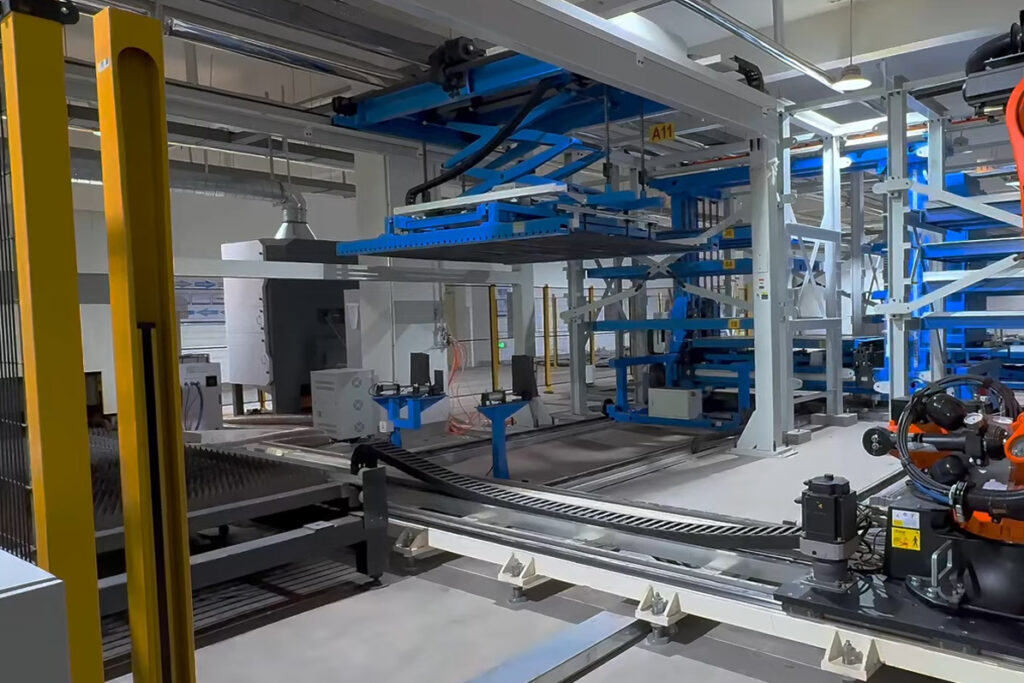
Where Laser Cutting Sports Equipment Actually Shows Up
The obvious answer is gym equipment. But that’s too vague.
You’ll see laser cutting steel tubes in:
- Squat racks and power cages
- Adjustable benches
- Treadmill and elliptical frames
- Exercise bike handlebars and base tubes
- Outdoor fitness structures
- Weight storage racks
- Pilates and rehabilitation equipment frames
- Bicycle frames, fork-related components, handlebars, and fixtures
- Ball storage, mat storage, and sports facility rack systems
- Commercial gym machine arms and support structures
The pattern is clear: repeated tubular parts, visible structure, weld fit-up, and alignment pressure.
That’s the sweet spot.
For manufacturers comparing machine categories, a broader laser products portfolio helps connect tube cutting with welding, marking, engraving, and application testing. I’d rather see a buyer understand the full workflow than buy one shiny machine and then discover the bottleneck moved three meters downstream.
The Best Factories Use the Laser Before the Part Is Born
A tube laser used as a fancy saw is wasted money.
There. Said it.
The better factories redesign the part around the machine. They add tab-and-slot joints. They cut welding location features. They place bolt holes from shared datums. They use small assembly marks. They reduce the number of handmade jigs. They stop asking welders to “pull it into place.”
A real-world example outside sports equipment makes the point well. In a bike shelter project, BLM Group reported 50% less manpower, 52% less production time, 26% lower production cost, and 20% lower material cost after redesigning the tube-processing workflow around laser tube cutting and bending. Same logic, different product: repeated tubular structures, assembly pressure, and labor savings.
That’s the part many buyers miss.
The machine is not the whole advantage. The redesign is.
Sports Equipment Buyers Are Getting Less Patient
The sporting goods industry isn’t exactly relaxing.
McKinsey’s 2024 sporting goods report noted 6% revenue growth in 2023 after 2% growth in 2022, while brands still fought inventory pressure and uneven performance.
That sounds like consultant language. Fine. Here’s the factory-floor version.
Buyers want shorter lead times, cleaner frames, more SKUs, smaller batch flexibility, better finish quality, and fewer excuses. Meanwhile, material costs don’t politely wait for your production team to catch up.
Reuters also reported that the World Steel Association expected global steel demand to rise 1.7% to 1.793 billion metric tons in 2024. That’s not a tiny background detail when your product is made from tube stock.
Steel costs bite.
So when a factory throws away time through bad cutting, re-drilling, excessive grinding, and rejected welded frames, it’s not just “normal production loss.” It’s weak process control.
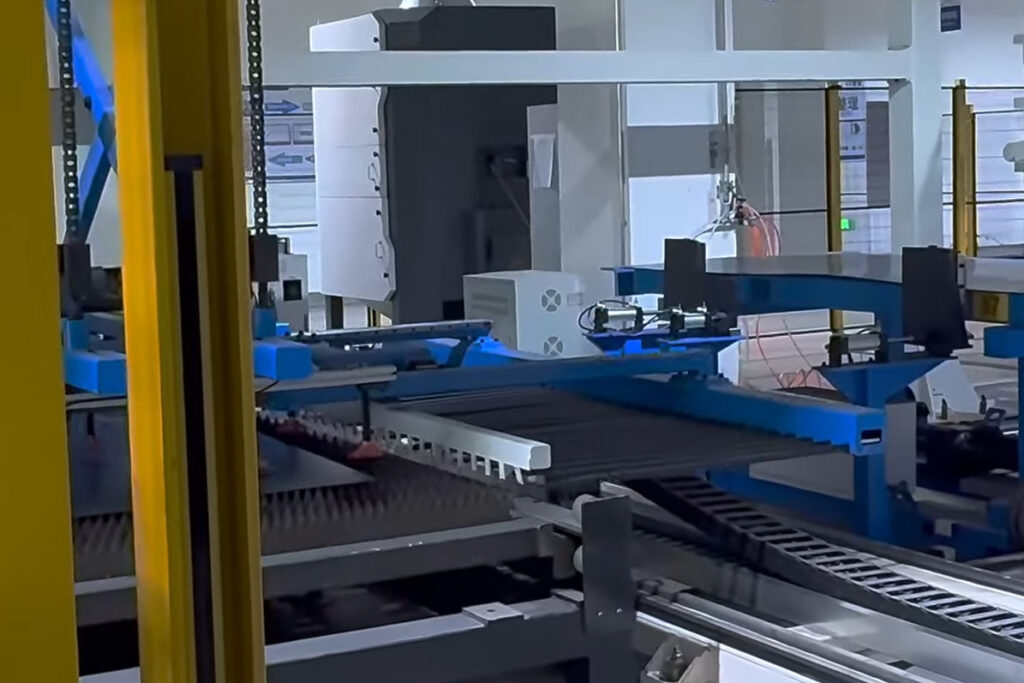
Cutting Methods Compared Without the Sales Perfume
Some shops still pretend every cutting method is equal if the operator is skilled enough.
Nope.
Skill helps. It doesn’t erase process limits.
| Method | Best For | Weak Point | Typical Sports Equipment Fit | My Take |
|---|---|---|---|---|
| Saw cutting + drilling | Simple frames, low-volume production | Multiple setups, hole drift, manual deburring | Basic benches, simple racks, low-price equipment | Cheap at first, expensive when variation grows |
| Plasma cutting | Thicker, rougher metal work | Wider kerf, more heat effect, rougher edges | Heavy outdoor structures, non-precision parts | Useful, but not ideal for clean gym equipment tubes |
| Waterjet cutting | Heat-sensitive materials, flat parts | Slower, higher operating cost for tube workflows | Specialty plates, mixed materials | Good tool, wrong default for most steel tubes |
| CNC tube laser cutting | Repeated steel tubes, holes, miters, slots, complex joints | Higher machine cost, needs programming discipline | Gym frames, bike parts, handles, racks, outdoor fitness structures | Best balance for repeatable tubular sports equipment |
| Manual cutting and grinding | Repair, prototypes, emergency changes | Labor-heavy, inconsistent, hard to scale | One-off sample corrections | Necessary sometimes, dangerous as a main process |
The table is simple. The decision usually isn’t.
A small factory making one basic frame may not need a tube laser in-house. Outsourcing can be smarter. But a manufacturer cutting thousands of uprights, handles, support legs, and welded tube assemblies every month? Different math. Very different.
The Numbers I’d Ask Before Trusting a Tube Laser Supplier
Don’t ask, “How many watts?”
That’s amateur hour.
Ask what tube range the machine handles. Ask about round, square, rectangular, and oval tube. Ask about 6 m loading. Ask whether it can control weld seam position. Ask about chuck accuracy, nesting software, bevel capability, automatic unloading, and whether the factory has cut your wall thickness before.
For laser cutting for fitness equipment manufacturing, the usual discussion includes:
- Tube diameter range: often around 10–220 mm, depending on machine class
- Wall thickness: commonly 0.8–8 mm for many sports equipment tube parts
- Materials: carbon steel, stainless steel, aluminum alloy, galvanized tube
- Laser source: 1.5 kW, 3 kW, 6 kW, 12 kW, or higher
- Assist gas: oxygen for faster carbon steel cutting; nitrogen for cleaner edges
- Features: miter cutting, slot cutting, hole cutting, part marking, nesting, self-locating joints
But from my experience, wattage gets over-worshipped.
A stable 3 kW or 6 kW setup with good software, good chuck control, good service, and a competent programmer can beat a higher-power machine run like a carnival ride. The machine spec sheet doesn’t cut your parts. The process does.
For factories pairing cutting with small precision joining, a 200W pro mini laser welding machine with CCD may help in sample development or fine assembly work. Heavy gym frames still need the right welding power, fixture design, and structural testing. Don’t fake that part.
Assist Gas, Kerf, Slag, and Other Things Buyers Ignore
Oxygen is cheaper in some carbon steel jobs and can cut fast. But it leaves oxide on the edge. That can matter before welding, coating, or adhesive bonding.
Nitrogen gives cleaner edges. It costs more.
Compressed air? Sometimes useful. Sometimes a false economy.
This is where a buyer needs to stop asking only for unit price. A lower cutting quote can create higher cost later if the tube needs extra cleaning, the weld quality drops, powder coating adhesion suffers, or burrs create assembly issues.
And inner-wall slag?
That little hidden devil can ruin your day.
On sports equipment tubes, especially where cables, bolts, bushings, or inserts pass through the tube, internal dross is not just cosmetic. It becomes an assembly problem. Sometimes a warranty problem. Sometimes a customer complaint with photos attached, which is always the worst kind.
Safety: The Part Nobody Puts in the Instagram Clip
Laser cutting videos look clean. Blue-white beam, sparks, smooth motion.
Nice theater.
But cutting steel tubes creates fumes, particulate, heat, fire risk, and material-specific exposure concerns. OSHA’s laser safety guidance says ventilation must control hazardous fumes and vapors from laser welding, cutting, and target interactions below relevant exposure limits.
I frankly believe safety is one of the fastest ways to judge a supplier.
Ask about extraction. Ask about filters. Ask what happens when they cut galvanized tube. Ask how they handle stainless steel. Ask whether operators wear proper protection or just squint heroically behind scratched acrylic.
If a factory can’t explain fume extraction, material separation, lens protection, slag control, and fire prevention, don’t be charmed by the sample photo.
That’s not professionalism. That’s luck with a deadline.
Branding and Traceability Aren’t Optional Anymore
A gym equipment frame used to need a logo and paint.
Now? More often it needs QR codes, serial numbers, load rating labels, batch tracking, warranty IDs, installation codes, and sometimes anti-counterfeit marks.
That’s where cutting, marking, and engraving start living in the same production conversation.
For permanent fine marking on suitable materials, a UV laser marking machine can support logos, codes, and traceability marks where low heat impact matters. For smaller branding, personalization, or flexible shop-floor marking, a portable laser engraver may help with samples, accessories, or lower-volume tasks.
Not every sports product needs that. But premium commercial equipment? Exported fitness products? Parts with warranty tracking?
Usually, yes.
And if a buyer isn’t sure whether cutting, welding, marking, or engraving is the right process, the laser machine application guide is a better starting point than guessing from machine names.
The Best Laser Cutting Method for Steel Tubes
My answer is blunt: for most serious sports equipment production, the best laser cutting method for steel tubes is CNC fiber tube laser cutting with stable rotary chuck control, proper assist gas, nesting software, and part design that actually uses the machine’s strengths.
Not just “fiber laser.”
That phrase alone tells me almost nothing.
For carbon steel gym frames, oxygen may make sense when speed and cost matter more than edge cleanliness. For stainless steel visible components, nitrogen is often the cleaner choice. For aluminum, reflectivity, burr control, and heat management get more sensitive. For thin-wall tube, clamping pressure and deformation matter. For thick tube, power and piercing strategy matter.
Tiny details. Big consequences.
A manufacturer cutting steel tubes for gym equipment should think in systems: tube stock, cut path, gas, kerf, heat, joint design, fixture, weld, grind, coating, inspection, packing.
Skip one step and the defect waits for you later.
FAQs
What is laser cutting sports equipment?
Laser cutting sports equipment is the use of CNC laser systems to cut, shape, notch, drill, and mark parts used in gym machines, bicycle components, outdoor fitness structures, racks, benches, and sports accessories with repeatable digital accuracy. It helps manufacturers improve fit-up, reduce manual correction, and produce cleaner metal frames at scale.
The biggest benefit usually appears in tube-based products. Steel tube frames depend on aligned holes, stable joints, accurate miters, and clean weld preparation. When those features come from one digital cutting setup, the whole production flow becomes less chaotic.
Why is steel tube laser cutting better than saw cutting for gym equipment?
Steel tube laser cutting is better than saw cutting for gym equipment when the part needs repeated holes, angled ends, slots, miters, or complex profiles because one CNC setup can replace several manual steps. This improves repeatability, reduces drilling drift, shortens weld preparation, and cuts down on grinding and fixture correction.
Saw cutting is still fine for basic straight tubes. I wouldn’t overcomplicate a simple support bar. But once the tube becomes part of an adjustable rack, welded frame, commercial bench, or machine structure, laser cutting usually gives better control.
How is laser cutting used in sports equipment manufacturing?
Laser cutting is used in sports equipment manufacturing to produce tubular frames, brackets, adjustment holes, handles, support legs, cable pass-throughs, decorative profiles, and traceability marks for fitness machines, bicycles, racks, benches, and outdoor training structures. It turns CAD geometry into repeatable production parts with less manual handling.
The smartest factories don’t just copy old saw-cut drawings. They redesign around the tube laser, adding self-locating slots, shared datums, assembly marks, and cleaner joint geometry. That’s where the real savings show up.
Your Next Steps
Don’t ask for a laser cutting quote first.
Ask for a process review.
Send the tube size, wall thickness, material grade, drawings, annual volume, welding plan, coating requirement, and tolerance target. Then ask where CNC tube laser cutting can remove manual steps, reduce fixtures, clean up weld fit-up, and cut rework.
That’s where the profit hides.
If your team is still comparing cutting, welding, marking, and engraving options, start with the available laser machine applications and laser products before freezing the design. The best savings usually happen before the first production run, not after the inspection team starts sorting bad frames into a corner.


Hot Click
Contact Us
Application
©Copyright [bogonglaser.com]. BOGONG Laser Machine Supplier All Rights Reserved.