
How Laser Technology Improves Data Center Hardware Quality
Where fiber cutting, tube cutting, bevel prep, welding and laser marking raise data center hardware quality, plus the trade-offs and RFQ details buyers should check.

Data center hardware is judged on fit, airflow, grounding and repeatability long before anyone looks at the finish. The Analiza Agenției Internaționale pentru Energie privind energia și inteligența artificială estimates that data centres used around 415 TWh of electricity in 2024 and projects roughly 945 TWh by 2030 in its Base Case. That growth pushes server chassis, racks, cooling parts and power hardware toward higher volumes and tighter density, which leaves less room for dimensional error. Laser technology improves quality only when the right process is matched to the right part. This article explains where fiber, CO2, UV and related laser processes help, where they do not, and what OEM/ODM buyers, quality managers and fabricators should verify before specifying a laser process or equipment.
Where Laser Processes Affect Data Center Hardware Quality
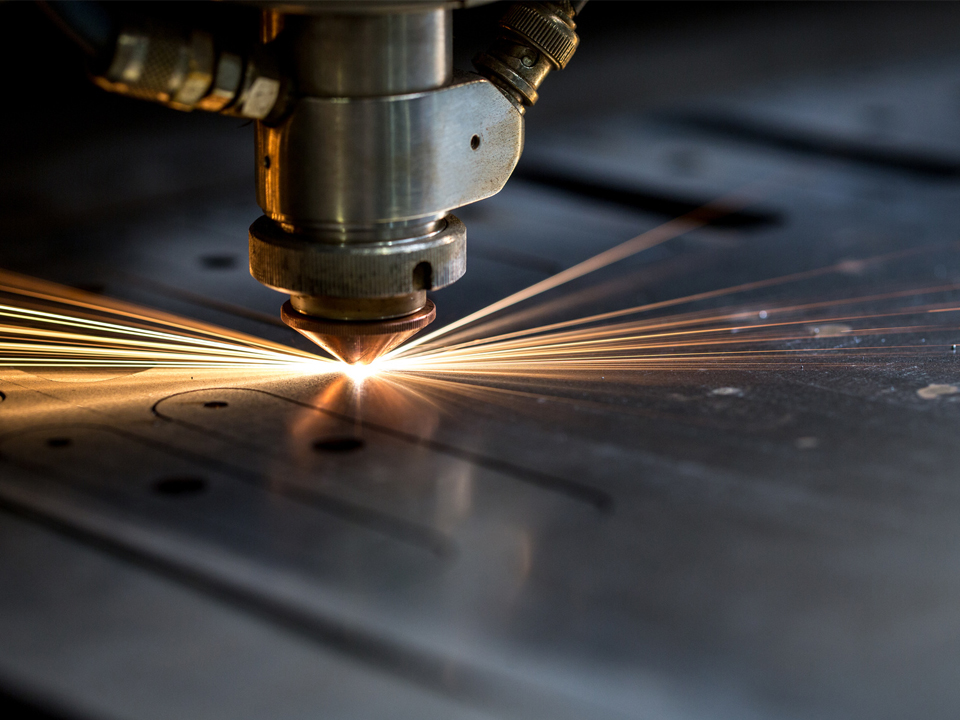
Laser technology improves data center hardware quality in four ways. It cuts flat parts with repeatable profiles, prepares edges for welding, joins thin parts with limited heat input, and permanently marks parts for traceability. It does not fix poor bend allowances, uncontrolled finishing or weak design. A laser creates the blank or the mark. Forming, coating and assembly still decide the final fit.
The table below maps common hardware categories to the laser process that usually applies. It is a selection guide based on how these processes generally work, not a statement of any machine’s validated capability.
| Hardware category | Proces tipic cu laser | Quality benefit | Verify before ordering |
|---|---|---|---|
| Server chassis, covers, airflow panels | Fiber laser sheet cutting | Consistent outlines and apertures; design changes need a new file rather than new tooling | Edge condition after coating, flatness after cutting, hole-to-bend distances |
| Rack frames, cable trays, tubular supports | Laser tube cutting | Repeatable slots, notches and tabs that reduce fit-up work | Tube diameter and wall range, squareness, seam position |
| Thick brackets and structural plates | Bevel (5-axis) fiber cutting | Weld-ready edges produced in the cutting step | Bevel angle tolerance, thickness limit, root face |
| Aluminum or copper cooling and power parts | Fiber cutting with suitable settings | Clean profiles on thin to medium material | Whether the supplier has actually run your alloy and thickness |
| Asset plates, serial numbers, Data Matrix codes | Fiber or UV laser marking | Permanent, machine-readable identification | Code grade, contrast on coated surfaces |
| Gaskets, insulators, acrylic or film parts | Tăiere cu laser CO2 | Clean non-metal shapes without cutting dies | Material compatibility, edge discoloration, fume extraction |
How Does Laser Cutting Improve Server Chassis and Rack Accuracy?
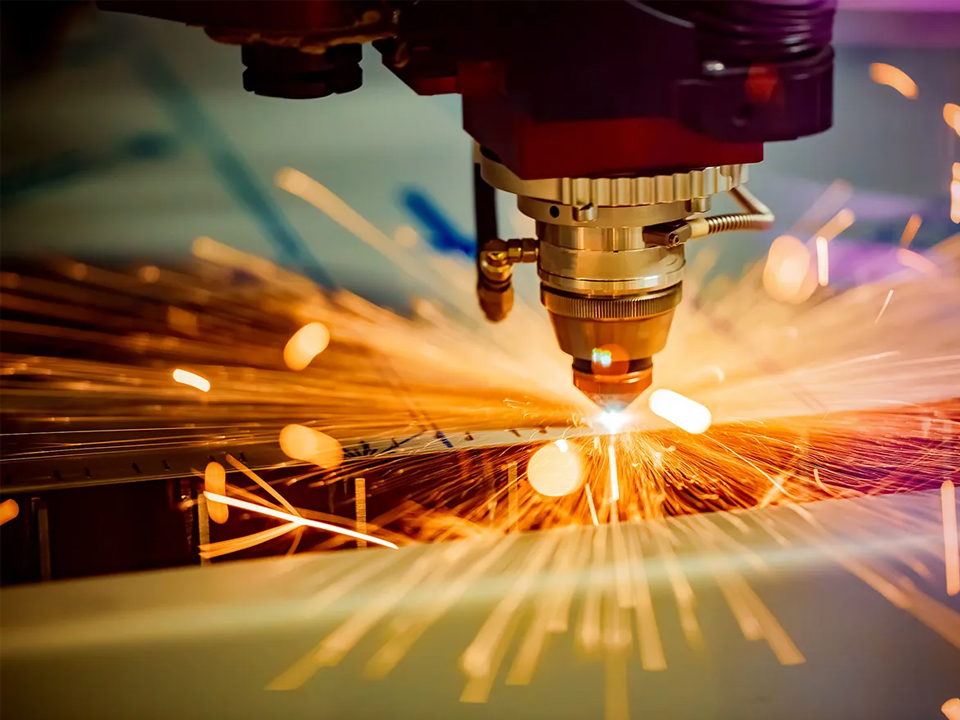
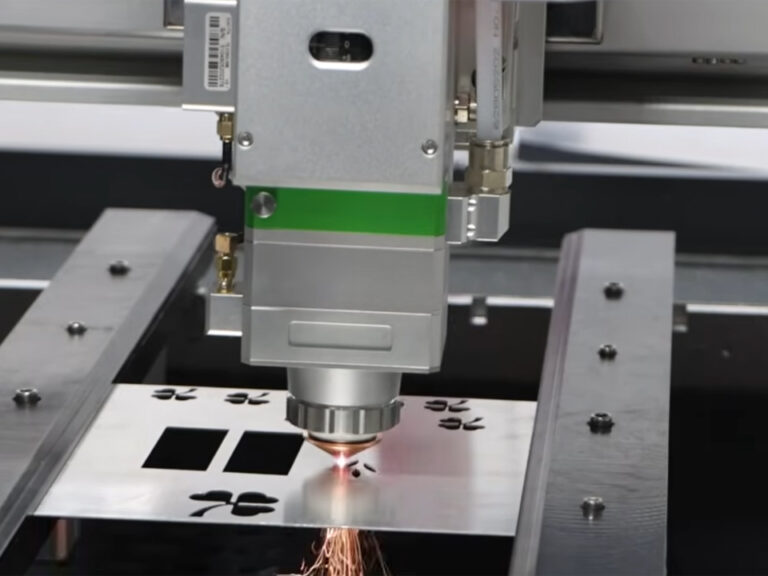
Laser cutting improves accuracy by removing the variables that tooling introduces: die wear, punch changeovers and fixture drift. A fiber laser follows a CNC path, so the same program produces the same outline on the first and the thousandth blank, as long as the sheet is flat and the machine is maintained. Because there is no dedicated tooling, a revision to a vent pattern or mounting slot is a file change. That matters in data center programs, where chassis designs change with each platform refresh.
Accuracy matters because rack-mounted equipment must interface with standardized frames. The Open Compute Project’s Open Rack V3 base specification states that compliance is required for any product intended to operate with Open Rack V3. Ears, rails and mounting features therefore have to land where the specification expects them. Blank accuracy does not guarantee that outcome, but a poorly cut blank makes it harder to achieve.
Buyers who want to understand the machine category behind these parts can review a mașină cu laser pentru tăierea metalelor overview. It describes the process as producing clean cuts with no material deformation. Treat that as a general process description, because actual flatness depends on material, nesting, gas and heat input.
Laser Cutting and Punching Are Often Combined
On panels with hundreds of identical vent holes, a turret punch can finish before a laser has traced each circle, and a punched pattern may be cheaper per part. Many fabricators therefore use a hybrid route. Laser handles complex outlines and small batches, and punching handles repeated perforations. A supplier that insists laser should do everything may be optimizing for its own equipment rather than your cost per part.
Edge Condition Affects Coating, Grounding and Shielding
Laser cutting is a thermal process. The TWI explanation of the heat affected zone notes that laser cutting creates a small heat affected zone because heat is applied to a small area, whereas shearing and waterjet cutting do not heat the material. For thin chassis sheet that zone is usually small. It still matters where edges will be powder coated, bonded to an EMI gasket or used as a grounding surface.
Confirm these points with the fabricator:
- Gaz auxiliar. Nitrogen cutting generally leaves a cleaner, oxide-free edge on steel and stainless. Oxygen cutting leaves an oxide layer that may need removal before coating. Ask which gas is used on which material.
- Dross and burrs. Residual dross can interfere with bend radii, gasket seating and powder coat thickness.
- Masked areas. Grounding points and shielding seams must be defined on the drawing before finishing, not discovered afterwards.
When Does More Laser Power Not Mean Better Quality?
A higher-wattage fiber laser is not automatically the better choice for data center hardware. Power mainly increases cutting speed and the maximum thickness a machine can handle. Many chassis, covers and brackets are thin-gauge parts, where additional power may raise throughput but does little for dimensional accuracy. For those parts, positioning accuracy, bed flatness, nozzle and focus control, nesting software and automated loading often influence quality more than wattage.
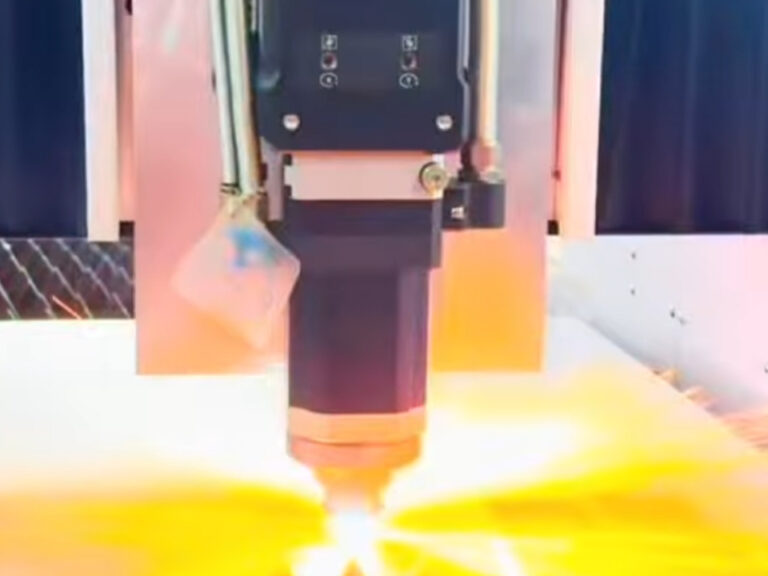
Higher power does make sense when a plant mixes thin chassis work with thicker structural plates and needs throughput. For that profile, a mașină de tăiat metale cu laser cu fibră de mare putere may fit. The supplier lists power options from 2000W to 40000W and an exchange pallet, so one sheet can be loaded while another is cut. The supplier positions the range for full-size sheet cutting, but the buyer should still ask for sample cuts on the actual alloy and gauge.
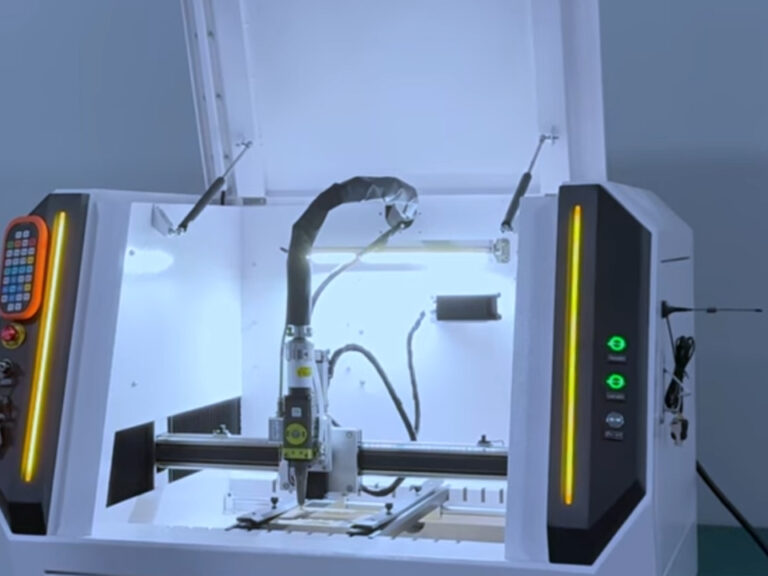
Smaller formats suit a different job. A small fiber laser cutting machine with a 500 x 500 mm cutting area can be useful for prototype brackets, shield plates and sample runs before a design moves to production. The manufacturer lists positioning accuracy of ≤±0.03 mm and repeatability of ≤±0.02 mm for this model. Those are machine specifications, not guaranteed part tolerances, and the product page is positioned around jewelry and craft cutting. Confirm that it suits your material and thickness before relying on it for engineering parts.
Tube and Bevel Cutting for Structural Hardware
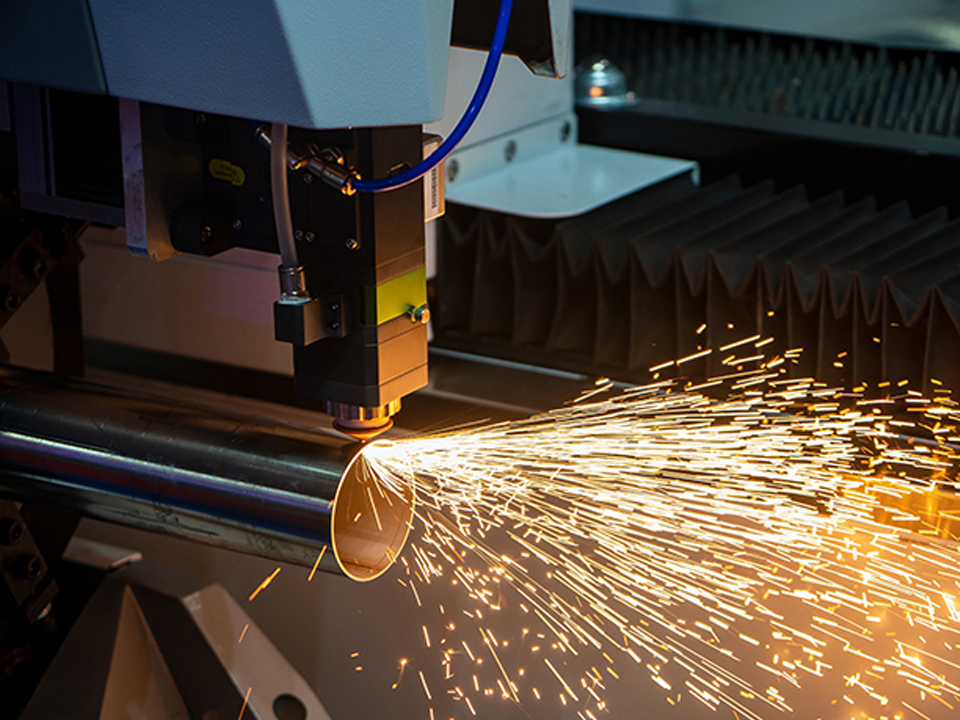
Racks, cable management supports and equipment frames often use square, round or rectangular tube. Flat-bed machines cannot cut tube profiles, and manual sawing and drilling add variation at every joint. A laser tube cutting machine with automatic loading cuts slots, notches and end profiles in one setup. The listed model auto-feeds pipe from φ10 to φ180 mm, with a 240 mm maximum diameter when loaded by hand, and processes stainless, carbon and galvanized tube. Check that range against your tube profiles, wall thickness and typical length before shortlisting any machine.
Thicker structural parts, such as base plates, lifting points or heavy mounting brackets, are usually welded. Here edge geometry drives weld quality. A mașină de tăiat cu laser cu fibră conică uses five-axis head control to cut the groove angle in the same operation as the profile, which can remove a separate chamfering step. The benefit is consistent weld preparation from part to part. Bevel cutting is slower than straight cutting and is only justified where weld joints are specified with a prepared edge.
Laser Welding: Lower Distortion, but Not for Every Joint
Welding thin panels can pull otherwise accurate parts out of alignment. Laser welding concentrates energy in a small area, which generally reduces heat input compared with conventional arc processes and can reduce distortion on thin parts. The heat affected zone concept described by TWI applies to welds as well as cuts, so ask suppliers how they limit and inspect it.
Machine choice depends on joint type. Bogong’s aparat de sudură cu laser tip podea is a 150W system with a CCD camera, presented for jewelry work. Treat it as an example of the small-part, camera-assisted spot welding category, not as a chassis welding solution. For enclosure seams and structural joints, ask suppliers for weld samples on your material and thickness, penetration checks and fixturing details.
Laser Marking for Traceability and Asset Identification
Marking is where lasers most directly improve quality control. Direct part marking applies a serial number, part number or 2D code to the part itself rather than to a label that can peel or be replaced. Vendors of laser marking systems, such as Laserax in its direct part marking overview, explain that marking legibility is typically validated with 2D barcode verifiers that grade codes under the AIM DPM standard, also known as ISO/IEC TR 29158. For buyers, that gives a measurable acceptance criterion. Specify the code type, size and minimum grade on the drawing instead of writing “laser marked.”
The laser type matters:
- Fiber laser marking (about 1064 nm) is the usual choice for bare and anodized metal.
- UV laser marking uses a shorter 355 nm wavelength. Bogong’s Mașină de marcat cu laser UV is described as suited to heat-sensitive materials and fine detail on metals and plastics. That is relevant for plastic housings, connectors and small components where heat damage is a risk.
- Portable or handheld marking has a role for large assemblies, field marking or low volume. A Gravură laser portabilă is described as marking metal and some non-metals, but a fixed station will usually give better repeatability for scanned codes.
Validate marking on the finished surface. A code that scans on raw steel can lose contrast after powder coating or anodizing. Decide whether marking happens before or after finishing, and verify the result on production-representative samples.
Non-Metal Parts: Where CO2 Lasers Fit
Not every hardware component is metal. Gaskets, insulating sheets, acrylic panels and film labels are typically cut with a CO2 laser, which many organic and polymer materials absorb well. A Gravură și tăietor cu laser CO2 offers a die-free way to make small runs of such parts. Before choosing one, confirm how the material behaves under the laser, since some plastics melt, discolor or release harmful fumes. Also confirm whether the part needs a flame rating or other approval that a cut edge could affect.
Common Failure Modes and How to Catch Them
| Failure mode | Typical cause | How to catch it |
|---|---|---|
| Parts do not fit rack or rail interfaces | Cumulative error from cutting, bending and finishing | First-article inspection against drawing datums; check after forming, not only after cutting |
| Coating peels or gaskets seat poorly at cut edges | Oxide layer, dross or burr on the laser-cut edge | Specify assist gas and edge requirements; inspect coated samples |
| Warped thin panels | Heat input, nesting or sheet stress | Review flatness on samples cut from the actual sheet lot |
| Weak or inconsistent shielding | Masking or grounding continuity not defined before coating | Add masking and conductivity checks to the drawing and inspection plan |
| Unreadable serial codes | Low contrast, wrong laser type or marking before finishing | Specify code type and minimum grade; test after final finish |
| Machine specs not matching part results | Catalogue accuracy confused with part tolerance | Request sample parts measured on your own material |
What Should You Verify Before Requesting a Quote or Selecting Equipment?
The details you supply determine whether a quotation reflects real production conditions. For laser-processed parts, include:
- Material and thickness, including alloy, temper, coating or galvanizing, because these affect gas choice, speed and edge quality.
- Critical dimensions and datums, with the tolerances that matter after forming and finishing.
- Edge and finish requirements, including coating type, masked areas and grounding points.
- Annual and batch quantities, to show whether laser only, punching or a hybrid route is more economical.
- Marking specification: content, code type, size, location and minimum readable grade.
- Inspection and documentation, such as first-article reports and material certificates.
- Packaging and shipping, since thin panels bend in transit.
If you are evaluating equipment rather than parts, ask for sample cuts or marks on your own material. Request written machine specifications, with a clear distinction between catalogue accuracy and part tolerance. Ask about assist gas and power options, automation, spare parts, training and warranty terms. The Bogong product pages reviewed list a two-year limited warranty, but lead times and payment terms should be confirmed in a written quotation rather than taken from a product page.
Întrebări frecvente
Does laser cutting improve the quality of server chassis?
It can. Laser cutting gives repeatable outlines and clean edges without dedicated tooling. Final quality still depends on flatness, forming accuracy, coating and grounding. Verify results on formed and finished first articles, not only on flat blanks.
Is laser cutting better than CNC punching for data center sheet metal?
Neither wins in every case. Lasers suit complex outlines, small batches and frequent design changes. Turret punching is often more economical for large repeated hole patterns. Many fabricators combine both processes on one part.
What laser power is needed for data center hardware?
It depends on material and thickness. Thin chassis sheet does not need very high power for accuracy, because extra wattage mainly raises speed and thickness capacity. Request sample cuts on your alloy and gauge before choosing a power level.
Can laser cutting damage the metal near the edge?
Laser cutting creates a small heat affected zone, according to TWI. On thin sheet it is typically minor, but edge oxide, dross and discoloration can affect coating and grounding. Ask which assist gas is used and inspect coated samples.
Which laser marking method is best for serial numbers and Data Matrix codes?
Fiber lasers are common for metal, while UV lasers suit heat-sensitive plastics and fine detail. Specify code type, size and minimum grade under ISO/IEC TR 29158, then test readability after final finishing.
Can the same laser machine cut metal and gaskets?
Usually not. Fiber lasers are intended for metals, while CO2 lasers are used for many non-metals such as acrylic and some gasket materials. Check material compatibility and fume handling before choosing equipment.
What should I send a supplier for a laser-cut parts RFQ?
Send drawings with material, thickness, critical tolerances, finish and masking requirements, marking specification, quantities, inspection requirements and packaging needs. Complete information reduces quotation revisions and avoids hidden rework costs.


Click fierbinte
Contactați-ne
Aplicație
©Copyright [bogonglaser.com]. BOGONG Laser Machine Supplier Toate drepturile rezervate.