
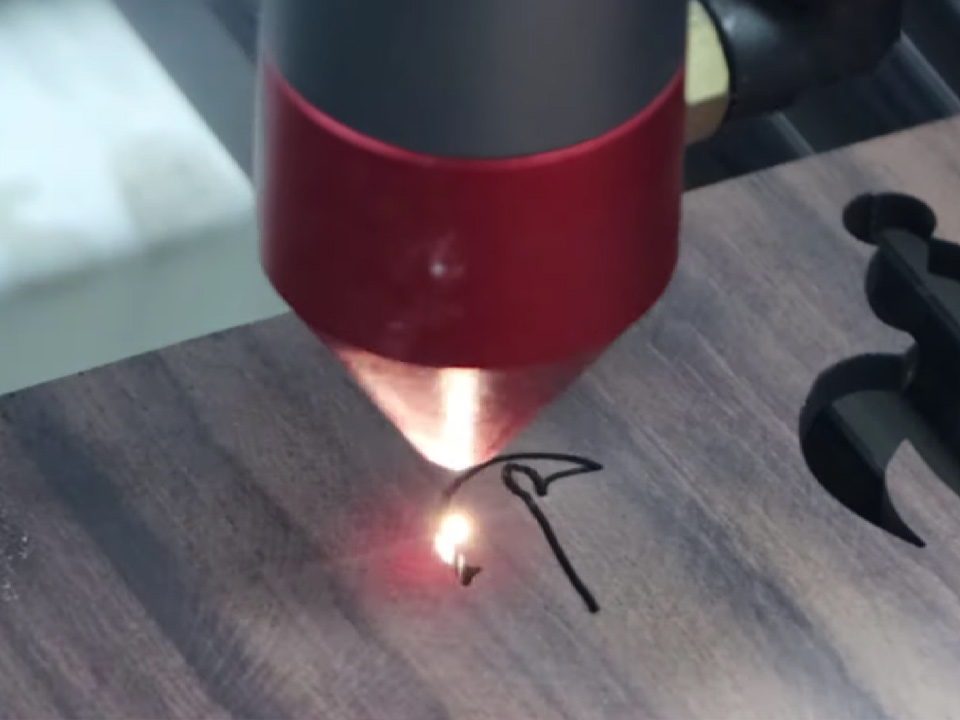
Laser Cutting Technology in Modern Bicycle Manufacturing
A skeptical look at laser cutting in bicycle manufacturing: where fiber lasers actually save money, where brands exaggerate, and why tube laser cutting is becoming a quiet advantage in modern bike frame production.

The Factory Floor Doesn’t Clap for Brand Poetry
I once watched a welder stop mid-job, lift his hood, and say, “This tube’s lying.”
Three words. Dead accurate.
The down tube looked fine from ten feet away, the fixture looked expensive enough to impress a visiting buyer, and the CAD print had all the usual confidence baked into it—but the miter was off just enough that every downstream step started stealing time from the next one.
That’s bicycle manufacturing in real life. Not the cinematic version.
Here’s the ugly truth: a lot of “craft” in mid-volume bike production is just unpaid correction work hiding under nicer language. Filing. Nudging. Re-clamping. Tacking, breaking the tack, tacking again. Somebody calls it hand-finishing. I call it margin leakage with sparks.
Laser Cutting Technology doesn’t fix bad engineering. Let’s get that out of the way.
But it does remove a surprising amount of shop-floor nonsense. When you’re cutting frame tubes, cable ports, e-bike battery slots, torque-plate pockets, motor-mount brackets, and those annoying little tabs that nobody notices until they don’t line up, repeatability stops being a luxury. It becomes survival.
And yes, I know—old-school builders will roll their eyes.
Let them.
A one-person custom framebuilder making lugged steel beauties in a quiet shop doesn’t need the same workflow as a factory pushing aluminum e-bike frames, cargo-bike chassis, folding frames, and mixed sheet-and-tube assemblies. Different game. Different pain.
Bicycle Frame Laser Cutting: Mostly Fit-Up, Occasionally Ego
But the laser isn’t magic.
I’ve seen factories buy shiny equipment and still make ugly parts because nobody wanted to talk about chuck runout, focus drift, gas pressure, tube ovality, burr control, or that cursed CAM post that turns a clean model into a weird little production nightmare.
It happens. Often.
Still, bicycle frame laser cutting solves a problem that bicycle factories have tolerated for decades: joints that almost fit. And “almost” is where welders get punished.
A clean laser-cut miter gives the welder a fighting chance. A repeatable cable-routing port means the assembler doesn’t have to fish housing through a ragged hole with a bent spoke and bad language. A battery-slot cut in the same place every time means the e-bike pack doesn’t rattle, rub, bind, or turn final assembly into a guessing contest.
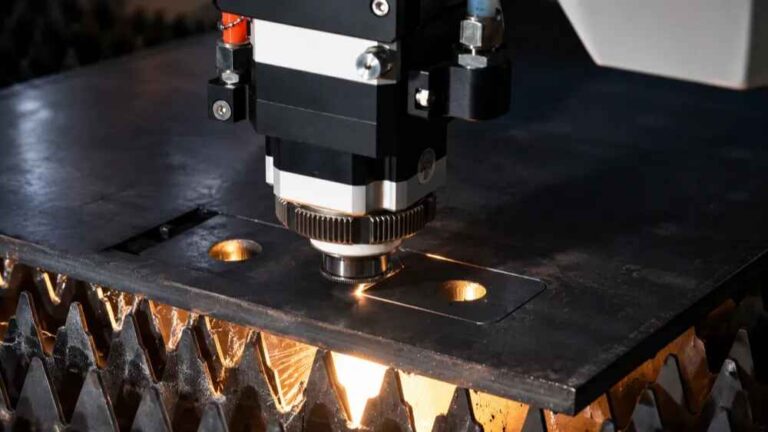
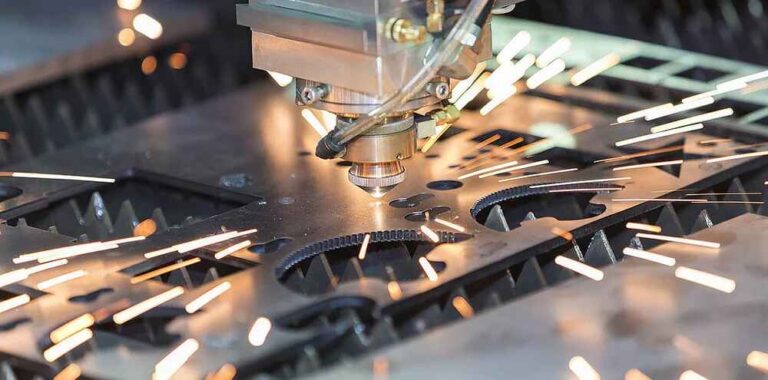
For manufacturers cutting tubes and flat brackets in the same production flow, a tube and metal sheet fiber laser cutting machine can be the less chaotic answer because it pulls sheet and tube processing into one system instead of scattering work across saws, mills, drills, punches, fixtures, and “ask Chen, he knows how this part really works.” The machine class listed there covers common tube diameters from 20 mm to 200 mm and includes fiber-source options from 1500W to 10000W, with stated positioning accuracy of ≤±0.03 mm and repeatability of ≤±0.02 mm.
That’s brochure language, sure.
But underneath it is a real production point: if you’re building frames at volume, geometry repeatability pays rent.
Would I buy that machine for a boutique titanium frame shop making 90 frames a year?
Probably not. Outsource the cuts. Keep the cash. Spend money on fixturing, finishing, inspection, and the things customers can actually feel.
But if you’re producing e-bike frames, shared-mobility bikes, delivery-bike frames, cargo bikes, or OEM runs where one bad bracket location becomes 800 bad bracket locations, then manual tube prep starts looking less romantic and more like a slow leak in the business.
E-Bikes Made the Old Slop Impossible to Hide
Remember when a bicycle frame was mostly just… a frame?
Cute.
Now it’s a battery shell, wiring tunnel, impact structure, controller bay, motor interface, thermal compromise, theft-resistant housing, and sometimes a design object with hidden fasteners because marketing wants “clean lines.” That’s not a bike frame anymore. That’s a mechanical-electrical packaging argument with pedals attached.
And the consequences aren’t abstract.
New York City officials said 2023 saw 268 e-bike battery fires, 150 injuries, and 18 deaths, which is why their 2024 safety push around lithium-ion battery fires got so much attention: NYC’s 2024 lithium-ion battery fire safety action. Most people read that as a battery and charger issue. Fair. It is. But frame people should read it too, because mechanical packaging, bracket alignment, cable protection, water ingress, enclosure fit, and service access are all part of the same risk stack.
No, laser cutting won’t save a junk battery.
Don’t be silly.
But laser cutting in bicycle manufacturing can reduce the dumb mechanical problems that make e-bike assemblies worse: rough cable windows, inconsistent tray slots, sloppy lock-plate holes, brackets that need “a little bending,” and battery cavities that rely on foam tape as an engineering philosophy.
That last one still annoys me.
Then there’s the money pressure. The 2024 Federal Register Section 301 update listed tariff changes affecting steel and aluminum products, EV batteries, and non-EV lithium-ion batteries: Federal Register 2024 Section 301 tariff actions.
Factories don’t need slogans. They need yield.
When material costs rise, scrap gets louder. Every ruined aluminum down tube, every botched titanium stay, every bracket batch with holes shifted by a hair—suddenly the accounting department starts caring about what the welding cell has been complaining about for years.
Finally.
Tube Laser Cutting for Bike Frames: The Savings Aren’t Where Salespeople Point
Everybody talks about cut speed first.
That’s usually the wrong obsession.
From my experience, the real savings show up in boring places: fewer secondary ops, less hand-fitting, fewer dedicated fixtures, cleaner tacks, faster prototype loops, better nesting yield, less senior-labor dependency, lower rework, and fewer moments where one experienced operator becomes the entire quality-control system.
You know that operator.
Every factory has one. He knows which tube batch is slightly oval, which fixture clamp lies, which bracket needs to be bumped before tack, and which drawing is technically correct but practically stupid. Great guy. Terrible single point of failure.
A BLM Group bicycle-shelter case study—not a bicycle frame, no need to oversell it—reported 50% less manpower, 52% less production time, 26% lower production cost, and 20% lower material cost after redesigning the tubular structure around Lasertube processing and tube bending: BLM Group bike shelter Lasertube case study.
Do those numbers copy directly onto a bike-frame ROI sheet?
No.
But the lesson travels. If you design tubular assemblies for laser cutting instead of merely using a laser to imitate old saw-cut workflows, the savings crawl into welding, assembly, inventory, fixtures, and material use. That’s the part that matters.
Comparison: Manual Prep vs CNC Laser Cutting Bicycle Parts
| Manufacturing Step | Manual Tube Notching / Sawing | CNC Laser Cutting Bicycle Parts | My Take |
|---|---|---|---|
| Tube mitering | Skilled labor, slower iteration, operator-dependent | Repeatable CAD-driven profiles | Laser wins for production consistency |
| Cable ports | Secondary drilling or machining | Cut during same program | Big win for e-bike frames |
| Battery-mount slots | Fixture-heavy, high rework risk | Repeatable slots and tabs | Almost mandatory for serious e-bike OEMs |
| Weld prep bevels | Grinding, machining, or separate setup | Possible with bevel laser cutting | Worth it when weld quality drives warranty risk |
| Prototype changes | Slow physical rework | CAD/CAM revision and recut | Laser wins for fast model-year changes |
| Small artisan batches | Flexible but labor-heavy | May be over-capitalized | Manual can still make sense |
| Mass customization | Painful | Strong fit if nesting and programming are disciplined | Laser wins if the factory has data discipline |
Fiber Laser Cutting Bicycle Components: The Material Doesn’t Care About Your Spreadsheet
But here’s where buyers get lazy.
They ask, “How thick can it cut?”
Wrong first question.
Ask instead: What edge quality can it hold on our actual tube wall? What happens on 6061 versus 4130? How stable is the cut on ovalized hydroformed sections? What’s the dross situation? Can the operator recover after a bad load? What assist gas cost are we eating per shift? What’s the HAZ doing near a weld zone? How many nozzles are we chewing through?
That’s the adult conversation.
For metal bicycle parts, a fiber laser cutting machine is usually the practical choice because bike factories are commonly dealing with carbon steel, stainless, aluminum alloy, titanium alloy, copper, brass, and mixed metal brackets. Fiber handles that world better than CO₂ for production cutting.
CO₂ still belongs somewhere. I’m not throwing it in the trash.
A CO2 laser engraver cutter can be useful for acrylic templates, plastics, wood, leather, packaging, shop aids, decals, foam inserts, or non-metal engraving jobs. But for bicycle frame laser cutting, CNC laser cutting bicycle parts, and tube laser cutting for bike frames, fiber is where the serious metal-cutting conversation usually lands.
Thin-wall bike tubing is fussy. Too much heat and the edge goes ugly. Too little process control and the weld cell inherits garbage. Run aluminum like steel and you’ll learn humility. Run titanium without caring about edge condition and post-cut contamination, and someone downstream will quietly hate you.
A 2024 Kaunas University of Technology fiber-laser cutting study looked at how laser power, cutting speed, and auxiliary gas pressure affect structural-steel cut quality: Kaunas University of Technology fiber laser cutting study.
The samples weren’t bicycle tubes. Fine.
The process lesson still applies: parameters are not decoration. They’re the job.
Bevels, Tabs, Slots—and the Stuff Marketing Leaves Out
Yet the interesting part isn’t just cutting a tube end.
It’s when the cut geometry starts doing assembly work.
Tabs that self-locate. Slots that set angles. Vent holes placed where purge strategy actually needs them. Cable windows that don’t scar housing. Chamfers that reduce grinder time before welding. Little cuts, big consequences.
This is where a bevel fiber laser cutting machine for groove cutting and chamfering becomes relevant—not because every bicycle part needs a bevel, but because some load-path components absolutely benefit from better weld preparation. Think motor plates, cargo-bike gussets, thick dropouts, torque arms, reinforcement plates, and e-bike battery-support structures.
Don’t bevel everything.
That’s how engineers make expensive scrap with confidence.
But when a weld joint carries real load, and the alternative is hand-grinding with inconsistent results, bevel-capable fiber cutting deserves a serious look. Especially on heavier micromobility frames where “bicycle” starts behaving more like light vehicle fabrication.
Tab-and-slot design is another giveaway.
If the parts self-fixture, the designer understands the floor. If every bracket has to float in space while a welder pokes it into place with a pick, the CAD model is lying again.
What Brands Say vs What Factories Mutter Under Their Breath
Bike brands say “integrated cockpit.”
The factory says, “The routing port burrs are chewing housings.”
Bike brands say “premium alloy platform.”
The factory says, “This wall thickness near the battery latch is a bad joke.”
Bike brands say “optimized stiffness.”
The factory says, “Who approved this dropout stack-up?”
That’s the split. Public language versus production reality.
Laser Cutting Technology works best when design, CAM, tube cutting, bending, welding, heat treatment, inspection, and finishing behave like one system. If those teams don’t talk, the laser becomes a very expensive way to reveal organizational dysfunction.
For buyers comparing equipment, a best metal cutting laser machine guide is useful only if you read it with your own ugly numbers in front of you: tube OD, wall thickness, alloy mix, duty cycle, batch size, nitrogen consumption, operator skill, service access, spare lenses, nozzle wear, electrical supply, extraction, nesting strategy, and whether your CAM workflow is clean or held together with panic.
I’m not kidding about the panic.
Plenty of factories buy hardware before they fix data flow. Then they blame the machine when the real problem is drawings, revision control, bad loading habits, and a production manager who thinks software is “the engineer’s issue.”
It isn’t.
How Laser Cutting Is Used in Bicycle Manufacturing
Some uses are obvious. Some hide in plain sight.
Frame Tubes
Top tubes, down tubes, seat tubes, head tubes, chainstays, and seatstays can be cut for miters, cable holes, vent slots, drainage features, internal-routing windows, and joint-prep geometry. A clean miter won’t make a bad frame good. But a bad miter can make a good design miserable to build.
E-Bike Battery Structures
Down tube shells, battery trays, locking plates, latch brackets, controller shelves, reinforcement strips, and wiring windows all benefit from repeatable laser-cut geometry. A battery cavity is not a place for “close enough.” It either fits properly or becomes rattle, rub, water ingress, assembly delay, or warranty noise.
Sometimes all five.
Dropouts and Torque Plates
Flat sheet components—dropouts, brake tabs, rack mounts, kickstand plates, torque plates, derailleur hanger interfaces—are natural fiber-laser work. Nest well and you save material. Nest badly and you’ve built a prettier scrap generator.
Cargo and Utility Frames
Cargo bikes are brutal teachers.
Long structures. Higher payloads. More brackets. More welded interfaces. More ways for tolerance stack-up to embarrass everyone. Tube laser cutting for bike frames makes particular sense here because one bad cut in a long cargo chassis can turn into alignment drama three stations later.
Prototype Runs
This part gets underplayed.
A model-year e-bike update might involve a new battery case, motor mount, cable path, charging port, latch position, or controller layout. With CNC laser cutting, you revise CAD, update CAM, recut, test the fixture, and move. Not instantly. But faster than waiting for old tooling rituals to catch up.
Speed matters when the market keeps changing its battery shape every other Tuesday.
Best Laser Cutting Technology for Bike Frames: My Biased Answer
For metal bike frames, I frankly believe the best laser cutting technology is usually a CNC fiber tube laser setup with strong chuck control, stable assist-gas delivery, clean CAM integration, realistic tube-loading workflow, service support that actually answers the phone, and proven performance on the exact material mix you run.
Not the biggest wattage number.
Not the cheapest quote.
Not the machine with the slickest trade-show screen and a salesperson saying, “Yes, titanium, aluminum, stainless, everything, no problem.”
That sentence should make you nervous.
If your factory cuts both tubes and sheet brackets all day, a combined sheet-and-tube system may make more sense than separate machines. If you’re doing small-batch titanium, weird oval tubes, or boutique geometry, outsourcing laser-cut tubes may be smarter than owning the machine. If your business is e-bike OEM work with battery trays, motor plates, cable windows, and brackets everywhere, ownership starts looking more believable.
That’s not romance. It’s takt time.
FAQs
Is fiber laser cutting better than CO₂ cutting for bicycle parts?
Fiber laser cutting is generally better than CO₂ cutting for metal bicycle parts because it’s better suited to production cutting of carbon steel, stainless steel, aluminum alloy, titanium alloy, copper, brass, and the mixed metal components used in frames, brackets, dropouts, and e-bike hardware.
CO₂ still has a useful role in non-metal work: acrylic, plastics, leather, wood, templates, packaging, marking, shop aids. But when the job is bicycle frame laser cutting or CNC laser cutting bicycle parts made from metal, fiber is usually the serious tool.
Which bicycle components benefit most from tube laser cutting?
The bicycle components that benefit most from tube laser cutting are frame tubes, down tubes, chainstays, seatstays, head tube joints, bottom bracket interfaces, e-bike battery structures, cable-routing holes, cargo-bike support tubes, and welded subassemblies where accurate fit-up affects alignment, cycle time, and weld quality.
I’d put e-bike down tubes and cargo-bike structures near the top. Too many brackets. Too much tolerance stack. Too many opportunities for one bad cut to become a full-line headache.
What’s the biggest mistake factories make with laser cutting bike frames?
The biggest mistake factories make with laser cutting bike frames is treating the laser like a faster saw instead of redesigning parts around digital cutting, self-locating tabs, repeatable slots, cleaner weld preparation, better nesting, controlled heat input, and smoother movement from cutting to welding.
Buying the machine is easy. Changing habits is harder. If engineering still tosses drawings over the wall and welding still “makes it work,” the laser won’t save the factory. It’ll just expose the mess faster.
Your Next Step: Go Look in the Scrap Bin
Don’t start with the sales deck.
Start with rejects.
Pull the last month of bad miters, chewed cable ports, misaligned dropouts, ugly battery slots, reworked brackets, distorted stays, and “usable but annoying” parts. Put money beside each one: labor minutes, lost material, fixture time, delayed assembly, warranty risk, and the hidden cost of making your best people babysit preventable errors.
Then compare that pile against CNC fiber laser cutting, tube laser cutting, outsourced laser-cut blanks, combined sheet-and-tube processing, and bevel-capable cutting where the load path actually justifies it.
If manual prep still wins, keep it. Seriously.
But if your factory is bleeding margin through “almost fits,” stop calling it craftsmanship. Fix the process.


Hot Click
Contact Us
Application
©Copyright [bogonglaser.com]. BOGONG Laser Machine Supplier All Rights Reserved.