-
Shunhua Road, Jinan City, Shandong

Why Laser Cutting Is Ideal for Server Rack and Chassis Production
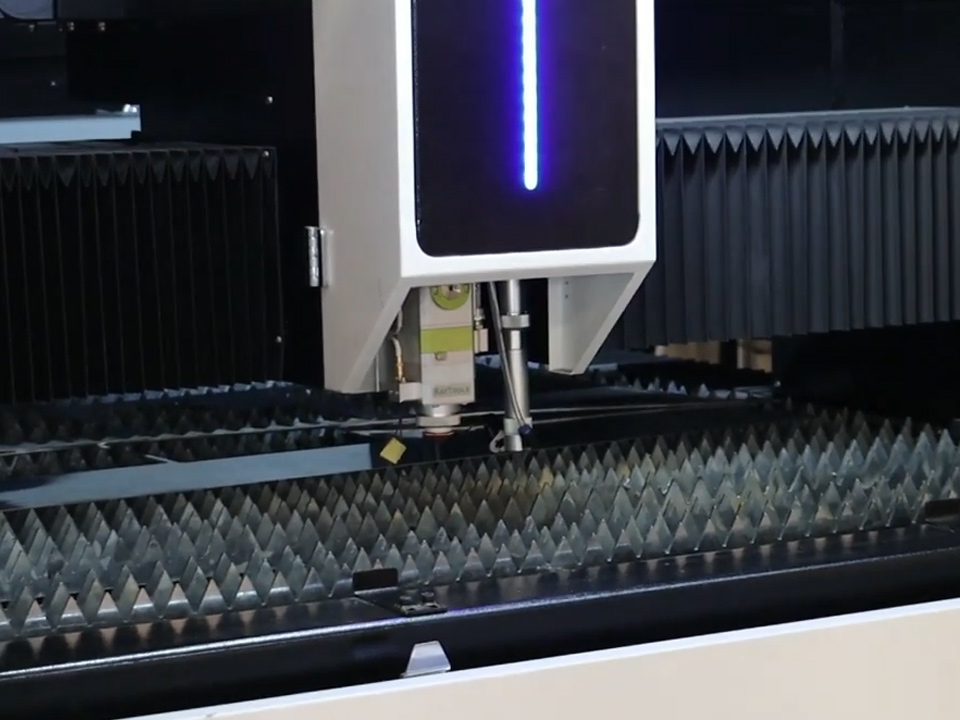
Laser cutting is not “better” because it sounds modern. It wins in server rack and chassis production because the business is now ruled by iteration speed, vent geometry, thermal constraints, and shorter product cycles. When rack density rises and AI-server demand jumps, fabricators that still think like 2016 stamping shops start losing time first, then margin, then the job.

Three things matter.
Not branding, not brochure talk, not the usual factory-floor theater where someone points at a big machine and calls it “advanced manufacturing” while quietly ignoring ECO churn, airflow rework, and the ugly fact that server chassis programs rarely stay frozen long enough for that neat sales pitch to survive first contact with engineering. It falls apart. Fast.
So let’s not pretend.
I frankly believe too many people still discuss laser cutting like it’s just one line item in a machine comparison, when in real server rack and chassis work it’s more like insurance against bad assumptions, late-stage redraws, vent-pattern fights, and those lovely moments when thermal engineering decides the panel you approved last week now needs to breathe differently.
That happens.
And when it does, nobody wants to hear a tooling vendor explain why your “small revision” just turned into a schedule problem.
The market moved, and old fabrication logic didn’t
Here’s the ugly truth.
Server hardware isn’t moving on the lazy timelines a lot of metal shops still build around, and if you’re making enclosure parts for AI servers, dense rackmount systems, or any modern chassis family with real deployment pressure, you’re not in a slow-and-steady metalforming business anymore—you’re in a revision-heavy, thermally sensitive, time-compressed manufacturing race where speed matters almost as much as geometry. Sometimes more.
That’s not opinion alone.
Reuters reported in March 2024 that Super Micro could manufacture, assemble, test, and ship a server rack in just “a few weeks” if components were available, while its revenue more than doubled in the last three months of 2023. In June 2024, Reuters reported HPE’s server revenue rose 18% year over year to $3.9 billion, with AI-server revenue more than doubling sequentially to $900 million and backlog reaching $3.1 billion. By August 2024, Reuters said Dell’s infrastructure solutions group posted record revenue of $11.65 billion, up 38%, while demand for its AI-optimized servers rose 23% sequentially to $3.2 billion and backlog hit $3.8 billion. That is not background noise. That is a production-speed signal.
Not subtle.
And then the thermal side gets nastier.
Uptime Institute’s 2024 survey says average server rack densities are rising, most facilities still sit below 8 kW on average, and most do not yet have racks above 30 kW—but Uptime also says that is expected to change. The IEA goes further: data centres used about 415 TWh in 2024, or roughly 1.5% of global electricity consumption, and it says demand from data centres is projected to nearly double to around 945 TWh by 2030 in its base case, with accelerated servers growing much faster than conventional ones. More heat. More airflow pressure. More cutout redesign. More bracket changes. More need for fast sheet metal iteration.
That’s the real setup.
A server chassis isn’t just a box anymore. It’s thermal hardware wearing sheet metal.
Why laser cutting fits the messiness of real chassis work
I’ve seen this movie.
Someone, usually on the sourcing side, decides they’re being disciplined by pushing too early toward hard tooling or toward some supposedly “more economical” process before the vent map, fan apertures, cable exits, I/O layout, service clearances, or PCIe slot stack-up is actually stable—and then the NPI loop turns into a circus because every tweak now carries process baggage it never should’ve had. Great idea. Until revision three.
That’s where laser cutting for server chassis earns its keep.
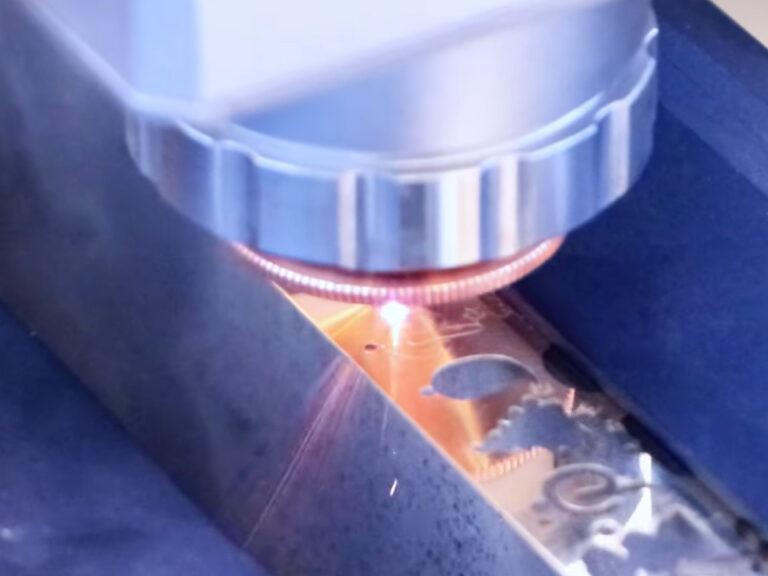
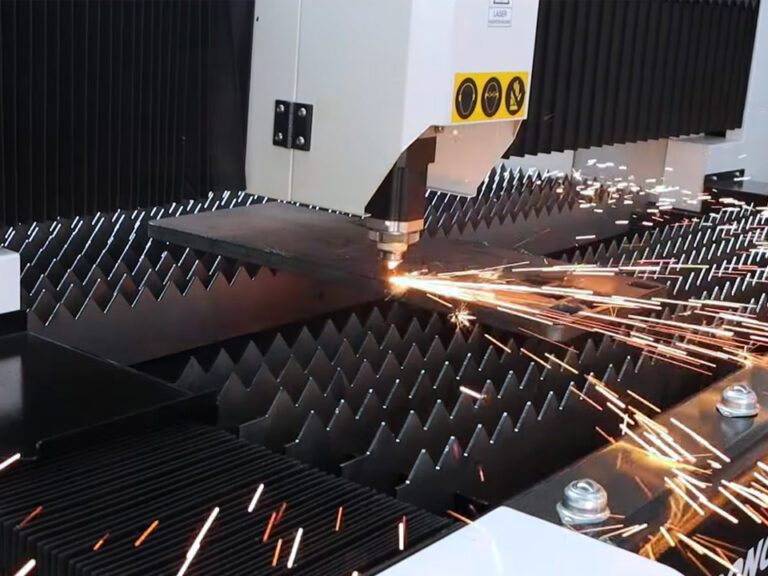
Not because it sounds modern. Because it tolerates chaos better. You can cut dense vent fields, weird window geometry, fine feature changes, mounting-hole updates, and service-access edits without acting like every engineering adjustment is a financial emergency. The University of Illinois’ DFM material lays out the distinction cleanly: sheet-metal laser cutting sits inside a “soft tooling” workflow, while stamping relies on “hard tooling” that requires custom-made, high-cost die sets. That single contrast explains half the argument.
Soft tooling matters.
Because server enclosure programs are ugly in exactly the ways outsiders underestimate. The vent pattern changes because CFD says so. The motherboard stand-off layout shifts. The PSU clearance gets tighter. The cable-management cutout needs another 6 mm. The field-service guy complains he can’t access the drive cage with gloves on. None of that is exotic. It’s Tuesday.
And in those moments, a supplier with fiber laser cutting machine options for metal fabrication looks a lot smarter than the one still thinking in die-cost amortization before the design has even settled down.
Where laser cutting saves the project, not just the part
But here’s what people miss.
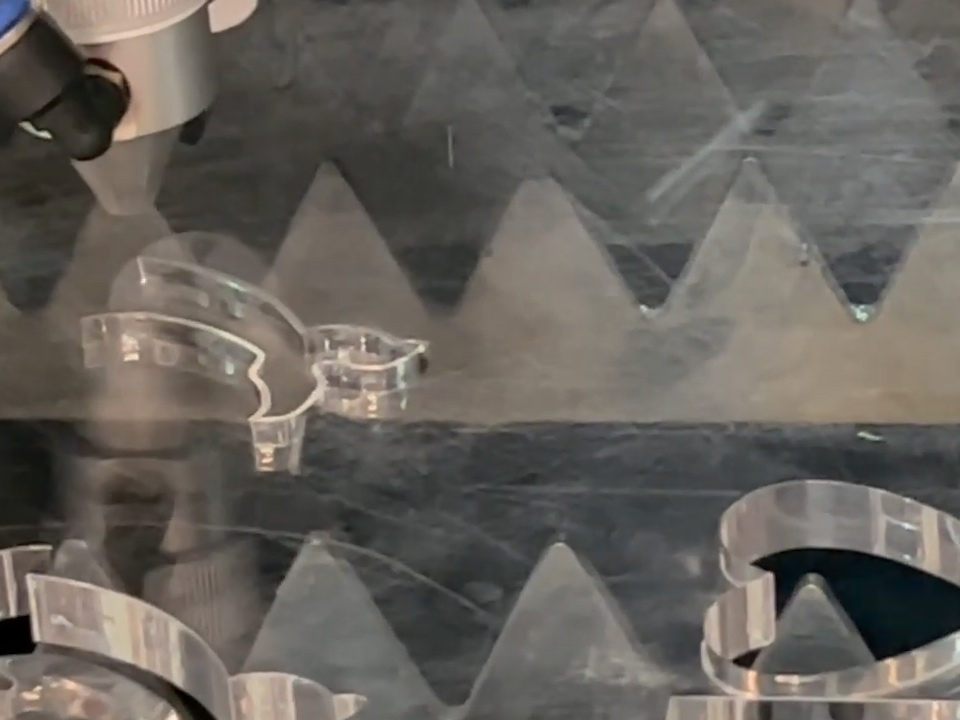
The biggest savings from sheet metal laser cutting for chassis manufacturing often don’t show up in the per-part number at first glance. They show up in the avoided nonsense: fewer tooling delays, fewer awkward workarounds, fewer “temporary” compromises that become permanent because nobody wants to reopen the process plan.
That’s the money leak.
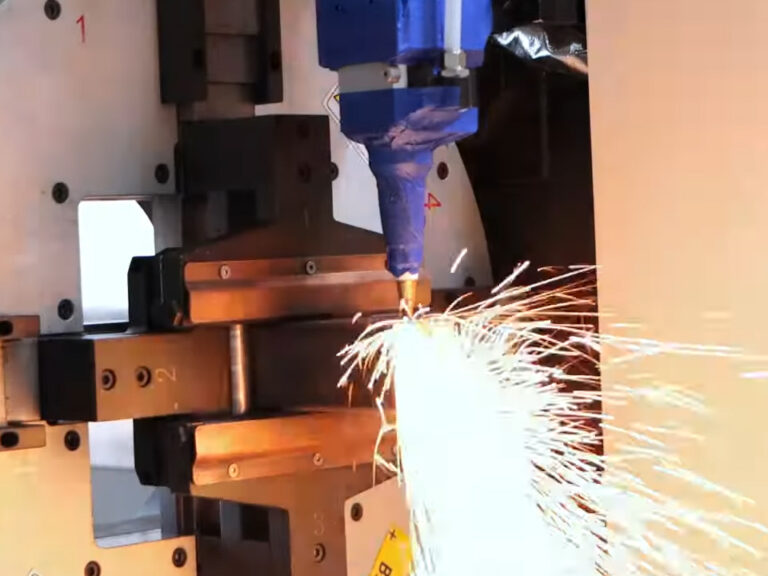
Laser cutting plays especially well when you’ve got short-to-medium runs, multiple SKU variants, and a lot of sheet metal that has to stay flexible while engineering is still learning what the product really needs. That’s not rare in server rack work. It’s normal. And if the line also touches structural tube members or mixed-format components, tube-and-sheet fiber laser cutting systems start making even more operational sense—fewer handoffs, fewer excuses, fewer chances to lose tolerance stack integrity between processes.
It works. Usually.
The comparison buyers should’ve made from day one
Most people ask the wrong question.
They ask what process is cheapest. Bad framing. The better question is which process stays economical after the design gets knocked around by airflow, EMI, access, tolerance, and serviceability feedback. Because that’s what actually happens in production-intent chassis work.
Here’s the practical comparison.
| Process | Best fit in server chassis work | Tooling burden | Revision speed | Geometry flexibility | Best volume logic |
|---|---|---|---|---|---|
| Laser cutting | Prototypes, NPI, variant-heavy chassis, vent-heavy panels, short-to-medium production | Low | Fast | High | Low to medium, sometimes medium-high |
| Turret punching | Repetitive features, simpler patterns, programs with stable geometry | Medium | Moderate | Moderate | Medium |
| Stamping / hard tooling | Very stable parts with long runs and locked design | High | Slow once tooling exists | Low after tool lock | High volume only |
The table looks simple.
Reality isn’t.
The reason laser holds up so well in laser cutting for server rack production is that rack and chassis projects rarely behave like textbook high-volume stampings until very late—if ever. The soft-tooling versus hard-tooling distinction in the Illinois material is not academic fluff; it maps directly onto the pain points buyers keep rediscovering the hard way.
Airflow penalties are real, and bad cuts get expensive later
Cooling is brutal.
The U.S. Department of Energy says that, at $0.12 per kWh, improving power supply efficiency from 75% to 85% can save roughly $2,000 to $6,000 per rack per year for 10 kW to 25 kW racks once direct and secondary cooling impacts are included. That is a useful reminder: in dense compute environments, tiny mechanical choices can have long operating-cost shadows. A chassis opening that is slightly wrong, a perforation field that is too conservative, or a panel design that slows cooling optimization is not just a fabrication issue. It becomes an energy and reliability issue.
And that’s why I get impatient when someone reduces this to machine speed alone.
From my experience, once you’re talking about dense compute hardware, the chassis panel is no longer “just sheet metal.” It’s part of the airflow strategy. It’s part of serviceability. It’s part of heat rejection. A cut feature that looks minor on a flat pattern can absolutely snowball into fan inefficiency, cable obstruction, or ugly field-service compromises.
That’s not dramatic. That’s manufacturing.
Reuters reported in June 2024 that Dell and Super Micro would provide server racks for xAI’s supercomputer, and that Musk said Grok 3 and beyond would require 100,000 Nvidia H100 chips. When programs start scaling around hardware density like that, the enclosure stops being a commodity shell. It becomes part of the deployment bottleneck.
That changes the math.
So yes, how laser cutting improves server chassis production is not some abstract SEO phrase. It improves production because it lets the metal keep up with the engineering reality instead of fighting it.
Why fiber laser systems keep showing up in serious fab cells
Because they fit.
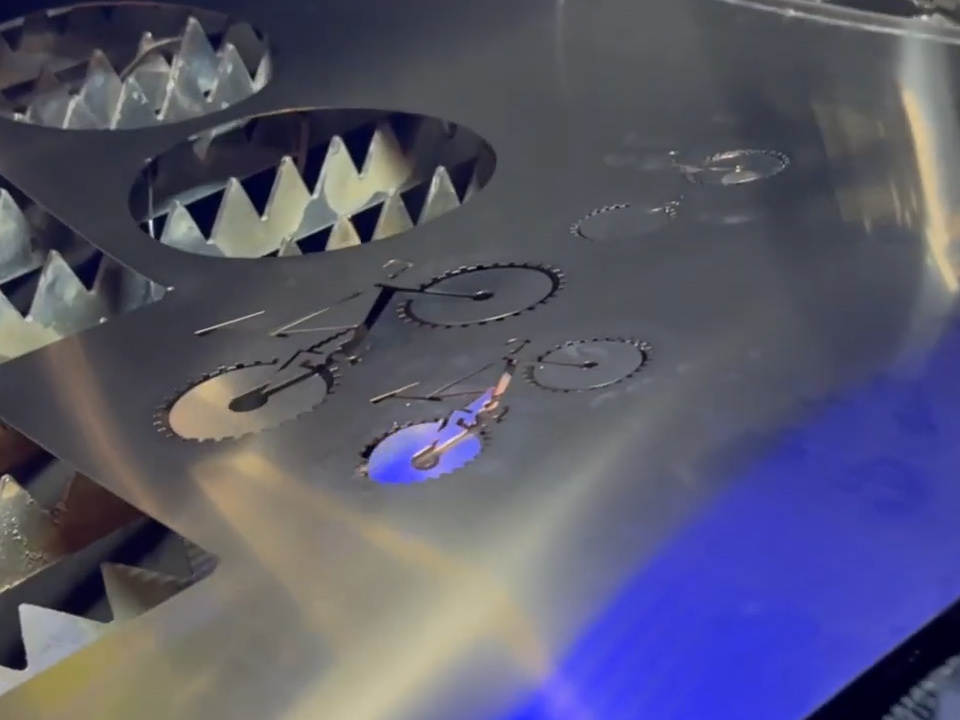
For fiber laser cutting machine for server chassis programs, the appeal is pretty direct: steel, stainless, aluminum, vent-heavy profiles, mixed feature sets, and fast response to design updates. That’s the day job. If the line also needs clean identification after forming or coating, a 30W fiber laser marking setup can handle serials, traceability, and part marking without turning that operation into a side quest. And if you’re evaluating a smaller-capacity setup for pilot work, prototyping, or a tighter-footprint fab cell, compact metal laser cutting configurations are worth a look too.
Not glamorous. Useful.
Punching and stamping still matter—but not in the lazy way people say they do
Let me be fair.
Turret punching still has a lane. Stamping definitely has a lane. I’m not arguing otherwise. If you’ve got a highly stable part family, locked geometry, real annual volume, and almost no revision risk, hard tooling can absolutely win on throughput economics.
But that last condition matters.
A lot of teams talk about future high volume like it’s already here. It usually isn’t. Or it arrives later than expected. Or the design keeps moving long enough that the imagined savings never fully materialize because the program spends too much time in quasi-stable limbo. That’s the trap.
The University of Illinois material is clear that hard tooling belongs to custom die-set economics and high-volume logic. Fine. Nobody disputes that. The issue is that modern server chassis sheet metal fabrication often lives upstream of that stable zone for much longer than sourcing plans admit. So buyers who force the process into tooling logic too early often end up paying for certainty they don’t actually have yet.
That’s the part people don’t like saying out loud.
The smartest play is hybrid—and a little less romantic
Factories love one-size-fits-all stories.
Real programs don’t.
The strongest operations I’ve watched don’t treat laser, punching, and stamping like ideological camps. They use precision laser cutting for rackmount chassis early, aggressively, and intelligently—during NPI, during airflow refinement, during variant management, during the phase where nobody can honestly swear the geometry won’t move again. Then, and only then, do they push truly stable part families into other processes if the numbers are real.
That sequencing matters.
Because the best process at prototype stage and the best process at year-three volume are often not the same thing. Pretending otherwise just makes the launch rougher. If you’re building broader in-house metal capability, fiber laser cutting machine solutions deserve serious consideration, and if your team is also looking at adjacent finishing or specialty marking workflows, 3D fiber laser engraver systems for metal work can help frame what belongs in the same cell and what should be separated.
I frankly believe that’s the adult view.
Not “laser is always best.” Not “stamping is cheaper.” Just this: in modern server rack and chassis production, laser usually makes the most sense first—and a lot of teams would save money if they admitted that earlier.
FAQs
Is laser cutting better than stamping for server chassis production?
Laser cutting is generally better for server chassis production when the design is still evolving, the SKU count is high, and airflow or access geometry may change, because it avoids custom hard tooling, speeds revisions, and supports short-to-medium production more gracefully than stamping. Stamping becomes attractive later, when the design is frozen, the volume is genuinely high, and the cost of hard tooling can be spread across a long, stable production run.
How does laser cutting improve server chassis production?
Laser cutting improves server chassis production by letting manufacturers turn CAD changes into physical parts quickly, handle dense vent patterns and intricate openings without custom dies, and shorten the loop between design, thermal testing, and manufacturing release. In practice, that means fewer delays when engineering changes its mind—which, honestly, it usually does. That matters because rack density is climbing, AI workloads are pushing cooling harder, and enclosure geometry now affects far more than appearance.
What is the best laser cutting method for server rack components?
The best laser cutting method for server rack components is usually fiber laser cutting on sheet metal because it fits modern enclosure materials, supports fast iteration, and integrates well with downstream bending, welding, coating, and marking operations used in rack and chassis fabrication. The reason buyers prefer it is not hype. It’s process fit. Server rack components often involve mixed geometry, variant control, and constant small revisions, which is exactly where soft-tooling logic tends to beat hard-tooling-first thinking.
Your Next Steps
Don’t start with the machine brochure.
Start with the mess. Look at how often your geometry is likely to shift, how sensitive the design is to airflow and cable-routing changes, how real the annual volume actually is, and how painful a tooling reset would be after thermal or customer feedback. That’s the audit that matters.
Because here’s the ugly truth.
If your chassis design is still moving, laser cutting should probably be your baseline. Not because it sounds sophisticated, but because it buys you room to think, test, revise, and ship without turning every engineering change into a production argument. And in this market, that room matters. A lot.


Hot Click
Contact Us
Application
©Copyright [bogonglaser.com]. BOGONG Laser Machine Supplier All Rights Reserved.