
Optimizing Laser Cutting for Server Rack Components
Server rack parts look simple until you start quoting real tolerances, flatness, burr limits, and post-cut fit. This article breaks down how smart shops optimize fiber laser cutting for server rack components without hiding behind brochure talk.

Server racks don’t forgive sloppy cutting
Server racks punish laziness.
I’ve seen shops walk customers through spotless showrooms, point at glossy machine covers, talk up wattage and automation, and then—two weeks later—ship rails with ugly taper, vent panels with heat pull, and bracket holes that technically “match the print” but still fight the assembler on the floor because the real problem was stack-up, not the drawing.
That happens. Constantly.
And honestly, I think the industry still lies to itself about where the pain really is. People love talking about cut speed. They don’t love talking about why the panel bows after the pierce sequence gets too aggressive, or why the turret team downstream starts swearing at laser-cut blanks that were supposed to make life easier.
Here’s the ugly truth: this market got tighter. Not looser.
The International Energy Agency says data centres used about 415 TWh of electricity in 2024, roughly 1.5% of global electricity consumption, and that demand has been climbing fast; Lawrence Berkeley National Laboratory says U.S. data centers used about 4.4% of total U.S. electricity in 2023 and could rise to 6.7% to 12% by 2028. That means more racks, denser builds, tougher thermal constraints, and way less tolerance for lazy metalwork. IEA’s Energy and AI analysis and Berkeley Lab’s 2024 U.S. Data Center Energy Use report summary don’t say it softly. They don’t need to.
Why sheet metal laser cutting for server chassis is trickier than it looks
Thin sheet lies.
A side panel looks easy until you actually have to hold flatness, keep perforation fields clean, stop burr from telegraphing into coating, and make sure the finished part still behaves after bending, PEM insertion, powder, and final rack build—because that’s where a lot of “good” parts suddenly become expensive parts.
And that’s the part sales teams skip, right?
From my experience, server rack component manufacturing becomes messy whenever someone treats all features like they belong in the same process window. They don’t. A long rail isn’t a door skin. A vent array isn’t a mounting ear. A PEM-ready hole isn’t just “another hole.” Outsiders miss that. Operators don’t.
The three mistakes I keep seeing
First, people optimize the machine before they optimize the part.
Bad start.
Second, they cut for nominal geometry and ignore how the part behaves after thermal load, extraction, handling, and bend sequence. That’s rookie stuff—except it still happens in very adult factories.
Third, they call a part “good” because the cut looked clean to the eye. But visual neatness is cheap. Functional neatness costs money and discipline.
When I say functional, I mean the real checklist: edge roughness, hole roundness, taper, dross, burr, HAZ, flatness, hole-to-hole accuracy, repeatability from sheet one to sheet two hundred, and whether the assembly tech has to do that little shove-and-flex trick just to make the hardware line up. You know the one.
The process window matters more than the machine brochure
Settings decide everything.
A 2024 study in Metals on fiber-laser cutting of 4 mm and 6 mm S355JR steel found that laser power, cutting speed, and auxiliary gas pressure materially changed surface roughness, dimensional deviation, cut taper, and heat-affected zone behavior. That is not academic filler. That is shop-floor reality with a DOI attached.
And yes, this is where people start getting uncomfortable.
Because once you accept that, you can’t keep pretending that one “dialed-in” program solves every server chassis laser cutting job in the plant. It doesn’t. Not if you’re serious.
What I would optimize first
I’d start with feature risk. Always.
If the part controls alignment, I care about positional accuracy and taper before I care about raw speed. If the part lives on the airflow side of the enclosure, I care about edge consistency across perforations and I care about heat map behavior during the cut. If the part is customer-facing sheet metal, I care about cut cleanliness before coating—because powder hides some sins, sure, but not the ones that matter.
And yes, I’m biased here. I’d rather run a “boring” stable recipe than a sexy fast one that turns into grinder time and finger-pointing later.
| Optimization target | What to tune first | What usually goes wrong | Production consequence |
|---|---|---|---|
| Mounting-hole accuracy | Speed, nozzle condition, gas pressure stability | Oval holes, taper, heat buildup | Bad fit with PEM hardware or cage nut geometry |
| Long rails and brackets | Nest direction, pierce strategy, sheet support | Bowing, twist, accumulated dimensional drift | Assembly misalignment |
| Perforated doors and vent panels | Cut sequencing, thermal distribution, micro-joint strategy | Warping, edge wash, inconsistent aperture quality | Airflow and cosmetic defects |
| Cosmetic enclosure panels | Assist gas quality, edge oxidation control, film handling | Rough edge, coating issues, scratch risk | Rejection after finishing |
| High-mix server chassis parts | Job batching, common-line limits, parameter library discipline | Inconsistent parts between lots | Hidden QA cost |
My unpopular opinion about speed
Factories love speed because speed photographs well.
That’s it.
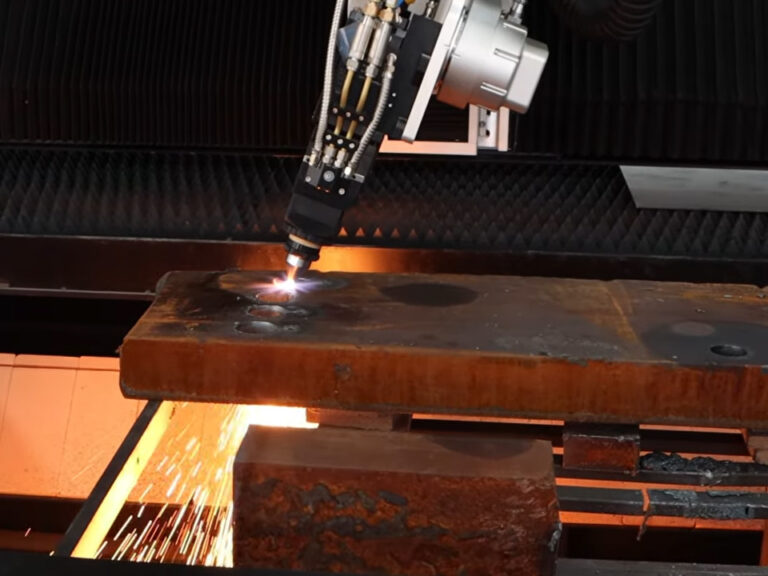
You can impress a visitor with fast traverse and flashy head motion, but if the part comes off the table hot, twitchy, slightly pulled, or carrying edge conditions that make deburring and bending unstable, then congratulations—you didn’t save time, you just relocated the pain to another department where it becomes harder to measure and easier to deny.
It works. Usually.
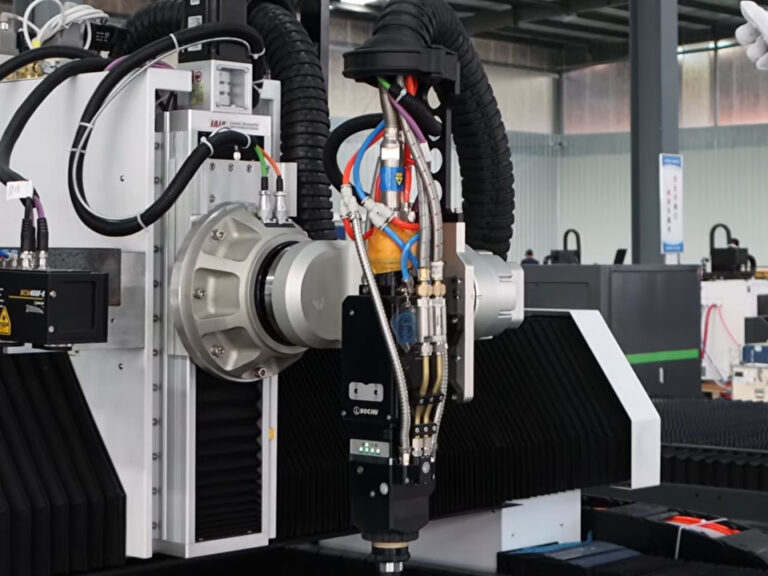
For readers comparing machine formats instead of just process theory, I’d look at workflow fit, not just brochure specs. A shop doing mixed server rack work may compare flat-sheet systems against flexible platforms like this all-in-one fiber laser metal cutting machine for tube and metal sheet applications. And when the work drifts toward finer features or smaller conductive metals, the decision logic shifts again with systems closer to this smallest fiber laser cutting machine for brass, gold, and silver.
Where the real profit hides in server rack component manufacturing
Not at the laser head.
I frankly believe too many managers stare at machine uptime and miss the ugly little leaks that kill job margin: bad nests, stupid pierce placement, sloppy gas control, poor extraction flow, feature sequencing that cooks the part, and inspection plans that only measure the easy dimensions because the harder ones are annoying to track.
That’s the money. Lost quietly.
Nesting is not just software magic
I’ve watched beautiful nests produce ugly parts.
Why? Because the software was chasing yield and forgot physics. Long skinny geometries, vent-heavy door skins, and bracket arrays don’t care how elegant the nest looks on the monitor if the heat concentration turns the sheet into a drama queen halfway through the run.
For precision cutting for server enclosures, the best nests usually aren’t the ones with the prettiest utilization number. They’re the ones that balance material yield, thermal sanity, and clean extraction. Slightly less efficient on paper. More efficient in the real world.
That distinction matters.
Assist gas is where cheap quotes go to die
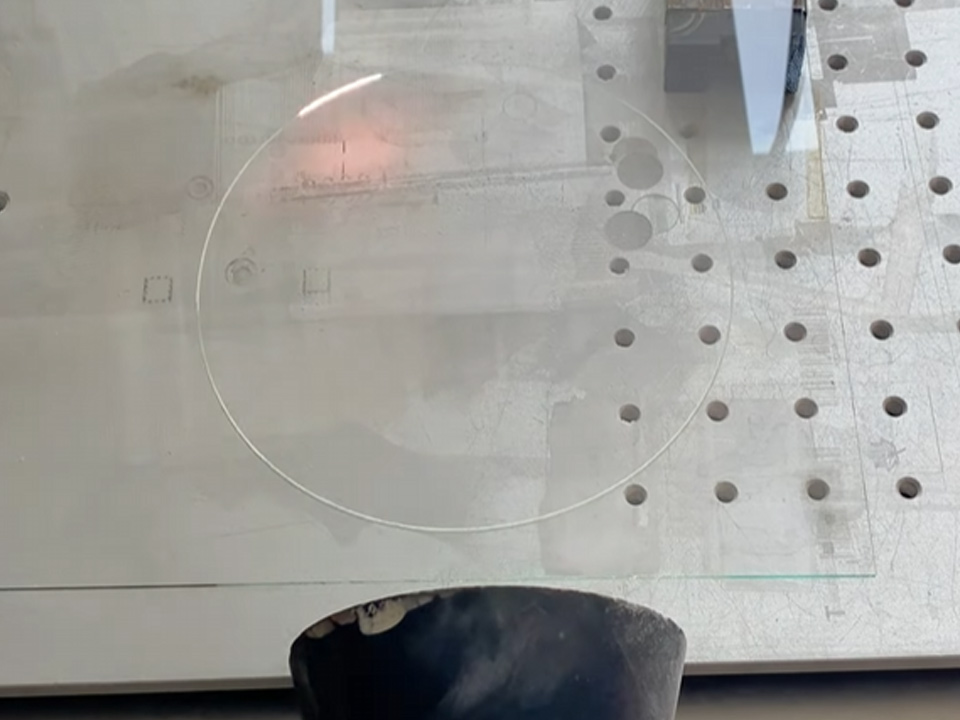
Nitrogen isn’t a side note.
Neither is nozzle wear. Neither is pressure stability. Neither is gas purity when you’re chasing clean edges and coating-ready surfaces. Shops dodge this topic because customers don’t always know to ask, and because gas quality is one of those invisible variables that doesn’t look sexy in a quotation PDF—but it absolutely shows up in the edge, and then in finishing, and then in the reject pile.
I’ve seen it too many times.
Inspection has to reflect rack reality
If you’re checking only overall length and width, you’re not inspecting server rack parts. You’re pretending to inspect server rack parts.
I want SPC around critical hole positions, slot widths, flatness on longer members, and edge condition where the part actually mates, fastens, or impacts airflow. Anything less is paperwork theater. And if the program includes part ID, serialized traceability, or durable marking after fabrication, the conversation often spills into systems like a 30W fiber laser marking machine or more specialized 3D fiber laser engraving for metal applications.
Fiber laser cutting for server racks is now tied to thermal design, not just fabrication quality
Heat changes the argument.
At the 2024 OCP Global Summit, the industry was already talking about AI racks above 200 kW, while NVIDIA’s published GB200 NVL72 rack-scale design called for about 120 kW of cooling capacity. Those aren’t small jumps. Those are design-pressure jumps. OCP’s 2024 summit materials and NVIDIA’s GB200 NVL72 design note make one thing very clear: mechanical slop is now a thermal problem wearing a fabrication costume.
That’s the shift.
And once you see it, you can’t unsee it. A bad rail or a warped door panel isn’t just embarrassing anymore. It can affect cable routing, service access, cooling path consistency, mating tolerance, and whole-rack maintainability in environments that are already running hot—literally and commercially.
So what’s the best laser cutting method for server rack components?
Not a brand.
Not a wattage figure.
Not some salesperson’s canned line about “precision at scale.”
It’s a chain of decisions. Material selection. Feature classification. Parameter windows by thickness and geometry. Heat-aware sequencing. Extraction logic. Inspection discipline. Feedback from assembly. That’s the method. Everything else is brochure frosting.
For teams comparing broader equipment strategy, that’s why I’d map overlap instead of buying machines in isolated silos. A line that cuts flat parts, handles tube work, marks parts, and supports mixed server-rack fabrication may get more value from capability planning across systems like fiber laser metal cutting platforms for combined tube and sheet workflows than from chasing the loudest single machine in the market.
The checklist I’d use before approving a server rack job
Simple rules win.
Not simplistic rules. Real ones.
Questions I would ask before greenlighting production
- What are the actual CTQ features once the part is bent, coated, and assembled?
- Which geometries are most likely to potato-chip under heat?
- Which holes are PEM-sensitive, coating-sensitive, or alignment-sensitive?
- Are we optimizing for cosmetic edge quality, structural fit, or airflow behavior first?
- Does the quoted takt time assume perfect nozzle condition and stable gas delivery, or fantasyland?
- Can this supplier show repeatability across lots—not just one cherry-picked first article?
The suppliers I trust most
Usually, they push back.
They ask annoying questions. They challenge bad drawings. They tell you when your tolerance stack is unrealistic. They don’t instantly nod and promise miracles. I trust that kind of supplier more because they sound like people who’ve actually been burned before.
The vendors that worry me? They say yes too fast.
And yes, that includes some very polished ones.
FAQs
What is the best laser cutting method for server rack components?
The best laser cutting method for server rack components is a fiber-laser process built around feature-specific parameter control, nitrogen-assisted clean edges, thermal-aware nesting, and inspection tied to assembly performance rather than just nominal dimensions. In practice, that means optimizing the full manufacturing chain, not only maximizing laser speed.
My blunt version: don’t shop for a beam, shop for a process window. Fiber lasers usually win because server rack parts live in thin-to-medium gauge metal, dense hole fields, long rails, and cosmetic enclosure surfaces where clean edges and repeatability matter more than flashy machine specs.
Why is precision cutting so important for server enclosures?
Precision cutting for server enclosures matters because enclosure parts must align across holes, bends, inserts, airflow openings, doors, rails, and service clearances, and small dimensional errors multiply once the assembly reaches coating, hardware insertion, and final rack integration. The cost of inaccuracy compounds downstream rather than staying isolated at the cutting stage.
From my experience, this is where people fool themselves. A tiny positional error can look harmless on one blank and become a full-on headache when the rack build starts stacking tolerances. Then suddenly the issue isn’t “one part,” it’s a whole batch with attitude.
What materials are common in server chassis laser cutting?
Server chassis laser cutting most often involves carbon steel, galvanized steel, stainless steel, aluminum, and occasionally copper-adjacent or mixed-material subcomponents, with process windows changing sharply depending on thickness, coating requirements, conductivity, and the final mechanical role of the part. So the right answer depends on use, not on whatever material happens to be trending in marketing decks.
Steel still carries a lot of the load because it’s stiff, familiar, and cost-friendly. But aluminum and specialty conductive parts are showing up more often as rack designs chase weight reduction, thermal performance, and next-gen power-delivery architecture.
Your Next Steps
Be tougher.
If you’re buying laser cutting for server rack components, stop asking only about lead time, wattage, and unit price. Ask how the supplier controls taper on critical holes, how they manage thermal distortion in perforated fields, what their assist-gas discipline looks like, and whether their inspection plan matches actual rack assembly conditions instead of just checking boxes for the paperwork file.
And if you’re the supplier, ask yourself a more uncomfortable question: do you actually have a real process for fiber laser cutting for server racks—or are you still leaning on operator instinct, patchwork settings, and cleanup work nobody wants to admit is happening?
Because that’s the split now.
The shops that win won’t be the loudest. They’ll be the ones whose parts fit.


Hot Click
Contact Us
Application
©Copyright [bogonglaser.com]. BOGONG Laser Machine Supplier All Rights Reserved.