-
Shunhua Road, Jinan City, Shandong

Metal Fabrication Efficiency With Fiber Laser Technology
Fiber laser cutting is not magic. It is, however, one of the few factory investments that can tighten tolerances, reduce energy waste, and lift throughput at the same time—if the shop understands material thickness, assist gas costs, nesting discipline, and downstream bottlenecks.

The old excuses sound expensive now
Let’s be honest.
I’ve heard this line too many times from shop owners and production managers: our real bottleneck is labor, not cutting, which sounds smart for about thirty seconds, right up until you look at what happened across manufacturing when companies kept pouring money into automation, then slammed the brakes, then still couldn’t solve throughput, staffing, or margin pressure because the real problem was never just headcount—it was bad process discipline wearing a respectable face. That tension showed up in Reuters’ 2023 report on record robot orders in North America and again in 2024 when orders cooled off but the underlying production pressure didn’t magically disappear.
And that’s why fiber laser cutting keeps pulling serious attention inside fabrication shops that actually watch numbers instead of PowerPoint decks. I frankly believe a lot of people still talk about lasers like it’s 2016—big wattage, shiny brochures, broad claims, zero nuance. But the ugly truth is simpler: if your nesting is messy, your gas strategy is lazy, your operator recipes drift by shift, and your downstream deburring crew is cleaning up “fast” cuts all day, you don’t have efficiency. You have noise.
What changed?
Well, the machines got better, yes. But more importantly, the margin for nonsense got smaller. A modern fiber platform will expose sloppy settings fast. In this 2024 MDPI study on 4 kW fiber-laser cutting of S355JR steel, researchers found that laser power, cutting speed, and assist-gas pressure materially changed surface roughness, dimensional deviation, kerf taper, and heat-affected zone depth. That’s not academic filler. That’s quoting risk. That’s weld prep. That’s whether your operator is handing the next station a clean part or a small disaster.
Where fiber laser cutting actually pays off
Fast cuts are nice. Clean flow is nicer.
Visitors love speed.
Owners should care more about what happens after the head moves on. Because the cut itself is only one slice of the bill; the real money leak shows up in rework, dross removal, edge prep, interrupted batches, idle machine time, and the little bits of friction that never make it into sales language but absolutely wreck cost per part over a month.
From my experience, this is where fiber laser cutting for metal fabrication separates itself from older setups. Not in some mystical, universal way. In a very boring way. Better absorption on common metals. Faster processing on lots of thin-to-medium gauge work. Less operator babysitting when the job is dialed in. More predictable output. Shops love to chase top-end speed numbers, but the grown-up question is this: what’s your stable output over an entire shift when people are tired, orders are mixed, and the floor is messy?
That question matters.
And the energy side is even less sexy—which is exactly why it matters. In Springer’s laser-cutting case study on industrial energy optimisation, the processing state accounted for the bulk of emissions, ranging from 55% upward depending on the setup and sheet count. Translation: a lot of shops are still wasting money not because fiber lasers are inefficient, but because the way they schedule, batch, and run jobs is inefficient. Big difference.
So when people ask me how fiber lasers improve metal fabrication, I don’t give the polished answer. Here’s the ugly truth: they improve it by punishing bad habits faster.
Fiber laser vs CO2 laser for metal cutting still matters
Not every old debate is dead
Some arguments linger.
And honestly, they should. The fiber laser vs CO2 laser for metal cutting discussion still matters if a shop handles a weird mix of materials, legacy workflows, or specialized production requirements. But for mainstream metal fabrication—sheet steel, stainless, aluminum, reflective metals, higher-volume repeat jobs—the balance has tilted hard toward fiber for reasons that aren’t hard to understand if you’ve ever had to defend operating cost with a straight face.
I’m not saying CO2 is useless. I’m saying nostalgia is expensive.
The broader technical picture from university and industry research keeps pointing in the same direction: fiber systems tend to perform strongly in common metal applications, especially when shops care about productivity and energy use rather than just “can it cut?” logic. The old framing—CO2 is proven, fiber is the new kid—isn’t just dated now. It’s lazy. And lazy buying decisions have a habit of becoming very detailed accounting problems six months later.
Here’s the plain-English comparison I’d actually show a buyer:
| Factor | Fiber Laser Cutting | CO2 Laser Cutting |
|---|---|---|
| Common metal throughput | Usually stronger on thin-to-medium metals | Often slower on comparable metal jobs |
| Energy use during cutting | Typically lower | Typically higher |
| Reflective metal handling | Better suited for many applications | More limited historically |
| Maintenance profile | Generally simpler beam delivery architecture | More optics/gas-path complexity |
| Best fit | Metal-heavy fabrication workflows | Mixed-material or legacy process environments |
Is that simplified? Sure. It’s supposed to be. Buyers don’t need another vague sermon. They need a framework.
Metal fabrication efficiency lives or dies after the beam
The edge quality problem nobody markets honestly
This is where the brochures get quiet.
A shop can brag about cut speed all day, then quietly bleed margin because the edge is rough, tapered, oxidized, or inconsistent enough to create pain in bending, welding, coating, or final assembly. I’ve seen that movie before. It usually ends with someone saying, “the machine is fast, but…” And once a production sentence starts with but, you already know the sales pitch is falling apart.
That MDPI study on fiber-laser parameters and cut quality is useful precisely because it shows how small parameter shifts can change roughness, dimensional accuracy, and kerf behavior in very real ways. So no, more power doesn’t automatically mean better results. Not if your material mix, gas choice, and recipe discipline are a mess.
And this is the part outsiders miss: metal fabrication efficiency is not just a cutting-speed contest. It’s a chain. If the edge is ugly, the next process pays. If the next process pays, your margin pays. Everybody pays.
Good shops think in cells, not isolated machines
One machine? Never enough.
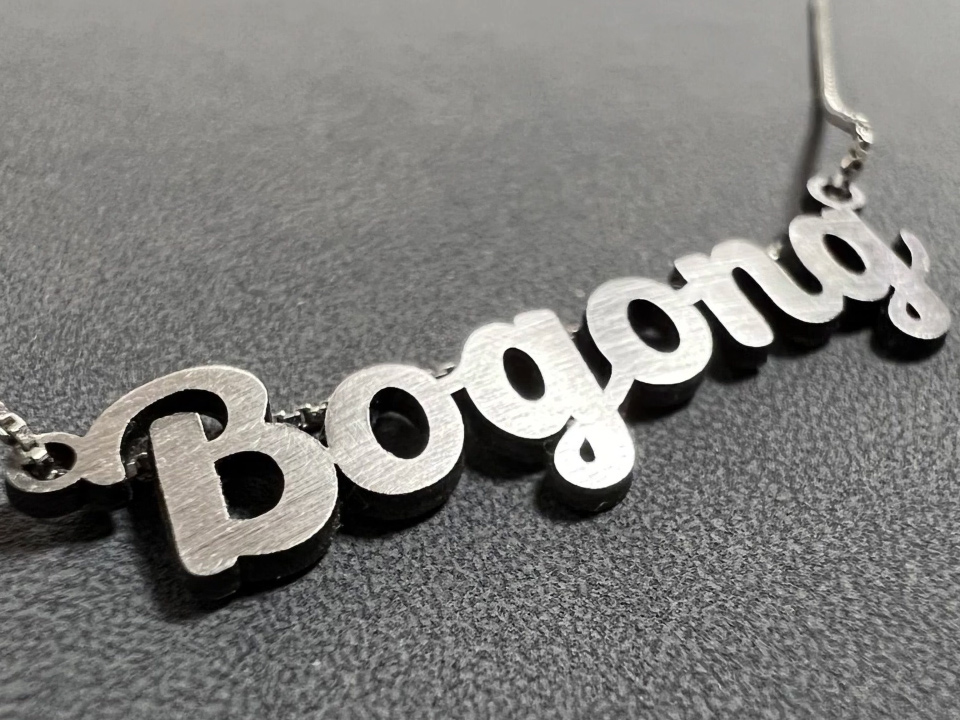
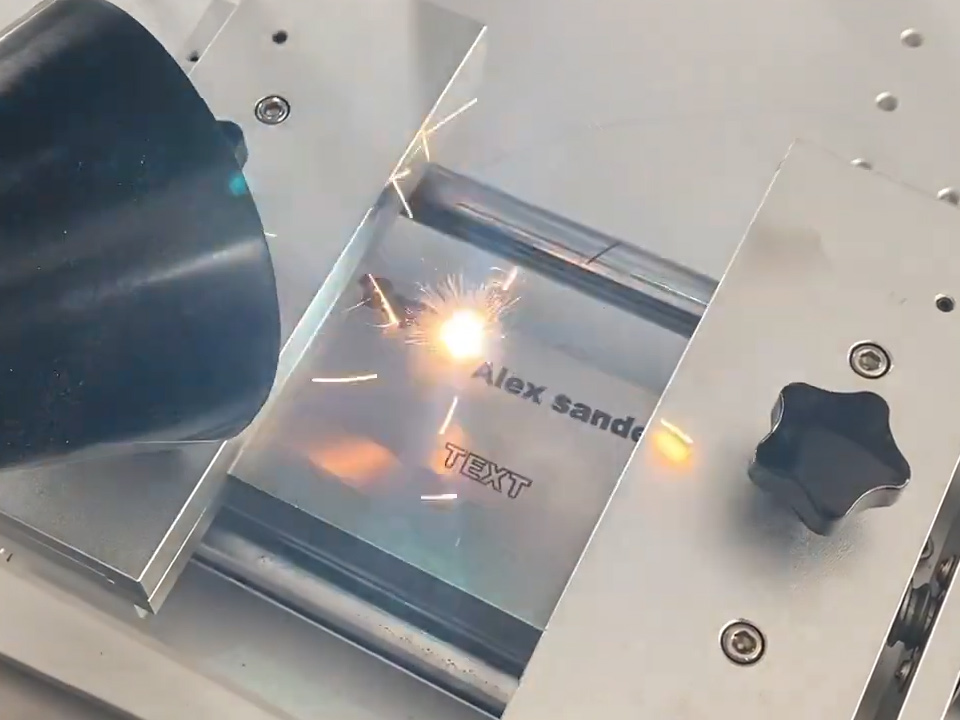
The better operators I’ve watched don’t obsess over the cutter in isolation. They think in production cells—cutting, cleaning, marking, traceability, handling, pack-out, all of it. That’s where efficiency compounds. So if residue is hurting downstream weld quality or prep time, a pulse laser cleaning machine can make more sense than adding another pair of gloves to the station. If serialized parts and traceability are a requirement, an all-in-one fiber laser marking machine or mini cabinet laser marking machine fits naturally into the workflow. And if you’ve got smaller, high-detail metal jobs in the mix, a fiber laser engraving and cutting machine for metal jewelry shows just how far focused fiber systems can go when precision—not brute-force sheet throughput—is the actual goal.
That’s real-world factory thinking.
Not glamorous. Effective.
The numbers buyers should force vendors to show
Peak power is a headline, not a business model
This part gets skipped a lot.
If I were buying a system tomorrow, I wouldn’t start by asking for the highest wattage. I’d ask for ugly data. Real data. The kind vendors don’t love unless they know their machine is actually sorted.
Ask for:
- pierce time by material and thickness
- stable throughput per shift, not just demo speed
- assist-gas consumption
- edge quality at production settings
- scrap rate under real nesting conditions
- idle-state draw
- downtime frequency
- operator ramp-up time
Because here’s the thing—buyers still get hypnotized by top-line machine specs, then act shocked when the shop floor doesn’t magically become disciplined. That’s not a machine failure. That’s a buying failure.
And the wider market doesn’t exactly reward sloppy capital decisions. Reuters reported in 2024 that North American robot orders fell sharply in 2023 as high interest rates and weaker economic conditions cooled spending. In other words: factories don’t get endless chances to buy the wrong thing and call it strategy.
Best fiber laser for sheet metal fabrication? Usually the wrong question.
People always want “best.”
I get it. But best fiber laser for sheet metal fabrication is usually a lazy shortcut. Best for what—1 mm stainless enclosures, 6 mm mild steel brackets, serialized electronics housings, mixed aluminum work, short-run custom jobs, high-volume nesting? Same phrase. Totally different answer.
From my experience, the smarter question is: which setup gives me the cleanest economics on my actual part mix? That’s a less glamorous question, but it’s the one adults in manufacturing should be asking. If your workflow leans into marking, fine-detail metal work, or mixed production demands, even something like a 50W split fiber laser engraving machine can make sense as part of the wider system. And yes, a CO2 laser marking machine still has its lane when the application isn’t metal-focused. Smart shops don’t marry one tool. They build a stack.
That’s the difference.
The quiet advantage nobody talks about enough
Less drama.
Seriously—that’s one of the best things a modern fiber setup can give a shop when it’s implemented well. Less fiddling. Less weird inconsistency between shifts. Less operator improvisation. More repeatable output. And repeatability, while boring as hell to talk about, is what keeps production calm enough to make money.
I frankly believe a lot of shops chase technology because they want the identity of being advanced, not the discipline of actually running an advanced process. Big mistake. A fiber system won’t rescue sloppy scheduling, weak nesting, or careless handoff between stations. It’ll just make those flaws easier to see.
Which is useful.
And uncomfortable.
FAQs
What is fiber laser cutting in metal fabrication?
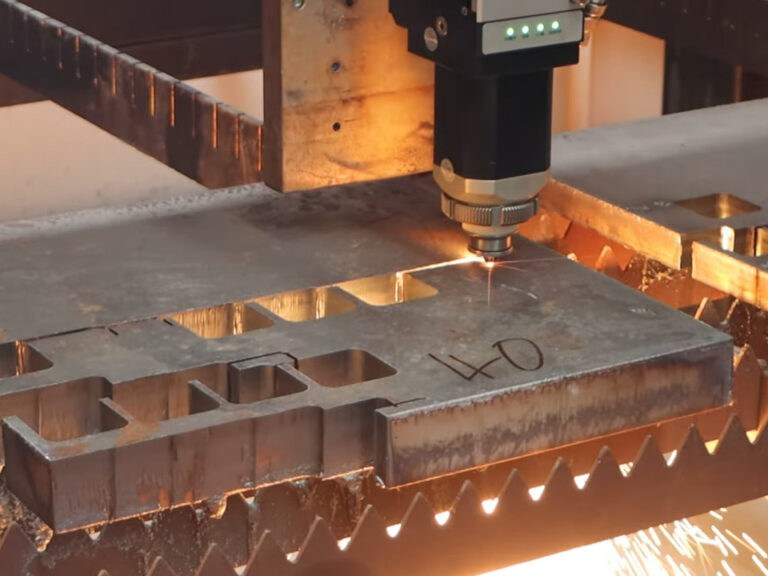
Fiber laser cutting is a metal-processing method that uses a fiber-delivered laser beam and assist gas—usually nitrogen or oxygen—to melt or vaporize metal with high precision, high speed on many common alloys, and relatively strong electrical efficiency compared with older laser-based fabrication methods.
In shop terms, it’s one of the cleaner ways to cut stainless, carbon steel, aluminum, and similar metals without building your whole process around heavy secondary cleanup.
How do fiber lasers improve metal fabrication efficiency?
Fiber lasers improve metal fabrication efficiency by reducing wasted motion across cutting, handling, and secondary finishing while also offering strong throughput on many metal jobs, lower active energy demand in many setups, and better parameter control over edge quality, taper, and dimensional consistency.
Usually, that means less cleanup, less drift, and fewer expensive surprises after the cut.
Is fiber laser better than CO2 laser for metal cutting?
Fiber laser is generally the better fit for many modern metal-cutting applications because it tends to deliver stronger productivity on common metals, better handling of many reflective materials, and lower operating energy demand in a lot of production environments, though CO2 still has valid uses in some specialized or mixed-material cases.
So no, CO2 isn’t “dead.” But for a metal-heavy shop, fiber is usually the more sensible default.
What metrics should shops track after buying a fiber laser?
Shops should track throughput per shift, assist-gas consumption, scrap rate, edge quality, energy per job, idle-state losses, downtime, and secondary-finishing hours because machine speed alone does not tell you whether the system is improving margin or simply moving the bottleneck to the next station.
If those numbers stay ugly, the investment isn’t working—no matter how pretty the brochure looked.
Your next move
If you’re seriously evaluating sheet metal fabrication with fiber laser, don’t let a vendor entertain you. Make them prove the economics on your actual work.
Send them your part mix. Ask for sample cuts using your materials. Compare nitrogen and oxygen assumptions. Look at edge condition after bending or welding—not just right off the table. And think like a production manager, not a spectator: can this machine work cleanly with your marking, cleaning, and part-identification flow using tools like a pulse laser cleaning machine or an all-in-one fiber laser marking machine?


Hot Click
Contact Us
Application
©Copyright [bogonglaser.com]. BOGONG Laser Machine Supplier All Rights Reserved.