-
Shunhua Road, Jinan City, Shandong

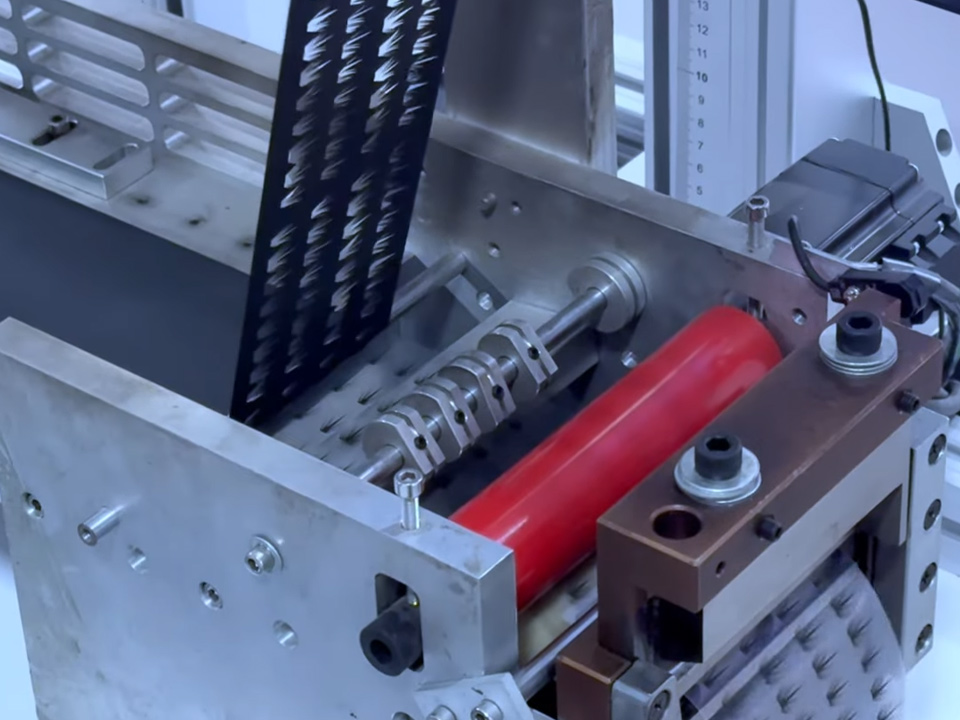
Laser Cutting in Automotive Parts Production
Laser cutting in automotive parts production is not a magic fix. It is a speed, flexibility, and quality weapon when the plant knows where to use it, what material it is cutting, and how to control burr, heat input, edge quality, and downstream forming risk.

The old die-first mindset is cracking
Plants feel pressure.
And I don’t mean the vague, PowerPoint kind of pressure that executives like to wave around in quarterly reviews; I mean the real kind, the shop-floor kind, where program changes show up late, capacity gets squeezed, material costs refuse to behave, and every bad assumption turns into scrap, overtime, or a very awkward customer call. That’s the pressure. According to the IEA’s 2024 Global EV Outlook and its executive summary.
Seventeen million. Roughly.
That number matters because when the IEA says electric car sales could hit about 17 million in 2024, or more than one in five cars sold worldwide, we’re not talking about a neat headline for analysts. We’re talking about more battery enclosures, more mixed-material structures, more lightweighting headaches, more variant chaos, and less tolerance for tooling that takes forever to change when engineering decides—again—to move a hole, trim an edge, or revise a bracket.
I frankly believe that’s where most people miss the point with laser cutting automotive parts. They still frame it like a cutting method. A process box. A line item. But that’s not the real fight. The real fight is flexibility under pressure, and whether your plant can absorb change without setting money on fire.
That’s the whole game.
And if you want public proof that this isn’t just shop gossip, look at laser blanking for automotive structural components. Fraunhofer ILT didn’t position it like some cute lab trick. They tied it directly to automotive sheet structures, and they openly stressed the savings from avoiding dedicated tooling, tool storage, maintenance, and die-change downtime. Which is exactly where the pain lives, by the way.
Where laser cutting automotive parts actually earns its keep
Structural sheet metal, prototype loops, and those ugly late-stage CAD surprises
But, let’s be honest—nobody in automotive gets to live in a stable world for very long.
If you’re making brackets, seat structures, reinforcements, cross members, battery enclosure parts, mounting plates, shields, or other body-adjacent components, sheet metal laser cutting for car parts starts paying for itself the moment the design team changes geometry after everyone pretended the release was final. We’ve all seen that movie. The CAD gets “frozen.” Then it melts. Then the supplier eats the panic.
That’s why laser cutting in automotive manufacturing keeps climbing the priority list. Not because it sounds advanced. Not because sales reps say “precision” thirty times. Because it lets you cut from digital files without waiting on hard tooling just to learn whether the part even behaves properly in the real world.
Useful, yes.
And here’s the ugly truth: for prototype and pre-production work, that speed is often worth more than a pretty per-piece number on paper. A cheap part that arrives too late to fix the design isn’t cheap. It’s just a delayed mistake.
Fraunhofer’s 2024 work on automotive-focused laser blanking says the quiet part out loud. Tool-less flexibility isn’t some side benefit anymore. It’s part of the production model. Fraunhofer’s automotive-oriented laser blanking work makes that painfully clear.
And then there’s tubes. People outside the trade underestimate tube-laser work all the time. Big mistake. Exhaust sections, seat frames, chassis supports, cross tubes, battery support structures—once you start looking at those part families, the case gets stronger. MIT’s 2024 thesis on tube laser technology points to meaningful cost advantages when tube-laser processing is deployed across broader product families.
That’s not theory. That’s manufacturing math.
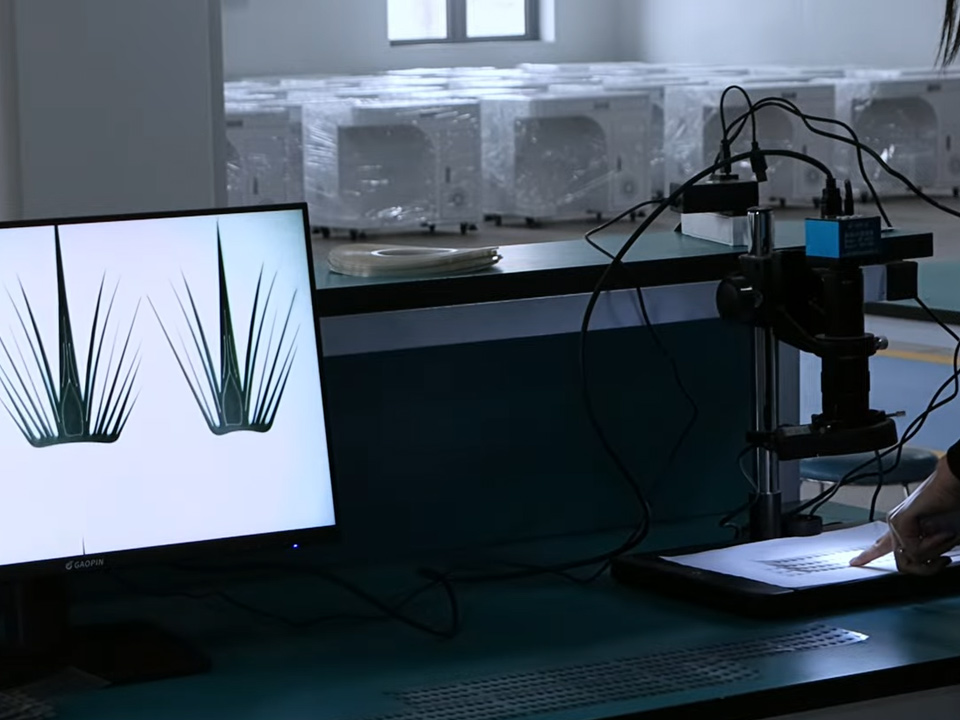
EV production changed the material story
Yet the cutting method is only half the story. Material mix changed everything.
Reuters has already highlighted aluminum’s role in EV manufacturing because of lightweighting pressure and the push for range gains in electric vehicles. That part isn’t news anymore—but it is still operationally important, because once aluminum volumes rise and reflective metals become more common in a program mix, fiber laser cutting automotive parts stops being a nice option and starts looking like the practical default for a lot of metal work.
So what’s the best laser cutting method for automotive components?
Most of the time, fiber. Usually. Especially for thin-to-medium metal sections where throughput, repeatability, and reflective metal handling all matter at once. That’s also why a page like fiber laser engraving and cutting for metal parts still fits here naturally—the end-market photo may be different, but the fiber-laser logic around metal processing still belongs in the same conversation.
Precision is expensive when you fake it
Precision laser cutting automotive components is not just “nice edges”
A clean edge looks good in a photo. That’s the problem.
From my experience, this is where weak suppliers expose themselves. They’ll show a shiny sample. Maybe a tidy edge. Maybe a quick tolerance claim. But ask what happens after forming—or after welding—or after surface treatment—and the room gets quiet fast.
Because the cut edge is not the whole part.
Older university work already showed that laser-cut edge quality can affect fatigue behavior in high-strength steels. That matters a lot more in automotive than many marketers admit. So yes, parameter discipline matters. Beam delivery matters. Pierce strategy matters. Assist gas matters. Nozzle condition matters. This university research on cut-edge fatigue behavior is not new, but the lesson hasn’t aged at all.
And once quality drifts in automotive, the consequences scale fast. NHTSA’s recall materials show just how ugly system-level failure can get: since 1966, the agency has overseen recalls involving more than 390 million vehicles, plus tens of millions of tires and equipment items, and its 2024 annual reporting shows how active the recall environment still is. I’m not saying every recall begins with a cut edge—obviously not—but I am saying this: process sloppiness becomes very expensive once it leaves the plant. NHTSA’s recall overview and its 2024 annual recall report are a useful reality check.
No romance there.
And before any cutting even starts, surface condition can quietly sabotage the whole line. Residual oil, oxide scale, contamination—those things don’t always scream at you early, but they show up later in weld stability, coating quality, or part appearance. That’s where pulse laser cleaning for metal surface preparation fits very naturally into an automotive workflow. Not flashy. Still smart.
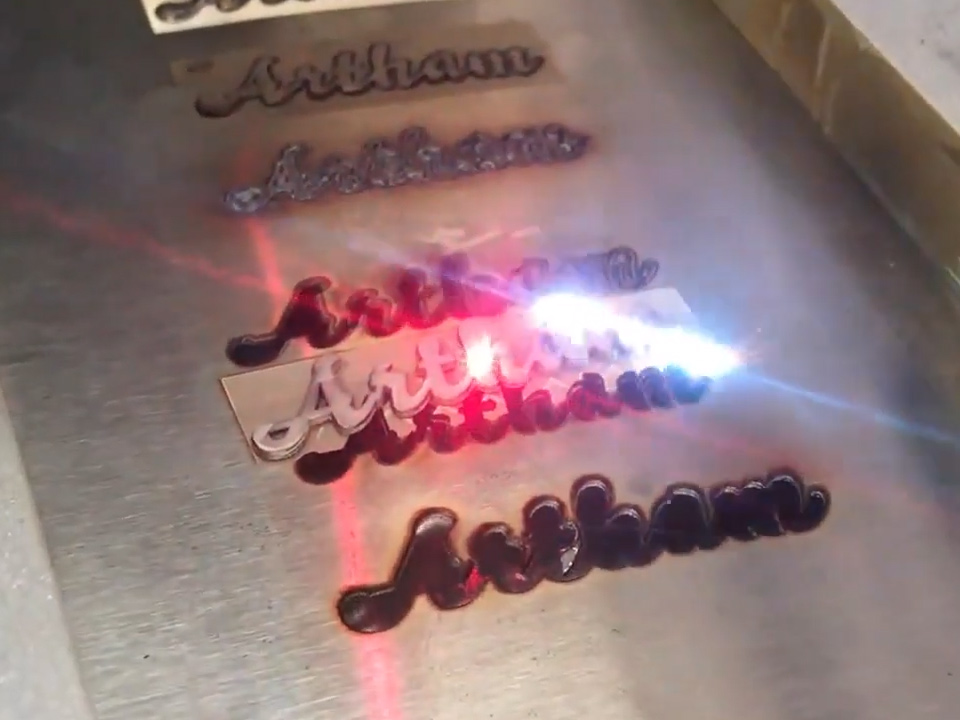
Energy use is the hidden argument nobody sells well
However, I think the industry does a terrible job talking honestly about energy.
Laser cutting looks modern, so people assume efficiency. That’s lazy thinking. A laser cell can burn plenty of electricity while producing surprisingly little value if the nesting is bad, the standby logic is poor, the scheduling is stupid, or the cutting program wastes time in non-productive states.
That stuff adds up.
A 2024 peer-reviewed case study on industrial laser cutting found that the actual processing state accounted for 55% of total impact on single sheets and 71% in batch processing. That’s a huge clue. It tells you the machine itself is only part of the story; the production strategy around the machine matters just as much, maybe more. The 2024 case study in the International Journal of Precision Engineering and Manufacturing-Green Technology is worth reading if you want something more rigorous than marketing slides.
So, does laser cutting improve automotive parts production?
Yes—when the line is run properly. When programming, nesting, nozzle management, assist gas selection, maintenance, pierce logic, and feedback loops are treated like one system. Otherwise, you just bought a very expensive beam source and gave your sales team nicer photos.
Fiber vs traditional tooling: where the numbers get uncomfortable
A comparison suppliers should stop dodging
And this is where the brochure language usually falls apart.
Because the real question is not “laser or stamping?” That’s too simplistic. The real question is uglier and more useful: at this annual volume, with this geometry, on this alloy, under this launch schedule, and with this much revision risk, which process gives you the lower total pain?
That’s the comparison that matters.
| Production Factor | Fiber Laser Cutting Automotive Parts | Conventional Hard Tooling / Blanking |
|---|---|---|
| Design change response | Fast; digital file updates can move immediately | Slow; tooling revisions cost time and money |
| Upfront cost | Lower initial tooling burden | High die/tool investment |
| Best fit volume | Prototype, pre-production, mixed-model, lower-to-mid volumes | Stable, high-volume runs |
| Edge quality control | Strong, but parameter-sensitive | Stable once process is locked |
| Material flexibility | High across many sheet-metal applications | Lower flexibility after tool commitment |
| Downtime risk | Less tool-change downtime | Tool wear/changeover adds downtime |
| Economic risk | Lower for uncertain programs | Lower only when geometry and volume are stable |
Fraunhofer’s 2024 laser blanking work basically backs up every line of that table. They explicitly point to savings tied to eliminated tooling, reduced maintenance burden, less tool storage, and fewer changeover interruptions in automotive sheet-metal work. Fraunhofer’s 2024 laser blanking work is one of the cleaner public references on this.
Still—let’s not oversell it.
If a part is frozen, stable, mature, and running at serious scale, conventional tooling can absolutely beat laser on unit economics. That’s not controversial. That’s just manufacturing reality. Laser wins when uncertainty is high, part families vary, launch timing is tight, or geometry won’t stop moving.
Which happens a lot.
The shops that win think beyond cutting
Traceability, marking, cleaning, and mixed-process lines
So here’s another hard truth: the better suppliers don’t think in isolated machines. They think in process chains.
A part gets cut. Then maybe it gets cleaned. Then marked. Then inspected. Then bent. Then welded. Then coated. Then scanned into some traceability workflow that nobody cared about enough five years ago and suddenly everyone cares about now. That’s why the conversation around laser cutting automotive parts can’t stop at the cut edge.
Traceability matters. A lot.
If your line can cut accurately but can’t support reliable marking or part identification, you’re leaving a hole in the system. Which is why all-in-one fiber laser marking for traceability workflows makes sense here. Different step, same production logic.
And automotive lines don’t only deal with bare structural metals. Interior parts, specialty coated surfaces, polymer-based components, labels, housings—those need different marking behavior, different contrast performance, different thermal windows. That’s where CO2 laser marking for non-metal materials and 3D UV laser marking for delicate or complex surfaces fit. No, they’re not structural cutting systems. But yes, they belong in the wider manufacturing discussion because real factories rarely live in one material category.
That’s how lines actually work.
What buyers should ask before approving an automotive parts laser cutting supplier
The questions that separate real capacity from brochure theater
But, honestly, most buyers still ask the wrong first questions.
They ask for a quote. They ask for lead time. They ask for a machine list. Fine. Useful, but shallow.
The better questions are nastier.
Ask what assist gas they plan to use on your exact alloy and thickness. Ask how they manage burr targets. Ask for cut-edge photos at your part thickness—not some random sample from a prettier job. Ask what happens to the edge before welding or bending. Ask whether the geometry has already been validated for downstream forming. Ask how they deal with cut taper, heat input, flatness drift, and nozzle wear.
Then ask this one.
What happens when the CAD changes in week seven?
That question tells you almost everything. Weak suppliers start giving vague comfort-language. Strong suppliers start talking about revised nesting, updated cut libraries, sample loops, version control, nozzle maintenance, inspection records, and how quickly they can push a changed file through without turning the schedule into a dumpster fire.
That’s the difference.
FAQs
How laser cutting improves automotive parts production?
Laser cutting improves automotive parts production by reducing tooling exposure, accelerating design validation, supporting rapid geometry changes, and enabling tighter control over cut consistency when programming, nesting, assist gas, and maintenance are handled properly across the production process. The biggest gains usually show up in prototype loops, pre-production changes, mixed-model manufacturing, and programs where waiting for dedicated tooling would slow learning or raise financial risk. Fraunhofer’s automotive-oriented laser blanking work and the 2024 case study in the International Journal of Precision Engineering and Manufacturing-Green Technology both support that view.
What is the best laser cutting method for automotive components?
The best laser cutting method for automotive components is usually fiber laser cutting for metal parts because it offers strong cutting performance across many steels and aluminum applications, while also supporting fast program changes, tight process control, and reliable handling of many common automotive sheet and component geometries. That said, the right choice still depends on alloy, thickness, coating, reflectivity, downstream forming needs, and whether the operation involves cutting, marking, or surface treatment rather than just one standalone process. This Reuters piece on aluminum in EVs helps frame why fiber systems matter more now.
Is laser cutting better than stamping for car parts?
Laser cutting is better than stamping for car parts when design changes are common, annual volumes are lower, launch timing is tight, or hard tooling would create too much financial and scheduling risk, while stamping still remains stronger for very stable, high-volume parts with locked geometry and proven process windows. So the honest answer is that they solve different factory problems: laser is mainly a flexibility and speed tool, while stamping is mainly a scale and per-piece economics tool once the program is mature enough. Fraunhofer’s 2024 laser blanking work supports that tradeoff directly.
Your Next Steps
Don’t start with the quote.
Start with the part data. Send the drawing. Send the material grade. Send the thickness, tolerance band, target annual volume, and what happens after cutting—bending, welding, coating, visible assembly, whatever the case is. Then ask the supplier to tell you, plainly, whether laser is the right fit for that part family or whether conventional tooling will beat it once the volume stabilizes.
That’s the move.
Because serious buyers don’t save money by chasing the lowest first number in an inbox. They save money by forcing the supplier to prove they actually understand the manufacturing logic behind the part—and by spotting, early, whether they’re talking to a real production partner or just another brochure in human form.


Hot Click
Contact Us
Application
©Copyright [bogonglaser.com]. BOGONG Laser Machine Supplier All Rights Reserved.