-
Shunhua Road, Jinan City, Shandong

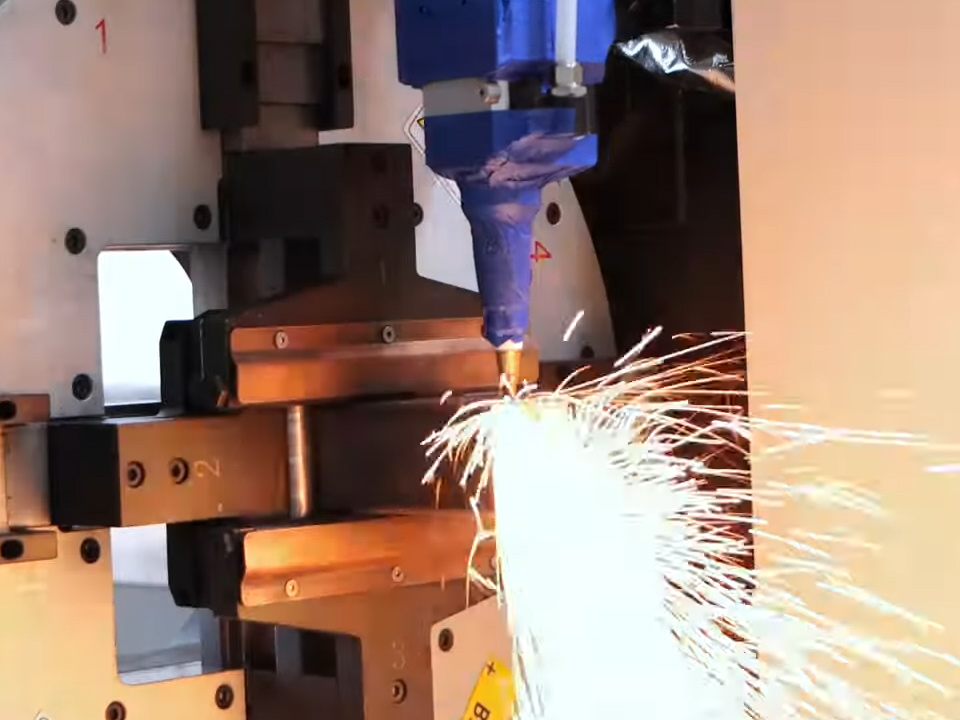
Best Laser Cutting Solutions for Data Center Hardware Manufacturing
Data center hardware manufacturing is no longer a sleepy enclosure business. AI server demand, rising rack density, and brutal throughput pressure are forcing manufacturers to treat laser cutting as a process discipline, not a machine purchase. I think too many buyers still shop by wattage alone. That is a mistake.

The data center boom is now a metalworking problem
Demand is real.
But let’s stop pretending this is still just an “IT infrastructure” story, because once North American data center capacity under construction jumps roughly 70% year over year to a record 3.9 gigawatts, and Foxconn starts talking about AI server revenue growing more than 40% in 2024, the pressure lands somewhere very physical: on chassis panels, rack brackets, airflow doors, cable trays, perforated steel, and the production teams expected to cut all of it faster than last quarter. That’s the part people dodge.
It gets physical.
And, honestly, I think a lot of buyers still underestimate what that means inside a fab shop. The 2024 United States Data Center Energy Usage Report from Lawrence Berkeley National Laboratory says U.S. data centers hit 176 TWh in 2023, which was 4.4% of total U.S. electricity use, and it projects a 2028 range of around 325 to 580 TWh. Bigger power draw usually means denser compute, tighter airflow design, nastier thermal constraints, and less tolerance for sloppy fabrication on server enclosures. That’s not theory. That’s the shop floor talking back.
So what changed?
AI changed the pacing. Utilities saw it. Fabricators should’ve seen it too. The IEA’s analysis of energy demand from AI and a Reuters report on utility forecasts point in the same direction: AI workloads are pushing a fresh load wave into the grid, which means more hardware, faster buildouts, and a nastier delivery calendar for anyone cutting sheet metal for data centers. I frankly believe this is where mediocre suppliers get smoked—not in the showroom, but in lead times, rework, and quiet scrap nobody wants to log.
Most laser cutting solutions fail for one boring reason
They buy wattage.
Here’s the ugly truth: the best laser cutting solutions for data center hardware manufacturing are almost never picked by the people who understand process windows, and that’s why so many capex decisions age badly after six months, when the machine’s already installed, the shiny demo parts are forgotten, and the production crew is left babysitting nozzle standoff, gas pressure drift, pierce timing, and edge trash on mixed-thickness jobs. I’ve seen it. More than once.
The brochure lies.
Or, fine, maybe “lies” is too harsh. But brochures absolutely flatten reality. A 2024 study in Metals on 4 mm and 6 mm S355JR steel did not tell a nice little story where more power fixes everything. It showed trade-offs. Real ones. Raise power from 2.8 kW to 4.0 kW on 4 mm stock and average roughness drops by 0.653 µm—good. But increase gas pressure and roughness can move the wrong way. On 6 mm material, gas pressure at 4 bar pushed kerf taper to 0.337 mm. That’s not a rounding error if you’re building hardware that has to bend, align, and assemble cleanly.
And then the thermal hit shows up.
Same paper. Same headache. Heat-affected-zone depth sat around 26.281 to 39.835 µm for 4 mm samples, but jumped to 155.441 to 230.779 µm for 6 mm. The recommended settings weren’t some macho “full-send” recipe either: 3.0 kW, 2900 mm/min, and 0.4 bar oxygen for 4 mm; 3.9 kW, 3240 mm/min, and 0.55 bar for 6 mm. That’s the point. Good laser cutting for server chassis and thicker support parts doesn’t come from ego. It comes from staying inside a sane process window.
And here’s another thing.
A 2024 energy case study published by Springer found that the processing state accounted for 55% of overall energy performance for single sheets and 71% when work was batch processed. Read that again. Not spindle mythology. Not sales fluff. Processing state. Which means nesting, batching, loading logic, idle time, and shop discipline are doing a huge share of the work. If your schedule is chaos, your laser cell will look “underperforming” even when the machine itself is fine. That’s a brutal truth, but it’s still truth.
What actually works by part family
I wouldn’t run server chassis parts and heavier rack hardware under the same mental model. That’s how people burn time and pretend it’s optimization.
| Part family | Typical job | What matters most | Common failure | Better answer |
|---|---|---|---|---|
| Server chassis, lids, airflow panels, PCI brackets | Thin, high-feature sheet with vents and tight hole patterns | Edge cleanliness, hole repeatability, low burr, minimal distortion | Buying excessive power and then chasing stability with operator tricks | Moderate-to-high power fiber setup with disciplined gas control and stable thin-sheet parameters |
| Rack rails, mounting brackets, structural door parts | Thicker steel, fewer cosmetics, more structural consequence | Kerf taper, dimensional stability, HAZ control, downstream forming behavior | Treating 6 mm work like 1.5 mm work | Separate process window for thicker stock, slower but tighter settings, validation before scaling |
| Mixed production for data center hardware manufacturing | Enclosures plus brackets plus support hardware | Batching, nesting, changeover speed, operator discipline | Focusing on raw cut speed only | Production planning around material family, thickness, and downstream process flow |
That table looks simple. The work isn’t. Thin-sheet server enclosure jobs care about burr, chatter, vent geometry, hole consistency, and how the cut behaves before the press brake ever touches it. Thicker rack parts? Different animal. More taper risk. Bigger HAZ. More chance of ugly fit-up later. And mixed production—well, mixed production is where weak planning goes to die.
Server chassis manufacturing is not the same as rack manufacturing
Thin metal lies.
It looks easy to outsiders because the sheets are thinner and the cut time per part can be fast, but anyone who has actually run high-feature chassis blanks knows the pain: vent arrays, fan holes, slot packs, tight datum relationships, bend-sensitive edges, cosmetic faces, EMI fit requirements, and assembly teams that instantly notice when the burr profile isn’t behaving. This is why I’m suspicious whenever someone talks about laser cutting for server chassis like it’s generic sheet work. It’s not. It’s precision production in disguise.
Thicker parts punish laziness.
Rack components, rails, door frames, and load-bearing brackets don’t care about your marketing copy. They care about taper, stability, heat, and whether the next process hates what you just sent downstream. As the Metals study showed, kerf taper rises with thickness, and the HAZ expands hard when you move into 6 mm work. So if a supplier is quoting both thin server enclosure panels and heavier support hardware with one universal “optimized setting,” I’d be very careful. That sounds efficient right up until it isn’t.
And demand isn’t easing.
That’s the real kicker. The record construction activity reported by Reuters from CBRE data, the Lawrence Berkeley energy report, and Foxconn’s 2024 AI server growth comments reported by Reuters all push the same conclusion: volume pressure is rising while spec discipline is getting tighter. Bad combo. Especially for shops still relying on tribal knowledge, “that one operator’s settings,” and optimism.
A cutting cell without cleaning and prep is only half a line
This part gets skipped.
But from my experience, the cutting head isn’t where the pain ends—it’s where the next bottleneck starts. Oxide. Spatter. residue. Surface contamination. Coating prep. Weld-prep touchups. Fixture cleanup. Shops love talking about IPG, beam quality, and cut speed, then quietly lose margin in all the junk that happens after the skeleton drops. That’s why I don’t love the “machine-only” mindset in sheet metal fabrication for data centers.
A line is a line.
If the workflow includes oxidation cleanup, coating prep, or fixture maintenance between batches, a portable laser cleaning setup for shop-floor flexibility can make a lot more operational sense than dragging parts into some improvised manual cleanup loop that slows everybody down and irritates the coating team.
And finer cleanup matters too.
For more sensitive hardware, localized oxide removal, or cleanup after precision laser cutting for server enclosures, a 200W/300W pulse laser cleaning machine with Raycus, MAX, or JPT source options fits the cell logic better than brute sanding or random abrasive touch-up. If the production environment is rougher or the contamination load is heavier, a CW laser cleaning machine for industrial metal surface treatment deserves a look as part of the total process—not as an afterthought somebody tries to justify after defects show up.
You can extend that thinking even further.
If the line also includes repair or join-up work on small metal hardware, tabs, or precision components around the fab cell, a 150W jewelry laser welding machine shows the same broader principle: don’t think in isolated boxes, think in process islands. Different tool, same operational mentality.
That’s how adults buy equipment.
Safety is where the sales pitch usually gets thin
This is not sexy.
And that’s exactly why people ignore it. OSHA’s hexavalent chromium guidance is not subtle: workers doing hot work on stainless steel and high-chrome alloys can face Cr(VI) exposure, OSHA sets the action level at 2.5 µg/m3 and the 8-hour permissible exposure limit at 5 µg/m3. So when I hear someone pitching laser cutting solutions without saying much about extraction, filtration, or exposure control, my trust drops fast. Fast.
Because here’s the ugly truth.
A shop can have good parts and bad plant discipline at the same time. That happens all the time. Stainless jobs get quoted because margins look decent, then fume extraction is handled like a side issue, and suddenly management acts shocked when compliance, worker safety, and actual operating conditions collide. I don’t think buyers should tolerate that kind of vagueness anymore.
The hard truth about choosing laser cutting for data center components
Most buyers still ask the wrong first question.
They ask, “How many kilowatts?” I’d ask something else: what mix of thin chassis blanks, perforated doors, rack brackets, support members, and secondary cleanup steps are you trying to survive over the next 24 months—and what does your actual throughput look like when changeovers, nest quality, and post-cut handling are included? That question is uglier. It’s also better.
Because no, the best laser cutting solutions aren’t always the most aggressive ones.
I frankly believe the winners in laser cutting in hardware manufacturing are usually the boringly disciplined shops: validated settings by thickness, sane gas strategy, strong nesting, operators who know when a nozzle is going sideways before quality data screams, and enough prep/cleaning support to keep the whole cell from getting sticky. That doesn’t sound glamorous. Good. Glamour doesn’t help when a server door warps.
FAQs
What are the best laser cutting solutions for data center hardware manufacturing?
The best laser cutting solutions for data center hardware manufacturing are production systems built around stable process windows for thin server-chassis parts and separate validated settings for thicker rack components, supported by smart nesting, fume control, and downstream cleaning so throughput, edge quality, and dimensional repeatability stay predictable at volume. That’s the short version. The longer version is harsher: if a shop can’t separate thin-sheet enclosure logic from thicker structural logic, it’s already behind.
Why is laser cutting for server chassis different from general sheet metal work?
Laser cutting for server chassis is different because it combines thin-gauge sheet, dense feature patterns, airflow geometry, and strict assembly-fit expectations, which means burrs, distortion, and repeatability problems show up faster than they do on simpler industrial sheet metal parts. That’s why chassis work chews up lazy process control. One ugly edge on a vented panel can ripple into bending, assembly, or cosmetic rejection faster than people expect.
How should manufacturers choose laser cutting for data center components?
Manufacturers should choose laser cutting for data center components by matching the process to part family, material thickness, thermal sensitivity, and downstream operations instead of buying by wattage alone, because scheduling, nesting, gas discipline, and cleanup workflow often decide output more than headline machine speed does. My advice? Audit the ugly stuff first—changeover time, scrap behavior, and downstream headaches. Those numbers tell the truth faster than a demo part does.
Is fume control a serious issue in precision laser cutting for server enclosures?
Fume control in precision laser cutting for server enclosures is a serious compliance and health issue, especially when stainless steel or high-chrome materials are involved, because OSHA identifies Cr(VI) exposure risk in hot work and sets both an action level and a legal exposure limit that shops must respect. And no, this isn’t some box-checking exercise. If a vendor can’t speak clearly about extraction and filtration, I’d treat that as a warning sign.
Your Next Step
If you’re buying or upgrading laser cutting solutions for data center hardware, don’t compare machines in a vacuum. Map the real part mix. Split thin enclosure work from thicker rack work. Test settings by thickness. Price the cleaning cell with the cutter—not after. And ask suppliers for numbers, not adjectives: gas pressure, kerf taper, HAZ depth, batch efficiency, exposure control, and rework rate.
That’s the real buying conversation.
If a vendor can’t handle that conversation comfortably, keep moving.


Hot Click
Contact Us
Application
©Copyright [bogonglaser.com]. BOGONG Laser Machine Supplier All Rights Reserved.