-
Шуньхуа Роуд, город Цзинань, Шаньдун

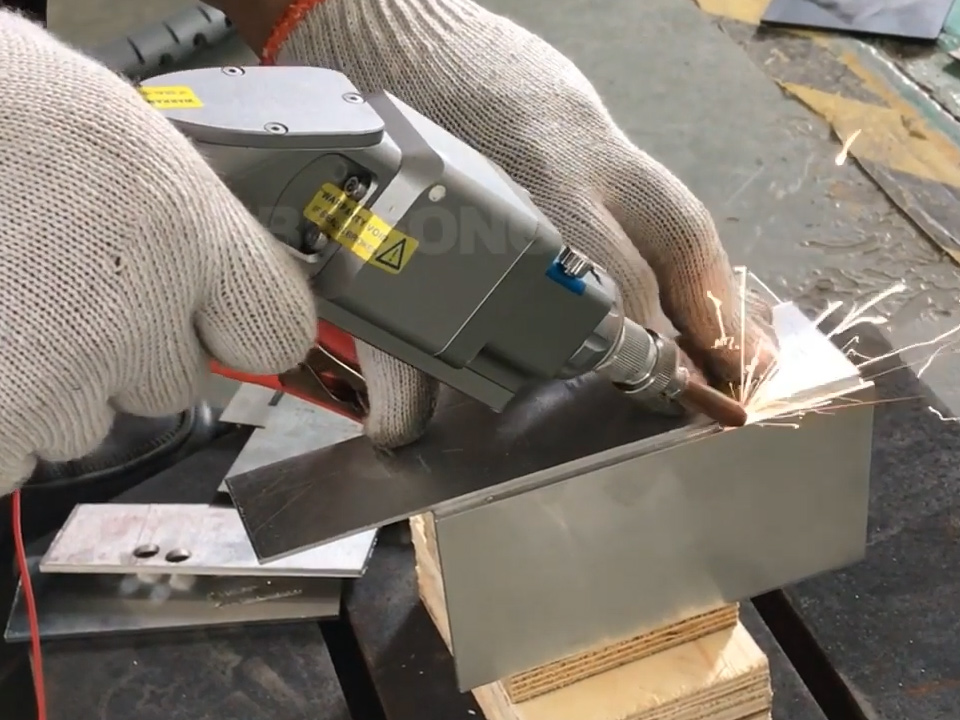
Can Handheld Laser Welders Replace TIG Welding in Production?
Can a handheld laser welder replace TIG welding in production? Here’s the hard truth on speed, cost, safety, and where TIG still wins.

Sometimes, yes.
But not in the clean, universal, sales-brochure way some machine dealers pitch it, because once you move from demo coupons to actual production—real operators, real fit-up problems, real shift pressure, real scrap costs—the question stops being “is laser newer?” and becomes “which process makes money on this exact joint with the fewest downstream problems?”
That’s the whole fight.
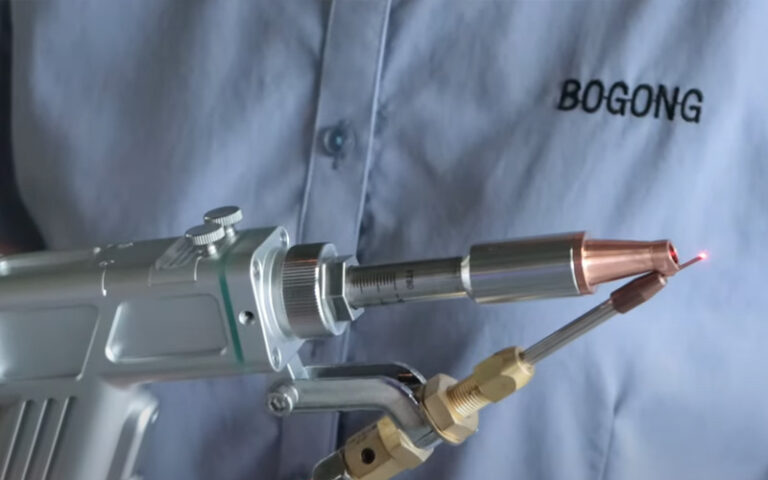
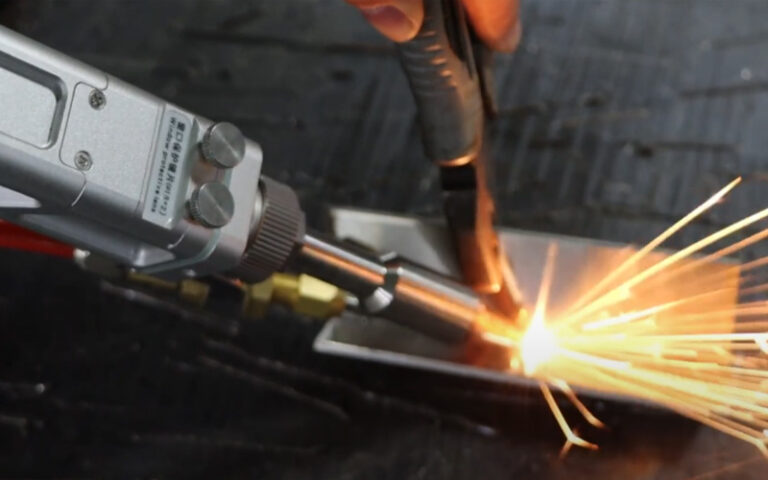
I’ll say it plainly: a ручной лазерный сварщик can replace TIG in a lot of thin-gauge stainless, mild steel, galvanized parts, cabinet work, sheet-metal assemblies, kitchen equipment, HVAC hardware, and cosmetic welds where heat input and finishing time are killing margin. But if your production floor lives on root-pass control, wide gap tolerance, odd repair work, thick-section buildup, aluminum inconsistency, or code-heavy procedures, TIG is not dead. Not even close.
And honestly, that’s where weak articles usually fail. They treat welding like a religion. It isn’t. It’s a manufacturing decision.
Here’s the ugly truth. Most buyers don’t switch because they fell in love with photons. They switch because labor is tight, output targets are rising, and rework is expensive. The U.S. Bureau of Labor Statistics counted 421,730 welders, cutters, solderers, and brazers in May 2023, with a mean annual wage of $52,640, which matters because any process that cuts training time, finishing time, or operator fatigue gets attention fast.
So, can handheld laser welders replace TIG welding in production?
My answer: they can replace TIG for selected production families, not for production as a whole.
That distinction matters more than the machine brochure.
If you’re still comparing processes at a surface level, start with this: best handheld laser welder gives you the buyer-facing overview, while air cooling handheld laser welding machine for sale is the more practical direction if you care about shop footprint, portability, and maintenance simplicity. And if your team wants multi-function flexibility rather than a single-purpose unit, 3 in 1 handheld laser welder is usually where the conversation shifts from welding theory to equipment utilization.
Now let’s get serious.
The strongest case for handheld laser welding in production is not just weld speed. It’s total cycle compression. Lower heat input often means less distortion. Less distortion means less straightening. Less straightening means less grinding, less polishing, fewer touch-ups, and less operator time wasted fixing damage the process created in the first place. Even a 2024 peer-reviewed study on robotic A-TIG versus multipass TIG showed how fast the economics can swing when heat input and pass count drop: the A-TIG setup cut welding cost and time by 80%, reduced angular distortion by 55%, and completed the weld in 2 minutes instead of 10 on the tested joint. That isn’t handheld laser data, no—but it proves the bigger point I keep making: shops don’t win by worshipping a process; they win by reducing passes, distortion, and finishing labor.
And then there’s the labor angle.
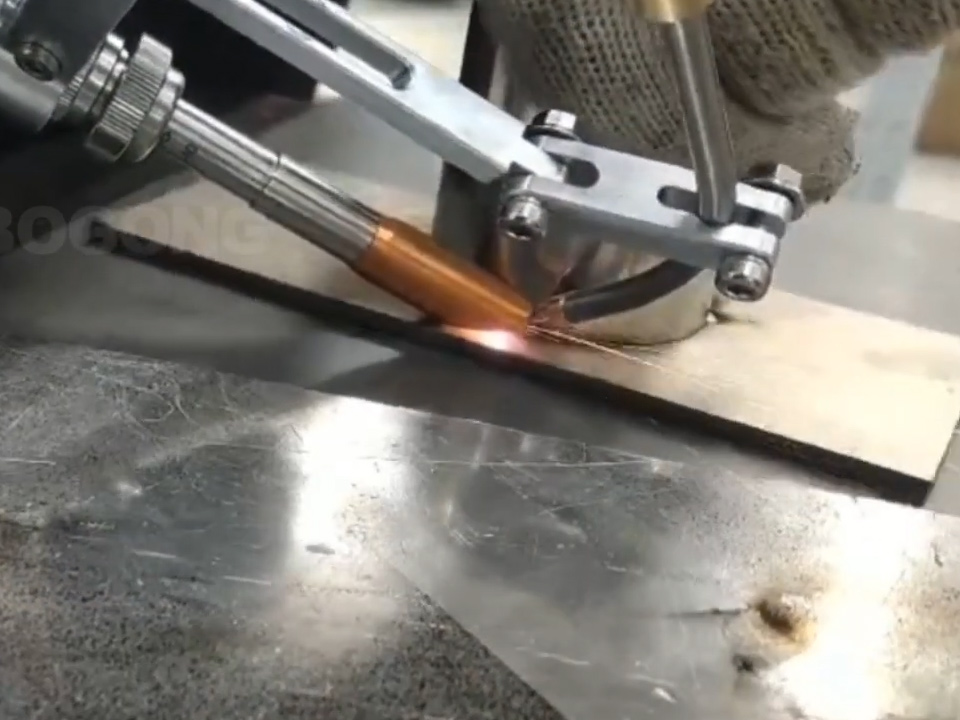
In March 2024, Reuters reported U.S. manufacturing PMI at 47.8 for February, with factory employment down to a seven-month low, which is exactly the kind of operating climate that makes easier-to-run, faster-output processes attractive to plant managers under pressure. When hiring is hard and throughput is soft, process simplification stops being optional.
That’s why the “handheld laser welder vs TIG welding” debate keeps getting framed the wrong way. People talk about arc quality, puddle feel, and machine specs. Fine. But production managers care about three uglier questions:
Can I train people faster? Can I reduce finishing labor? Can I keep quality stable on Monday afternoon when the good welder is off shift?
That’s the real interview.
Where a handheld laser welder really does beat TIG
If I were auditing a shop, I’d push hard toward laser on repeatable parts with thin-to-medium gauge material, decent fit-up, short seam lengths, cosmetic expectations, and too much post-weld cleanup. Stainless enclosures. Tool cabinets. Elevator trim. Food equipment housings. Decorative metalwork. Light frames. Sheet-metal boxes. Battery cabinets. Appliance panels. That stuff.
Why? Because TIG is often being used there as a very expensive bandage for jobs that mainly need low heat, visual consistency, and speed.
And yes, that hurts feelings.
TIG remains beautiful. It also remains slow.
A lot of buyers looking up laser welding vs TIG welding are really trying to solve a finishing problem disguised as a welding problem. If your team spends more time sanding blue heat marks and chasing warp than actually joining metal, your issue is not “welder skill.” Your issue is process mismatch.
Where TIG still holds the line
Now for the part some sellers don’t like hearing.
TIG still earns its keep when joint fit-up is messy, when material thickness varies too much, when the weld must bridge gaps that laser hates, when the job needs very fine filler control, or when you’re in repair, prototyping, low-volume custom work, or procedure-driven sectors where the process history and qualification path matter more than demo speed.
And let’s talk about that gap tolerance. This is where many first-time buyers get burned. A handheld laser system looks magical on clean coupons with tight prep. Then they put it in a real shop, feed it inconsistent parts, and suddenly the “faster than TIG” story gets swallowed by fixturing work, edge prep, reject rates, and operator hesitation.
So no, fiber laser welder vs TIG is not a morality play where one hero walks off with the crown. It’s a job-matching exercise.
The safety issue nobody should wave away
This part is not marketing fluff. It’s liability.
OSHA’s technical manual states that laser welding can generate hazardous fumes and vapors requiring adequate ventilation, warns that ultraviolet radiation from laser welding plasmas must be shielded, and notes that enclosures around Class IV beams can create fire risk if materials are exposed above 10 W/cm². In other words, if a shop buys a handheld laser welder because it wants “easy” welding but refuses to invest in guarding, PPE, beam control, and extraction, that shop is not modernizing. It’s just rearranging risk.
That’s why I’d never separate production-speed talk from safety infrastructure. If you’re moving toward laser, the discussion should naturally include laser protective fence. Not as an accessory. As part of the process cost.
Because one hard truth in this industry is simple: cheap safety planning becomes expensive after the first incident.
The production comparison that actually matters
| Factor | Ручной лазерный сварочный аппарат | TIG Welding |
|---|---|---|
| Best use case | Repeatable thin-to-medium gauge production parts | Precision work, variable joints, repair, procedure-heavy welding |
| Travel speed | Usually much faster on suitable joints | Slower, especially on long seams |
| Heat input | Lower | Higher |
| Distortion risk | Lower on many thin materials | Higher, especially over long runs |
| Post-weld finishing | Often less grinding and polishing | Often more cleanup |
| Gap tolerance | Less forgiving | More forgiving |
| Operator learning curve | Often easier to become productive fast | Usually longer to master well |
| Filler control | More limited in practical shop use | Excellent manual control |
| Flexibility on ugly real-world parts | Умеренный | Strong |
| Safety complexity | High beam-control demands | High fume/arc hazards, but more familiar to many shops |
That table looks simple. It isn’t.
Because the hidden variable is part family discipline. If your upstream cutting, bending, and fixturing are sloppy, laser may expose every weakness you’ve been hiding under TIG skill. If your parts are consistent, though, laser can feel almost unfair.
My blunt rule for choosing between laser and TIG
I use a rough shop-floor filter.
If the part is under roughly 3 mm to 4 mm, appears in batches, needs decent cosmetics, has consistent fit-up, and currently suffers from excessive finishing time, I start leaning laser. If the part comes in ugly, changes every week, demands delicate filler feeding, or lives in a code-sensitive environment, I lean TIG until proven otherwise.
That’s not dogma. That’s survival.
It’s also why I don’t like lazy search phrases like best handheld laser welder for metal fabrication unless the buyer also defines material type, joint form, thickness band, duty cycle, shielding gas setup, wire-feeding needs, and safety plan. “Best” without production context is just shopping theater.
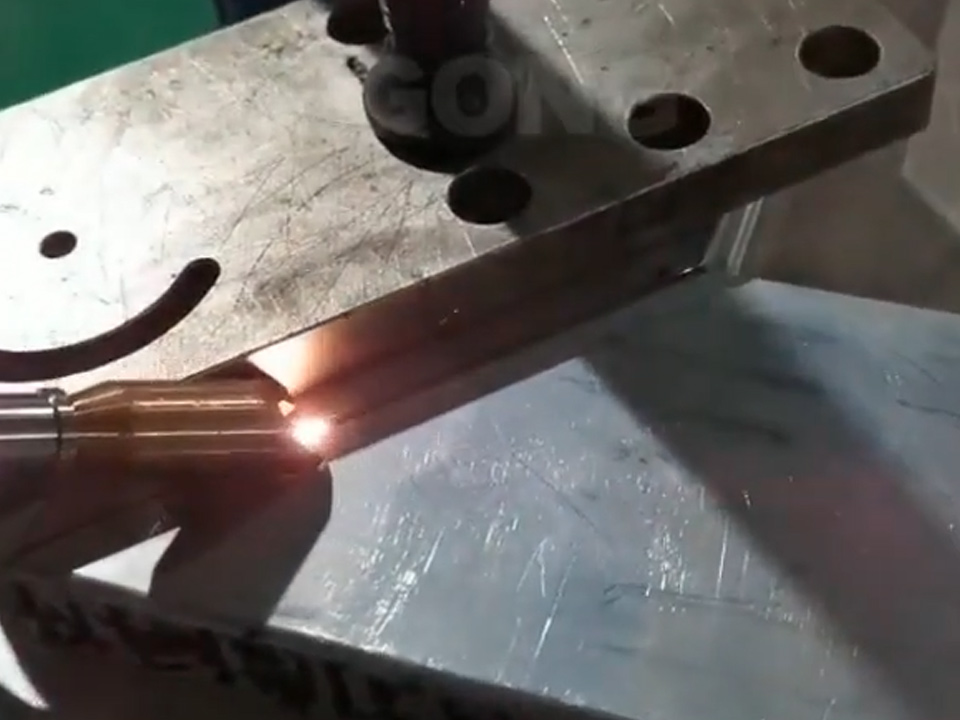
The cost mistake buyers make
They compare machine price.
Wrong move.
The real comparison is: machine cost + operator productivity + finishing labor + scrap + fixturing + training + downtime + safety investment.
A handheld laser welder often loses the sticker-price battle against simpler welding equipment. Then it wins the shift economics if your shop bleeds labor after the weld is already done.
That’s why many smart buyers start by testing one production family, not replacing the whole welding department. One cell. One part range. One operator pair. One QA loop. Then they look at takt time, reject rates, gas consumption, power use, and finish labor over 30 to 60 days.
That’s how adults buy equipment.
Not by watching a glossy demo video and declaring TIG obsolete.
So, can handheld laser welders replace TIG welding in production?
Yes—inside a defined production window.
No—not across all welding work.
And that split answer is the honest one.
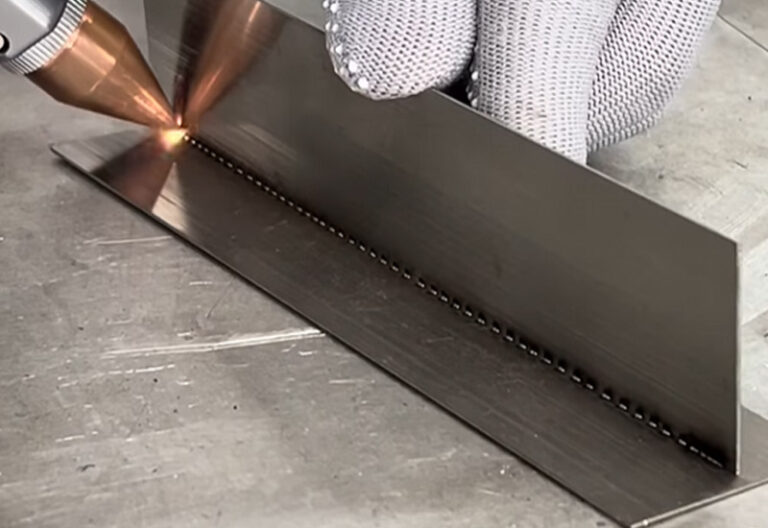
If your factory mainly runs repeat jobs with tight prep and cosmetic standards, a production welding with handheld laser welder setup can absolutely push TIG out of a meaningful share of daily work. But if your shop survives on adaptability, gap-bridging, repair judgment, and manual finesse, TIG will stay in the building long after the laser arrives.
That’s the part vendors rarely say out loud: the best laser adoption stories usually come from shops disciplined enough to deserve the speed.
If you’re still in evaluation mode, browse laser products to compare adjacent equipment paths, then move straight to contact us when you’re ready to test your actual materials and joint types instead of guessing from brochure language.
Вопросы и ответы
Can handheld laser welders replace TIG welding completely?
A handheld laser welder can replace TIG welding completely only for a narrow group of production jobs where materials, joint design, fit-up, thickness, and cosmetic standards all favor low heat input and fast travel speed; outside that window, TIG still wins on tolerance, filler control, and process flexibility.
In real factories, “completely” is the trap word. Most shops should expect partial replacement, not total process extinction. Laser usually takes over repeatable thin-gauge production seams first. TIG stays for repairs, awkward joints, inconsistent parts, and jobs that need manual puddle control.
Is handheld laser welding better than TIG for production?
Handheld laser welding is better than TIG for production when the line depends on repeatability, low distortion, reduced finishing, and faster operator output on well-prepared parts; it is not better when the work involves variable fit-up, heavy manual correction, or broad joint-condition uncertainty.
That’s the answer buyers need. On the right work, laser can cut total labor sharply because it reduces not only weld time but also grinding and straightening. On rougher work, TIG’s forgiveness often protects yield better than raw speed ever could.
How do I choose between laser welding and TIG welding?
Choosing between laser welding and TIG welding means matching the process to your material thickness, joint gap, fit-up quality, finish requirement, labor skill level, safety setup, and production volume rather than chasing whichever machine sounds more advanced in a sales call.
I’d look at five things first: thickness band, gap consistency, finish labor, scrap rate, and part repeatability. If those five point toward consistency, laser deserves a serious trial. If they point toward chaos, TIG usually keeps its seat.
If you want a serious answer for your own parts, not a generic one, start with your drawings, thickness range, and monthly output target. Then go here: contact us.


Горячий клик
Свяжитесь с нами
Приложение
©Copyright [bogonglaser.com]. Поставщик лазерного оборудования BOGONG Все права защищены.