
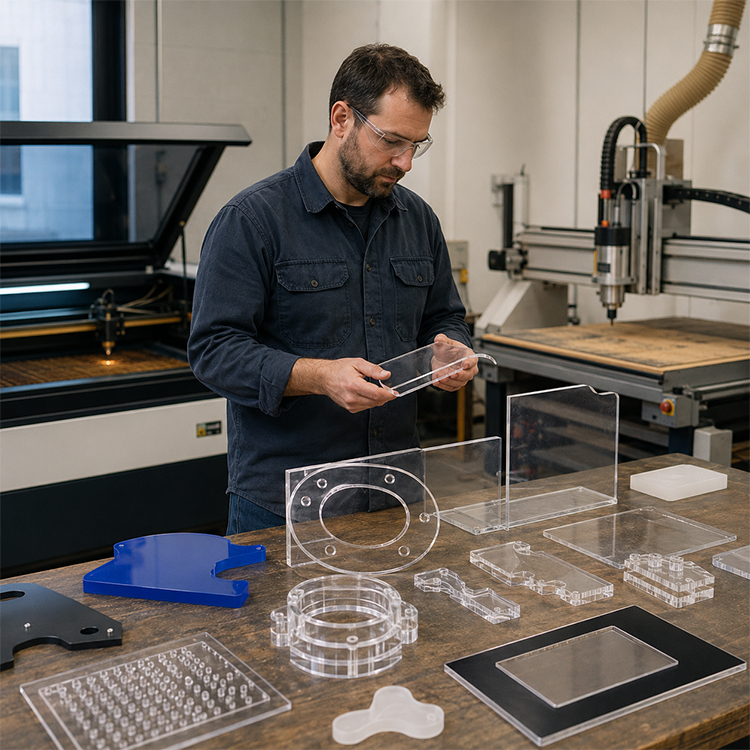
Découpe laser ou fraisage CNC pour les matériaux acryliques
La découpe laser et le fraisage CNC permettent tous deux de découper l'acrylique, mais ils ne résolvent pas le même problème de fabrication. Ce guide présente la vérité de l'atelier sur la qualité des bords, le comportement du PMMA, le contrôle des fumées, les marques d'outils, les tolérances, le coût et la meilleure façon de découper les feuilles d'acrylique pour la signalisation, les présentoirs, les fixations et les composants industriels.

Les méthodes de découpe de l'acrylique que personne n'explique honnêtement
Les contours mentent.
Dans la fabrication d'acrylique, une bordure brillante peut donner un aspect haut de gamme à un produit de fabrication médiocre, tandis qu'une bordure mate usinée peut faire paraître inachevée une pièce de qualité supérieure sur le plan mécanique. C'est précisément pour cette raison que les acheteurs continuent de choisir les mauvaises méthodes de découpe de l'acrylique pour les travaux qui ne s'y prêtent pas. Alors, quelle finition reflète réellement la qualité du produit ?
Je vais être franc : La découpe au laser de l'acrylique remporte la palme de l'esthétique, le fraisage CNC de l'acrylique s'impose pour de nombreux travaux structurels, et le meilleur moyen de découper une plaque d'acrylique dépend moins de la fiche technique de la machine que de l'épaisseur, de la nécessité d'un bord poli à la flamme, de la géométrie des trous, de l'accumulation des tolérances, du contrôle des émanations, et du fait que la pièce soit destinée à être collée, pliée, montée ou soumise à des contraintes en service.
Le PMMA n'est pas simplement du “ plastique ”. Il s'agit de polyméthacrylate de méthyle, généralement désigné par l'acronyme PMMA, issu de la synthèse chimique du méthacrylate de méthyle, et son comportement sous un faisceau laser CO₂ de 10,6 µm est très différent de celui observé sous une fraise à carbure à cannelure en O. La chaleur le fait fondre et le refondre. Un outil de coupe le cisaille. Cette différence résume tout.
En ce qui concerne la production axée sur l'acrylique, je recommanderais tout d'abord aux lecteurs de consulter la page de Bogong consacrée à machine de découpe laser pour l'acrylique, car cela met en avant les avantages réels : une découpe sans contact, des arêtes nettes et un risque de fissuration réduit. Mais il ne faut pas en faire une image idyllique. La chaleur n'est jamais gratuite.
Découpe au laser de l'acrylique : Les dommages contrôlés permettent d'obtenir de jolis résultats
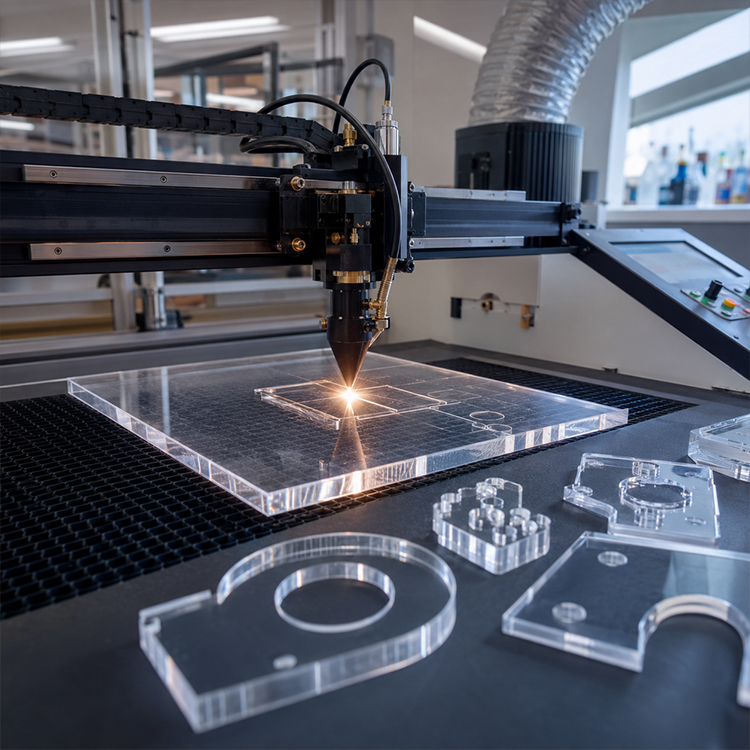
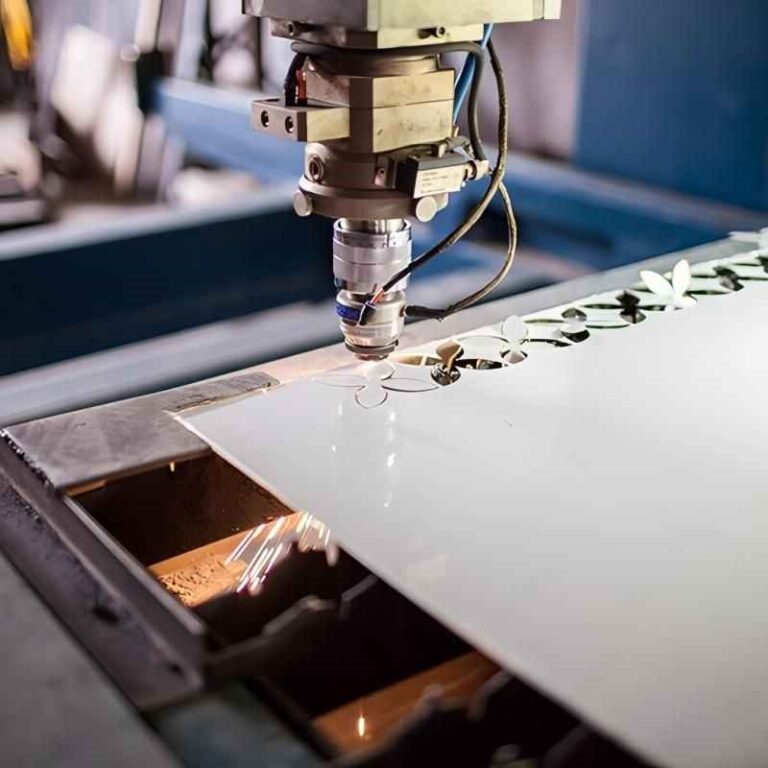
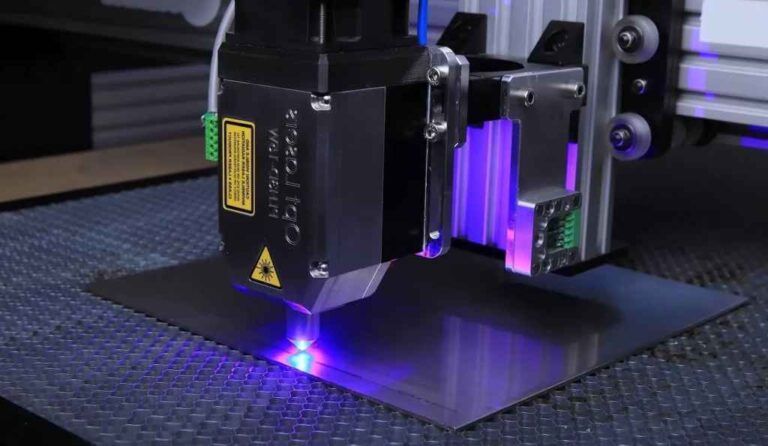
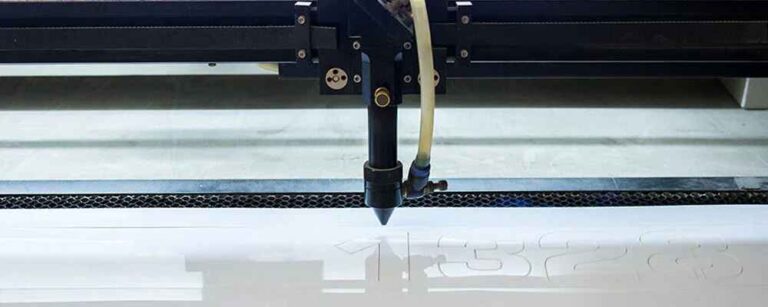
La découpe au laser de l'acrylique fonctionne parce que le PMMA absorbe suffisamment bien l'énergie du laser CO₂ pour chauffer, faire fondre, vaporiser et refondre brièvement le bord. Ce bord fondu se refroidit ensuite pour donner cette finition brillante que l'on qualifie de “ polie ”. L'explication de Bogong concernant Comment la découpe au laser permet d'obtenir des bords polis sur l'acrylique explique bien le mécanisme : cet éclat n'a rien de magique ; il s'agit d'un phénomène thermique.
C'est aussi là que réside le piège.
Une découpe au laser parfaite sur de l'acrylique coulé de 3 mm peut paraître presque prête à la vente dès sa sortie du plateau. Une mauvaise découpe au laser sur de l'acrylique de 12 mm peut présenter un aspect fumé, courbé, bosselé ou surchauffé. J'ai vu des ateliers rejeter la faute sur le fournisseur de plaques alors que le véritable coupable était en réalité des optiques sales, une mauvaise mise au point, une aspiration insuffisante, une puissance excessive ou l'habitude de traiter toutes les plaques de PMMA comme si elles étaient du même matériau.
Voici ma règle : si le bord est le résultat final, utilisez le laser. Si le bord n'est qu'un joint caché, il vaut peut-être mieux ne pas dépenser d'argent pour l'esthétique.
Selon la Rapport annuel 2024 du NIST sur l'économie manufacturière américaine, la valeur ajoutée du secteur manufacturier américain a atteint $2,3 billions de dollars (en dollars chaînés de 2017) en 2023, soit 10,2% du PIB. Ce chiffre est important car la fabrication acrylique n’est plus une simple activité artisanale ; elle s’inscrit désormais dans une économie manufacturière où la répétabilité, la réduction de la main-d’œuvre, le contrôle des retouches et la disponibilité des machines déterminent la marge bénéficiaire.
Pour les ateliers spécialisés dans la fabrication d'enseignes, de présentoirs de magasin, de trophées, de guides de lumière, de housses de protection et de mobilier de point de vente, un Machine de découpe laser CO2 C'est généralement la solution la plus adaptée sur le plan commercial par rapport à une défonceuse lorsque le matériau est de l'acrylique de faible à moyenne épaisseur et que le client souhaite obtenir un bord de finition transparent.
Les avantages de la découpe laser de l'acrylique
La découpe au laser de l'acrylique s'impose lorsque le projet nécessite des bords polis, de petits détails internes, une faible pression de serrage, une géométrie décorative complexe, une gravure, des agencements imbriqués et un minimum de finition. C'est sur les feuilles d'acrylique fines, d'une épaisseur comprise entre 1 mm et 10 mm, que le laser CO₂ se révèle particulièrement efficace.
C'est également un atout lorsque la pièce est fragile. Une fraise exerce une poussée latérale, contrairement au laser. Cette différence est déterminante pour les traits fins, les petits lettrages, les logos complexes, les décorations de mariage en acrylique, les inserts de présentoirs et les éléments de signalétique fins qui risqueraient de vibrer, de s'ébrécher ou de se déformer en cas de découpe mécanique.
Mais voici la dure réalité : la découpe au laser n'est pas automatiquement plus propre sur le lieu de travail.
Une étude de 2023, Caractérisation des émissions générées par la découpe au laser à dioxyde de carbone de plastiques acryliques, a analysé les émissions générées par la découpe au laser CO₂ de l'acrylique, en s'intéressant plus particulièrement aux rejets de particules et de gaz. Cela devrait inciter tout acheteur avisé à se renseigner sur les systèmes d'aspiration, les conduits d'évacuation, la filtration et les procédures d'ouverture du couvercle avant même de s'interroger sur la vitesse maximale.
Listes de l'OSHA méthacrylate de méthyle, n° CAS 80-62-6, dont la valeur limite d'exposition (PEL-TWA) fixée par l'OSHA est de 100 ppm, soit 410 mg/m³. Les fumées de découpe du PMMA ne constituent pas un “ problème d'odeur ”. Il s'agit d'un problème lié au contrôle du processus.
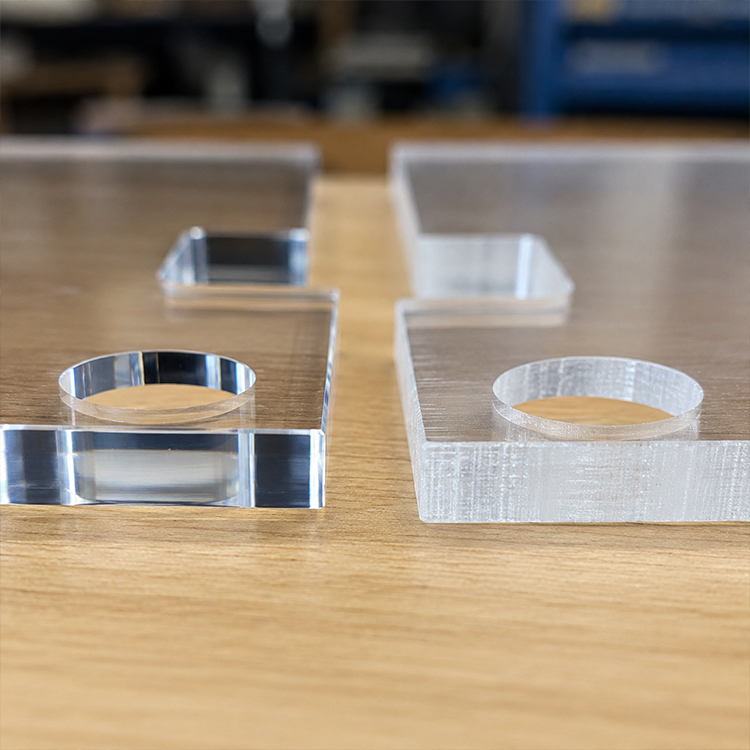
Table des matières
Fraisage CNC de l'acrylique : Des arêtes vilaines, une solidité à toute épreuve
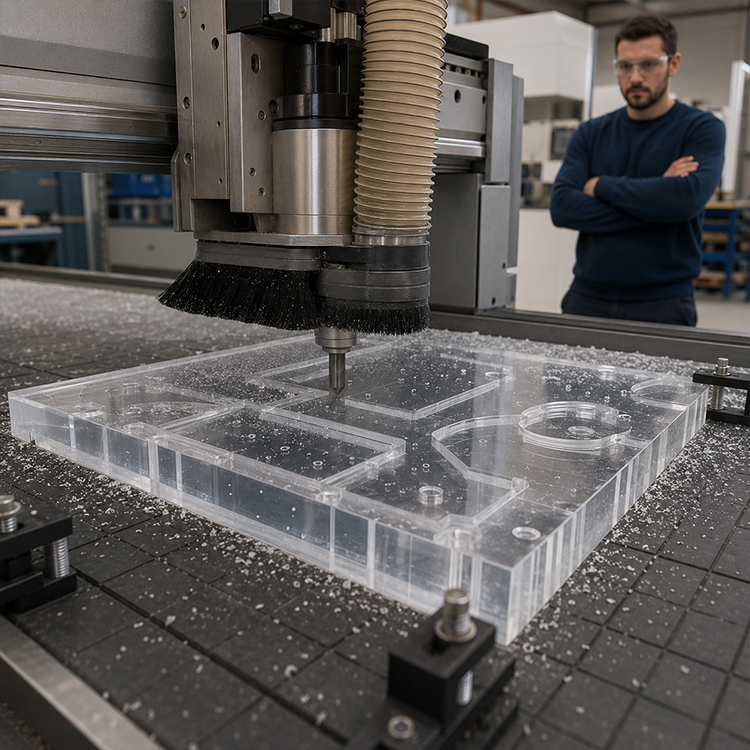
Le fraisage CNC de l'acrylique est un procédé de découpe mécanique. La broche tourne. La fraise enlève des copeaux. Le matériau est maintenu en place par aspiration, des pinces, des languettes ou des dispositifs de fixation. Le bord peut présenter un aspect lisse, mais il n'aura généralement pas l'aspect d'un polissage au laser, à moins d'être ensuite poli à la flamme, poncé ou traité chimiquement.
Et pourtant, c'est souvent le routage qui joue le rôle de l'adulte dans la pièce.
Si vous devez découper de l’acrylique épais, réaliser des biseaux, des poches, des rainures, des lamages, des trous filetés, des fentes nécessitant un ajustement mécanique précis, ou encore des pièces dont les bords doivent présenter une contrainte contrôlée pour le collage, le fraisage CNC de l’acrylique peut s’avérer plus performant que la découpe au laser. Je sais que cela peut paraître démodé dans un contexte où le laser occupe une place prépondérante dans le marketing, mais la défonceuse fait quelque chose que le laser ne peut pas faire : elle enlève de la matière sans créer la même zone étroite affectée par la chaleur.
Les bords découpés au laser peuvent subir des contraintes thermiques. Ces contraintes peuvent se manifester ultérieurement sous forme de craquelures, de fissures autour des joints collés au solvant ou de défaillances inesthétiques au niveau des fixations. Le fraisage laisse certes des marques d'outillage, mais une fraise en carbure à une seule goujure ou à goujure en O, correctement choisie, permet d'obtenir un bord solide, net et prévisible qui offre un meilleur comportement lors des assemblages.
Alors, quelle est la meilleure méthode pour l'acrylique : la découpe au laser ou le fraisage CNC ? Il n'y a pas de réponse universelle. Cette question est trop simpliste. Il faut plutôt se demander à quelles contraintes la pièce doit résister.
Les avantages de la découpe CNC de l'acrylique
La découpe d'acrylique par CNC se distingue par son épaisseur, le contrôle dimensionnel des matériaux plus épais, le profilage 3D, l'évidement, les chanfreins, la finition des trous, les assemblages mécaniques, les fixations à tête fraisée, ainsi que les bords destinés à être collés ou usinés à nouveau.
Pour l’acrylique de 15 mm, 20 mm ou 25 mm d’épaisseur, je préfère aborder la géométrie de la fraise, l’évacuation des copeaux, le faux-rond de la broche, la vitesse d’avance et la gestion des contraintes plutôt que de prétendre qu’un bord brillant obtenu au laser résout tous les problèmes. Dans l’acrylique plus épais, la découpe au laser peut entraîner un effilement, des marques de chaleur, des résidus et des contraintes internes. Une défonceuse produit des copeaux. Les copeaux sont gênants. Ils prouvent également que la chaleur s’est dissipée dans la matière enlevée au lieu de rester dans le bord.
Mais l'utilisation des routeurs exige un certain savoir-faire. Une vitesse d'avance insuffisante fait fondre l'acrylique. Des fraises de mauvaise qualité provoquent des vibrations. Un serrage insuffisant fait bouger les pièces. La surchauffe repousse les copeaux vers le bord. Et même si personne ne veut l'admettre, bon nombre de “ problèmes CNC ” sont en réalité liés à la table à vide.
Découpe laser ou fraisage CNC pour l'acrylique : Comparaison entre l'atelier et l'usine
| Facteur | Découpe laser de l'acrylique | Fraisage CNC de l'acrylique | Mon point de vue |
|---|---|---|---|
| Aspect des bords | Aspect brillant, poli à la flamme | Bord usiné, de mat à lisse | Le laser l'emporte si la beauté des arêtes fait vendre la pièce |
| Impact de la chaleur | Effet thermique plus important au niveau des bords | Effet thermique réduit si la charge de copeaux est correcte | Avantages de la défonceuse pour les assemblages sensibles aux contraintes |
| Plage d'épaisseur optimale | L’acrylique de 1 à 10 mm d’épaisseur est souvent le plus résistant | Souvent plus résistant avec de l'acrylique de 6 à 25+ mm d'épaisseur | Il y a bien un chevauchement, mais l'épaisseur modifie la réponse |
| Détail interne | Idéal pour les petits textes, les logos et les contours précis | Limité par le diamètre de l'outil et les vibrations | Le laser s'impose pour les géométries décoratives complexes |
| Réalisation de poches et travail en 3D | Mauvaise adaptation | Une bonne tenue | Le routeur se distingue par ses caractéristiques mécaniques |
| Fumées et poussières | Vapeurs de PMMA, odeurs, particules : une extraction est nécessaire | Éclats d'acrylique, poussière, éventuelles particules en suspension dans l'air | Les deux nécessitent un contrôle ; les émanations de laser sont plus faciles à sous-estimer |
| Post-traitement | La finition des bords est souvent minime | Peut nécessiter un polissage, un ponçage ou une finition à la flamme | Le laser réduit le travail de finition |
| Serrage des pièces | Généralement plus simple, avec moins de force latérale | Le vide, les pinces et les languettes jouent un rôle essentiel | Le serrage de la pièce dans la défonceuse peut être déterminant pour la qualité |
| Meilleurs cas d'utilisation | Présentoirs, signalétique, trophées, panneaux décoratifs, revêtements fins | Panneaux épais, fixations, poches, chanfreins, pièces mécaniques collées | Adaptez le processus à la fonction, et non à la mode |
Le Données du BLS sur les accidents du travail et les maladies professionnelles déclarés par les employeurs pour la période 2023-2024 a recensé 2,5 millions d’accidents du travail et de maladies professionnelles non mortels dans le secteur privé en 2024, soit une baisse de 3,1% par rapport à 2023. Pourquoi évoquer cela dans un article consacré aux méthodes de découpe ? Parce que les décisions importantes en matière de fabrication tiennent compte de l'exposition des travailleurs, de la manipulation, des tâches répétitives, de la poussière, des émanations, du bruit et de la maintenance — et pas seulement de la brillance des arêtes.
La réalité matérielle : Acrylique coulé, acrylique extrudé, PMMA et argent
L'acrylique coulé et l'acrylique extrudé ne présentent pas les mêmes caractéristiques. L'acrylique coulé offre généralement un résultat de gravure plus net et permet souvent d'obtenir de meilleurs résultats optiques lors de la découpe. L'acrylique extrudé peut être moins cher et présenter une épaisseur plus homogène, mais il peut fondre différemment, dégager une odeur plus forte et offrir un contraste moindre lors de la gravure.
Cette différence est importante lors du choix des techniques de fabrication de l'acrylique.
Si je devais établir un devis pour un projet de présentoir de vente au détail présentant des bords apparents, je commencerais par tester la découpe d’acrylique sur un laser CO₂. Si je devais établir un devis pour une plaque de fixation épaisse comportant des poches, des trous de vis et nécessitant un collage ultérieur, j’opterais plutôt pour le fraisage CNC. Si je devais établir un devis pour un projet mixte — par exemple, un socle de présentoir en acrylique avec un logo gravé —, j’envisagerais de découper au laser les contours visibles et d’utiliser le fraisage là où l’ajustement mécanique est important.
La page plus complète de Bogong sur applications de la machine de découpe laser C'est utile de le savoir ici, car l'acrylique n'est pas le seul matériau utilisé dans un atelier. Une même décision d'achat peut concerner du bois, du papier, des plastiques, du verre, du cuir et des métaux. Il ne faut toutefois pas confondre “ peut être traité ” et “ doit être traité ”. Le PVC en est l'exemple classique. De nombreux ateliers de découpe laser le refusent, et ce à juste titre.
Pour les flux de travail impliquant des plastiques mixtes, la solution de Bogong machine de découpe laser pour le plastique Cette page fournit un aperçu plus général des matériaux, même si, dans tout plan de fabrication sérieux, je continuerais à distinguer l'acrylique de l'ABS, du PET, du polycarbonate et du PVC. Chaque type de plastique présente des émanations, un comportement au niveau des bords et des risques qui lui sont propres.
L'argument du coût : La coupe la moins chère est souvent la plus coûteuse
La découpe au laser permet souvent de réduire la main-d'œuvre, car le bord est net dès la découpe. C'est un point important. Si une pièce en acrylique usinée à la défonceuse nécessite un ponçage, un raclage, un polissage à la flamme, une inspection et des retouches, l'avantage du coût horaire moins élevé de la défonceuse peut s'annuler.
Mais la découpe au laser peut aussi cacher des coûts. Les filtres d’aspiration des fumées ne sont pas là pour faire joli. Les lentilles, les miroirs, les tubes, les refroidisseurs, les conduits, les nids d’abeilles, le nettoyage des résidus et les risques d’incendie ont tous un coût. Le fraisage CNC a lui aussi son lot de coûts : fraises, panneaux de support, extraction des copeaux, pompes à vide, dispositifs de fixation, contrôle du bruit et compétences de l’opérateur.
L'erreur de l'acheteur est de ne prendre en compte que le temps de fonctionnement de la machine.
Pour comparer la découpe laser de l'acrylique et le fraisage CNC, il convient de se baser sur le coût de la pièce finie, et non sur le coût de la découpe. Le coût de la pièce finie inclut les feuilles rejetées, les opérations de finition secondaires, l'intervention de l'opérateur, le nettoyage, les rayures dues à l'emballage, la stabilité de la pièce et les réclamations des clients après l'installation.
Une petite peine. Une grosse facture.
Si la commande porte sur 500 panneaux de présentation identiques destinés à la vente au détail, avec des bords apparents, la découpe au laser peut s'avérer plus économique, même si le tarif horaire de la machine est plus élevé. Si la commande porte sur 40 caches mécaniques en acrylique épais, comportant des trous fraisés et devant s'ajuster parfaitement autour des pièces de quincaillerie, le fraisage peut s'avérer plus économique, car la découpe au laser nécessiterait tout de même des opérations secondaires.
Ma dure recommandation : Choisir en fonction du mode de défaillance
La meilleure façon de découper une plaque d'acrylique consiste à choisir le procédé en fonction des risques de défaillance de la pièce, et non en fonction de l'aspect de l'échantillon sous l'éclairage d'une salle d'exposition.
Optez pour la découpe laser de l'acrylique lorsque le principal problème réside dans un défaut esthétique : bords ternes, polissage irrégulier, lettrage ébréché, traces d'outils visibles, gravure de mauvaise qualité ou finition trop longue.
Recourez au fraisage CNC de l'acrylique lorsque le problème principal est d'ordre mécanique : mauvais ajustement, trous de fixation fissurés, joints collés soumis à des contraintes, bords épais déformés, cavités imprécises ou géométrie d'assemblage fragile.
Et utilisez les deux lorsque le projet le justifie. Un flux de travail hybride n'est pas un signe de faiblesse. C'est souvent la véritable solution professionnelle.
Pour les travaux nécessitant beaucoup de gravure, notamment les logos, les numéros de série, les motifs décoratifs et le marquage sur des surfaces en acrylique, Bogong propose Machine à graver au laser pour l'acrylique C'est une suite logique, car la découpe et la gravure font souvent l'objet d'un devis commun dans le domaine de la signalétique et de la fabrication de présentoirs.
FAQ
Quelle est la meilleure façon de découper une feuille d'acrylique ?
La meilleure façon de découper une plaque d'acrylique consiste à adapter la méthode de découpe à la fonction finale de la pièce : la découpe au laser est généralement la solution la plus adaptée pour les bords visibles polis, les profils complexes et les travaux décoratifs en acrylique, tandis que le fraisage CNC est généralement plus indiqué pour les plaques épaisses, les éléments mécaniques, les cavités, les trous et les assemblages sensibles aux contraintes.
Pour l'acrylique d'affichage de 1 à 10 mm d'épaisseur, je commence généralement par tester la découpe au laser CO₂. Pour les supports, les caches ou les pièces structurelles en acrylique de 12 à 25 mm d'épaisseur, je privilégie le fraisage CNC. Une erreur coûteuse serait de supposer qu'une méthode est toujours supérieure à l'autre.
La découpe au laser ou le fraisage CNC sont-ils meilleurs pour l'acrylique ?
La découpe au laser est plus adaptée à l'acrylique lorsque la netteté des arêtes, la finesse des détails, la gravure et la réduction des opérations de finition sont prioritaires ; le fraisage CNC est quant à lui plus adapté lorsque l'épaisseur, la précision mécanique, le creusage de poches, le fraisage en contre-dépouille et la réduction des contraintes thermiques sont prioritaires. Le choix du procédé le plus approprié dépend de la priorité accordée à l'aspect esthétique ou aux performances de la pièce en acrylique.
En termes simples : le laser pour des contours esthétiques, la défonceuse pour les éléments fonctionnels usinés. Si la pièce doit être collée ou vissée, ne négligez pas le comportement sous contrainte au niveau du bord de coupe.
La découpe au laser de l'acrylique génère-t-elle des fumées toxiques ?
La découpe au laser de l'acrylique génère des fumées et des particules qui nécessitent une ventilation, une filtration et des mesures de contrôle sur le lieu de travail adaptées, d'autant plus que le traitement du PMMA peut entraîner le rejet de méthacrylate de méthyle et d'autres contaminants atmosphériques. L'acrylique est couramment découpé au laser, mais la sécurité de la production dépend de la conception du système de ventilation, de l'identification des matériaux, des procédures suivies par les opérateurs et de la gestion de l'exposition.
L'odeur n'est pas un indicateur de contrôle qualité. Une arête propre obtenue avec une extraction insuffisante reste le signe d'un processus défaillant. Considérez le système d'évacuation comme faisant partie intégrante de la machine, et non comme un accessoire facultatif.
Le défonçage CNC de l'acrylique permet-il d'obtenir un bord poli ?
Le fraisage CNC de l'acrylique permet d'obtenir un bord usiné lisse, mais nécessite généralement une finition secondaire, telle que le ponçage, le polissage, le polissage au diamant ou le polissage à la flamme, afin d'obtenir le même aspect brillant que celui de l'acrylique découpé au laser. On opte pour le fraisage moins pour son rendu esthétique immédiat que pour l'épaisseur, l'ajustement et les caractéristiques mécaniques qu'il permet d'obtenir.
Une fraise à cannelure en O de haute qualité permet d'obtenir un bord très net. Toutefois, si le client souhaite que les bords apparents présentent une transparence comparable à celle du verre, prévoyez le temps nécessaire à la finition avant d'établir votre devis.
Quelle méthode de découpe de l'acrylique est la meilleure pour l'acrylique épais ?
Le fraisage CNC est souvent plus adapté à l'acrylique épais, car il enlève la matière sous forme de copeaux, réduit l'échauffement excessif des bords et permet de réaliser des cavités, des biseaux, des lamages et des détails mécaniques que le laser ne peut pas reproduire proprement. La découpe au laser de l'acrylique épais est certes possible, mais les marques de chaleur, le rétrécissement, les fumées et les contraintes deviennent plus difficiles à maîtriser.
Je ne me fierais pas à un petit échantillon pour évaluer de l'acrylique épais. Il faut tester la feuille réelle, la géométrie réelle, la tolérance réelle et la méthode d'assemblage réelle.
Quelles sont les techniques de fabrication de l'acrylique qu'un atelier professionnel devrait combiner ?
Un atelier professionnel spécialisé dans l'acrylique doit combiner la découpe au laser CO₂, le fraisage CNC, la gravure, le polissage, le collage, le cintrage, le perçage et l'aspiration contrôlée, plutôt que de s'appuyer sur une seule machine pour chaque tâche. Les techniques de fabrication de l'acrylique les plus performantes reposent sur l'adéquation des procédés : les bords apparents, l'ajustement mécanique, la liaison chimique et les exigences de finition nécessitent tous des choix distincts.
Les meilleurs ateliers ne sont pas fidèles à une machine. Ils sont fidèles à la pièce finie.
Dernières réflexions : Testez la coupe avant de faire confiance au devis
Ne choisissez pas entre la découpe laser de l'acrylique et le fraisage CNC de l'acrylique à partir d'une fiche de vente. Envoyez le vrai dessin, la vraie épaisseur, le vrai type de feuille, la vraie tolérance et la vraie exigence de finition.
Demandez un échantillon de coupe. Demandez comment les fumées sont contrôlées. Demandez ce qu'il advient des chants collés au solvant après 48 heures. Demandez si le bord cité est fini à la machine, poli à la flamme, poli ou non. Et si votre projet dépend de chants acryliques clairs et exposés, commencez par consulter le document Bogong's Options de la machine de découpe laser pour l'acrylique et demandez ensuite une recommandation de procédé en fonction de l'épaisseur, de la géométrie et du volume de production de votre tôle.


Hot Click
Nous contacter
Application
©Copyright [bogonglaser.com]. BOGONG Laser Machine Supplier Tous droits réservés.