-
Shunhua Road, Jinan City, Shandong

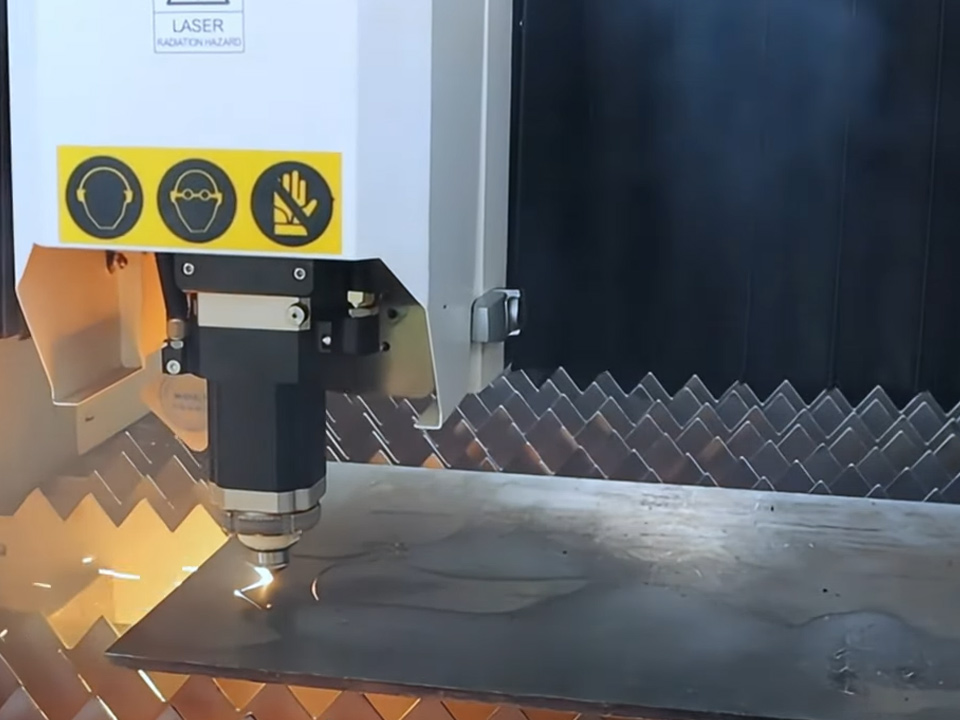
Cutting Aluminum With Fiber Laser: Challenges and Solutions
Aluminum punishes lazy laser setups. I’ve seen shops blame the metal when the real problem was nozzle condition, gas logic, focal position, or a machine bought on headline wattage alone. Here’s the hard truth about fiber laser cutting aluminum, with data, case-backed reasoning, and practical fixes.

Aluminum Doesn’t Forgive Sloppy Cutting
Aluminum bites back.
I’ve sat through enough machine demos to know the trick: the sample part looks clean, the rep smiles, the cut edge shines under the lights, and everyone in the room starts talking about speed as if speed is the whole story, when the real fight is happening somewhere else entirely—reflectivity at pierce, heat running off too fast, melt hanging in the kerf, and operators chasing burr with bad settings. That’s the real shop-floor mess. Usually.
And I frankly believe this is where buyers get misled. They hear “fiber laser cutting aluminum” and picture a solved process. It isn’t. Not even close. According to the 2024 USGS aluminum summary, transportation made up 35% of U.S. aluminum consumption, which tells you why this topic matters so much now: more demand, tighter lead times, less tolerance for scrap, and more people pretending they’ve mastered a material that still humbles them daily.
That matters.
Because once aluminum lands in automotive brackets, EV enclosures, trailer parts, marine fittings, battery trays, or cosmetic panels, the argument changes. Suddenly, this isn’t about whether the machine can cut. It’s about whether it can cut all week without spitting dross, drifting kerf, staining edges, or wrecking your downstream fit-up.
And that’s why I’d rather inspect the process window than listen to a sales pitch. If someone is serious about buying a fiber laser cutting machine, they should care less about the sexy headline numbers and more about pierce control, gas consistency, nozzle alignment, and whether the machine keeps its nerve when aluminum starts acting like aluminum.
Why Aluminum Makes Good Machines Look Bad
Reflectivity Starts the Trouble
Here’s the ugly truth: the first few milliseconds matter more than a lot of people admit.
Aluminum reflects a lot of energy before the cut stabilizes, which is why the ugliest failures often show up at pierce or at entry, not halfway through the contour where everything is already thermally settled. That’s where weaker systems wobble—back reflection risk, unstable penetration, blowout, splash, ugly starts, sometimes even a chain reaction that ruins the rest of the profile. According to OSHA’s laser safety guidance, reflected laser energy is a real hazard, not some fussy side note engineers invented to slow production down.
So what do good shops do?
They stop being reckless. They separate pierce settings from cut settings. They stop forcing one canned recipe across every alloy, thickness, and temper. And they treat reflective metals like their own headache—which they are. That’s also why a lot of buyers who compare aluminum behavior with brass or precious metals end up reviewing platforms like the smallest fiber laser cutting machine for brass, gold, silver, because reflective-metal performance is rarely isolated to one application.
Heat Runs Away Fast
And then there’s the thermal side of it.
Aluminum drags heat away from the cut zone so quickly that the operator is often stuck in a narrow little box: too little energy and the bottom edge won’t clear, too much and the kerf gets sloppy, the melt stream turns unstable, or the lower edge freezes with junk hanging off it like a bad casting seam. A review in The International Journal of Advanced Manufacturing Technology points out that surface roughness and kerf width in aluminum alloy cutting are mainly driven by laser power, cutting speed, and standoff distance, while gas pressure doesn’t always move the needle as much as people think.
That part gets ignored.
I’ve watched shops waste hours cranking gas pressure because the edge looked dirty. Bad move. Sometimes the gas isn’t the root problem at all. Sometimes it’s the power-speed pair. Sometimes it’s focus drift. Sometimes the nozzle’s slightly off and nobody noticed because it “looked fine.”
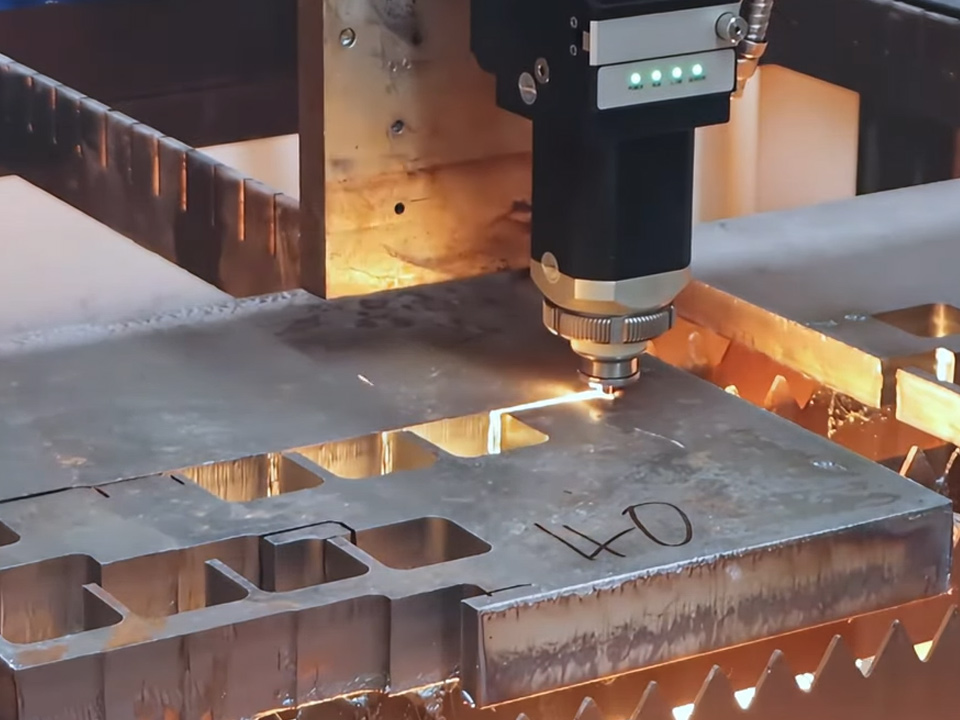
Gas Isn’t Just There to Blow Stuff Out
This part gets oversimplified constantly.
Assist gas isn’t background equipment. It’s not a fan. It’s not just there to kick melt out of the cut and make everyone feel productive. The review on assist-gas behavior in laser cutting makes it pretty clear that melt removal depends on gas dynamics inside the kerf, and that once you pass certain thresholds, more pressure doesn’t keep giving you cleaner parts. Sometimes you just get turbulence, shock effects, wasted nitrogen, and a more expensive mess.
I’ve seen that too.
A shop gets bottom burr. Someone says, “Turn up the gas.” They do. Burr gets worse—or different. Nobody knows why. Then they blame the alloy. But the alloy didn’t change. Their assumptions did.
The Real Aluminum Laser Cutting Problems Nobody Wants to Admit
Bottom Burr Means the Melt Didn’t Leave Cleanly
Most of the time, burr is a process confession.
It means molten aluminum didn’t fully evacuate the kerf before it re-solidified. That can come from bad speed, wrong focal position, nozzle wear, unstable stand-off, optics contamination, poor gas flow, bad recipe logic, or the old classic: running one program on 5052 and expecting it to behave the same on 6061. It won’t. According to the same 2024 review in Springer, aluminum cut quality changes with interacting parameters, not some magic setting you can carry around forever like a lucky wrench.
So when people ask me about fiber laser aluminum burr solutions, I usually ask one thing first: when did you last check nozzle concentricity? Because that answer tells me whether they’re troubleshooting—or guessing.
Rough Edge Is More Than a Cosmetic Problem
But shops love minimizing this one.
They’ll say the edge is “acceptable.” Sure. Acceptable until the part goes to welding and fit-up gets weird. Acceptable until a customer compares batches. Acceptable until bending exposes variation. Acceptable until cosmetic inspection starts rejecting panels because the lower edge looks like it was chewed, not cut.
And then?
Then suddenly roughness matters a lot. The Springer review is useful here because it doesn’t pretend one parameter rules the world. Power, speed, stand-off—they interact. Shops that tune one variable at a time like they’re playing darts blindfolded usually end up chasing symptoms.
Edge Chemistry Can Bite You Later
This is where some shops get caught by surprise.
If the part is decorative, visible, or headed for welding, the edge condition matters beyond just “Did it separate?” Gas strategy changes edge chemistry. Oxidation changes post-processing behavior. Discoloration might annoy the customer before it hurts the part—but either way, it’s a problem. That’s one reason mixed-workflow buyers often compare equipment like an all-in-one fiber laser metal cutting machine for tube and sheet when they need flexibility without giving up stability.
Because flexibility sounds great.
Until the settings library turns into chaos.
The Air in the Shop Matters Too
Here’s another thing people act weirdly casual about.
Laser cutting fumes aren’t harmless just because the cut looks clean. A Norway-based exposure study published in PMC found that particles generated during laser cutting were mainly below 300 nm, and that open laser cutters could result in higher metal exposure. The same study tied particle generation to material type, thickness, power, speed, and assist gas.
That should make people pause.
Because when someone says, “We’ve always cut it this way,” that’s not evidence. That’s habit. Sometimes bad habit.
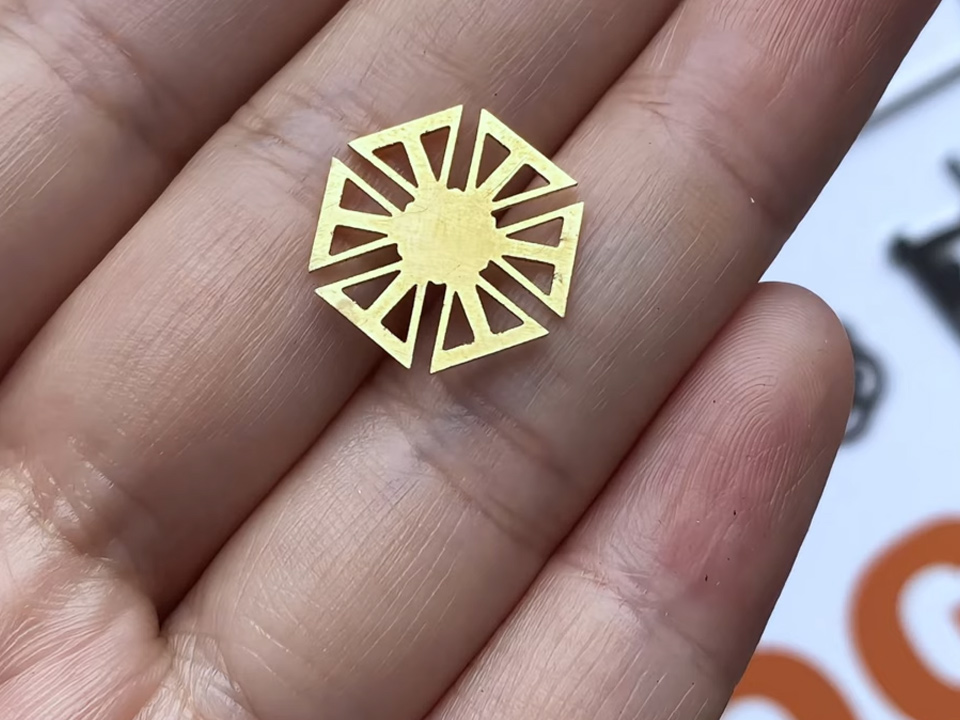
What Actually Fixes Fiber Laser Cutting Aluminum
Start With Process Discipline
From my experience, the shops that do this well are rarely the loudest ones.
They keep separate pierce logic. They don’t trust old settings blindly. They watch nozzle wear. They verify focal position after maintenance. They retune when thickness changes. They don’t pretend 2 mm aluminum and 8 mm aluminum live in the same universe. It’s less glamorous than buying a bigger source. It’s also smarter.
And there’s hard support for that kind of thinking. A 2024 study from the University of Stuttgart showed that Bayesian optimization can reduce trial-and-error when tuning laser processes and reach useful results after a reasonable number of experiments. That matters because a lot of aluminum cutting is still tuned by tribal memory and operator instinct.
Sometimes that works. Sometimes it really doesn’t.
Stop Looking for One Perfect Setting
I hate that phrase.
There is no perfect setting for aluminum. There’s a usable window, maybe a narrow one, maybe a forgiving one if the job is easy—but not one sacred number set. If someone tells you they have the best fiber laser for aluminum cutting because they nailed one sample on one thickness, I’d keep my wallet closed.
Here’s the practical version:
| Problem | What is usually happening | What to check first | What I’d change before blaming the machine |
|---|---|---|---|
| Bottom burr | Melt not fully ejected before re-solidification | Focus position, nozzle condition, stand-off, speed | Rebuild the speed/focus window, inspect nozzle concentricity, verify gas stability |
| Rough edge | Energy and melt flow are out of balance | Power-speed pair, standoff distance | Retune power and speed together, not separately |
| Poor pierce start | Reflectivity and unstable initiation | Pierce recipe, ramp logic, optics cleanliness | Use a dedicated pierce strategy and slower entry |
| Oxide/discoloration | Gas strategy does not match finish target | Assist gas type and purity | Move to a cleaner inert-gas logic where finish matters |
| Random variation between sheets | Recipe too narrow for alloy/thickness variation | Batch material consistency, consumables, maintenance | Widen validated parameter bands and tighten maintenance |
That table looks simple.
It isn’t. Because every row is a systems problem pretending to be a simple defect.
Hardware Still Rules
People want software to save them.
It won’t—at least not if the nozzle is beat up, the stand-off drifts, the gas line is unstable, or the beam delivery path is dirty. Aluminum punishes small hardware mistakes. That’s why I keep coming back to the assist-gas study: gas flow inside the kerf changes the whole cut result, and pressure alone won’t rescue bad geometry or sloppy setup.
If your gas train is ugly, your parts will be too.
Some Jobs Need More Than a Straight Cut
And this gets overlooked in quoting.
If the aluminum part needs weld prep, controlled edge geometry, or downstream joining work, then a plain 2D contour may not be enough. In those cases, a process option like bevel fiber laser cutting and groove cutting starts making more sense—not because beveling is trendy, but because some parts simply need more than separation.
The Buying Mistakes I See Over and Over
Buying on Wattage Alone
This one never dies.
Yes, more power can help. No, wattage alone won’t save a bad process chain. Shops buy the big source, brag about the number, then discover they still have ugly pierce behavior, unstable cut starts, finicky gas performance, or parts that only look decent when the moon is in the right phase. The 2024 Stuttgart optimization work points in the opposite direction: good laser processing comes from tuning multiple factors, not worshipping one headline spec.
I frankly believe too many buyers are still paying for brochures.
Treating Fiber vs CO2 Like a Religion
I’m not nostalgic about CO2. But I’m also not interested in fake binary debates.
For aluminum sheet cutting, fiber is the serious tool. That part is clear. But if a shop has mixed work—engraving, nonmetal, odd production flow—then a CO2 laser engraver and cutter may still belong somewhere in the conversation. Not as a replacement. As context.
That nuance matters.
Trusting Demo Parts More Than Production Reality
A demo part tells you almost nothing if you don’t know the alloy, temper, thickness, assist gas purity, nozzle condition, cut path, or whether the part was the fifth try that day. I want the ugly evidence: scrap rate, repeatability, edge consistency after a full shift, variation after material lot changes, whether the machine still behaves when an operator who didn’t build the demo runs it.
That’s real evaluation.
And the economics make this more important, not less. Reuters reported in early 2024 that analysts expected weak demand to weigh on base metals markets. When demand softens, waste gets harder to hide. Suddenly “good enough” cutting starts looking expensive.
FAQs
What is the main challenge when cutting aluminum with a fiber laser?
The main challenge in fiber laser cutting aluminum is keeping the process stable despite aluminum’s high reflectivity and high thermal conductivity, which together can disrupt piercing, narrow the usable parameter window, and increase the risk of burrs, rough edges, inconsistent kerf quality, and wasted sheets if settings drift.
But that’s only the clean version. In the shop, the trouble usually shows up as bad starts, lower-edge dross, weird cut inconsistency, or a recipe that worked yesterday and suddenly doesn’t because the nozzle wore down or the material batch changed.
How do you reduce burr when cutting aluminum with a fiber laser?
Reducing burr in fiber laser cutting aluminum means improving molten-metal ejection before re-solidification by tuning cutting speed, focal position, stand-off distance, nozzle condition, and gas behavior together, because burr is usually a sign that the melt stream is leaving the kerf too slowly, too unevenly, or too late.
From my experience, the first check should be nozzle condition and alignment—not a dramatic jump in gas pressure. Shops often reach for gas first because it feels active. It usually isn’t smart.
What assist gas is best for laser cutting aluminum?
The best assist gas for laser cutting aluminum depends on the finish target, edge chemistry requirement, and production economics, because inert-gas strategies generally support cleaner fusion cutting while reactive approaches can change cut behavior and edge condition, especially when downstream welding, cosmetic quality, or oxidation control matters.
That means there isn’t one universal answer. If the customer cares about a clean edge, that pushes the logic one way. If the job is purely about throughput and cost, the decision can shift fast.
Your Next Move If You’re Serious About Aluminum Cutting
Don’t buy the demo.
Buy the process logic. Buy the machine only if it proves it can handle your actual alloys, your thicknesses, your finish standards, your shift conditions, and your operators—not just a clean sample made under showroom conditions. Ask how the vendor handles pierce strategy. Ask how they monitor nozzle wear. Ask how they stop burr before it starts. Ask how they keep the cut stable when the sheet changes.
That’s the difference.
The strong vendors answer with real process detail. The weak ones hide behind wattage, speed charts, and polished parts.


Hot Click
Contact Us
Application
©Copyright [bogonglaser.com]. BOGONG Laser Machine Supplier All Rights Reserved.