-
Shunhua Road, Jinan City, Shandong

Best Materials for Industrial Laser Cutting Machines
Mild steel usually wins on margin. Stainless wins on edge stability and downstream corrosion resistance. Aluminum is fast until reflectivity, burr control, and gas cost bite you. Copper and brass are possible, but only when your machine, optics, and budget are ready for the punishment.

Stop romanticizing materials
Most shops don’t lose money on wattage.
They lose it in a slower, uglier way: bad material mix, wrong assist-gas assumptions, cheap-sheet variability nobody admitted during quoting, and that classic sales-floor optimism where everyone talks about “max thickness” but nobody talks about warped sheets, ugly dross, nozzle crashes, edge oxidation, or the rework pile growing in the corner. I’ve seen that movie before.
It happens.
And I frankly believe this is where a lot of buyers get fooled. They don’t buy a laser around actual jobs. They buy around ego, spec-sheet theater, and one shiny demo sample that was probably cut on a perfect day by the factory’s best technician—not by the guy who’ll be running second shift three months later.
So, what are the best materials for industrial laser cutting machines?
Here’s the ugly truth: mild steel usually pays the bills, stainless steel proves whether your process is tight, aluminum looks exciting until it starts acting expensive, and copper or brass—yes, they’re possible—can turn into a money pit fast if your machine setup is half-baked. Why do so many people pretend otherwise?
If you’re still figuring out what machine class fits your workload, a standard fiber laser cutting machine is the right baseline. Not some fantasy build. Not a showroom unicorn.
The materials that actually make money
Mild steel is still the safe bet
Mild steel remains the most practical answer for industrial laser cutting materials because it hits the sweet spot—low raw material cost, broad demand, familiar process windows, strong cut stability, and less drama on the floor than reflective metals that look impressive in brochures and then fight you during production when sheet quality changes a little.
That’s why shops keep coming back to it.
You can push decent throughput. You can train operators on it. You can quote it without holding your breath. And if you’re building out a production flow for brackets, cabinets, panels, structural bits, enclosures, and general fab work, mild steel is usually the material that gives you the fewest “what the hell happened here?” mornings.
But—and this matters—assist gas changes the economics fast. Oxygen can help with speed on thicker mild steel, but now you’re dealing with an oxidized edge. Nitrogen gives you a nicer cut face, usually, but your gas bill starts whispering bad news. Shops ignore that. Then regret it.
Stainless steel separates real shops from brochure shops
Stainless is different.
People talk about stainless as if it’s just a cleaner version of mild steel. It’s not. From my experience, stainless is where process discipline stops being optional and starts being the whole job: gas purity, focus position, nozzle condition, extraction, heat control, cosmetic standards, all of it.
And yes, stainless is one of the best metals for industrial laser cutting if you care about corrosion resistance, food-grade applications, medical housings, decorative panels, premium enclosures, or parts that need a cleaner edge and less post-processing mess.
But here’s the catch.
If your shop is sloppy, stainless will expose you. Fast. Tiny mistakes show up in the cut, in the discoloration, in the edge quality, in downstream assembly, in the customer complaint email nobody wants to answer. Stainless doesn’t lie.
Aluminum looks easy online. It isn’t.
This one gets oversold.
Aluminum absolutely belongs on the list of materials suitable for fiber laser cutting, especially for lightweight assemblies, transport components, electronics housings, and all the jobs where shaving weight actually matters. When it runs well, it runs beautifully. Clean motion. Fast cycle times. Nice throughput.
Usually.
But aluminum is twitchier than many new buyers expect. Reflectivity, thermal behavior, sheet flatness, burr control, cosmetic consistency—those issues aren’t side notes. They’re the job. One shift goes fine, the next one doesn’t, and suddenly you’re staring at edge inconsistency wondering whether it’s gas, focus, material batch, pierce logic, or all four at once.
That’s why I don’t love hearing people say aluminum is “easy.” Easy for who? A trained operator on a dialed-in setup? Sure. A first-time buyer who thinks speed alone equals profit? Not a chance.
For smaller footprints or tight precision work, something like the 5050 small fiber laser cutting machine or the smallest 3020 fiber laser cutting machine only makes sense if the part mix is stable and reflective-metal handling is already understood. Otherwise, you’re just buying a compact headache.
Copper and brass are specialty materials, not beginner mode
Yes, they can be cut.
No, that doesn’t mean they should be your default quoting target.
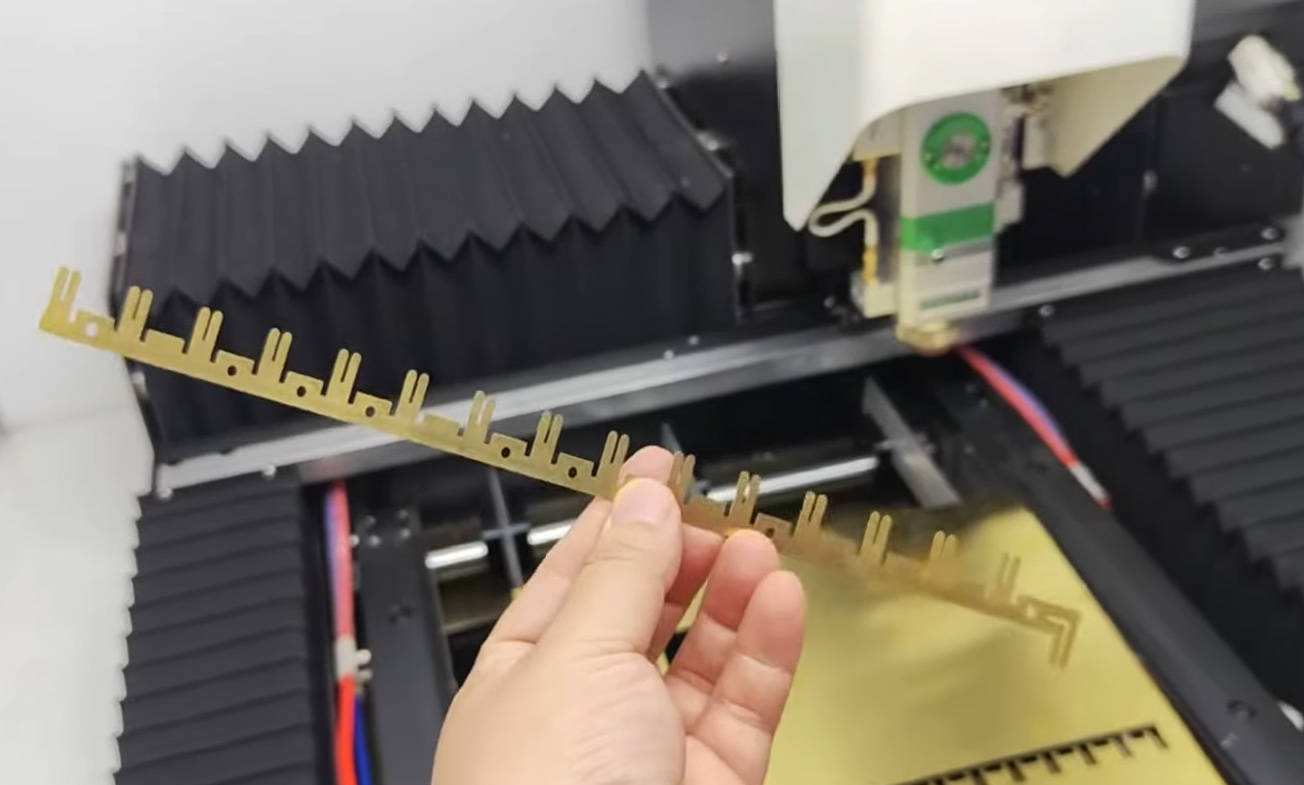
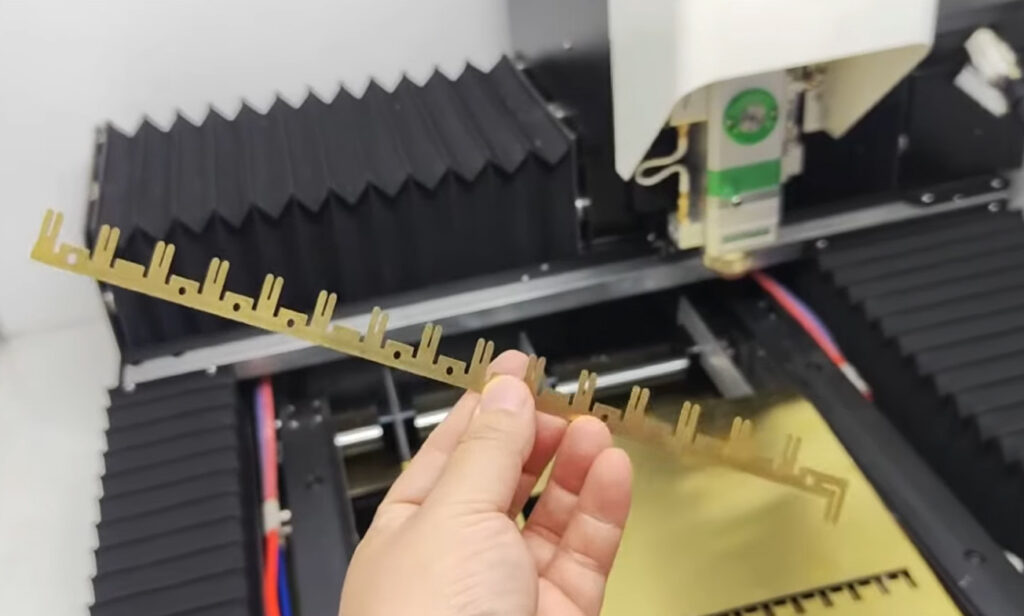
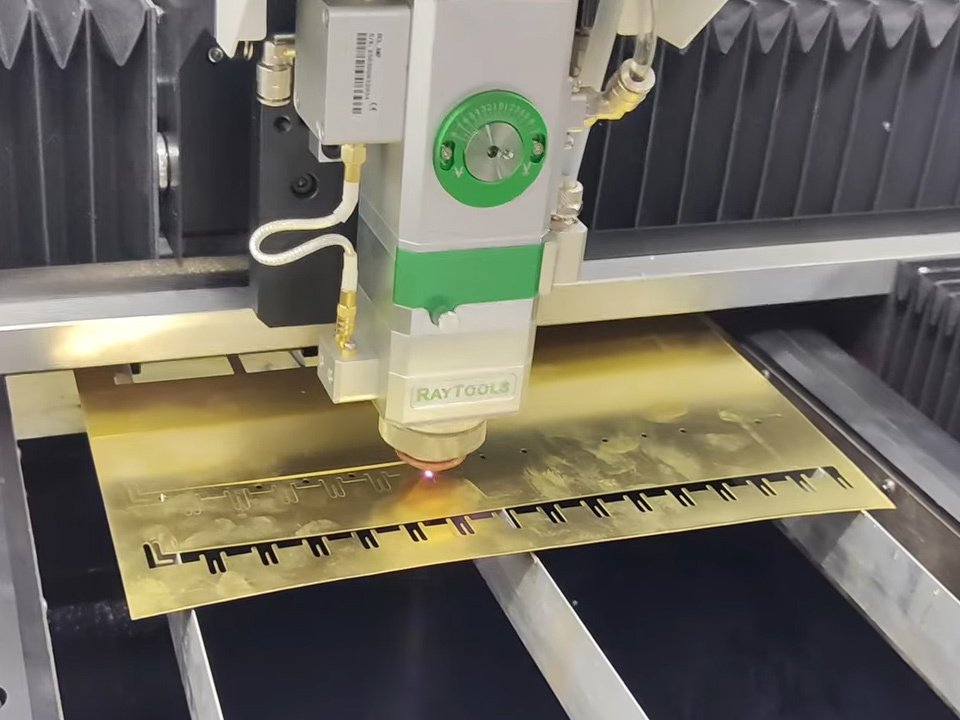
This is where the phrase what materials can industrial laser cutting machines cut misleads people. “Can cut” is a technical answer. It is not a business answer. Copper and brass are absolutely on the menu for the right setup, but they don’t behave like forgiving production metals. Reflectivity is higher. Process windows tighten up. Optics protection matters more. Scrap gets expensive faster than you think.
And that’s where buyers get burned.
I’ve seen people get excited about copper because the machine demo looked smooth. Then real production starts—different part geometry, different batch, different shift, slightly dirty optics, slightly lazy setup—and suddenly the job that looked premium starts chewing margin. That’s not rare. That’s normal when the prep work is weak.
If brass, gold, silver, or similar reflective materials are a serious part of your workflow, a specialized machine like the smallest fiber laser cutting machine for brass gold silver is the more honest conversation. Better that than pretending any generic platform will handle specialty metals gracefully just because someone said “fiber can cut it.”
A blunt ranking of industrial laser cutting materials
Here’s my real-world ranking. Not the polished sales version.
| Material | Ease of Cutting | Margin Potential | Main Risk | Best Use Case |
|---|---|---|---|---|
| Mild steel | High | High | Oxidized edge with oxygen, thicker-section heat effects | General fabrication, brackets, cabinets, frames |
| Stainless steel | Medium | High | Fume control, gas cost, cosmetic sensitivity | Food equipment, medical housings, premium enclosures |
| Aluminum | Medium | Medium-High | Reflectivity, burrs, cosmetic rejects, gas cost | Lightweight parts, electronics, transport components |
| Galvanized steel | Medium | Medium | Coating-related fumes, edge cleanliness | HVAC, ducting, electrical enclosures |
| Brass | Low-Medium | Niche | Reflectivity, thermal control, optics protection | Decorative parts, electrical and specialty components |
| Copper | Low | Niche-High | Reflectivity, scrap cost, unstable process window | Electrical parts, busbars, thermal components |
How to choose materials for laser cutting without kidding yourself
Start with finished-part margin, not headline speed
This is where people drift off course.
They obsess over cutting speed, then ignore pierce time, scrap from unstable starts, gas consumption, sheet utilization, cleanup labor, cosmetic rejects, and the ugly reality that some jobs look profitable only until you account for all the junk around the actual cutting. That’s not a small mistake. That’s the mistake.
Speed alone lies.
A smarter approach is to ask one question: after nesting loss, gas, consumables, post-processing, and scrap, which material leaves the most money per finished part on your actual job mix? Not demo parts. Your parts.
Most of the time, the answer is boring. Mild steel wins more often than people want to admit.
Gas strategy changes everything
Nitrogen isn’t free.
And a lot of buyers talk about clean edges as if they come out of thin air. They don’t. They come out of compressors, tanks, piping, flow rates, pressure stability, and utility bills that keep showing up every month whether the quoting team remembered them or not.
That’s why some shops should think beyond single-format production and consider broader platforms like the all-in-one fiber laser metal cutting machine for tube and sheet when the actual problem is mixed-part throughput. Sometimes the material choice isn’t the only bottleneck. Sometimes the whole flow is.
Reflective metals expose weak operators
I’ll say it plainly.
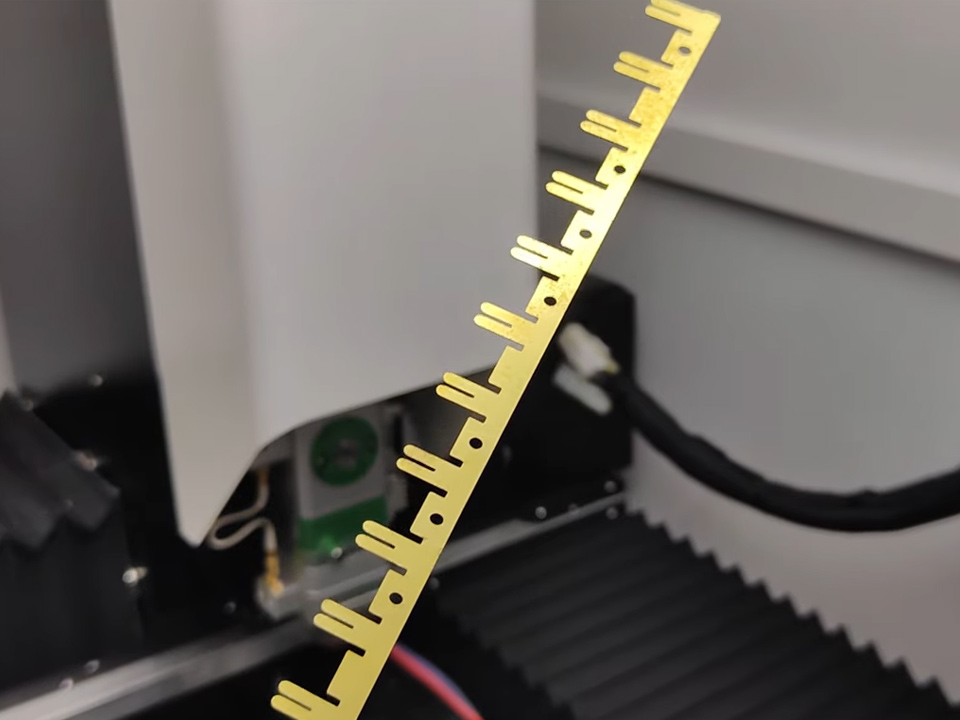
A lot of shops don’t have a machine problem. They have a setup problem. Copper, brass, and certain aluminum jobs punish lazy habits: dirty lenses, weak nozzle centering, sloppy focus checks, poor pierce timing, bad gas tuning, and that classic operator overconfidence where somebody says, “It was cutting fine yesterday.”
Yesterday doesn’t matter.
Reflective metals are less forgiving, more sensitive, and far more honest than mild steel. They reveal bad habits immediately. That’s why I treat them as skilled-work materials, not beginner materials.
Material compatibility is not just “can the beam cut it?”
This phrase gets abused.
Industrial laser cutting machine material compatibility should never mean only beam-material interaction. It also means: does your machine architecture, assist-gas setup, extraction, nozzle selection, and operator skill actually support repeatable production on that material without quality drift or hidden cost spikes?
That’s the real question.
Because yes, a machine may technically cut stainless, galvanized steel, aluminum, brass, and copper. But if the shop can’t hold quality, can’t control gas cost, or keeps fighting rework, then “compatible” becomes a pretty meaningless word.
What most content gets wrong about laser cutting materials
It confuses possible with practical.
And honestly, that one mistake ruins a lot of buying decisions. A machine spec sheet might say it can process mild steel, stainless, galvanized sheet, aluminum, brass, copper, and more. Fine. But that list tells you almost nothing about what your shop should prioritize, quote aggressively, or build a production plan around.
The better question is harsher.
Which material gives you repeatable edge quality, acceptable scrap, stable runtime, and a margin that survives contact with real operators, real delivery dates, and real customer expectations? That answer changes depending on beam source, power, thickness range, edge requirements, downstream coating or welding, and whether the customer is buying a structural part or a cosmetic one.
So here’s my plain ranking.
Best overall material
Mild steel.
Best premium production material
Stainless steel.
Best lightweight production material
Aluminum—if you know what you’re doing.
Best specialty electrical material
Copper, but only if your setup is actually ready for it.
And if your work includes prep for weld joints, chamfers, or more complex edge geometry, a bevel fiber laser cutting machine for groove cutting and chamfering changes the equation because material choice and part geometry start colliding in ways many entry-level buyers never model correctly.
FAQs
How do I choose materials for laser cutting?
Choosing materials for laser cutting means matching the metal to your machine power, assist-gas setup, required edge quality, part thickness, production volume, and real finished-part margin instead of just picking whatever the machine brochure says it can process.
Start with your part mix. Then look at thickness, finish standards, coating or welding needs, gas cost, and scrap risk. If you skip those steps, you’re not choosing a material strategy—you’re guessing.
Are stainless steel and aluminum suitable for fiber laser cutting?
Stainless steel and aluminum are both suitable for fiber laser cutting, but they usually demand tighter process control than mild steel because gas quality, pierce logic, heat input, and cosmetic edge consistency matter more during production.
Stainless is a strong premium choice when corrosion resistance matters. Aluminum is attractive for lightweight parts, but it gets expensive quickly if your setup is loose or your operators treat reflective materials casually.
Can fiber lasers cut copper and brass well?
Fiber lasers can cut copper and brass, but whether they cut them well depends heavily on machine configuration, optics protection, gas control, operator skill, and how stable the shop’s process really is over repeated production runs.
Technically possible does not mean commercially smart. I wouldn’t tell a new shop to build its early quoting around copper or brass unless the machine and the team are already prepared for the extra sensitivity.
Does material choice affect laser cutting safety and compliance?
Material choice affects laser cutting safety and compliance because different metals, coatings, and alloys can change fume behavior, operator exposure, extraction demands, and the overall control measures required for routine production.
That’s why material choice should never be treated as a simple cutting question. It’s also a process-control question, a ventilation question, and sometimes a very expensive mistake if ignored early.
Your next move should be practical, not flashy
If you’re building a production plan around real work—not showroom talk—start with mild steel, move into stainless when your process is stable, approach aluminum with more respect than the internet suggests, and treat copper or brass as specialty work until your machine, optics, gas control, and operators are genuinely ready.
That order matters.
It’s not glamorous. But it’s how shops stay profitable, keep scrap under control, and avoid turning a good laser investment into a very expensive lesson.


Hot Click
Contact Us
Application
©Copyright [bogonglaser.com]. BOGONG Laser Machine Supplier All Rights Reserved.