
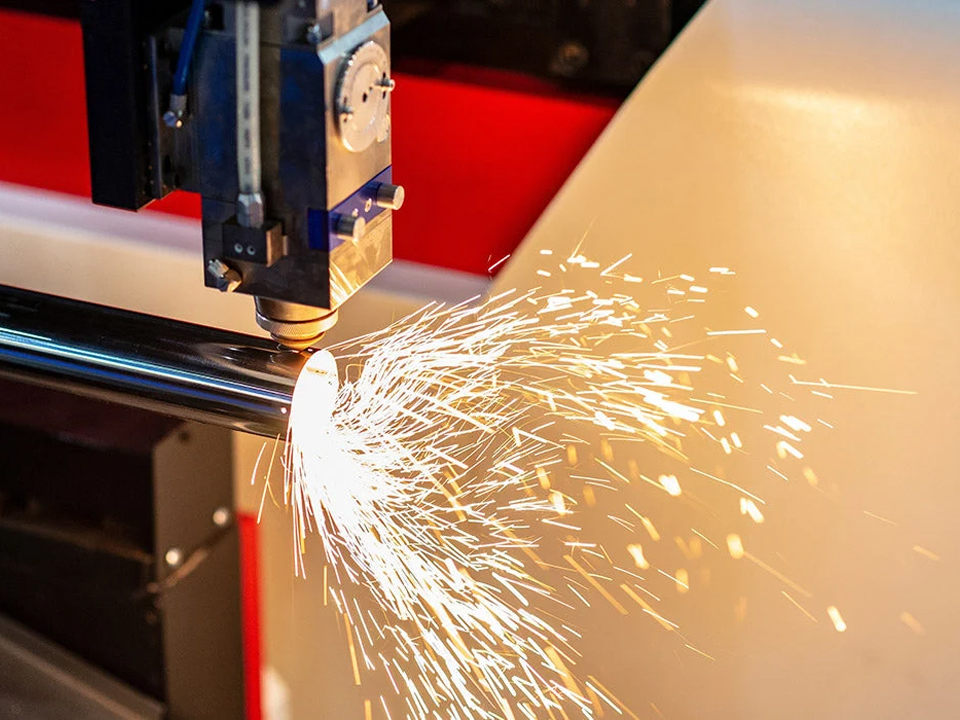
اختيار معدات قطع المعادن بالليزر المناسبة
How to match laser metal cutting equipment to your parts: power versus thickness, assist gas, sheet, tube and bevel formats, reflective metals, RFQ details, and supplier checks.

Laser metal cutting equipment is not a single product category. A 300 × 300 mm cabinet machine for jewelry parts, a 1500 × 3000 mm sheet cutter, a tube cutter with automatic loading, and a 12 kW bevel-cutting system solve different production problems, and a wrong match shows up later as slow throughput, poor edge quality, idle capacity, or unplanned gas and power costs. Most buyers start by comparing wattage and price. A better starting point is the part: material, thickness, size, edge requirement, and monthly volume. This guide explains how to turn those inputs into a short list of machine types, which specifications deserve scrutiny, which costs sit outside the machine quote, and what to prepare before requesting an RFQ from a manufacturer.
Which Types of Laser Metal Cutting Equipment Are Available?
For metal, the practical choice is between a few machine formats, and the format matters more than the power rating. Fiber lasers are the usual source for metal; the BOGONG LASER cutting-machine pages describe 1070 nm solid-state continuous-wave fiber sources. CO₂ machines are covered later.
| Equipment format | Typical work | نقاط القوة الرئيسية | Main watch-outs |
|---|---|---|---|
| Flatbed sheet cutter (e.g., 1500 × 3000 mm) | Enclosures, brackets, panels, signage | Flexible nesting, wide material range | Bed size must match purchased sheet stock; gas and power draw rise with wattage |
| High-power flatbed with exchange pallet | Thick plate, continuous production | Loading while cutting continues | Higher installation, gas, and floor-space requirements |
| Tube cutter (manual or automatic loading) | Frames, furniture, profiles | Cuts, notches, and slots round and shaped tube in one setup | Diameter range, tube length, and straightness limit what runs well |
| Combined sheet-and-tube machine | Shops with mixed work | One machine, smaller footprint | Compromises one function if workload leans heavily toward the other |
| Bevel (5-axis head) cutter | Weld-prepped plate | Produces V, X, and Y edges in the cutting step | Needs bevel-capable CAM and operator skill; higher cost |
| Compact cabinet cutter (e.g., 300 × 300 mm) | Jewelry, small precision parts | Enclosed, small footprint | Not a substitute for sheet production |
Shops that cut mostly flat sheet usually begin with a standard fiber laser cutting machine in the 1,000W to 6,000W range. That product page lists a 1500 × 3000 mm cutting size, closed-loop servo drive, and refrigerated water cooling. Buyers who want a wider comparison across the product line can start from the metal cutting laser machine overview, which also lists the subsystems (cutting head, chiller, gas supply, air compressor, dust extraction) that make up a full cutting system rather than a laser source alone.
How Much Laser Power Do You Actually Need?
Laser power determines how thick a material can be cut and how fast. It does not, by itself, determine accuracy. The common mistake is to size the machine to the thickest plate you might cut once a year, then pay for that capacity in electricity, gas, and capital on every shift.
A more defensible approach is to separate two numbers:
- Production thickness: the range that makes up most of your monthly volume, cut at acceptable speed and edge quality.
- Maximum thickness: the upper limit the machine can sever, often with slower speed, wider kerf, rougher edges, or a narrower process window.
Published ratings blur this distinction. As an example, one manufacturer buying guide positions 8–12 kW machines for production work up to about 25 mm carbon steel and 16 mm stainless, and a 4–6 kW tier for roughly 16 mm carbon and 8 mm stainless. The product page for BOGONG’s 6000W–40kW high-power fiber laser cutting machine, by comparison, quotes thicknesses for a 6 kW source of up to 25 mm carbon steel, 18 mm stainless steel, 16 mm aluminum, and 10 mm copper and brass. The figures are not necessarily in conflict; they likely reflect different definitions of “cut.” But a buyer reading both could draw very different conclusions. Treat any thickness table as a maximum until the supplier states the assist gas, edge-quality criterion, and cutting speed behind it.
Higher power is also not automatically the better purchase. At the thin-gauge end, extra wattage raises speed, but the part may be limited by piercing time, acceleration, nesting, or loading rather than beam power. A 12 kW machine running 2 mm sheet can sit idle waiting for the operator.
Illustrative example (hypothetical)
A fabricator makes 2–3 mm stainless steel enclosures all year and a few 10–12 mm carbon steel brackets each month. Buying for the brackets would push the shop into a larger source and higher gas and power costs on every enclosure. A mid-power machine, with the occasional heavy bracket cut at slower speed or outsourced, may give a lower total cost. The answer changes if brackets grow to 30 percent of volume. Size to the volume-weighted workload, then verify the occasional heavy job with a sample cut.
Which Assist Gas and Utilities Will the Machine Need?
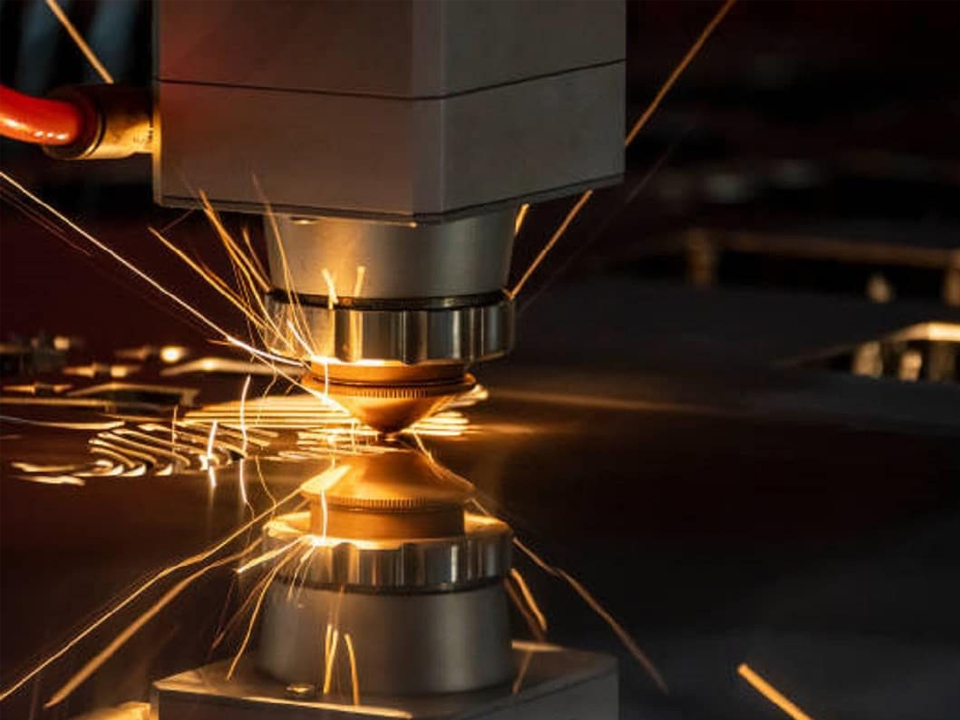
Assist gas can be a significant running cost, and it is rarely included in the headline machine price.
According to Linde’s laser cutting gas guidance, oxygen is the standard active assist gas for mild and carbon steels, while nitrogen is an inert gas that suits applications where a clean edge matters. Linde’s nitrogen page names stainless steel and aluminum alloys as typical nitrogen jobs, notes that higher nitrogen pressure gives faster cutting speeds, and states a minimum nitrogen purity specification of 99.998 percent for its laser cutting gas. Those are one supplier’s product specifications, but the underlying point applies broadly: gas type, purity, pressure, and flow rate affect speed, edge oxidation, and operating cost.
For buyers, this means asking:
- Which gas does each material and thickness in my plan require?
- What nitrogen volume and pressure does the cutting head consume at my typical thickness?
- Is supply by cylinder, bulk tank, or on-site nitrogen generator more economical at my volume?
- What electrical supply is needed? On BOGONG’s product pages, the 3015 flatbed lists 220V single-phase or 380V three-phase options, while the 6 kW and higher-power flatbed and bevel machines list 380V three-phase.
- What chiller and compressed-air capacity is required?
Gas and power costs scale with wattage and utilization, so include them when comparing two quotes.
How to Choose Between Sheet, Tube, Combined, and Bevel Machines
Sheet cutting: bed size and loading
Bed size should follow the sheet stock you buy. A 3015 bed takes sheets up to 3,000 × 1,500 mm; a larger bed adds floor space, cost, and handling needs without benefit if your parts nest well on standard sheets. If production runs more than one shift, ask whether an exchange pallet is available so that loading does not stop the beam.
Tube cutting: diameter, length, and loading
Tube machines are defined by their chuck and support design. BOGONG’s ماكينة قطع الأنابيب الليزرية ذات التحميل الأوتوماتيكي page lists auto-feed processing for diameters of roughly φ10 to φ180 mm, with a maximum of 240 mm when tubes are loaded by hand, plus a three-chuck design intended to limit deformation and support long tubes. Before buying any tube cutter, confirm the supported cross-sections (round, square, rectangular, others), tube lengths, wall-thickness range, and whether the machine handles zero-tail cutting to reduce scrap.
Combined machines
A sheet and tube fiber laser cutting machine combines both functions and lists source options from 1,500W to 10 kW. It makes sense when both volumes are moderate and floor space is limited. If either process is a high-volume core business, two dedicated machines may keep both lines productive at the same time instead of forcing one job to wait for the other.
القطع المائل
If your parts go to welding, bevel preparation can be moved into the cutting stage. A آلة القطع بالليزر الليفي ذات الحواف المائلة uses a five-axis cutting head; the product page lists ±45° bevels and V, X, and Y profiles. Ask how bevel accuracy is verified, which thickness range the bevel head supports at which angle, and whether your CAM workflow can program the bevel geometry. Bevel cutting needs more than a hardware upgrade; programming of corners, lead-ins, and run-outs affects quality.
Compact precision cutting
For small parts in precious metals or thin stainless, a machine like the 300 × 300 mm compact fiber laser cutter for brass, gold, and silver fits better than a sheet cutter. Where the actual requirement is surface engraving rather than through-cutting, a آلة النقش والقطع بالليزر الليفي للمجوهرات المعدنية in the 50–100W range may be the more suitable class, though the product page positions it mainly for personalized engraving. Confirm the actual cutting thickness in your metal before ordering.
What About Copper, Brass, and Aluminum?
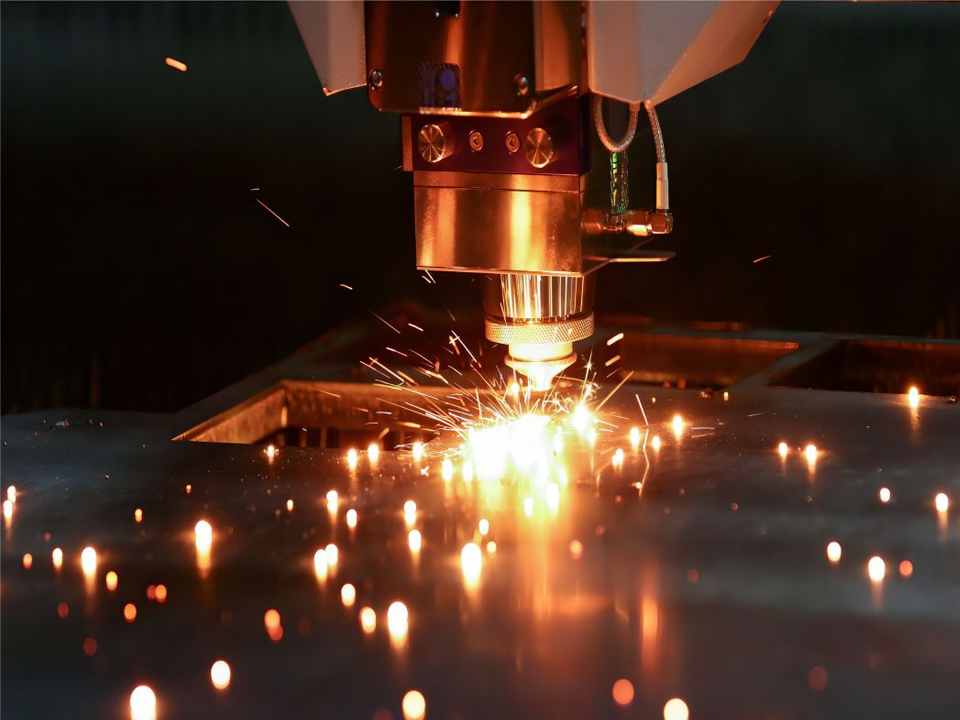
Reflective metals deserve a separate check because they behave differently from steel under a fiber laser. A technical presentation from SPI Lasers on back-reflection protection identifies copper, brass, and aluminum as the challenging materials for fiber laser cutting, and describes how light reflected back through the delivery fiber can heat the cutting head and fiber. It places the first back-reflection peak in the pierce phase, while the metal surface is still solid, and describes power ramping to reduce it. The document is a laser manufacturer’s presentation from 2018, so treat it as a technical explanation rather than a current performance guarantee.
For a buyer, the practical questions are:
- Does the laser source include back-reflection protection or monitoring?
- Does the supplier provide tested piercing parameters for your alloy and thickness?
- Is the maximum thickness for copper and brass stated separately from steel (the 6 kW page above lists 10 mm for copper and brass)?
- Which gas was used in the stated test?
If reflective metals make up a significant share of your work, ask for a sample cut in your exact alloy before you commit.
Should You Buy Fiber or CO₂ for Metal Cutting?
For metal-only production, fiber is the usual choice, and CO₂ is mostly considered when the shop also cuts non-metals such as acrylic or wood. CO₂ lasers operate at a longer wavelength (10,600 nm) than fiber lasers (about 1,070 nm), and metals generally absorb the fiber wavelength more efficiently. A CO₂ laser engraver-cutter is better evaluated for mixed-material, lower-power work rather than as a primary route to industrial metal cutting. If you need to cut both metal and non-metal, price two separate machines against a hybrid compromise.
What Else Belongs in the Purchase Decision?
Cutting is rarely the last process. Two adjacent steps affect equipment planning:
- Part identification. Serial numbers, QR codes, and logos are commonly applied after cutting. A آلة الوسم بالليزر الليفي 30W أو آلة الوسم بالليزر الليفي الكل في واحد can serve that role on cut parts, without competing for beam time on the cutter.
- Surface preparation before welding or coating. Some downstream welding or coating specifications call for cleaned surfaces after thermal cutting. A آلة التنظيف بالليزر النبضي 1000 واط is listed for oxide-film removal before welding on its product page. Whether it is justified depends on your downstream quality requirements, so it should be evaluated separately rather than bundled into the cutter decision.
What Safety and Compliance Checks Apply?
The laser inside an industrial cutter is a high-hazard source, and the enclosure and interlocks are what make the system safe to operate. Switzerland’s Federal Office of Public Health, in its factsheet on laser material processing, advises using Class 1 (fully enclosed) laser systems for material processing, and refers to SN EN 60825-1 and SN EN ISO 11553-1 as the laser-safety standards for machinery. That guidance is specific to Switzerland, so confirm the equivalent requirements in your own market, such as CE marking in the EU. Ask the supplier for the declaration of conformity and test documentation applicable to the exact model, and check interlock design, fume extraction, and fire protection for the materials you cut. Do not assume a product page’s safety wording equals certification.
What Should You Prepare Before Requesting a Quote?
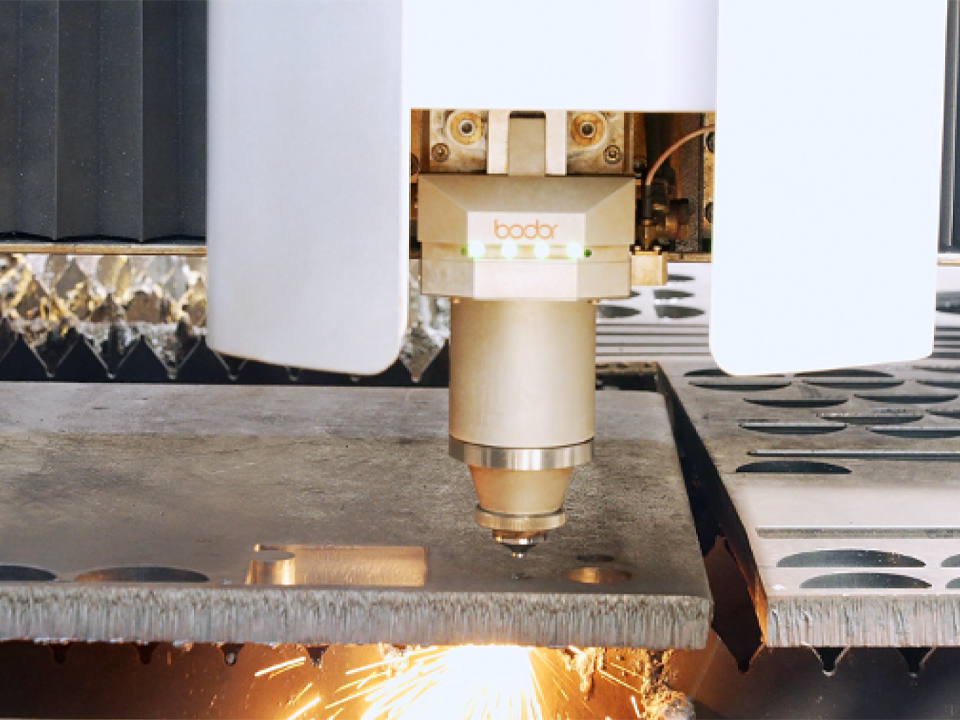
An accurate RFQ lets the supplier size the machine instead of guessing. Include:
| بند طلب عرض الأسعار | ما أهمية ذلك |
|---|---|
| Materials and grades (e.g., 304 stainless, mild steel, 5xxx aluminum) | Determines gas, source behavior, and reflective-metal risk |
| Thickness range, and the share of volume at each thickness | Separates production thickness from maximum thickness |
| Largest sheet or tube size, plus diameter range for tube | Sets bed size, chuck capacity, and loading method |
| Edge requirement (bright, oxide-free, weld-ready, bevel angle) | Drives gas choice and process capability |
| Monthly volume and shift pattern | Indicates whether pallet exchange or automation is justified |
| Tolerance requirement and how it is inspected | Positions accuracy claims against your real needs |
| Electrical supply, gas supply, and available floor space | Prevents installation surprises |
| Target market and compliance needs | Determines documentation |
| Software and file formats | Confirms CAD/CAM compatibility |
| Training, installation, and spare-parts expectations | Affects uptime and first-year cost |
One further point on accuracy. BOGONG’s product pages list the same positioning accuracy (≤±0.03 mm) and repeatability (≤±0.02 mm) across several different machine formats. A single spec line cannot capture the effect of machine size, thermal behavior, or part geometry, so ask how those figures were measured and request a test-cut report on a part similar to yours.
What Should You Verify Before Selecting a Supplier?
Before signing, request:
- Sample cuts in your material, thickness, and gas, with measured edge quality and cut time.
- Component transparency: laser source brand and model, cutting head, controller, drives, and chiller. BOGONG’s product pages name sources such as Raycus, IPG, and MAX across the range; confirm which one applies to your quotation.
- Warranty terms in writing. The pages list a two-year limited warranty and technical support, but scope, exclusions, and consumables coverage must come from the contract.
- Lead time, packing, and shipping terms, with installation and commissioning responsibilities defined.
- Spare parts and service response for lenses, nozzles, protective windows, and chillers.
- Reference customers running a similar machine in a similar application.
الأسئلة الشائعة
What laser power do I need for metal cutting?
Choose power from your production thickness, not your occasional maximum. Higher power cuts thicker material and runs faster, but also raises gas and electricity costs. Verify the thickness rating with sample cuts in your material, using the assist gas and edge quality you require.
Is a fiber laser better than a CO₂ laser for cutting metal?
For metal-only production, fiber lasers are generally the preferred choice because metals absorb the roughly 1,070 nm fiber wavelength well. CO₂ lasers are more often considered for mixed shops that also cut non-metals. The right choice depends on your material mix.
Which assist gas should I use for laser cutting steel and stainless steel?
Oxygen is the standard active assist gas for mild and carbon steel, while nitrogen is typically used for stainless steel and aluminum when a clean edge is needed. Nitrogen raises running cost, so confirm consumption and purity requirements with the supplier.
Can a fiber laser cut copper and brass?
Yes, but reflective metals need more care. Check for back-reflection protection, tested piercing parameters, and a stated maximum thickness for each alloy. Request a sample cut in your exact material, because performance varies by alloy, thickness, power, and gas.
Should I buy a sheet cutter, tube cutter, or combined machine?
Match the machine to your volume split. A combined sheet-and-tube machine saves space for mixed, moderate workloads. If either sheet or tube is a high-volume core process, a dedicated machine usually keeps that line productive without competing for machine time.
What does a laser metal cutting machine cost beyond the purchase price?
Beyond the machine, budget for assist gas, electricity, chiller and compressor operation, consumables such as nozzles and lenses, extraction, installation, training, and freight. These recurring items can change which of two quotations has the lower total cost.
What should I ask a supplier before ordering?
Ask for sample cuts in your material, the laser source and component brands, safety and conformity documents for your market, written warranty terms, lead time, installation scope, and spare-parts availability. Compare quotes on these points, not only on wattage and price.


نقرة ساخنة
اتصل بنا
التطبيق
©حقوق النشر [bogonglaser.com]. جميع الحقوق محفوظة لمزود ماكينات الليزر بوغونغ ليزر.