-
Shunhua Road, orașul Jinan, Shandong

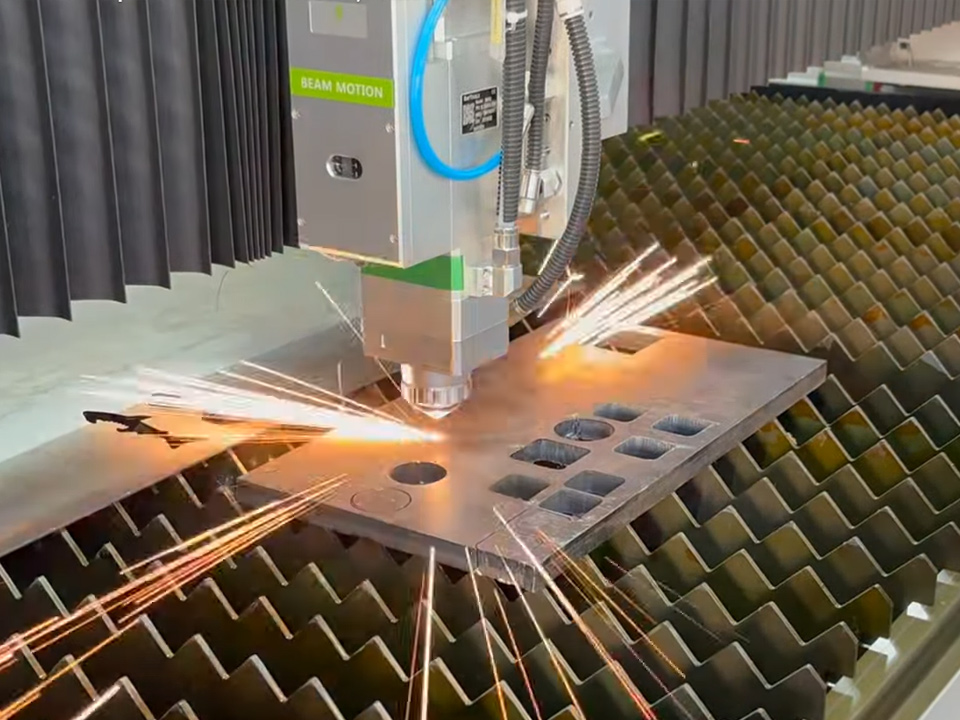
What Fiber Laser Power Is Needed to Cut 6mm Stainless Steel?
A hard-nosed guide to fiber laser power for 6mm stainless steel, with real-world cut logic, edge quality trade-offs, and buying advice.

If you’re asking about fiber laser power for 6mm stainless steel, the real starting point is usually 3kW, the range I’d call comfortable for actual production is 4kW to 6kW, and anything lower than that tends to drag you into a narrower process window where feed rate, pierce stability, nozzle condition, and gas behavior start bossing the operator around more than they should.
And honestly, that’s the version most buyers should hear first. I’ve sat through too many conversations where somebody says a 2kW source can cut 6mm stainless as if that settles it. It doesn’t. A machine “can” do something in a demo hall and still be a pain in the neck on the shop floor five weeks later when the sheet isn’t perfect, the nozzle isn’t fresh, and the operator is juggling three jobs at once.
So when people ask me what fiber laser power is needed to cut 6mm stainless steel, I don’t hear a lab question. I hear a business question. I hear: what power level gives me decent edge quality, fewer ugly surprises, tolerable nitrogen cost, and a machine that doesn’t need constant hand-holding to get through a normal production run?
That’s a different question.
And stainless is touchy. More than mild steel. Everybody in this trade knows it, even if some sellers talk around it. Six-millimeter stainless will quickly expose weak spots in the whole cut stack—beam quality, height control, nozzle centering, gas train stability, focus tuning, motion smoothness, all of it. A demo coupon can flatter a machine. Production usually doesn’t.
A 2024 study on 4 mm and 6 mm stainless cutting found that laser power, cutting speed, and assist gas pressure materially affected dimensional accuracy and cut quality. That’s exactly why I don’t like power-only sales talk. The usable process window matters as much as the headline wattage.
What fiber laser power is needed to cut 6mm stainless steel, really?
Here’s the practical view I’d use before spending real money:
| Power Level | Can It Cut 6mm Stainless? | Real-World Verdict | Typical Use Case |
|---|---|---|---|
| 1.5kW–2kW | Sometimes | Marginal, slow, narrow process window | Trials, light-duty work, low throughput |
| 3kW | Da | Entry point for serious work | Small shops, mixed production |
| 4kW | Da | Best balance for many buyers | General production, cleaner output, better speed |
| 6kW | Da | Strong production choice | Higher volume, thicker mix, more margin for error |
| 12kW+ | Absolutely | Overkill if 6mm is your main job | Shops also cutting much thicker plate |
The table looks neat. Real life isn’t.
If 6mm stainless comes up regularly in your order book, I’d be looking hard at a proper mașină de tăiat cu laser cu fibră in the 4kW to 6kW zone, not trying to squeeze “acceptable” behavior out of a smaller source just because the quote looked friendlier on day one. And if you’re already dealing with thicker plate, mixed materials, or plans to grow output, then a 6000W to 40kW high-power fiber laser cutting machine starts to look less like overkill and more like insurance.
The ugly truth about 2kW for 6mm stainless
Can it cut it?
Yes, sometimes.
Would I buy around that assumption? Not unless the workload is light, the expectations are modest, and the buyer fully understands what corners they’re standing near. This is where sales language gets slippery. A seller shows a clean test piece. The buyer sees capability. But capability is not the same as repeatability, and repeatability is where the money either stays in your pocket or quietly leaks out through gas, rework, lost time, and operator frustration.
And it never starts with disaster. It starts with “good enough.” Then the pierce takes longer than expected. Then the feed gets nudged down. Then the edge is fine on some nests and rougher on others. Then everyone starts blaming material, instead of admitting the machine is running close to the edge of its comfortable zone.
A 2025 study on AISI 304 stainless steel showed measurable changes in roughness, kerf geometry, and microhardness when cutting speed and focus position shifted, even with power fixed at 2000 W and gas pressure at 14 bar. That tells you something useful: when you’re trying to make lower power do thicker stainless work, the process window gets less forgiving.
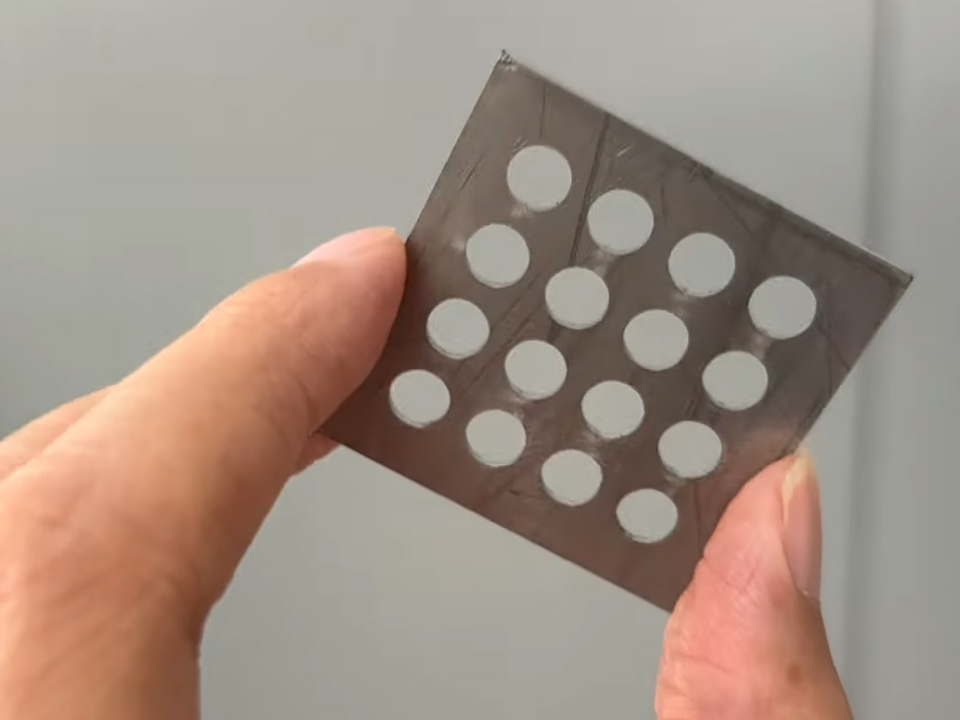
Fiber laser cutting 6mm stainless steel is a systems problem, not a brochure problem
People love talking wattage.
Fine. Wattage matters. But on 6mm stainless, the actual result comes from the whole chain: source quality, head stability, focus strategy, capacitive sensing, nozzle condition, assist gas consistency, sheet condition, and how much slop the operator has in the setup. Leave one of those weak, and the cut starts to tell on you.
Especially gas.
This is where a lot of cheap quotes stop looking cheap. Most shops that want a bright, clean, low-oxide cut on stainless are using nitrogen assist gas, not oxygen. Nitrogen helps produce the kind of edge people actually want for visible parts, downstream welding, or premium fabrication work. It also pushes operating cost up. Sometimes hard.
So when somebody asks me for the best fiber laser for 6mm stainless steel, I don’t start chanting source brands like they’re football clubs. I look at the whole package. Gas train. Cutting head. Motion platform. Dust extraction. Service support. The boring stuff. The stuff that determines whether the machine runs smoothly or turns into a temperamental diva every time production gets busy.
That stuff matters more than the sales deck.
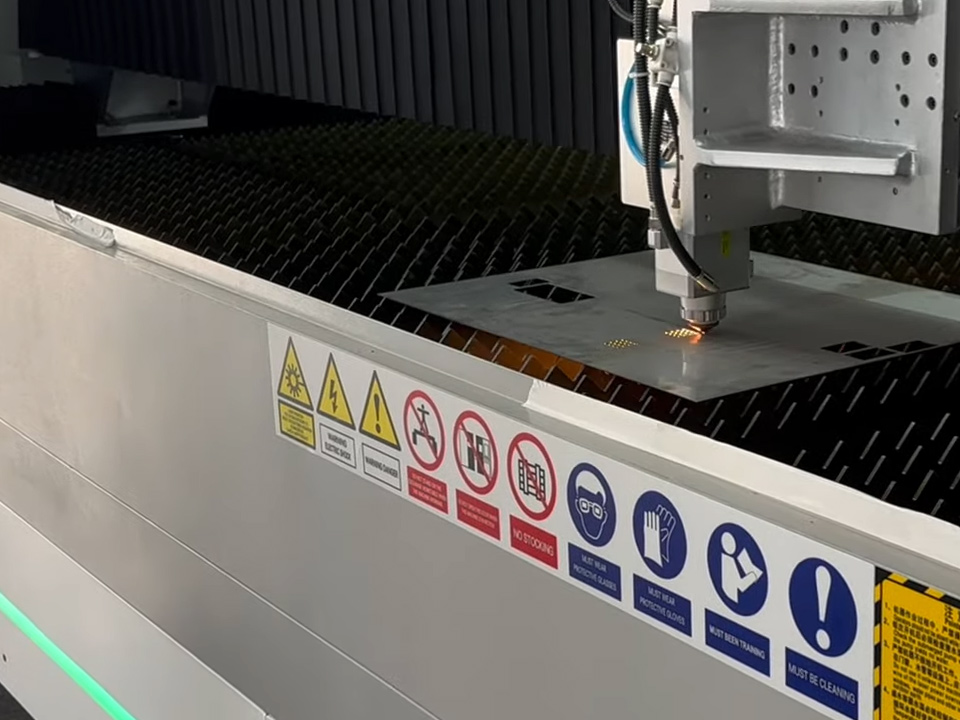
And while people obsess over cut speed, some of them get strangely casual about safety. OSHA states that laser hazard classification exists to define proper control measures and hazard awareness, and yet plenty of shops still treat guarding like an optional accessory instead of part of the cutting cell. If you’re building out a serious setup, a laser protective fence is not just a nice extra. It’s basic discipline.
Stainless steel laser cutting power requirement: how I’d decide
Here’s how I’d simplify it.
If your shop mostly cuts thin sheet and only occasionally touches 6mm stainless, 3kW can work. Not magically. Not effortlessly. But it can work if the machine is decent and the operator knows what they’re doing.
If 6mm stainless is a regular production thickness and edge quality matters, I’d move the discussion to 4kW quickly. That’s where a lot of buyers stop fighting the machine so much.
If the shop wants more throughput, more parameter tolerance, and less of that “let’s hope today’s batch behaves” feeling, 6kW is where things get a lot more relaxed. More margin. More headroom. Fewer excuses.
And I frankly believe headroom gets undervalued because it doesn’t photograph as well as a low entry price.
That matters in a choppy metals market. Reuters reported in April 2024 that the World Steel Association expected global steel demand to rise 1.7% in 2024 to 1.793 billion metric tons, though the recovery remained uneven by region. Reuters also reported in April 2024 that Eurofer cut its EU steel demand growth forecast again and noted imports had risen 11% in Q4 2023, accounting for 27% of total consumption that year.
That’s not the kind of market where I want machine regret.
How to cut 6mm stainless steel with a fiber laser without fooling yourself
Let me put it another way.
The smartest buyers don’t ask only whether the machine can cut 6mm stainless. They ask what else the machine needs to do over the next two or three years. That’s the part beginners miss. Machines stay. Orders shift. Material mix changes. The one job that justified the purchase often stops being the only job six months later.
So before I’d get hypnotized by one clean coupon, I’d zoom out. A best metal cutting laser machine isn’t the one that wins on brochure sparkle. It’s the one that fits your real schedule, operator skill, maintenance discipline, and part mix. And if the workflow includes weld prep or angled edge work, then a bevel fiber laser cutting machine might improve the overall job economics more than simply chasing another jump in source power.
That’s the kind of thing experienced shops think about.
Not just the shiny spec.
6mm stainless steel cutting speed fiber laser discussions usually miss the ugly costs
Everybody asks about speed.
But speed by itself is a half-truth. A machine can post a sexy cutting-speed number and still lose the plot once you count real-world pierce time, rejected parts, cleanup labor, gas consumption, nozzle wear, and the annoying fact that not every sheet comes in perfectly flat and cooperative.
I’ve watched shops brag about meters per minute while quietly burning margin on secondary cleanup. That’s not efficiency. That’s accounting with makeup on.
So when people ask me about 6mm stainless steel cutting speed fiber laser targets, I usually push them toward a duller but better metric: repeatable good parts at sane operating cost. Fast and twitchy looks great in a demo clip. Stable and profitable looks better on a monthly report.
I know which one I’d pick.
So what should you actually buy?
My answer hasn’t changed.
If 6mm stainless matters to your business, I’d put 4kW to 6kW at the center of the shortlist. That range gives most shops the best mix of cutting confidence, better throughput, and enough process margin that the machine doesn’t feel edgy every time conditions drift.
If the budget is tighter and production demands are lighter, 3kW is still a reasonable floor. Not luxurious. Not foolish. Reasonable.
But if someone is pitching 2kW as the ideal production answer for steady 6mm stainless work, I’d want proof on your material, your geometry, your quality standard, and more than one carefully staged test piece. I’d also ask uncomfortable questions about gas use, nozzle life, pierce consistency, and what the cut face looks like after the machine’s been running for a while.
That’s where sales confidence usually gets quieter.
Întrebări frecvente
Can a 2kW fiber laser cut 6mm stainless steel?
A 2kW fiber laser can cut 6mm stainless steel under controlled conditions, but it usually operates with a tighter process window, slower cutting speeds, and less tolerance for sheet variation, nozzle wear, and gas instability than a 3kW to 6kW production-oriented setup.
Yes. It can. But that doesn’t mean it’s the smart production choice for most shops.
Is 3kW enough for 6mm stainless steel?
A 3kW fiber laser is generally the minimum practical power level for regular 6mm stainless steel cutting because it offers a workable balance between penetration capability, edge quality, and throughput without pushing the process as close to instability as a 2kW machine often does.
That’s why I see 3kW as the entry point for serious work, not the dream setup.
What is the best fiber laser power for 6mm stainless steel?
The best fiber laser power for 6mm stainless steel is usually 4kW to 6kW because that range gives most fabricators better cutting speed, wider parameter tolerance, stronger edge consistency, and more room for mixed-material production than lower-powered systems built around minimum-cost entry pricing.
For most real shops, that’s the sweet spot. Cleaner. Safer. Less fiddly.
Why is nitrogen often used for cutting 6mm stainless steel?
Nitrogen is commonly used for cutting 6mm stainless steel because it helps produce a bright, oxidation-free edge, reduces post-processing needs, and supports cleaner cosmetic results than oxygen-based cutting, especially when appearance, welding readiness, or premium finished-part quality matters to the customer.
The catch is cost. Nice edges usually aren’t free.
Does higher power always mean better cutting quality?
Higher laser power does not automatically mean better cutting quality because quality still depends on focus position, beam delivery, gas pressure, nozzle condition, motion control, and parameter tuning; more power simply gives the operator a wider and usually more forgiving working window when the rest of the system is sound.
So yes, more power helps. But sloppy setup can still make an expensive machine look bad.
Ready to choose a machine without getting seduced by the easy pitch?
If you’re evaluating fiber laser power for 6mm stainless steel, don’t stop at “can cut.” Ask what cuts cleanly, what cuts repeatedly, and what still makes sense when gas bills, scrap, maintenance, and delivery pressure enter the picture.
Start with a serious mașină de tăiat cu laser cu fibră, compare it with a high-power production model, and treat safety like part of the machine purchase, not an afterthought, with a proper laser protective fence.


Click fierbinte
Contactați-ne
Aplicație
©Copyright [bogonglaser.com]. BOGONG Laser Machine Supplier All Rights Reserved.