-
Strada Shunhua, città di Jinan, Shandong

Industries That Benefit Most From Fiber Laser Cutting Technology
Not every factory needs a fiber laser. But the shops chasing thinner margins, tighter tolerances, and faster changeovers usually do. Here’s where fiber laser cutting technology pays off, where it disappoints, and why the loudest sales claims often miss the shop-floor math.

Stop romanticizing the machine
I’ve seen this movie before: a factory boss signs off on a new laser, the sales rep smiles, the install team leaves, and for about three weeks everybody walks around like they just bought a printing press for money—until the nesting is sloppy, the material spec drifts, the nozzle gets abused, and suddenly the “profit machine” is just another expensive box sitting on the floor. Then reality hits.
It depends.
But that’s the part most articles skip, isn’t it? They act like fiber laser cutting technology is automatically the right move for any metal shop with electricity and ambition. I frankly believe that’s lazy advice. The machine matters, sure, but the job mix matters more. The quoting style matters. The rework rate matters. The amount of nonsense between CAD and shipped part matters even more.
And here’s the ugly truth: a laser doesn’t fix a messy operation. It just shines a brighter light on it.
A weak shop will still miss tolerances, still scrap parts, still chase bad files, still blame operators for management mistakes. Only faster. If your drawings are a mess, your assist gas is inconsistent, and nobody on the floor trusts revision control, you won’t suddenly become “high precision” because the brochure said so.
That’s why I don’t buy the blanket claim that all manufacturers benefit equally. They don’t. Some absolutely clean up with fiber laser cutting. Others? They just buy a very expensive headache.
If you’re still comparing modern lasers to old punch-and-die logic like it’s 2014, you’re already behind. U.S. Census data showed fabricated metal products shipments running above prior-year levels in 2024, which matters because rising throughput in metal-heavy sectors tends to reward flexible cutting processes more than fixed tooling does.
That matters.
Where fiber laser cutting technology actually makes money
1) Metal fabrication shops and contract manufacturers
Anecdotally—and I say this as someone who’s watched enough fabrication businesses drown in short-run chaos—the first group that usually gets real value out of fiber laser cutting technology is the contract fab crowd, because they don’t live in a clean, stable production world; they live in revision hell, customer panic, ugly job stacks, mixed materials, and quote requests that show up late on Friday like they own the place.
That’s the sweet spot.
If you’re cutting brackets, cabinets, doors, covers, gussets, enclosures, chassis panels, machine skins, and custom sheet assemblies all week long, the appeal is obvious. Not glamorous. Just obvious. The machine isn’t only cutting metal—it’s cutting set-up drag, reducing die dependency, and letting the shop breathe when a customer changes hole locations for the third time in one afternoon.
From my experience, that’s why broad sheet metal fabrication still sits at the center of most serious fiber laser cutting applications. The economics line up. Short runs. Mid-volume repeats. Too many SKUs. Too much churn. Traditional tooling starts to feel clunky in that environment, while a programmable cutter feels—well—less brittle.
And it’s not always about chasing bigger wattage, either. That’s rookie thinking. Sometimes the smarter move is simply matching the machine to the actual work, which is why a practical macchina per il taglio laser in fibra or a more production-minded best metal cutting laser machine setup can be a better call than overbuying horsepower you’ll never fully load.
Because unused capacity is still waste. Fancy waste, but waste.
2) Automotive and EV supply chains
But let’s get more specific.
Automotive isn’t attractive because cars are “high tech.” That phrase gets tossed around too much. The real reason this sector benefits is uglier and more practical: constant platform updates, supplier-side price pressure, lightweighting targets, bracket redesigns, thermal management changes, and battery-related geometry that rarely sits still for long. That kind of motion punishes rigid tooling.
Which is why flexible cutting starts to look really good.
Reuters reported in February 2024 that EV makers were already dealing with layoffs, altered plans, and production cuts as demand cooled in the near term. A lot of people read that as a sign of weakness. I read it differently. When production forecasts get shaky, suppliers usually want fewer fixed-cost commitments and more process flexibility—not less.
That’s the angle.
And the battery side didn’t exactly go quiet. Reuters reported in September 2024 that the U.S. Department of Energy planned to award $3 billion to 25 battery manufacturing projects in 14 states. Real money. Real plants. Real fabricated hardware.
So when people ask me which sectors benefit most from laser cutting, I keep coming back to EV-adjacent suppliers making battery trays, module supports, cooling system hardware, charger cabinets, mounting plates, and all the weird little structural components that never get featured in glossy marketing photos but somehow carry the whole production chain on their backs.
Not sexy. Important.
That’s why industries using fiber laser cutting at a serious level often include auto suppliers and EV ecosystem manufacturers. Not because lasers are trendy. Because design volatility is expensive, and slow changeovers are even worse.
3) EV charging infrastructure and energy hardware
Here’s one that too many writers still miss.
EV infrastructure.
Not the car itself. The boxes around it. The charger housings, mounting assemblies, support brackets, cable management panels, weather covers, utility-side enclosures, steel shells, kiosk frames—that stuff. The boring stuff. Which, by the way, is usually where the money hides.
The Federal Highway Administration’s EV charger rules matter here. Starting July 1, 2024, chargers manufactured for covered projects need final assembly in the U.S. and at least 55% domestic component cost, while predominantly steel or iron housing components must meet Buy America requirements. Reuters also reported that the rules require U.S.-made iron or steel charger enclosures or housing.
That last word matters. Enclosures.
I’m hammering that point because it changes the manufacturing math. If you build charger housings or related infrastructure, the case for best industries for fiber laser cutting gets stronger fast. This is enclosure-heavy work. Plate, sheet, mounting geometry, repeatability, surface-ready edges, lots of revisions. Exactly the kind of production environment where laser processing can trim time without locking you into old tooling logic.
And yes, if a buyer is trying to figure out how this fits a broader production mix, a practical review of laser cutting machine application isn’t a bad place to start. Too many people buy equipment before they’ve even mapped their real part families.
That never ends well.
4) Aerospace and defense suppliers
Now this sector—honestly—gets hyped for the wrong reasons.
People hear “aerospace” and immediately think ultra-fancy parts, micron-level tolerances, magic metallurgy, and machines that somehow float above normal factory reality. That’s only half true. Aerospace absolutely demands discipline, traceability, and repeatability. But it also involves mountains of brackets, mounts, fixtures, support parts, clips, shields, and thin-gauge components that are not mystical at all. They’re just demanding.
The FAA’s 2024 economic impact report said U.S. civil commercial aircraft manufacturing generated $57 billion in total output. Reuters separately reported that Airbus delivered 735 aircraft in 2023 and ended the year with a backlog of 8,598. That backlog isn’t just a headline; it translates into production pressure across suppliers and subsuppliers, including plenty of fabricated metal work.
That’s real demand.
Still, let’s not overstate it. Fiber laser cutting technology is not some universal aerospace cheat code. It won’t replace every process. It shouldn’t. Some alloys, thickness ranges, and downstream requirements still push work toward waterjet, EDM, machining, or other routes. Anyone who pretends otherwise is either selling a machine—or hasn’t spent enough time around actual parts.
But for the right batch of stainless, aluminum, and carbon steel support components? It fits. Very well, actually.
Reuters also reported this week that Honeywell and Howmet were managing rising defense demand alongside a commercial aerospace upswing. Again, that doesn’t automatically mean “everyone buy lasers tomorrow morning.” But it does support the idea that programmable, high-throughput metal cutting has a strong seat at the table when demand pressure rises and part mix stays messy.
Demand spikes. Suppliers scramble.
That’s usually when flexible processes start looking less like a luxury and more like basic survival.
5) Tube processing, structural products, and equipment frames
And then there’s tube.
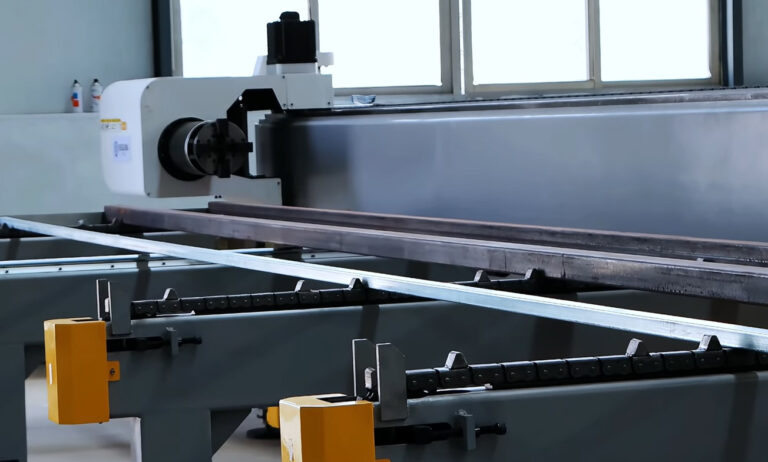
Honestly, this segment doesn’t get enough respect in most laser articles. Maybe because it sounds less glamorous than aerospace or EVs. But if you’ve ever watched a shop burn labor on saw cuts, drill cycles, coping, manual layout, weld-prep marking, and all the little repeatable nonsense that clogs production flow, you already know why laser tube systems matter.
Agricultural equipment. Gym machines. Trailer parts. Rack systems. Furniture frames. Material handling equipment. Exhaust assemblies. Structural support products. None of this sounds flashy. That’s fine. Profit rarely does.
The reason this group benefits is simple: laser tube cutting can collapse multiple steps into one upstream process, which means fewer handoffs, fewer opportunities for human error, and a much cleaner path into welding or assembly. A decent automatic loading laser tube cutting machine can save a shop from death by a thousand touches.
That’s not poetic. It’s just the shop-floor truth.
And if the product family has enough repetition—but not so much that dedicated tooling makes more sense—then the economics can get very compelling, very quickly.
6) Heavy equipment and thick-plate fabrication
Here’s where I think a lot of content online gets sloppy.
They lump everything heavy into one bucket. That’s a mistake. Thin stainless enclosure work and thick-plate weldment prep are not cousins. They barely speak the same language.
Heavy equipment fabrication can absolutely benefit from fiber laser cutting technology, but only when the job fits the process window. Thickness matters. Bevel geometry matters. Weld prep matters. Cost-per-cut matters. Edge condition matters. And downstream fit-up? That’s where the whole story gets real.
So if you’re dealing with thicker sections and structural fabrication, a standard flat sheet cutting conversation is too shallow. What matters more is whether the machine can actually reduce prep work where it counts. That’s why a bevel fiber laser cutting machine for groove cutting and chamfering deserves a different conversation than a basic sheet cutter.
Different beast.
Would I tell every heavy fab shop to switch? No. Absolutely not. Depending on the material and the job, plasma or oxy-fuel may still be the better money-maker. That’s the annoying answer, but it’s the true one.
Which industries use fiber laser cutting most, and why?
Honestly, if I had to rank the sectors based on where fiber laser cutting technology tends to make the most practical sense—not the sexiest sense, the practical sense—it would look something like this:
| Industria | Why fiber laser cutting technology fits | Typical parts | ROI potential |
|---|---|---|---|
| Contract metal fabrication | Handles mixed jobs, short runs, fast revisions | brackets, panels, cabinets, covers | Very high |
| Automotive & EV suppliers | Flexible for design churn and platform shifts | battery trays, chassis parts, supports | Very high |
| EV charging & energy hardware | Enclosure-heavy production and domestic sourcing pressure | charger housings, plates, cabinets | Alto |
| Aerospace suppliers | Strong for repeatable thin- to medium-gauge precision parts | mounts, brackets, fixtures, supports | High, but selective |
| Tube & frame manufacturers | Consolidates many secondary operations | tubes, frames, structural profiles | Alto |
| Heavy equipment fabrication | Strong when beveling and weld prep matter | base plates, arms, weld-prep parts | Medium to high |
There it is.
The common thread isn’t just “metal.” That’s too broad. It’s variability. It’s part churn. It’s setup drag. It’s the hidden cost of secondary handling. The industries that benefit most are usually the ones losing money in places they don’t even measure well.
The ugly truth about how fiber laser cutting benefits manufacturing
Here’s the ugly truth: most articles about how fiber laser cutting benefits manufacturing read like they were approved by three sales managers and a compliance team. Clean. Bland. Weirdly bloodless.
That’s not how factories work.
What actually matters on the floor is whether the machine cuts enough friction out of daily production to justify itself. Not in theory. In practice. With real jobs. Real operators. Real scrap. Real midnight calls from customers who changed the print after quoting.
And from my experience, the biggest wins usually look like this:
Faster changeovers
No dies to swap. No waiting on a tooling schedule. No fake confidence built on the assumption that tomorrow’s part will look like today’s.
Lower WIP mess
A cleaner upstream cutting process can reduce the pile-up of half-finished parts waiting for rework, sorting, or correction. That doesn’t sound glamorous. It is valuable anyway.
Better consistency
Assuming you’ve got decent material, sane parameters, and someone who actually understands nozzle condition and gas settings, repeatability improves. Which means bending, welding, and assembly stop inheriting quite so many surprises.
More part families on one machine
This is where industrial fiber laser cutting solutions usually earn their keep. One machine. Many jobs. Fewer excuses.
Less downstream drama
Not none. Let’s be adults about it. But less.
And I frankly believe the biggest upside is managerial, not mechanical. A fiber laser gives a factory more room to survive customer volatility without turning every design change into a production emergency. That matters a lot more than people admit.
Where the technology disappoints
But let’s not turn this into a love letter.
Fiber laser cutting technology disappoints when buyers get seduced by speed numbers and ignore process fit. It disappoints when the shop has terrible data hygiene. It disappoints when management buys too much machine for too little work. It disappoints when operators get blamed for bad planning. Seen that too many times.
A few common failure zones:
Reflective metals without the right process window
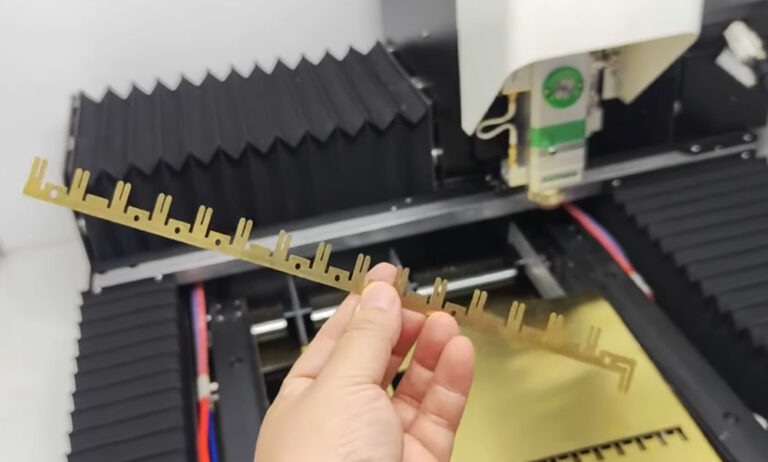
Copper, brass, some aluminum work—it can be done, yes, but not casually. You need the right setup, the right expectations, and a team that understands the real cutting behavior. Otherwise things get ugly fast.
Ultra-thick material
Sometimes laser makes sense. Sometimes it doesn’t. Plasma and oxy-fuel didn’t vanish just because laser marketing got louder.
Garbage-in, garbage-out data
Bad DXFs. Wrong revisions. Dirty nesting. Wrong pierce assumptions. Inconsistent job prep. The machine can’t save you from your own paperwork.
Underloaded equipment
This one hurts the most, because it’s usually avoidable. The cheapest laser is often the one you never bought.
So yes, fiber laser cutting for metal fabrication can be a strong move. But “can be” is doing a lot of work in that sentence.
What the 2024 data says—once you strip out the brochure talk
Step back for a second.
When you line up the better signals—not forum chatter, not YouTube comments, not random “top 10 benefits” copy—the pattern is pretty obvious. Manufacturing still matters. Reuters, citing U.S. government data, noted in July 2024 that manufacturing accounts for 10.3% of the U.S. economy. Reuters also reported in March and April 2024 that orders for motor vehicle bodies, parts, and trailers rose, while Census data showed fabricated metal product shipments running ahead of the prior year in 2024. Meanwhile, aerospace output and backlog numbers remained substantial, and battery manufacturing kept attracting billion-dollar investment.
That’s the signal.
The sectors that keep demanding fabricated metal work—despite cost pressure, despite demand wobble, despite regulatory noise—are usually the sectors where fiber laser cutting technology has the strongest practical case. Not universal. Not automatic. But strong.
And if a buyer is thinking beyond one isolated machine purchase, it also makes sense to look at adjacent production considerations like laser protective fence solutions for safe cell planning or the broader laser products catalog. Good equipment decisions almost never happen in a vacuum.
Domande frequenti
What industries benefit most from fiber laser cutting technology?
Industries that benefit most from fiber laser cutting technology are metal-intensive sectors with frequent design changes, tight tolerances, and strong pressure to reduce setup time, scrap, and secondary operations; this usually includes contract metal fabrication, automotive and EV supply chains, EV charging infrastructure, aerospace suppliers, tube-processing shops, and selected heavy-equipment manufacturers.
That’s the clean answer. The messier answer is that the real winners are the shops dealing with part variation, customer revisions, and too many manual touches per job. If a sector runs enclosure-heavy products, frames, brackets, trays, or support parts, fiber laser usually starts to look less like a luxury and more like a sensible production tool.
What is the best industry entry point for a new fiber laser buyer?
The best industry entry point for a new fiber laser buyer is usually general metal fabrication or enclosure manufacturing, because these sectors offer broad part variety, frequent customer revisions, and clear opportunities to replace manual layout, slow tool changes, and excessive secondary processing.
If I were advising a first-time buyer, I’d start by looking at the jobs that already create the most friction—slow setup, annoying revisions, messy secondary work, repeatable scrap. That’s where the machine’s value tends to show up first, and usually most clearly.
Your next move
If you’re seriously trying to figure out whether your sector belongs in the “best fit” category, don’t start with wattage charts and don’t start with sales talk. Start with your own jobs.
Pull the last 90 days of work. Look at revision frequency. Look at setup time. Look at rework. Look at how many times each part gets handled before it leaves the building. Then ask the question that actually matters:
Is fiber laser cutting technology removing a real bottleneck here—or am I just shopping for a nicer-looking problem?
That question saves money.
And if you want to match the machine style to the work instead of guessing, compare your likely part mix against a macchina per il taglio laser in fibra, a tube cutting configuration, or a bevel-capable fiber laser system. The buyers who make good decisions usually aren’t asking, “What’s popular right now?” They’re asking, “Where, exactly, are we bleeding time and margin?”


Click a caldo
Contatto
Applicazione
©Copyright [bogonglaser.com]. BOGONG Laser Machine Supplier All Rights Reserved.