-
Shunhua Road, Jinan City, Shandong

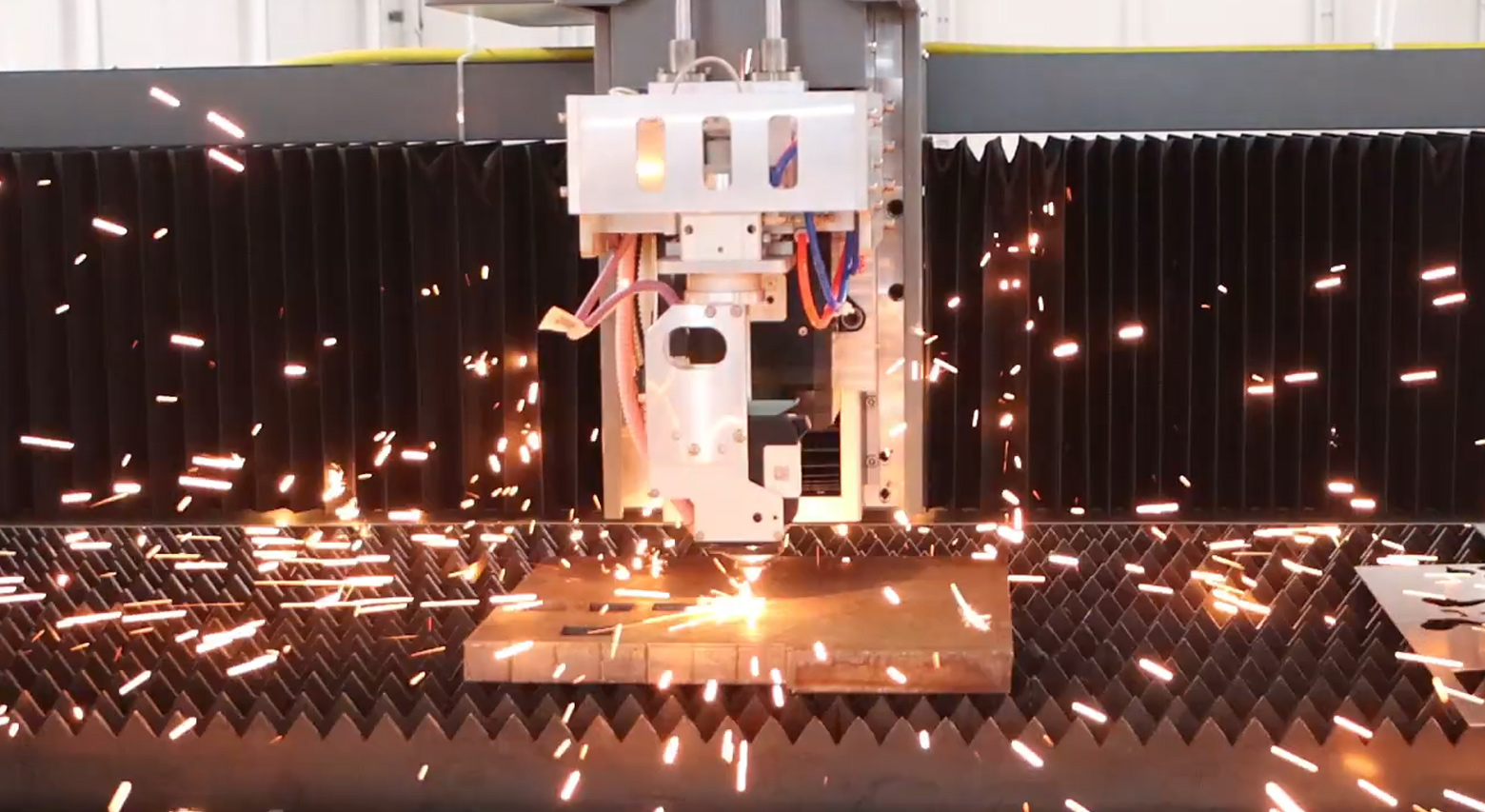
How to Improve Edge Quality When Laser Cutting Metal

Bad edges spread.
They spread into scrap, into weld prep, into coating defects, into late-night grinding, into those embarrassing customer photos where the part looks “finished” from three feet away and terrible the second somebody flips it over and checks the bottom lip under real light.
I’ve seen it.
And here’s the ugly truth: most laser cutting metal edge quality problems are not born from some exotic hardware limitation. They come from lazy process windows, half-remembered recipes, dirty nozzles, bad gas habits, and operators being told to “just run it” because the schedule is already upside down. Then everyone acts surprised when the edge comes out furry. Why?
A 2024 review in The International Journal of Advanced Manufacturing Technology makes the point pretty clearly: cut quality tracks process parameters hard—speed, gas, standoff, nozzle diameter, thickness, focus behavior—not just raw laser power. And a 2024 Métaux paper on S355JR steel lands in the same neighborhood: power matters, yes, but dimensional and edge outcomes still swing with the rest of the setup. That’s not a theory. That’s the job.
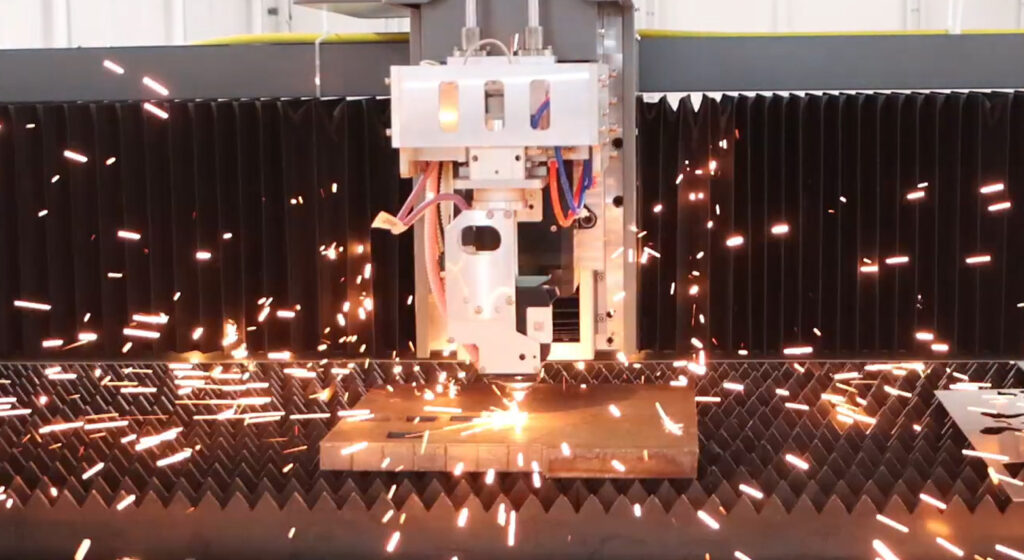
The real reason rough edges after laser cutting metal keep showing up
But let’s not romanticize this.
Most rough edges after laser cutting metal come from one boring failure: the melt didn’t leave the kerf cleanly. That’s it. You can dress it up with software terms, fancy machine-brand language, and PowerPoint screenshots from the applications team, but if molten metal hangs around too long—or exits badly—the cut face will rat you out.
Three things.
Heat, flow, timing.
What good edge quality actually looks like
A good edge isn’t just “not awful.” It means low roughness, low dross, controlled taper, minimal oxide when the job needs it, and a heat-affected zone that doesn’t come back to bite you during bending, welding, coating, or fatigue service.
That last one gets ignored way too often. Shops love to talk throughput. Customers care about fit, finish, and failure. A 2023 study on AISI 304 tied dross formation at the laser-cut edge to fatigue strength, which is exactly the kind of thing people dismiss until the part starts living a hard life in the field. This 2023 research on fatigue strength and dross formation is worth a careful read if your parts cycle, vibrate, or see structural loads.
The usual suspects — and yes, they’re boring
From my experience, the failure stack is almost always some version of this:
- Cutting speed is outside the stable ejection window
- Assist gas pressure is wrong for the material and thickness
- Focus position is copied from an old job and nobody revalidates it
- The nozzle is chipped, dirty, or off-center
- Material variation gets ignored because “it’s the same grade”
That last excuse drives me crazy. Same grade on paper does not mean same behavior on the bed.
And gas flow? Not some side note. It’s the whole movie. The physics review on assist gas makes this painfully obvious—shock structure, gas flow behavior, pressure distribution, all of it affects cut quality in ways many shops never really map. This technical review on assist gas behavior says it more elegantly than most applications guides do.
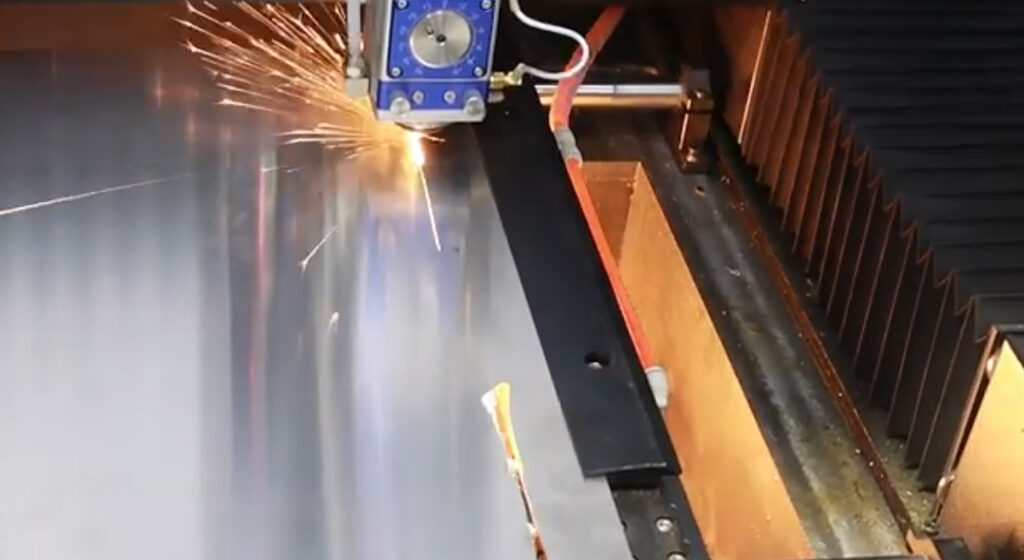
How to improve edge quality in laser cutting without playing settings roulette
Start with one sheet.
Seriously. One sheet, one thickness, one alloy, one gas. Then run a tight matrix. Don’t touch ten variables and call it process development. That’s not development. That’s gambling with a spreadsheet.
The levers that actually change the cut
1. Speed is not a bragging right
I frankly believe this is where shops fool themselves the most. They see a stable pierce, a clean first pass, maybe a decent top edge, and they assume the recipe is “optimized.” Then the bottom edge grows whiskers and everyone reaches for a flap wheel.
Speed needs to sit inside the melt-ejection window. Too slow, and you bake the cut face, deepen striations, and feed oxide. Too fast, and the kerf turns unstable and starts dropping dross like a bad habit.
The 2024 S355JR study is useful here because it doesn’t worship one variable; it shows the trade-off logic. More power can change dimensional behavior, yes, but cut quality still depends on the rest of the stack behaving together. That’s the annoying answer. Also the honest one. The 2024 Métaux study on S355JR steel is a good reminder that there is no magic “fast but still clean” number.
2. Gas choice is process strategy, not a checkbox
Nitrogen isn’t oxygen. Everyone knows that. Fewer people act like they know it.
Use nitrogen (N₂) when appearance matters, oxidation matters, welding matters, or the customer is going to stare at the edge and ask why it’s brown. Use oxygen (O₂) when you want the exothermic assist on thicker mild steel and you’re willing to live with the oxide story that comes with it. Compressed air can work—but it’s often a compromise people pretend is free.
It’s not free.
You pay later. Usually in cleanup.
If you’re trying to reduce burrs in laser cutting metal or get closer to dross-free laser cutting, gas pressure and flow stability deserve way more attention than they usually get. Shops love tweaking power because it feels important. Gas is less glamorous. Gas is still what saves the edge.
3. Focus drift will quietly wreck your day
Here’s a thing operators know and managers forget: focus doesn’t have to be wildly wrong to produce ugly parts. A small shift can mess with kerf geometry, energy density, and the timing of melt ejection enough to drag down laser cut edge quality across a whole nest.
And no, “it cut fine yesterday” is not a process report.
4. Nozzle condition matters more than people admit
A beat-up nozzle will gas-starve one side of the kerf, distort the jet, and create that maddening pattern where half the sheet looks acceptable and the other half looks like somebody cut it with impatience and wishful thinking.
This happens. A lot.
5. Think about the next operation, not just the cut itself
If the part gets TIG welded, powder coated, bent on a tight radius, or used in an assembly with visual standards, your edge target is different from what’s acceptable on a throwaway bracket. Shops that ignore downstream work almost always “save” pennies and spend dollars.
A practical settings map for cleaner laser cut edges
Look, I don’t trust broad rules without context. But I do trust a troubleshooting map that forces people to stop guessing.
| Problem on the edge | Likely root cause | First adjustment to test | Second adjustment to test | What not to do |
|---|---|---|---|---|
| Heavy bottom dross | Poor melt ejection, wrong speed, low/unstable gas flow | Reduce speed slightly | Check gas pressure and nozzle condition | Do not blindly raise power first |
| Rough striations | Bad speed-focus pairing, excess thermal load | Re-center focus | Increase speed within stable cut window | Do not keep slowing the cut |
| Oxidized edge | Wrong gas choice for finish requirement | Switch to nitrogen if finish matters | Tighten gas purity/flow control | Do not promise bright edges with oxygen |
| Tapered kerf | Focus mismatch, nozzle offset, poor stand-off | Recheck focus and centering | Verify stand-off height | Do not blame CAD geometry first |
| Intermittent burrs | Material inconsistency, contamination, nozzle wear | Inspect sheet and nozzle | Run short validation matrix | Do not copy yesterday’s settings |
| HAZ too visible | Too much heat per unit length | Raise speed carefully | Tune focus and gas to sustain ejection | Do not overcompensate with extra pressure |
My default troubleshooting order
Not glamorous. Still effective.
I do it like this:
- Confirm material spec, flatness, coating, and thickness
- Replace or clean the nozzle
- Verify centering and stand-off
- Run a speed sweep
- Run a gas-pressure sweep
- Revisit focus
- Only then touch power or optics strategy
That order saves time because it goes after the usual junk first. Fancy nesting software won’t fix a filthy nozzle. It just helps you make flawed parts more efficiently.
Why the best settings for clean laser cut edges depend on the business, not just the machine
Yet this is where the sales story usually falls apart.
A “good edge” is not one universal standard. It changes with the part, the sector, the inspection method, and the pain tolerance of the customer. Cheap frames, visible stainless parts, battery trays, medical brackets, food equipment panels—they don’t live by the same rules.
And in regulated work, edge quality is tied to more than aesthetics. The U.S. FDA’s 2024 final rule aligned the medical-device quality system regulation more closely with ISO 13485:2016, which pushes process control and risk thinking right into the manufacturing conversation. That doesn’t mean every burr becomes a federal case. But it does mean sloppy, undocumented process habits age badly in audited environments. The FDA’s 2024 QMSR final rule says exactly where that direction is heading.
And then there’s safety—the unsexy part nobody budgets for until an injury report lands. U.S. Bureau of Labor Statistics data published for 2023 showed an incidence rate of 3.0 total recordable cases per 100 full-time workers for “all other fabricated metal product manufacturing” and 3.9 for “all other miscellaneous fabricated metal product manufacturing.” That doesn’t prove ugly edges caused each one, obviously. But pretending cut quality and handling risk are unrelated is nonsense.
The insider mistakes shops keep repeating
I’ve watched this loop too many times.
A shop buys a higher-power source. Everyone gets excited. The demo parts look clean. Then production starts, the setup discipline stays mediocre, and suddenly the same old burrs show up—just faster. More wattage, same sloppiness.
Mistake 1: Believing the sample coupon
A perfect sample coupon is marketing. Production is heat buildup, pierce count, sheet variation, operator habits, and that one dense corner of the nest where your “stable” recipe suddenly stops being stable.
Mistake 2: Treating edge quality like an isolated problem
If you’re also welding, cleaning, or finishing these parts, bad edges don’t stay in their lane. They create drag everywhere. That’s why I’d connect this conversation directly to downstream fabrication choices like handheld laser welding systems, 3-in-1 handheld laser welder workflows, and pre-finish cleanup with a 200W pulse laser cleaning machine.
Mistake 3: Keeping safety in a different mental folder
It’s the same system. Cleaner edges mean less handling, less secondary cleanup, less operator frustration, fewer stupid little cuts and rework motions that nobody counts until they become “normal.” If you’re building a serious cell, physical protection belongs in the plan too, which is why a laser protective fence isn’t some decorative add-on. It’s part of adult manufacturing.
Mistake 4: Never building a real cut recipe library
This one is pure self-sabotage. The good shops log gas type, purity, nozzle ID, stand-off, focus offset, speed band, sheet source, and edge photos. The weak shops rely on memory and confidence. Guess which ones actually control laser cutting metal burr formation over time?
When the right answer isn’t another settings tweak
Sometimes the process is the problem.
If you’re trying to force bright, clean edges on thick mild steel with oxygen because the quote was built around cycle time, you may be solving the wrong equation. If weld prep keeps eating margin, maybe the better move is to stop obsessing over machine-side heroics and rethink the whole flow—cleaner cuts, less oxide, faster joining, smarter handoff between stations.
That’s where related equipment decisions start to matter. Maybe that means a better post-cut fabrication path with an air-cooling handheld laser welding machine. Maybe it means more flexibility with a portable handheld laser welding setup. The point is simple: edge quality doesn’t live alone. It drags the rest of the line with it.
And I’ll say it plainly: most shops don’t have a machine problem. They have a discipline problem.
FAQ
What causes burrs in laser cutting metal?
Burrs in laser cutting metal are solidified remnants of molten material that were not fully expelled from the kerf during cutting, usually because speed, assist gas pressure, focus position, nozzle condition, or material behavior fell outside a stable melt-ejection window.
That’s the clean definition. The messy shop-floor version is this: the machine melted the metal, but the process didn’t throw it out of the cut cleanly. So it hung there, cooled there, and now somebody has to deal with it later.
How can I improve laser cut edge quality quickly?
Improving laser cut edge quality quickly means narrowing the process window around stable melt removal by validating material condition, checking nozzle centering, sweeping cutting speed, confirming assist gas pressure, and then fine-tuning focus rather than randomly raising power or recycling old settings.
If I had to do it under time pressure, I’d clean the nozzle, verify stand-off, run a short speed band, then check the bottom edge after each pass. Not glamorous. But it works. Usually.
What are the best settings for clean laser cut edges?
The best settings for clean laser cut edges are the lowest-heat, fully stable combination of speed, focus, nozzle alignment, and assist gas flow that removes melt consistently while meeting the part’s downstream needs for oxidation, roughness, taper, and heat-affected zone control.
So, no, there isn’t one universal recipe. Stainless with nitrogen is one story. Mild steel with oxygen is another. Thin gauge behaves differently from thick plate. Anyone pretending otherwise is selling comfort, not know-how.
Your next move if edge quality is hurting margin
Do one honest test.
Take one metal, one thickness, one repeat offender of a job, and build a proper mini-matrix around speed, gas, focus, and nozzle condition. Photograph the edge. Log the settings. Keep the winner. Throw away the mythology.
If you’re serious about improving laser cutting metal edge quality, don’t start by shopping for more watts. Start by proving whether your current process is even under control.
That answer stings. Sometimes.
But it usually makes money.


Hot Click
Nous contacter
Application
©Copyright [bogonglaser.com]. BOGONG Laser Machine Supplier All Rights Reserved.