
Máquinas de corte por láser en las modernas fábricas inteligentes
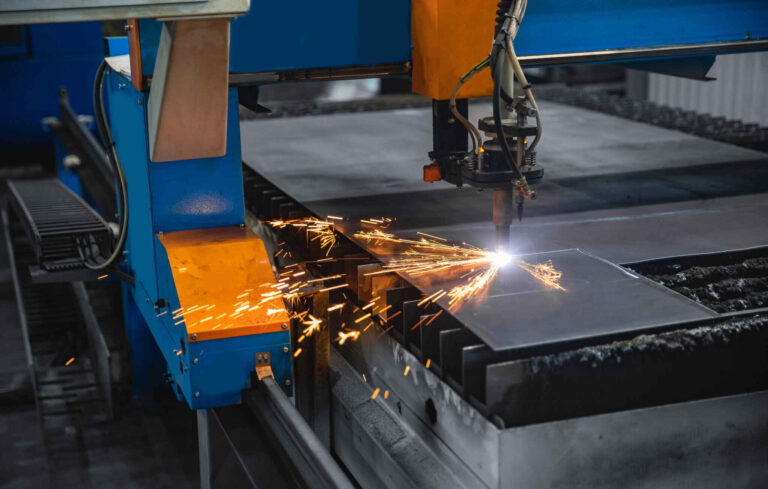
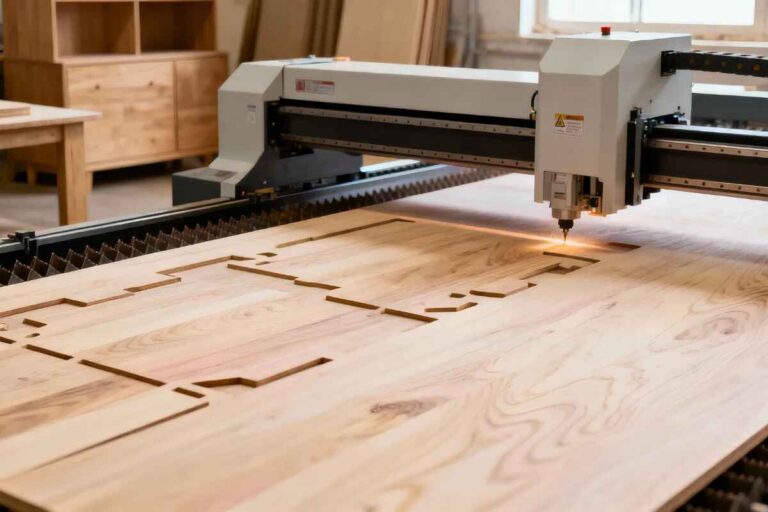
La charla sobre fábricas inteligentes se vuelve esponjosa rápidamente. Quiero volver a la realidad. Las máquinas de corte por láser son importantes en las fábricas inteligentes modernas no porque parezcan avanzadas, sino porque convierten instrucciones digitales en piezas repetibles y trazables a velocidad industrial. La cruda realidad: la máquina por sí sola nunca es la mejora. La mejora es el sistema que la rodea.

Primero tres palabras.
La mayoría de los artículos sobre “fábricas inteligentes” dan la impresión de haber sido escritos por alguien que nunca se ha encontrado junto a un estante de chapas a las 6:40 de la mañana, mientras un operario espera el material, la producción ya va con retraso y el láser, aunque técnicamente está disponible, en realidad no genera beneficios porque la planificación previa ha sido descuidada y la clasificación posterior es un caos. Eso ocurre muy a menudo. Más de lo que la gente admite.
Y esa es la parte que, sinceramente, creo que se pasa por alto.
Seguimos fingiendo que la máquina es lo importante. Pero no lo es. La máquina es la parte visible: la parte brillante, la que aparece en los folletos, aquello a lo que el departamento de compras puede apuntar. Pero la verdadera historia es más fea y más interesante: retrasos en la carga, anidamientos defectuosos, variaciones en la calidad del gas, boquillas sucias, caos en la mezcla de piezas, archivos de anidamiento enviados con retraso y jefes que dicen querer la automatización, pero siguen dirigiendo el taller a base de llamadas telefónicas e intuición. ¿Te suena?
Ya he visto esta película. Demasiadas veces.
Una máquina de corte por láser solo resulta valiosa en una fábrica inteligente cuando deja de actuar como un activo independiente y empieza a comportarse como un nodo de producción: uno que recibe instrucciones claras, corta con repetibilidad, proporciona datos útiles y no obliga a los humanos a supervisar cada decisión básica. Esa es la línea divisoria. Si se cruza, la máquina se gana su lugar. Si no se alcanza, lo único que habrás conseguido es una costosa fuente de optimismo.
Por eso el El trabajo de las Academias Nacionales en 2024 sobre la fabricación inteligente tiene más importancia que la mayoría de los informes técnicos de los proveedores. Aborda la fabricación inteligente como un problema de datos y sistemas, y no solo como un problema de maquinaria, que es precisamente cómo deberían abordarla las plantas que se toman en serio este tema. Si los datos no pueden circular, no son fiables o no sirven para orientar la actuación, la fábrica no es inteligente. Es solo una fachada.
Por qué las máquinas de corte por láser encajan tan bien en las fábricas inteligentes
Es casi obvio.
Una cortadora láser ya forma parte de un flujo de trabajo digital. Se importa el archivo CAD. Se crea el diseño de anidamiento. Se seleccionan los parámetros. El rayo hace su trabajo. Se registra el estado. Se puede comprobar la calidad. Se puede contar la producción. Se pueden medir los desechos… bueno, si la dirección quiere realmente la cifra real de desechos y no la que resulta más tranquilizadora.
Eso último es importante.
Porque cuando la gente habla de “corte por láser en fábricas inteligentes”, lo que suele querer decir es esto: un proceso más fácil de medir, más fácil de automatizar, más fácil de estandarizar y más fácil de integrar con sistemas MES, ERP, software de anidamiento, herramientas de planificación, lógica de mantenimiento y seguimiento del rendimiento por turno. No es perfecto. Pero sí más limpio que muchos de los antiguos métodos de fabricación.
Y la tendencia general en el sector industrial va precisamente en esa dirección. La Oficina del Censo de EE. UU. informó de que los trabajadores del sector manufacturero están más expuestos a las tecnologías de automatización que el resto de la economía, con 52% de trabajadores del sector manufacturero expuestos a estas tecnologías frente a 28% fuera de dicho sector. También señaló que la inteligencia artificial y los robots están especialmente vinculados a los motivos de automatización dentro del sector manufacturero.
Eso no es una nota al margen. Es el entorno operativo.
Fijémonos ahora en los robots. La Federación Internacional de Robótica señaló que Estados Unidos alcanzó una densidad de robots de 295 unidades por cada 10 000 empleados del sector manufacturero en 2023, mientras que China llegó a 470 y Corea del Sur a 1 012. No se trata de cifras meramente presuntuosas. Estas cifras revelan en qué tipo de ecosistema de producción se integran actualmente las máquinas de corte por láser: uno en el que la carga automatizada, la recogida de piezas, la supervisión del estado, los turnos sin personal y un control más estricto del takt se están convirtiendo en algo habitual, y no en algo excepcional.
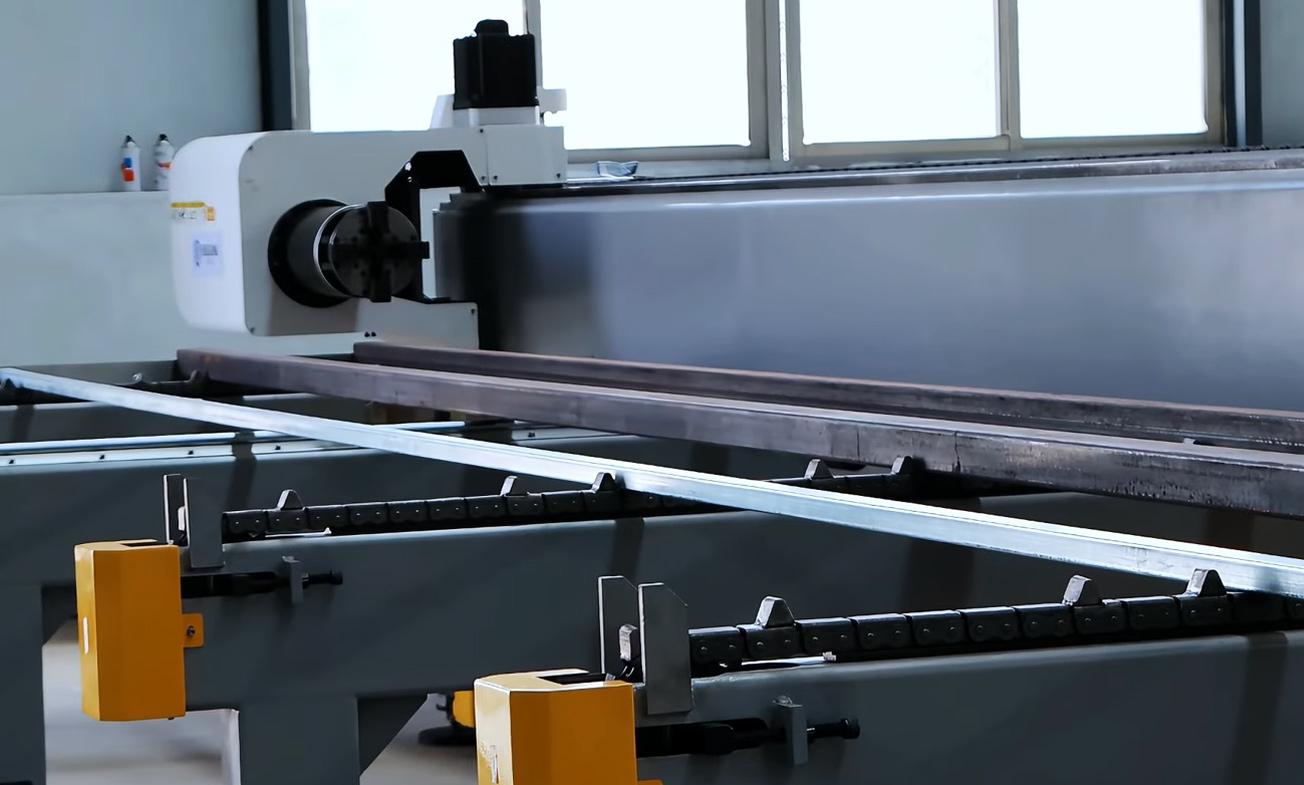
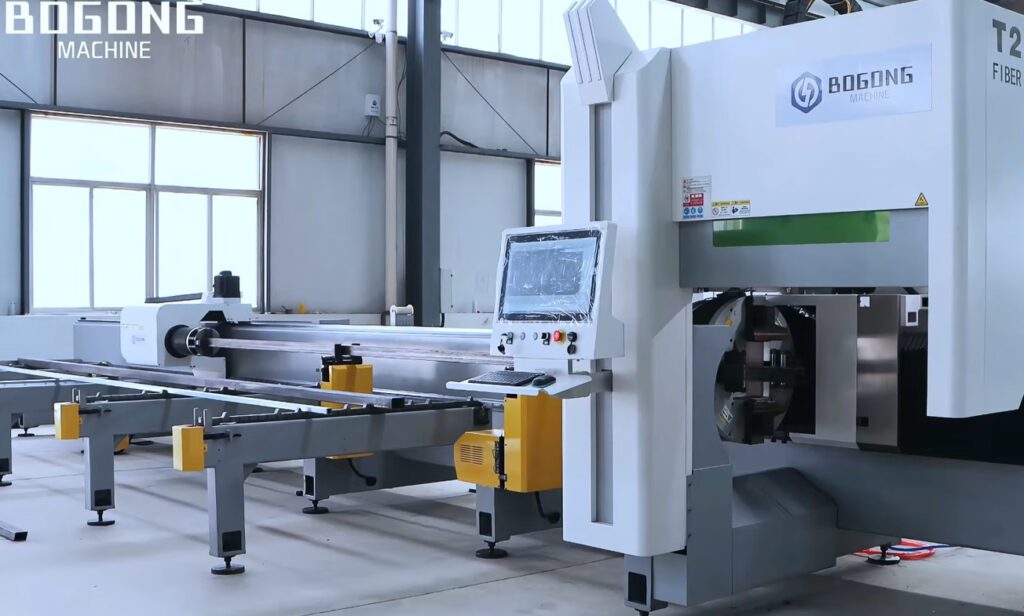
Pues sí, un estándar máquina de corte por láser de fibra Sin duda, puede instalarse en una fábrica moderna. Pero, según mi experiencia, cuando la presión laboral, la estabilidad del rendimiento y la uniformidad del turno de noche se convierten en prioridades fundamentales, los compradores empiezan a considerar más detenidamente configuraciones como una cortadora láser de tubos de carga automática. Porque la cruda realidad es muy sencilla: la carga manual ha acabado con más casos de retorno de la inversión que todos los láseres de baja potencia juntos.
Lo que los compradores de fábricas inteligentes realmente esperan de la automatización del corte por láser
Quieren cifras.
Ni “innovación”. Ni “excelencia preparada para el futuro”. Lo siento, pero ese tipo de lenguaje suele significar que alguien está intentando disimular unas operaciones deficientes. Los compradores de verdad quieren saber la producción por operario, la reducción de los desechos, la velocidad de puesta a punto, la estabilidad del tiempo de actividad, la uniformidad en los bordes y datos de alarmas que realmente puedan utilizar. Quieren que la máquina deje de ser un misterio.
Y quieren menos excusas.
Si dejamos de lado el lenguaje comercial, esto es lo que las fábricas suelen esperar de la automatización del corte por láser: un flujo predecible, ciclos de producción más rápidos, un mejor aprovechamiento de las chapas, menor dependencia del operario, menos recortes, menos momentos de “¿por qué ha pasado esto?” y cierta trazabilidad cuando llega una reclamación semanas más tarde. No quieren magia. Quieren control.
Por eso las máquinas de corte por láser siguen encajando tan bien en la lógica de la fábrica inteligente. Se sitúan justo en el punto en el que la planificación digital se convierte en producción física, y si ese traspaso se gestiona bien, la máquina pasa a formar parte de un circuito cerrado en lugar de convertirse en un simple cuello de botella.
| Demanda de fábricas inteligentes | Lo que debe ofrecer el sistema láser | Lo que suele fallar |
|---|---|---|
| Visibilidad de la producción en tiempo real | Estado de la máquina, avance del corte, alarmas, datos de OEE | La máquina funciona bien, pero los datos quedan bloqueados en el software del fabricante |
| Eficiencia laboral | Carga automática, turnos sin supervisión, configuración más rápida | La carga manual borra los ajustes de ganancia |
| Consistencia en la calidad | Haz estable, control del gas, recetas de parámetros, calidad de los bordes | Los operadores siguen “retocando” los ajustes sin seguir ninguna disciplina |
| Producción flexible | Anidamiento rápido, tiradas cortas, materiales mixtos, cambios rápidos | El software de planificación de recursos empresariales (ERP) y el de anidamiento no están conectados |
| Menor coste por pieza | Mejor aprovechamiento de las chapas, menos reelaboraciones y menos tiempos de inactividad | Las tasas de desechos y recortes no se registran con transparencia |
| Seguridad y cumplimiento normativo | Recintos, enclavamientos, formación, barreras fotoeléctricas | La seguridad se incorporó posteriormente, no se tuvo en cuenta en la fase de diseño |
Y ahí lo tienes.
La máquina no lo es todo en la compra. Lo importante es el sistema. Los compradores que no lo tienen claro acaban echándole la culpa a la cortadora de los problemas causados por la planificación, la carga, los hábitos de los operarios o una mala disciplina en los procesos —lo que algunos trabajadores de planta llamarían sin rodeos “desperdicio de la dirección”—.”
La cruda realidad del corte por láser en la Industria 4.0
Most factories aren’t there.
They’re halfway there. Maybe.
A few dashboards. A few machine screens. Some digital drawings. A software subscription nobody fully uses. And then everybody acts shocked when the so-called Industry 4.0 line still depends on one veteran operator who remembers which settings actually work on 5 mm stainless when the humidity gets weird.
Here’s the ugly truth: digitized is not the same as smart. Connected is not the same as controlled. And monitored is not the same as managed.
A real Industry 4.0 laser cutting setup does something much harder than “having software.” It links planning, execution, reporting, and reaction speed. Job comes in. Material is ready. Nest is right. Parameter library is locked down. Cut runs. Alarm data flows. Someone can actually see deviation fast enough to do something useful. That’s a loop. Most factories still have fragments.
Want proof that systems beat slogans? Look at the World Economic Forum’s 2024 Lighthouse examples. Foxconn’s Bắc Giang site used 40+ Fourth Industrial Revolution use cases and lifted labor productivity by 190%, hit 99.5% on-time delivery, and cut manufacturing costs by 45%. Siemens’ Erlangen electronics factory used more than 100 AI algorithms plus digital twins and improved labor productivity by 69%, cut time to market by 40%, and reduced energy use by 42%. GE HealthCare’s Beijing site used 45 digital solutions across 26 lines and cut cycle times and scrap by 66% while reducing customer complaints by 73%. That’s not showroom language. That’s operating leverage.
Now, no, those aren’t “laser-only” case studies. Exactly. That’s the lesson.
Laser cutting machines get stronger inside smart factories because they’re relatively easy to standardize, relatively easy to instrument, and relatively easy to connect to the rest of the production stack. But if the stack itself is weak—bad scheduling, poor material staging, fuzzy ownership, no one watching scrap honestly—the machine won’t save you. It’ll just reveal you.
A bit painful. But useful.
So when someone asks me for the best laser cutting machines for smart factories, I don’t start with wattage. I start with part flow, SKU churn, material mix, shift pattern, handling pain, nesting discipline, and whether the customer wants real data or presentation data. Those are two very different appetites.
Where fiber laser cutting in manufacturing earns its keep
On the hard jobs.
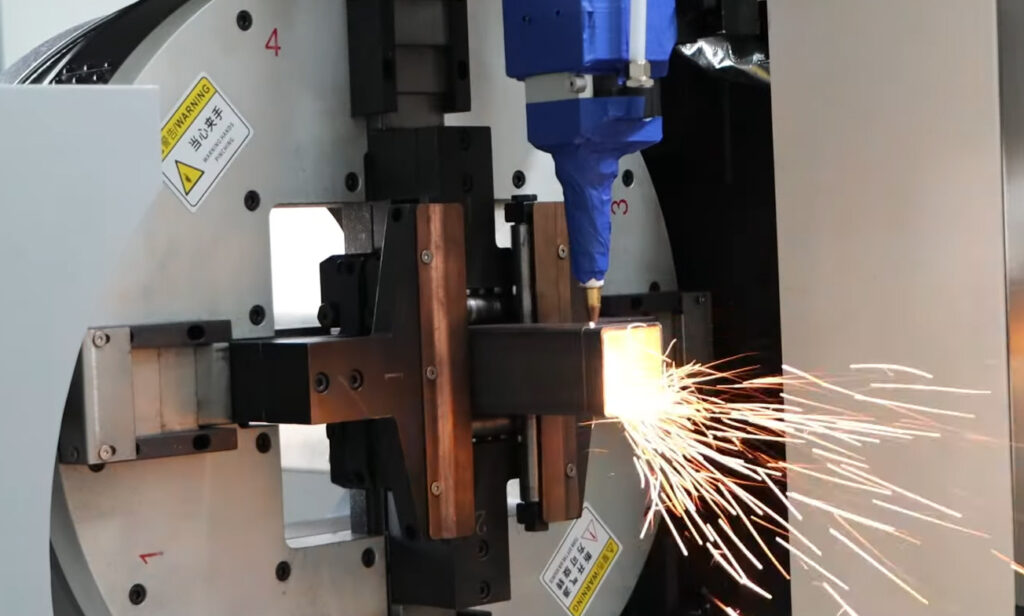
Not the easy demo cuts. Not the cherry-picked samples sales teams love. I mean real factory work: enclosures, cabinets, brackets, server chassis, tube components, panel parts, weld-prep pieces, mixed batch sizes, ugly scheduling windows, and customers who suddenly want the same part in three revisions and five materials by next Thursday.
That’s where fiber laser cutting in manufacturing makes sense.
It’s especially strong when you need speed plus repeatability plus digital control. Sheet metal shops know this. Electrical cabinet producers know this. Chassis fabricators know this. Anyone doing medium- to high-mix fabrication knows it too, even if they complain about consumables, assist gas, pierce settings, and all the other practical details outsiders rarely understand.
And yes, application fit matters more than brochure specs.
If bevel prep is eating time downstream, then a máquina de corte láser de fibra en bisel para el corte y biselado de ranuras may solve a welding problem before the first tack. If the plant is juggling both sheet and tube with constant scheduling friction, an all-in-one metal sheet and tube laser cutting machine might make more operational sense than splitting work across scattered assets. And if the buyer is still trying to map actual use cases, the aplicaciones de la máquina de corte por láser page is a better starting point than obsessing over maximum power.
Because—this is important—more kW doesn’t automatically mean more money.
I’ve watched factories chase 12 kW, 20 kW, even bigger names, while the real limiter was unload time, poor nesting, or the fact that the parts came off the table faster than the shop could sort them. That’s not a laser problem. That’s cell design. Or, if we’re being blunt, a planning problem dressed up as an equipment problem.
Smart factory laser cutting is also a safety and management problem
Nobody loves this topic.
But they should.
As soon as you move toward automated loading, remote status checks, unattended shifts, and more aggressive output targets, safety stops being a compliance checkbox and becomes part of production architecture. That means guarding, interlocks, authorization levels, extraction, gas handling, maintenance discipline, and access logic all have to be treated like production variables—not legal afterthoughts.
I know that sounds dry. It isn’t. It gets real very fast.
A valla protectora láser isn’t decorative. It’s part of how a serious factory manages risk when a cutting cell is expected to run hard and run consistently. Same goes for enclosure design, lockout behavior, maintenance access, and whether operators are quietly bypassing procedures because the process was set up in a way that makes the “safe” path slow and annoying. That happens too.
And then there’s software.
Everyone wants AI in manufacturing right now. Of course they do. But Reuters reported in July 2024 that manufacturers were rolling out planned generative AI projects more slowly than expected because of accuracy worries; 58% of manufacturing leaders planned to increase AI spending in 2024, but only 20% of planned AI projects had actually been implemented in the prior year. Forty-four percent of manufacturing respondents cited response accuracy concerns. Honestly, that caution sounds healthy to me. A plant can survive bland software. It can’t afford confident nonsense near live equipment.
So yes, smart factory laser cutting needs software. But not theater software. Not dashboard wallpaper. It needs systems that are accurate, auditable, floor-aware, and boring in the best possible way.
Reliable beats flashy.
Siempre.
What a serious buyer should measure before signing
Start here.
Part mix. Material range. Sheet thickness. Tube share. Assist gas cost. Nozzle consumption. Setup time. Handling time. Unload flow. Scrap visibility. Re-cut rate. Operator skill spread. Software compatibility. Maintenance response. Safety design. That’s the shopping list.
And I’d add one more thing most buyers ignore: decision lag.
How long does it take your plant to notice that the laser cell is drifting, backing up, throwing rejects, or sitting idle because the next nest wasn’t released properly? Ten minutes? Two hours? Monday morning? That answer tells you more about your smart-factory maturity than any sales presentation ever will.
From my experience, the best laser cutting machines for smart factories are not the ones with the prettiest spec sheet. They’re the ones that fit the factory’s actual production metabolism—the pace, the handoffs, the part family, the staffing reality, the ERP mess, the maintenance culture, all of it. If the machine fits the work, it wins. If the machine outruns the system, the system punishes it.
Why laser cutting machines will stay central to modern factories
Because they keep scaling.
Not effortlessly. Not cheaply. And not without headaches. But they scale better than a lot of competing fabrication methods when the plant needs precision, throughput, recipe control, flexible routing, and a straight path into automation.
That’s why they aren’t going anywhere.
Global automation density keeps climbing, leading plants keep proving that tightly integrated digital production can deliver hard gains, and laser cutting remains one of the cleanest bridges between digital instruction and physical output. That bridge matters. Especially now. Especially when customers want faster turns, more revisions, and cleaner quality records without paying for chaos.
And there’s the simplest truth of all: in a modern factory, ambiguity is expensive. Laser cutting machines reduce ambiguity. They cut what the file says, if the file is right, the setup is right, and the system around them isn’t broken. That’s exactly why smart factories keep pulling them closer to the center.
Preguntas frecuentes
¿Cómo contribuyen las máquinas de corte por láser a mejorar las fábricas inteligentes?
Laser cutting machines improve smart factories by converting digital production instructions into repeatable, traceable parts while feeding operating data—such as machine status, cut progress, alarm history, and throughput—into connected software systems that support scheduling, maintenance, quality tracking, and production visibility across the factory. That’s the clean answer.
The longer answer is more practical. They help plants cut down setup drag, standardize quality, support short runs, and expose waste that older processes often hide. If connected properly, they don’t just make parts—they make problems visible sooner.
¿Cuál es la diferencia entre una cortadora láser CNC estándar y un sistema de corte por láser para fábricas inteligentes?
A standard CNC laser cutter is a programmable cutting machine, while a smart factory laser cutting system is a connected production unit that exchanges useful data with planning, quality, maintenance, and material-handling systems to improve output consistency, traceability, and reaction speed across the broader manufacturing process. That’s the distinction.
In plain language, one machine cuts. The other participates. A smart-factory system can support recipe locking, automated loading, job prioritization, status alerts, traceability, and tighter links to bending, welding, or packing. Same beam, very different operating logic.
¿Son las máquinas de corte por láser de fibra la mejor opción para las fábricas inteligentes modernas?
Fiber laser cutting machines are often the best option for modern smart factories when the core work involves metal fabrication, high throughput, variable batch sizes, tight tolerances, and a need for stable integration with automation and digital production systems across sheet or tube processing workflows. That’s usually the answer.
But not always. If your factory still struggles with loading, scheduling, or material staging, the machine won’t fix that by itself. Fiber is powerful—but it works best when the rest of the cell isn’t chaotic.
¿Qué deben tener en cuenta los compradores antes de elegir las mejores máquinas de corte por láser para fábricas inteligentes?
Buyers should check part families, material types, sheet and tube volumes, automation goals, software compatibility, gas and energy costs, safety requirements, service support, and actual handling bottlenecks before choosing the best laser cutting machines for smart factories, because machine value depends heavily on production flow and system discipline. That’s the shortlist.
I’d also push buyers to verify real integration capability. Not just installation. Ask whether the vendor can support alarm reporting, recipe control, MES links, unattended-shift safeguards, and usable production data. If they can’t, the machine may still cut well—but it won’t truly behave like part of a smart factory.
Your next step
If you’re evaluating laser cutting machines for a modern smart factory, don’t begin with “How much power do we need?” Start with a harsher question: where does the factory lose control today? Material release? Loading? Scrap visibility? Re-cut rates? Scheduling lag? Operator variance? That’s where the buying logic should begin.
Then narrow the machine around the reality.
If you want practical options to compare, review Bogong Laser’s máquinas de corte por láser de fibra, look at its automatic loading tube cutting systems, and factor in soluciones de vallado de protección láser before you treat the cell like a finished answer. It isn’t. A smart factory is built through disciplined choices—one linked decision at a time.


Hot Click
Contacte con nosotros
Aplicación
©Copyright [bogonglaser.com]. BOGONG Laser Machine Supplier Todos los derechos reservados.