
Präzisionsblechzuschnitt für Fitnessgeräte-Rahmen
Ein harter Blick auf den Blechzuschnitt, den CNC-Blechzuschnitt, den Laserzuschnitt für Bleche und die kundenspezifische Metallfertigung für Rahmen von Fitnessgeräten - wo ein paar Zehntelmillimeter darüber entscheiden können, ob sich eine Kraftmaschine erstklassig anfühlt oder stillschweigend abgelehnt wird.

Der Rahmen fängt schon an zu lügen, bevor ihn überhaupt jemand verschweißt hat
Ich habe einmal miterlebt, wie dem Installateur die Schuld für einen Kabelkanal gegeben wurde.
Falsch.
Der Monteur hatte mit einem Rahmen zu kämpfen, der bereits drei Arbeitsschritte zuvor aus der Spur geraten war: schlampiger Blechzuschnitt, ein nachlässig gefertigter Schlitz, eine Schwenkplatte, die zunächst in Ordnung aussah, bis sich der Riemenscheibenschlitten unter Last zu bewegen begann, und ein Schweißer, der das Ganze “irgendwie hinbekam”, weil die Produktion im Rückstand war und niemand eine weitere Besprechung wollte.
So läuft das in dieser Branche übrigens: Stillschweigende Ausbesserungen. Schleifstaub. Einfach drübermalen.
Hier ist die bittere Wahrheit: Beim Präzisionsschneiden von Blechen für die Rahmen von Fitnessgeräten geht es nicht darum, dass das Metall auf einem Foto auf der Website gut aussieht. Es geht darum, all die lästigen kleinen Variablen in den Griff zu bekommen, die sich später in Form von Kabelabrieb, Bolzenreibung, schrägen Verkleidungen, quietschenden Lagern, Abplatzungen der Pulverbeschichtung, Verschiebungen der Schraubenlöcher und jenem hohlen Klappern bemerkbar machen, das die Nutzer schon bemerken, bevor es Ihrem Vertriebsmitarbeiter auffällt.
Kleine Fehler verbreiten sich.
Und sie verhalten sich nicht gerade zimperlich: Ein halber Millimeter Abweichung beim Zuschnitt einer Halterung kann zu einem Problem bei der Schweißpassung führen, dann zu einem Problem mit dem Lackabstand, anschließend zu einem Montageproblem und schließlich zu einem Garantiegespräch mit jemandem, der schwört, die Maschine habe sich “vom ersten Tag an nie richtig angefühlt”.”
Warum ist das gerade jetzt von Bedeutung? Weil die Metallversorgungskette nach wie vor eine wichtige Rolle spielt. Reuters berichtete, dass die weltweite Stahlnachfrage im Jahr 2024 voraussichtlich um 1,71 TP3T auf 1,793 Milliarden Tonnen steigen werde, wobei für 2025 ein weiteres Wachstum erwartet werde. Das wirkt sich auf Lieferzeiten, Blechpreise und die Produktionsplanung aus, noch bevor die Einkäufer die Auswirkungen zu spüren bekommen.
Toleranz ist nicht sexy. Aber sie sorgt dafür, dass die Rechnungen bezahlt werden.
Aber lassen Sie uns einmal konkret werden.
Ein Rahmen für Fitnessgeräte ist nicht einfach nur “Metallkonstruktion”. Er ist ein Lastpfad, an dem bewegliche Teile verschraubt sind. Da gibt es Führungsstangen, Seilrollenhalterungen, Seilschutzvorrichtungen, Halterungen für den Gewichtsblock, Einstellplatten, Abdeckungen, Laschen, Verstärkungsbleche und vielleicht noch einige Zierblenden, die alle absolut gerade sitzen müssen – denn Fitnessstudiobetreiber bemerken billig aussehende Geräte sehr schnell.
Meiner Erfahrung nach sind die teuersten Fehler nicht die spektakulären. Es sind vielmehr die kleinen Ärgernisse: eine Platte, die man mit einem Hammer bearbeiten muss, eine Nut, die nach der Pulverbeschichtung klemmt, eine Riemenscheibe, die 2 mm außermittig läuft, eine Abdeckung, die brummt, weil der Rahmen unter realen Montagebedingungen nicht rechtwinklig genug ist.
Das ergibt Sinn.
Beim Laserschneiden von Blechen werden gerne Toleranzen von ±0,1 mm, ±0,2 mm oder ±0,3 mm angegeben. Gut. Schreiben Sie das ruhig ins Angebot. Die wichtigere Frage ist jedoch eine weitaus unangenehmere: Hält diese Toleranz auch dem Nesting, der Wärmezufuhr, Materialschwankungen, dem Transport mit Gabelstaplern, der Schweißschrumpfung, dem Strahlen, der Pulverbeschichtung und der Endmontage stand?
Normalerweise? Nur, wenn es jemandem wichtig ist.
Die Schnittkante bestimmt die Schweißnaht
Gute CNC-Blechbearbeitung verschafft dem Schweißer eine Chance. Schlechte Bearbeitung macht den Schweißer zum Zauberer. Und in der Produktion ist “Zauberer” meist nur ein anderes Wort für “unkontrollierte Variable”.”
| Fertigungsfaktor | Warum dies für die Rahmen von Fitnessgeräten wichtig ist | Worauf ich achte |
|---|---|---|
| Lochposition | Ausrichtung von Riemenscheibe, Lager und Führungsstange | Verschiebung der Schraubenlöcher nach Wärmeeinwirkung |
| Rechtwinkligkeit der Kanten | Passgenauigkeit der Schweißnähte und Symmetrie des Rahmens | Verjüngung bei Schnitten in dicken Blechen |
| Burr-Stufe | Beschichtungsqualität und Montagesicherheit | Versteckte Grate in der Nähe von Schlitzen und Griffen |
| Wärmebeeinflusste Zone | Ermüdungsverhalten und Oberflächenvorbereitung | Oxidkruste auf sauerstoffgeglühtem Stahl |
| Verschachtelungsgenauigkeit | Reproduzierbarkeit über Chargen hinweg | Gespiegelte Teile, gemischte Revisionsstände |
| Rückverfolgbarkeitskennzeichnungen | Garantie, Chargenkontrolle, Rückrufe | QR-Code-, Serien- und Teilecode-Kennzeichnung |
Schauen Sie sich die letzte Zeile an. Rückverfolgbarkeitskennzeichnungen. Langweilig? Ja. Nützlich? Auf jeden Fall.
Wenn eine Charge von Fitnessgerätegestellen aufgrund von Beanstandungen hinsichtlich der Ausrichtung der Umlenkrollen zurückkommt, müssen Sie wissen, welche Plattenversion in welchem Gestell verbaut wurde. Nicht “wahrscheinlich März”. Nicht “wie beim letzten Mal”. Echte Rückverfolgbarkeit.
An dieser Stelle kommen Markierungsgeräte ins Spiel. A 3D-Faserlasergravierer für Metall oder eine 30W Faserlaser-Beschriftungsmaschine kann bei Teilenummern, Chargennummern, QR-Codes, Seriennummern und all den langweiligen kleinen Kennzeichnungen helfen, die plötzlich von unschätzbarem Wert sind, wenn ein verärgerter Kunde anruft.
Laser, Plasma, Wasserstrahl, Stanzen: Hören Sie auf, so zu tun, als könne ein einziges Werkzeug alle Probleme lösen
Ich bin ehrlich gesagt der Meinung, dass zu viele Käufer die falsche Frage stellen.
Sie fragen: “Kannst du das schneiden?”
Sie sollten fragen: “Können Sie dieses Teil aus diesem Material in dieser Dicke mit dieser Bezugspunktstrategie in dieser Losgröße schneiden, ohne dass dabei nachgelagerter Ausschuss entsteht?”
Eine andere Frage. Eine bessere Frage.
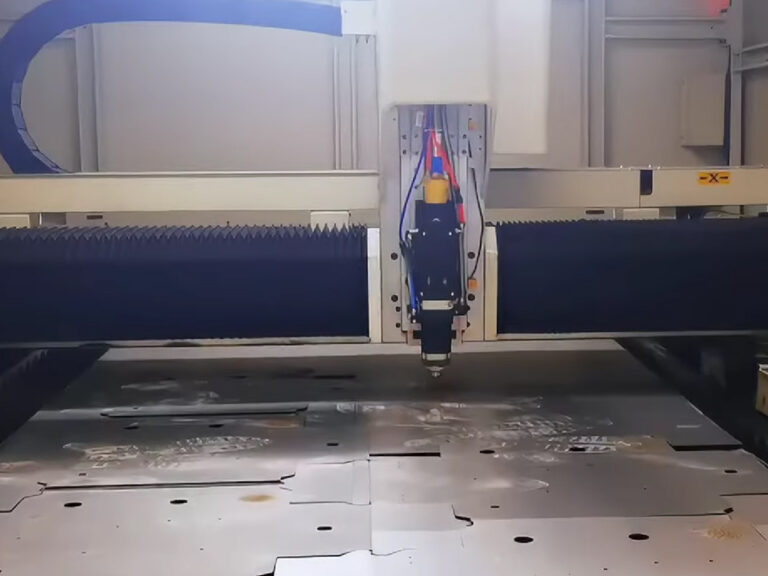
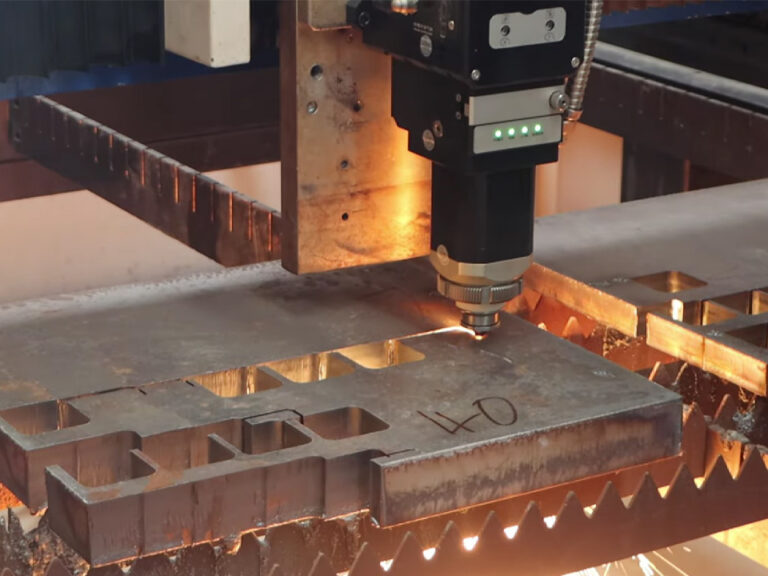
Das Laserschneiden von Blech ist in der Regel meine erste Wahl für Halterungen, Montageplatten, Kabelschutzvorrichtungen, geformte Bleche, Verstärkungsbleche, geschlitzte Laschen und Teile, bei denen es auf die Genauigkeit der Lochpositionen ankommt. Der Faserlaser ist schnell, sauber, wiederholgenau und äußerst effizient, wenn das Team weiß, was es tut.
Aber das ist keine Zauberei.
Dicke Bleche? Reflektierendes Material? Enge Ecken? Lange, schmale Teile, die sich durch die Hitze wie eine Banane verziehen? Jetzt reden wir über den Prozess und nicht mehr in Prospektsprache.
Vergleich verschiedener Schneidverfahren für die Herstellung von Rahmen für Fitnessgeräte
| Schnittmethode | Optimale Verwendung in den Rahmen von Fitnessgeräten | Schwachstelle | Meine Meinung |
|---|---|---|---|
| Faserlaserschneiden | Halterungen, Verstärkungsbleche, Platten, Einstelllöcher, Laschen, Abdeckungen | Reflektierende Metalle und dicke Werkstücke erfordern eine Prozesssteuerung | Die beste Standardeinstellung für Genauigkeit und Geschwindigkeit |
| CO₂-Laserschneiden | Workflows für nichtmetallische oder ältere Werkstoffe aus verschiedenen Materialien | In der modernen Metallproduktion eher selten | Immer noch nützlich, aber nicht meine erste Wahl |
| Plasmaschneiden | Dicke Konstruktionsbleche, gröber bearbeitete Rahmenbauteile | Breiterer Schnittspalt, mehr Krätze, geringere Präzision | Gut für grobe Arbeiten, nicht für die Feinjustierung |
| Wasserstrahlschneiden | Hitzeempfindliche Werkstoffe, dickes Aluminium, Speziallegierungen | Langsamer, kostspieliger, abrasiver Reinigungsprozess | Hervorragend geeignet, wenn Wärmeverformung nicht akzeptabel ist |
| CNC-Stanzen | Wiederkehrende Löcher, Schlitze, dünne Blechplatten | Die Werkzeuge schränken die Geometrie und die Kantenqualität ein | Schnell, wenn die Entwürfe standardisiert sind |
| Sägen + Bearbeitung | Rohrteile, schwere Ansätze, Präzisionsenden | Mehr Handhabung, mehr Arbeitsaufwand | Unverzichtbar für den Bau von Hybridrahmen |
Auch kleinformatige Fasersysteme verdienen eine Erwähnung – nicht, weil jeder Sportgerätehersteller Schnitte im Schmuckmaßstab benötigt, sondern weil kompakte Präzision immer mehr Einzug in die Metallbearbeitung hält. Eine Maschine wie die Kleinste Faserlaserschneidmaschine für Messing, Gold und Silber Es befindet sich zwar in einer anderen Fertigungslinie, doch die Logik ist dieselbe: kontrollierter Strahl, kontrollierte Schnittspalte, kontrollierte Wiederholgenauigkeit.
Und was die Gravurtechnik angeht, so gelten selbst Geräte, die für engere Nischen vermarktet werden – wie zum Beispiel ein Erstklassige Faserlaser-Graviermaschine zum Verkauf (2024)—deutet auf dieselbe Realität in der Fertigung hin: Eine dauerhafte Metallkennzeichnung ist nicht mehr optional, wenn Teile, Chargen, Gewährleistungsansprüche und Konformitätsnachweise miteinander abgeglichen werden müssen.
Sicherheit sagt mehr aus als die Verkaufspräsentation
Hier ist ein Trick, den ich benutze.
Wenn ein Betrieb bei den Maßnahmen zum Schutz, zur Verriegelung, zur Entnahme, zum Entgraten und zur Materialhandhabung nachlässig ist, schenke ich seinen Angaben zu den Toleranzen kein Vertrauen. Nicht voll und ganz. Nicht, wenn es um die Rahmen von Fitnessgeräten geht.
Das klingt hart.
Gut.
Das US-amerikanische Bureau of Labor Statistics meldete für das Jahr 2023 eine Gesamtquote meldepflichtiger Arbeitsunfälle und Berufskrankheiten von 3,2 Fällen pro 100 Vollzeitbeschäftigte in der Herstellung von Metallfertigprodukten sowie von 3,9 für alle sonstigen Bereiche der Herstellung von Metallfertigprodukten. Das ist keine abstrakte Zahl von einem Sicherheitsplakat, sondern eine Warnung vor den Arbeitsbedingungen, die hinter günstigen Angeboten für maßgeschneiderte Metallbearbeitung stecken.
Zu den aktuellen Top 10 der am häufigsten zitierten OSHA-Vorschriften gehören auch „Lockout/Tagout“ und Maschinenschutz, wobei der Maschinenschutz mit 29 CFR 1910.212 in Verbindung steht.
Das ist wichtig, denn Lasertische, Abkantpressen, Scheren, Schleifmaschinen, Gabelstapler, Entgratungsstationen und Vorrichtungen sind keine harmlosen Kulissen. Die OSHA-Vorschrift zur Maschinensicherung besagt, dass Arbeitsbereiche, in denen Mitarbeiter Verletzungsgefahren ausgesetzt sind, abgesichert werden müssen, und die OSHA führt Guillotine-Schneidemaschinen und Scheren ausdrücklich als Maschinen auf, die in der Regel eine Absicherung am Arbeitspunkt erfordern.
Wenn ein Lieferant also einen verdächtig niedrigen Preis nennt, sollten Sie nicht nur nach dem Preis fragen.
Frag, was verschwunden ist.
Prüfung? Kantenverrundung? Kontrollierte Überarbeitungen? Stickstoff als Schutzgas? Wartung der Vorrichtungen? Schulung des Bedienpersonals? Vorbeugende Wartung? Verriegelungsverfahren? Die Lockout/Tagout-Vorschrift der OSHA gilt für Wartungs- und Instandhaltungsarbeiten, bei denen eine unerwartete Energiezufuhr, das Anlaufen der Maschine oder die Freisetzung gespeicherter Energie zu Verletzungen der Arbeitnehmer führen könnte.
Ich weiß, ich weiß – die Einkäufer wollen übersichtliche Stückpreise. Aber die Fertigung schert sich nicht darum, was die Tabellenkalkulation verlangt.
Das Rückrufbeispiel, das Rahmenkonstrukteure ins Schwitzen bringen dürfte
Eine Rückrufmitteilung ist niemals nur eine Rückrufmitteilung. Es ist eine öffentliche Nachbetrachtung.
Im Dezember 2024 kündigte die US-amerikanische Verbraucherschutzbehörde (Consumer Product Safety Commission) einen Rückruf des an Fitnessstudios verkauften Trainingsgeräts „Precor Resolute Cable Multi-Station“, Modell RMS905, an. Die Behörde erklärte, dass ein Sicherungsstift möglicherweise nicht vollständig in der vertikalen Schiene einrasten könne, wodurch der Seilzugwagen unerwartet herunterfallen könne; betroffen waren etwa 834 Geräte, wobei neun Fälle von herabfallenden Seilzügen und zwei leichte Kopfverletzungen gemeldet wurden.
Lag das an einem fehlerhaften Blechzuschnitt?
Das sage ich nicht.
Aber ich sage Folgendes: Jede Maschine mit Gewichtsauswahl oder Kabelzug hängt von der Ausrichtung, der Eingriffsgeometrie, der Wiederholgenauigkeit und der Haltbarkeit im Einsatz ab. Ein Stift rastet nicht im luftleeren Raum ein. Eine Schiene ist nicht einfach nur eine Schiene. Ein Lochmuster ist nicht einfach nur “nahe genug”. Jede Platte, jeder Schlitz, jede Biegung, jede Schweißnaht und jede Beschichtungsschicht ist Teil des Mechanismus – ob das Beschaffungsteam das nun versteht oder nicht.
Verpasst man den Stapelvorgang, gerät die Maschine in Konflikt mit den Gesetzen der Physik.
Die Physik hat die Oberhand.
Für dauerhafte Warnschilder, die Kennzeichnung von Bauteilen und die Chargenkennzeichnung eignet sich ein 3D-UV-Laserbeschriftungsmaschine kann sinnvoll sein, wenn Etiketten Schweiß, Reinigungschemikalien, Abrieb und unachtsames Fitnessstudio-Personal mit einem Schaber überstehen müssen. Für eine genauere Metallidentifizierung ist die 3D-Faserlasergravierer für Metall passt zur eher industriellen Seite des Jobs.
So schneidet man Blech für die Rahmen von Fitnessgeräten, ohne dass der Schrottbehälter voll wird
Fangen Sie früher an als mit dem Schneiden.
Das ist die Antwort, die niemand gerne hört.
Der größte Teil des Verschnitts ist bereits vor dem Laserschneiden in der Konstruktion vorgesehen. Die DXF-Datei weist eine schlampige Benennung der Ebenen auf. Die Biegezugabe wird geschätzt. Der Abstand für die Pulverbeschichtung ist reine Fantasie. Bei der Materialgüte steht “gleichwertig”, weil jemand billigeren Stahl wollte. Der Schlitz wird mit Nennmaß gezeichnet, obwohl jeder weiß, dass die Beschichtung Platz wegnimmt. Dann wird die Werkstatt dafür verantwortlich gemacht.
Klar. Praktisch.
Wenn ich einen Prozess für die Herstellung von Rahmen für Fitnessgeräte entwickle, möchte ich, dass zunächst die Materialgüte festgelegt wird: Q235, Q345, ASTM A36, ASTM A500-Rohre, Edelstahl 304, Aluminium 6061 – was auch immer der Rahmen tatsächlich benötigt. Keine vagen Angaben. Kein “Standardstahl”. Echte Spezifikationen.
Dann möchte ich, dass die Konstruktionsabsicht direkt in der Fertigungslogik vermerkt wird. Lagerbohrungen sind keine Dekoration. Riemenscheibenschlitze sind keine frei gestaltbaren Elemente. Laschen- und Schlitzverbindungen sollten die Montage steuern und kein falsches Vertrauen erwecken. Alles, was ein bewegliches Teil fixiert, wird anders behandelt als eine Abdeckplatte. Alles, was in der Nähe eines Präzisionsmerkmals geschweißt wird, wird auf Verformungen überprüft.
Und ja, ich möchte eine Versionsverwaltung, die so selbsterklärend ist, dass selbst ein müder Nachtschichtmitarbeiter sie nicht vermasseln kann.
Ein sinnvoller Arbeitsablauf sieht in der Regel so aus: Faserlaser für das präzise Blechschneiden, Wasserstrahlschneiden für wärmeempfindliche oder dicke, schwer zu bearbeitende Teile, Plasmaschneiden nur dann, wenn die Kante nicht als Bezugspunkt dient, CNC-Stanzen für dünne Bleche mit hoher Wiederholgenauigkeit, Sägen und Zerspanen für Rohrenden, Vorsprünge und hybride Rahmenelemente.
Einfach? Nein.
Lohnt es sich? Meistens schon.
Was ich einen Lieferanten fragen würde, bevor ich ihm den Auftrag erteile
Aber genau hier fange ich an, nervig zu werden.
Ich möchte keinen Lieferanten, der sagt: “Das schaffen wir.” Das sagt nämlich jeder. Ich möchte einen Lieferanten, der mir schon von sich aus erklärt, wo bei dem Auftrag etwas schiefgehen könnte, noch bevor ich danach frage.
Fragen Sie nach den Toleranzen in Abhängigkeit von der Materialstärke. Fragen Sie, wie Erstmuster geprüft werden. Fragen Sie, ob der Abstand zwischen den Bohrungen gemessen wird oder nur das Außenprofil. Fragen Sie, wie vermengt werden unterschiedliche Revisionsstände verhindert. Fragen Sie, ob die Entgratung enthalten ist oder stillschweigend ausgeschlossen wird. Fragen Sie, wie mit langen, schmalen Blechen umgegangen wird, die zum Verziehen neigen. Fragen Sie, was passiert, wenn sich DXF- und PDF-Dateien widersprechen.
Dann beobachte ihren Gesichtsausdruck.
Die guten Geschäfte antworten ohne großes Aufhebens. Die schlechten geben sich dann selbstbewusst.
Bei den Rahmen von Fitnessgeräten ist diese Antwort von Bedeutung, da es sich bei den Mängeln oft um „sanfte“ Fehler handelt: schlechte Seilführung, störendes Brummen des Rahmens, nicht bündig sitzende Abdeckungen, Einstellstifte, die sich rau anfühlen, ungleichmäßig belastete Führungsstangen sowie Pulverbeschichtungen, die an Stellen mit Presspassungen abblättern.
Keine Explosion. Nur ein Imageschaden.
Und vielleicht ist das sogar noch schlimmer.
FAQs
Was versteht man unter Blechschneiden für die Rahmen von Fitnessgeräten?
Das Blechschneiden für die Rahmen von Fitnessgeräten umfasst das präzise Zuschneiden von Stahl-, Edelstahl- oder Aluminiumblechen, Halterungen, Verstärkungsblechen, Schutzvorrichtungen und Befestigungskomponenten, damit die geschweißten Konstruktionen der Fitnessgeräte korrekt ausgerichtet sind, wiederholten Belastungen durch die Benutzer standhalten und sich ohne übermäßiges Schleifen, Einpressen, Klappern oder Nachbearbeitung nach der Beschichtung montieren lassen.
In der Praxis heißt das: Entweder ist die Maschine von Anfang an einwandfrei, oder sie liefert von Anfang an fehlerhafte Ergebnisse. Selbst die beste Schweißvorrichtung der Welt kann eine Halterung mit verschobenen Bohrlöchern, einer konischen Kante oder einem Schlitz, der sich nach der Pulverbeschichtung schließt, nicht vollständig retten.
Ist das Laserschneiden für die Rahmen von Fitnessgeräten besser geeignet als das Plasmaschneiden?
Das Laserschneiden eignet sich in der Regel besser als das Plasmaschneiden für Rahmen von Fitnessgeräten, wenn das Bauteil präzise Bohrungen, saubere Kanten, exakte Schlitze, eine hohe Oberflächenqualität oder wiederholbare Schweißpositionen erfordert, während das Plasmaschneiden für schwerere Konstruktionsteile geeignet ist, bei denen die Schnittkante keinen Einfluss auf die Ausrichtung oder die Geometrie beweglicher Teile hat.
Bei dickeren Blechen mit rauer Oberfläche würde ich weiterhin Plasma einsetzen, wenn die Kante bearbeitet, verdeckt oder geschweißt wird, ohne als Bezugspunkt zu dienen. Aber bei Riemenscheibenhalterungen, Bauteilen für Schaltstapel, Einstelllöchern, Schutzvorrichtungen und sichtbaren Rahmenblechen? Da würde ich fast immer den Faserlaser wählen.
Wie präzise muss das CNC-Blechschneiden bei der Herstellung von Rahmen für Fitnessgeräte sein?
Das CNC-Schneiden von Blechen für die Herstellung von Rahmen für Fitnessgeräte sollte so präzise sein, dass die Ausrichtung der Bohrungen, die Passgenauigkeit der Schweißnähte, der Abstand zur Beschichtung und die Montageabstände gewährleistet sind. Dabei werden bei vielen präzisionslasergeschnittenen Bauteilen häufig Toleranzen von etwa ±0,1 mm bis ±0,3 mm angestrebt, sofern die Materialstärke, der Zustand der Maschine und die Prozesssteuerung dies zulassen.
Akzeptieren Sie keine pauschale Toleranz für das gesamte Rahmenpaket. Eine 3-mm-Verkleidung, ein 8-mm-Verstärkungsblech und eine 16-mm-Drehplatte verhalten sich nicht gleich. Der Lieferant sollte das wissen, ohne dass man ihm das erst erklären muss.
Ihre nächsten Schritte: Kaufen Sie nicht einfach das Endprodukt, sondern prüfen Sie den Prozess
Wenn Sie Präzisionsblechzuschnitte für die Rahmen von Fitnessgeräten benötigen, schicken Sie nicht einfach eine DXF-Datei und hoffen Sie auf das Beste.
Senden Sie die Zeichnungsunterlagen. Erkundigen Sie sich nach dem Schneidweg. Fragen Sie nach den Materialzertifikaten. Fragen Sie, wie die Erstmuster geprüft werden. Fragen Sie, wie Änderungen gekennzeichnet werden. Fragen Sie, welche Toleranzen nach der ersten Charge tatsächlich eingehalten werden – nicht nur bei dem Musterteil, das während der Produktion besonders sorgfältig behandelt wird.
Dann lass sie es beweisen.
Denn sobald der Rahmen geschweißt, gestrahlt, beschichtet, verpackt, versandt, montiert und von echten Anwendern in Betrieb genommen wurde, wird “nahe genug” sehr schnell teuer.


Heißer Klick
Kontakt
Anmeldung
©Copyright [bogonglaser.com]. BOGONG Laser Maschine Lieferant Alle Rechte vorbehalten.