-
طريق شونهوا، مدينة جينان، شاندونغ

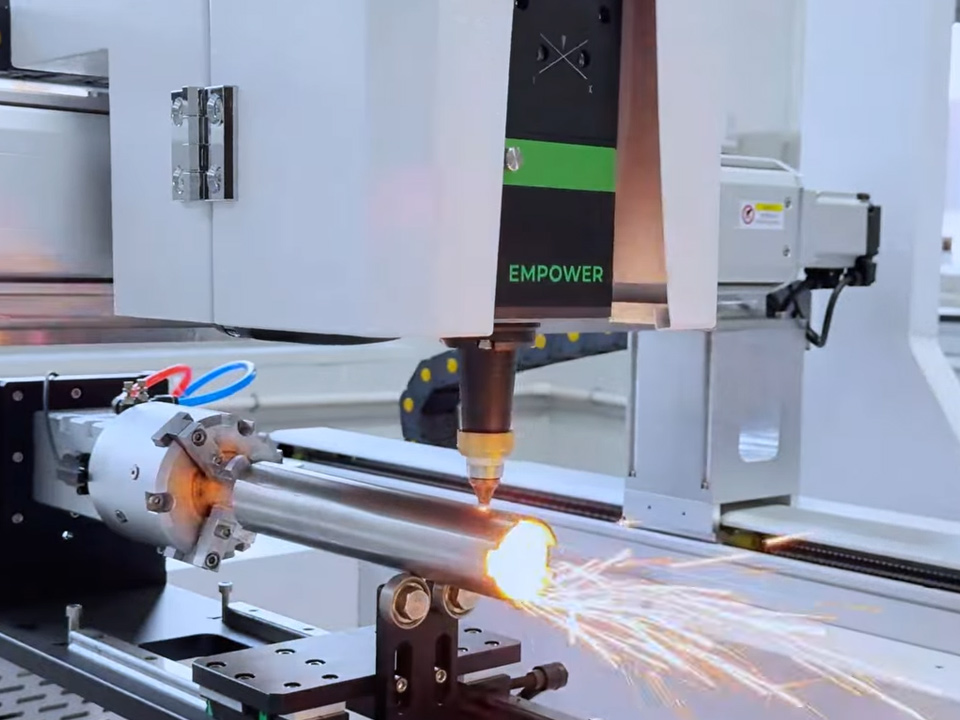
Real Operating Cost of a Fiber Laser Cutting Machine Per Hour
Fiber laser cutting machine operating cost per hour explained with real numbers for power, gas, labor, consumables, and maintenance.

I’ve sat through enough machine pitches to know the script by heart: they flash a neat little electricity number, maybe toss in a claim about “low maintenance,” and suddenly a buyer starts imagining a tidy hourly cost that looks almost harmless, even though the real shop-floor burn rate is messier, louder, and way more expensive once nitrogen, nozzles, lens covers, operator drag, scrap, idle spindle time—yes, laser people still borrow that CNC phrasing—and maintenance creep start showing up on the ledger. That’s how it goes.
Three numbers lie.
The first lie is “power cost only.” The second lie is “rated power equals actual spend.” The third one is my favorite: “our machine only costs a few dollars an hour to run.” Sure. Maybe in a fantasy shop with free gas, free labor, perfect nests, and an operator who never sneezes.
Here’s the ugly truth: when people search fiber laser cutting machine operating cost per hour, most of them are hunting for a simple number. I get it. Everyone wants the shortcut. But from my experience, that shortcut is exactly what creates bad ROI decisions, especially for owners buying their first machine or distributors trying to compare a 3 kW platform against a 6 kW or 12 kW setup without asking what actually happens after installation.
And that’s the trap.
Because the real cost of running a fiber laser cutter isn’t one number. It’s a stack. Electricity, yes. But also assist gas, labor, consumables, routine service, finance load, lost time during setup, bad cut retries, dirty optics, extraction load, chiller load, and those little process hiccups that don’t look dramatic in a demo video but absolutely chew through margin over a month.
Want the blunt version?
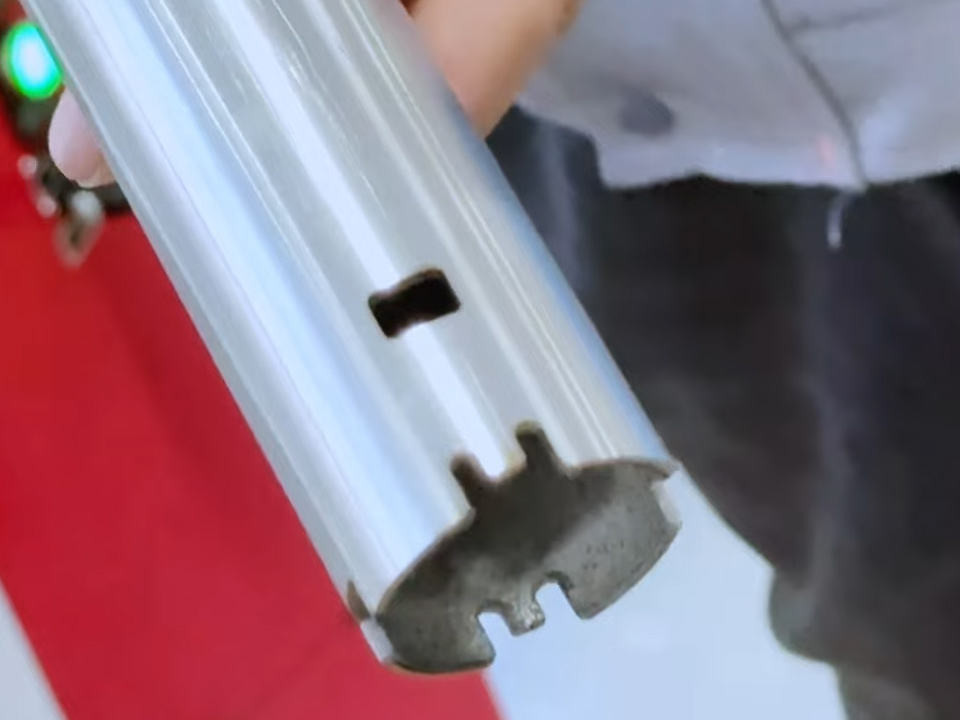
If somebody is quoting hourly cost and not mentioning gas, they’re either simplifying for marketing—or hiding the ball.
The power-only crowd loves to sound scientific. They’ll point to industrial electricity rates and say, look, the machine doesn’t cost much at all. And they’re not totally wrong, which is what makes the half-truth dangerous. The U.S. EIA’s 2024 average industrial electricity price was 8.13 cents per kWh, which means pure power cost can look deceptively small on paper, especially for smaller and mid-power systems. But industrial power prices vary by region, and energy pressure remains a live issue globally, with the IEA noting that EU industrial electricity demand stayed weak after the energy shock and Reuters reporting that high industrial energy costs continued to hit manufacturing investment decisions in Europe.
That part matters. But only that part? Not even close.
I frankly believe electricity is the cleanest-looking line item and the least honest one when it’s isolated from the rest of the machine cell. A fiber laser isn’t just the source. It’s the source plus the chiller, extractor, controls, drives, gas train, operator time, and the reality that not every paid hour is a beam-on hour. Shops forget that. Or pretend to.
So when someone asks me, how much does a fiber laser cutting machine cost to run, I usually answer with another question: what are you cutting, with what gas, on what thickness, with what operator structure, and how many truly productive hours are you getting every week?
Silence follows.
That silence is useful.
Because a compact unit and a production monster don’t live in the same cost universe. A shop using a small fiber laser cutting machine for lighter work, short runs, or smaller parts will not experience the same hourly burden as a shop driving a high-power fiber laser metal cutting machine hard across thicker material with big gas demand and heavier financial overhead. Seems obvious, right? Yet buyers still compare them like they’re choosing between two laptop models.
They’re not.
They’re choosing between cost structures.
And if you’re still at the early comparison stage, a broader look at the آلة القطع بالليزر الليفي category helps because source wattage alone doesn’t tell you much about the real hourly economics. Not enough, anyway.
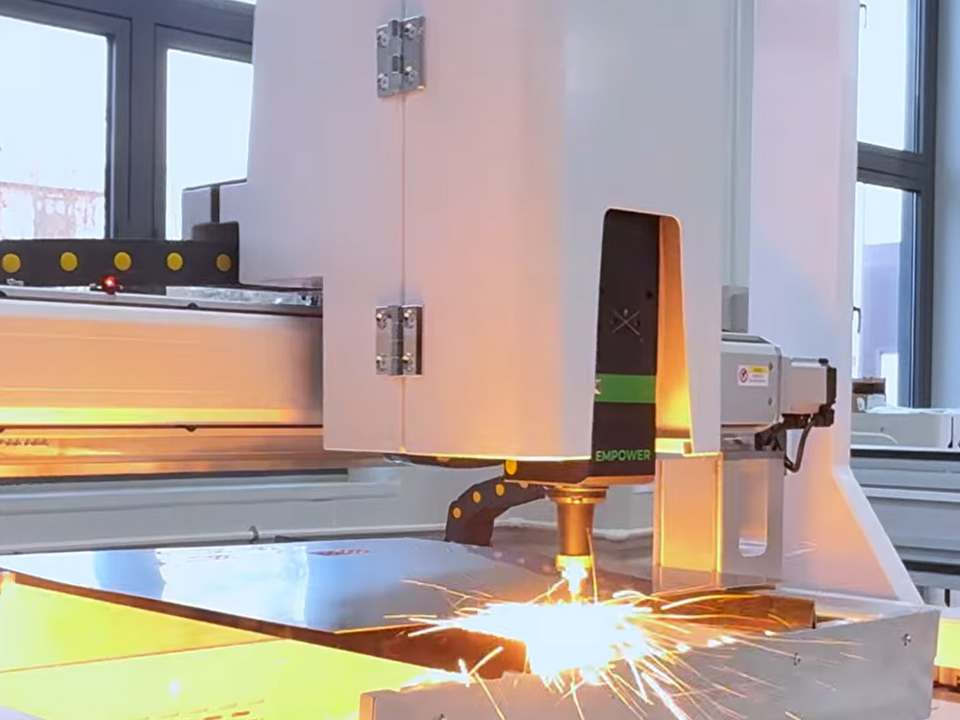
Now let’s talk about the line item that gets butchered most often: gas.
People obsess over watts. I get why. Watts are sexy on a sales sheet. Gas isn’t. Gas is the boring expense that ruins your quoting discipline when you ignore it. And in a lot of real-world cutting jobs—especially stainless, aluminum, bright-edge work, or cleaner edge requirements—nitrogen is where the quiet bleeding happens. Slow, expensive, relentless.
That’s not drama. It’s invoicing.
Compressed air gets abused in these conversations too. It’s often treated like “free shop air,” which is almost funny if you’ve ever paid for compressors, dryers, filters, leaks, pressure losses, and maintenance. The U.S. Department of Energy has long warned that compressed air is one of the most expensive utilities in a plant, and poor system efficiency can be brutal. More recent industry estimates also show that the real cost of compressed air often exceeds the direct electrical cost of generating it once drying, filtration, maintenance, and distribution losses are included.
Nothing free there.
And nitrogen? That can turn nasty fast. Not because nitrogen is “bad,” but because people under-model it. High purity, high pressure, long cut times, thicker sections, sloppy process tuning, oversized nozzle choices—stack all that together and suddenly your neat cost-per-hour assumption looks like it was written by someone who never had to sign a gas contract.
Here’s the structure I actually trust when thinking about fiber laser cutter cost calculation. Not because it looks pretty. Because it survives contact with reality.
| Cost Component | Typical Hourly Range | What Changes It Most |
|---|---|---|
| Electricity | $1.50–$8.00 | Machine power, duty cycle, local kWh rate, chiller/extraction load |
| Assist gas | $2.00–$35.00+ | Nitrogen vs oxygen vs compressed air, pressure, thickness, nozzle size |
| Operator labor | $6.00–$25.00 | Region, skill level, whether one operator runs multiple cells |
| المواد الاستهلاكية | $0.50–$5.00 | Nozzles, ceramics, protective lenses, filters |
| Routine maintenance | $1.00–$6.00 | Preventive schedule, contamination, service access |
| Depreciation / finance | $4.00–$30.00+ | Machine price, utilization, lease terms, expected service life |
| Downtime / scrap reserve | $1.00–$10.00 | Nesting quality, training, material mix, process control |
That table is where the grown-up conversation starts.
Not ends.
Because two shops can own similar machines and still have wildly different fiber laser machine hourly operating cost depending on how they run the floor. One shop has good nesting, disciplined setup, clean gas supply, stable operators, sensible scheduling, and enough throughput to keep non-cut time under control. Another shop has stop-start production, chaotic job switching, poor lens hygiene, and an owner who still thinks downtime “doesn’t count” because it isn’t cutting. That second shop will swear the machine is expensive. The first shop will swear it prints money. Same technology. Different behavior.
That’s the part outsiders miss.
Here’s a more concrete working model. Again—not brochure math. Shop math.
| السيناريو | Electricity | Gas | Labor | Consumables + Maintenance | Depreciation/Finance | Estimated Real Hourly Cost |
|---|---|---|---|---|---|---|
| Thin carbon steel with air assist | $2.50 | $2.00 | $10.00 | $2.00 | $8.00 | $24.50/hr |
| Oxygen cutting on thicker carbon steel | $3.50 | $4.50 | $10.00 | $2.50 | $8.00 | $28.50/hr |
| Nitrogen cutting stainless/aluminum | $4.00 | $18.00 | $10.00 | $3.00 | $8.00 | $43.00/hr |
| High-power heavy-production setup | $6.00 | $25.00 | $14.00 | $4.00 | $18.00 | $67.00/hr |
Do those numbers move? Of course they do.
But the shape is right. That’s what matters. Electricity is there, yes. But once nitrogen enters the chat—or once finance load and labor loading get real—the total number climbs quickly. That’s why I roll my eyes a bit when someone says a production laser “only costs a few bucks an hour.” Maybe the beam does. The business doesn’t.
Let me be specific about fiber laser cutting machine electricity cost per hour, because that phrase gets searched a lot and, fair enough, it deserves a clean answer. On the 2024 U.S. industrial average rate of 8.13 cents per kWh, a system drawing an effective 25 kWh across laser source, chiller, controls, and auxiliaries lands near $2.03 per hour; at 60 kWh it is about $4.88 per hour; at 100 kWh it is about $8.13 per hour. That is why electricity can look tame compared with gas and loaded labor, even though it remains a major planning variable in higher-power setups or higher-tariff markets.
Simple enough.
But here’s where buyers drift off course: they confuse connected load with real draw, then confuse real draw with actual production cost, and then they quote jobs using that distorted number as if the machine never pauses, never pierces badly, never needs a lens swap, never waits for a forklift, and never loses time to remnant handling.
That’s not costing. That’s wishful quoting.
Utilization changes everything. Say you’ve got a machine financed at a healthy monthly payment, but it only sees 1,200 truly productive hours a year because your jobs are patchy, setups drag, and your sales team keeps booking low-margin one-off work. Your hourly burden will feel heavy—because it is. The same machine at 4,000 productive hours? Whole different animal. Same metal. Same beam source. Different math.
That’s why I keep coming back to fit.
A lot of buyers would be better served with a smaller, sharper setup they can keep busy than a giant table they can barely feed. If your workflow leans toward compact metal parts, jewelry components, or smaller precision runs, then something like the smallest fiber laser cutting machine for brass, gold, and silver may align better with reality than an oversized production frame bought mostly for ego. And if your shop flips between profiles, tube jobs, and sheet work, an all-in-one tube and sheet metal laser cutting machine can shift handling economics in ways a simple wattage comparison never shows.
Different workflow. Different pain points.
Another thing I don’t think the industry says enough: lasers rarely get “expensive” all at once. Usually the margin leak starts quietly. A dirty protective lens here. A nozzle crash there. Pierce quality gets a little less forgiving. Operators slow down settings to play it safe. Scrap inches up. A machine that is still technically “running” starts costing more every hour without anyone formally admitting it.
That’s how shops get blindsided.
Not by disaster. By drift.
And drift is sneaky because it hides inside normalcy. The machine still powers on. Parts still come off the bed. But cut quality consistency softens, rework shows up in odd batches, and the operator starts compensating with tribal-knowledge tweaks that never make it into any standard operating sheet. Suddenly your CNC fiber laser cutting machine running cost is higher than your spreadsheet says, but your spreadsheet hasn’t been updated since the installation month.
That’s a management issue, not a laser issue.
From my experience, the shops that actually know their cost don’t “estimate once.” They track monthly. Sometimes weekly. Beam-on hours, sold hours, gas use, nozzle life, lens cover replacement, maintenance frequency, scrap percentage, actual nesting yield, and operator efficiency. They look at the ugly stuff. That’s why their quoting holds up under pressure.
Most people don’t want that answer. They want a clean universal number. Sorry. Doesn’t exist.
What does exist is a believable range. In real operations, I’d treat roughly $20 to $70+ per hour as a realistic working band depending on machine power, assist gas strategy, labor rate, utilization, and finance structure. Small air-assisted work can sneak under that. Nitrogen-heavy stainless production or higher-power systems can blow right past it. That’s not fearmongering. That’s just what happens when the calculator includes the items people prefer not to mention.
And yes, infrastructure matters more than people think. Bad extraction sizing, unstable cooling, weak gas purity control, sloppy nesting, poor operator training, or rough power quality can quietly turn a decent machine into an expensive one. The beam source doesn’t operate in a vacuum. The cell matters. The support system matters. The people matter.
Always have.
If you’re still figuring out which parts and production profiles make sense for a laser investment, it’s worth looking through laser cutting machine applications and the broader laser products catalog. Not because those pages magically answer your hourly cost question, but because machine economics only make sense when tied to actual job mix, part geometry, thickness range, and how your floor really runs on a Tuesday afternoon when nobody is in “demo mode.”
That’s the real test.
So, what is the honest answer to what is the operating cost of a fiber laser cutting machine per hour?
It depends. Annoying answer, I know. But the honest version is better: most real shops should budget for a full-stack hourly cost, not a power-only fairy tale, and that full-stack number usually lands far above the headline electricity estimate used in marketing copy. If you’re pricing parts, planning ROI, or choosing between machine formats, that distinction is everything.
الأسئلة الشائعة
What is the real operating cost of a fiber laser cutting machine per hour?
The real operating cost of a fiber laser cutting machine per hour is the full hourly expense of producing saleable parts, including electricity, assist gas, labor, consumables, maintenance, depreciation or financing, and an allowance for downtime or scrap—not just the machine’s power draw. In practice, many shops land somewhere between $20 and $70+ per hour depending on machine size, gas choice, material thickness, operator structure, and utilization. Smaller air-assisted work may sit lower. Nitrogen-heavy stainless jobs often sit much higher.
How much does electricity alone add to fiber laser cutting cost per hour?
Electricity alone is the direct hourly power expense from the laser source, chiller, controls, extraction, and supporting systems, calculated from real operating draw and local industrial electricity rates rather than nameplate power alone. In many cases, electricity looks modest compared with gas and labor. A mid-power setup may only spend a few dollars per hour on power, while larger or harder-worked systems spend more. Useful metric, yes. Complete metric, no.
Why is nitrogen often the biggest hidden cost in laser cutting?
Nitrogen is often the biggest hidden cost because oxide-free cutting can consume high volumes continuously, and the hourly gas burden rises quickly with thicker material, higher pressure, long run times, larger nozzles, and poor process discipline. Shops tend to underestimate nitrogen because they fixate on wattage first. But once stainless or aluminum becomes a regular part of the production mix, gas cost can dominate the hourly model. That’s where sloppy estimating really gets punished.
Is a higher-power fiber laser always cheaper per part?
A higher-power fiber laser is not always cheaper per part because faster cutting does not automatically offset higher assist gas demand, larger finance burden, maintenance exposure, and underutilization risk, especially if the work mix is thin, inconsistent, or poorly matched to the machine. Sometimes the bigger unit absolutely wins on throughput. Sometimes it becomes an oversized cash drain with great specs and mediocre real-world ROI. Fit matters more than swagger.
What should buyers include in a fiber laser cutter cost calculation?
A proper fiber laser cutter cost calculation should include electricity, assist gas, operator labor, consumables, routine maintenance, depreciation or lease cost, setup time, expected scrap, and the financial effect of idle or underutilized hours. I’d also include gas purity control, filter replacement, and a realistic downtime reserve because those “small” items never stay small for long. If your model leaves them out, your quoted part price is probably lying to you.
If you want a machine matched to your production reality instead of brochure math, start with the work you actually cut—not the wattage that sounds impressive in a sales call. Explore the full fiber laser cutting machine range or reach out through contact us to compare the right platform, gas strategy, and cost structure for your shop.


نقرة ساخنة
اتصل بنا
التطبيق
©Copyright [bogonglaser.com]. BOGONG Laser Machine Supplier All Rights Reserved.