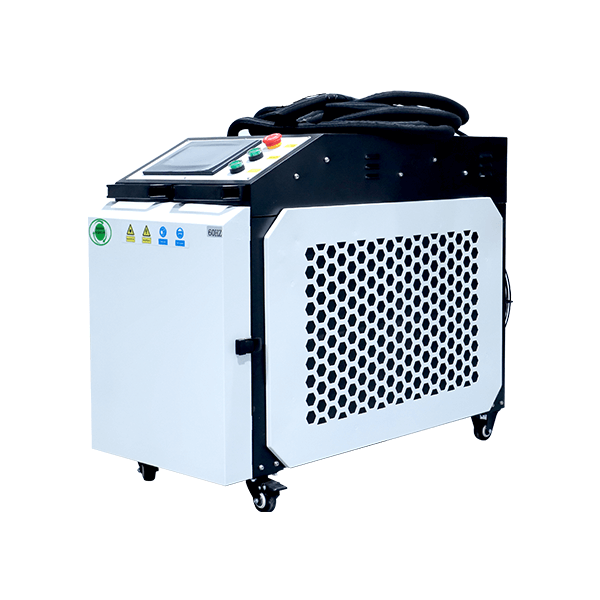
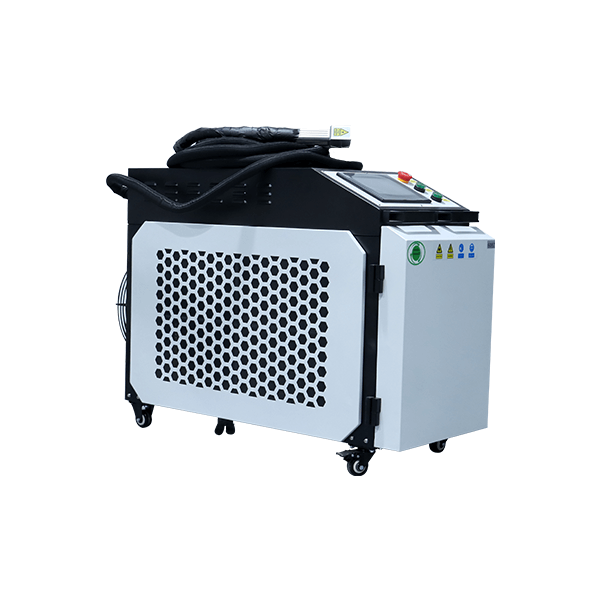
Portable Laser Welder Applications
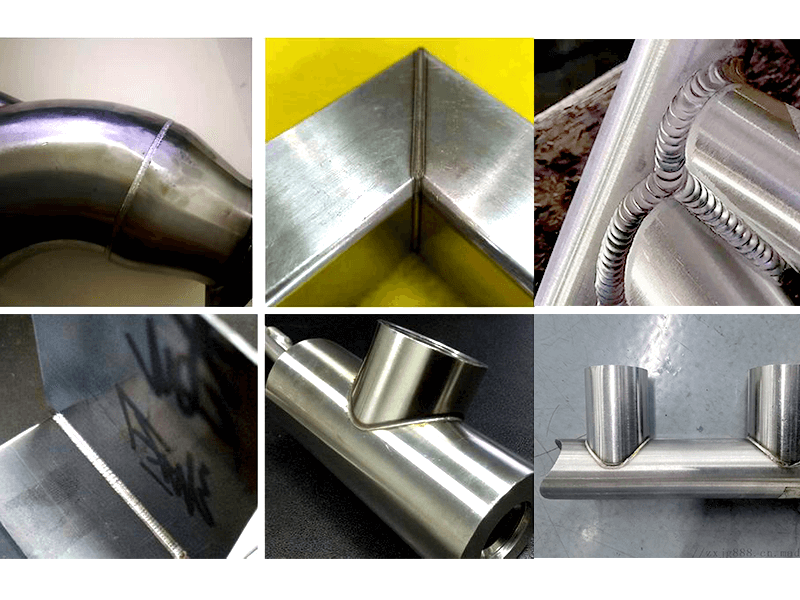
Portable laser welders are highly versatile tools capable of welding a wide range of metals and alloys, including stainless steel, carbon steel, brass, copper, aluminum, gold, chromium, silver, titanium, nickel, platinum, rhodium, tantalum, niobium, tungsten, molybdenum, and more. They can handle different combinations of materials, such as welding brass to stainless steel, copper to brass, titanium to molybdenum, titanium to gold, and nickel to copper.
Handheld laser welding machines find applications across various industries, from home use to large-scale manufacturing:
Aviation
Used for engine casings, wing spacers, fuselage skins and ribs, wall panels, and bellows.
Electronic Instruments
Welds integrated circuit leads, picture tube electron guns, all-tantalum capacitors, speed control tubes, and instrument hairsprings.
Machinery
Ideal for precision springs, dot matrix printer parts, metal thin-walled bellows, thermocouples, and electro-hydraulic servo valves.
Steel Metallurgy
Efficient in welding silicon steel sheets with thicknesses from 0.2mm to 8mm and widths from 0.5mm to 1.8mm, including high, medium, and low carbon steel, as well as stainless steel, with welding speeds ranging from 100cm/min to 1000cm/min.
Automotive
Used for welding parts such as roofs, body panels, side frames, chassis, transmission components, gear assemblies, and ignition system parts.
High-Speed Rail
Effective for welding the honeycomb structures of train car bodies.
Shipbuilding
Utilized for working on decks, cabin bulkheads, walls, and flat plate sandwich members.
Medical
Involved in the production of pacemakers and lithium-iodine batteries used in these devices.
Food Industry
Welds food cans, replacing traditional soldering and contact high-frequency welding methods. This process is non-toxic, fast, material-efficient, and produces aesthetically pleasing joints with excellent performance.
Other Applications
Includes welding for gas turbines, heat exchangers, dry cell zinc and copper casings, and components for nuclear reactors.