-
Strada Shunhua, città di Jinan, Shandong

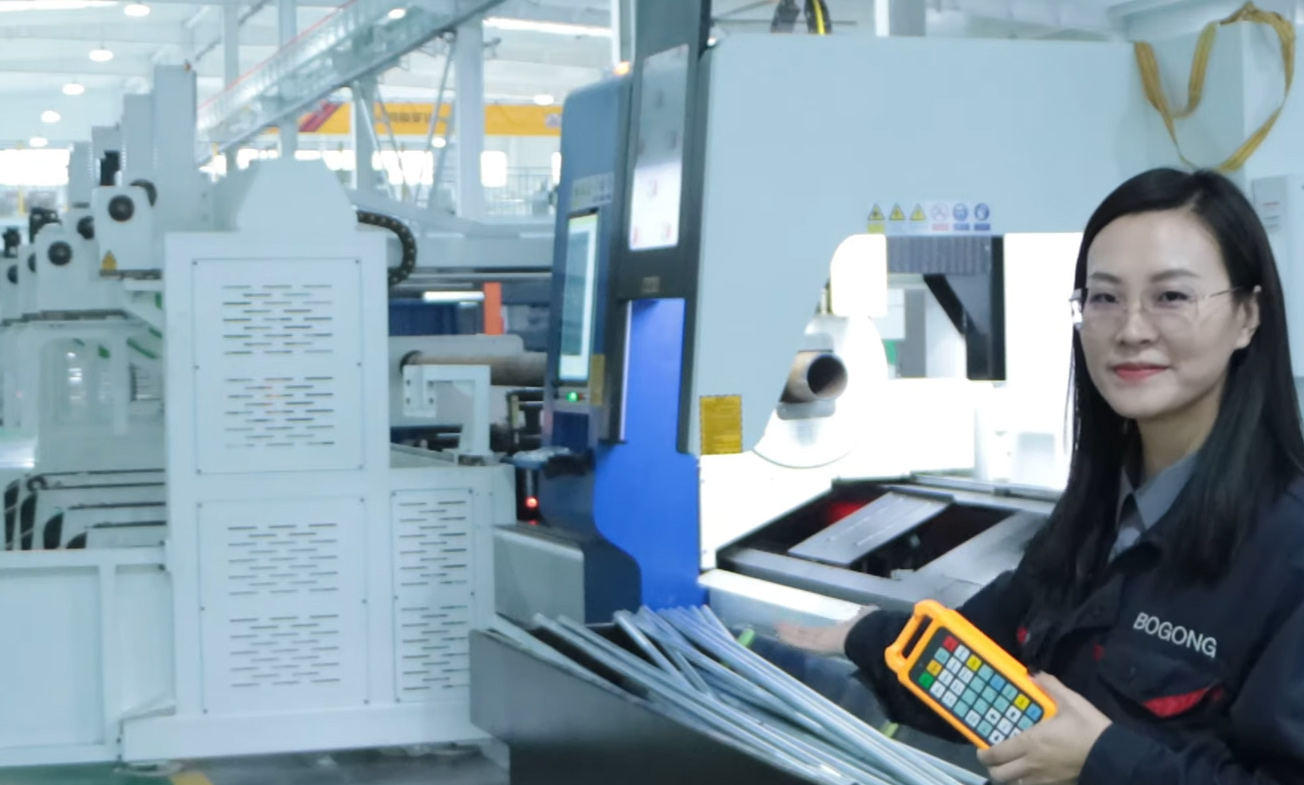
Laser Cutting Solutions for Sheet Metal Fabrication Businesses
Most sheet metal shops do not lose money because they cut too slowly. They lose money because they cut inconsistently. This article breaks down where laser cutting manufacturing actually pays off, where it disappoints, and which machine paths make sense for fabricators that care about throughput, tolerance control, and real operating margin.

The hard truth: most shops do not have a speed problem
They have a variation problem.
I have seen too many sheet metal businesses obsess over headline wattage, table size, and brochure cutting speeds while ignoring the ugly part of the business: inconsistent edges, drifting dimensions, unstable assist-gas settings, poor nesting discipline, and operators compensating for process noise with tribal knowledge instead of repeatable standards. What does that produce? Scrap, rework, missed downstream fits, and quotes that look profitable only until the second shift touches the job. NIST has been making this point for years in more technical language: better precision reduces scrap, rework, trial runs, and process variation, while measurement standards and sensors are required to control quality in real production.
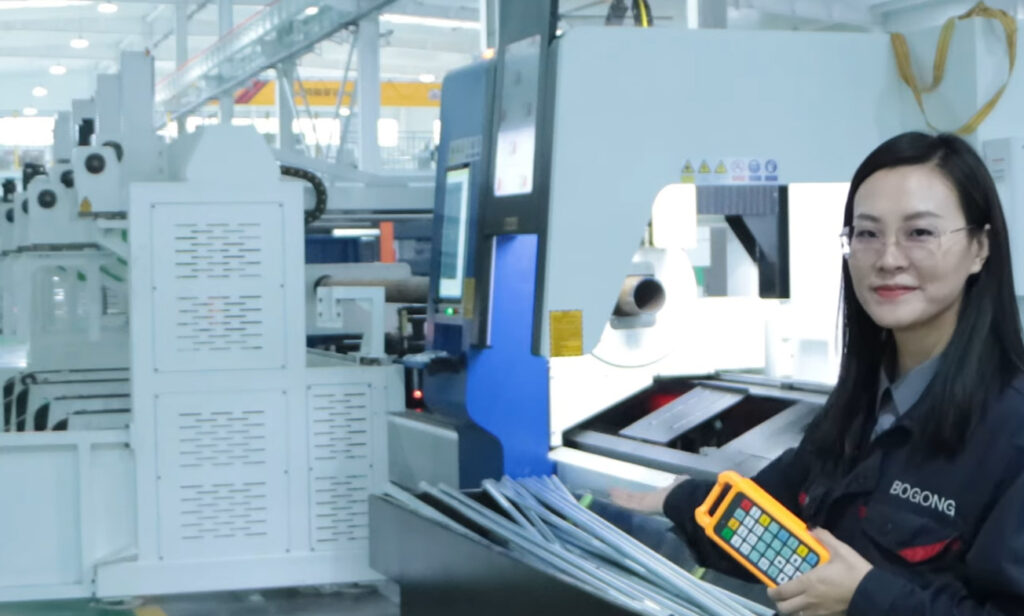
That is why laser cutting manufacturing matters.
Not because laser is magical, and not because every shop needs the biggest machine on the market, but because a well-set fiber laser can turn dimensional control into a business advantage when your customers expect bracket holes to line up, bends to form cleanly, and assemblies to fit without the familiar shop-floor sentence nobody wants to hear: “close enough.” And in a market where BLS reported that labor productivity fell in 17 of 21 manufacturing industries in 2023, betting on processes that reduce operator-dependent variation is not some nice idea. It is basic survival. See the latest BLS productivity data if you want the macro backdrop.
Where laser cutting actually makes fabrication businesses better
Repeatability beats heroics
A precision laser cutting line gives you a narrower operating window for error, but only if the shop treats process control seriously. NIST’s 2024 work on statistical process control is blunt about it: manufacturers monitor dimensional and surface-finish metrics to catch significant variation before those shifts turn into batch-level quality failures. That matters in fabricated parts because one bad edge does not just create one bad part. It can wreck welding prep, coating appearance, fixture fit, and final assembly alignment. Read NIST’s discussion of statistical process control in manufacturing quality assurance.
So yes, laser cutting quality control starts at the beam. But it does not end there.
The shops that win use stable parameter libraries, nozzle checks, gas-pressure verification, cut-edge inspection by material family and thickness, and documented corrective actions. The shops that lose? They buy expensive hardware and run it like a guessing contest. If you are evaluating macchine per il taglio laser in fibra for flat sheet work, that is the filter I would use first: not “How fast is it on the best demo file?” but “How tightly can we hold output on a normal Wednesday with ordinary operators and mixed job loads?”
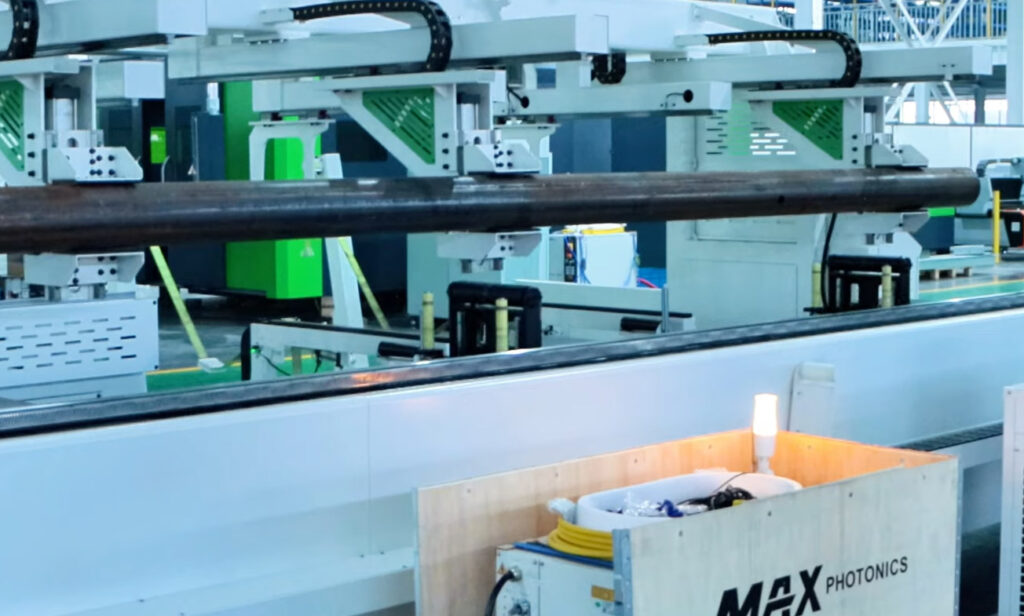
Tight tolerances are earned, not advertised
Here is where many sales pitches get slippery. Everybody claims tight tolerances. Fewer people tell you what happens when thickness changes, heat builds up, gas pressure drifts, or power gets pushed beyond the sweet spot.
A 2024 study in Metalli on S355JR steel plates showed exactly why this matters. In 4 mm and 6 mm plate tests, laser power had a significant effect on dimensional accuracy, higher gas pressure could hurt accuracy in thicker material, and the best-performing 6 mm sample reached an average dimensional deviation of 0.096 mm, while the best 4 mm result reported 0.225 mm. Surface roughness also shifted with power, speed, and gas pressure. In plain English: parameter discipline beats brute force. See the full 2024 cutting-accuracy study on S355JR steel.
That is why I do not trust generic promises about “high precision” unless the vendor can speak clearly about your thickness range, your material mix, your assist-gas economics, and your acceptable deviation band. If your shop handles beveled weld-prep components, for example, a standard flat-sheet setup is not the whole answer. You may need bevel fiber laser cutting for groove and chamfer work because the tolerance problem changes once edge geometry becomes part of the downstream weld plan.
Consistency is a margin story
Everyone talks about speed. I care about gross margin.
NIST’s precision-manufacturing work ties higher precision to fewer rejects, less scrap, less rework, fewer trial series, and less need for 100% inspection. That is not abstract academic talk. That is margin protection inside a fabricator’s actual P&L. If one process change cuts inspection burden, saves a secondary cleanup step, and reduces remake risk on a repeat customer’s enclosure line, you did not just improve quality. You improved the economics of the shop.
And that is the uncomfortable part many buyers avoid. A machine can be expensive and still be the cheaper option.
What different laser cutting solutions are really for
Not every sheet metal business needs the same toolset. And I think shops get in trouble when they buy for aspiration rather than work mix.
| Business need | Best-fit laser solution | Why it works | Where shops misjudge it |
|---|---|---|---|
| High-volume flat sheet cutting in mild steel, stainless, aluminum | Macchina per il taglio laser in fibra | Strong speed-to-precision balance, narrow kerf, good repeatability in common sheet applications | Buying too much power for the actual thickness mix |
| Thick plate throughput and industrial heavy-duty output | 6000W to 40kW high-power fiber laser systems | Better productivity on demanding workloads and larger production runs | Assuming more kW always means better part quality |
| Non-metal cutting, engraving, mixed materials, signage-style workloads | CO2 laser engraver cutter | Better suited for non-metal use cases and engraving flexibility | Trying to force it into metal-heavy production logic |
| Structural or weld-prep parts needing edge geometry | Bevel fiber laser cutting machine | Reduces secondary prep and holds more consistent edge prep geometry | Underestimating programming and setup complexity |
| Tube, pipe, and profile processing | Automatic loading laser tube cutting machine | Better automation and part-to-part consistency on profile work | Treating tube work as a side process without workflow design |
| Buyers comparing broad machine classes | Best metal cutting laser machine options | Useful for matching budget and workload shape | Shopping by marketing labels instead of cut data |
That table looks simple. It is not.
The machine choice should be tied to your quoting pattern, material family, nesting behavior, downstream steps, and order variability. A job shop doing mixed batches of 1.5 mm to 6 mm stainless brackets has a very different problem from a contract manufacturer cutting thick plate, and both of them should stop pretending one brochure page solves it.
Why process heat, gas, and path planning decide whether the machine pays off
Heat is the silent saboteur
This is where a lot of shops get humbled. They assume laser cutting for tight tolerances is only a machine-spec question. It is not. It is also a thermal-management question.
A 2024 Machines paper on sheet metal laser process optimization focused on thermal effects, distortion, and excessive material melting in thin-walled components, and proposed segmented parameter optimization tied to perforation points and machining paths. That sounds academic. It is actually practical shop-floor advice: the order of cuts, the heat load in local regions, and the logic of the toolpath can decide whether your final part stays flat or comes off the table already asking for trouble. See the 2024 process-parameter optimization study under heat influence.
So when a fabricator tells me, “Our machine is accurate, but some thin parts still move,” I do not start with blame. I start with path strategy, pierce placement, nest density, lead-ins, heat build-up, and whether the shop is trying to squeeze cycle time so hard that it is quietly buying distortion instead.
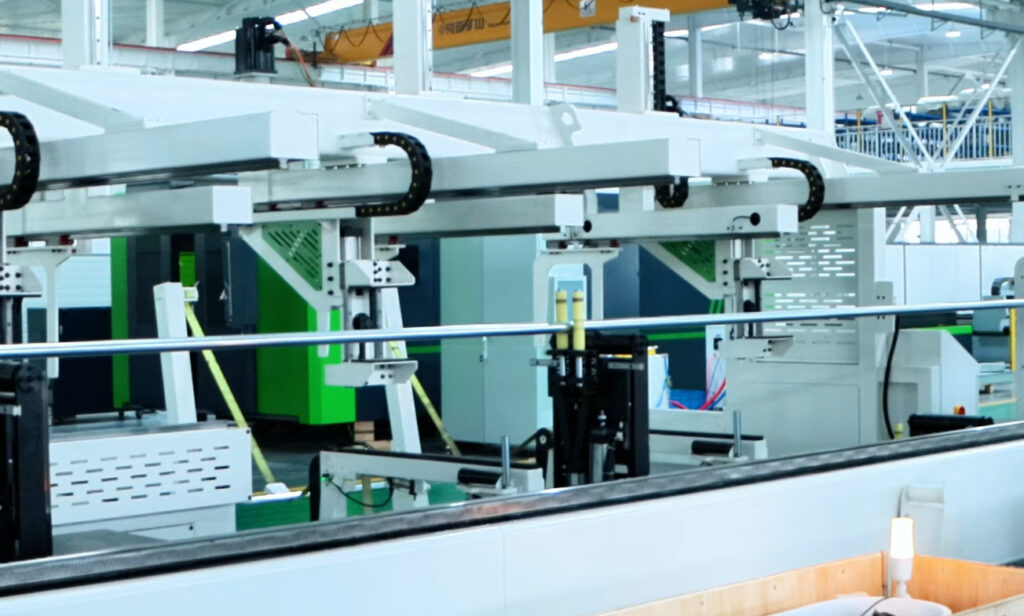
Gas settings are not housekeeping
They are quality settings.
Assist gas choice and pressure affect cut-edge condition, oxidation, dross behavior, and dimensional stability. The S355JR study showed gas pressure had limited effect on some 4 mm accuracy outcomes but became more damaging at higher levels in 6 mm material, where high pressure coincided with larger deviation on bottom-surface accuracy. That is exactly the kind of detail that separates repeatability in laser cutting from “the machine ran fine during the demo.”
And yes, I will say the unpopular part: many shops underinvest in gas discipline because it is boring. But boring usually pays.
The buying mistakes I keep seeing in sheet metal fabrication
Mistake one: buying watts instead of capability
Big numbers sell. They also distract.
A 20 kW or 30 kW headline sounds impressive, but if most of your revenue comes from thin to mid-thickness parts with tight cosmetic or assembly requirements, then process stability, cut quality, software, service response, gas cost, and operator training usually matter more than bragging rights. That is why buyers comparing best metal cutting laser machine options should build a decision matrix around actual jobs, not showroom theater.
Mistake two: treating software like an accessory
I have very little patience for this one.
Your nesting engine, parameter library, pierce logic, collision avoidance, remnant handling, and job traceability are not side features. They are part of the machine’s economic output. If you want product consistency in manufacturing, then data discipline has to sit beside mechanical capability. NIST’s repeated emphasis on sensors, standards, and real-time data for process control should end the debate. This is not optional admin work. This is production control.
Mistake three: forgetting the factory is a system
A laser cell does not live alone.
If cut parts queue up before deburring, bending, or welding, your expensive consistency at the cutting stage may disappear downstream. If tube work is growing, adding automatic loading tube laser capacity can make more sense than overloading a flat-sheet machine with jobs it was never meant to dominate. And if your product mix includes non-metal or hybrid workloads, a Taglierina laser CO2 may be the right complement rather than a wrong substitute.
Domande frequenti
What is laser cutting manufacturing?
Laser cutting manufacturing is the use of CNC-controlled laser systems, assist gas, and programmed toolpaths to cut sheet metal or other materials into repeatable part geometries with controlled kerf width, edge quality, and dimensional accuracy, so fabricators can reduce variation across batches and downstream assembly problems.
In practice, that means better repeatability when settings, inspection, and machine maintenance are stable. It does not mean every laser automatically produces good parts. Shops still need parameter control, gas discipline, heat management, and measurement routines.
How does laser cutting improve product consistency in manufacturing?
Laser cutting improves product consistency by combining non-contact cutting, programmable motion control, stable process parameters, and measurable output metrics such as dimensional deviation and surface finish, which lets fabricators hold tighter tolerances and detect drift faster than shops relying on looser, more operator-dependent cutting methods.
The key word is measurable. NIST’s process-control work centers on monitoring dimensional and surface metrics, and the 2024 S355JR study shows that parameter choices materially change deviation and roughness outcomes. Consistency is not a slogan. It is controlled variation.
Is fiber laser cutting better for sheet metal fabrication businesses?
Fiber laser cutting is usually the better option for sheet metal fabrication businesses focused on metal throughput, fine edge quality, and production repeatability because it is built for efficient cutting of common sheet metals, especially in thin and medium thickness ranges where speed and precision both matter.
But “better” depends on the work mix. Thick plate, bevel prep, tube work, and non-metal applications can each change the answer. That is why I would match machine type to job profile before I matched it to a budget headline.
What hurts repeatability in laser cutting the most?
Repeatability in laser cutting is hurt most by unstable parameter settings, poor gas-pressure control, thermal distortion, nozzle wear, inconsistent material quality, weak inspection routines, and software or toolpath decisions that ignore heat accumulation and batch-level variation during production.
If I had to rank the usual culprits, I would start with process discipline, not machine age. Shops blame hardware faster than they audit settings, gas, and heat strategy. That is often a management problem wearing a technical disguise.
Your next move
Do not buy the flashiest machine. Buy the machine-path that fits your quoting reality.
If your business lives on repeat flat-sheet production, start with a serious look at fiber laser cutting solutions. If thick plate and industrial throughput dominate your backlog, compare 6000W to 40kW high-power systems. If edge prep is eating labor, study bevel cutting options. And if profiles and tubes are becoming a bigger slice of revenue, look hard at automatic tube laser automation.
My advice is simple. Audit your last 90 days of jobs. Count the remakes. Count the deburring hours. Count the fit-up complaints. Then choose the laser cutting solution that fixes the expensive problem, not the glamorous one. That is how sheet metal fabrication businesses stop chasing machine specs and start building consistency into margin.


Click a caldo
Contatto
Applicazione
©Copyright [bogonglaser.com]. BOGONG Laser Machine Supplier All Rights Reserved.