-
Shunhua Road, Jinan City, Shandong

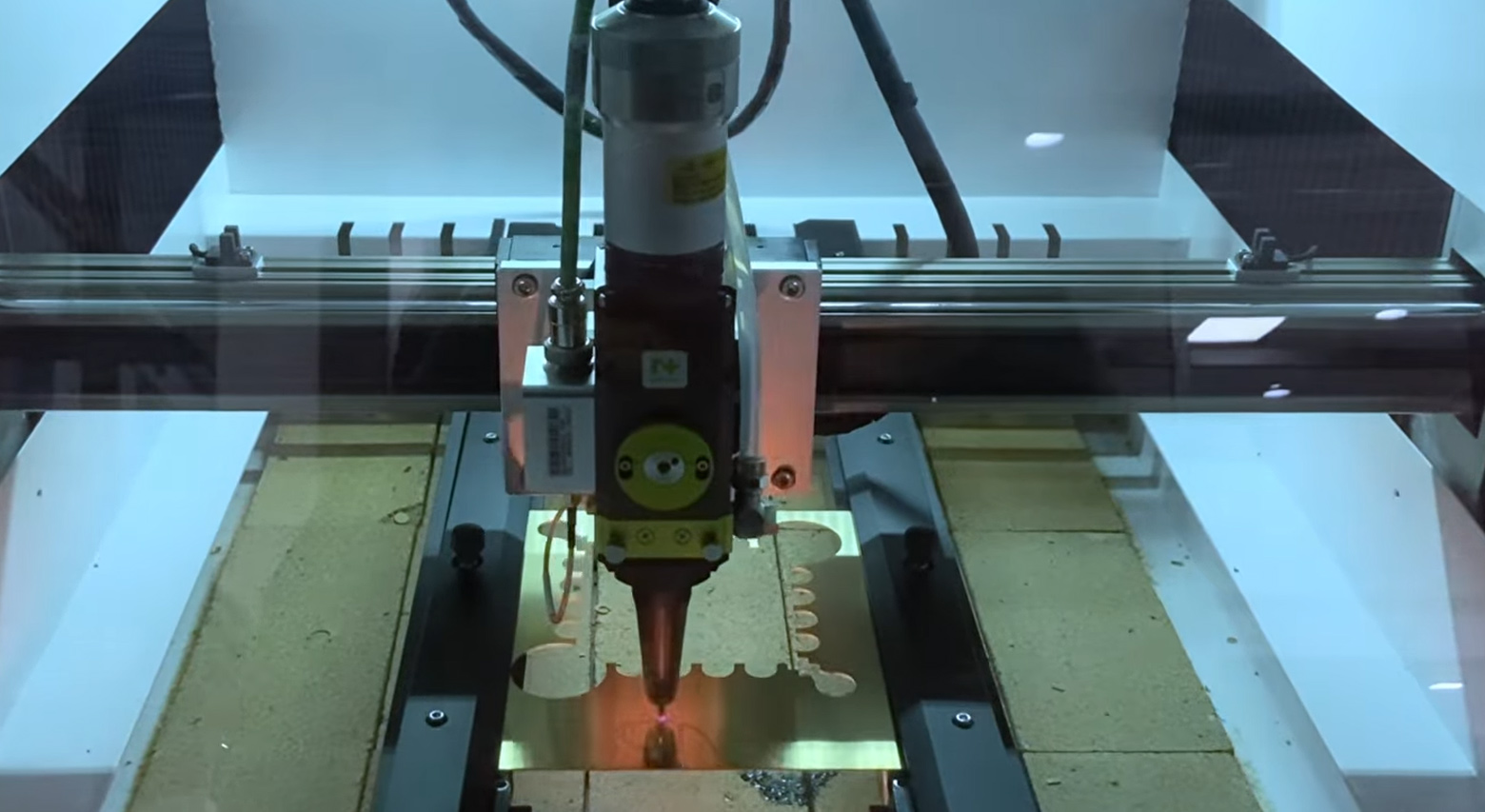
Laser Cutting vs Water jet Cutting for Metal Manufacturing
I’ve seen too many shops pretend laser and waterjet are interchangeable. They are not. One is usually the money printer. The other is the rescue tool when heat, thickness, or metallurgy starts fighting back. Here’s the blunt version.

Most buyers ask the wrong question
Which one is faster?
That’s usually the first thing people ask, and I get it, because throughput is easy to sell in a meeting, easy to stick into a quote sheet, and easy to wave around like proof you’re making a smart choice, even though it tells you almost nothing about cleanup, scrap, HAZ headaches, taper, consumables, or the ugly cost of parts that look fine until QC gets mean.
That’s the trap.
I frankly believe half the bad buying decisions in fabrication start there. Somebody hears “laser is faster” and treats the case as closed. Then real production starts. Parts warp. Coatings don’t like the edge. A customer asks for thicker stock. Suddenly that tidy decision looks expensive.
So, no, this isn’t a tie. Not really.
For routine sheet metal work, laser usually takes the job. For thick plate, heat-sensitive alloys, or parts where edge metallurgy can’t be messed with, waterjet still earns its keep. That’s not a diplomatic answer. It’s just what happens on the floor.
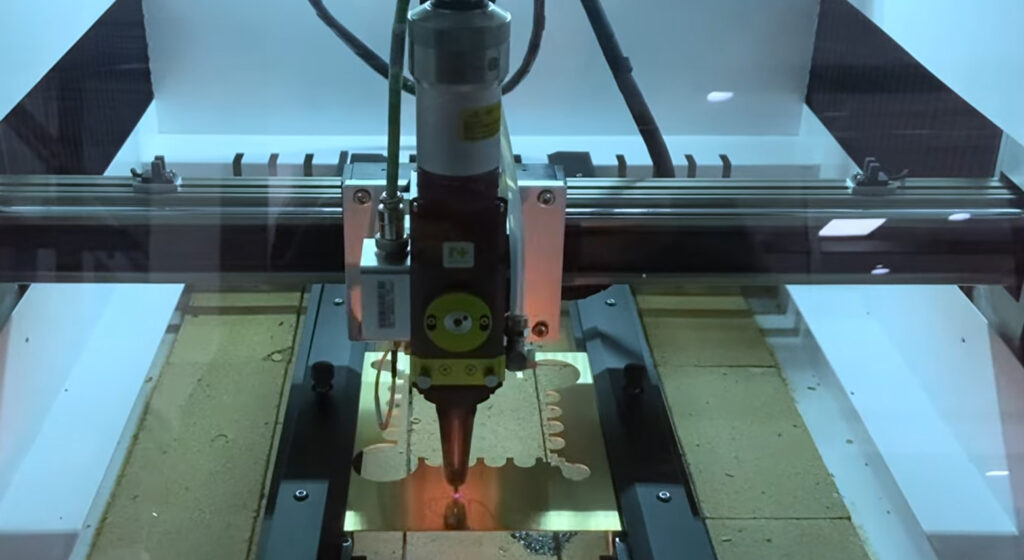
And this matters more now, not less. Reuters reported in June 2024 that U.S. spending on factory construction climbed to a record high even while broader activity softened, driven by investment tied to chips and green energy production. More plants means more brackets, panels, housings, busbar parts, trays, covers, and cut-metal headaches.
Laser cutting vs water jet cutting in one hard table
Here’s the version I’d actually hand to a buyer.
| Factor | Découpe au laser | Waterjet Cutting |
|---|---|---|
| Vitesse de coupe | Usually faster on thin to medium sheet metal | Usually slower, especially on production runs |
| Zone affectée par la chaleur | Yes, possible depending on setup and material | No thermal HAZ |
| Edge quality | Very strong on properly tuned sheet jobs | Strong, especially when heat distortion must be avoided |
| Thickness range | Excellent on thin and mid-thickness metals | Better on very thick metals |
| Material flexibility | Best on conductive industrial metals in standard ranges | Handles reflective, layered, thick, and heat-sensitive materials better |
| Secondary finishing | Often low on optimized parts | Can be low, but taper and surface finish depend on settings |
| Operating inputs | Electricity, assist gas, optics, maintenance | Water, abrasive, pump maintenance, disposal |
| Best fit | High-throughput fabrication | Precision without heat, thick stock, specialty jobs |
Looks simple. It isn’t.
Because that table doesn’t show what happens after the cut. NASA’s report on stainless coupons is a good example: laser-cut 316L samples showed a heat-affected zone and weaker coating adhesion, while waterjet was used where avoiding that edge condition mattered. That’s the kind of detail sales decks skip and engineers remember.
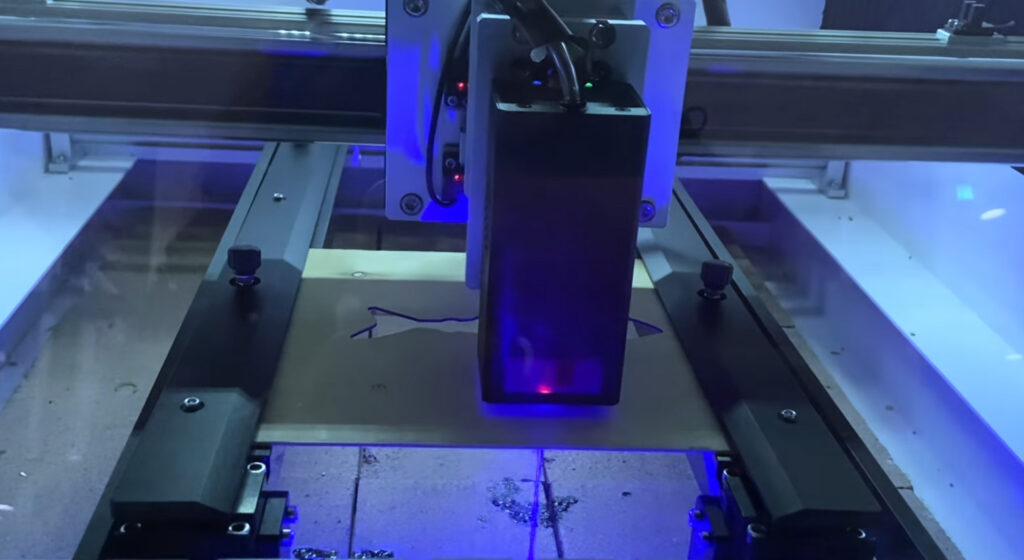
Where laser wins — and wins hard
Thin sheet, repeat jobs, tight nesting, real production tempo
Laser makes money.
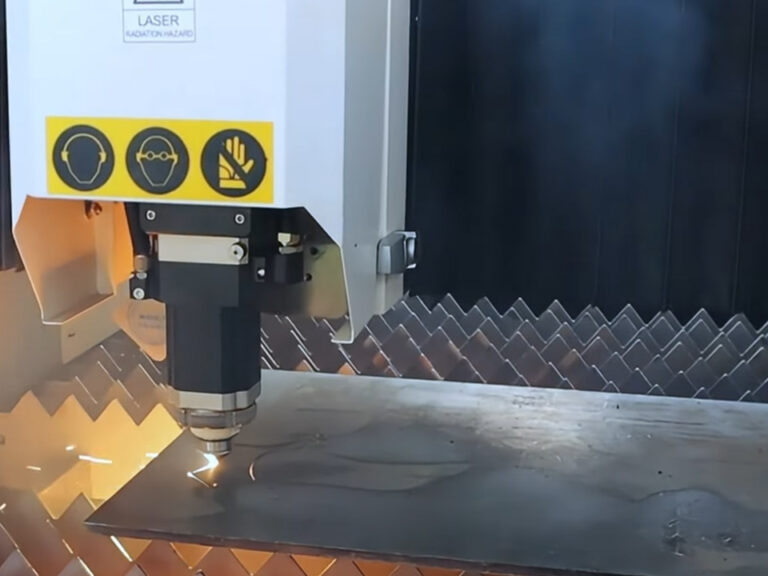
That’s the plain-English version. When a shop is chewing through stainless, mild steel, aluminum, or galvanized sheet in repeat geometries, laser usually outruns waterjet by enough that the real conversation shifts away from “which process is better” and toward nesting efficiency, assist-gas strategy, automation, unload time, nozzle health, and whether the operator actually knows how not to wreck a clean setup.
That’s the real shop talk.
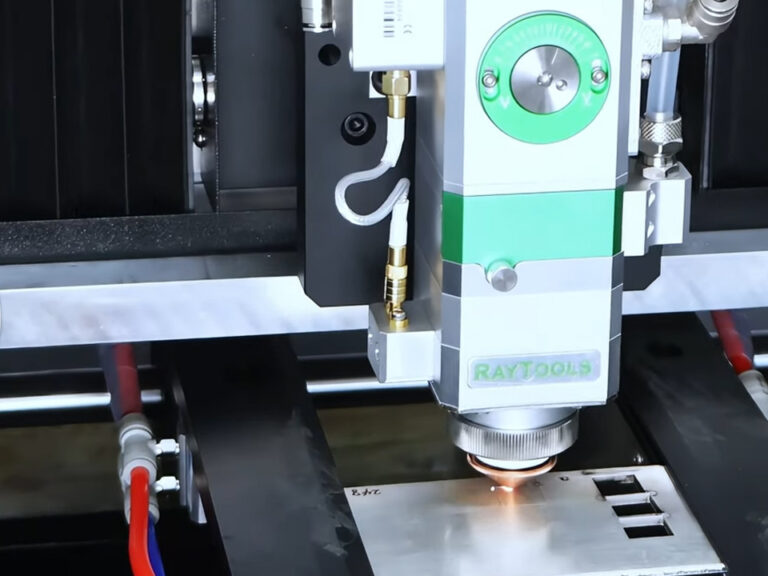
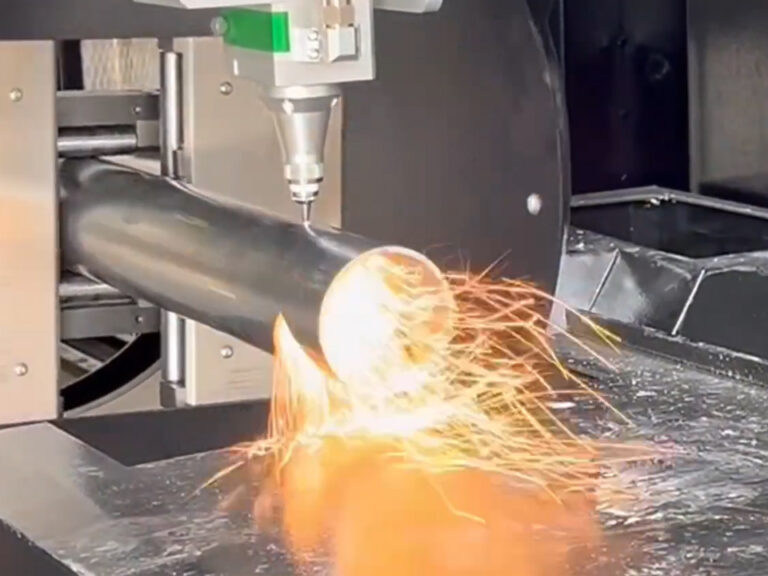
And if the workflow is sheet-plus-tube, I’d naturally point readers toward an all-in-one fiber laser metal cutting machine for tube and sheet processing. If the work is smaller, more delicate, or focused on non-ferrous parts, a compact fiber laser cutting machine for brass, gold, and silver parts fits that conversation better. Not because model pages solve everything — they don’t — but because throughput is usually a systems problem, not just a beam problem.
And the demand side is real, too. Reuters’ June 2024 reporting tied record factory construction spending to domestic investment in semiconductors and green energy goods. That matters for this topic because new plants don’t buy cutting capacity for fun; they buy it to feed line speed, fixture timing, and delivery windows.
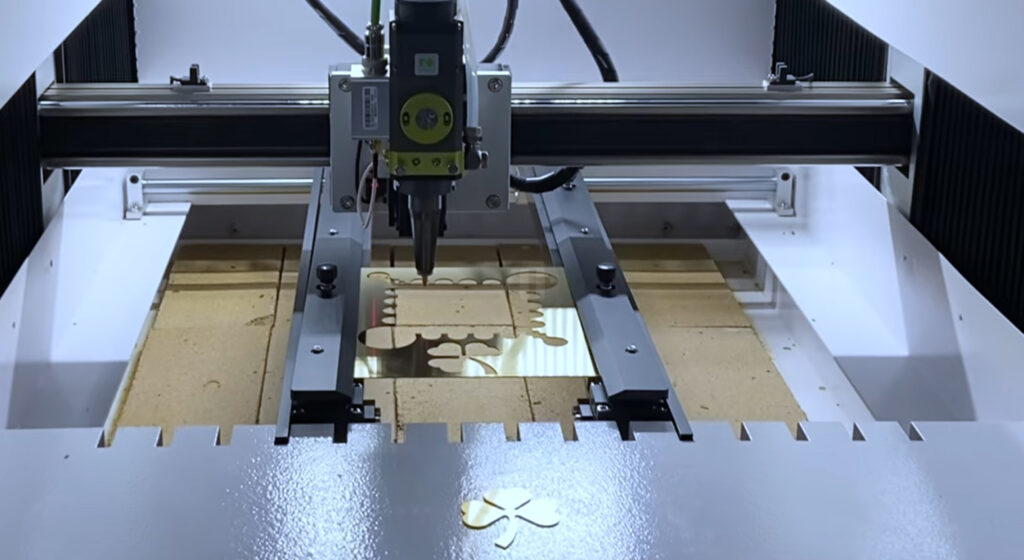
Precision at production speed — yes, but only when the process window is tight
Here’s the ugly truth: laser doesn’t “just” produce good parts.
It produces good parts when the recipe is locked down — power, speed, gas pressure, focus, pierce logic, all of it. That’s why I still like the 2024 study on S355 steel so much; it makes the point without marketing fluff. Laser power, cutting speed, and gas pressure changed the dimensional result and edge quality in measurable ways. In other words, the machine isn’t the whole story. The cut window is. laser power, cutting speed, and gas pressure materially changed cut accuracy and edge quality
And, honestly, that’s how real factories think. They don’t separate cutting from the rest of the line. If traceability matters — serials, QR codes, batch marks, part IDs — then something like a 30W fiber laser marking machine stops being a side note and becomes part of the production logic.
Where waterjet still refuses to die
Thick plate, no-heat requirements, weird materials, zero room for edge drama
Waterjet is slower. Sure.
But slower doesn’t mean weaker. It means different. And from my experience, people only mock waterjet when they’ve never had to explain to a customer why the cut edge changed the material enough to ruin coating, bonding, flatness, or fatigue behavior later.
That conversation is not fun.
A 2024 review hosted by the NIH’s PMC describes abrasive waterjet use on titanium vent screens tied to the F-22 program, where the process was chosen specifically to avoid heat-affected zones and warpage, with 7,000 to 30,000 shaped holes in 4.8 mm Ti-6Al-4V parts. That’s not a hobby-shop use case. That’s serious process selection under pressure.
And NASA’s stainless findings tell a similar story in a different way: if the edge condition affects adhesion and downstream performance, the “faster” process can become the wrong process very quickly.
The hidden reason buyers switch to waterjet
They got burned.
That’s usually it. Not always. But often enough.
A buyer doesn’t wake up one day passionately in love with abrasive garnet, pump maintenance, and slower cycle time. They switch because laser solved one problem and created another. Maybe the part cut fine, but later finishing hated it. Maybe the edge looked clean but the substrate didn’t behave. Maybe distortion was small — just small enough to slip through — until assembly started stacking tolerances and the whole thing went sideways.
That happens.
And when it does, the boring old “cold-cut” pitch suddenly sounds a lot smarter than it did in the quote stage.
If your workflow runs into post-cut surface work, contour branding, or odd-shape component finishing, there’s also a natural bridge into 3D fiber laser engraving for metal components. But that only helps once the cutting process has stopped sabotaging the part underneath.
Laser cutting vs waterjet cost is where people start fooling themselves
Machine-hour math is not enough. Not even close.
I hate lazy cost comparisons.
They’re everywhere. Somebody compares hourly rates, maybe tosses in consumables, maybe not, and calls it analysis. But that’s not how finished-part cost works in the wild. Laser may look fantastic on paper — and often is fantastic — until assist gas, nozzle wear, dirty optics, bad pierce settings, or operator sloppiness start chewing through margin. Waterjet may look flexible and “safer,” right until abrasive use, disposal, pump maintenance, and slower cycle times pile up harder than expected.
So what should you count?
Everything. Pierce time. Cleanup. nesting yield. Scrap. Rework. Edge quality. Downstream coating behavior. Operator skill. Material thickness. Whether the part needs deburr. Whether one rejected batch nukes the savings from fifty “cheap” runs. That’s the math. The rest is brochure math.
Laser cutting vs waterjet speed is usually not a fair fight
For standard metal fab, laser is usually faster. Usually by a lot.
But speed alone is a fake king. I’ll take a slower process every time if the faster one quietly creates a metallurgy problem that shows up three departments later. That’s the part glossy articles never want to say. Waterjet buys you thermal peace. Laser buys you cadence. Pick the one that matches the job instead of the one that flatters the sales rep.
And if a factory is pushing toward denser digital workflows — marking, identification, specialty engraving, fast changeovers — even more niche systems like a top-rated fiber laser engraving platform tell you where the broader ecosystem is headed: tighter software-to-part flow, fewer manual handoffs, less guesswork.
How to choose between laser cutting and waterjet cutting without wasting a quarter
Choose laser when the job looks like this
Choose laser when you’re cutting thin to medium-thickness sheet metal, need higher throughput, want short cycle times, and can keep HAZ risk under control with proper setup, gas choice, and sane part design. That’s still the default lane for enclosures, panels, brackets, guards, cabinets, and plenty of general fabrication work. laser power, cutting speed, and gas pressure materially changed cut accuracy and edge quality
Choose waterjet when the job looks like this
Choose waterjet when heat can’t touch the part, when the stock is thick, when the alloy is fussy, or when downstream coating, bonding, or structural behavior depends on preserving the edge condition as closely as possible. In those cases, waterjet isn’t the “slower alternative.” It’s the safer process.
Ask these five questions before you sign anything
- What’s the actual metal grade and thickness?
- Will the edge be coated, bonded, welded, or fatigue-loaded later?
- Is line speed the priority, or material integrity?
- Which tolerance matters most — profile, taper, finish, or substrate condition?
- What does one rejected batch really cost?
That last one stings.
Because it forces honesty. And honesty usually kills the shallow “laser vs waterjet” debate pretty fast.
The myth I’d retire tomorrow
“Waterjet is more precise.”
Maybe. Sometimes. But not as a blanket rule, and I’m tired of seeing that phrase thrown around like it settles anything. Precision is not one thing. It can mean profile accuracy, hole geometry, taper control, repeatability, edge finish, or metallurgical stability. Different job. Different answer.
Same with laser.
Laser is usually the better production tool for mainstream sheet metal manufacturing. Waterjet is usually the safer tool when heat becomes the enemy or thickness pushes laser into compromise. That’s the answer I trust because it’s the one that survives contact with real parts.
FAQ
Is laser cutting better than waterjet cutting for metal manufacturing?
Laser cutting is usually better for metal manufacturing when the work involves thin to medium-thickness sheet, high throughput, repeatable geometry, and digitally controlled production flow, while waterjet is usually better when heat-affected zones, distortion, metallurgical change, or very thick material make thermal cutting risky. That’s the short answer. The longer answer is uglier: “better” changes fast when downstream finishing or part integrity matters more than raw speed.
Is waterjet more expensive than laser cutting?
Waterjet can be more expensive per finished part when abrasive, pump wear, disposal, and slower cycle times are counted, while laser can become more expensive when assist gas use, optics issues, thermal effects, or rework start eating margin. So, yes — sometimes. But the real cost story is usually the penalty for choosing the wrong process.
What metals are best for laser cutting vs waterjet cutting?
Laser cutting is generally best for common fabrication metals such as carbon steel, stainless steel, and aluminum in thin to medium thickness ranges, while waterjet is often better for thick plate, titanium, layered materials, reflective metals, and jobs where edge heat would undermine function or later finishing. That’s the practical split. Not universal — but very real.
Your next move if you’re buying equipment or outsourcing parts
Don’t ask which process is “best.”
Ask for the same part quoted both ways. Same alloy. Same thickness. Same tolerance. Same downstream requirements. Then compare cut time, edge condition, cleanup, scrap risk, and finished-part cost — not just machine time. That’s where people stop talking and start learning.
And if your work leans toward fast sheet throughput, traceability, tube-plus-sheet flexibility, or scalable metal processing, start by looking at systems built for that actual rhythm: fiber laser systems for combined sheet and tube cutting, compact fiber laser cutters for precious and non-ferrous metalset industrial laser marking platforms for metal traceability.
That’s the move I’d make.
Because the wrong cutting choice doesn’t fail gracefully. It fails late — after quoting, after scheduling, after the part already looked “good enough.” And that’s when metal manufacturing gets very honest, very fast.


Hot Click
Nous contacter
Application
©Copyright [bogonglaser.com]. BOGONG Laser Machine Supplier All Rights Reserved.