-
Calle Shunhua, ciudad de Jinan, Shandong

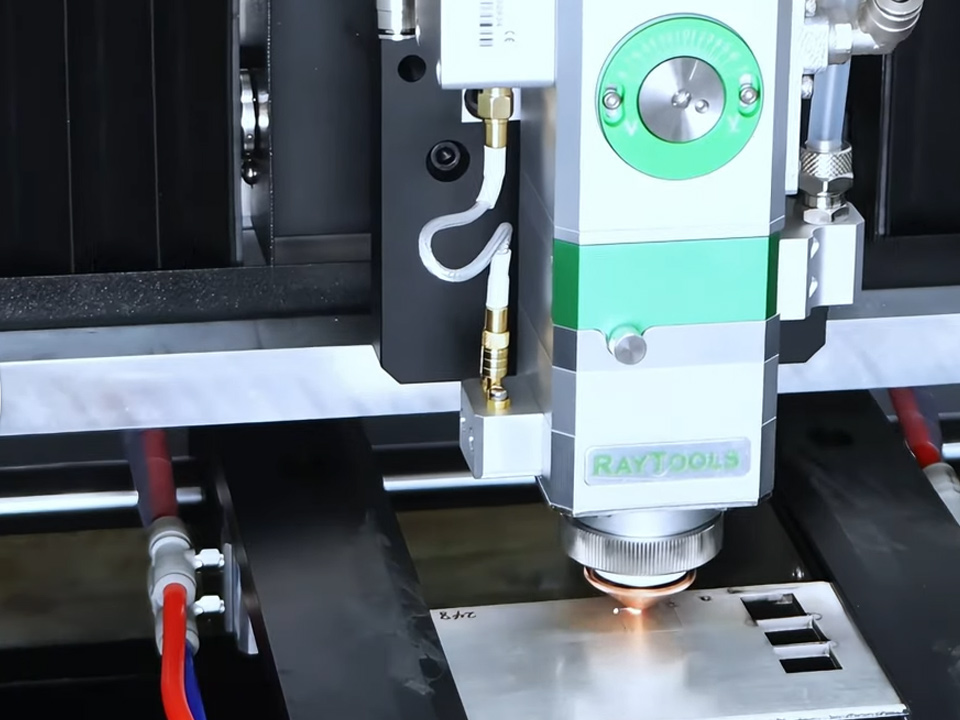
Industrial Laser Cutting Machines for Sheet Metal Processing
Most buyers shop by wattage first and regret it later. This guide breaks down what actually matters in a sheet metal laser cutting machine: material mix, assist gas cost, thickness range, automation, bevel readiness, operator risk, and downstream labor.

The market sells power. Smart buyers buy throughput.
Three words first: wattage lies.
I’ve watched too many buyers get hypnotized by a 12 kW, 20 kW, even 30 kW headline, then act surprised when their real bottleneck turns out to be nest efficiency, nozzle management, nitrogen cost, operator skill, bevel prep, or the ugly truth nobody likes to say out loud: the machine was fast, but the factory wasn’t.
What are you really buying?
If you’re shopping for a sheet metal laser cutting machine, you are not buying “laser.” You are buying a stack of outcomes: edge quality, uptime, scrap rate, gas spend, labor dependency, rework burden, weld prep, and how much pain the machine creates downstream. That is why the best industrial laser cutting machine is almost never the one with the biggest brochure number.
The demand picture backs this up. According to AMT, U.S. manufacturing technology orders fell for a third straight year in 2024, though they still finished 9.7% above the long-term annual average dating back to 1998. That is not a boom story. It is a selection story. Buyers are still spending, but with more skepticism and less room for mistakes. And TRUMPF’s 2023/24 fiscal-year figures told a similar story: sales fell to €5.2 billion and order intake dropped to €4.6 billion, down 10.4% year over year. In plain English, this market is active, but nobody serious is buying casually anymore.
Fiber won. But that doesn’t mean every fiber laser cutting machine for sheet metal is good.
I’ll say it plainly.
For most modern sheet metal shops, a fiber laser cutting machine for sheet metal beats older CO2 logic on speed, maintenance profile, and floor-space economics. But that sentence gets abused. “Fiber” is now treated like a guarantee. It is not. It is just the entry ticket.
The better question is whether the machine fits your material mix. Thin carbon steel. 3 mm stainless. 6 mm mild steel. Occasional brass. Daily aluminum. Mixed-job nesting. Short-run contract work. None of that behaves the same. And thicker plate is where marketing brochures start hiding the ugly details.
A 2024 study on S355JR structural steel found that fiber-laser cutting quality drops as material gets thicker, and that the relationships between laser power, cutting speed, and gas pressure become more complex, not less. That matters because many buyers assume more power automatically means clean thick-section cutting with no trade-offs. It doesn’t. The researchers found measurable changes in roughness, dimensional accuracy, and cut taper across 4 mm and 6 mm plates. So yes, your CNC laser cutting machine for sheet metal may look brilliant on demo coupons and still disappoint on production runs if your parameter window is narrow.
That is also why I would rather see a buyer compare control stability, nozzle change discipline, assist-gas strategy, and nesting software before obsessing over max power. A smaller machine that stays profitable is better than a monster that burns cash elegantly.
For smaller-format work, prototype runs, and lighter sheet processing, a compact system like small fiber laser cutting machine for precision sheet work often makes more business sense than a giant platform that spends half its life underloaded.
Where money actually disappears in sheet metal processing
Most cost models are too polite.
They focus on machine price, shipping, maybe installation, and then stop right before the part where the shop starts bleeding money every week. That is amateur-hour thinking. A serious sheet metal processing machine should be judged on operating reality.
Here is the comparison I use when I want the conversation to become honest.
| Buying Factor | What Sales Brochures Emphasize | What Actually Decides Profit |
|---|---|---|
| Laser power | Max kW number | Material mix and stable cut window |
| Velocidad de corte | Peak straight-line speed | Real nested throughput and pierce strategy |
| Precisión | Demo-piece edge quality | Repeatability across shifts and operators |
| Gas setup | “Supports oxygen/nitrogen/air” | Gas cost per month and finish consistency |
| Automatización | Loader tower photos | Labor saved per shift and uptime recovery |
| Thickness capacity | Maximum cut claim | Acceptable edge quality at target thickness |
| Mantenimiento | “Low maintenance” | Spare parts access, nozzle discipline, optics cleanliness |
| Integration | CAD/CAM compatibility | Whether cutting reduces welding, grinding, and marking time |
And yes, tooling demand data tells a similar story. The Cutting Tool Market Report from AMT and USCTI said U.S. cutting tool shipments totaled $2.43 billion in 2024, down 0.6% from 2023. That is a small decline, but it matters because it signals a buyer base watching spend carefully, squeezing more from current equipment, and expecting new machines to justify themselves with real productivity, not vague promises.
So when somebody asks me for the best laser cutting machine for sheet metal, my answer annoys them a little: the best one is the machine that lowers your total cost per acceptable part, not the one that gives your sales team the prettiest spec sheet.
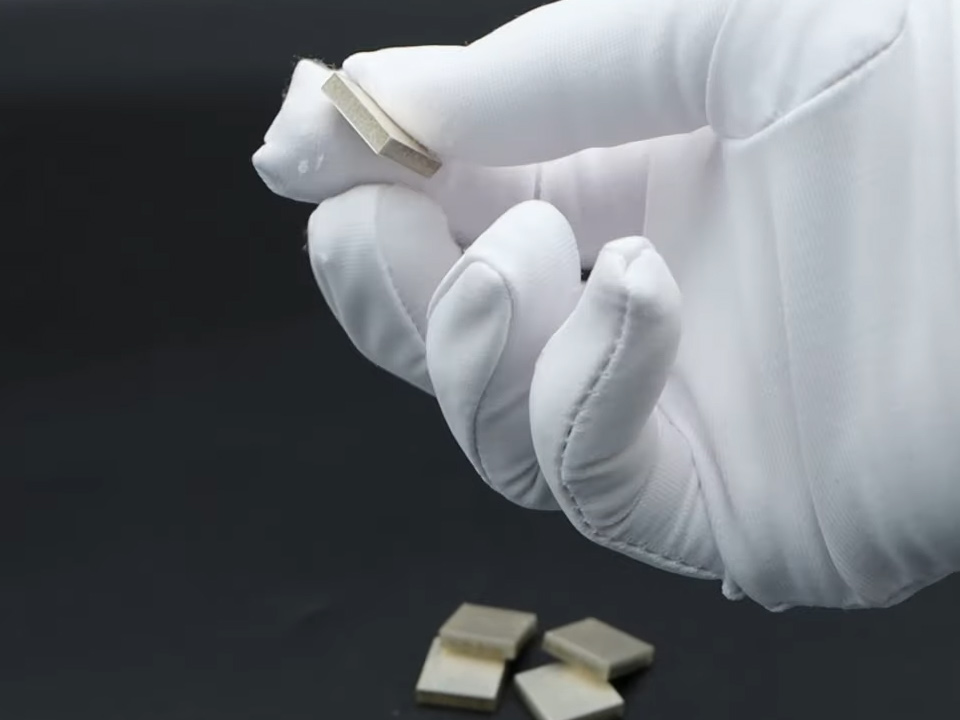
Stainless steel is where cheap decisions get exposed
Here’s the hard truth.
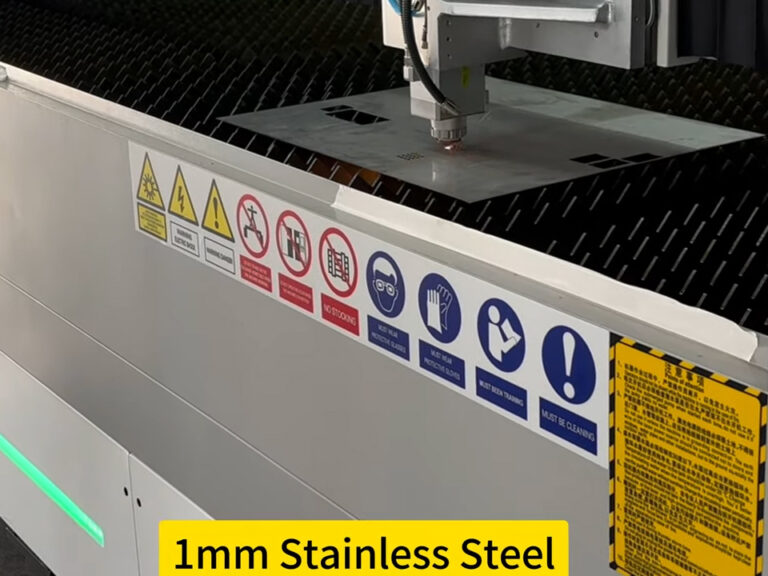
A laser cutting machine for stainless steel sheet metal is easy to sell and much harder to run well. Stainless punishes bad gas strategy, lazy focus settings, poor nozzle alignment, and weak operator discipline. And because many buyers care about cosmetics, burr level, oxidation, and weld readiness, stainless is often the material that exposes whether a vendor really understands industrial work or just knows how to do showroom demos.
TRUMPF’s 2024 launch of the TruLaser Series 3000 Bevel Cut Edition is telling. The company pushed a system that can produce bevel cuts while cutting, on sheets up to 1 inch thick, specifically to reduce downstream prep before welding. That is the right direction. Mature buyers are no longer asking only, “How fast does it cut?” They are asking, “How much grinding, beveling, and labor does it remove after cutting?” That is a smarter question, and frankly, an overdue one.
If your workflow includes assembly and weld prep, your laser decision should not be isolated from welding. That is why I’d look at the relationship between cutting and post-process stations, including systems like a floor-type laser welding machine for heavier fabrication workflows. Shops that separate these decisions too aggressively often create a line that looks efficient on paper and clumsy on the floor.
Safety is not paperwork. It changes the machine you should buy.
This part gets ignored.
And then somebody gets burned, flashed, or blindsided by a reflected beam risk on polished metal.
OSHA is blunt on laser hazards. For Class 4 industrial lasers, exposure to either the direct beam or the reflected beam can create immediate eye and skin hazards, and may also present a fire hazard. That is not just a compliance footnote. It should shape enclosure design, training, interlocks, guarding, SOP quality, and whether your team is even ready for the system you are about to purchase.
I’ve seen buyers spend six figures on a machine and then treat safety like an accessory. Bad idea. Especially in sheet metal shops where reflective surfaces, fumes, assist gases, and rushed production cycles meet tired operators.
And if you are thinking beyond cutting into traceability, serialization, or part identification, bring marking into the same planning session. A shop that cuts clean but cannot label efficiently is leaving money on the table. That is why a UV laser marking machine for part traceability and fine-detail coding can matter more than buyers expect, especially in medical, electronics, and export-heavy jobs. For lighter branding or batch work, a portable laser engraver for flexible on-floor marking tasks can fill a different role without tying up the main cell.
How to choose a laser cutting machine for sheet metal without fooling yourself
Do not start with the machine. Start with the jobs that pay your rent.
Here’s the buyer checklist I trust more than any vendor slideshow:
1. Map your real material distribution
List actual monthly volume by material and thickness. Not the dream mix. The real mix. If 70% of your work is thin stainless and galvanized sheet, stop shopping like you’re a shipyard.
2. Price assist gas like an adult
Nitrogen quality is expensive. Oxygen changes edge behavior. Compressed air can work in some cases, but not as a magic shortcut for everything. Gas strategy can wreck a budget long after the capital expense is forgotten.
3. Check downstream labor, not just cut time
A machine that reduces bevel prep, slag cleanup, sorting, and weld correction may beat a faster machine on total throughput.
4. Audit software and nesting
A CNC laser cutting machine for sheet metal lives or dies on more than mechanics. Nesting, remnant handling, simulation, and production scheduling often decide whether your shop feels smooth or chaotic.
5. Match automation to labor reality
If you run lights-out poorly, you are not automated. You are unsupervised. Loader towers and auto-sort options only pay off if your order flow and staffing can support them.
6. Demand sample parts from your own files
Not generic stars, circles, and logos. Send nasty geometry. Tabs. Tiny holes. Long contours. Mixed nesting. Weld-prep edges. Then judge the result like a skeptic.
7. Ask about service like you expect trouble
Because eventually there will be trouble. Spare parts lead time, remote diagnostics, local technician coverage, and response commitments matter more than a charming sales presentation.
The buyer mistake nobody admits: confusing versatility with focus
This happens constantly.
A shop wants cutting, welding, marking, engraving, maybe crystal work, maybe everything. It feels ambitious. It also creates bloated buying logic. Industrial laser investments work best when every machine has a job, and every job has a margin.
So I prefer focused cells. A dedicated cutter for sheet throughput. A welding station where joining quality matters. A marking system where compliance or traceability matters. Even specialty tools, like a 3D crystal laser engraving machine for high-detail non-metal applications, belong in the conversation only if the business model truly supports them. Otherwise, you are not building capability. You are collecting distractions.
Preguntas frecuentes
What is a sheet metal laser cutting machine?
A sheet metal laser cutting machine is an industrial system that uses a focused laser beam, motion control, and assist gas to cut steel, stainless steel, aluminum, or other metal sheets into precise parts with minimal tooling changes. In practice, it is a production asset that affects edge quality, throughput, scrap rate, and downstream labor more than most buyers first realize.
It is not just a cutter. It is part of a wider manufacturing chain that includes nesting software, gas delivery, operator training, unloading, sorting, and usually welding or marking after cutting.
What is the best fiber laser for sheet metal processing?
En best fiber laser for sheet metal processing is the machine that matches your dominant material mix, thickness range, gas budget, labor model, and throughput target better than its competitors, not the one with the biggest wattage number. For many shops, fit beats bragging rights.
If your work is mostly thin to medium-gauge sheet, a stable, well-supported fiber platform with good software and sensible automation often outperforms a higher-power machine that is oversized for the actual job mix.
Why is stainless steel harder to optimize in laser cutting?
Laser cutting machine for stainless steel sheet metal applications are harder to optimize because stainless is sensitive to assist-gas selection, nozzle alignment, focus position, oxidation control, heat input, and cosmetic finish requirements, so small setup errors show up quickly in burrs, discoloration, and weld-prep problems. It is less forgiving than many buyers expect.
That is why stainless jobs often reveal whether a machine, operator, and process window are genuinely production-ready or just demo-ready.
Your next move
Buy slower.
That’s my real advice. Not because the market is dead. It isn’t. But because this is exactly the kind of category where a rushed purchase creates years of expensive, boring pain. The wrong industrial laser cutting machine does not fail dramatically. It fails quietly, one bad edge, one extra gas bill, one avoidable rework shift at a time.
So run a harder process. Collect your top 20 recurring parts. Break them down by material, thickness, edge requirement, and downstream process. Ask every vendor to prove performance on those parts, not theirs. Then compare the full system: cutting, welding, marking, safety, software, service, and operating cost.
That is how professionals buy. And honestly, it is how they avoid getting sold.


Hot Click
Contacte con nosotros
Aplicación
©Copyright [bogonglaser.com]. BOGONG Laser Machine Supplier All Rights Reserved.