-
طريق شونهوا، مدينة جينان، شاندونغ

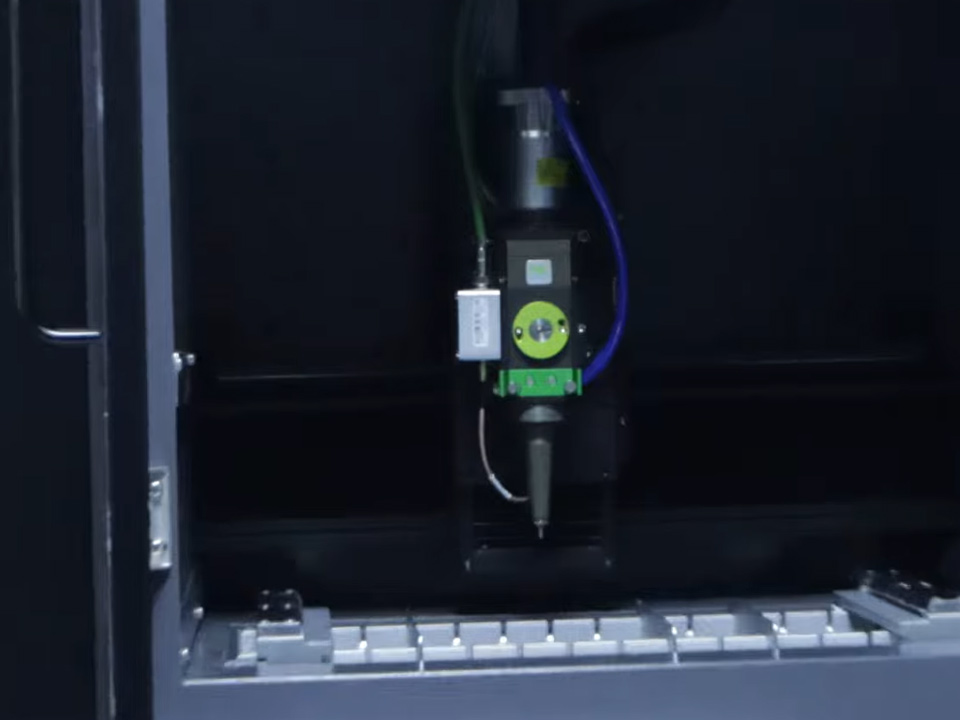
Precision Laser Cutting for Bicycle Frame Parts
I’ve seen too many bicycle component programs dressed up as “premium manufacturing” when the numbers said the opposite. The hard truth is simple: if your laser process cannot control burrs, distortion, nesting yield, and downstream welding prep, your beautiful CAD file is just an expensive sketch. Here’s what serious manufacturers should care about.

It sounds clean.
But once you leave the pretty CAD screen and start dealing with real bicycle frame component manufacturing—dropouts that need to sit dead right, gussets that can’t warp, battery brackets that must line up with assembly jigs, and weld zones that punish even small edge defects—the whole “precision” story gets messy in a hurry. Fast.
I’ve watched this happen. More than once.
And here’s the ugly truth: shops rarely get wrecked by the laser beam itself. They get wrecked by the garbage around it—bad nesting, lazy deburring assumptions, fit-up drift, parts mixed between revisions, oxide on the edge, and that classic shop-floor fairy tale that a tight drawing automatically means a stable process. It doesn’t. Never did.
The market got mean, and that changes everything
But let’s not pretend this is only a machine conversation.
On the demand side, the squeeze is real. PeopleForBikes reported that only about 2% of e-bikes sold by bike shops in Q1 2024 were sold online, yet online e-bike sales were growing at an annual rate of 45%. In mountain bikes, the same 2024 market reporting showed heavy discounting: 69% of mountain bikes sold through IBD e-commerce channels in March and April were discounted, with an average discount of $626. That’s not background noise. That’s pressure.
So what happens upstream?
Brands stop tolerating fluff. They start looking at every tab, bracket, gusset, and dropout and asking the one question suppliers hate: why does this part still cost this much if your process is supposedly dialed in?
And then there’s policy. In June 2024, the U.S. Domestic Bicycle Production Act was introduced to modify duty rates for bicycle manufacturing components, create an electric bicycle production tax credit, and support domestic investment in bicycle and e-bicycle manufacturing. That’s not some sleepy legislative footnote buried in a committee folder. It tells you where the argument is going—closer scrutiny on where parts are made, how they’re priced, and whether domestic or near-market fabrication can finally pencil out.
Then materials join the fight. Reuters reported in February 2025 that the U.S. imposed a flat 25% tariff on steel and aluminum imports “without exceptions or exemptions,” and another Reuters report noted U.S. aluminum demand in 2024 was 4.3 million metric tons, with 3.7 million metric tons imported. If you’re cutting aluminum bicycle frame parts and still treating scrap like a rounding error, I frankly believe you’re asleep at the wheel.
That’s the setup. Brutal, honestly.
Which bicycle frame parts actually deserve laser time
Not every part should touch a laser.
That’s the first thing I’d say in a supplier review, and it usually annoys someone in the room because “advanced manufacturing” sounds better when it’s applied to everything. But smart factories don’t spray laser time across the whole BOM just to look modern. They use it where it earns its keep.
Where laser cut bike frame components make sense
These are usually good candidates for precision laser cutting for bicycle parts because the geometry moves, tooling flexibility matters, and nobody wants to pay for hard tooling every time a frame program changes direction:
- dropout plates
- brake mounts
- battery cradle brackets for e-bikes
- suspension linkage plates
- gussets and reinforcement tabs
- chainstay bridge parts
- head tube reinforcement features
- jig and fixture plates for custom bicycle frame parts fabrication
Pretty straightforward. Usually.
The best suppliers use laser where it reduces setup drag, cleans up revision control, and helps them avoid tooling deadweight. They do not throw laser at every part because the sales deck needs fresh photos.
Where it goes sideways
However, here’s where the brochure starts lying by omission: aluminum reflects, titanium gets grumpy fast, stainless can hide thermal damage until fit-up, and mild steel forgives a lot more nonsense than people admit in meetings, which is exactly why prototype results often look better than production reality.
You cut five parts. Great. Try five hundred.
From my experience, that’s when the operator matters more than the machine badge. If the team can’t explain pierce strategy, assist gas choice, edge taper behavior, burr formation, and how those things change by alloy and thickness, then you don’t have a process window. You have a guess. A polished one, maybe—but still a guess.
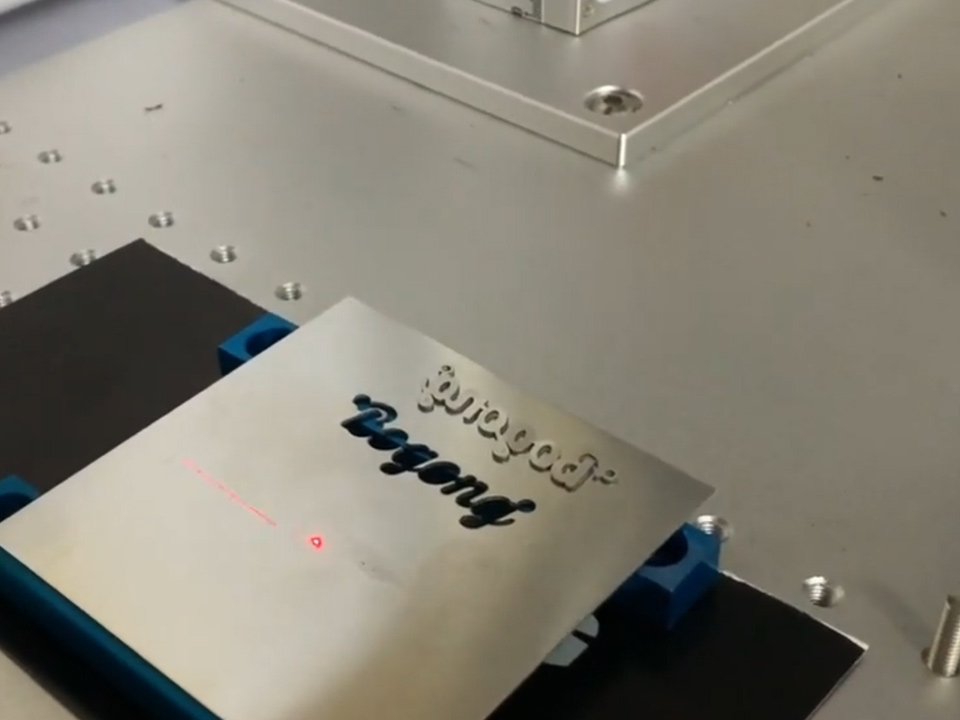
Fiber laser cutting for bicycle frame parts: good, bad, and expensive
People love clean labels. Real production hates them.
The phrase “best laser cutting method for bike frame components” sounds useful, but it’s too neat. The real answer depends on material grade, thickness range, fit-up tolerance, welding method, cosmetic expectations, and whether the supplier can hold the same edge condition on Monday morning and Friday night. That last one matters more than people think.
The comparison nobody should skip
| Material / Part Type | Best-Fit Laser Approach | Typical Advantage | Common Failure Mode | My Verdict |
|---|---|---|---|---|
| Mild steel frame tabs and plates | Fiber laser | Fast cut speed, stable economics | Burrs when process discipline slips | Safe choice |
| Stainless steel mounts and brackets | Fiber laser | Clean edges, good repeatability | Heat tint and fit-up issues if settings drift | Strong choice |
| Aluminum bicycle frame parts | Fiber laser with tight gas/process control | High productivity, flexible nesting | Reflection, dross, unstable edge quality | Worth it only with a serious setup |
| Titanium bicycle frame parts | Precision fiber laser, slower and stricter | Low-tooling flexibility for niche runs | Oxidation, edge contamination, rework risk | Good for premium low-volume work, not for lazy shops |
| Composite-adjacent fixtures or marking needs | Non-cutting laser workflows | Traceability and tool identification | Misapplied process selection | Use as support, not core cutting |
And I’ll be blunt: if a supplier says titanium bicycle frame parts laser cutting is “easy,” I’d start checking everything else they say. Titanium is workable, yes. Easy? No chance.
Titanium looks sexy. It also exposes weak shops.
Yet titanium keeps getting romanticized because it sounds premium, and premium sounds profitable, and profitable sounds fun right up until your edges oxidize, your weld-prep gets contaminated, and your supposedly elite short-run project turns into a little bonfire of rework, excuses, and delayed shipment dates.
I’ve seen that movie. Bad ending.
Titanium absolutely has a place in custom bicycle frame parts fabrication, especially for boutique builds, niche performance programs, and lower-volume premium work where geometry flexibility matters. But if the shop is sloppy with shielding, gas purity, handling, or post-cut cleanup, titanium won’t forgive them. It’ll humiliate them.
The smarter production stack is usually hybrid
And this is the part many buyers miss: the best laser cutting bicycle frame parts workflow often isn’t laser-only at all. It’s a stack.
Usually something like this:
- laser cutting for tabs, plates, and awkward 2D features
- machining where mating faces or slots need tighter control
- forming where repeat bends matter
- laser cleaning before weld prep
- laser marking for batch control and traceability
That’s why I look beyond the cut cell.
If a supplier can support weld-prep with a آلة التنظيف بالليزر النبضي, I pay attention. If they can track batches and parts using an all-in-one fiber laser marking machine, I trust them a bit more. And if they understand contour work, tooling support, or metal-surface detail using a 3D fiber laser engraver for metal أو 3D fiber laser engraver for metal systems, that tells me they’re thinking like manufacturers, not brochure writers.
What recent market evidence really says
Here’s where it gets interesting.
The 2024 Domestic Bicycle Production Act was not written for fun. It was written because policymakers see value in pulling more bicycle manufacturing activity—and more component accountability—closer to home. That matters if you’re quoting frame tabs, battery brackets, or structural subcomponents and pretending geography doesn’t affect your margins. It does.
And Reuters’ 2025 reporting, including factory-related industry coverage and tariff pressure, reinforces the same point from another angle: smaller-scale manufacturing is getting hit by the same cost swings as bigger industrial sectors, just without the same room for error. That’s a rough combo.
So when someone says bicycle frame component manufacturing is mainly a technical issue, I don’t buy it. Not anymore.
It’s a cost-structure issue first. Then a process-control issue. Then, way behind those two, a marketing issue.
Three signals I’d watch like a hawk
1. Tariffs are changing part economics
If steel and aluminum import costs jump, then nesting yield, remnant use, and scrap discipline suddenly matter a lot more than whatever nice adjective the supplier put in the quote. Reuters’ tariff reporting made that painfully obvious.
2. Discount-heavy retail squeezes bad suppliers first
When 69% of mountain bikes in a given channel are moving at discount and the average markdown is $626, brands start attacking hidden waste in the BOM. They have to. Fancy talk won’t survive that kind of retail pressure.
3. Domestic incentives reward suppliers who can prove consistency
Not promise it. Prove it.
That means traceability, process discipline, and less hand-waving during audits or part reviews. Again, the language in the 2024 U.S. legislation points in that direction.
How to laser cut bicycle frame parts without making welding miserable
This part gets overlooked. Constantly.
Start with the joint, not the machine
But a lot of teams still begin with laser settings, which is backwards because the real sequence should start with joint type, weld method, tolerance stack-up, fixture design, expected cosmetic standard, and contamination risk, and only after that should anyone start locking in cut parameters, pierce logic, assist gas, and feed strategy.
That’s how adults do it.
If the part is feeding into a visible TIG-welded frame zone, your edge expectations are different from a hidden e-bike battery support bracket buried inside an enclosure. Obvious? Sure. Still missed all the time.
A clean edge is not the same as a weld-ready edge
And this is where people cheat a little in conversation. They’ll say the edge is “clean” because it looks decent under shop lighting, but decent-looking isn’t the same as weld-ready when you’ve got oxides, residue, oils, or fine contamination hanging around the cut zone waiting to poison fit-up and torch behavior.
That’s exactly where a آلة التنظيف بالليزر النبضي makes practical sense. Not as a buzzword add-on. As a prep tool.
Traceability saves ugly arguments later
Once volume rises, the discussion changes. Suddenly it’s not “Can you make this?” It’s “Can you prove this batch matched Rev C and not the old version?” That’s when permanent marking stops being optional.
So yes, for serial numbers, lot codes, QR traceability, and batch segregation, a fiber laser marking solution matters. It saves time, confusion, and blame.
And if the wider program includes coated fixtures, polymer support pieces, or non-metal identification needs, then a ماكينة الوسم بالليزر CO2 or a 3D UV laser marking machine fits better than trying to bully one laser category into doing everything.
The questions buyers still forget to ask
Ask these before the PO. Not after.
Can you hold tolerance after nesting changes?
A shop that looks perfect on Sheet 1 and drifts on Sheet 8 is not stable. It’s just lucky early.
What does your scrap map look like by alloy and thickness?
No numbers? I get nervous.
How do you prep the edge before welding?
If the answer gets vague, I’d expect trouble later.
Do you mark parts or batches for traceability?
Because if you don’t, field complaints become detective work.
What changed from prototype settings to production settings?
This one makes weak suppliers squirm. For good reason.
الأسئلة الشائعة
What is precision laser cutting for bicycle frame parts?
Precision laser cutting for bicycle frame parts is the controlled use of a focused laser beam to cut metal components such as dropouts, gussets, tabs, brackets, and reinforcement plates to tight dimensional tolerances while limiting burrs, distortion, and downstream welding problems. In real factory terms, it’s a method for producing repeatable, weld-ready components without relying on dedicated hard tooling for every design change.
Is fiber laser cutting the best method for bike frame components?
Fiber laser cutting is often the best method for bike frame components made from steel, stainless steel, and many aluminum sheet or plate parts because it combines speed, repeatability, and design flexibility in one process. Still, “best” depends on the alloy, part thickness, weld-prep expectations, and whether the supplier can keep the cut window stable under real production conditions.
How do manufacturers reduce weld defects after laser cutting bicycle parts?
Manufacturers reduce weld defects after laser cutting bicycle parts by aligning the cut process with joint design, controlling gas and pierce settings, removing oxides and residue before welding, and maintaining fixture consistency across the batch. The suppliers that take cleaning and traceability seriously usually solve weld issues faster because they can isolate problems instead of guessing.
Your next move if you actually care about part quality
If you’re sourcing laser cut bike frame components, ask for three things right away: a material-specific sample, a real explanation of the weld-prep workflow, and a traceability plan for production lots. Then match those answers against your frame geometry, alloy mix, cosmetic targets, and margin pressure.
That’s the real test.
If a supplier can connect cutting, cleaning, marking, and production control into one believable workflow, keep going. If they can’t, all the polished factory videos in the world won’t rescue the program. The bicycle business is too tight for fantasies now.


نقرة ساخنة
اتصل بنا
التطبيق
©Copyright [bogonglaser.com]. BOGONG Laser Machine Supplier All Rights Reserved.