-
طريق شونهوا، مدينة جينان، شاندونغ

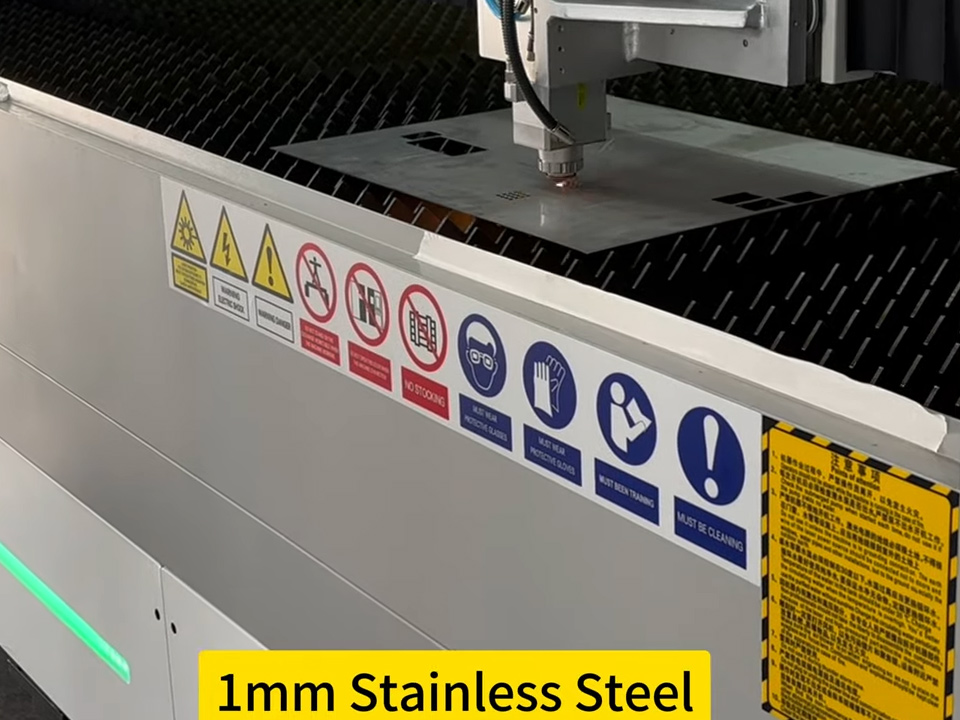
Laser Cutting Thin vs Thick Metal: What Buyers Should Know
Thin and thick metal do not behave like two points on the same curve. They act like two different jobs with two different risk profiles. This article breaks down what buyers should ask before they spend money on a fiber laser cutting system.

Three facts first.
A lot of buyers walk into this market thinking metal is metal, watts are watts, and if a vendor says the machine can cut both thin sheet and thick plate, that’s close enough; then six months later they’re staring at burrs, taper, heat tint, warped blanks, ugly bottom edges, and a quote that looked cheap only because nobody bothered to count the cleanup labor. It happens. Often.
That’s the trap.
I frankly believe thin and thick cutting should almost be treated like two separate buying projects that just happen to share a laser source, because the process window, the pain points, the operator demands, and the ways you lose money are not even remotely the same. So why do so many buyers still compare them like they’re shopping for the same machine?
Because spec sheets flatter people.
And shops pay for that vanity later.
According to a 2024 study published in المعادن, laser power, cutting speed, and assist-gas pressure all shifted cut quality in measurable ways, especially once thickness changed and the process stopped behaving nicely, which is exactly why I don’t trust brochure claims unless they’re backed by nasty real-world samples from the buyer’s actual material stack. See the data in this 2024 المعادن study on S355JR steel laser cutting.
And the industrial base behind this is huge. The U.S. fabricated metal product manufacturing sector sat around 1.47 million jobs in 2024, per the U.S. Bureau of Labor Statistics employment data, which means this isn’t some niche procurement problem—it’s a daily capital decision inside a very unforgiving business.
Why “how thick can it cut?” is usually the wrong first question
It sounds smart.
But it’s usually lazy.
Here’s the ugly truth: maximum thickness is a salesman’s number, not a production number, and buyers who anchor on that headline often miss the far more expensive question—at what thickness can this machine cut at a speed, edge quality, taper level, gas cost, and reject rate that still makes money after the part leaves the table?
That’s the real game.
From my experience, the middle zone is where the trouble lives. Not the easy thin stuff. Not the heroic max-thickness demo. The middle. The band where a machine can technically get through the sheet, yes, but the kerf starts acting up, the bottom edge gets furry, the gas bill climbs, the cycle time drags, and now your operator is standing there tweaking parameters instead of running production.
That is where margin dies.
So if your work is mostly brackets, cabinets, covers, racks, electrical enclosures, light structural bits, or tidy nested sheet jobs, you should care more about throughput, motion control, pierce behavior, edge cleanliness, and repeatability than about some inflated “can cut X mm” line in a PDF. But if your book is shifting toward thicker carbon steel, chunky base plates, welded assemblies, or parts where bevel prep and bottom-edge quality actually matter, the buying logic changes—fast. The 2024 المعادن paper makes that pretty obvious once you stop reading it like marketing copy.
Thin metal laser cutting looks easy right up until it isn’t
Thin jobs fly.
That’s exactly why people underestimate them.
A buyer sees 0.5 mm, 1 mm, 2 mm sheet and assumes almost any fiber machine will chew through it cleanly, but thin metal laser cutting has its own ugly little habits: edge washout on tiny features, thermal ripple on light-gauge stock, ugly holes, micro-burrs that show up later at coating, and parts that look fine on the table but turn annoying the minute they hit forming.
And yes, overpowered machines can be part of the problem.
I know that sounds backwards. Still true.
Too much heat, sloppy pierce settings, weak gas control, nozzle instability, or bad motion tuning can wreck thin work in a very efficient way. The cut happens. The part is wrong. That’s worse than a machine that obviously fails, because now you’re burning material fast while pretending the process is stable.
The 2024 المعادن study on S355JR steel laser cutting showed that roughness shifted with process settings, and higher gas pressure did not simply “fix” the cut. That matters. It tells you this isn’t brute-force manufacturing. It’s parameter discipline.
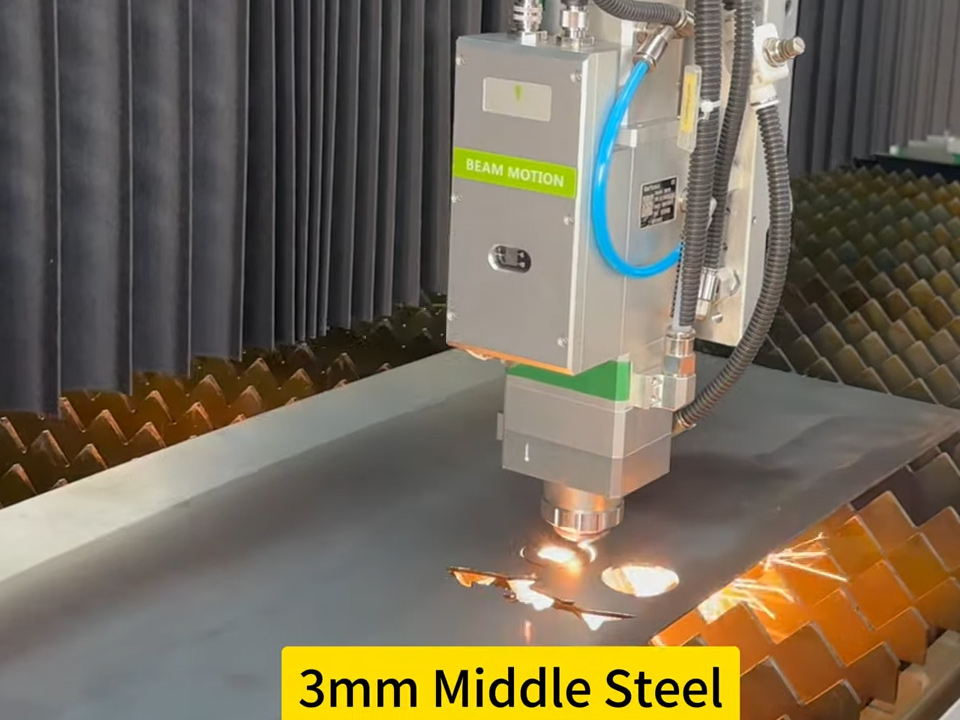
So if thin sheet is your bread-and-butter, I’d look hard at machine categories built for fast, repeatable production rather than thick-plate posturing—something like an all-in-one fiber laser metal cutting machine for tube and sheet work or a dedicated fiber laser cutting machine for sheet metal production. Not because the naming sounds nice. Because the use case does.
What I’d demand from a vendor for thin sheet
Not pretty coupons.
Production parts.
Ask them for 0.5 mm, 1 mm, 2 mm, and 3 mm samples with holes, tabs, acute corners, close nesting, and feature density that actually looks like your jobs. Then look at flatness. Look at bend performance. Look at coating behavior. Look at whether the edge stays decent after a real shift, not a polished trade-show demo.
And ask this—bluntly: what happens on sheet 400?
That question makes sales teams uncomfortable for a reason.
Thick metal laser cutting is where physics starts sending invoices
This is the part buyers love to romanticize.
Big wattage. Big plate. Big claims.
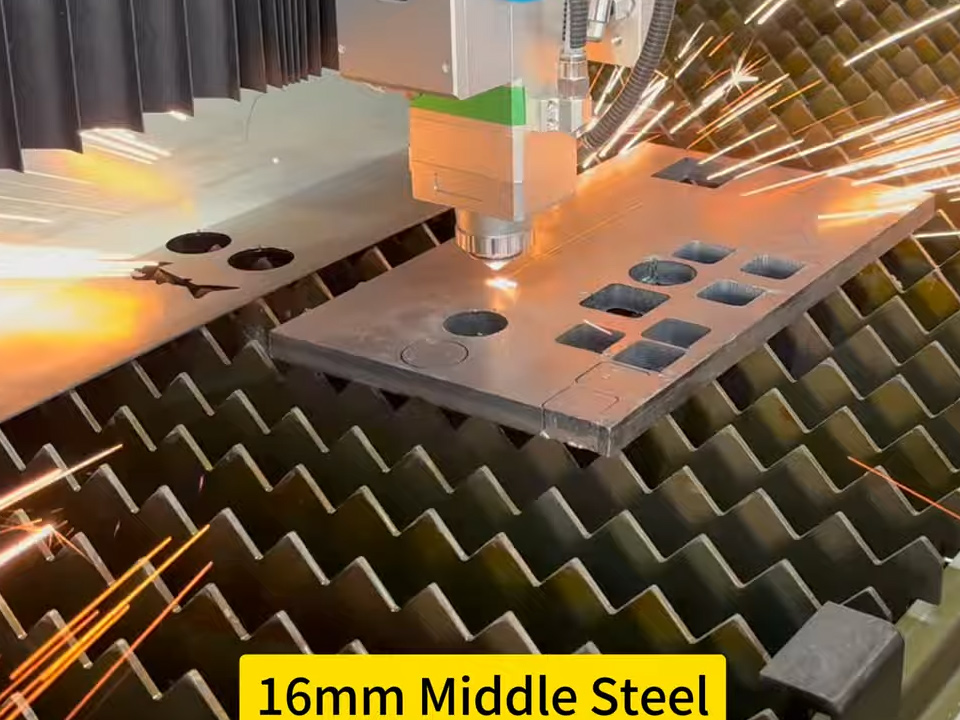
But thick metal laser cutting is not just thin cutting with more power. That’s outsider logic. In the real shop, once thickness climbs, the machine starts fighting a nastier mix of melt ejection, focal position sensitivity, kerf taper, bottom-edge drag lines, HAZ growth, pierce time, gas use, and plain old process stability.
Stuff gets weird.
The 2024 المعادن study on S355JR steel laser cutting showed that when thickness increased from 4 mm to 6 mm, kerf taper rose from 0.056 mm to 0.199 mm, while the heat-affected zone jumped from about 26–40 µm up to roughly 155–231 µm. That is not a cosmetic shift. That’s the process telling you the job has changed.
And if you’re buying for thicker sections, that change affects everything downstream—fit-up, weld prep, cleanup time, labor, reject risk, even whether your operator trusts the machine enough to run unattended.
A separate 2024 study in a nuclear-processing application landed on the same broader truth: thick cutting behaves best when speed, focus, power, and gas pressure are balanced together, not shoved to the max one by one. Their best-performing window sat around 1 m/min, focal position between -20 and -25 mm, laser power between 7200 and 9600 W, and gas pressure at 10 MPa, which you can read in this 2024 laser-cutting process study on PMC. Different application, same lesson.
You can’t bully the cut forever.
And this is exactly why a shop doing heavier work should ask for stable operating windows, not hero numbers. What thickness range runs clean without constant hand-holding? What gas setup does it need? How ugly is the bottom edge? How much hand deburring shows up later? How often does the operator step in when the plate gets serious?
If bevel prep matters—and for welded heavy parts it often does—you should also pay attention to platforms closer to a bevel fiber laser cutting machine for groove and chamfer work. Ignore that early, and you’ll just pay for prep work later with more labor and more irritation.
The comparison buyers actually need
| Buying Factor | Thin Metal Laser Cutting | Thick Metal Laser Cutting |
|---|---|---|
| Main priority | Throughput, nesting, edge cleanliness | Stability, penetration, taper and bottom-edge control |
| Typical failure mode | Warping, burrs, tiny-hole distortion, cosmetic edge issues | Dross, incomplete cut, taper drift, slow cycle time |
| Power strategy | Enough power with strong motion/control discipline | Enough power plus process headroom and gas discipline |
| Gas sensitivity | Important for edge finish and oxidation control | Critical for melt ejection and cut stability |
| Hidden cost | Scrap from poor repeatability at speed | Secondary cleanup, gas cost, operator intervention |
| Best buyer question | “How many good parts per shift?” | “How many acceptable thick parts without cleanup?” |
That table looks simple.
It isn’t.
I’ve seen buyers compare machines as if these two columns were just minor setting changes inside the same workflow. They’re not. Thin sheet punishes sloppy control. Thick plate punishes weak process headroom. Those are different sins.
The part nobody wants to budget for: fumes, compliance, and other expensive “extras”
Here’s another hard truth.
A machine quote is never the whole quote.
In August 2024, South Coast AQMD’s proposed Rule 1445 laid out additional requirements aimed at cutting toxic emissions from laser and plasma arc cutting equipment, including both point-source and fugitive emissions. Read the actual South Coast AQMD proposed Rule 1445 document. Buyers in regulated regions should read that stuff before they sign, not after the installer leaves.
Because yes, extraction matters.
And a weak extraction setup is not a “later” problem. It affects compliance, shop conditions, maintenance, cleanup, and total cost almost immediately. I frankly believe too many procurement teams still treat fume handling like a side item—something to trim so the machine price looks prettier in a meeting. That’s bad buying.
Really bad.
Power matters, but machine fit matters more
So what laser machine is best for metal cutting?
The one that matches your thickness mix.
Not the one with the flashiest power number. Not the one that makes your team feel like they bought the biggest toy on the street. The one that fits the work you actually run, the tolerances you actually sell, and the amount of babysitting your operators can realistically handle without losing half the shift.
If 70% to 80% of your revenue comes from lighter gauge sheet, you may make more money with faster acceleration, cleaner edges, simpler operation, and stable thin-sheet output than with a much bigger platform that mostly loafs through work below its sweet spot. But if your order book is creeping into thicker carbon steel and heavier structural jobs, underbuying power can hurt just as badly—cycle time drags, dross grows, and operators start “helping” the machine way too often. Again, the 2024 المعادن study backs the bigger point: process response shifts with thickness.
That’s why I’d build a thickness-weighted cost model before comparing vendors. Nothing fancy. Just honest.
Include:
- job percentage by thickness
- material type
- average run length
- cut-edge expectations
- cleanup labor
- assist-gas consumption
- uptime assumptions
- operator involvement
Then compare machines against that. Not against ego. Not against sales theater.
And yes, machine type still matters. For most modern laser cutting sheet metal workflows, a آلة القطع بالليزر الليفي is usually the more sensible path than a CO2 laser engraver cutter if your focus is metal processing, speed, reflectivity handling, and production logic. That’s not nostalgia talking. It’s fit.
There’s also sourcing risk, and buyers ignore that at their own peril
This part gets shrugged off too often.
Big mistake.
In September 2024, Reuters reported that U.S. authorities arrested a former laser equipment salesman over allegations tied to illegal exports of laser equipment to a Rosatom division in Russia. The actual Reuters report on the laser-equipment export case is worth a read if you source internationally or buy higher-spec equipment through cross-border channels.
Why mention that in a cutting article?
Because machine capability is only half the purchase. The other half is whether the supply chain around it can survive compliance checks, shipping risk, documentation scrutiny, and service support without turning into a mess. A machine with good specs and bad sourcing baggage can wreck ROI faster than a mediocre feed rate ever will.
What I would ask before trusting any thickness claim
Short list.
No fluff.
For thin sheet buyers
- Show me my gauge range, not your best demo part.
- Show me tiny holes, sharp corners, and close nesting.
- Show me bend results and coating behavior.
- Show me what happens after a full shift, not after ten minutes.
For thick plate buyers
- Show me bottom-edge quality at my target thickness.
- Show me taper numbers and HAZ behavior.
- Show me gas use for real production runs.
- Show me how many parts leave the table without hand cleanup.
For everyone
- What is the stable process window?
- What maintenance hits first in the field?
- What extraction package do you actually recommend?
- What service and parts support will you commit to in writing?
الأسئلة الشائعة
How thick can a laser cut metal?
A laser can cut metal across a broad thickness range, but the useful limit is the thickness where the machine still produces acceptable edge quality, manageable taper, reasonable gas consumption, and commercially sensible cycle times for the buyer’s actual material, tolerance, and finish requirements. That is the number buyers should care about, not a brochure maximum.
In plain English, “can cut” and “can cut well enough to make money” are not the same thing. The 2024 المعادن study on S355JR steel laser cutting is a good reminder of that.
Is thin vs thick metal laser cutting really that different?
Thin and thick metal laser cutting are different production problems because thin sheet depends heavily on speed, motion control, edge cleanliness, and consistency, while thick plate puts far more pressure on power reserve, focal stability, melt ejection, gas strategy, taper control, and bottom-edge quality over the full cut depth.
So yes—they’re different in ways that affect machine choice, labor, gas cost, part quality, and how much post-cut cleanup your team ends up doing. The 2024 المعادن paper makes that shift pretty hard to ignore.
What is the best laser cutter for thick metal?
The best laser cutter for thick metal is the system that can hold stable cut quality, acceptable taper, and low dross at your target thicknesses without blowing up cycle time, gas cost, operator workload, or downstream cleanup requirements, all while matching your actual part mix and shop capacity.
That means buyers should demand proof—thick-plate samples, bottom-edge condition, taper data, gas usage, and cleanup rates—instead of accepting a sales claim at face value. The 2024 laser-cutting process study on PMC points to the same idea: thick cutting lives or dies by parameter balance.
Why should buyers care about fume control and compliance?
Buyers should care about fume control because laser and plasma metal cutting can produce toxic emissions, and tightening regulatory expectations can affect equipment planning, extraction design, operating cost, documentation, and legal exposure from the moment a new system goes into service.
That is not abstract risk. The South Coast AQMD proposed Rule 1445 document is a clear sign that regulators are watching this category more closely.
Your Next Step
Don’t buy the headline.
Buy the fit.
If your work is mostly thin sheet, press vendors on speed, repeatability, and edge quality at volume. If your jobs skew thicker, press them on taper, bottom-edge quality, gas efficiency, and cleanup rates. And if your workload spans both, make every supplier quote against your real thickness mix, your real materials, and your real finish standards—not some glossy demo fantasy.
That’s how buyers stay out of trouble.


نقرة ساخنة
اتصل بنا
التطبيق
©Copyright [bogonglaser.com]. BOGONG Laser Machine Supplier All Rights Reserved.